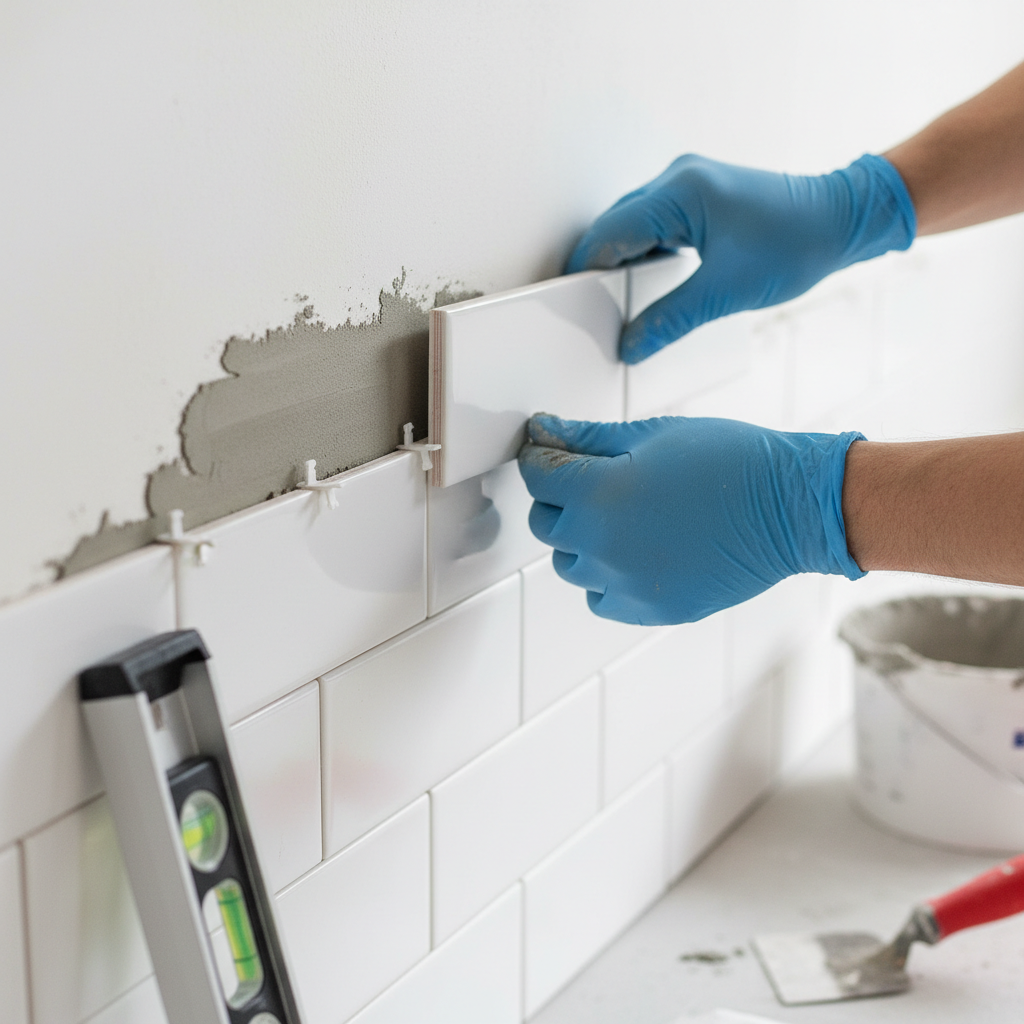
- Uneven Substrate: The wall itself isn't flat, plumb, or level, creating an inconsistent base for the tiles. Minor dips or bulges become highly noticeable once rigid tiles are applied.
- Insufficient Layout Planning: Skipping the dry-lay step and not establishing a precise starting line leads to tiles drifting off-level or out of alignment as you work across the wall.
- Incorrect Mortar Consistency: Mortar that is too wet will cause tiles to slide down the wall. Mortar that is too dry or lumpy won't provide adequate adhesion, leading to weak spots and potential tile popping.
- Inconsistent Mortar Application: Applying too much or too little mortar, or not combing it with uniform trowel ridges, results in some tiles being seated higher or lower than others.
- Not Using Spacers (or Using Them Inconsistently): Spacers are crucial for uniform grout lines. Skipping them or using different sizes will lead to uneven spacing.
General remodeling · Renovation planning
| Project category | General remodeling |
|---|---|
| Problem type | Renovation planning |
| Trade required | General contracting |
| Urgency | Planned project |
| Safety risk | Low safety risk |
| DIY suitability | Pro recommended |
| Cost category | Major investment |
| Typical timeline | Design and permitting often 2–4 months before work starts |
| Contractor type | General contractor |
Repair option
Phase the work and fix the building envelope first.
Replacement option
Full renovation with permits, design, and a general contractor.
Common causes
- Space no longer fits how the household lives
- Resale preparation
- Deferred maintenance stacking up
Relevant tools:project cost estimatorcompare quoteshome improvement material prices
Published May 6, 2026Last updated August 17, 2026
Tools & materials you'll need
Affiliate linksAs an Amazon Associate FixlyGuide earns from qualifying purchases — at no extra cost to you. Prices and availability are accurate as of publication and subject to change.
Quick Answer
The most common mistake first-time DIYers make when installing a kitchen backsplash is failing to achieve a perfectly level and evenly spaced tile layout, resulting in a crooked, uneven, and unprofessional appearance. This frequently stems from overlooking proper surface preparation, rushing the initial layout, and inconsistent mortar application. To fix this, always start with a meticulously plumb and level reference line, use uniform tile spacers, and ensure full, even mortar coverage on both the wall and the back of each tile (back-buttering).
The Problem
You've decided to tackle a kitchen backsplash installation yourself, envisioning a pristine, perfectly aligned wall of tiles. However, reality often sets in when the first few rows go up, and suddenly, tiles are sliding, the grout lines are widening or narrowing, and the whole installation looks like it's sloping downhill – or worse, uphill. This frustrating issue of uneven, misaligned, or sliding tiles is the number one headache for DIYers, especially those new to tiling. It's often not immediately apparent with the first few tiles, but as you progress, small errors accumulate, leading to noticeable flaws in the final appearance. These flaws can range from subtly crooked grout lines to entire sections of tile appearing out of plane with the rest of the wall, diminishing the aesthetic appeal and making your hard work look less than professional. The core of the problem lies in a combination of insufficient preparation and lack of precise technique, which can be easily corrected with the right approach.
How It Works
Understanding why tiles become uneven or slide requires a look at the interplay between the wall, the adhesive, and the tiles themselves. The wall, ideally, should be a perfectly flat, plumb, and level surface. However, most walls have minor imperfections – slight bows, dips, or out-of-plumb corners. When you apply thin-set mortar or mastic to this surface, the adhesive's primary job is to bond the tile securely while allowing for minor adjustments. Thin-set mortar, a cement-based product, cures chemically and mechanically bonds to both the substrate and the tile. Mastic, an organic adhesive, dries by evaporation. Both require a consistent layer for optimal adhesion and to allow tiles to seat properly. If the wall isn't flat, or if the adhesive is applied unevenly, some tiles will sit higher or lower, or deeper into the adhesive than others. Gravity also plays a significant role, especially with heavier tiles or when too much adhesive is used. Without a solid, level foundation and consistent support from spacers and the adhesive layer, tiles can sag or slip before the adhesive sets, leading to misalignment. Furthermore, the expansion and contraction of building materials, though minor, can exacerbate these issues if tiles aren't properly spaced and allowed to cure in a stable environment.
Step-by-Step Fix
Here’s how to avoid and fix the common problem of uneven or sliding backsplash tiles, ensuring a professional finish.
1. Prepare Your Walls Meticulously — Start with a clean, flat, and dry surface for optimal adhesion.
- Remove any existing backsplash, loose paint, wallpaper, or grease. A degreaser like TSP (trisodium phosphate) works wonders. Sand down any rough patches or plaster drips. Repair any holes or significant imperfections with joint compound or spackle, ensuring the wall is as smooth and flat as possible. Allow all repairs to dry completely, then lightly sand smooth.
- Safety Note: Wear gloves and eye protection when using degreasers or sanding to avoid irritation.
2. Establish a Laser-Precise Layout — A perfect starting line is critical for a straight backsplash.
- Locate the lowest point of your countertop using a 4-foot level. Measure up from this point the height of one full tile plus 1/8 inch for the grout line. Draw a perfectly level horizontal line across the entire backsplash area at this height. This will be your starting line for the second row of tiles. The first row will rest directly on the countertop, sometimes requiring shims if the counter isn't perfectly level.
- Find the center point of your backsplash area (usually the wall behind the sink or stove) and draw a plumb vertical line from your horizontal line. Dry-lay tiles from this center point outwards to see how cuts will fall at the ends of the wall and at corners. Adjust your starting vertical line slightly if it means avoiding tiny slivers of tile at the ends, aiming for cuts that are at least half a tile wide.
3. Mix Your Thin-Set or Mastic Correctly — Consistency is key for proper adhesion and workability.
- If using powdered thin-set, follow the manufacturer's instructions precisely for water ratios. Mix thoroughly with a drill and paddle mixer until it has a smooth, peanut-butter-like consistency. Let it slake (rest) for 5-10 minutes, then re-mix briefly. This allows polymers to activate and ensures a consistent, lump-free mixture.
- Pro Tip: If your mix is too thin, tiles will slide. If too thick, it's hard to spread and won't bond well. Adjust with small amounts of water or powder until it's just right.
4. Apply Mortar Evenly (Trowel and Back-Butter) — Double up for superior grip and leveling.
- Use the recommended notched trowel size for your tiles (typically 1/8-inch V-notch or 1/4-inch square notch for backsplashes). Spread a thin, even layer of mortar onto a section of the wall (about 2x2 feet) using the flat side of the trowel, then comb through with the notched side at a 45-degree angle. Ensure consistent ridges.
- Back-buttering: For extra adhesion and to help compensate for minor wall imperfections, apply a very thin skim coat of mortar to the back of each tile with the flat side of your trowel before placing it. This ensures 100% coverage and minimizes air pockets.
5. Place Tiles with Spacers and Gentle Adjustments — Precision is paramount here.
- Place the first tile firmly into the mortar, wiggling it slightly to ensure full contact. Insert tile spacers (1/8-inch or 1/16-inch are common for backsplashes) between tiles and at the bottom edge (resting on the countertop or shims) to maintain uniform grout lines.
- As you set each tile, gently press it into place. Use a tapping block and rubber mallet to lightly tap tiles flush with their neighbors. Immediately check for level and plumb with your level. Make minor adjustments within 10-15 minutes of placement before the mortar begins to set.
- If tiles are sliding: You might have too much mortar, or it's too wet. Remove the tile, scrape off excess mortar from both the wall and the tile back, and reapply a thinner, slightly drier coat. Use larger spacers or shims if necessary to temporarily hold it in place until the mortar gains initial strength.
- If tiles are uneven: Tap down high spots. If a tile is too low, gently pry it off, add a tiny bit more mortar to the back, and re-seat it.
6. Routinely Check for Plumb and Level — Don't wait until the end to discover a problem.
- Every few rows, step back and visually inspect your work. Use your level frequently to check both horizontal and vertical alignment. A long straightedge across several tiles can also reveal inconsistencies.
- Address any issues immediately. It's much easier to fix a problem when the mortar is still wet than after it has cured.
7. Allow Ample Curing Time — Patience is a virtue in tiling.
- After all tiles are set, remove all spacers. Allow the mortar to cure for at least 24-48 hours (or as per manufacturer's instructions) before grouting. Rushing this step can cause tiles to shift when pressure is applied during grouting.
8. Grout with Care — Finish strong for a polished look.
- Once the mortar is fully cured, mix your grout according to manufacturer's instructions. Apply with a rubber float, pushing it firmly into the grout lines at a 45-degree angle, ensuring full coverage. Clean off excess grout with a damp sponge applied diagonally to the grout lines.
Common Causes
- Uneven Substrate: The wall itself isn't flat, plumb, or level, creating an inconsistent base for the tiles. Minor dips or bulges become highly noticeable once rigid tiles are applied.
- Insufficient Layout Planning: Skipping the dry-lay step and not establishing a precise starting line leads to tiles drifting off-level or out of alignment as you work across the wall.
- Incorrect Mortar Consistency: Mortar that is too wet will cause tiles to slide down the wall. Mortar that is too dry or lumpy won't provide adequate adhesion, leading to weak spots and potential tile popping.
- Inconsistent Mortar Application: Applying too much or too little mortar, or not combing it with uniform trowel ridges, results in some tiles being seated higher or lower than others.
- Not Using Spacers (or Using Them Inconsistently): Spacers are crucial for uniform grout lines. Skipping them or using different sizes will lead to uneven spacing.
- Rushing the Process: Tiling requires patience. Rushing leads to overlooked details, poorly set tiles, and less time for crucial adjustments before the mortar sets.
- Lack of Back-Butterin' (for larger/heavier tiles): Larger or heavier tiles benefit immensely from a thin layer of mortar applied to their backs in addition to the wall, ensuring full contact and preventing
Related Articles
Keep troubleshooting with these hand-picked guides from FixlyGuide:
- The #1 Caulk Mistake That Leads to Mold (And How to Fix It Right) — Discover the most common caulk mistake that causes frustrating mold growth around your bathtub and learn the simple, effective way to recau…
- The 3 Hidden Reasons Your Baseboards Are Pulling Away (And How to Fix It FAST) — Don't ignore separating baseboards—they’re not just an eyesore. Learn the surprising culprits behind the gaps and how to permanently fix th…
- The 30-Second Sump Pump Test That Prevents Flooding (Most Homeowners Skip It) — Discover how a simple 30-second test can prevent catastrophic basement flooding by ensuring your sump pump is ready for the rainy season.
- The $30 Secret to Banishing Ice Dams Without Damaging Your Roof — Discover how a simple, inexpensive trick can safely eliminate dangerous ice dams from your roof and prevent costly damage to your home.
- Is Your Roofline Hiding a $10,000 Secret? 7 Warnings Your Soffit & Fascia Are Failing — Discover the critical signs of soffit and fascia damage that could indicate widespread problems and how to properly address them before the…
- The #1 Mistake Homeowners Make After Finding Missing Shingles (And How to Fix It Right) — Discover the crucial steps to take after a storm rips shingles from your roof, ensuring a proper, lasting repair and preventing costly futu…
Should you do this yourself?
Answer five quick questions before you start. Safety outranks savings every time.
Your experience with work like this
How high do you have to work?
Does the job involve any of these?
Will it need a permit?
Specialty tools
Free and instant. Educational guidance only — not a quote, inspection, or professional diagnosis.
What should this project cost?
Enter your project details for a realistic cost range before you call anyone.
Cost depends heavily on which system turns out to be the source.
- Regional adjustment
- National average
- Labor share (typical)
- ~$1,620
- Quotes to collect
- 3 written estimates
Educational estimate based on national averages — not a binding quote. Always confirm with written local estimates.
Before you start
Check the difficulty, permits, and safety risk — then decide whether to call a pro.
- Estimate this projectGet a cost range for your scope and ZIP before you call anyone.Open
- Get local estimatesSend one request and compare written estimates from vetted pros.Open
Free, no signup required. Estimates are educational guidance, not a quote or an inspection.
Recommended for DIYers & woodworkers
Sponsored
The Top 20 Tools for Workshops of Any Budget
No stationary machines or power tools required — plus 3 fundamental tools that can't be bought at any price.
Get the free guide
Ted's Woodworking — The #1 Woodworking Resource
Detailed instructions, dimensioned drawings, materials & cutting lists, and 3D schematics for every skill level.
See the plansSponsored: links above are affiliate links. FixlyGuide may earn a commission on qualifying purchases — at no extra cost to you.
Frequently asked questions
How do you keep backsplash tiles from sliding down?+
To prevent backsplash tiles from sliding, ensure your mortar is mixed to a firm, peanut-butter-like consistency, not too wet. Use the correct notched trowel size and back-butter each tile with a thin layer of mortar for maximum adhesion. Most importantly, ensure your starting line is perfectly level and use consistent tile spacers to provide support as the mortar sets.
Why are my kitchen backsplash tiles not straight?+
Kitchen backsplash tiles are often not straight due to an uneven wall surface, an unlevel starting line, inconsistent mortar application (too much, too little, or lumpy), or not using tile spacers correctly. Skipping the dry-lay layout and not frequently checking with a level also contribute to misalignment.
How long should mortar dry before grouting backsplash?+
Most thin-set mortars require a minimum of 24 to 48 hours to cure sufficiently before you can begin grouting your backsplash. Always refer to the specific mortar manufacturer's instructions, as cure times can vary based on humidity, temperature, and mortar thickness.
Discussion
Loading comments…