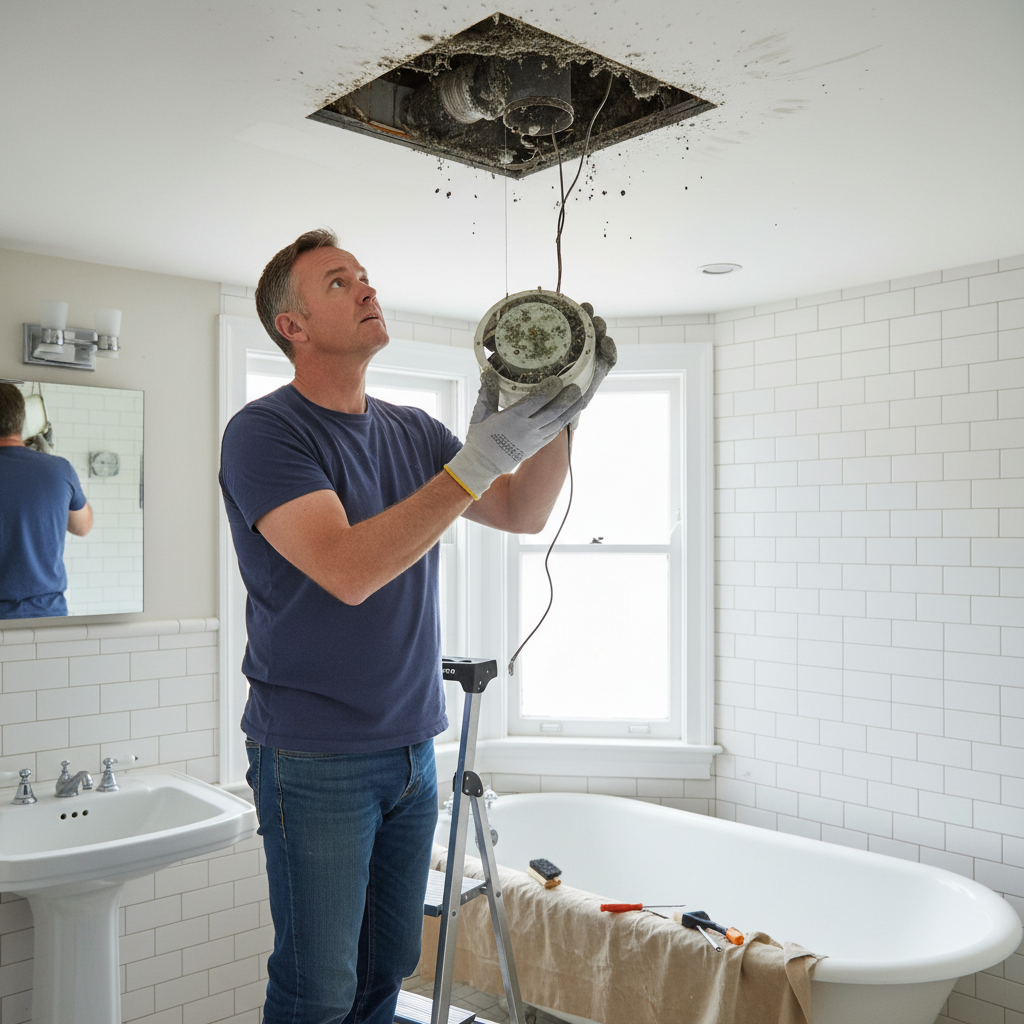
- The Grille and Motor Assembly: This is the part you see in the ceiling. It includes the decorative plastic grille, the electric motor, and an impeller (the fan blades, which look like a hamster wheel) that spins to move air.
- The Housing: A metal or plastic box in the ceiling that holds the motor assembly and connects to the ductwork. It also contains a small, crucial component called a damper flap.
- The Ductwork: A flexible or rigid tube, typically 4 or 6 inches in diameter, that creates a sealed pathway for the exhausted air to travel from the fan housing to the outdoors.
- The Exterior Vent Cap: Located on your roof or an exterior wall, this is the final exit point. It has a screen or louvers to keep birds, insects, and rodents out while allowing air to escape.
HVAC · High energy usage
| Project category | HVAC |
|---|---|
| Problem type | High energy usage |
| Trade required | HVAC |
| Urgency | Planned project |
| Safety risk | Low safety risk |
| DIY suitability | DIY for experienced homeowners |
| Cost category | High cost |
| Typical timeline | Assessment within weeks; replacement planned off-season |
| Contractor type | Licensed HVAC technician |
Repair option
Duct sealing, insulation, and a tune-up before touching the equipment.
Replacement option
High-efficiency replacement sized by a load calculation, not a rule of thumb.
Common causes
- Aging, low-efficiency equipment
- Leaking ducts losing conditioned air
- Insufficient attic insulation
- Oversized system short-cycling
Relevant tools:project cost estimatorrepair or replace
Published April 24, 2026Last updated August 17, 2026
Tools & materials you'll need
Affiliate links- AmazonStepladder1 · Ensure it's stable and appropriate for your ceiling height.
- AmazonSafety Glasses1
- AmazonDust Mask1 · N95-rated is recommended to protect from mold spores.
- AmazonScrewdriver1 · Typically a Phillips head is needed.
- AmazonShop Vacuum1 · A model with a brush attachment is essential for removing caked-on dust.
- AmazonBucket1
- AmazonScrub Brush / Old Toothbrush1-2
As an Amazon Associate FixlyGuide earns from qualifying purchases — at no extra cost to you. Prices and availability are accurate as of publication and subject to change.
'''
Quick Answer
That musty, mildew-like odor from your bathroom fan means it’s harboring mold or mildew. This happens when the fan and its ductwork become coated with dust and debris, which then traps moisture from shower steam. Instead of exhausting the humid air, the fan is just blowing smelly, spore-filled air back into your bathroom. The fix involves a thorough cleaning of the fan assembly and, crucially, inspecting the entire duct path to the outside for blockages or improper installation.
The Problem
You turn on your bathroom exhaust fan to clear away steam after a hot shower, but instead of fresh air, you get a blast of musty, damp, locker-room odor. It’s an unpleasant and counterintuitive problem. The very device meant to protect your bathroom from moisture-related issues is making the air feel dirtier. This isn’t just an annoyance; it’s a red flag. That smell is the byproduct of active mold or mildew growth, which is feasting on trapped moisture and organic matter (like dust) inside your fan or its ducting. This circulation of mold spores can degrade your home’s air quality, potentially trigger allergies, and indicate a larger moisture problem that could lead to drywall damage, wood rot, or more significant mold infestations in your ceiling or attic.
How It Works
A bathroom exhaust fan is a simple but critical part of your home’s ventilation system. Its job is to create negative pressure in the bathroom, pulling the warm, moisture-laden air produced by showers and baths out of the room before it can condense on cold surfaces like walls, mirrors, and windows. This prevents the peeling paint, warped cabinetry, and, most importantly, the mold and mildew growth that thrive in damp environments.
The system consists of four main parts:
- The Grille and Motor Assembly: This is the part you see in the ceiling. It includes the decorative plastic grille, the electric motor, and an impeller (the fan blades, which look like a hamster wheel) that spins to move air.
- The Housing: A metal or plastic box in the ceiling that holds the motor assembly and connects to the ductwork. It also contains a small, crucial component called a damper flap.
- The Damper Flap: This is a small, hinged flap located at the point where the housing connects to the duct. When the fan is on, the airflow pushes this flap open. When the fan is off, it falls shut, preventing cold drafts and pests from coming into your home from the outside.
- The Ductwork: A flexible or rigid tube, typically 4 or 6 inches in diameter, that creates a sealed pathway for the exhausted air to travel from the fan housing to the outdoors.
- The Exterior Vent Cap: Located on your roof or an exterior wall, this is the final exit point. It has a screen or louvers to keep birds, insects, and rodents out while allowing air to escape.
When you flip the switch, the motor spins the impeller, pulling air from the bathroom into the housing. The air pushes the damper flap open and travels through the ductwork until it’s expelled outside through the vent cap. For this to work effectively, the fan must be powerful enough for the room’s size, measured in CFM (Cubic Feet per Minute), and the duct path must be clear, well-sealed, and installed correctly.
Step-by-Step Fix
Follow these steps to deep clean your fan and diagnose the source of the smell. This is a satisfying DIY project that can dramatically improve your bathroom’s air quality.
SAFETY NOTE: You will be working with electricity. Before you begin, locate the correct circuit breaker in your home’s main electrical panel and switch it to the "OFF" position. Confirm the power is off by trying to turn on the fan at the switch.
1. Power Down — At your main electrical panel, shut off the breaker that powers the bathroom fan. Double-check that it’s off by flipping the fan switch. Wear your safety glasses and dust mask, as this job can get messy.
2. Drop the Grille — Most fan grilles are held in place by two metal springs or clips. Pull down gently on the grille, and you’ll feel the tension. Squeeze the clips together with your fingers to release them from the slots in the fan housing and let the grille hang or remove it completely.
3. Unplug and Remove the Fan Motor — Look inside the housing. You’ll see the motor and impeller assembly. There should be a standard electrical plug connecting it to the housing; unplug it. Most modern fan motors are held in place by one to three screws. Remove these screws and the entire motor/impeller unit should drop out easily.
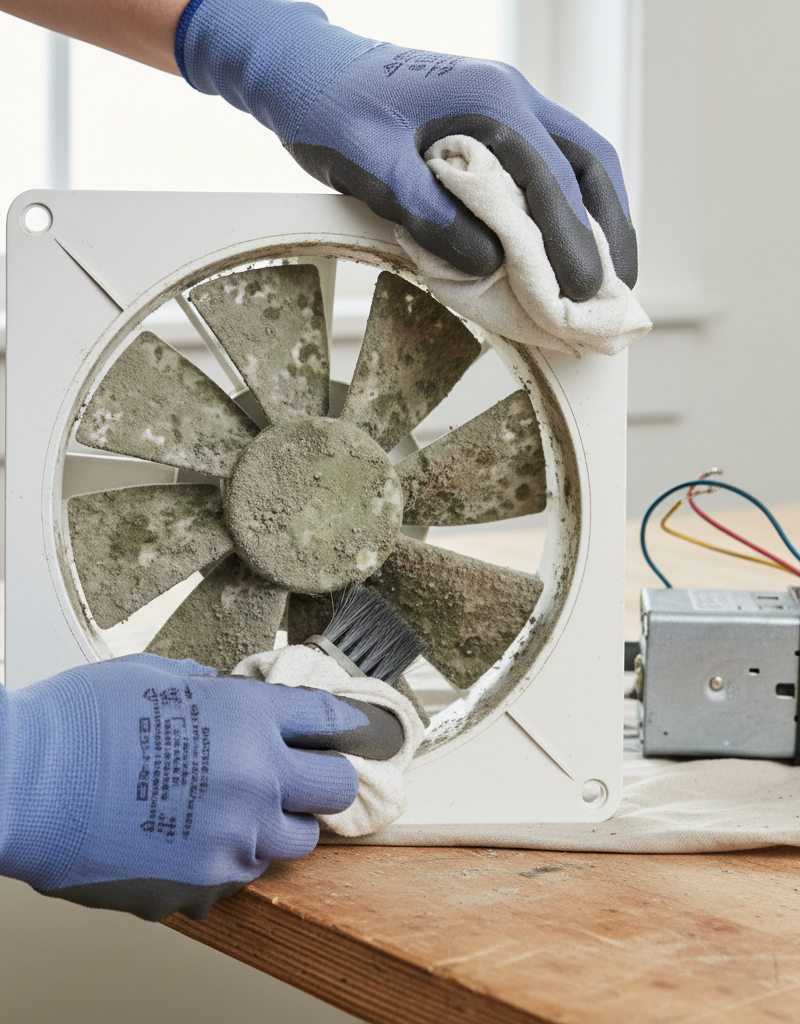
4. Deep Clean the Components — Take the grille and the motor assembly to a sink or use a bucket. Using a shop vacuum with a brush attachment, remove all the thick, caked-on dust and lint. Then, use a scrub brush and a solution of one part white vinegar to one part warm water (or a mild dish soap solution) to scrub the grille and the individual fan blades of the impeller. You may need an old toothbrush to get into tight crevices. This is where most of the smelly mold resides. Rinse thoroughly and set them aside to air dry completely.
5. Clean the Fan Housing — Back at the ceiling, use your shop vac to remove all the dust and debris from inside the housing. Then, with a cloth dampened with your vinegar solution, wipe down all interior surfaces of the housing. Pay special attention to corners where moisture and gunk accumulate. Don't spray liquids directly into the housing to avoid getting water into the electrical receptacle.
6. Inspect the Damper Flap — Find the small, hinged flap inside the housing where the duct connects. It should be made of thin metal or plastic. Use your finger to ensure it moves freely, opening and closing easily. If it’s stuck shut with dust or debris, it’s trapping humid air inside the duct, causing condensation and that musty smell. Clean it and make sure it operates correctly.
7. Check the Duct Connection — Make sure the duct is securely attached to the fan housing’s exhaust port. There should be no gaps. Ideally, this connection should be sealed with foil mastic tape (not duct tape, which fails under temperature changes). A loose connection allows warm, moist air to leak into your cold attic or ceiling cavity, a prime recipe for mold.
8. Do a Quick Duct Inspection — If you can safely access your attic or the area above the fan, take a look at the duct. It should be as straight and short as possible, sloping slightly upwards towards the exterior vent to allow any condensation to drain outside. Look for any sharp kinks, sagging low spots (where water can pool), or complete disconnections. Also, critically, confirm that the duct terminates outside the house, not in the attic. Venting into an attic is a major code violation and a guaranteed mold factory.
9. Clear the Exterior Vent Cap — Go outside and locate the fan’s termination point on the roof or a side wall. Ensure the flap or louvers on the cap are not stuck shut and that the opening isn’t clogged with lint, leaves, a bird’s nest, or other debris. A blocked exit is a common cause of backpressure and trapped moisture.
10. Reassemble and Test — Once all the cleaned parts are completely dry, reinstall the motor assembly (plug it in first, then screw it into place). Re-attach the grille by squeezing the mounting clips and inserting them back into their slots. Restore power at the breaker and turn the fan on. The air should now move freely and smell clean.
Common Causes
- Dust and Lint Buildup: The fan blade and housing become caked with dust, which absorbs moisture from the air and becomes a food source for mold.
- Trapped Moisture: If the fan isn’t run long enough, moisture condenses inside the cold ductwork and housing.
- Blocked Ductwork: Kinks in flexible ducts or sagging sections create low points where water can pool and stagnate.
- Improper Duct Termination: A fan that vents into an attic space simply moves moisture from one area to another, creating a serious mold hazard.
- Stuck Damper Flap: The backdraft damper gets gummed up with dust and stays shut, trapping all the moist air in the duct line.
- Clogged Exterior Vent: The vent cap on the exterior of the house is blocked by lint, nests, or debris, preventing air from escaping.
Common Mistakes
- Ignoring the Smell: The musty odor is a clear warning sign. Ignoring it allows mold to proliferate and can lead to bigger problems.
- Only Cleaning the Grille: Wiping down the exterior grille does nothing to address the source of the problem, which is inside the housing and duct.
- Forgetting to Kill the Power: This is a serious electrical shock hazard. Always turn off the breaker before working on any hardwired appliance.
- Running the Fan for Too Short a Time: You must run the fan during your shower and for at least 20-30 minutes afterward to completely exhaust all the humid air from the room and the duct itself.
- Using Harsh Chemicals: Bleach or other caustic cleaners can degrade the plastic components of the fan and may not be necessary. Vinegar is an effective and safer mold killer.
- Not Checking the Full Path: The problem might not be the fan itself but a blockage miles away at the vent cap. You must consider the entire system from grille to cap.
Cost & Time Breakdown
Here’s what to expect in terms of cost and time for tackling a smelly bathroom fan.
| Task | DIY Cost | Pro Cost | Time Commitment |
|---|---|---|---|
| Thorough DIY Fan Cleaning | $10 - $20 (vinegar, brushes) | N/A | 1 - 2 hours |
| Professional Fan & Duct Cleaning | N/A | $150 - $300 | 2 - 3 hours |
| DIY Fan Motor/Unit Replacement | $50 - $200 (for a new unit) | $250 - $600 | 2 - 4 hours |
| Professional Duct Repair/Rerouting | N/A | $300 - $1,000+ | 3 - 8 hours |
Tips & Prevention
- Run It Longer: The single best thing you can do is run your fan for 20-30 minutes after every shower. This ensures all the moist air is evacuated from the ductwork, not just the room.
- Install a Timer Switch: Replace your standard fan switch with a countdown timer switch. For about $30, you can set the fan to run for 30 or 60 minutes with one push, so you never forget.
- Perform Annual Cleanings: Once a year, perform the deep clean outlined in the steps above. A 5-minute vacuum of the grille every few months also helps.
- Check Your Exterior Vent: Twice a year, when cleaning your gutters, take a quick look at the exterior vent cap to ensure it’s clear of debris.
- Verify Correct Sizing: If you have persistent moisture problems, your fan may be undersized. The Home Ventilating Institute recommends a fan with a CFM rating equal to or greater than the square footage of your bathroom (for bathrooms under 100 sq. ft.).
- Upgrade Your Fan: Consider upgrading to a modern fan with a higher CFM rating, a quieter motor, or a built-in humidity sensor that turns the fan on and off automatically.
When to Call a Professional
While cleaning the fan is a manageable DIY job, certain situations warrant a call to an electrician or an HVAC specialist. Don't hesitate to call a pro if you encounter any of the following:
- The smell persists after a thorough cleaning. This strongly suggests the problem lies deep within the ductwork—it may be disconnected, filled with water, or harbor a large mold colony that requires professional remediation.
- The fan is venting directly into the attic. This is a serious issue that needs to be corrected immediately by a professional. They will need to properly route the ductwork to the exterior of the house to prevent major moisture damage and mold growth in your attic insulation and roof structure.
- You find significant water in the ductwork or housing. This could indicate a roof leak or a serious condensation problem due to uninsulated ducting passing through a cold attic. An expert needs to diagnose the source.
- You suspect any electrical issues. If the fan motor hums but doesn’t spin, you hear buzzing sounds, or the wiring looks damaged or corroded, do not proceed. Call a licensed electrician.
- The ductwork is inaccessible or you're not comfortable working on a ladder or in your attic. Safety comes first. If the job requires climbing on the roof or navigating a cramped attic, it’s best left to a professional with the right safety equipment. '''
Related Articles
Keep troubleshooting with these hand-picked guides from FixlyGuide:
- That Musty Smell When Your Bathroom Fan Runs? Here’s Why. — A musty odor from your bathroom fan isn't just unpleasant; it's a red flag for moisture and mold buildup within the fan housing, motor, or…
- The Secret Culprit Behind Your AC Blowing Warm Air (It’s Not What You Think) — Discover the unexpected reason your air conditioner is blowing warm air and how a simple, often overlooked fix can restore your home’s cool…
- AC Blowing Warm Air? Easy Fixes for Common AC Problems — Discover the most common reasons your AC is blowing warm air and learn simple, actionable steps to troubleshoot and fix the issue yourself,…
- Why Your House is Humid Despite AC & How to Fix It — Even with your AC running, high indoor humidity can make your home uncomfortable. Often, common issues like oversized units or clogged filt…
- Heat Pump Not Heating in Freezing Weather? Here's Why — If your heat pump struggles to heat your home when temperatures drop below freezing, it's likely due to a common issue like a dirty filter,…
- That Musty Smell From Your Fan? It's Not Just Dust — A musty smell from your bathroom fan is a major red flag for hidden mold and mildew growth in the fan housing or ductwork, often caused by…
What should this project cost?
Enter your project details for a realistic cost range before you call anyone.
Service calls and common repairs run $150–$900; full system replacement typically $6,000–$12,000.
- Regional adjustment
- National average
- Labor share (typical)
- ~$1,935
- Quotes to collect
- 3 written estimates
Educational estimate based on national averages — not a binding quote. Always confirm with written local estimates.
Frequently asked questions
Can a smelly bathroom fan make you sick?+
Yes, if the musty smell is caused by mold, running the fan can circulate mold spores throughout your bathroom and home. This can trigger allergic reactions, asthma attacks, sneezing, and other respiratory issues in sensitive individuals.
How often should I clean my bathroom fan?+
You should perform a quick cleaning of the grille every 3-6 months to remove surface dust. A deep clean, where you remove the motor and scrub the housing and fan blades, should be done at least once a year to prevent mold growth and musty odors.
Why does my bathroom fan still smell musty after I cleaned it?+
If a thorough cleaning of the fan unit and housing doesn't solve the problem, the odor is almost certainly coming from the ductwork. The duct may have a low spot that's pooling with stagnant water, or it may be venting into the attic, which has created a large, hidden mold colony.
Is it okay for a bathroom fan duct to have a bend in it?+
Yes, gentle bends are normal and often necessary. However, sharp 90-degree kinks or sagging sections in flexible ducts should be avoided. These obstruct airflow and create traps for moisture and dust, leading to the problems that cause musty smells.
Discussion
Loading comments…