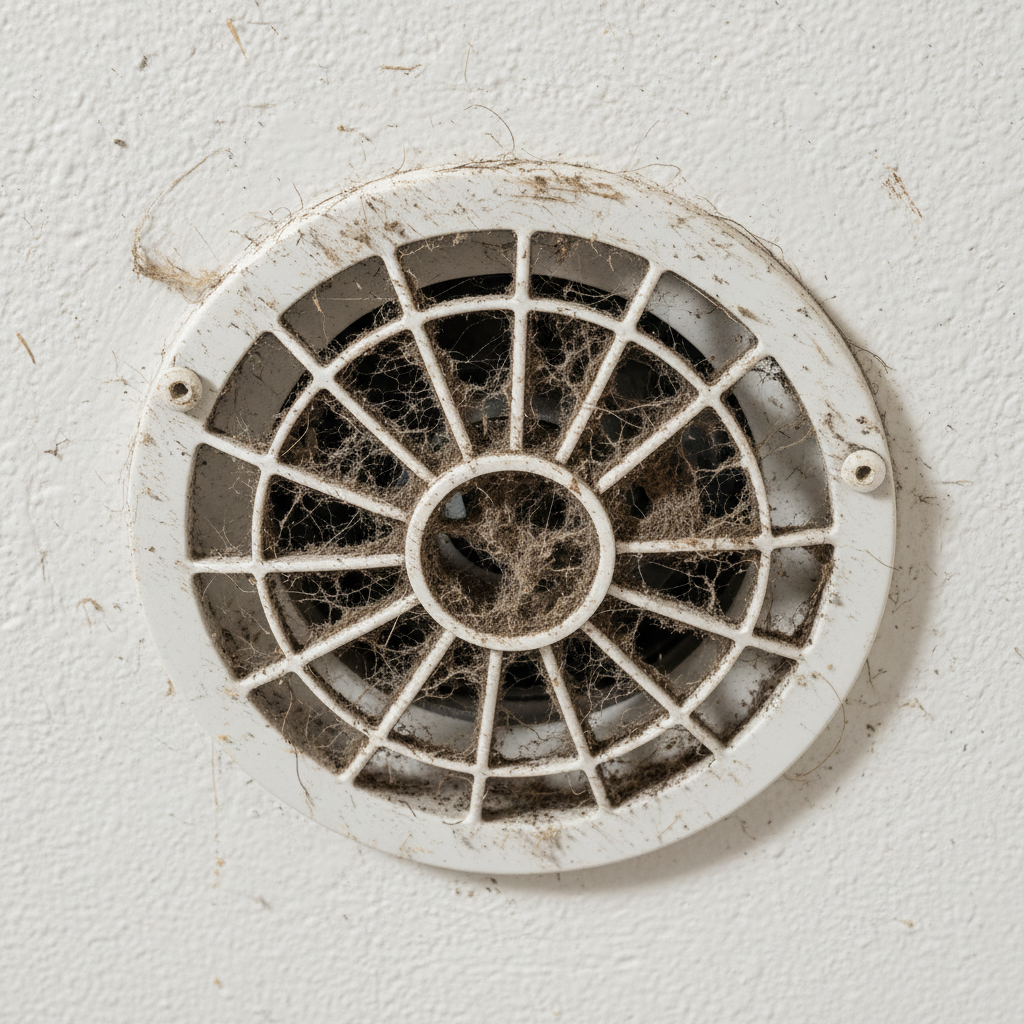
- Mold and Mildew Growth: The number one cause. It flourishes on the dust, lint, and moisture that collects on the fan blades, housing, and in the ductwork.
- Blocked or Sagging Ducts: A dip or sag in a flexible exhaust duct creates a low point where water condenses and pools. This water trap becomes a permanent swampy mess, breeding mold and blocking airflow.
- Undersized Fan: If your fan's CFM (Cubic Feet per Minute) rating is too low for the size of your bathroom, it can't remove moisture effectively. It runs, but it can't keep up, leaving residual moisture behind after every shower.
- Dirty or Stuck Exterior Vent Flap: If the flap on the outside cap is painted shut, clogged with lint, or blocked by a bird’s nest, the moist air has nowhere to go. It backs up in the duct system, where it condenses.
General remodeling · Renovation planning
| Project category | General remodeling |
|---|---|
| Problem type | Renovation planning |
| Trade required | General contracting |
| Urgency | Planned project |
| Safety risk | Low safety risk |
| DIY suitability | Pro recommended |
| Cost category | Major investment |
| Typical timeline | Design and permitting often 2–4 months before work starts |
| Contractor type | General contractor |
Repair option
Phase the work and fix the building envelope first.
Replacement option
Full renovation with permits, design, and a general contractor.
Common causes
- Space no longer fits how the household lives
- Resale preparation
- Deferred maintenance stacking up
Relevant tools:project cost estimatorcompare quoteshome improvement material prices
Published April 24, 2026Last updated August 17, 2026
Tools & materials you'll need
Affiliate links- AmazonStep Ladder1 · To safely reach the ceiling-mounted fan
- AmazonSafety Glasses1 · To protect your eyes from falling dust and debris
- AmazonDust Mask1 · To avoid inhaling dust and mold spores
- AmazonShop Vacuum1 · With brush and crevice attachments for thorough cleaning
- AmazonScrewdriver1 · As needed, depending on the fan model
- AmazonScrub Brush1 · An old toothbrush works well for tight spaces
- AmazonBucket1 · For your cleaning solution
As an Amazon Associate FixlyGuide earns from qualifying purchases — at no extra cost to you. Prices and availability are accurate as of publication and subject to change.
Quick Answer
That musty, swampy smell from your bathroom fan is almost always caused by mold and mildew. When you shower, the fan pulls warm, moist air up, and if the fan or ductwork is dirty or inefficient, moisture condenses and collects, creating a perfect breeding ground for mold spores that get blown back into the room.
The Problem
You flip the switch to clear the steam from your bathroom, and instead of fresh air, you get a blast of a musty, earthy odor, like a damp basement or a swamp. The smell is unpleasant, persistent, and a clear sign that something is wrong within your ventilation system. This isn't just an annoyance; it indicates a potential moisture problem and air quality issue. The very device meant to protect your bathroom from moisture damage and mold could be actively spreading mold spores throughout the space, posing a health risk to anyone with allergies, asthma, or a compromised immune system. Ignoring this smell is like ignoring a smoke alarm—it’s a warning that demands investigation.
How It Works
A bathroom exhaust fan is a simple but critical appliance. Its job is to pull moisture-laden air, odors, and airborne particles out of your bathroom and expel them safely outside your home. Understanding its components helps pinpoint where smells originate.
-
The Grille: This is the visible cover on your ceiling. Its primary function is aesthetic, but it's also the first line of defense, catching dust and debris.
-
The Fan Assembly: Tucked behind the grille is the main unit. It consists of a small electric motor and a blower wheel (often called a "squirrel cage"). When you turn the fan on, the motor spins the squirrel cage at high speed. The spinning blades create a vacuum effect, sucking air from the bathroom up through the grille and into the fan housing.
-
The Housing: This is the metal or plastic box that contains the motor and fan. It funnels the captured air toward the ductwork connector.
-
The Ductwork: A flexible or rigid tube (typically 4 or 6 inches in diameter) connects the fan housing to the outside. This is the pathway for the exhausted air. The air travels through this duct, across your attic or between floor joists, to the exterior of your house.
-
The Exterior Vent Cap: This is the final exit point on your roof or an exterior wall. It has a flap (damper) that opens when the fan is running to let air out and closes when the fan is off to prevent pests, drafts, and rain from getting in.
The musty smell is generated when this process is compromised. If moisture-rich air condenses inside the cold ductwork or within the fan housing itself, it creates a perpetually damp environment. Dust, skin cells, and lint stick to these damp surfaces, providing a nutrient source for mold and mildew to flourish. When you next turn on the fan, it blows these smelly, spore-filled particles back into your bathroom.
Step-by-Step Fix
This deep-cleaning process will eliminate the source of the odor in most cases. It requires no special electrical skills, just attention to detail.
Safety Note: Before starting any work, ensure the power to the bathroom fan is completely off at the circuit breaker. Flick the fan switch on and off to confirm there is no power.
-
Safety First: Kill the Power — Go to your home's main electrical panel and find the circuit breaker that controls the bathroom. Flip it to the "OFF" position. Return to the bathroom and test the fan switch to be absolutely certain the power is disconnected.
-
Remove the Grille — Most fan grilles are held in place by two small metal spring clips. Pull the grille down gently from the ceiling about 2-3 inches. Squeeze the spring clips on either side and the grille will detach completely. These are often grimy, so be prepared.
-
Unplug and Remove the Motor Assembly — Look inside the housing. You should see the motor and squirrel cage fan. There will be a single electrical plug connecting it to the housing; unplug it. Most fan motors are held in place by one or two screws or a simple clip system. Remove the screws and the entire motor/fan unit should drop down for easy removal.
-
Deep Clean the Grille — Take the plastic grille to a sink or tub. Use a scrub brush with warm, soapy water to remove all the caked-on dust and grime. For stubborn mildew stains, use a solution of one part white vinegar to one part water. Rinse thoroughly and set it aside to dry completely.
-
Clean the Fan Motor and Blades — This part is the biggest source of odor. Take the motor assembly outside or to a well-ventilated area. Use a can of compressed air to blow out loose dust from the motor vents and squirrel cage. Then, use a damp cloth with your vinegar-water solution to meticulously wipe down each individual blade of the squirrel cage and the surrounding motor mount. An old toothbrush is excellent for this. Crucially, do not spray liquid directly into the motor itself.
-
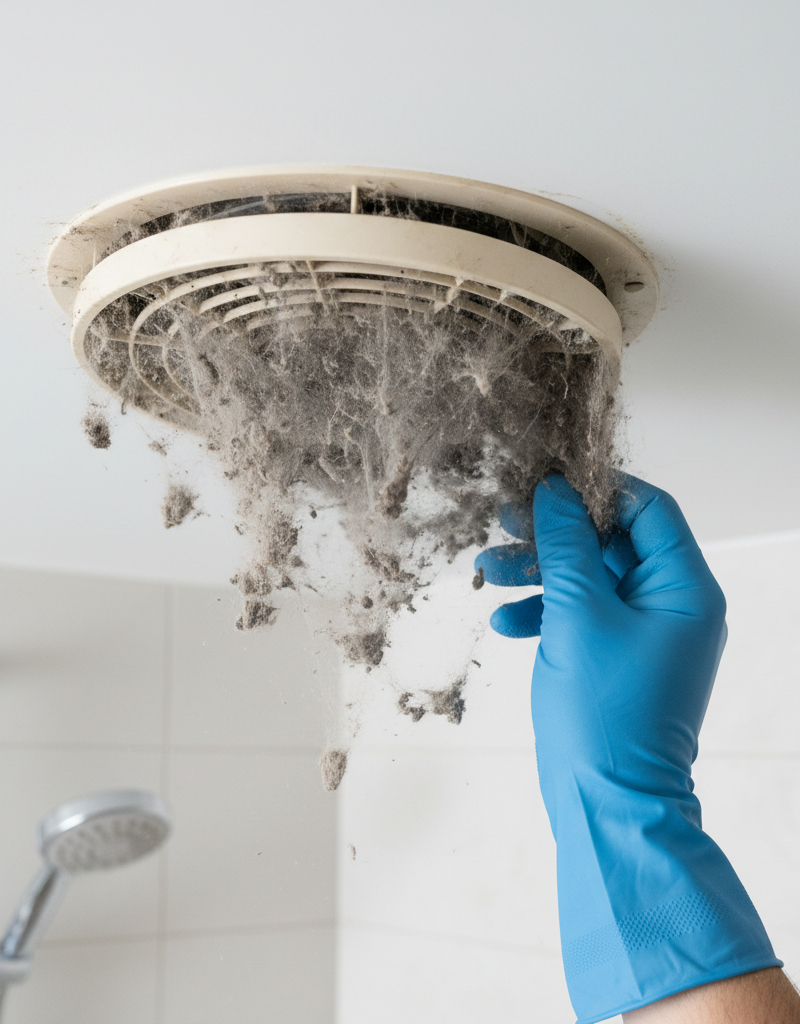
Inspect and Clean the Housing — Back in the bathroom, put on your dust mask and safety glasses. Use a shop vacuum with a crevice tool or brush attachment to suck out all the dust, debris, and potential construction material from inside the fan housing in the ceiling. After vacuuming, wipe the entire interior of the housing with a cloth dampened with the vinegar solution. Look for signs of rust or water stains, which may indicate a roof leak.
-
Inspect the Ductwork Visually — With the housing empty, you can see the start of the exhaust duct. Check that it is securely attached to the housing flange. Look for any obstructions, sagging, or pooling water right at the connection point. If you see a large amount of debris, that’s a sign the duct itself needs cleaning.
-
Check the Exterior Vent Flap — Find where your fan vents to the outside (a vent on the roof or a wall). Make sure the flap moves freely and isn't clogged with lint, leaves, or a bird's nest. A stuck flap traps moisture in the entire system. You can usually clear it by hand or with a small brush from the outside.
-
Reassemble While Dry — Once every component—the grille, the motor assembly, and the wiped-down housing—is completely dry, you can reassemble. Proceed in the reverse order of disassembly: first, reinstall the motor assembly, plugging it back in securely. Then, re-attach the grille by squeezing the spring clips and guiding them back into their slots.
-
Test Your Work — Restore power at the circuit breaker. Turn the fan on. It should run more quietly and the musty smell should be gone. Let it run for 20-30 minutes to fully air out the system.
Common Causes
Understanding the root cause will prevent the smell from returning.
- Mold and Mildew Growth: The number one cause. It flourishes on the dust, lint, and moisture that collects on the fan blades, housing, and in the ductwork.
- Improperly Vented Ductwork: A shockingly common construction shortcut is to have the exhaust fan vent directly into the attic or a wall cavity instead of all the way to the outside. This pumps warm, moist air into a cold, unconditioned space, leading to major mold growth, wood rot, and insulation damage.
- Blocked or Sagging Ducts: A dip or sag in a flexible exhaust duct creates a low point where water condenses and pools. This water trap becomes a permanent swampy mess, breeding mold and blocking airflow.
- Undersized Fan: If your fan's CFM (Cubic Feet per Minute) rating is too low for the size of your bathroom, it can't remove moisture effectively. It runs, but it can't keep up, leaving residual moisture behind after every shower.
- Dirty or Stuck Exterior Vent Flap: If the flap on the outside cap is painted shut, clogged with lint, or blocked by a bird’s nest, the moist air has nowhere to go. It backs up in the duct system, where it condenses.
- Lack of a Damper: Some older or improperly installed fans may lack a backdraft damper at the fan housing or the wall cap. This allows cold, damp air from outside to flow back into the ductwork, causing condensation and musty smells even when the fan is off.
Common Mistakes
Avoid these pitfalls for a successful and safe cleaning.
- Forgetting to Turn Off the Power: This is the most critical safety step. Never work on a fan without first killing the circuit at the breaker.
- Spraying Cleaners into the Motor: This is a quick way to short-out the fan motor and ruin it. Always apply cleaners to a cloth or brush first, and never saturate the motor windings.
- Reinstalling Wet Parts: Reassembling the fan before the grille and motor assembly are bone-dry will just reintroduce moisture into the system and encourage mold to grow back immediately.
- Ignoring the Duct and Exterior Vent: Only cleaning the grille is a cosmetic fix. The real source of the musty smell is almost always deeper in the motor assembly and ductwork. You must clean the entire system.
- Using Bleach: While effective at killing mold, bleach can be corrosive to the metal parts of the fan motor and can damage plastic components over time. A vinegar solution is safer and just as effective for cleaning and deodorizing.
Cost & Time Breakdown
Cleaning is an inexpensive DIY job, but resolving underlying duct issues can be more involved.
| Task | DIY Cost | Pro Cost | Time |
|---|---|---|---|
| Basic Fan & Housing Cleaning | $5 - $15 | $150 - $250 | 1-2 hours |
| Duct Cleaning/Inspection | $20 - $40 (for brushes) | $250 - $450 | 2-3 hours |
| Fan Motor/Unit Replacement | $50 - $200 | $250 - $550 | 2-4 hours |
| Duct Rerouting or Replacement | N/A | $500 - $1,500+ | 4-8+ hours |
Tips & Prevention
Keep the musty smell from coming back with these simple habits.
- Run the Fan Longer: Let the fan run for a full 20-30 minutes after every shower or bath to ensure all residual humidity has been removed from the room and the ductwork.
- Install a Timer or Humidistat Switch: A timer switch is an easy upgrade that lets you set the fan to run for a specific duration and then shut off automatically. A humidistat switch is even better—it automatically turns the fan on when humidity is high and off when the air is dry.
- Perform a Quick Clean Every 6 Months: Pull the grille down and vacuum it and the inside of the housing every six months to prevent the heavy buildup that feeds mold.
- Do an Annual Deep Clean: Perform the full step-by-step cleaning process detailed above once a year to keep the motor, fan blades, and housing pristine.
- Check Your Fan's Power: Ensure your fan is adequately sized. To find your required CFM, multiply the bathroom's square footage by 1.1 (for a standard 8-foot ceiling). For example, a 10-foot by 8-foot bathroom (80 sq ft) needs a fan rated for at least 88 CFM.
- Inspect the Exterior Vent: Twice a year (spring and fall), make sure your exterior vent flap is clean and functional.
When to Call a Professional
While cleaning the fan is a straightforward DIY task, certain situations warrant a call to a professional electrician or HVAC technician.
If the musty smell persists even after a thorough cleaning of the fan unit and housing, the problem likely lies deeper within the ductwork. You should call a pro if you suspect the duct is disconnected, crushed, or terminated inside your attic. An HVAC professional can properly inspect the entire duct run, clean it with specialized tools, repair or replace it, and ensure it is sealed and vented correctly to the outdoors. If your investigation reveals electrical issues, such as a humming motor that won’t spin or a fan that doesn’t work at all after cleaning, an electrician is needed to diagnose the wiring or replace the unit safely. Finally, if you notice water stains on the ceiling around the fan, this could indicate a roof leak, which requires a professional roofer to address the primary issue before you fix the fan.
Safety Note: Never attempt dangerous DIY projects. For issues involving main electrical service panels, gas lines, or main plumbing stacks, always hire a licensed professional.
Related Articles
Keep troubleshooting with these hand-picked guides from FixlyGuide:
- Your Windows Are Crying? The Hidden Cause of Condensation — Window condensation isn't just a harmless annoyance; it's a clear signal that your home's indoor humidity is too high, potentially leading…
- The Tiny Gap That Destroys Your Bathtub's Structure (and How to Seal It) — Recaulking your bathtub correctly is crucial to prevent water damage, mold growth, and structural issues in your bathroom.
- Your shower sucks? 3 hidden culprits explained. — Low water pressure throughout your house often points to a few common culprits, from a partially closed main shut-off valve to issues with…
- The 3 Hidden Reasons Your LED Bulbs Die Early (And the Simple Fixes) — LED bulbs promise long life, but often fail prematurely due to hidden electrical issues or incompatible fixtures. Learn the real culprits.
- Your Windows Are Crying. Here's What They're Telling You. — Window condensation is more than an annoying fog; it's a clear sign that your home's indoor humidity is too high, a problem that can lead t…
- Bathroom fan smell? 3 hidden culprits for mold & moisture — A musty smell from your bathroom fan often signals trapped moisture and mold growth in the fan housing or ductwork, a fixable issue that ha…
What should this project cost?
Enter your project details for a realistic cost range before you call anyone.
Mid-range remodels commonly $12,000–$22,000; small repairs often under $600.
- Regional adjustment
- National average
- Labor share (typical)
- ~$5,603
- Quotes to collect
- 3 written estimates
Educational estimate based on national averages — not a binding quote. Always confirm with written local estimates.
Get the print-ready PDF of this guide
A clean, ad-free, printable version you can keep on your phone or pin to the workshop wall. Free with a FixlyGuide account.
- Print-optimized layout
- Tools, materials & every step included
- Saved to your account
Recommended for DIYers & woodworkers
Sponsored
The Top 20 Tools for Workshops of Any Budget
No stationary machines or power tools required — plus 3 fundamental tools that can't be bought at any price.
Get the free guide
Ted's Woodworking — The #1 Woodworking Resource
Detailed instructions, dimensioned drawings, materials & cutting lists, and 3D schematics for every skill level.
See the plansSponsored: links above are affiliate links. FixlyGuide may earn a commission on qualifying purchases — at no extra cost to you.
Frequently asked questions
Can a smelly bathroom fan make you sick?+
Yes, if the smell is from mold, the fan can distribute mold spores into the air. This can trigger allergic reactions, aggravate asthma, and cause respiratory irritation, especially in sensitive individuals.
How often should I clean my bathroom fan?+
You should do a quick cleaning of the fan grille every 6 months to prevent dust buildup. A complete deep cleaning of the motor, fan blades, and housing should be done at least once a year.
What is the best cleaner for a bathroom fan?+
A simple and effective cleaner is a 50/50 solution of white vinegar and water. It is excellent for cutting through grime, neutralizing odors, and killing mold and mildew without using harsh chemicals that could damage the fan.
Why does my bathroom fan still smell after I cleaned it?+
If the smell persists after a thorough cleaning of the fan unit, the problem is likely in the ductwork. The duct may have a low spot that traps water or it may be venting into the attic. In this case, it is best to call a professional for an inspection.

Discussion
Loading comments…