
- Daily Living Activities: The average family of four releases several gallons of water vapor into the air each day through breathing, cooking, showering, and washing clothes.
- Airtight Construction: Modern, energy-efficient homes are built to be very airtight to prevent drafts. A side effect is that they also trap moisture inside, making mechanical ventilation essential.
- Poor Ventilation: Inadequate or unused kitchen and bathroom exhaust fans are a primary culprit for high indoor humidity.
- Cold Outdoor Temperatures: The colder it is outside, the colder your window glass becomes, and the lower your indoor humidity needs to be to prevent condensation.
- Basement or Crawlspace Issues: A damp, musty basement or a dirt-floor crawlspace with no vapor barrier will constantly evaporate moisture that rises up into the main living areas of the house.
General remodeling · Renovation planning
| Project category | General remodeling |
|---|---|
| Problem type | Renovation planning |
| Trade required | General contracting |
| Urgency | Planned project |
| Safety risk | Low safety risk |
| DIY suitability | Pro recommended |
| Cost category | Major investment |
| Typical timeline | Design and permitting often 2–4 months before work starts |
| Contractor type | General contractor |
Repair option
Phase the work and fix the building envelope first.
Replacement option
Full renovation with permits, design, and a general contractor.
Common causes
- Space no longer fits how the household lives
- Resale preparation
- Deferred maintenance stacking up
Relevant tools:project cost estimatorcompare quoteshome improvement material prices
Published April 24, 2026Last updated August 17, 2026
Tools & materials you'll need
Affiliate linksAs an Amazon Associate FixlyGuide earns from qualifying purchases — at no extra cost to you. Prices and availability are accurate as of publication and subject to change.
The Problem
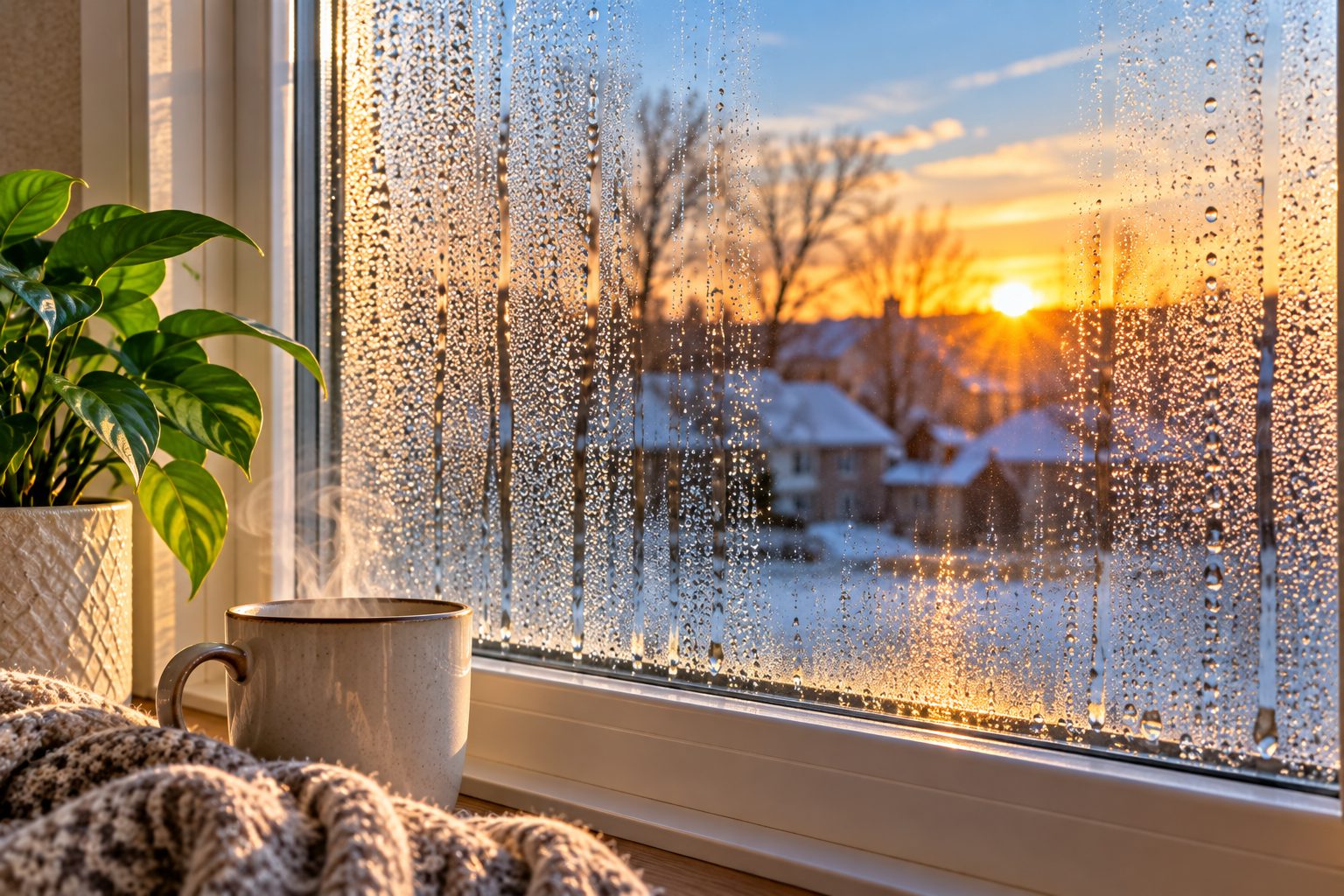
You see it on a cold morning: your windows look like they’re "sweating," covered in a fog of moisture, with small puddles of water gathering on the sill. This is interior window condensation, and while a little bit might seem harmless, it’s your home’s primary way of telling you that there’s too much moisture in the air.
Ignoring persistent window condensation is a mistake. That water pooling on the sill can seep into wooden frames, causing the paint to peel and the wood to swell and rot over time. It can damage the drywall or plaster around the window, leading to stains and structural decay. Most importantly, this consistent dampness creates the perfect breeding ground for mold and mildew. Black mold can grow unseen on the inside of your walls or on the window frames, releasing spores into the air that can impact your home's air quality and potentially affect your family's health. The issue is often more pronounced on older, single-pane windows which get much colder, but it can happen on modern double-pane windows, too. If your windows are frequently "crying," it's a clear signal that you need to investigate the balance of humidity and ventilation in your home.
How It Works
To understand why your windows are sweating, you need to understand a key scientific concept: the dew point. Air is not just empty space; it contains a variable amount of invisible water vapor. The amount of vapor it can hold is directly related to its temperature—warmer air can hold significantly more moisture than colder air. "Relative Humidity" (RH) is the measure of how much water vapor is currently in the air, expressed as a percentage of the maximum amount it could hold at that temperature.
Here’s the crucial part: When this warm, moisture-laden air comes into contact with a surface that is cooler than the air itself, the air next to that surface cools down rapidly. As it cools, its ability to hold water vapor drops. If it cools to a specific temperature called the "dew point," the air becomes 100% saturated. Any further cooling forces the air to shed its excess moisture, which then condenses into liquid water on that cold surface.
Your window glass is almost always the coldest surface inside your home during the winter. It’s the primary barrier between your heated interior and the freezing temperatures outside. So, when your home’s internal relative humidity is high, the warm, moist air touches the cold glass, instantly cools below its dew point, and—voilà—condensation forms. It’s the exact same principle you see when a cold can of soda "sweats" on a hot summer day. It isn't leaking; it's just condensing moisture from the surrounding air.
Step-by-Step Fix
1. Get Your Baseline — Before you can manage your humidity, you need to measure it. Purchase an inexpensive digital hygrometer. Place it in a central area of your home, away from bathrooms or the kitchen, to get an accurate average reading of your home's relative humidity (RH). For most homes, the ideal RH is between 30% and 50% in the winter. If your reading is consistently above 50%, you have a humidity problem to solve.
2. Use Your Exhaust Fans — The two biggest sources of short-term humidity are cooking and showering. Make it a strict rule to run your kitchen range hood fan every time you cook, and run your bathroom exhaust fan during every shower and for at least 20-30 minutes afterward. A "humidity sensing" fan that turns on and off automatically is an excellent upgrade.
3. Improve Air Circulation — Stagnant air allows pockets of high humidity to build up near windows. Turn your ceiling fans on a low, clockwise setting during the winter. This gently pushes warmer air that collects near the ceiling back down into the living space, helping to keep surfaces (including window glass) warmer and distribute moisture more evenly.
4. Ventilate Strategically — Even in the cold, you need to introduce fresh, dry air. On a dry, less frigid day, open a few windows on opposite sides of the house for just 15-20 minutes. This "purge ventilation" allows a significant amount of moist indoor air to escape and be replaced by drier outdoor air without losing too much heat.
5. Uncover Your Windows — Heavy curtains and blinds are great for privacy and insulation, but they also trap a pocket of cold, stagnant air against the window glass. During the day, open your blinds and curtains fully. This allows the warm air from your heating system to circulate freely over the glass, raising its surface temperature and making it harder for condensation to form.
6. Deploy a Dehumidifier — If your humidity levels are stubbornly high (above 50%), a dehumidifier is your most powerful tool. For a widespread issue, a large portable unit (rated for 50-70 pints) placed in a central location is effective. For persistent basement dampness contributing to whole-home humidity, a dedicated basement dehumidifier is essential.
7. Check Your Dryer Vent — A clogged or disconnected clothes dryer vent is a massive source of indoor moisture. Inspect the flexible duct behind your dryer to ensure it’s securely connected and not torn. Then, go outside while the dryer is running and make sure the exterior vent flap is opening and that there is a strong flow of warm, moist air being expelled.
8. Relocate Houseplants — Houseplants release moisture into the air through a process called transpiration. If you have a large collection of plants clustered together on a windowsill, you could be creating a localized zone of very high humidity. Try spacing them out or moving them away from windows that experience heavy condensation.
9. Adjust Your Humidifier — If you have a furnace-mounted whole-house humidifier, it may be set too high for the current outdoor temperature. Colder weather requires a lower humidity setting to prevent condensation. Consult your owner's manual, but a general rule is to set it around 40% when it's 20-40°F outside, and down to 30-35% when it drops below 20°F.
10. Clean Up Standing Water — Don't let the condensation that does form sit there. Use a squeegee or microfiber cloths to wipe the windows and sills dry every morning. This is your last line of defense against water damage and mold growth while you work on solving the root humidity issue.
Common Causes
- Daily Living Activities: The average family of four releases several gallons of water vapor into the air each day through breathing, cooking, showering, and washing clothes.
- Airtight Construction: Modern, energy-efficient homes are built to be very airtight to prevent drafts. A side effect is that they also trap moisture inside, making mechanical ventilation essential.
- Poor Ventilation: Inadequate or unused kitchen and bathroom exhaust fans are a primary culprit for high indoor humidity.
- Cold Outdoor Temperatures: The colder it is outside, the colder your window glass becomes, and the lower your indoor humidity needs to be to prevent condensation.
- Basement or Crawlspace Issues: A damp, musty basement or a dirt-floor crawlspace with no vapor barrier will constantly evaporate moisture that rises up into the main living areas of the house.
- New Construction or Remodeling: Freshly poured concrete, new lumber, and drywall compound all release a significant amount of moisture into the air as they cure, a process that can take months.
- Unvented Appliances: Using unvented gas or kerosene space heaters can pump large amounts of water vapor into the air as a byproduct of combustion.
Common Mistakes
- Ignoring the Problem: Thinking window sweat is normal and harmless is the biggest mistake. It's a clear warning sign of a moisture imbalance that can cause expensive damage.
- Blaming the Windows: While old, inefficient windows make condensation more likely, the root cause is almost always excess humidity, not faulty windows. Replacing windows without addressing humidity may not solve the problem.
- Blocking Airflow: Keeping heavy drapes closed all winter traps cold air against the glass, guaranteeing condensation. You must let warm air circulate over the window.
- Running a Humidifier Excessively: Adding moisture to the air with a humidifier when the air is already too damp will only make the condensation problem worse.
- Wiping Up Water but Not Solving the Cause: Cleaning the windows is necessary, but it's a temporary fix. If you aren't taking steps to reduce humidity, the condensation will just return tomorrow.
- Sealing a House Too Tightly: While sealing air leaks is good for energy efficiency, a house needs to breathe. Without a balanced ventilation strategy (exhaust fans, ERV/HRV), you can create an unhealthy, high-humidity environment.
Cost & Time Breakdown
| Task | DIY Cost | Pro Cost | Time Estimate |
|---|---|---|---|
| Humidity Monitoring (Hygrometer) | $10 - $30 | N/A | 5 minutes to set up |
| Using Existing Fans & Vents | Minimal electricity cost | N/A | Ongoing daily habit |
| Purchasing a Portable Dehumidifier | $150 - $400 | N/A | 10 minutes to unbox & run |
| Bathroom Fan Replacement/Upgrade | $100 - $300 (unit + supplies) | $400 - $800 | 2-4 hours |
| Window Weather-Stripping & Caulking | $20 - $50 | $150 - $400 | 1-3 hours |
| Whole-House ERV/HRV Installation | Not a DIY project | $2,500 - $5,000+ | 1-2 days |
Tips & Prevention
- Target the Right Humidity: Your goal is a wintertime relative humidity between 30% and 50%. You may need to be closer to 30% during deep freezes to prevent any condensation from forming.
- Keep Air Moving: Even when you're not actively heating, keep your furnace’s fan set to "On" or "Circulate" to help even out temperature and humidity throughout the home.
- Check Foundation Grading: Ensure the soil around your foundation slopes away from the house so that rainwater and melting snow don't saturate the ground around your basement walls.
- Cover Your Sump Pump: If you have an open sump pit in your basement, it’s a constant source of evaporation. Get a sealed, airtight cover for it.
- Space Out Your Firewood: Don't store large amounts of firewood inside your home; freshly cut wood can hold a surprising amount of moisture.
- Delay Your Projects: Avoid major interior painting or drywall projects during the coldest, dampest parts of winter if possible, as these activities release a lot of moisture.
When to Call a Professional
While most interior condensation is a DIY-solvable humidity issue, there are specific situations where you absolutely need a professional. The most critical one is condensation between the panes of a double- or triple-pane window. This means the insulating seal has failed, the inert gas has escaped, and moist air has been drawn inside the unit. This cannot be repaired; the sealed glass unit (called an IGU or Insulated Glass Unit) or the entire window must be replaced by a window professional.
Additionally, if you have tried all the humidity-reducing steps and still have persistently high readings and wet windows, it’s time to call for help. An HVAC professional can perform a comprehensive assessment of your home’s ventilation system and may recommend a whole-home solution like a Heat Recovery Ventilator (HRV) or Energy Recovery Ventilator (ERV). These systems provide a continuous supply of fresh, filtered air while retaining most of your home's heat. If you suspect a hidden water leak or major foundation moisture problem is the cause, a home inspector or water intrusion specialist can use tools like thermal cameras to find the source of the problem.
Related Articles
Keep troubleshooting with these hand-picked guides from FixlyGuide:
- Your Windows Are Crying? The Hidden Cause of Condensation — Window condensation isn't just a harmless annoyance; it's a clear signal that your home's indoor humidity is too high, potentially leading…
- Is your home's humidity secretly rotting your windows? — Discover why your windows are collecting condensation on the inside—a sign that your home's indoor humidity is too high, potentially leadin…
- The 7 Fall Chores Most Homeowners SKIP (And Why They'll Cost You Thousands) — Don't let autumn's beauty distract you from these critical home maintenance tasks that can prevent costly damage and ensure a cozy winter.
- The $30 Secret to Banishing Ice Dams Without Damaging Your Roof — Discover how a simple, inexpensive trick can safely eliminate dangerous ice dams from your roof and prevent costly damage to your home.
- That Musty Smell From Your Fan? It's Not Just Dust — A musty smell from your bathroom fan is a major red flag for hidden mold and mildew growth in the fan housing or ductwork, often caused by…
- Why Your House is Humid Despite AC & How to Fix It — Even with your AC running, high indoor humidity can make your home uncomfortable. Often, common issues like oversized units or clogged filt…
What should this project cost?
Enter your project details for a realistic cost range before you call anyone.
Per-window replacement commonly $450–$1,400 installed; hardware repairs often under $300.
- Regional adjustment
- National average
- Labor share (typical)
- ~$281
- Quotes to collect
- 3 written estimates
Educational estimate based on national averages — not a binding quote. Always confirm with written local estimates.
Recommended for DIYers & woodworkers
Sponsored
The Top 20 Tools for Workshops of Any Budget
No stationary machines or power tools required — plus 3 fundamental tools that can't be bought at any price.
Get the free guide
Ted's Woodworking — The #1 Woodworking Resource
Detailed instructions, dimensioned drawings, materials & cutting lists, and 3D schematics for every skill level.
See the plansSponsored: links above are affiliate links. FixlyGuide may earn a commission on qualifying purchases — at no extra cost to you.
Frequently asked questions
Is a little bit of condensation on my windows normal?+
Yes, a small amount of fogging or a few droplets on windows during a very cold morning is often normal and will usually disappear as the day warms up. However, if the windows are heavily fogged, water is pooling on the sill, or condensation is present throughout the day, it indicates an excess humidity problem that needs to be addressed.
Will buying new windows solve my condensation problem?+
Not always. New, high-performance windows have a warmer interior glass surface, which reduces the likelihood of condensation. However, if your home's indoor humidity is extremely high, even the best windows can still sweat. New windows help, but the root cause—excess humidity—must be solved first.
What's the difference: condensation inside vs. between the panes?+
This is a critical distinction. Condensation on the *inside* surface (the side you can touch) is a humidity problem within your house. Condensation that has formed *between* the two panes of glass is a sign that the window's airtight seal has failed. This cannot be fixed and means the insulated glass unit or the entire window needs to be replaced by a professional.
Does window condensation mean I have mold?+
Not necessarily, but it is a major risk factor. The persistent moisture from condensation creates the ideal conditions for mold and mildew to grow on window frames, sills, and even inside the adjacent walls. If you have chronic condensation, you should carefully inspect these areas for any signs of mold.

Discussion
Loading comments…