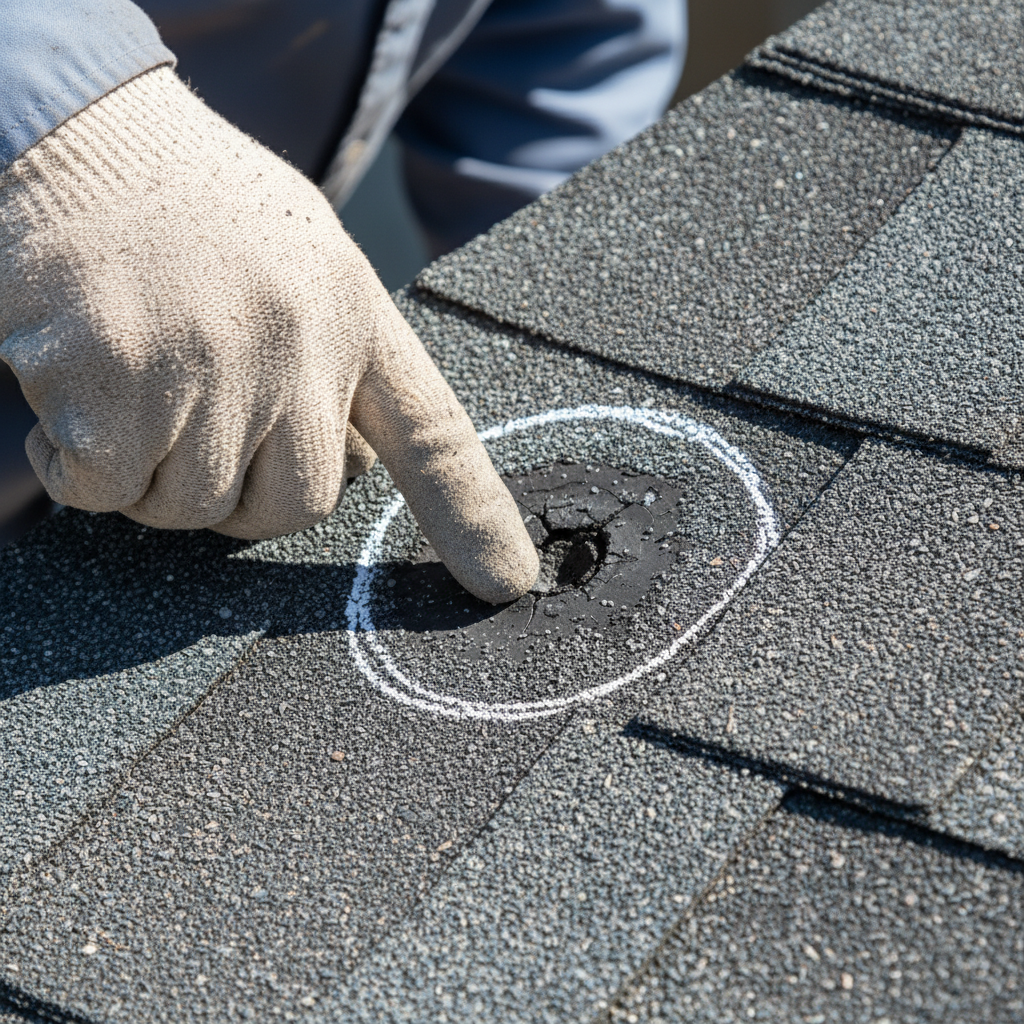
- Blistering: Small, pimple-like bubbles that form on shingles due to manufacturing moisture being baked in the Texas sun. These are not hail bruises.
- Mechanical Damage: Scuffs, tears, or straight-line marks caused by foot traffic, dragging ladders, or tools from a previous repair or installation.
- Age-Related Wear: Uniform, gradual granule loss across the entire roof, especially in waterways, is simply your roof getting old, not storm damage.
- Improper Installation: "High nails" that have popped through the shingle can be mistaken for impacts. An adjuster will check the nailing pattern.
- Manufacturing Defects: Issues like thermal cracking or widespread adhesive failure are the manufacturer’s responsibility, not your insurer's.
Roofing · Hail damage
| Project category | Roofing |
|---|---|
| Problem type | Hail damage |
| Trade required | Roofing |
| Urgency | Urgent — within days |
| Safety risk | Moderate safety risk |
| DIY suitability | Licensed pro only |
| Cost category | High cost |
| Typical timeline | Inspection within days; claim and build often several weeks |
| Contractor type | Licensed roofing contractor |
Repair option
Spot repair for isolated slopes with limited impact marks.
Replacement option
Insurance-scope replacement when impacts exceed the carrier threshold per square.
Common causes
- Impact bruising that knocked granules loose
- Cracked mat under the surface, not visible from the ground
- Damaged soft metals: vents, gutters, flashing
Relevant tools:repair or replace roofcompare quotes
Published June 12, 2026Last updated August 17, 2026
Tools & materials you'll need
Affiliate links- AmazonSidewalk Chalk
As an Amazon Associate FixlyGuide earns from qualifying purchases — at no extra cost to you. Prices and availability are accurate as of publication and subject to change.
'''
Quick Answer
Insurance adjusters in Frisco use a systematic checklist to validate hail damage, focusing on "test squares" on all four slopes of your roof. They photograph and measure hail bruises on shingles, dents in soft metals like gutters and vents, and check for collateral damage to AC fins and window beads to build a case for a full roof replacement under your policy.
The Problem
Another spring storm has just rolled through Collin County, leaving a trail of quarter-sized hailstones across Frisco. Your phone buzzes with alerts and your neighbors are already having roofing trucks pull up. You look at your roof and don't see any obvious holes, but a nagging uncertainty sets in. Is there damage? Is it enough for an insurance claim? If you call your insurer, will the claim be denied, potentially raising your rates for nothing? This is the core problem for thousands of North Texas homeowners: the stressful gray area between a passing storm and a $20,000 roof replacement. You know damage might be there, but you don't know how to prove it. Worse, you suspect the insurance adjuster who comes to your home has a specific, methodical way of evaluating the roof—a checklist designed to protect their employer's interests. You’re right. They do. And not knowing that checklist puts you at a significant disadvantage.
How It Works
An adjuster's inspection isn't arbitrary; it's a process of scientific validation designed to justify a payout under the terms of your policy. The entire process hinges on identifying and quantifying functional damage to the roofing system, not just cosmetic issues.
First, consider the material science of a modern architectural shingle. It has three key layers: a fiberglass mat for structure, a layer of asphalt for waterproofing, and a top layer of ceramic granules for UV protection and color. Hail doesn't just dent a shingle; it violently slams these granules, fracturing them and forcibly displacing them, exposing the soft asphalt beneath. This "bruise" feels soft or spongy to the touch. Once the black asphalt is exposed, Frisco's brutal 100°F+ summer sun goes to work, baking and shrinking the material. Over the next 12-24 months, this UV degradation causes the shingle to crack, allowing water to penetrate the mat and reach your roof decking. A hail-damaged roof is a slow-motion leak in the making.
This is what the adjuster is trained to find. Their primary tool is the 10-foot by 10-foot "test square." An adjuster will mark out a square of this size on each of the four primary slopes of your roof (North, South, East, West), because hail is wind-driven and rarely damages all slopes equally. Within this specific 100-square-foot area, they hunt for a minimum number of verifiable hail impacts—typically 8 to 10 bruises. If they can document this threshold of damage on multiple slopes, it proves the damage is widespread and not isolated, justifying a full replacement. They systematically chalk each hit, photograph it, and build a report. Their secondary proof comes from "collateral damage"—dents in softer materials like aluminum gutters, roof vents, and window beading, which prove that hail of sufficient size and density fell on your specific property.
Step-by-Step Fix: Your Adjuster-Style Inspection Checklist
You can perform the same basic assessment the pros do. This checklist helps you determine if you have enough evidence to confidently file a claim.
-
Safety First & Gear Up — Never get on a roof that is wet, excessively steep (a 6:12 pitch or greater), or during high winds. If you have a two-story home, leave the high-up work to a professional. Wear soft-soled, high-grip shoes, and ensure your ladder is stable and extended three feet above the roofline. Have a spotter on the ground.
-
Establish the Date of Loss — The first thing an adjuster does is confirm the storm date. This is the official "date of loss" for your claim. Use a weather app or website to pinpoint the exact date and time a significant hail event occurred over your Frisco address.
-
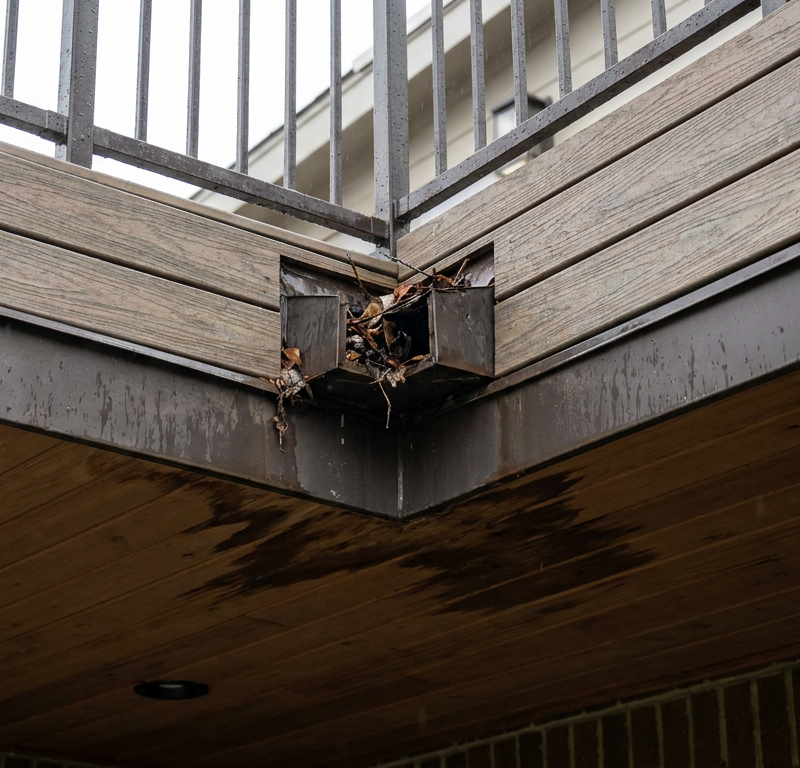
Check the "Soft Stuff" First (Collateral Damage) — Before even getting on the ladder, walk your property. Look for small, distinct dents on your gutter downspouts, the fins of your air conditioner unit, window screens or metal window beading, and any metal fascia wrap. These are the easiest signs of hail to spot and are powerful corroborating evidence. Photograph any dents you find, using a coin for scale.
-
Divide Your Roof Into Four Quadrants — Mentally (or with chalk), divide your roof into four distinct slopes: front, back, left, and right. The slope that faced the oncoming storm will almost always have the most damage. This is why a simple ground inspection isn't enough.
-
Mark a 10'x10' "Test Square" on Each Slope — Pick a representative spot on each of the four slopes. Use a tape measure and sidewalk chalk to mark out a 10-foot by 10-foot square. This is your inspection area, the exact method used by adjusters to create a consistent, repeatable analysis.
-
Scan for Circles: Identify Potential Hail Bruises — Scan the shingles inside your test square. You are looking for circular spots where the colored granules have been knocked away, exposing the black asphalt mat beneath. A true hail hit will feel soft or bruised when you press on it, like a bruise on an apple. This distinguishes it from manufacturing defects or harmless "blisters," which are typically harder.
-
Count the Hits Inside Each Test Square — With your chalk, circle every legitimate bruise you find within the square. Now, count them. Is the count over 8? If you are finding 8, 10, or 12+ hits in a single square, you have found significant damage. Repeat for all four slopes. A high count on two or more slopes is the smoking gun for a total roof replacement claim.
-
Photograph Everything with Scale and Context — Take photos of the entire test square showing all your chalk marks. Then, take close-up photos of individual bruises, placing a quarter or a small ruler next to the impact for scale. These photos are your proof.
-
Inspect All Penetrations and Flashings — Hail loves to damage soft metals. Carefully inspect the lead pipe jack covers (plumbing vents), aluminum turbine vents, and any other metal vents on your roof. Dents here are powerful evidence. Also check the step flashing along walls and ridge vents.
-
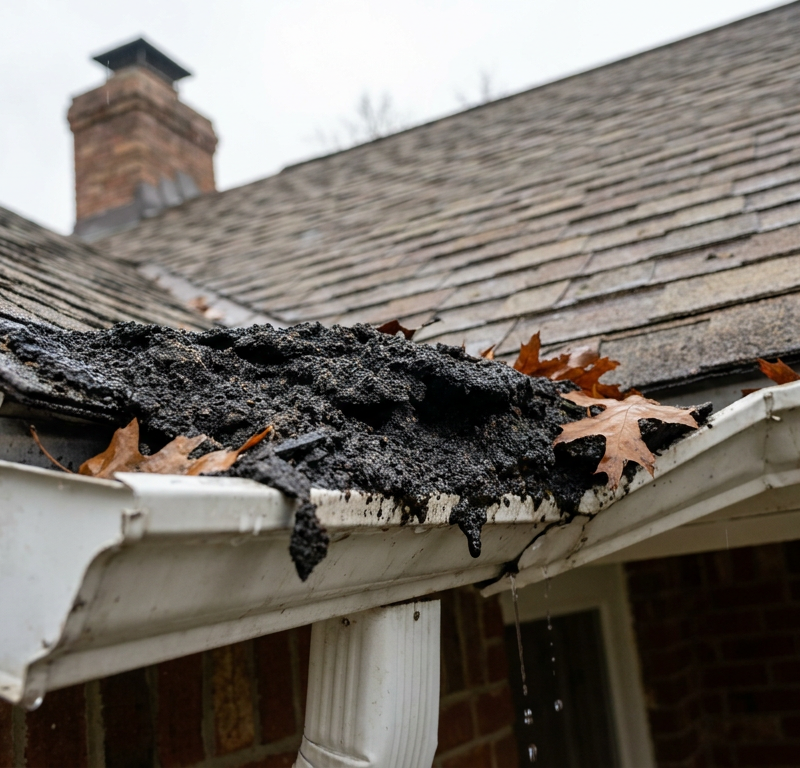
Assess the Gutter System for Granule Loss — Look inside your gutters. Are they filled with black, sand-like material? These are the ceramic granules from your shingles. A heavy accumulation of granules post-storm is a clear sign your roof’s protective layer took a severe beating and has suffered accelerated aging.
Common Causes of Claim Denial
Adjusters are also trained to spot damage that isn't from hail. Identifying these can lead to a denied claim:
- Blistering: Small, pimple-like bubbles that form on shingles due to manufacturing moisture being baked in the Texas sun. These are not hail bruises.
- Mechanical Damage: Scuffs, tears, or straight-line marks caused by foot traffic, dragging ladders, or tools from a previous repair or installation.
- Age-Related Wear: Uniform, gradual granule loss across the entire roof, especially in waterways, is simply your roof getting old, not storm damage.
- Improper Installation: "High nails" that have popped through the shingle can be mistaken for impacts. An adjuster will check the nailing pattern.
- Manufacturing Defects: Issues like thermal cracking or widespread adhesive failure are the manufacturer’s responsibility, not your insurer's.
Common Homeowner Mistakes
- Calling Insurance First: Calling your agent before a roofer inspects is risky. If damage is minimal, you log a "zero-dollar" claim that can still impact your rates. Always get a trusted roofer’s assessment first.
- Not Understanding Your Policy: You must know your deductible and whether you have a Replacement Cost Value (RCV) or Actual Cash Value (ACV) policy. ACV policies pay you for the depreciated value of your old roof, leaving you to cover the rest.
- Accepting the First Offer: The adjuster's initial summary is an offer, not a final decree. It often misses key components (code-required upgrades like drip edge, ice & water shield, proper ventilation) that a good roofer can add back in via a "supplement."
- Waiting Too Long: In Texas, you generally have one year from the date of loss to file a homeowners insurance claim. Don't wait.
Cost & Time Breakdown
This table outlines the costs and time for the inspection and potential follow-up actions in the Frisco area.
| Task | DIY Cost | Pro Cost | Time |
|---|---|---|---|
| Initial Ground & Gutter Inspection | $0 | $0 (included in roofer inspection) | 30-60 minutes |
| Full Roof & Attic Inspection | $50 (safety gear) | Free (from most DFW roofing contractors) | 1-2 hours |
| Professional Inspection Report w/ Photos | N/A | $150 - $400 (for an independent report) | 2-3 hours |
| Emergency Tarping (for active leaks) | $100-$200 | $300-$600 | 1-2 hours |
| Meeting with Insurance Adjuster | $0 | $0 (your roofer should do this for you) | 1 hour |
| Full Roof Replacement (Architectural) | N/A | $14,000 - $25,000+ | 1-3 days |
| Full Roof Replacement (Class 4 IR) | N/A | $18,000 - $35,000+ | 1-3 days |
Tips & Prevention
- Invest in Class 4 Shingles: On your next replacement, upgrade to Impact-Resistant (IR) Class 4 shingles. The upfront cost is 10-20% higher, but most Texas insurers provide premium discounts of 20-35%, paying for the upgrade over a few years.
- Get a "Before" Photo Album: Take clear photos of your roof from all angles when it's in good condition. This creates a baseline that makes it easy to spot new storm damage.
- Maintain Proper Attic Ventilation: A hot attic bakes shingles from below, accelerating aging and causing blisters. Ensure your attic meets the 1:300 ventilation ratio (1 sq. ft. of net-free vent area for every 300 sq. ft. of attic floor space) to maximize shingle life.
- Choose Your Roofer Before the Storm: Research and identify a reputable, local DFW roofing company with deep insurance claim experience before you need one. When the storm hits, you'll make one call to a trusted partner, not 10 calls to strangers.
- Document the Hail: If you can do so safely, take pictures of the hailstones next to a coin or ruler. This helps establish the size of the hail that fell.
When to Call a Professional
While this checklist is a powerful tool for an initial assessment, it does not replace the trained eye of a professional. You should call a professional roofer immediately if your roof is a two-story or has a steep pitch (anything over a 6/12 slope). The risk of a fall is not worth it.
More strategically, you should always call a reputable Frisco roofer before you call your insurance company. Let them perform this exact inspection process for you. A good roofer acts as your advocate. They will document the damage, create a detailed report, and then meet the insurance adjuster on your roof. They speak the same language as the adjuster, pointing out damage the adjuster might overlook and ensuring every necessary component is included in the claim. They fight to get items like starter strips, proper flashing, and code-required ventilation included in a supplement, often adding thousands of dollars to the claim to ensure the job is done right. Facing an insurance claim alone is a risk; letting a pro manage the process is your best strategy for a fair outcome. '''
Should you do this yourself?
Answer five quick questions before you start. Safety outranks savings every time.
Your experience with work like this
How high do you have to work?
Does the job involve any of these?
Will it need a permit?
Specialty tools
Free and instant. Educational guidance only — not a quote, inspection, or professional diagnosis.
Questions to ask before you sign
Ask every contractor the same questions and the cheapest bid stops looking cheapest. Check them off as you go — your progress is saved on this device.
Free, no signup. Bring this to every walkthrough so you compare bids on the same terms.
What should this project cost?
Enter your project details for a realistic cost range before you call anyone.
Spot repairs commonly run $400–$1,800; full replacement typically $9,000–$18,000 for an average home.
- Regional adjustment
- National average
- Labor share (typical)
- ~$2,948
- Quotes to collect
- 3 written estimates
Educational estimate based on national averages — not a binding quote. Always confirm with written local estimates.
Fixly Project Decision Box
- DIY difficulty
- Professional Recommended
- Estimated time
- Inspection 1–2 hours · repairs 1–3 days
- Cost level
- High
Main tools / materials
- Binoculars for a ground-level look
- Flashlight for attic checks
- Moisture meter
- Roofing cement (temporary patch only)
When to stop and call a pro
- Active leak near lights, fans, or any wiring
- Sagging, bulging, or water-filled ceiling
- Steep, wet, or two-story roof — do not climb it
- Storm or hail damage you plan to claim on insurance
Need professional help?
Free roof assessment first — no phone calls until you ask for them.
Get Local Roofing HelpGet help with your roof now
Stay off the roof. These free tools help you protect the house and reach the right professional fast.
- Emergency repair checklistThe first steps that limit damage before a pro arrives.Open
- Repair or replace your roof?Answer 10 questions about age, leaks, and damage to get a clear next step.Open
- Get local estimatesSend one request and compare written estimates from vetted pros.Open
Free, no signup required. Estimates are educational guidance, not a quote or an inspection.
Get the print-ready PDF of this guide
A clean, ad-free, printable version you can keep on your phone or pin to the workshop wall. Free with a FixlyGuide account.
- Print-optimized layout
- Tools, materials & every step included
- Saved to your account
Frequently asked questions
How many hail hits does it take to get a new roof in Texas?+
There is no single state law, but most insurers in the DFW area look for a minimum of 8-10 verified hail impacts within a 10'x10' test square on multiple slopes of the roof to declare it a total loss. The adjuster must be able to prove the damage is widespread.
Can I get my Frisco roof replaced for just cosmetic damage?+
Unlikely. Insurance policies cover functional damage, not cosmetic. For an asphalt shingle, this means granule loss that compromises its ability to shed water and resist UV rays, or fractures in the shingle mat. Dents in soft metals like gutters and vents, however, are often covered as functional damage.
What is a Class 4 roof and is it worth it in Frisco?+
A Class 4 rating means the shingle has passed the UL 2218 test, withstanding a 2-inch steel ball dropped from 20 feet without fracturing. In Frisco's 'Hail Alley,' it is highly recommended. Many Texas insurers offer significant premium discounts, often 20-35%, for installing a Class 4 roof, which helps offset the higher initial cost.
My insurance claim was denied. Now what?+
Do not panic. You can request a second inspection with a different adjuster. A more effective route is to have a qualified DFW roofer who specializes in insurance claims submit a detailed report, photos, and estimates to your insurer as a supplemental claim. This new evidence forces them to re-evaluate the decision. A public adjuster is also an option.
Discussion
Loading comments…