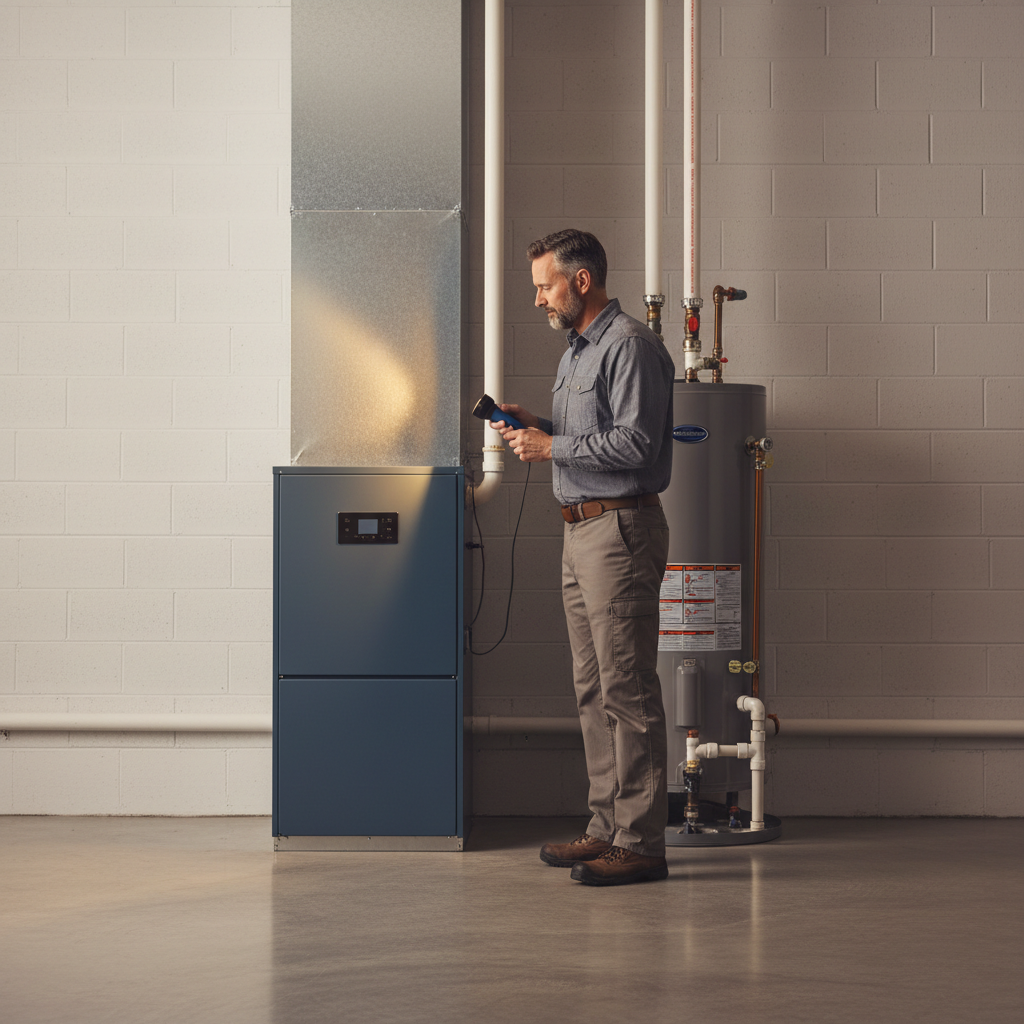
- Check the fan setting. It should be on AUTO, not ON. The ON setting forces the blower to run 24/7, regardless of whether the furnace is generating heat.
- Ensure the system is set to HEAT, not COOL or OFF.
- Raise the temperature setting at least 5°F above the current room temperature to ensure you are actively calling for heat.
HVAC · High energy usage
| Project category | HVAC |
|---|---|
| Problem type | High energy usage |
| Trade required | HVAC |
| Urgency | Planned project |
| Safety risk | Low safety risk |
| DIY suitability | DIY for experienced homeowners |
| Cost category | High cost |
| Typical timeline | Assessment within weeks; replacement planned off-season |
| Contractor type | Licensed HVAC technician |
Repair option
Duct sealing, insulation, and a tune-up before touching the equipment.
Replacement option
High-efficiency replacement sized by a load calculation, not a rule of thumb.
Common causes
- Aging, low-efficiency equipment
- Leaking ducts losing conditioned air
- Insufficient attic insulation
- Oversized system short-cycling
Relevant tools:project cost estimatorrepair or replace
Published April 21, 2026Last updated August 17, 2026
Tools & materials you'll need
Affiliate linksAs an Amazon Associate FixlyGuide earns from qualifying purchases — at no extra cost to you. Prices and availability are accurate as of publication and subject to change.
How it works
A modern gas furnace follows a precise, safety-oriented sequence to produce heat. Understanding this sequence is key to diagnosing why it might fail.
- Call for Heat: The process begins when your thermostat's measured temperature drops below its set point, sending a low-voltage (24V) signal to the furnace's control board.
- Safety Checks & Draft Induction: The control board first confirms that all safety switches are in their normal, closed state. It then energizes the draft inducer motor, a small fan that purges the heat exchanger of any lingering gases and creates a negative pressure. A pressure switch monitors this draft; if it doesn't detect sufficient airflow, the ignition sequence halts. This prevents ignition if the venting is blocked.
- Ignition: Once the pressure switch closes, the control board activates the igniter. On most modern furnaces, this is a hot surface igniter (HSI) made of silicon carbide or nitride, which glows orange-hot (over 2000°F). On older models, it might be a spark igniter.
- Gas Valve and Ignition: After the igniter heats up for a set period (typically 15-45 seconds), the control board opens the gas valve, releasing a carefully metered flow of natural gas or propane to the burners. The hot igniter ignites the gas.
- Flame Sensing: Immediately upon ignition, a flame sensor—a thin metal rod engulfed by the flame—uses a principle called flame rectification to send a tiny microamp signal back to the control board, confirming a stable flame is present. If this signal is not received within a few seconds, the board shuts the gas valve as a critical safety measure.
- Blower Activation: Once the flame is proven, the burners continue to heat the primary heat exchanger. After a timed delay (usually 30-90 seconds) to allow the exchanger to get sufficiently hot, the control board energizes the main blower motor. This fan pulls cool return air from your home, pushes it over the hot heat exchanger, and distributes the warmed air through your ductwork.
The "furnace blowing cold air" problem almost always occurs when this sequence is interrupted after step 6 has begun or after step 5 fails. For instance, if the flame sensor is dirty (Step 5 fails), the gas valve closes but the blower may still complete its cycle, pushing unheated air. Similarly, if a clogged filter causes the furnace to overheat, a high-limit switch will trip, shutting off the burners (interrupting Step 5) while the blower runs on to cool the unit down, again resulting in cold air from your vents.
Step-by-Step Fix
Work through these steps in order, from most common and simplest to more involved. Do not proceed to internal components without first turning off all electrical power to the furnace.
1. Confirm the Thermostat Settings — This is the most common false alarm. A simple setting change can make the furnace blower run continuously, circulating cool air between heating cycles. * Check the fan setting. It should be on AUTO, not ON. The ON setting forces the blower to run 24/7, regardless of whether the furnace is generating heat. * Ensure the system is set to HEAT, not COOL or OFF. * Raise the temperature setting at least 5°F above the current room temperature to ensure you are actively calling for heat.
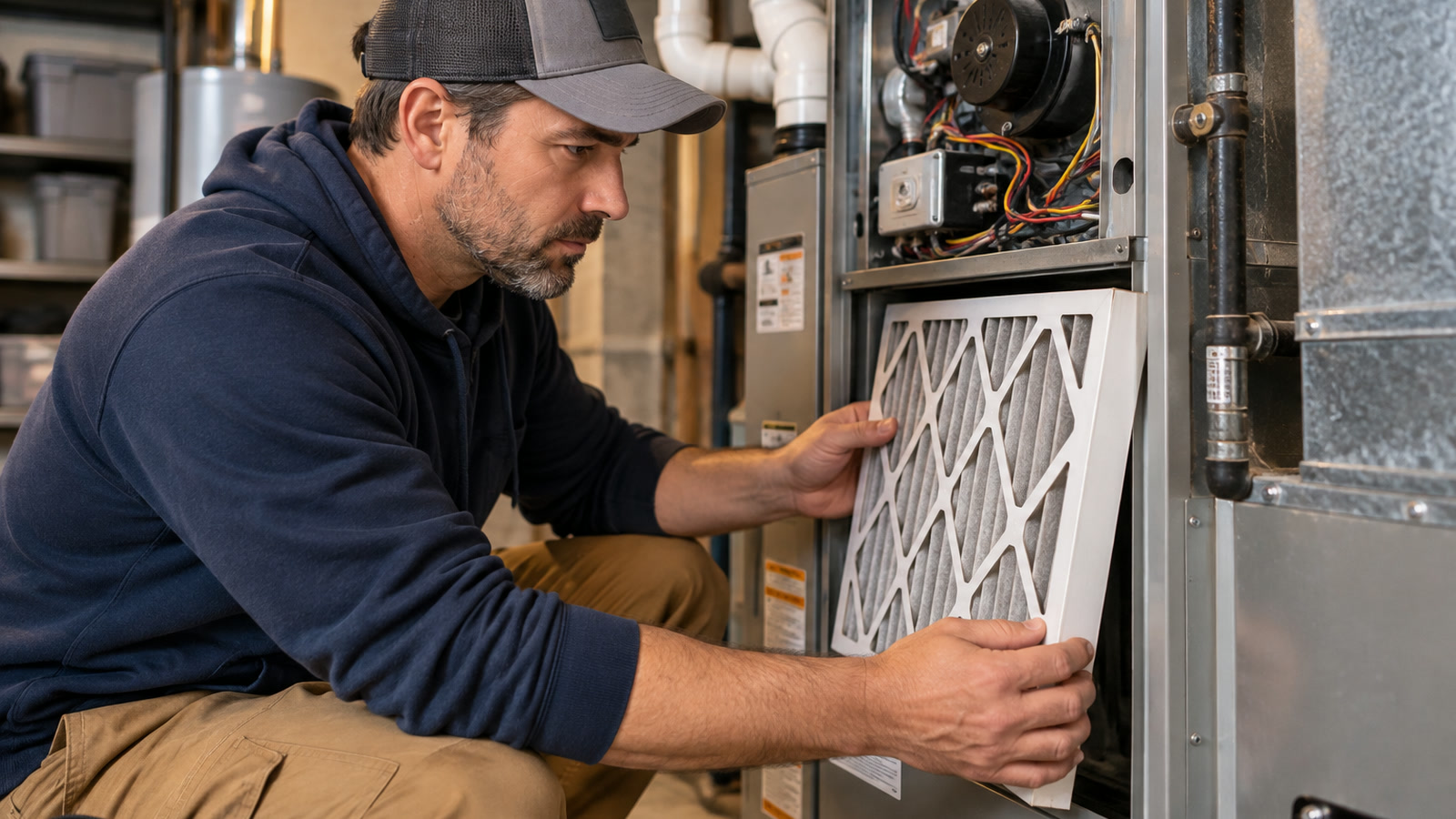
2. Inspect and Replace the Air Filter — A severely clogged air filter is the leading mechanical cause of a furnace blowing cool air. It starves the system of airflow, causing the heat exchanger to rapidly overheat. * Locate the filter compartment, usually a slot between the main return duct and the furnace body. * Slide the old filter out. Hold it up to a light; if you cannot easily see light through it, it is clogged and must be replaced. * Purchase a new filter of the exact same dimensions. Note the MERV rating; for most residential systems, a filter in the MERV 8-11 range provides a good balance of filtration and airflow. * Slide the new filter in, ensuring the arrow printed on the filter's cardboard frame points toward the furnace blower motor. Replacing a filter backward can cause it to collapse and be drawn into the blower.
3. Verify All Power and Fuel Switches — A furnace can't heat if it lacks power for its controls or fuel for its burners. Check every shutoff point. * Electrical Breaker: Find your main electrical panel and locate the breaker labeled "Furnace," "FAU," or "HVAC." Ensure it is firmly in the ON position. If it has tripped, reset it once. If it trips again, there is an electrical fault that requires a professional. * Furnace Power Switch: Look for a standard light switch on or near the furnace unit itself. This is a service switch and must be in the ON position. It is sometimes mistaken for a light switch and turned off accidentally. * Gas Shutoff Valve: On the gas pipe leading into your furnace, you will find a shutoff valve. The handle should be parallel to the pipe, indicating it is open. If the handle is perpendicular, it is closed; turn it to the open position. If you have a propane system, also check the gauge on your outdoor tank to ensure you have fuel.
4. Check the Condensate Drain Line (High-Efficiency Furnaces Only) — If your furnace has white PVC pipes for venting, it is a high-efficiency (90%+) condensing unit. These produce acidic water (condensate) as a byproduct of combustion. * Locate the flexible plastic tubing or PVC pipe that drains from the side or bottom of the furnace. It will lead to a floor drain or a small condensate pump. * If this line becomes clogged with algae or sediment, water backs up into a safety switch, which shuts down the ignition sequence to prevent water damage. * Look for visible water in a clear trap or U-bend near the furnace. Disconnect the tubing at an accessible point (place a bowl underneath to catch water) and use a wet/dry vacuum to suck the line clear from the outbound side. Do not blow high-pressure air into the line towards the furnace, as you can damage internal components.
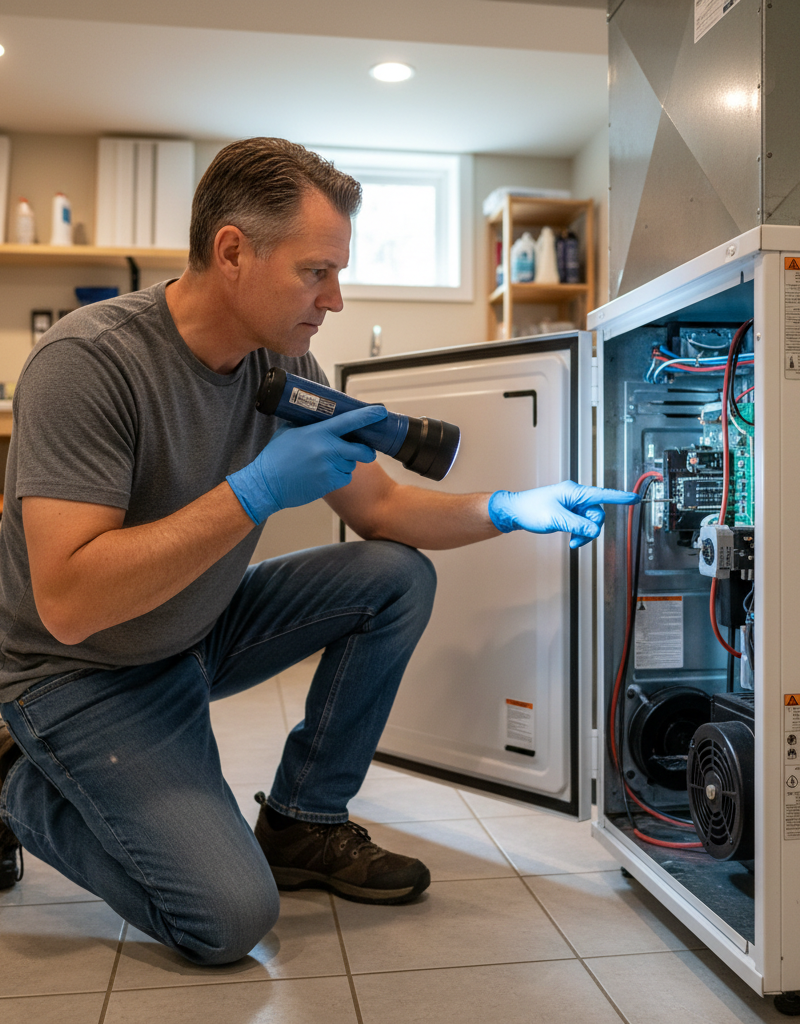
5. Observe the Startup Sequence and Read the Diagnostic Codes — The furnace's own control board is your most powerful diagnostic tool. You must watch what it does and read its error report. * With the furnace panels still on, call for heat from the thermostat. Stand near the furnace and listen and watch. * You should hear the small inducer motor start (a faint humming). After about 30-60 seconds, you might hear a click (the gas valve) and see the burners ignite with a whoosh. * If the burners light for a few seconds and then shut off while the main blower continues to run, you likely have a flame sensor issue (see Step 7). * If the burners never light, find the small observation window on the blower door. You will see a flashing LED light on the control board. The pattern of flashes is an error code. * Remove the furnace's main access panel (turn power off first) to find a sticker on the back of the panel that serves as a legend for these codes (e.g., 3 flashes = Pressure Switch Fault; 4 flashes = High-Limit Open).
6. Address Airflow and Venting Faults — If the diagnostic code indicates a pressure switch or high-limit fault, the issue is airflow. * For a high-limit fault (overheating): You have an airflow restriction. You've already checked the filter. Now, ensure all supply registers and return grilles in your home are open and unobstructed by furniture or rugs. Check the indoor evaporator coil (part of your AC system, located above the furnace) for dirt and debris, as this can also block airflow. * For a pressure switch fault (venting): This means the furnace isn't sensing a proper draft. Go outside and inspect the PVC intake and exhaust terminators. They must be clear of snow, ice, leaves, bird nests, or other debris. Also, check the small rubber hoses connected to the pressure switch itself inside the furnace (power off). Ensure they are not cracked, brittle, or clogged.
7. Clean the Flame Sensor — This is the single most common repair for a furnace that lights for 3-5 seconds and then shuts off the burners. Carbon buildup on the sensor insulates it, preventing it from confirming the flame. * Safety First: Turn off power at the breaker AND the furnace service switch. Shut off the gas at the valve feeding the furnace. * Locate and Remove: The flame sensor is a thin, bent metal rod with a white ceramic base and a single wire attached. It is mounted in the path of the last burner. Use a 1/4-inch nut driver or screwdriver to remove the single screw holding it in place. Gently pull the sensor out of the burner assembly. - Clean Gently: Do not use sandpaper or an abrasive emery cloth. This will scratch the rod and cause carbon to build up even faster. Instead, use a clean, crisp dollar bill (which has a slightly abrasive quality), a piece of fine steel wool (#000), or a light-duty Scotch-Brite pad. Rub the metal rod until it is dull silver and free of white or black residue. * Reinstall: Carefully slide the sensor back into place, secure the screw, and re-attach the wire. Do not overtighten the screw.
8. Reset the System — Once you have performed a fix, you must properly reset the furnace to clear the "lockout" mode and try again. * Ensure all furnace panels are securely back in place. The door safety switch must be fully depressed for the furnace to operate. * Turn the gas valve back to the ON position. * Turn on the electrical power at the breaker and the furnace switch. * Lower the thermostat setting so it is not calling for heat. Wait two minutes. * Raise the thermostat to call for heat and observe the new ignition sequence. If the problem persists, the issue may require professional diagnosis.
Common mistakes
- Replacing the Thermostat First: A furnace blowing cold air is very rarely caused by a faulty thermostat. It is almost always a thermostat setting (Fan ON) or a fault at the furnace unit itself. Don't waste $100 on a new thermostat until you have fully diagnosed the furnace.
- Using Abrasives on the Flame Sensor: Using coarse sandpaper or a wire brush on a flame sensor rod creates microscopic scratches that attract carbon deposits, making the problem return faster. The goal is to polish, not grind. Use fine steel wool or a crisp dollar bill.
- Forgetting to Kill Power: Attempting to remove a flame sensor or touch any component inside the service panel without shutting off the breaker is extremely dangerous. The furnace contains 120V power and a high-voltage transformer for the igniter. Always shut off the breaker.
- Ignoring Diagnostic Codes: The flashing LED on the control board is the furnace telling you exactly what is wrong. Homeowners often jump to a fix they read about online (like cleaning the flame sensor) when the code is flashing a pressure switch error, wasting time and effort. Always start with the code.
- Defeating Safety Switches: Never tape, wedge, or bypass the blower door safety switch to watch the furnace operate with the panel off. This exposes you to a live 120V blower motor and other energized components. The small viewing window is there for this purpose.
- Incorrect Filter Direction: All air filters have an arrow on the frame indicating the direction of airflow. The arrow must point towards the furnace/blower motor. Installing it backward can cause the filter media to tear and be sucked into the blower, causing serious damage.
Cost & time breakdown
This table outlines typical costs and time for addressing common furnace issues. Pro costs can vary significantly by region and contractor.
| Task | DIY Cost | Pro Cost | Time |
|---|---|---|---|
| Thermostat Setting Adjustment | $0 | $100-$150 (trip charge) | 2 minutes |
| Air Filter Replacement | $5-$30 | $100-$175 (includes filter) | 5 minutes |
| Flame Sensor Cleaning | $0-$5 (for steel wool) | $125-$250 | 20 minutes |
| Clearing Condensate Drain | $0 | $125-$275 | 30 minutes |
| Hot Surface Igniter Replacement | $25-$75 (part only) | $200-$400 | 30 minutes (DIY), 1 hour (Pro) |
| Pressure Switch Replacement | $20-$60 (part only) | $175-$350 | 25 minutes (DIY), 1 hour (Pro) |
When to call a pro
While many causes of cold air are DIY-friendly, certain symptoms indicate a problem that requires professional tools and expertise. Call a qualified HVAC technician if you encounter any of the following:
- Persistent Fault Codes: You have correctly identified a fault code (e.g., pressure switch error), checked the obvious causes (clear vents), and reset the system, but the fault immediately returns. This points to a failed component (like the pressure switch itself or the inducer motor) rather than a simple blockage.
- Electrical Humming or Clicking, No Action: You hear the furnace click or hum but the inducer motor or main blower never starts. This could be a failed motor, a bad capacitor, or a faulty control board, all of which require electrical testing to diagnose.
- No Glow from Hot Surface Igniter: If you determine through the startup sequence that the inducer is running but the igniter never glows, the igniter has likely failed. While replacing it can be a DIY job, it's a fragile component, and a professional will ensure the correct part is installed safely.
- Gas Smell: If you smell natural gas or propane near the furnace or in your home, do not try to find the leak. Leave the house immediately, do not operate any light switches or electronics, and call your gas utility's emergency line from a safe distance. Then call an HVAC professional.
- Loud Banging, Scraping, or Squealing: These noises indicate severe mechanical failure, such as a broken blower wheel or failing motor bearings. Shut the system down at the breaker to prevent further damage and call for service.
Prevention & maintenance
Consistent maintenance is the best way to prevent unexpected furnace failures on the coldest night of the year.
- Change Your Air Filter Religiously: This is the single most important maintenance task. Check 1-inch filters monthly during heavy use and replace them at least every 90 days. Thicker 4- to 5-inch media filters should be replaced every 6 to 12 months.
- Schedule Annual Professional Tune-Ups: Once a year, before heating season begins, have a technician perform a full inspection. They will check gas pressure, test safety switches, inspect the heat exchanger for cracks, clean the burners, and measure combustion efficiency—tasks that are beyond the scope of DIY.
- Keep the Furnace Area Clear: Do not store anything combustible near the furnace. Ensure there is at least 30 inches of clearance on all sides to provide adequate combustion air and service access. Never block the furnace's fresh air intake vents.
- Maintain Your Vents: Regularly inspect your outdoor PVC vent pipes (high-efficiency furnaces) to ensure they are free of debris, snow, and ice. Inside, keep at least 75% of your home's supply registers open at all times to ensure balanced airflow.
- Test Carbon Monoxide Detectors: Test your CO detectors monthly and replace the batteries every six months when you change your clocks. CO detectors have a limited lifespan; replace the entire unit every 7-10 years, according to the manufacturer's date code on the back.
- Flush the Condensate Line: For high-efficiency furnaces, prevent clogs by pouring a cup of distilled white vinegar down the condensate line's cleanout tee every few months during the winter. This inhibits algae and slime growth.
Related Articles
Keep troubleshooting with these hand-picked guides from FixlyGuide:
- The Hidden Reason Your Furnace Short Cycles — And Why Most Homeowners Get It Wrong — Furnace short cycling, characterized by frequent on-off cycles, often points to a few common issues, most of which are surprisingly easy fo…
- AC Blowing Warm Air? Easy Fixes for Common AC Problems — Discover the most common reasons your AC is blowing warm air and learn simple, actionable steps to troubleshoot and fix the issue yourself,…
- [AC Not Cooling? 12 Things t
What should this project cost?
Enter your project details for a realistic cost range before you call anyone.
Service calls and common repairs run $150–$900; full system replacement typically $6,000–$12,000.
- Regional adjustment
- National average
- Labor share (typical)
- ~$1,935
- Quotes to collect
- 3 written estimates
Educational estimate based on national averages — not a binding quote. Always confirm with written local estimates.
Fixly Project Decision Box
- DIY difficulty
- Advanced
- Estimated time
- Homeowner checks 20–30 minutes
- Cost level
- Moderate
Main tools / materials
- Clean air filter
- Garden hose for condenser coils
- Shop vac for the condensate line
When to stop and call a pro
- Burning smell, smoke, or a tripping breaker
- Refrigerant lines iced over or hissing
- Any work inside the sealed refrigerant circuit (EPA-licensed only)
- Gas smell near a furnace — leave and call the utility
Need professional help?
Find an HVAC Pro Near YouFrequently asked questions
Why does my furnace turn on, then immediately blow cold air and shut off?+
That's short cycling, almost always caused by a dirty flame sensor or a tripped high-limit switch from a clogged filter. Replace the filter and clean the flame sensor — that fixes it 80% of the time.
Can a dirty filter really cause my furnace to blow cold air?+
Yes. When airflow is restricted, the heat exchanger overheats, the high-limit safety trips, the burners shut off, and the blower keeps running to dissipate the heat — pushing cool air through the house.
How long does a flame sensor last?+
5–10 years, but they need cleaning every 1–2 years. They don't fail outright — they just get coated with combustion residue until the controller can't detect flame.
Should I leave my thermostat fan on AUTO or ON?+
AUTO for almost everyone. ON runs the blower 24/7, increases your electric bill significantly, and makes the house feel cooler between heat cycles.
Discussion
Loading comments…