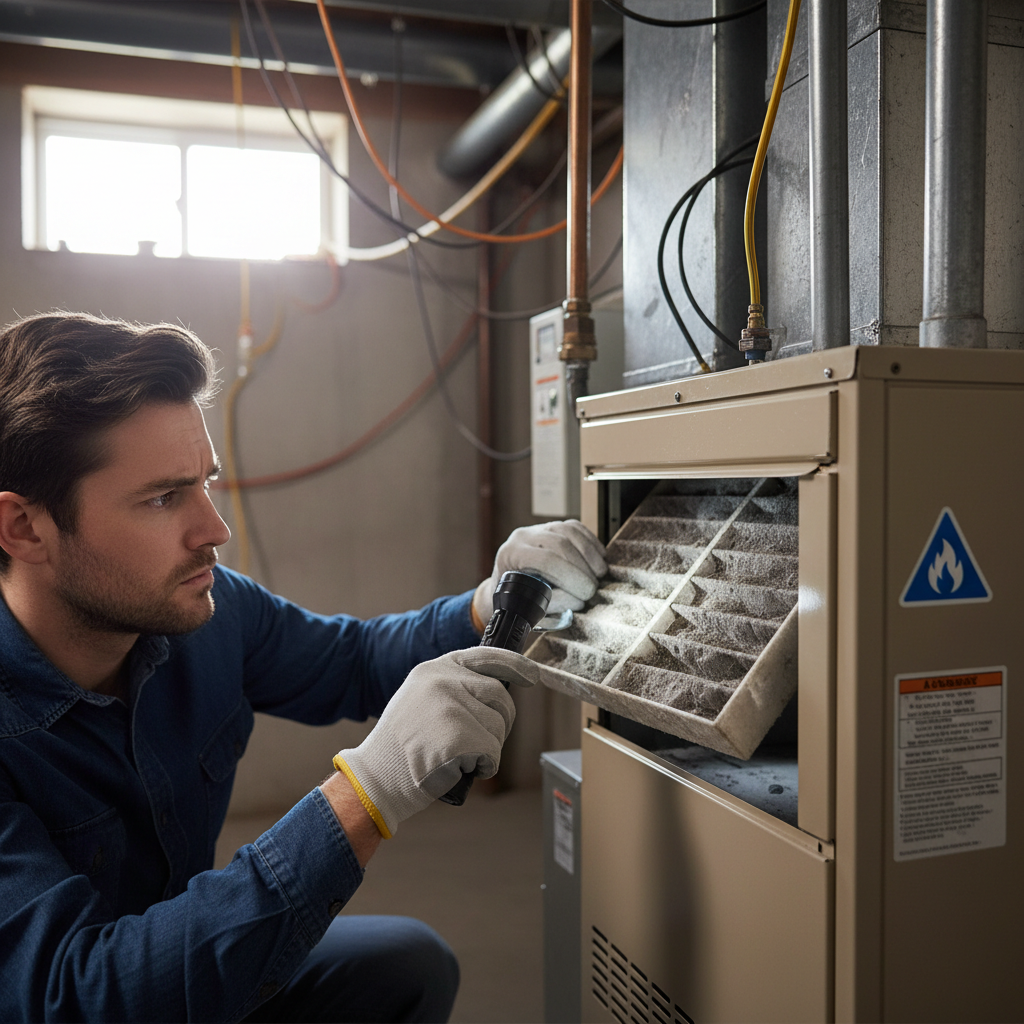
- Inspect and Replace the Air Filter — A clogged air filter is the single most common cause of furnace short cycling. It restricts the flow of air over the heat exchanger, causing it to rapidly overheat and trip the high-limit safety switch.
- Tools: New, correct-size air filter.
- Turn off the power to your furnace at the breaker panel or the service switch located near the unit.
- Locate the filter slot, usually between the return air duct and the furnace cabinet itself. Slide out the old filter and hold it up to a light. If you cannot see light through it, it is long overdue for replacement.
- Insert the new filter, ensuring the airflow arrows on the filter frame point toward the furnace blower motor. Restore power and observe if the short cycling is resolved.
HVAC · High energy usage
| Project category | HVAC |
|---|---|
| Problem type | High energy usage |
| Trade required | HVAC |
| Urgency | Planned project |
| Safety risk | Low safety risk |
| DIY suitability | DIY for experienced homeowners |
| Cost category | High cost |
| Typical timeline | Assessment within weeks; replacement planned off-season |
| Contractor type | Licensed HVAC technician |
Repair option
Duct sealing, insulation, and a tune-up before touching the equipment.
Replacement option
High-efficiency replacement sized by a load calculation, not a rule of thumb.
Common causes
- Aging, low-efficiency equipment
- Leaking ducts losing conditioned air
- Insufficient attic insulation
- Oversized system short-cycling
Relevant tools:project cost estimatorrepair or replace
Published April 25, 2026Last updated August 17, 2026
Tools & materials you'll need
Affiliate linksAs an Amazon Associate FixlyGuide earns from qualifying purchases — at no extra cost to you. Prices and availability are accurate as of publication and subject to change.
How it works
A properly functioning furnace operates in a predictable, controlled sequence to heat your home efficiently. The cycle begins when the indoor temperature drops below your thermostat's setting, prompting it to send a low-voltage signal to the furnace's integrated control board. This board acts as the furnace's brain, initiating the heating process. First, it starts the induced draft motor, a small fan that pulls air through the heat exchanger and pushes exhaust gases safely out the flue vent. A pressure switch verifies the inducer motor is creating sufficient draft; only then does the sequence continue.
Next, the control board energizes the igniter—typically a hot surface igniter that glows orange-hot. After a brief warm-up period (15-30 seconds), the board opens the gas valve, allowing gas to flow to the burners where it is lit by the igniter. A flame sensor immediately confirms that ignition was successful; if no flame is detected, the gas valve shuts for safety. As the burners heat the metal walls of the heat exchanger, a high-limit switch monitors its temperature. Once the heat exchanger is sufficiently hot, the control board activates the main blower motor, which pushes household air over the exterior of the heat exchanger and distributes the now-warmed air through your ductwork. This entire cycle typically lasts 10 to 20 minutes. Short cycling interrupts this, often because a safety device like the high-limit switch detects a problem—most commonly, overheating from restricted airflow.
Step-by-Step Fix
Follow these steps in order to diagnose and resolve the most common causes of furnace short cycling, starting with the simplest and most frequent culprits.
-
Observe and Time the Furnace Cycle — Before touching anything, watch your furnace operate. Use a stopwatch to time how long it runs from ignition until it shuts off. A cycle less than 10 minutes, especially under 5 minutes, confirms short cycling. Note the sequence of events. Does the main blower fan turn on before the system shuts down? If the burners ignite but shut off before the main fan starts, it often points to a component like the flame sensor. If the main fan runs for a few minutes and then the entire system shuts down, it's more likely an overheating issue caused by poor airflow.
- Safety: Do not remove any service panels at this stage. This is a purely observational step.
-
Inspect and Replace the Air Filter — A clogged air filter is the single most common cause of furnace short cycling. It restricts the flow of air over the heat exchanger, causing it to rapidly overheat and trip the high-limit safety switch.
- Tools: New, correct-size air filter.
- Turn off the power to your furnace at the breaker panel or the service switch located near the unit.
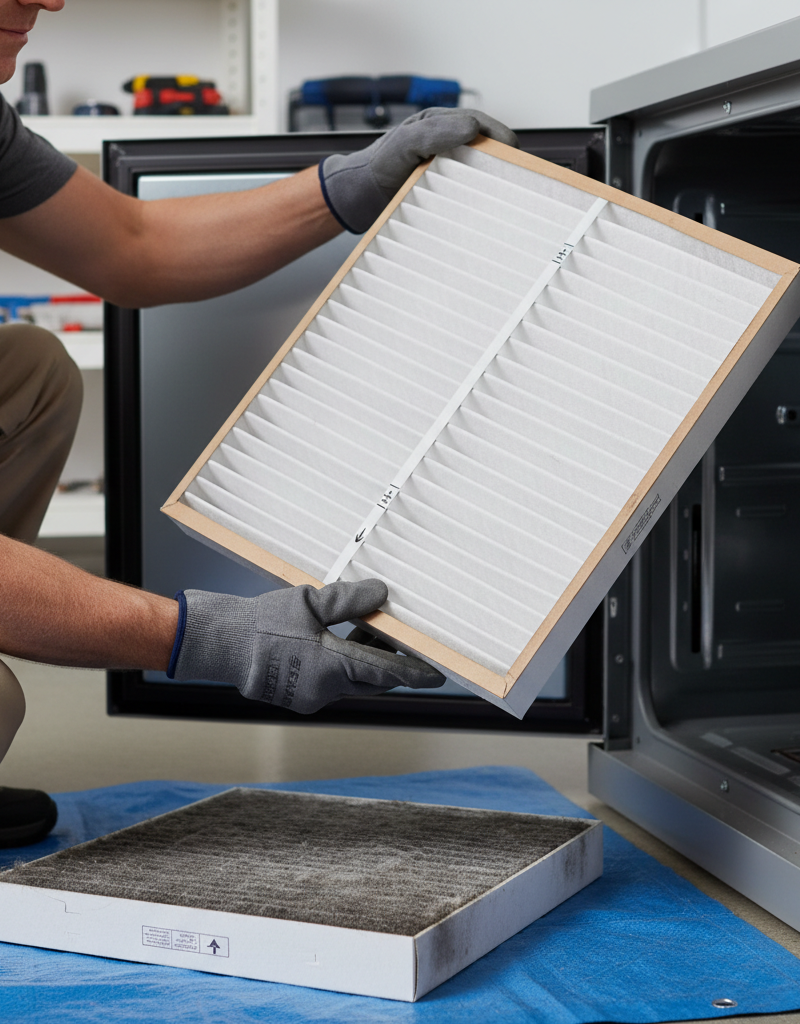
- Locate the filter slot, usually between the return air duct and the furnace cabinet itself. Slide out the old filter and hold it up to a light. If you cannot see light through it, it is long overdue for replacement.
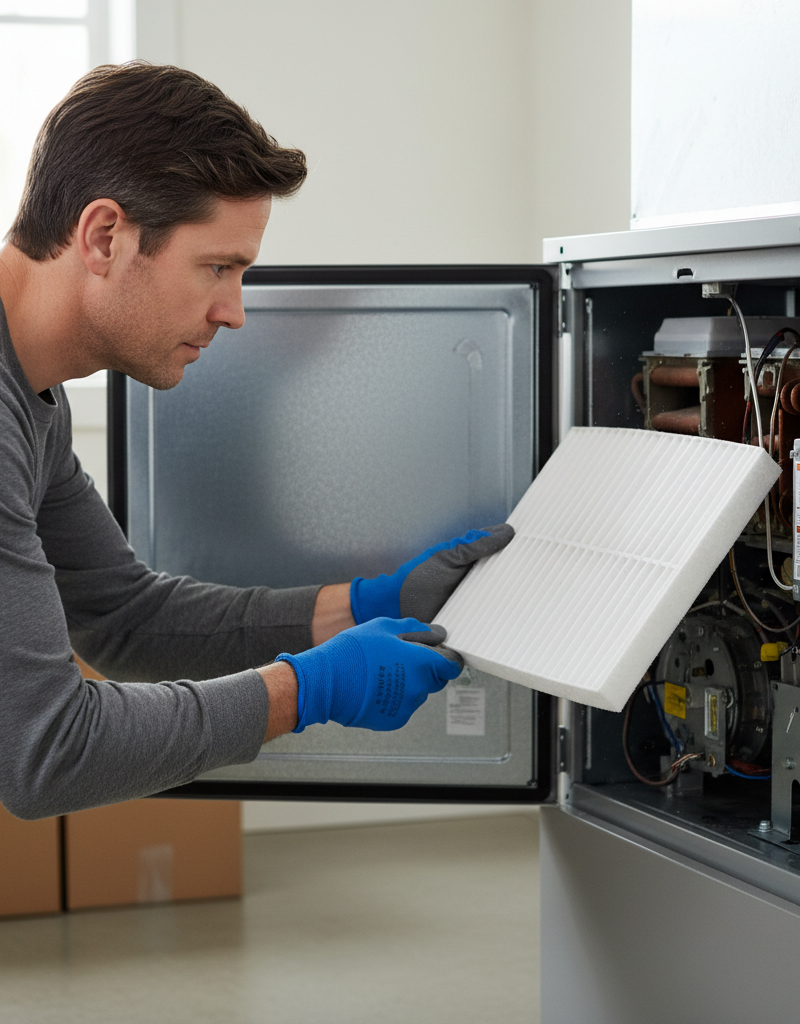
- Insert the new filter, ensuring the airflow arrows on the filter frame point toward the furnace blower motor. Restore power and observe if the short cycling is resolved.
-
Check All Air Vents and Return Grilles — Restricted airflow isn't just about the filter. You must ensure the air has a clear path into and out of the furnace. Walk through your home and check every supply vent (where warm air blows out).
- Ensure all vent dampers are open.
- Confirm that no furniture, rugs, drapes, or other items are blocking the vents.
- Locate your system's main return air grille(s)—the large grates that pull air back to the furnace. These are often in a central hallway or wall. Ensure they are completely unobstructed. Closing more than 20% of your home's vents can create enough back-pressure to cause overheating.
-
Examine the Thermostat and its Location — A faulty or poorly placed thermostat can send premature "off" signals.
- First, check the settings. Ensure it is set to
HEATand theFANis set toAUTO, notON. - If it's a battery-powered model, replace the batteries with a fresh set.
- Consider the thermostat's location. Is it in direct sunlight, near a hot lamp, or above a running television? Is it located in a small, enclosed room that heats up much faster than the rest of the house? Any of these factors can trick the thermostat into thinking the desired temperature has been reached, causing it to shut the furnace down too soon.
- First, check the settings. Ensure it is set to
-
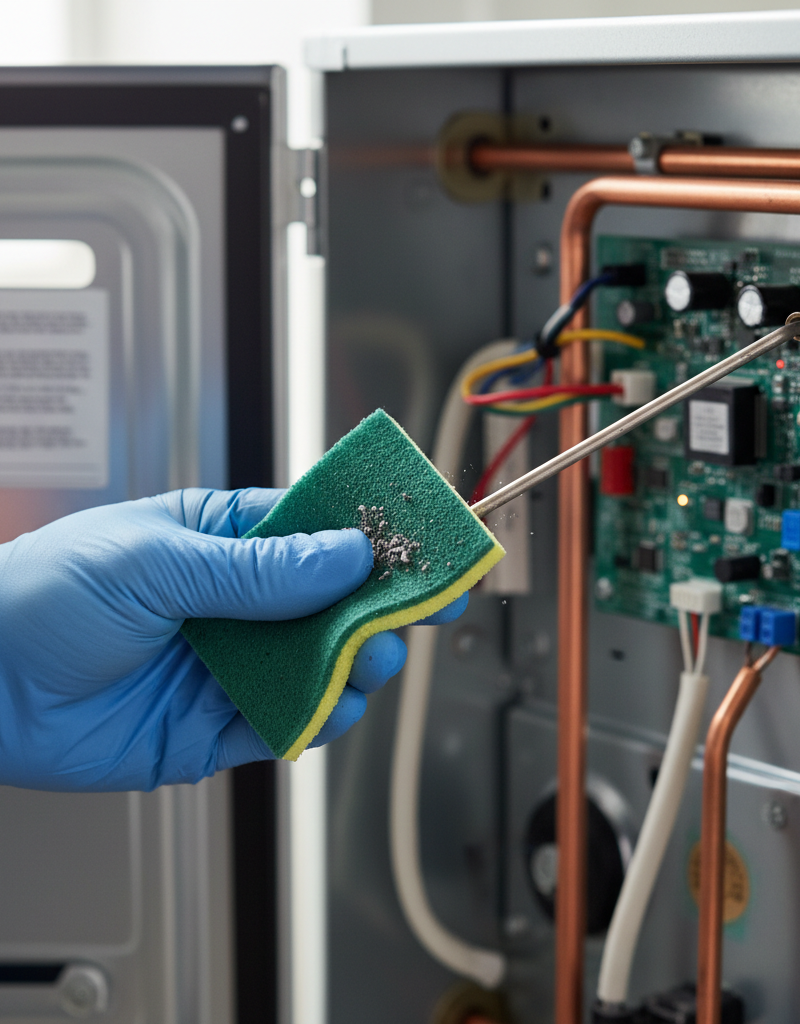
Inspect the Flame Sensor — If the furnace burners ignite for a few seconds and then shut off, the problem is often a dirty flame sensor. This metal rod sits in the path of the flame and confirms ignition. Over time, it can become coated with carbon buildup, insulating it and preventing it from detecting the flame.
- Tools: Nut driver or screwdriver, fine-grade steel wool or emery cloth, clean cloth.
- Safety: Shut off power to the furnace and turn off the gas supply at the shutoff valve near the unit.
- Remove the furnace's main access panel. Locate the flame sensor—it's a thin, L-shaped metallic rod with a single ceramic insulator at its base and one wire attached. It is typically held in place by a single screw.
- Carefully remove the screw and pull the sensor out. Gently clean the metal rod with the steel wool or emery cloth until it is shiny. Do not use sandpaper, which can scratch the surface. Wipe it clean with a cloth.
- Reinstall the sensor, secure the screw, reconnect the wire, and restore gas and power.
-
Clear the Condensate Line (High-Efficiency Furnaces Only) — Furnaces with an AFUE rating of 90% or higher produce acidic water (condensate) as a byproduct of combustion. This water must drain away. If the drain line becomes clogged with algae or debris, water backs up and triggers a float switch or pressure switch, shutting the furnace down to prevent water damage.
- Tools: Shop vacuum, pipe cleaners or a thin flexible brush, white vinegar.
- Locate the clear or white PVC pipe leaving the side or bottom of your furnace. Follow it to where it drains, often into a floor drain or a small condensate pump.
- Use the shop vacuum to suck out any clog from the termination point of the drain line. You can also disconnect the tube near the furnace (have a pan ready to catch water) and use a brush to clear it. Pouring a cup of diluted white vinegar down the line once or twice a year can help prevent future buildup.
-
Inspect the Outdoor Vent Pipes — Both standard and high-efficiency furnaces have pipes that vent to the outdoors. A blockage here will starve the system of combustion air or prevent exhaust from escaping, tripping a pressure switch.
- Go outside and find your furnace vents. Standard-efficiency furnaces typically have a single metal flue pipe coming out of the roof. High-efficiency units have two (or sometimes one concentric) white PVC pipes, usually exiting a side wall.
- Check for any obstructions like snow, ice, leaves, bird nests, or animal debris. Carefully clear away anything blocking the pipes.
-
Test the High-Limit Switch — If you've addressed all airflow issues and the furnace still short cycles due to overheating, the high-limit switch itself could be faulty and tripping at too low a temperature. This is less common than an actual overheating problem.
- Tools: Multimeter, nut driver.
- Safety: Turn off all power to the furnace.
- Locate the high-limit switch. It is a small, rectangular or disc-shaped device with two wires connected to it, mounted directly on the heat exchanger plenum.
- Set your multimeter to the continuity setting (it often has a beep icon). Disconnect the two wires from the switch and touch one multimeter probe to each terminal on the switch.
- If the switch is functioning correctly, it should have continuity (the meter will beep or read near zero ohms) when the furnace is cold. If it shows no continuity (an open circuit), the switch is bad and must be replaced with an identical part. Crucially, if the switch tests fine but the furnace still trips, do not replace it. This confirms you have an unresolved airflow or mechanical issue that requires professional diagnosis.
Common mistakes
- Replacing the High-Limit Switch Prematurely. New DIYers often assume the part that shuts the furnace off is the part that is broken. The high-limit switch is a safety device; its job is to react to an overheating problem. Replacing it without fixing the underlying airflow restriction means the new switch will also trip, or worse, fail to trip and allow the heat exchanger to crack.
- Installing an Overly Restrictive Air Filter. Seeing dust in your ducts might tempt you to buy a filter with the highest MERV (Minimum Efficiency Reporting Value) rating available. However, filters with MERV 13 or higher can be too dense for many residential systems, choking airflow and causing the furnace to short cycle. Check your furnace manufacturer's manual for the maximum recommended MERV rating.
- Closing Vents in Unused Rooms. It seems logical to close vents to save energy, but modern forced-air systems are balanced for a specific total airflow. Closing too many vents increases static pressure in the ductwork, which reduces airflow across the heat exchanger, leading to overheating and short cycling—ultimately wasting energy and stressing components.
- Ignoring a Dirty Blower Wheel. Homeowners are often diligent about the filter but forget the blower wheel. Over years, this "squirrel cage" fan can become caked with dirt and dust, dramatically reducing its ability to move air. This has the same effect as a clogged filter but is harder to spot.
- Bypassing a Safety Switch. Under no circumstances should you ever bypass a high-limit switch, pressure switch, or flame rollout switch. These devices are critical for preventing catastrophic failures, including fire and the release of deadly carbon monoxide gas into your home. A switch that trips repeatedly is a clear signal of a dangerous underlying condition.
Cost & time breakdown
This table provides estimates for DIY repairs and professional service. Pro costs can vary significantly based on location and the specifics of the service call.
| Task | DIY Cost | Pro Cost | Time |
|---|---|---|---|
| Replace Air Filter | $5 - $30 | $80 - $150 | 5 minutes |
| Clean Flame Sensor | <$5 (for steel wool) | $120 - $250 | 30 minutes |
| Clear Condensate Line | <$10 (for a brush) | $100 - $225 | 45 minutes |
| Replace Thermostat | $30 - $250 | $150 - $500 | 1 hour |
| Replace High-Limit Switch | $20 - $60 | $180 - $350 | 45 minutes |
| HVAC Airflow & Sizing Diagnosis | N/A | $200 - $600 | 2 - 4 hours |
When to call a pro
While many causes of short cycling are DIY-friendly, certain symptoms and situations require the expertise and specialized tools of a licensed HVAC technician. Call a professional immediately if:
- You have completed all the DIY diagnostic steps (filter, vents, flame sensor, etc.) and the problem persists. This indicates a more complex issue, such as a failing blower motor, a faulty control board, or an internal blockage.
- You smell natural gas or propane near your furnace. If you do, leave the house immediately, do not operate any light switches or electronics, and call your gas utility's emergency line from a safe distance.
- Your carbon monoxide detectors are going off. This is an emergency. Vacate the premises and call 911. It can be a sign of a cracked heat exchanger, which can leak deadly flue gases into your home.
- You see soot or scorch marks on or around the furnace cabinet. This indicates poor combustion or "flame rollout," a dangerous condition that needs immediate professional attention.
- The furnace makes loud, unusual noises such as screeching (bad motor bearings), grinding, or loud banging when it shuts off (often a sign of ductwork issues).
- You suspect your furnace is oversized for your home. This is the "hidden reason" many get wrong. If your home heats up extremely fast and the furnace has always had short run times, a professional is needed to perform a Manual J load calculation to confirm sizing and propose a correct long-term solution.
Prevention & maintenance
Consistent, simple maintenance is the most effective way to prevent short cycling and the costly repairs that follow.
- Change Your Air Filter Religiously. This is the number one preventative task. For standard 1-inch filters, inspect monthly and replace at least every 90 days. For larger 4- to 5-inch media filters, replace every 6 to 12 months. Write the date on the new filter frame.
- Schedule Annual Professional Tune-Ups. An HVAC technician should service your furnace every fall before the heating season begins. They will clean and inspect the burners, ignition system, and blower components; check gas pressure; verify safety controls; and inspect the heat exchanger for cracks.
- Keep the Furnace Area and Vents Clear. Maintain at least 30 inches of clearance around your furnace to ensure proper airflow for combustion and service access. Routinely check that furniture, toys, and rugs are not blocking supply and return air vents throughout the house.
- Test CO Detectors. Test your carbon monoxide detectors monthly and replace their batteries every six months when you change your clocks for daylight saving time. Replace the entire detector unit every 7-10 years, according to the manufacturer's date stamp on the back.
- Inspect Outdoor Vents Seasonally. Before winter, check that the exhaust flue and intake pipes are clear of bird nests, leaves, and other debris. During winter, check them after heavy snowfall or ice storms to ensure they haven't been blocked.
- Listen for Changes. Pay attention to the normal sounds of your furnace. If you notice the cycle time getting shorter, or hear new clicks, rattles, or whines, investigate it promptly. Early intervention is always less expensive than emergency repair.
Related Articles
Keep troubleshooting with these hand-picked guides from FixlyGuide:
- Furnace Blowing Cold Air? Diagnose It in 10 Minutes — A furnace that runs but blows cold air is almost always one of 6 things — and 5 of them you can fix yourself before the house drops below 6…
- The #1 Mistake Homeowners Make When Their AC Won't Turn On (And the Easy Fix) — Learn the most common reason your air conditioner won't turn on and how to diagnose and fix it with simple steps.
- The Hidden Culprit Behind That Burning Smell From Your Vents (And How to Fix It) — That strange burning smell from your vents when the heat kicks on usually points to a natural accumulation of dust on your furnace's heat e…
- Oven Not Heating to Correct Temperature? How to Diagnose and Fix — An oven that doesn't heat to the correct temperature can ruin meals. This guide helps you diagnose common issues like a faulty igniter or h…
- AC Blowing Warm Air? Easy Fixes for Common AC Problems — Discover the most common reasons your AC is blowing warm air and learn simple, actionable steps to troubles
What should this project cost?
Enter your project details for a realistic cost range before you call anyone.
Service calls and common repairs run $150–$900; full system replacement typically $6,000–$12,000.
- Regional adjustment
- National average
- Labor share (typical)
- ~$1,935
- Quotes to collect
- 3 written estimates
Educational estimate based on national averages — not a binding quote. Always confirm with written local estimates.
Fixly Project Decision Box
- DIY difficulty
- Advanced
- Estimated time
- Homeowner checks 20–30 minutes
- Cost level
- Moderate
Main tools / materials
- Clean air filter
- Garden hose for condenser coils
- Shop vac for the condensate line
When to stop and call a pro
- Burning smell, smoke, or a tripping breaker
- Refrigerant lines iced over or hissing
- Any work inside the sealed refrigerant circuit (EPA-licensed only)
- Gas smell near a furnace — leave and call the utility
Need professional help?
Find an HVAC Pro Near YouGet the print-ready PDF of this guide
A clean, ad-free, printable version you can keep on your phone or pin to the workshop wall. Free with a FixlyGuide account.
- Print-optimized layout
- Tools, materials & every step included
- Saved to your account
Frequently asked questions
What is considered short cycling for a furnace?+
Short cycling is generally defined as a furnace running for less than 10 minutes per heating cycle. A healthy furnace typically runs for 10-20 minutes, depending on factors like outdoor temperature and home insulation.
Does short cycling damage a furnace?+
Yes, frequent short cycling significantly increases wear and tear on critical components like the ignitor, heat exchanger, and blower motor, potentially leading to premature failure and costly repairs.
Can a dirty air filter cause short cycling?+
Absolutely. A dirty air filter restricts airflow, causing the furnace to overheat and trip its high-limit switch, leading to short cycling as a safety measure.
How do I know if my furnace is oversized?+
Signs of an oversized furnace include rapid heating of your home, coupled with frequent on-off cycles, even during very cold weather. If your home warms up noticeably fast but the furnace just won't run for long, it's a strong indicator.
Discussion
Loading comments…