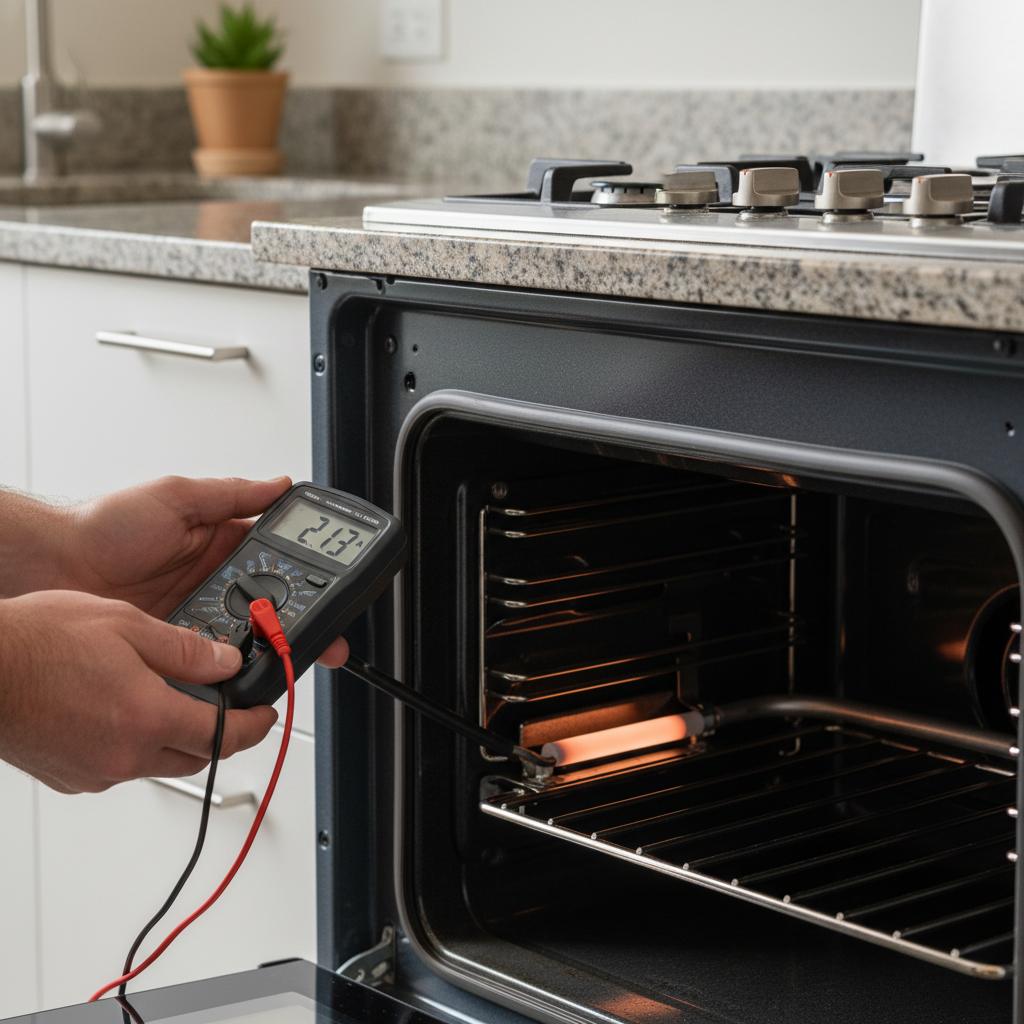
- Title: Perform the Live Test
- Details: This is the moment of truth.
- Tools: You will need a multimeter with a clamp-on ammeter function.
- Safety: Ensure the testing area is clear and you are not touching any metal parts of the oven. Double-check that your isolated wire isn't touching the chassis.
HVAC · High energy usage
| Project category | HVAC |
|---|---|
| Problem type | High energy usage |
| Trade required | HVAC |
| Urgency | Planned project |
| Safety risk | Low safety risk |
| DIY suitability | DIY for experienced homeowners |
| Cost category | High cost |
| Typical timeline | Assessment within weeks; replacement planned off-season |
| Contractor type | Licensed HVAC technician |
Repair option
Duct sealing, insulation, and a tune-up before touching the equipment.
Replacement option
High-efficiency replacement sized by a load calculation, not a rule of thumb.
Common causes
- Aging, low-efficiency equipment
- Leaking ducts losing conditioned air
- Insufficient attic insulation
- Oversized system short-cycling
Relevant tools:project cost estimatorrepair or replace
Published May 5, 2026Last updated August 17, 2026
Tools & materials you'll need
Affiliate links- AmazonClamp-on Ammeter1 · A multimeter with an amp clamp function is required for the key diagnostic test.
- AmazonNut Driver or Screwdriver1 · Typically 1/4" or 5/16" for oven floor panel and igniter bracket screws.
- AmazonWork Gloves1 · Protects hands from sharp metal edges inside the oven.
- AmazonOven Thermometer1 · Optional, but useful for verifying temperature accuracy after the fix.
As an Amazon Associate FixlyGuide earns from qualifying purchases — at no extra cost to you. Prices and availability are accurate as of publication and subject to change.
Quick Answer
A gas oven that takes an eternity to preheat is one of the most common appliance complaints, and the cause is almost always a weak bake igniter. You might see it glowing a dull orange, leading you to believe it's working, but that glow is deceptive. The key is that the igniter must not only get hot, but it must also pull a specific electrical current—typically between 3.2 and 3.6 amps—to signal the gas valve to open. As igniters age, they lose their ability to draw this current. A weak igniter might only pull 2.8 amps, which isn't enough to fully open the valve, resulting in a drastically slow preheat, inconsistent temperatures, or a complete failure to light. The definitive diagnosis is to perform a live amperage test on the igniter wire with a clamp meter.
The Problem
It starts subtly. You preheat the oven to 400°F for a frozen pizza, and 15 minutes later, the "preheat" light is still on. You dismiss it. A few weeks later, you're trying to roast vegetables at 425°F, and after 30 minutes, your separate oven thermometer reads a measly 300°F. The frustration builds. Dinners are delayed, baked goods are ruined, and you start questioning your appliance. What used to be a reliable 10-minute preheat to 350°F now feels like an epic waiting game of 30, 40, or even 50 minutes.
Sometimes, you might notice a faint smell of gas for a moment when the oven is trying to light. This is a tell-tale sign of a weak igniter. The gas valve may be cracking open for a split second, releasing a small amount of unburned gas, but the igniter isn't hot enough (or drawing enough amps) to trigger a full, sustained flame. The valve closes, the igniter keeps trying, and the cycle repeats until, eventually, it manages to create a stable flame. This start-stop process is what stretches a 10-minute job into a 45-minute ordeal.
You are not just losing time; you are also wasting energy and dealing with an oven that can't maintain a consistent temperature, leading to unevenly cooked food. The pizza crust is burnt on one side and doughy on the other. The cake is sunken in the middle. It makes you want to call a repair technician and face a $250 bill, but the truth is, this is often a straightforward and inexpensive DIY fix, provided you can correctly diagnose the problem.
How It Works
The ignition system in most modern gas ovens is a clever, safety-oriented design. It's not as simple as a spark lighting a flame. The system is built around a component called a hot surface igniter (or glow bar) and a safety gas valve. Understanding their relationship is the key to solving slow preheating.
Here’s the sequence of events when you turn your oven to "Bake":
-
Power is Sent: The oven's electronic control board (or mechanical thermostat dial) sends 120 volts of alternating current (AC) down to the bake igniter. The igniter is a small, rectangular bar made of silicon carbide, a material that glows intensely hot when electricity passes through it.
-
The Igniter Heats Up: The igniter begins to glow, starting as a dull orange and brightening to a brilliant yellow-orange, reaching temperatures of 1,800°F to 2,500°F. More importantly, as a resistor, it begins to draw electrical current, measured in amperes (amps).
-
The Amperage "Password": The bake igniter is wired in series with the safety gas valve. This is the most crucial detail. Think of it like a chain: the electricity must flow through the igniter to get to the valve. The gas valve is designed as a safety device; it will not open and release gas unless it receives the correct "password," which is a specific amount of current. For most residential ovens, this magic number is between 3.2 and 3.6 amps.
-
The Valve Opens: When the igniter is healthy and pulling, for example, 3.3 amps, the current flows through the igniter and energizes a solenoid or a bi-metal arm inside the gas valve. This action physically opens the valve, allowing gas to flow to the burner tube.
-
Ignition: The super-heated igniter, positioned right next to the burner tube, instantly ignites the flowing gas. You hear a gentle "whoosh" as the main burner lights. A flame sensor (often part of the igniter or a separate thermocouple) confirms a stable flame, and the oven begins to heat.
Here's where it all goes wrong. Over years of use, the silicon carbide in the igniter degrades. Its internal resistance increases. It can still receive 120 volts and glow a convincing orange, but it can no longer draw the required 3.2+ amps. A weak, aging igniter might only be able to pull 2.7 or 2.9 amps. To your oven's safety valve, this is the wrong password. It refuses to open, or it might flutter teasingly. This is the root of your slow-preheating oven. The system is stuck in a loop, waiting for an amperage signal that the weak igniter can no longer provide, until by sheer luck it manages to get hot enough for long enough to finally trigger the valve.
Step-by-Step Fix
This guide will walk you through the definitive test and replacement of a weak oven igniter. This is a live electrical test and requires caution.
SAFETY FIRST:
- Electrical: Before disassembling anything, disconnect the oven from power by unplugging it or switching off the corresponding breaker in your electrical panel. Label the breaker so no one turns it on.
- Gas: For added safety, turn off the gas supply using the shut-off valve, typically located behind the oven or in the basement/crawlspace below it.
Step 1: Expose the Bake Burner Assembly
- Title: Access the Oven Floor
- Details: Open the oven door and remove all oven racks. In most ovens, the bottom panel (the "oven floor") is a separate piece of metal. It's usually held down by two or more screws at the back of the oven cavity. These may be Phillips head or, more commonly, 1/4" or 5/16" hex head screws. Remove them and lift the panel out of the oven. This will expose the bake burner tube (a long, H-shaped or U-shaped pipe) and the igniter assembly.
Step 2: Locate the Igniter
- Title: Identify the Igniter
- Details: Look for a small, rectangular ceramic component, typically grayish-black, mounted in a metal cage. It will be positioned right next to the burner tube. Wires will run from the back of the igniter through the rear of the oven cavity. Note its position and how it's mounted.
Step 3: Prepare for the Amperage Test
- Title: Isolate a Wire
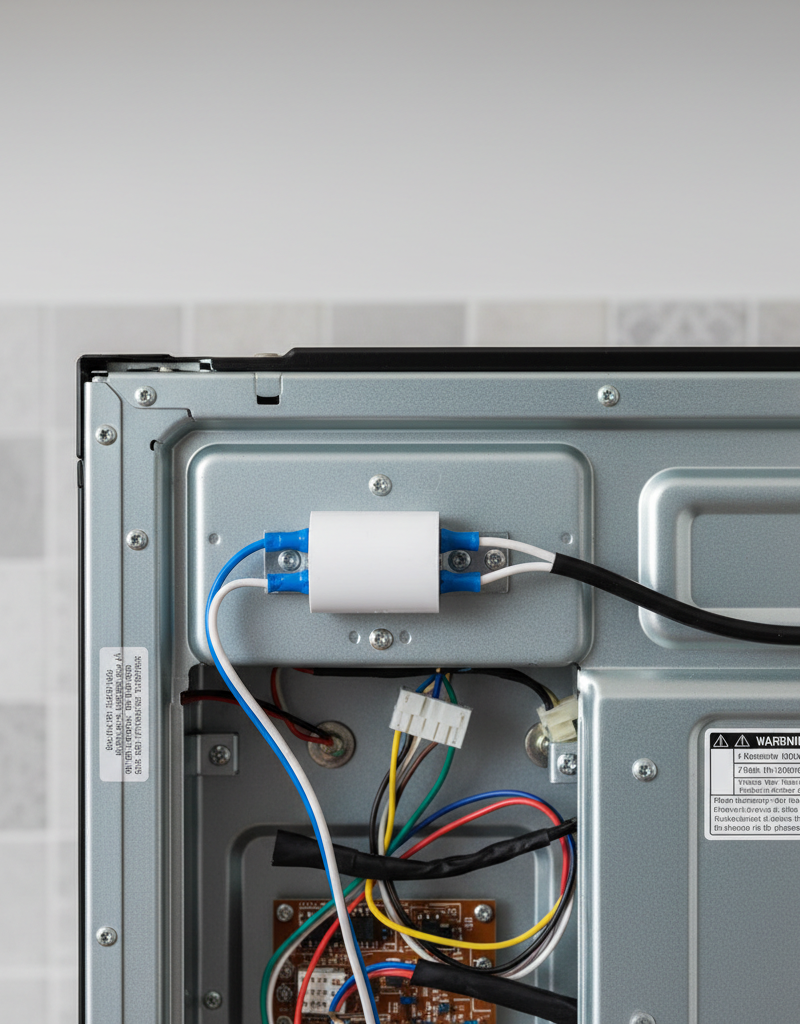
- Details: Follow the two wires from the igniter. They usually connect to a plastic plug/harness behind the oven's rear access panel or, in some models, underneath in the drawer cavity. You need to create enough slack on one of these wires to fit your clamp meter around it. If needed, temporarily remove the oven's rear access panel (more screws) to access the wiring harness. You must be able to clamp around a single wire, not both.
Step 4: The Definitive Igniter Amp Test
- Title: Perform the Live Test
- Details: This is the moment of truth.
- Tools: You will need a multimeter with a clamp-on ammeter function.
- Safety: Ensure the testing area is clear and you are not touching any metal parts of the oven. Double-check that your isolated wire isn't touching the chassis.
- Procedure: Reconnect power to the oven (plug it in or flip the breaker). Turn the oven on to a "Bake" setting (e.g., 350°F). The igniter should begin to glow. Immediately clamp your ammeter around the single, isolated wire leading to the igniter.
- Analyze the Reading: Watch the meter. A strong, healthy igniter will show the amperage climbing steadily within seconds to a value between 3.2 and 3.6 amps. If the reading stalls out below 3.2 amps (e.g., 2.5A, 2.9A, 3.1A), you have found your problem. The igniter is weak and must be replaced.
Step 5: Remove the Faulty Igniter
- Title: Disconnect and Unscrew
- Details: Turn the power off at the breaker again! Disconnect the gas supply. Disconnect the wire harness plug you identified earlier. Back inside the oven, use a nut driver or screwdriver to remove the screws holding the igniter's metal cage to the oven chassis. Handle the old igniter assembly carefully—they are notoriously brittle.
Step 6: Source a Quality Replacement
- Title: Buy the Right Part
- Details: Use your oven's full model number (usually found on a sticker around the door frame or in the storage drawer) to order the correct replacement igniter. Do not buy a cheap "universal" part. Different valves are calibrated for different amp ranges. An OEM or a reputable aftermarket part (like those made by ERP or Supco) is your best bet. Note whether your original is a flat or round-style igniter and order accordingly.
Step 7: Install the New Igniter
- Title: Handle with Care
- Details: New igniters are extremely fragile. Do not touch the gray ceramic element with your bare hands (oils can cause hot spots) and do not bump it against anything. Carefully screw the new igniter assembly into place. Route the wires to the back and reconnect the plug. If your replacement part requires you to splice wires (some universal kits do), use the included high-temperature ceramic wire nuts and ensure the connection is tight and secure.
Step 8: Reassemble and Test
- Title: Final Verification
- Details: Reinstall the oven floor panel and put the racks back in. Turn the gas supply and the power back on. Turn the oven to bake at 350°F and start a timer. You should hear the "whoosh" of the main burner igniting within 30 to 90 seconds. The preheat time should be dramatically faster, typically 7-12 minutes to reach 350°F. Congratulations, you’ve just saved yourself a significant repair bill.
Common Causes
While a weak igniter is the prime suspect in over 90% of slow-preheat cases, other issues can occasionally be the cause.
- Weak Igniter (Most Common): The silicon carbide material degrades over thousands of heating/cooling cycles, increasing its electrical resistance and reducing its amperage draw below the crucial 3.2-amp threshold required by the gas valve.
- Failing Gas Valve: Less common, but the internal bi-metal arm or solenoid in the valve itself can wear out. In this case, the igniter might show a healthy 3.3 amps on your meter, but the valve still fails to open. This requires replacing the entire gas valve, a job often best left to a professional.
- Faulty Oven Temperature Sensor: This sensor is a probe, usually located at the top rear of the oven cavity. It reads the oven's temperature and sends that information to the control board. If the sensor is faulty, its resistance reading may be incorrect, tricking the control board into thinking the oven is hotter than it actually is. This can cause the burner to cycle off prematurely, stretching out the preheat time. You can test it by checking its resistance (ohms) with a multimeter at room temperature and comparing it to the manufacturer's spec (usually around 1080-1100 ohms at 77°F).
- Failing Control Board (ECU/PCB): In rare cases, the electronic relay on the main control board that sends power to the ignition circuit can fail. It might send intermittent or low voltage, preventing the igniter from ever reaching its full potential.
- Improper Line Voltage: Also very rare, but if the outlet supplying the oven has low voltage (e.g., 105V instead of 120V), it will prevent the entire ignition system from operating correctly.
Common Mistakes
Avoid these pitfalls that can cost you time and money.
- The Visual-Only Test: The single biggest mistake is seeing the igniter glow orange and assuming it's "good." The glow means nothing without the amperage data. An igniter can glow brightly while pulling only 2.8 amps, which is not enough.
- Breaking the New Igniter: These parts are made of a ceramic material and are incredibly brittle. Dropping one from even a few inches or bumping it against the oven wall during installation will likely crack it. Handle the new part like a raw egg.
- Replacing the Temperature Sensor First: Because it's slightly easier to access, many DIYers replace the temperature sensor first. While it can be a cause, it's far less common than a weak igniter. Perform the amp test first to avoid buying unnecessary parts.
- Buying Cheap Universal Igniters: Saving $20 on a generic online igniter can backfire. If its amp range isn't perfectly matched to your oven's gas valve, you may have the same problem or create new ones. Always use your model number to buy the specific part.
- Ignoring Safety Procedures: Forgetting to turn off the power at the breaker before reaching into an oven is a severe shock hazard. Forgetting to shut off the gas before working on gas components is a fire or explosion risk.
- Poor Wire Splicing: If your new igniter requires splicing, use the provided ceramic wire nuts. Do not use standard plastic wire nuts or electrical tape, which cannot withstand the high temperatures behind an oven and will create a fire hazard.
Cost & Time Breakdown
Here’s what you can expect to spend in time and money for this repair.
| Task | DIY Cost | Pro Cost | Time |
|---|---|---|---|
| Igniter Replacement | $25 - $75 (for the part) | $175 - $300 | 45-60 minutes |
| Temperature Sensor Replacement | $20 - $50 (for the part) | $150 - $250 | 20-30 minutes |
| Gas Valve Replacement | Not Recommended for DIY | $350 - $600 | 1-2 hours |
| Diagnostic Service Call | N/A | $100 - $150 | 30-60 minutes |
Tips & Prevention
Keep your oven running efficiently and extend component life.
- Never Use Foil on the Oven Floor: Placing aluminum foil on the bottom panel of the oven can block airflow, trap heat, and cause the igniter and other components to overheat, leading to premature failure.
- Keep it Clean: Spills and debris, especially around the burner and igniter area, can interfere with ignition and cause corrosion. Clean your oven regularly.
- Use Self-Clean Sparingly: The extremely high temperatures of a self-clean cycle are very hard on all oven components, including electronics and igniters. Use it only when absolutely necessary.
- Check Your Temp: Once a year, place a dedicated oven thermometer inside your oven and set it to 350°F. Let it run for 30 minutes and see if the thermometer matches the setting. If it's off by more than 25°F, it could indicate a drifting temperature sensor.
- Take a "Before" Photo: Before you disconnect any wires or unscrew any parts, take a quick photo with your smartphone. It can be an invaluable reference during reassembly.
When to Call a Professional
While igniter replacement is a manageable DIY task, some situations warrant a call to a qualified appliance technician.
- If You Smell Gas: If you ever smell a strong, persistent odor of natural gas, do not operate any electrical switches. Leave the house immediately, and then call your gas company and a service technician. This is especially true if the oven has been trying to light for more than 90 seconds with no success.
- If the Igniter Tests Good: If you perform the amperage test and your igniter is drawing a healthy 3.2-3.6 amps but the gas valve still refuses to open, the problem lies with the valve or the control board. Replacing a gas valve involves working directly with gas fittings and requires a professional to ensure it is done safely and without leaks.
- If You Are Uncomfortable with Live Testing: The amp clamp test is performed while the oven has power. If you are not 100% confident in working safely around live 120V electricity, it is not worth the risk. A professional can diagnose it for you.
- If You Have a sealed burner system or high end range: Some high-end ranges (like Wolf or Thermador) have more complex ignition systems or sealed components that are much harder to access. For these models, professional service is often the wiser choice.
Related Articles
Keep troubleshooting with these hand-picked guides from FixlyGuide:
- The #1 Mistake Homeowners Make When Their Dryer Isnt Drying (And How to Fix It Free) — Most homeowners assume a slow dryer means a broken dryer, but the most common culprit is a simple, often overlooked maintenance issue that'…
- Refrigerator Not Cooling but Freezer Works: 6 DIY Fixes — When the freezer is fine but the fridge is warm, the cause is almost always airflow — not refrigerant. Here are the 6 fixes, ordered from f…
- The #1 Mistake Homeowners Make When Their Dishwasher Stops Cleaning (And the Simple Fix) — Discover the most common reason your dishwasher isn't cleaning dishes and learn a simple, effective fix you can do yourself in minutes.
- The #1 Reason Your Ice Maker Stopped (It's Not Clogged!) — Discover the most overlooked culprit behind a non-working ice maker and how a simple fix can restore fresh ice to your freezer.
- That Mildew Smell in Your Washer? Here’s the Real Reason — Is a musty odor taking over your laundry room? That mildew smell from your washing machine isn't just unpleasant—it's a sign of a deeper pr…
- The Secret Reason Your Oven Fails to Heat (It's NOT Always the Element) — Discover why your oven isn't reaching its set temperature, from common part failures to overlooked calibration issues, and how to fix it.
What should this project cost?
Enter your project details for a realistic cost range before you call anyone.
Cost depends heavily on which system turns out to be the source.
- Regional adjustment
- National average
- Labor share (typical)
- ~$1,620
- Quotes to collect
- 3 written estimates
Educational estimate based on national averages — not a binding quote. Always confirm with written local estimates.
Fixly Project Decision Box
- DIY difficulty
- Advanced
- Estimated time
- Homeowner checks 20–30 minutes
- Cost level
- Moderate
Main tools / materials
- Clean air filter
- Garden hose for condenser coils
- Shop vac for the condensate line
When to stop and call a pro
- Burning smell, smoke, or a tripping breaker
- Refrigerant lines iced over or hissing
- Any work inside the sealed refrigerant circuit (EPA-licensed only)
- Gas smell near a furnace — leave and call the utility
Need professional help?
Find an HVAC Pro Near YouFrequently asked questions
Can a bad oven igniter cause a gas smell?+
Yes, a weak or failing igniter is a common cause of a temporary gas smell. If the igniter isn't hot enough to draw the amps needed to fully open the gas valve, the valve might flutter open and shut, releasing small puffs of unburned gas before a proper flame is established. If you smell gas for more than a few seconds, turn the oven off immediately and call for service.
Why does my oven igniter glow but not work?+
This is the most common point of confusion. The orange glow only indicates that the igniter is receiving electricity, not that it's working correctly. The oven's gas valve requires a specific electrical current (usually 3.2-3.6 amps) to open. An old, weak igniter can still glow brightly but may only pull 2.8 amps, which is not enough to open the gas valve, leading to a no-light or slow-light condition.
How do I know if my oven temperature sensor is bad?+
A bad temperature sensor can cause slow preheating. You can test it with a multimeter set to ohms (Ω). First, turn off the power. Disconnect the sensor and measure its resistance at room temperature. Most oven sensors should read around 1080 to 1100 ohms at 77°F (25°C). If the reading is significantly higher or lower, or if it's an open circuit (no reading), the sensor is bad and needs to be replaced.
Are all oven igniters the same?+
No, they are not. While many look similar, they come in different shapes (flat vs. round), mounting bracket styles, and most importantly, electrical specifications. Using an igniter not designed for your oven's specific gas valve can lead to continued problems or damage the valve. Always use your oven's model number to find the exact replacement part.
Discussion
Loading comments…