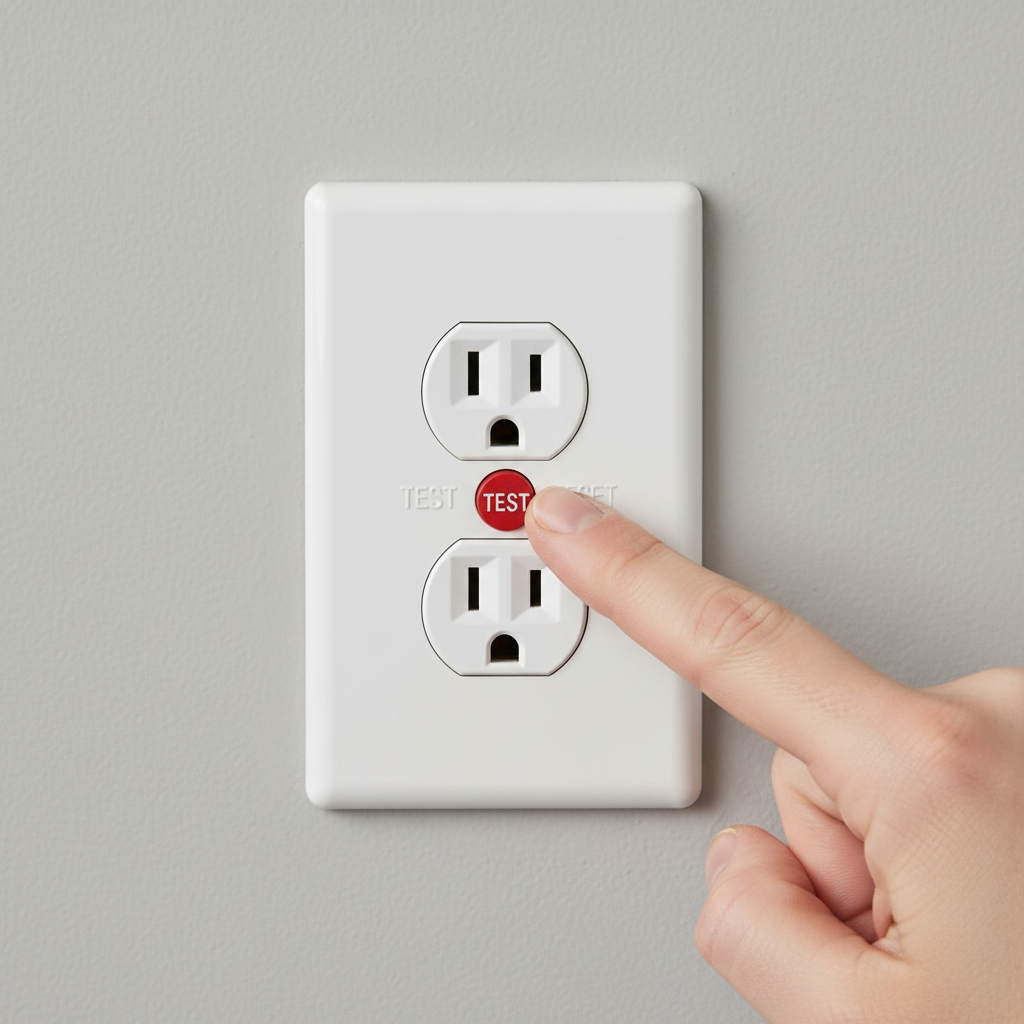
- Inspect for Visible Wiring Damage — Turn off power at the breaker, then remove the GFCI outlet faceplate and carefully pull the outlet from the wall box.
- Tools: Screwdriver set (Phillips and flathead), non-contact voltage tester.
- Safety: Wear electrician's gloves. Do not touch bare wires with power on. If wires are melted or charred, do NOT attempt DIY repair, call an electrician.
Electrical · Breaker keeps tripping
| Project category | Electrical |
|---|---|
| Problem type | Breaker keeps tripping |
| Trade required | Electrical |
| Urgency | Urgent — within days |
| Safety risk | High safety risk |
| DIY suitability | Pro recommended |
| Cost category | Low cost |
| Typical timeline | Diagnosis in a single visit |
| Contractor type | Licensed electrician |
Repair option
Isolate the load, then repair the fault or replace the breaker.
Replacement option
New dedicated circuit when the load simply exceeds what the circuit was built for.
Common causes
- Genuine overload on a shared circuit
- Ground fault from moisture in an exterior box
- Failing breaker or a damaged appliance cord
Relevant tools:diy or hire a prodiy difficulty
Published May 4, 2026Last updated August 17, 2026
Tools & materials you'll need
Affiliate linksAs an Amazon Associate FixlyGuide earns from qualifying purchases — at no extra cost to you. Prices and availability are accurate as of publication and subject to change.
Quick Answer
A GFCI outlet that repeatedly trips is performing its critical safety function by detecting an imbalance in electrical current, usually caused by a ground fault. This can stem from moisture affecting receptacles, a defective appliance plugged into the circuit, or compromised wiring within the circuit itself. Diagnosing the problem involves systematically unplugging appliances, checking for visible damage, and ensuring the circuit is dry before considering more involved electrical checks.
The Problem
Imagine plugging in your trusty old hairdryer in the bathroom, and click, everything goes dark. Or perhaps you're making coffee in the kitchen, and suddenly the counter outlets are dead. You reset the Ground Fault Circuit Interrupter (GFCI) outlet, and it trips again immediately, or after a few minutes. This isn't just an annoyance; it's your electrical system telling you something is wrong. A GFCI is an essential safety device designed to protect you from severe electric shock by constantly monitoring the current flowing in and out of the circuit. If it detects even a tiny difference, indicating current is escaping where it shouldn't (like through you to the ground), it trips the circuit in milliseconds. When it keeps tripping, it means there's a persistent fault, and ignoring it puts you at risk.
How It Works
At its core, a GFCI outlet is a miniature guardian, always on the lookout for danger. Standard electrical outlets have two main slots: a "hot" slot that carries electricity from the panel to the appliance, and a "neutral" slot that carries unused electricity back to the panel. There's also a "ground" hole, which is a safety net, diverting current away from you if there's a fault. A GFCI outlet adds a sophisticated twist: it uses a differential transformer to compare the current flowing out on the hot wire with the current flowing back in on the neutral wire. In a healthy circuit, these currents should be identical. If even a small portion of the electricity (as little as 4-6 milliamperes) deviates from this path—meaning it's "leaking" to ground somewhere—the GFCI will detect that imbalance. This leakage could be through moisture, a damaged appliance, or even a person, and it triggers a tiny solenoid inside the GFCI to instantly open the circuit, cutting power faster than you can blink. This rapid response is what prevents serious electrical shocks and potential electrocution, especially in areas prone to moisture like bathrooms, kitchens, basements, and outdoor locations.
Step-by-Step Fix
Safety Note: Always turn off power at the circuit breaker before working on electrical outlets or wiring. Use a non-contact voltage tester to confirm power is off.
-
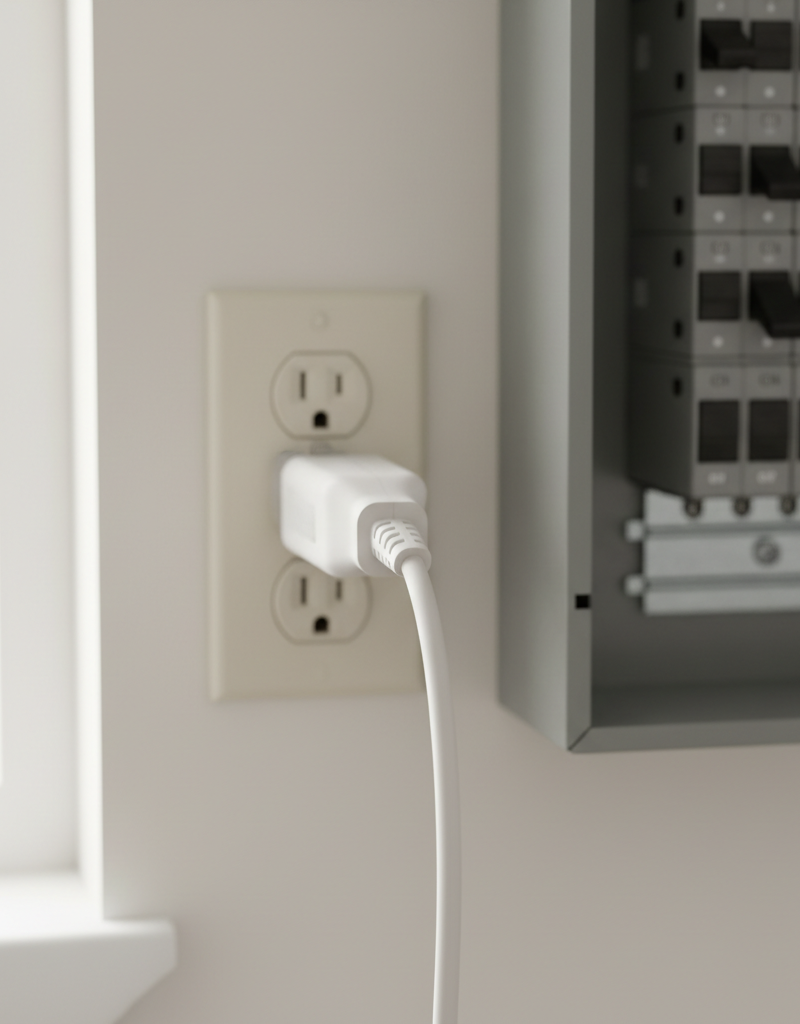
Isolate the Faulty Appliance — Unplug everything from the affected GFCI and its downstream outlets. If the GFCI trips immediately upon reset, even with nothing plugged in, the issue is likely with the GFCI outlet itself or the associated wiring. If it holds, plug in appliances one by one, resetting the GFCI after each, until you find the one that causes it to trip. This identifies a faulty appliance. If the outdoor outlets are tripping the indoor GFCI, check outdoor lighting, pumps, or holiday decorations.
-
Check for Moisture Intrusion — Visually inspect the GFCI and all connected outlets for dampness. Moisture is a prime culprit. Look for water splashes, condensation, or signs of leaks around the outlet, especially in bathrooms, kitchens, and outdoor locations. If found, dry the area thoroughly with a cloth and use a hairdryer on a cool setting if necessary. Ensure weatherproof covers are properly sealed for outdoor outlets. Allow several hours (or even a day) for the area to completely dry before attempting to reset.
-
Inspect for Visible Wiring Damage — Turn off power at the breaker, then remove the GFCI outlet faceplate and carefully pull the outlet from the wall box. Look for frayed wires, loose connections, or melted insulation. Check for wires pinched by the outlet screws or box. If you see any damaged wires, you'll need to repair them by trimming and re-stripping, or by replacing the entire wire run if damage is extensive. Ensure all wire connections are tight and secure. Repeat this for any downstream outlets connected to the GFCI.
- Tools: Screwdriver set (Phillips and flathead), non-contact voltage tester.
- Safety: Wear electrician's gloves. Do not touch bare wires with power on. If wires are melted or charred, do NOT attempt DIY repair, call an electrician.
-
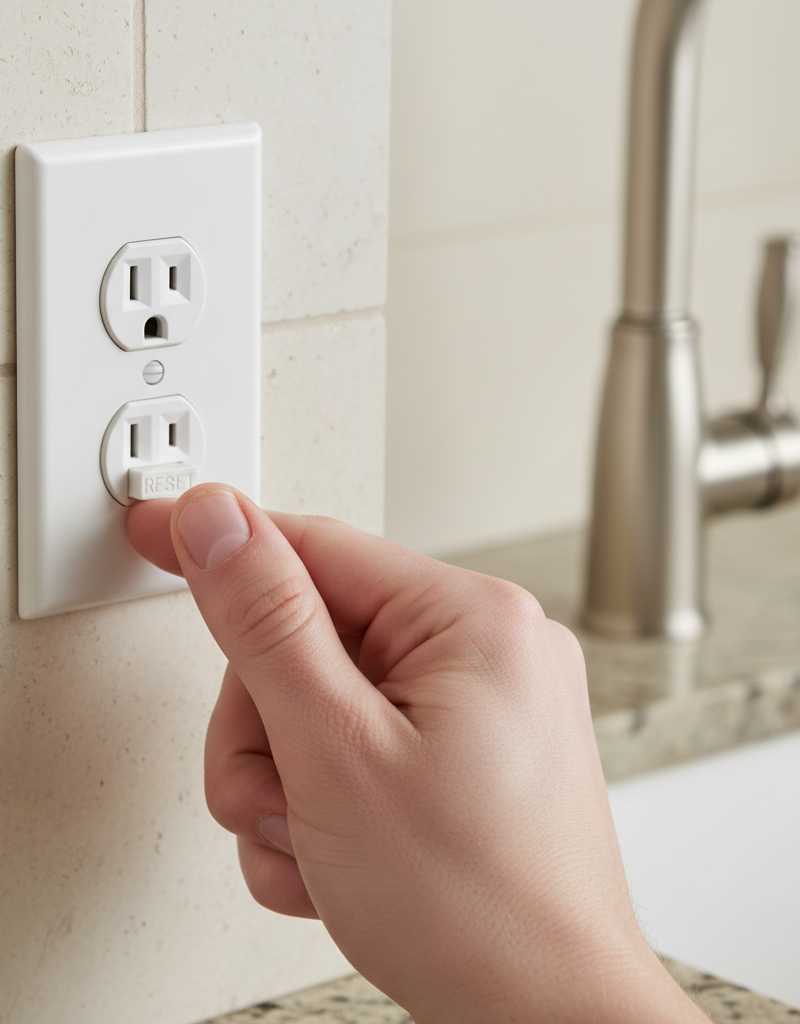
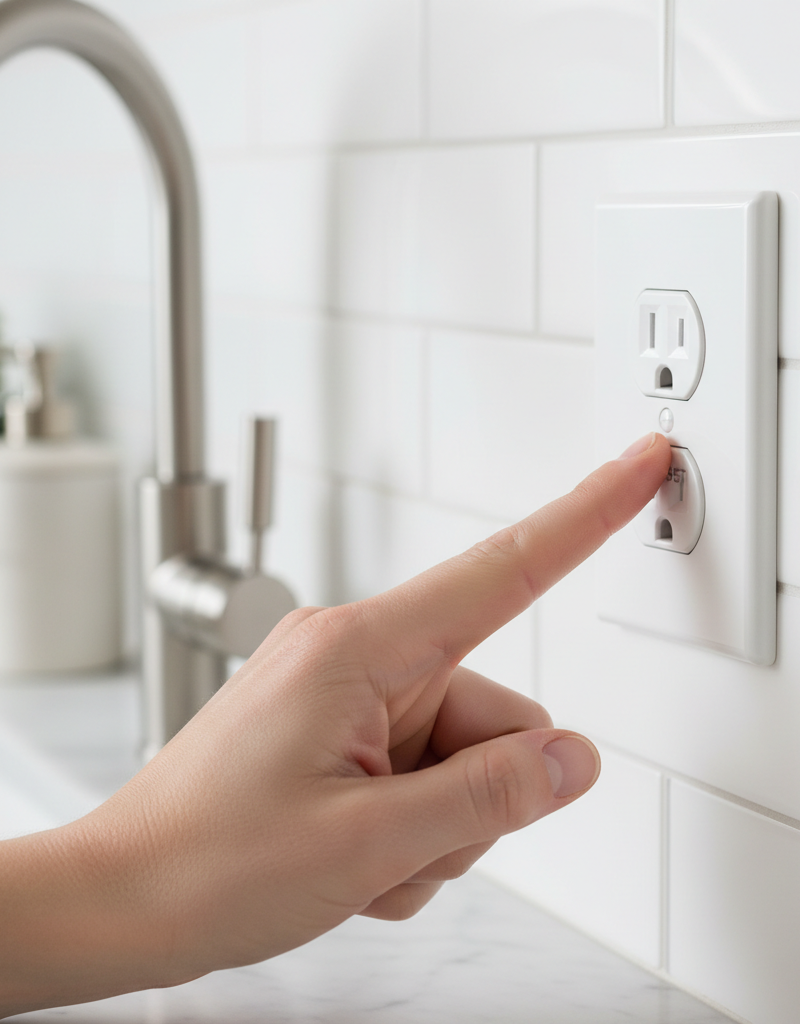
Test the GFCI Outlet Itself — Press the "Test" and "Reset" buttons. With power on, push the "Test" button. The "Reset" button should pop out, and power to the outlet should cut off. Press "Reset" to restore power. If the GFCI doesn't trip when you press "Test," or doesn't reset afterward, the unit itself is likely defective and needs replacement. Do this test even if you suspect an appliance is the cause, as the GFCI could also be failing.
-
Look for Overloaded Circuits — Count the number of high-wattage appliances on the GFCI circuit. While less common for a GFCI (which trips on ground faults, not overloads), linking too many high-draw devices can sometimes stress the wiring, leading to intermittent ground faults. Check which lights and outlets are fed by the GFCI. Redistribute appliances to different circuits if possible.
-
Consider an Internal Appliance Fault — Try plugging the suspected faulty appliance into a different, non-GFCI outlet on another circuit. If the appliance still causes a breaker to trip or shows signs of malfunction (sparks, smoke, burning smell), it definitely has an internal fault and should be repaired by a professional or replaced. Never bypass a GFCI to use an appliance.
-
Address Nuisance Trips — If the GFCI trips during electrical storms or power fluctuations. Sometimes, a GFCI can be sensitive to voltage surges or drops. While usually a sign it's doing its job, persistent nuisance trips without an obvious fault might indicate an older, more sensitive GFCI or local grid issues. Consider installing a whole-house surge protector or replacing the GFCI with a newer, high-quality model designed to minimize nuisance trips while maintaining safety.
-
Professional Assessment for Persistent Issues — If all DIY checks fail, contact a licensed electrician. A persistent, undiagnosable GFCI trip indicates a hidden or complex wiring issue that requires professional expertise and specialized tools to locate and fix safely.
Common Causes
- Moisture Intrusion: The most frequent culprit. Water or even high humidity allows current to leak to ground. This is why GFCIs are mandatory in wet locations.
- Faulty Appliance: An appliance with damaged internal wiring or heating elements can send current to ground, triggering the GFCI.
- Damaged Wiring: Frayed insulation, pinched wires inside the wall, or loose connections can create a path for current to escape directly to the ground wire or the metal electrical box.
- Aging GFCI Outlet: Over time, the internal components of a GFCI can degrade, leading to increased sensitivity or outright failure, causing it to trip unnecessarily or fail to trip when needed.
- Overloaded Circuit (Indirectly): While GFCIs protect against ground faults, not overloads, excessive current draw can sometimes stress wiring and insulation, leading to minor ground fault conditions that trip the GFCI.
- Incorrect Wiring (Downstream): If a GFCI is incorrectly wired to protect additional "downstream" outlets, a fault in any of those downstream outlets or their connected appliances will cause the master GFCI to trip. Often, homeowners incorrectly connect the neutral wire of a load to the neutral bus bar in the panel, while the hot wire goes through the GFCI.
Common Mistakes
- Ignoring the Trip: Resetting repeatedly without investigating the cause can mask a serious electrical hazard, leading to shock or fire.
- Blaming the GFCI First: While GFCIs can fail, they are usually tripping for a reason. Always troubleshoot external factors (appliances, moisture) before assuming the GFCI itself is the problem.
- Not Unplugging Everything: Failing to disconnect all appliances and determine if the GFCI holds first makes diagnosis much harder, as you don
Related Articles
Keep troubleshooting with these hand-picked guides from FixlyGuide:
- The Hidden Reason Your GFCI Trips (It's Not Always a Faulty Outlet) — A continuously tripping GFCI outlet is a critical safety warning, often indicating moisture, a faulty appliance, or a wiring problem that r…
- The Hidden Reason Your GFCI Trips (It’s Not Always a Bad Outlet) — A tripping GFCI outlet is a safety mechanism doing its job, often indicating a problem like moisture, a faulty appliance, or a wiring issue…
- 7 Hidden Equity Drains Costing You Thousands Annually — Your home is an asset, but silent problems like minor leaks, poor insulation, and deferred maintenance can drain its value. Discover the se…
- 7 Closing Cost Surprises First-Time Buyers Never See Coming — First-time home buyer? That final cash-to-close figure is often shockingly higher than expected. Uncover the hidden fees and closing cost s…
- The Surprising Reason Your House Ticks and Pops At Night (And What It Means) — That unsettling ticking or popping sound in your house at night is usually normal thermal expansion and contraction, but sometimes it signa…
- GFCI Outlet Won't Reset? Fix It With These Simple Steps — A GFCI outlet that won't reset usually indicates a tripped circuit, a ground fault, or a faulty outlet. Learn how to diagnose and fix the p…
What should this project cost?
Enter your project details for a realistic cost range before you call anyone.
Outlet and switch work usually $150–$400; panel upgrades commonly $1,800–$4,200.
- Regional adjustment
- National average
- Labor share (typical)
- ~$709
- Quotes to collect
- 3 written estimates
Educational estimate based on national averages — not a binding quote. Always confirm with written local estimates.
Fixly Project Decision Box
- DIY difficulty
- Professional Recommended
- Estimated time
- Diagnosis 1–2 hours
- Cost level
- Moderate
Main tools / materials
- Non-contact voltage tester
- Outlet tester
- Flashlight
When to stop and call a pro
- Burning smell, scorch marks, or a warm outlet or switch plate
- A breaker that trips again right after being reset
- Any work inside the service panel
- Aluminum wiring or cloth-insulated wiring
Need professional help?
Talk to a Licensed ElectricianGet the print-ready PDF of this guide
A clean, ad-free, printable version you can keep on your phone or pin to the workshop wall. Free with a FixlyGuide account.
- Print-optimized layout
- Tools, materials & every step included
- Saved to your account
This article was independently written by FixlyGuide based on the source topic.
Frequently asked questions
What does it mean if my GFCI outlet trips but nothing is plugged in?+
If your GFCI trips with nothing plugged in, the problem is likely with the GFCI outlet itself or the wiring connected to it. This could be due to moisture inside the electrical box, damaged insulation on the wires, or the GFCI unit failing internally. Always turn off power at the breaker before investigating.
Can a bad appliance cause a GFCI to trip?+
Yes, absolutely. A faulty appliance with damaged internal wiring, a heating element, or simply a worn-out component can create a ground fault by allowing current to leak from the hot wire to the appliance's metal casing, which then travels to ground, triggering the GFCI.
How do I know if the GFCI outlet itself is bad?+
To test if the GFCI outlet is bad, plug a lamp into it and turn the lamp on. Press the 'Test' button on the GFCI. The lamp should turn off, and the 'Reset' button should pop out. If the lamp doesn't turn off or the 'Reset' button doesn't pop out, the GFCI may be faulty and should be replaced.
Discussion
Loading comments…