- Physical signs of damage: You see scorch marks, blackening, or melted plastic on the outlet, faceplate, or surrounding wall.
- Sensory warnings: The outlet feels warm or hot to the touch, or you smell burning plastic, ozone (a sharp, metallic smell), or anything unusual coming from the outlet.
- Audible buzzing or humming: A properly functioning outlet should be silent. Any buzzing, sizzling, or humming sounds coming from within the wall indicate a dangerous loose connection or arcing.
- Instantaneous trip with no load: The GFCI trips the instant you reset it, even with nothing plugged into it or any of its downstream outlets. This strongly suggests a ground fault within the circuit wiring itself, not an appliance.
- Circuit breaker also trips: If resetting the GFCI also causes the main circuit breaker to trip, you may have a serious short circuit in addition to a ground fault.
Electrical · Panel or service upgrade
| Project category | Electrical |
|---|---|
| Problem type | Panel or service upgrade |
| Trade required | Electrical |
| Urgency | Planned project |
| Safety risk | High safety risk |
| DIY suitability | Licensed pro only |
| Cost category | High cost |
| Typical timeline | Permit plus utility scheduling, commonly 2–6 weeks |
| Contractor type | Licensed electrician |
Repair option
Add a subpanel when the main service is adequate.
Replacement option
Full service upgrade with utility coordination and permits.
Common causes
- Obsolete or recalled panel brands
- Service capacity too small for added loads
- No room for required AFCI/GFCI breakers
Relevant tools:project cost estimatorcompare quotes
Published April 21, 2026Last updated August 17, 2026
Tools & materials you'll need
Affiliate linksAs an Amazon Associate FixlyGuide earns from qualifying purchases — at no extra cost to you. Prices and availability are accurate as of publication and subject to change.
How it works
A Ground Fault Circuit Interrupter (GFCI) is a specialized electrical outlet designed to prevent severe electric shock. Standard circuit breakers protect wiring from overheating and fire by tripping on overloads or short circuits (typically 15-20 amps). A GFCI, however, protects people from electrocution by detecting minute current imbalances, as small as 4 to 6 milliamps (0.006 amps).
Inside every GFCI is a differential current transformer—a small ring-shaped device with the hot and neutral wires passing through it. This transformer continuously measures the amount of current flowing out on the hot wire and compares it to the current returning on the neutral wire. In a properly functioning circuit, these two currents are perfectly balanced.
A "ground fault" occurs when some of the electrical current finds an alternative path to the ground instead of returning through the neutral wire. This can happen if you touch a faulty appliance while also being grounded (e.g., standing on a wet floor), or if water enters an electrical box. This alternate path creates an imbalance; the current returning on the neutral wire will be less than the current going out on the hot wire. The GFCI’s internal sensor detects this tiny discrepancy and, within as little as 1/40th of a second (25 milliseconds), triggers an internal solenoid that physically disconnects the circuit. This rapid response cuts power before a fatal amount of electricity can pass through a person's body.
Step-by-Step Fix
Follow these steps in order to diagnose and resolve a tripped GFCI outlet. Do not skip steps, as they are designed to safely isolate the problem from simplest to most complex.
-
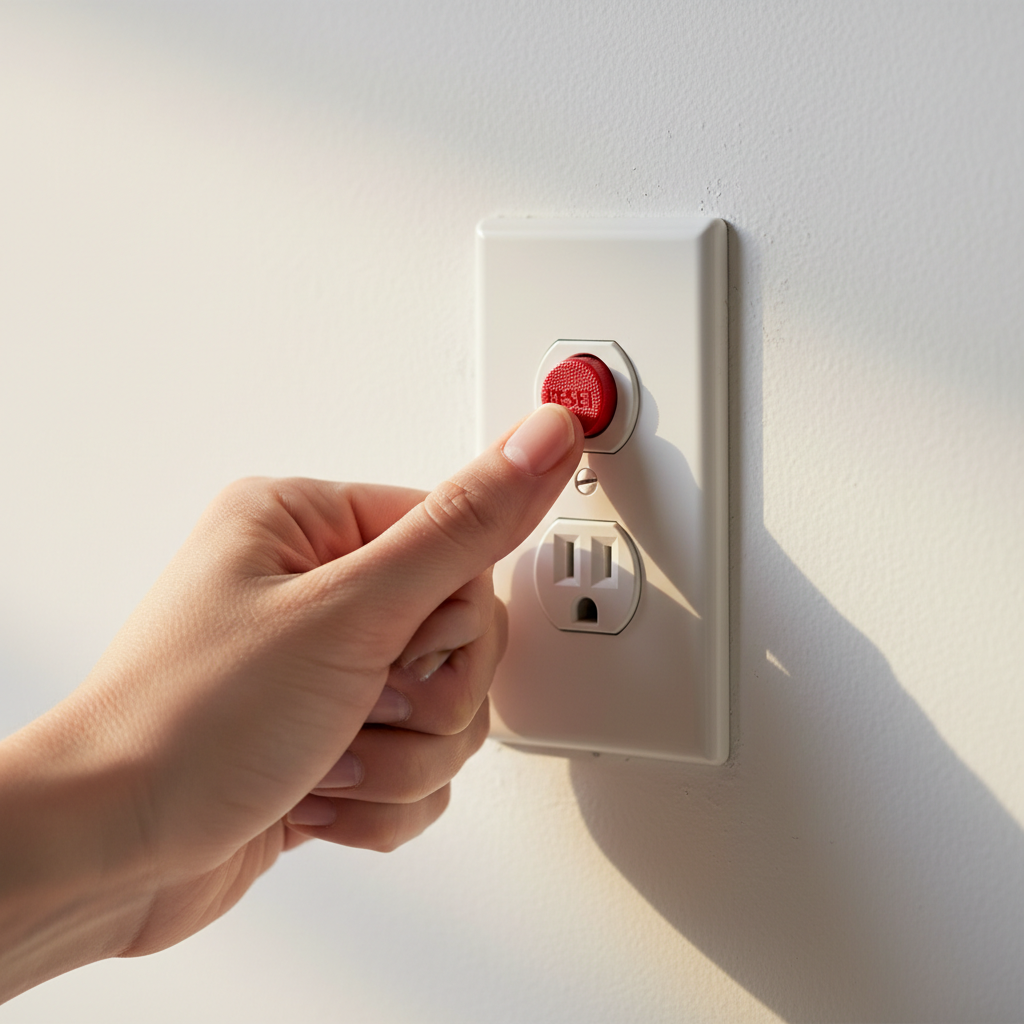
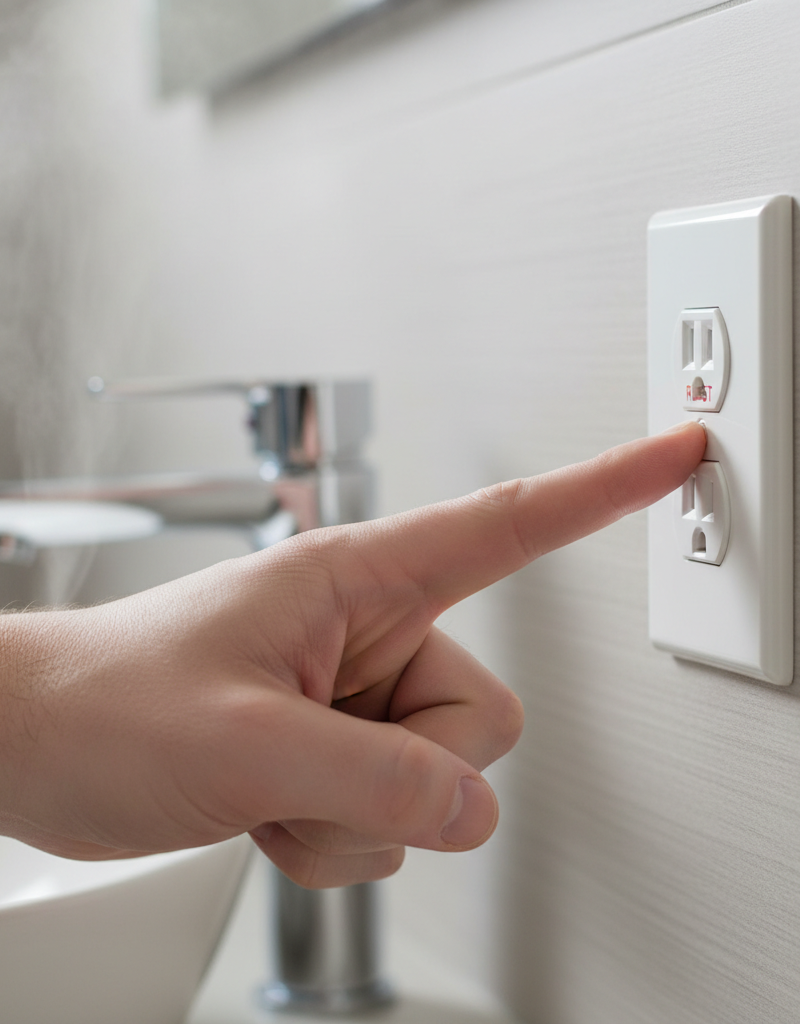
Perform an Initial Reset — Unplug all appliances from the affected GFCI outlet and any other standard outlets on the same circuit that have lost power. Press the "RESET" button (usually red, but sometimes a different color) firmly into the outlet until you hear and feel a distinct click. The button should stay depressed.
- Test for Power: Plug in a small, simple device you know is working, like a night light or phone charger, to confirm power is restored. If the outlet works, the problem was likely a temporary fault in a previously connected appliance.
- Indicator Lights: Many modern GFCIs have a small LED status light. A solid green light typically means the outlet is powered and functioning correctly. No light may indicate it's tripped or has no power from the panel. A red light often signifies a failed self-test or end-of-life status.
-
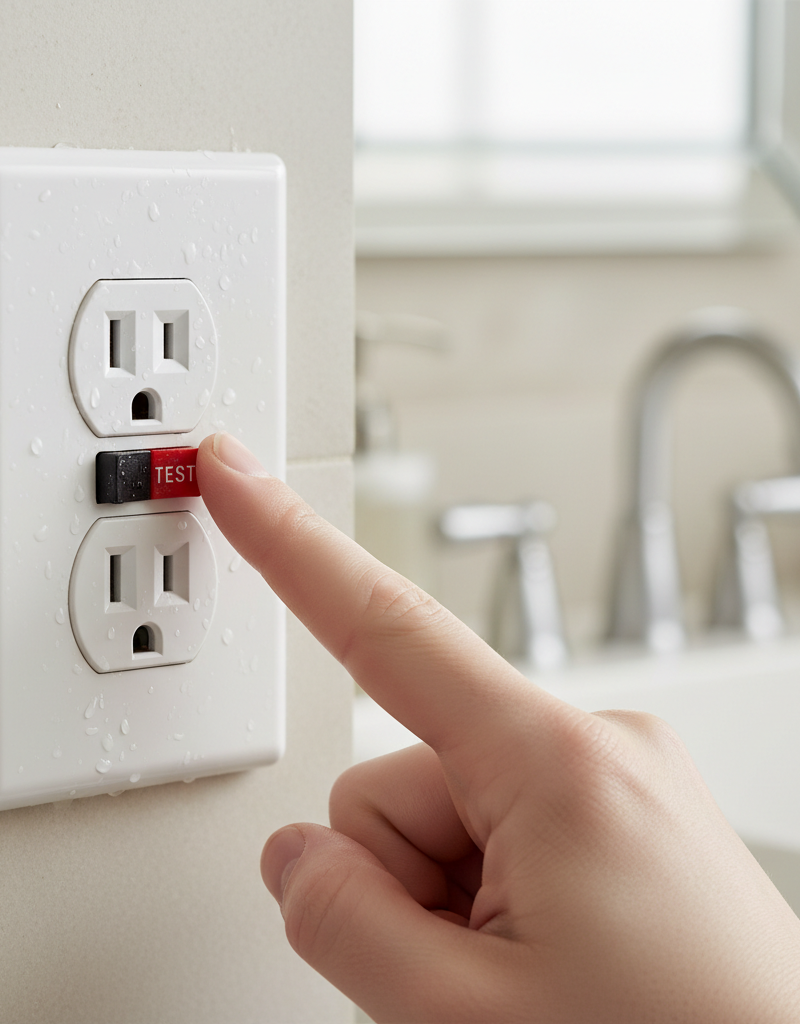
Conduct a Manual Safety Test — If the outlet resets successfully, you must verify its protective function is still working. With the test lamp still plugged in and on, press the "TEST" button (usually black). You should hear a loud click as the "RESET" button pops out and the lamp turns off. Press "RESET" again to restore power.
- If TEST Fails: If pressing the "TEST" button does not trip the outlet, the GFCI's internal safety mechanism has failed. The outlet is no longer providing ground fault protection and must be replaced immediately, even if it still provides power.
-
Find the "Upstream" Controlling GFCI — A single GFCI outlet is often wired to protect several standard outlets "downstream" from it. If a regular outlet is dead, the GFCI that controls it may be located elsewhere. Systematically search for and reset every GFCI in your home.
- Common Locations: Check in this order: all outlets in the same room, other bathrooms, the garage, basement (especially near the main electrical panel), kitchen countertops, and any exterior outlets under weatherproof covers. Test the dead outlet after resetting each one.
-
Isolate a Faulty Appliance — If the GFCI trips immediately after you plug a specific device in, that appliance is the culprit. To confirm, unplug everything from the GFCI and all related downstream outlets. Reset the GFCI. One by one, plug each appliance back in and turn it on. The one that causes the GFCI to trip has an internal ground fault.
- Common culprits: Appliances with heating elements or motors are frequent offenders, such as hair dryers, coffee makers, toasters, blenders, and shop vacuums. Damaged extension cords or decorative lights are also common sources. Discontinue use of the faulty appliance.
-
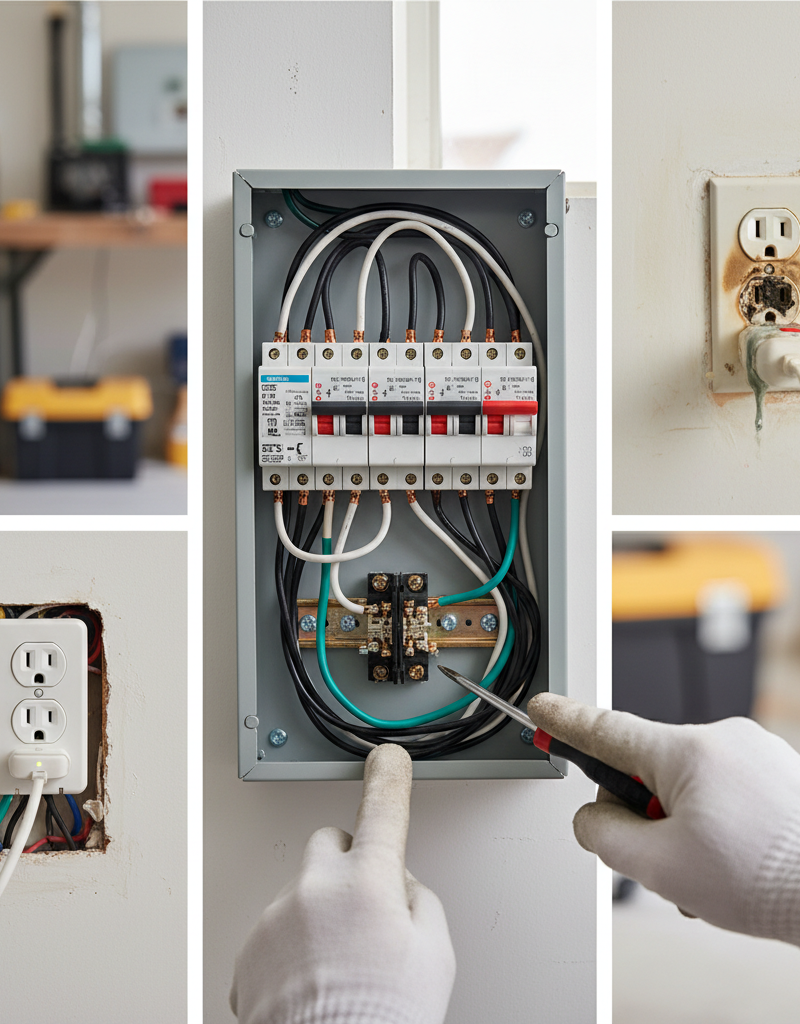
Check the Main Circuit Breaker — If the GFCI outlet has no power, makes no sound when you press the buttons, and its indicator light is off, the circuit breaker feeding it may have tripped. Go to your main electrical panel. Look for a breaker handle that is shifted to the middle or "TRIPPED" position (it will not be aligned with the others in the "ON" position).
- Reset Procedure: To correctly reset a breaker, you must first push the handle firmly to the full "OFF" position. Then, flip it back to the "ON" position. This re-engages the internal spring. Simply nudging it toward "ON" will not work.
-
Inspect for and Dry Out Moisture — Water is a common cause of ground faults, especially in bathrooms, kitchens, and outside. Turn off the circuit breaker that controls the outlet first. Carefully remove the faceplate and look for any signs of water, condensation, or corrosion inside the electrical box.
- Drying: If moisture is present, use a hair dryer on a low, cool setting to gently dry the interior of the box from a safe distance. Allow the outlet and box to air dry for at least 4-6 hours (or 24 hours for significant water exposure) before turning the breaker back on and attempting to reset the GFCI.
- Prevention: Ensure outdoor outlets have proper "in-use" weatherproof covers and that caulking around the box is intact.
-
Test for Power at the LINE Terminals — This step requires a non-contact voltage tester (NCVT) and basic electrical safety knowledge. Proceed only if comfortable. Turn the circuit breaker OFF. Remove the outlet from the wall. The incoming power wires from the panel are connected to the "LINE" terminals (usually marked on the back of the GFCI). Disconnect any wires from the "LOAD" terminals. Turn the breaker back ON. Carefully check for power at the LINE terminals with your NCVT.
- No Power at LINE: If the breaker is on and there is no power at the LINE terminals, the problem is in the wiring between the panel and this outlet. Call an electrician.
- Power at LINE: If there is power, the GFCI outlet itself is likely faulty.
-
Replace the GFCI Outlet — If you've determined the outlet is end-of-life (failed the TEST button) or faulty (has power at LINE terminals but won't reset), it must be replaced. Purchase a new GFCI with the same amperage rating (usually 15A or 20A) as the old one.
- Safety First: Turn off the corresponding circuit breaker and verify the outlet is dead with an NCVT.
- Wiring: Carefully note which wires connect to the LINE terminals (incoming power) and which, if any, connect to the LOAD terminals (outgoing power to other outlets). Install the new GFCI with the exact same wiring configuration. Reversing LINE and LOAD is a common mistake that will prevent the outlet from working correctly.
Common mistakes
- Ignoring the Root Cause: Simply resetting a GFCI that trips repeatedly without investigating why is dangerous. A persistent trip indicates a real ground fault in an appliance or the wiring, which is a shock and fire hazard.
- Confusing LINE and LOAD Terminals: When replacing a GFCI, mixing up the LINE (incoming power) and LOAD (outgoing power) terminals is the most common installation error. This will result in the GFCI not resetting or failing to protect downstream outlets. The LINE terminals are always where the power from the breaker connects.
- Replacing a GFCI with a Standard Outlet: In locations where GFCIs are required by code (kitchens, bathrooms, garages, outdoors), replacing a faulty one with a cheaper standard outlet is illegal and removes a critical layer of personal safety.
- Forgetting to Check Upstream Devices: Many DIYers spend hours troubleshooting a dead outlet, not realizing it's a standard receptacle protected by a tripped GFCI located in another room or on another floor. Always conduct a whole-house search for tripped GFCIs first.
- Using Indoor-Rated GFCIs Outdoors: Standard GFCI outlets are not designed to withstand moisture, temperature fluctuations, and UV exposure. For any outdoor or wet location, you must use a GFCI specifically marked as "WR" for Weather-Resistant.
- Resetting a Wet Outlet: Attempting to reset a GFCI that is visibly wet or has recently been exposed to water can be dangerous. Always shut off power at the breaker and allow the outlet and electrical box to dry completely before restoring power.
Cost & time breakdown
The cost and time required can vary significantly based on whether the fix is a simple reset or a more complex wiring diagnosis.
| Task | DIY cost | Pro cost | Time |
|---|---|---|---|
| Resetting a Tripped GFCI or Breaker | $0 | $75 - $150 (minimum service call) | 5 - 30 minutes |
| Replacing a Single Faulty GFCI Outlet | $15 - $30 (for outlet and basic tools) | $125 - $250 | 30 - 60 minutes |
| Diagnosing an Appliance Fault | $0 | $75 - $150 (if diagnosis is the only task) | 15 - 45 minutes |
| Diagnosing a Persistent Ground Fault | $25 - $75 (for NCVT and multimeter) | $150 - $400+ | 1 - 4 hours |
| Tracing and Repairing Faulty Circuit Wiring | N/A (Pro recommended) | $250 - $800+ | 2 - 8 hours |
| Replacing a GFCI Breaker at the Panel | N/A (Pro recommended) | $200 - $350 | 1 - 2 hours |
When to call a pro
While resetting a GFCI is a simple homeowner task, certain signs indicate a more dangerous problem that requires a licensed electrician. Stop immediately and call a professional if you encounter any of the following:
- Physical signs of damage: You see scorch marks, blackening, or melted plastic on the outlet, faceplate, or surrounding wall.
- Sensory warnings: The outlet feels warm or hot to the touch, or you smell burning plastic, ozone (a sharp, metallic smell), or anything unusual coming from the outlet.
- Audible buzzing or humming: A properly functioning outlet should be silent. Any buzzing, sizzling, or humming sounds coming from within the wall indicate a dangerous loose connection or arcing.
- Instantaneous trip with no load: The GFCI trips the instant you reset it, even with nothing plugged into it or any of its downstream outlets. This strongly suggests a ground fault within the circuit wiring itself, not an appliance.
- Circuit breaker also trips: If resetting the GFCI also causes the main circuit breaker to trip, you may have a serious short circuit in addition to a ground fault.
- Replacement doesn't help: You have correctly installed a brand-new GFCI outlet, and it behaves exactly like the old one (i.e., it won't reset). This confirms the problem lies within your home's wiring.
Prevention & maintenance
Proper maintenance ensures your GFCIs will protect you when needed and last their expected lifespan.
- Test Monthly: The National Electrical Code (NEC) recommends testing every GFCI outlet in your home once a month. Press "TEST," confirm the power cuts off, then press "RESET." This simple, 10-second check verifies that the life-saving trip mechanism is functional.
- Use Weather-Resistant (WR) Models Appropriately: For all outdoor, garage, unfinished basement, and other potentially damp locations, exclusively install GFCIs marked "WR." They are built with corrosion-resistant materials that prevent premature failure from moisture and humidity.
- Install Proper "In-Use" Covers Outdoors: Standard flat covers only protect an outdoor outlet when it's not in use. Replace these with deep, bubble-style "in-use" covers that keep both the outlet and the plug dry, even in heavy rain.
- Know the Lifespan: GFCI outlets have complex internal components that wear out. Their typical service life is 10-15 years. If your home's GFCIs are approaching this age, consider proactively replacing them, especially if they are pre-2006 models that lack self-testing features.
- Inspect Appliance Cords: Before plugging anything into a GFCI, especially power tools or kitchen appliances, give the cord a quick visual inspection. Do not use items with frayed insulation, exposed wires, or damaged plugs, as they are a primary cause of ground faults.
- Label Your Panel: Take the time to accurately label which circuit breaker in your main panel controls which GFCI outlets. This saves critical time and frustration during troubleshooting.
Related Articles
Keep troubleshooting with these hand-picked guides from FixlyGuide:
- GFCI Outlet Won't Reset? Fix It With These Simple Steps — A GFCI outlet that won't reset usually indicates a tripped circuit, a ground fault, or a faulty outlet. Learn how to diagnose and fix the p…
- That tripped breaker? 80% miss the hidden cause. — A tripping circuit breaker is a common household problem, often indicating an overloaded circuit or a short circuit. Understanding the caus…
- The Annoying Chirp: 3 Hidden Reasons Your Smoke Detector Won't Shut Up — Discover the real reasons your smoke detector chirps every 30 seconds and how to silence it permanently with simple DIY steps.
- [Th
Should you do this yourself?
Answer five quick questions before you start. Safety outranks savings every time.
Your experience with work like this
How high do you have to work?
Does the job involve any of these?
Will it need a permit?
Specialty tools
Free and instant. Educational guidance only — not a quote, inspection, or professional diagnosis.
What should this project cost?
Enter your project details for a realistic cost range before you call anyone.
Outlet and switch work usually $150–$400; panel upgrades commonly $1,800–$4,200.
- Regional adjustment
- National average
- Labor share (typical)
- ~$709
- Quotes to collect
- 3 written estimates
Educational estimate based on national averages — not a binding quote. Always confirm with written local estimates.
Fixly Project Decision Box
- DIY difficulty
- Professional Recommended
- Estimated time
- Diagnosis 1–2 hours
- Cost level
- Moderate
Main tools / materials
- Non-contact voltage tester
- Outlet tester
- Flashlight
When to stop and call a pro
- Burning smell, scorch marks, or a warm outlet or switch plate
- A breaker that trips again right after being reset
- Any work inside the service panel
- Aluminum wiring or cloth-insulated wiring
Need professional help?
Talk to a Licensed ElectricianBefore you start
Check the difficulty, permits, and safety risk — then decide whether to call a pro.
- Estimate this projectGet a cost range for your scope and ZIP before you call anyone.Open
- Get local estimatesSend one request and compare written estimates from vetted pros.Open
Free, no signup required. Estimates are educational guidance, not a quote or an inspection.
Get the print-ready PDF of this guide
A clean, ad-free, printable version you can keep on your phone or pin to the workshop wall. Free with a FixlyGuide account.
- Print-optimized layout
- Tools, materials & every step included
- Saved to your account
Frequently asked questions
Why does my GFCI keep tripping with nothing plugged in?+
Either the outlet itself has failed (most common after 10+ years), there is moisture in the outlet box, or there is a wiring fault somewhere downstream on the same circuit. Replace the outlet first; if it still trips, call an electrician.
Can I replace a GFCI outlet myself?+
Yes, if you are comfortable turning off the breaker, confirming power is off with a tester, and following line/load wiring carefully. If any of those steps make you nervous, hire an electrician — it is a $100–$150 job.
Do GFCI outlets wear out?+
Yes. Most last 10–15 years. After that the internal sensing circuit can fail in either direction — the outlet may stop tripping when it should (dangerous) or trip constantly when it should not (annoying).
What is the difference between TEST and RESET?+
TEST simulates a ground fault to confirm the outlet is working — it should always trip when pressed. RESET turns the outlet back on after a trip. Test monthly.
Discussion
Loading comments…