- Just Running Water Through It: Believing that running a cycle with plain water is "cleaning" the machine. Water does nothing to remove the hard mineral deposits bonded to the internal components.
- Skipping the Mid-Cycle Soak: Rushing the process and just letting the vinegar run straight through. The most effective dissolving action happens when the hot acid is allowed to sit and work on the scale for an extended period.
- Not Rinsing Thoroughly: Running only one water rinse after the vinegar. This often leaves a distinct vinegar tang in your next few pots of coffee. Two to three full rinses are essential.
- Using Bleach or Harsh Chemicals: Never use bleach to clean the inside of a coffee maker. It can damage the internal plastic and metal parts and is very difficult to rinse out completely, posing a health risk.
- Forgetting the External Parts: Focusing only on the internal descaling while ignoring a dirty carafe or clogged spray head. The overall performance depends on every part being clean.
Plumbing · Clog
| Project category | Plumbing |
|---|---|
| Problem type | Clog |
| Trade required | Plumbing |
| Urgency | Soon — within weeks |
| Safety risk | Low safety risk |
| DIY suitability | DIY friendly |
| Cost category | Low cost |
| Typical timeline | Same-day DIY attempt; pro visit within a day or two |
| Contractor type | Licensed plumber |
Repair option
Plunger, hand auger, or trap cleanout before chemicals.
Replacement option
Line replacement when clogs return in the same spot repeatedly.
Common causes
- Hair and soap buildup in the trap
- Grease cooling in the branch line
- Flushed wipes or foreign objects
Relevant tools:diy difficultydiy or hire a pro
Published May 5, 2026Last updated August 17, 2026
Tools & materials you'll need
Affiliate linksAs an Amazon Associate FixlyGuide earns from qualifying purchases — at no extra cost to you. Prices and availability are accurate as of publication and subject to change.
Quick Answer
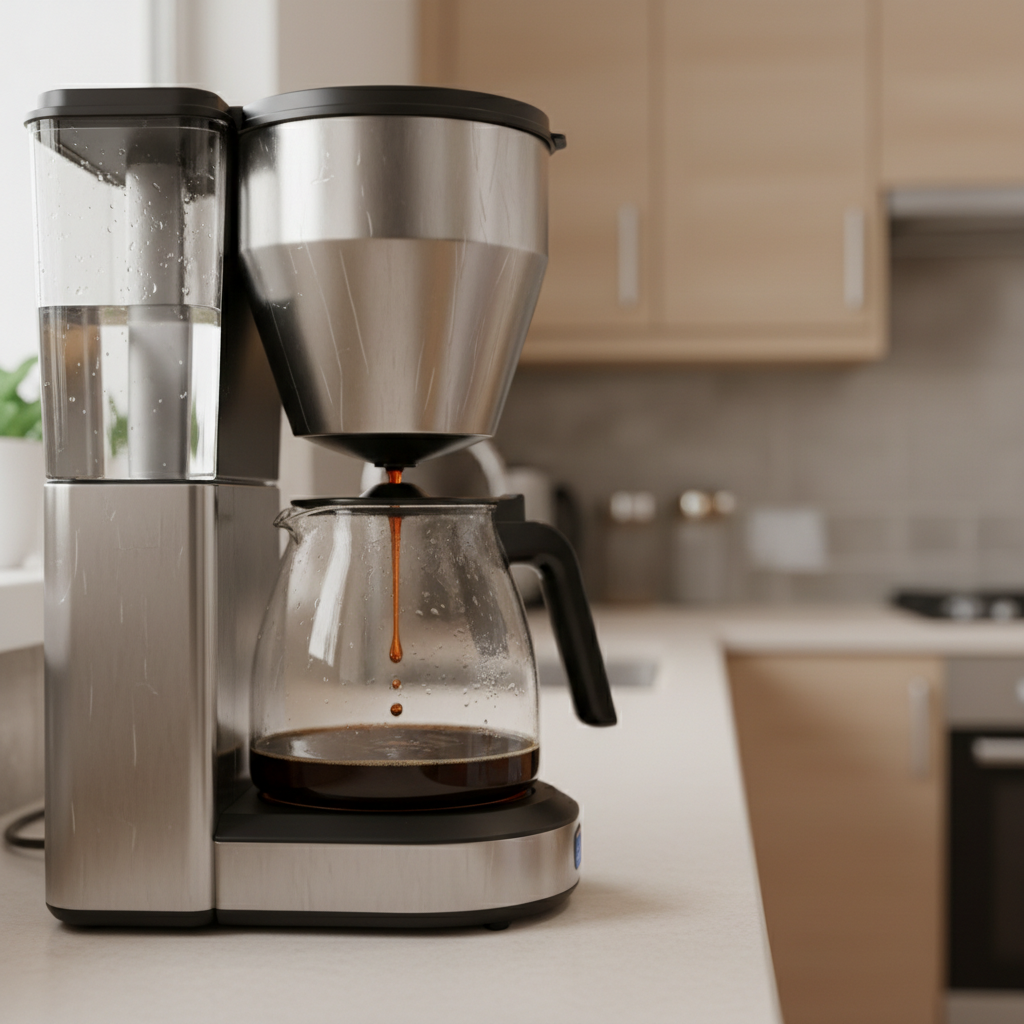
Your coffee maker is likely dripping slowly because of limescale (calcium and magnesium) buildup from hard water. This mineral scale constricts the internal tubing that carries water from the reservoir to the spray head, choking the flow. The fix is to run a descaling solution, typically a 50/50 mix of white vinegar and water, through a brew cycle. This simple process dissolves the mineral blockage and restores your machine's performance, making your coffee brew faster and taste better.
The Problem
It starts subtly. You notice the gurgle and drip of your morning coffee routine seems to be stretching a bit longer. What used to be a reliable five-minute brew now takes seven, then ten, and now you’re staring at a frustrating 15-minute ordeal. The coffee that finally emerges is often weak and lukewarm, a disappointing shadow of its former self. Sometimes, the water backs up so much that it overflows the filter basket, sending hot water and coffee grounds cascading across your counter in a infuriating brown mess.
You’ve cleaned the carafe. You’ve replaced the filter. You’ve even tried different coffee grounds. Yet, the problem persists. The drip, drip, drip is agonizingly slow, a single drop forming and falling every few seconds where a steady stream used to be. It’s a common homeowner frustration that leads many to prematurely discard a perfectly good appliance, assuming the motor is “dying” or that it’s simply worn out. In reality, the machine isn’t failing; it’s slowly being strangled from the inside.
How It Works
A standard automatic drip coffee maker is a marvel of simple physics. When you pour cold water into the reservoir, it flows into a narrow aluminum tube connected to a resistive heating element. This element, much like the one in an electric kettle, gets incredibly hot very quickly. As the water inside the tube flashes into steam—a process known as nucleate boiling—it creates pressure. This steam pressure forces the remaining hot water up a separate piece of vinyl or silicone tubing.
This tube carries the near-boiling water up to the top of the machine, where it exits through a spray head (or "drip nozzle") and rains down over the coffee grounds in the filter basket. The water then extracts the delightful coffee compounds, drips through the filter, and fills the carafe below, which sits on a low-power warming plate.
The chokepoint in this entire system is that narrow aluminum heating tube. Your tap water, especially if you live in an area with "hard water," is full of dissolved minerals like calcium and magnesium carbonates. When this mineral-rich water is heated, the minerals precipitate out and form a rock-hard, crusty deposit known as limescale. Over hundreds of brew cycles, this scale builds up on the inside walls of the heating tube, progressively narrowing the channel. As the passage constricts, less water can be pushed through by the steam pressure, resulting in the slow, weak drip you’re experiencing. The machine is working just as hard, but it’s fighting against a clog of its own making.
Step-by-Step Fix
This process, known as descaling, uses a mild acid to dissolve the mineral buildup inside your machine. It requires about 2 hours, but most of that is hands-off waiting time.
-
Empty and Prep the Machine — First, ensure the coffee maker is unplugged and cool. Empty any old, damp grounds from the filter basket and discard the paper filter. If you have a permanent mesh filter, empty it and give it a quick rinse. Pour out any leftover coffee from the carafe and rinse it with warm water. You want to start with a completely empty machine.
-
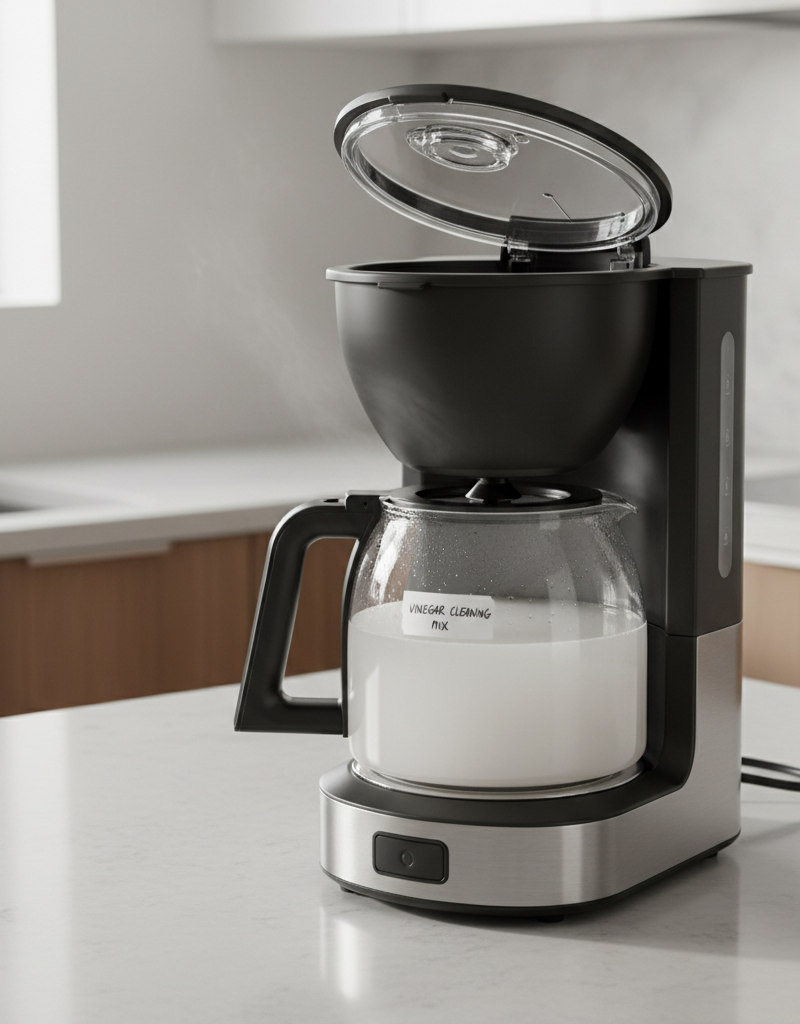
Mix the Descaling Solution — You don't need a fancy commercial product. Plain white distilled vinegar is the gold standard for this job due to its acetic acid content. Create a solution by mixing equal parts white vinegar and water. For a standard 12-cup coffee maker, this typically means about 6 cups of vinegar and 6 cups of water. Pour this solution directly into the water reservoir, just as you would with plain water.
-
Run the First Half of the Brew Cycle — Place the empty carafe back on the warming plate and put the empty filter basket in its place. Plug in the machine and turn it on to start a normal brew cycle. The machine will begin to pump the hot vinegar solution through its internal plumbing.
-
Initiate the Critical Mid-Cycle Soak — This is the most important step for a deep clean. When the carafe is about half-full of the brewed vinegar solution, turn the coffee maker off. Let the machine sit for at least 60 minutes. This pause allows the hot vinegar trapped in the heating element and tubing to actively dissolve the stubborn, caked-on limescale. Skipping this soak is the most common mistake and leads to a less effective clean.
-
Complete the Brew Cycle — After the 60-minute soak, turn the coffee maker back on and let it finish brewing the rest of the vinegar solution into the carafe. Once the cycle is complete and the machine is quiet, turn it off.
-
Inspect and Discard the Solution — Carefully remove the carafe. The brewed vinegar solution inside will likely look brownish or cloudy and may even have small black or white flakes floating in it. This is the dissolved limescale and coffee residue you just cleaned out. It's a good sign! Pour this solution down the sink.
-
Run Multiple Fresh Water Rinses — The vinegar did its job, but you don't want it in your morning coffee. Fill the reservoir with a full pot of fresh, cold water and run another complete brew cycle. Discard the water. Repeat this rinsing process at least two more times (for a total of 3 fresh water rinses). This is crucial for flushing out any loosened debris and ensuring there is no lingering vinegar taste or smell.
-
Clean All Removable Parts — While the rinse cycles are running, take the opportunity to deep clean the other components. Wash the carafe, the lid, and the brew basket in your sink with hot, soapy water. Use a soft bottle brush to scrub inside the carafe and its lid. Pay special attention to the spray head above the basket; use a toothpick or a small paperclip to gently clear any visible debris from its drip holes.
-
Wipe Down and Reassemble — Once the final rinse is complete, use a damp cloth to wipe down the exterior of the coffee maker, including the warming plate. Reassemble the dry, clean components.
-
Run a Final Test Brew — Brew a pot of coffee as you normally would. You should immediately notice a significant difference. The machine will gurgle powerfully, and a steady stream of hot water will produce a much faster brew time, often cutting the previous, slow time by more than half. The resulting coffee will also taste hotter, stronger, and less bitter.
Common Causes
- Hard Water & Limescale Buildup: This is, by far, the number one cause. Over 85% of US households have hard water. When this water is heated, dissolved minerals like calcium and magnesium precipitate out and form a rock-hard scale on the heating element and in the water lines. This is the same stuff that leaves white spots on your dishes.
- Coffee Ground Obstructions: If you overfill your filter basket or use a grind that is too fine (like an espresso grind), small coffee particles can wash over the filter edge and get into the system. They can clog the small hole at the bottom of the brew basket or even find their way into the machine's internal tubing over time.
- Clogged Spray Head: The small holes in the spray head where the hot water comes out can become individually clogged with mineral deposits. This can cause an uneven saturation of the coffee grounds, leading to a weak brew, and can contribute to the water backing up.
- Using the Wrong Grind Size: Drip coffee makers are designed for a medium grind. Using a very fine grind creates a dense bed of coffee that water struggles to penetrate. This resistance dramatically slows the drip rate and is a primary cause of basket overflows.
- Infrequent Cleaning: A coffee maker is not a self-cleaning appliance. Oily residue from coffee beans builds up over time, which can become sticky and trap mineral deposits, accelerating the entire clogging process. Delaying descaling allows the scale to harden and become much more difficult to remove.
Common Mistakes
- Just Running Water Through It: Believing that running a cycle with plain water is "cleaning" the machine. Water does nothing to remove the hard mineral deposits bonded to the internal components.
- Skipping the Mid-Cycle Soak: Rushing the process and just letting the vinegar run straight through. The most effective dissolving action happens when the hot acid is allowed to sit and work on the scale for an extended period.
- Not Rinsing Thoroughly: Running only one water rinse after the vinegar. This often leaves a distinct vinegar tang in your next few pots of coffee. Two to three full rinses are essential.
- Using Bleach or Harsh Chemicals: Never use bleach to clean the inside of a coffee maker. It can damage the internal plastic and metal parts and is very difficult to rinse out completely, posing a health risk.
- Forgetting the External Parts: Focusing only on the internal descaling while ignoring a dirty carafe or clogged spray head. The overall performance depends on every part being clean.
- Waiting Too Long: Allowing the machine to get to the point where it takes 30 minutes to brew a pot. At this stage, the scale can be so thick that a single vinegar cycle may not be enough to clear it completely. Regular, proactive cleaning is key.
Cost & Time Breakdown
Fixing a slow coffee maker is one of the most cost-effective DIY repairs you can perform in your kitchen. The cost of professional repair is not applicable here, as the service call would exceed the price of a new high-quality machine.
| Task | DIY Cost | Pro Cost | Time |
|---|---|---|---|
| Basic Vinegar Descaling | $1 - $3 (for vinegar) | $75 - $150 (Replacement Cost) | 1.5 - 2 hours (mostly inactive) |
| Deep Cleaning Components | $0 (soap and water) | N/A | 10 minutes |
| Clearing a Ground Clog | $0 | N/A | 5 minutes |
| Replacement Carafe | $15 - $25 | N/A | 2 minutes to order |
Tips & Prevention
- Descale Proactively: Don't wait for the drip to slow. If you have hard water, descale your machine every 1-2 months. If you have soft water, every 3-4 months is sufficient. Set a recurring calendar reminder.
- Use Filtered Water: The single best way to prevent limescale is to stop it at the source. Using water from a pitcher filter, refrigerator filter, or purchasing filtered water will dramatically reduce mineral content and extend the time between descaling.
- Clean Removable Parts Regularly: Wash the brew basket and carafe with soap and water after every use. This prevents the buildup of coffee oils, which can turn rancid and make your coffee taste bad.
- Use the Right Grind: Ensure you're using a medium grind appropriate for a drip machine. If your grounds look like fine powder, they are likely too fine and will cause flow problems.
- Don't Leave it On: Turn the machine off after brewing is complete. Letting the carafe sit on the hot plate for hours can bake coffee onto the bottom and create a burnt taste.
When to Call a Professional
When it comes to small appliances like coffee makers, "calling a professional" almost always means replacing the unit. There is no cost-effective way to have a technician diagnose and repair a $100 coffee maker; the labor and parts would quickly surpass its value. This is a quintessential DIY-or-buy-new scenario.
You should move from "repair" to "replace" mode if you encounter these issues:
- The Descaling Fails: If you have performed a thorough descaling (or even two) and the machine is still dripping incredibly slowly, the blockage may be too severe or caused by something other than minerals that vinegar can't dissolve.
- Leaking From the Base: If water is pooling under the unit, it indicates a cracked reservoir or a failed internal hose seal. This is not safely or easily repairable.
- It Won't Heat: If the brew cycle starts but the water remains cold and nothing comes out, the heating element has likely failed. This is the machine's core component and is not replaceable.
- Electrical Malfunctions: If the lights flicker, the buttons are unresponsive, or it trips your circuit breaker, unplug it immediately and recycle it. Do not attempt an electrical repair.
- Visible Cracks or Damage: If the housing is cracked or key parts are broken, it's time for a new machine.
Related Articles
Keep troubleshooting with these hand-picked guides from FixlyGuide:
- Your Dishwasher Dishes Come Out Cloudy? It's This, Not Soap — Tired of cloudy glasses and spotty plates? The unsightly white residue from your dishwasher is almost always caused by hard water mineral d…
- The #1 Reason Your Ice Maker Stopped (It's Not Clogged!) — Discover the most overlooked culprit behind a non-working ice maker and how a simple fix can restore fresh ice to your freezer.
- The #1 Mistake Homeowners Make When Their Ice Maker Stops (And the Easy Fix) — Is your refrigerator ice maker on strike? Often, a simple oversight or minor clog is the culprit, easily fixable with basic tools.
- Refrigerator Not Cooling but Freezer Works: 6 DIY Fixes — When the freezer is fine but the fridge is warm, the cause is almost always airflow — not refrigerant. Here are the 6 fixes, ordered from f…
- Your Refrigerator's Loud Hum? The Fix Most People Miss — A constant, loud refrigerator hum is more than annoying—it's a warning sign. Before you call a pro, discover the #1 most overlooked cause a…
- The Secret Culprit Behind Your Kitchen Sprayer’s Drab Drizzle (It’s Not Clogging!) — Don't replace that kitchen sink sprayer head just yet! Low pressure often stems from a few hidden, easily fixable issues within your faucet…
Should you do this yourself?
Answer five quick questions before you start. Safety outranks savings every time.
Your experience with work like this
How high do you have to work?
Does the job involve any of these?
Will it need a permit?
Specialty tools
Free and instant. Educational guidance only — not a quote, inspection, or professional diagnosis.
What should this project cost?
Enter your project details for a realistic cost range before you call anyone.
Cost depends heavily on which system turns out to be the source.
- Regional adjustment
- National average
- Labor share (typical)
- ~$1,620
- Quotes to collect
- 3 written estimates
Educational estimate based on national averages — not a binding quote. Always confirm with written local estimates.
Get the print-ready PDF of this guide
A clean, ad-free, printable version you can keep on your phone or pin to the workshop wall. Free with a FixlyGuide account.
- Print-optimized layout
- Tools, materials & every step included
- Saved to your account
Frequently asked questions
How often should I descale my coffee maker?+
If you have hard water, descale it every 1-2 months. If you have soft water or use filtered water, descaling every 3-4 months is usually sufficient. Regular descaling is the best way to prevent slow dripping.
Can I use something other than vinegar to descale my coffee maker?+
Yes, you can use citric acid (about 2 tablespoons dissolved in a full reservoir of water) or a commercial descaling solution. However, avoid using bleach or baking soda, as bleach can damage the machine and be unsafe, and baking soda is not effective at removing mineral scale.
My coffee is overflowing the basket. Is that a clogging issue?+
Yes, it's a flow-rate issue. It's most commonly caused by using coffee grounds that are too fine, creating a dense puck that water can't pass through easily. It can also be caused by the slow drip from an already-clogged machine, which saturates the grounds faster than the carafe can receive the coffee. First, try a coarser grind, and if that doesn't work, perform a full descaling.
Will descaling my coffee maker make the coffee taste better?+
Absolutely. Besides fixing the slow drip, descaling removes old coffee oil residue and mineral deposits that can make coffee taste bitter or metallic. A clean machine brews hotter and extracts flavor more efficiently, resulting in a significantly better-tasting cup of coffee.

Discussion
Loading comments…