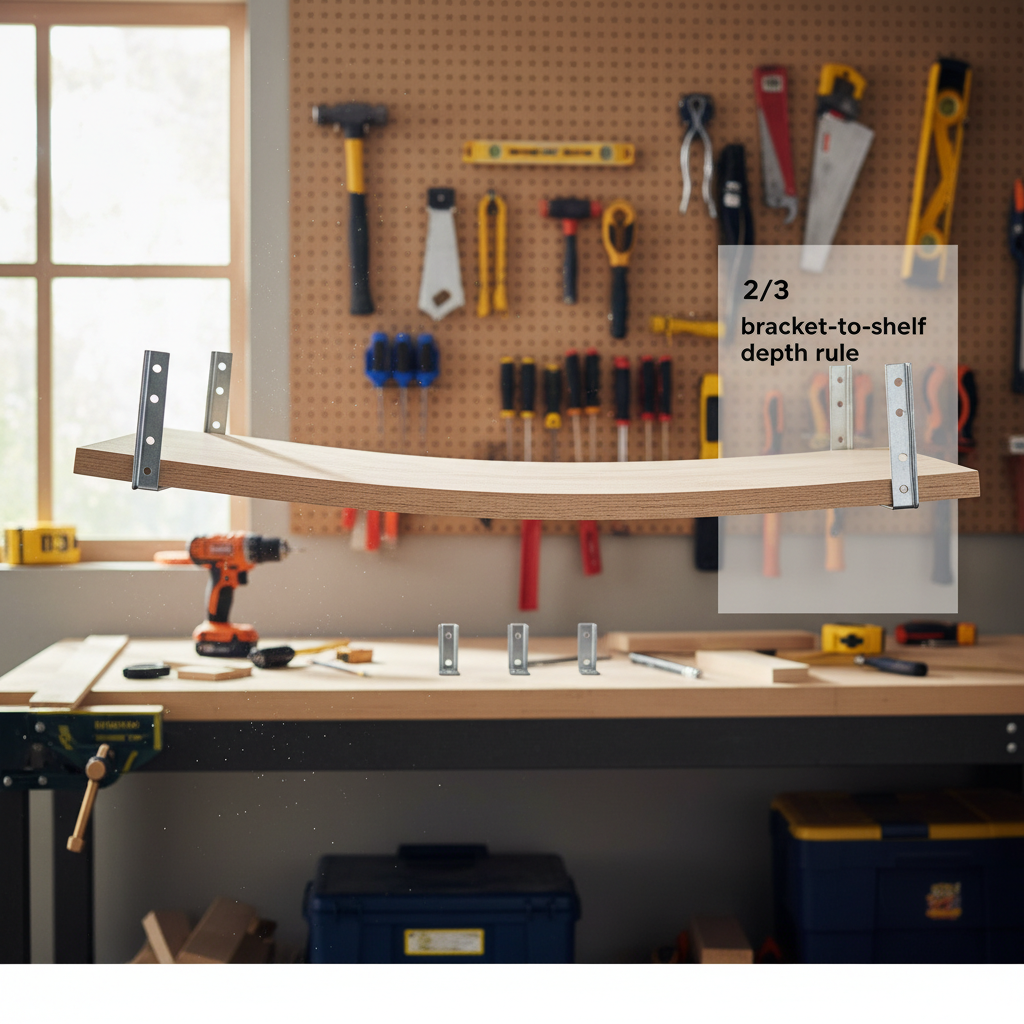
- The 2/3 Rule Violation: This is the number one reason for sagging. The internal bracket is simply too short to handle the leverage of the shelf depth.
- Low-Quality Brackets: Many off-the-shelf floating shelf kits come with thin, flimsy brackets made from soft metal. These will bend and deform under even moderate loads, regardless of proper anchoring.
- Overloading: Every shelf has a weight limit. Placing a full set of heavy encyclopedias or a cast-iron pot on a shelf designed for lightweight picture frames will inevitably cause it to fail.
- Hollow-Core Shelf Construction: Some cheap shelves are not solid wood or MDF but are hollow inside with a thin veneer. These shelves lack the structural integrity to hold their own shape, let alone anything on top of them.
- Wall Integrity: In older homes with plaster-and-lath walls, the wall itself may not have the integrity to support a heavy load, even if you anchor into a stud.
General remodeling · Renovation planning
| Project category | General remodeling |
|---|---|
| Problem type | Renovation planning |
| Trade required | General contracting |
| Urgency | Planned project |
| Safety risk | Low safety risk |
| DIY suitability | Pro recommended |
| Cost category | Major investment |
| Typical timeline | Design and permitting often 2–4 months before work starts |
| Contractor type | General contractor |
Repair option
Phase the work and fix the building envelope first.
Replacement option
Full renovation with permits, design, and a general contractor.
Common causes
- Space no longer fits how the household lives
- Resale preparation
- Deferred maintenance stacking up
Relevant tools:project cost estimatorcompare quoteshome improvement material prices
Published May 5, 2026Last updated August 17, 2026
Tools & materials you'll need
Affiliate linksAs an Amazon Associate FixlyGuide earns from qualifying purchases — at no extra cost to you. Prices and availability are accurate as of publication and subject to change.
Quick Answer
Floating shelves sag primarily because the internal support bracket is too short for the shelf's depth, failing the professional 2/3 rule: the bracket must extend at least two-thirds of the way into the shelf. This creates excessive leverage on the bracket, causing it to bend or pull away from the wall, especially when combined with inadequate wall anchoring or overloading.
The Problem
It’s a depressingly common sight in modern homes. The sleek, minimalist floating shelf you installed a year ago now has a noticeable, dispiriting droop. The books you neatly arranged now tilt forward, and a small but infuriating gap has opened between the back of the shelf and the wall. You push up on the front edge, and it flattens out, only to slump back down as soon as you let go. It looks cheap, feels unstable, and you're constantly worried that one more decorative object will be the final straw that sends it all crashing down. This isn't just an aesthetic issue; it's a sign of a fundamental failure in physics and installation, a problem that won't fix itself and will only get worse over time.
How It Works
A floating shelf is a classic example of a cantilever system. In simple terms, it's a rigid beam (the shelf) supported at only one end. The wall acts as the support and fulcrum, and the entire system relies on resisting the force of leverage. Gravity pulls down on the entire shelf, but this force is magnified dramatically at the front edge, farthest from the wall. The internal bracket is the unsung hero tasked with counteracting this amplified force.
This is where the crucial 2/3 Bracket-to-Shelf Depth Rule comes into play. The rule, followed diligently by professional carpenters and installers, dictates that the support rods of the bracket must extend at least two-thirds (or roughly 67%) of the total depth of the shelf.
- Example: For a standard 10-inch deep floating shelf, the internal bracket rods must be at least 6.7 inches long. An 8-inch bracket would be even better. A 4-inch bracket is a guaranteed recipe for sagging.
Why? Physics. A longer bracket arm inside the shelf provides a longer lever to resist the downward rotational force (or 'moment'). It more effectively transfers the load from the outer edge of the shelf back to the wall plate and, crucially, to the wall studs. When the bracket is too short—violating the 2/3 rule—the leverage of the overhanging portion of the shelf becomes too powerful. The immense pressure on the short bracket rods causes them to flex and bend. Simultaneously, the wall plate they are welded to experiences immense pull-out force at the top and compression at the bottom, causing it to tear away from the drywall or bend, creating that tell-tale gap at the top.
Step-by-Step Fix
Fixing a sagging floating shelf isn't about tightening a screw; it's about addressing the root cause: an improperly sized or poorly anchored bracket. This guide will walk you through a full re-installation.
SAFETY FIRST: Always wear safety glasses when drilling. Be mindful of potential electrical wiring or plumbing within walls. If you are unsure, use a stud finder with AC detection or consult a professional.
-
Empty and Remove the Shelf — First, carefully remove all items from the shelf. Then, check underneath for small set screws that secure the shelf board to the bracket; loosen these with an Allen key or screwdriver. Carefully slide the wooden shelf board straight off the bracket posts. If it's stuck, it may be due to the bracket's sagging angle; you might need to lift the front edge of the shelf firmly while pulling it away from the wall.
-
Inspect the Bracket and Wall — With the shelf removed, take a hard look at the exposed bracket and the wall behind it. Is the metal backplate bent? Are the support rods angled downwards? Look at the wall anchors. Have the screws pulled out of the drywall? Are there compression marks or cracks in the wall? This diagnosis will confirm the failure point.
-
Perform the 2/3 Rule Test — This is the moment of truth. Use a tape measure to find the full depth of your shelf board (e.g., 10 inches). Now, measure the length of the support rods on your bracket, from the wall plate to the tip (e.g., 5 inches). Divide the rod length by the shelf depth (5 / 10 = 0.5, or 50%). If this number is less than 0.67, you've found your primary culprit. The bracket is too short and must be replaced.
-
Locate Wall Studs — This is the most critical step for a secure installation. Use a high-quality electronic stud finder to locate the vertical wooden studs behind your drywall. Slide it horizontally across the wall, marking the left and right edges of each stud with a pencil. Standard stud spacing is 16 inches on-center, but can sometimes be 24 inches. Your goal is to anchor the new bracket directly into at least two of these studs.
-
Select a New Bracket and Hardware — Purchase a new heavy-duty floating shelf bracket that passes the 2/3 rule for your shelf depth. Look for brackets made of solid steel, with a thick backplate (at least 3/16 inch). For securing the bracket to the studs, discard any included drywall anchors. You need 5/16-inch or 3/8-inch diameter lag bolts that are long enough to go through the bracket, the drywall (typically 1/2 inch), and at least 1.5 inches into the wooden stud.
-
Position and Level the New Bracket — Hold the new, appropriately-sized bracket against the wall, aligning its mounting holes with the stud locations you marked. Use a 2-foot or 4-foot bubble level (a torpedo level is too short for accuracy here) placed on top of the bracket to ensure it is perfectly level. Use a pencil to mark the exact drilling location for each lag bolt through the holes in the bracket.
-
Drill Pilot Holes — Move the bracket aside. To prevent the stud wood from splitting and to make driving the lag bolts easier, you must drill pilot holes. The pilot hole should be slightly smaller in diameter than the lag bolt's shaft (not the threads). A 5/32-inch or 3/16-inch drill bit is typically appropriate for a 5/16-inch lag bolt. Drill straight into the wall at your pencil marks, going about 2 inches deep.
-
Secure the Bracket to the Wall — Position the bracket back on the wall, aligning it with your pilot holes. Use a socket wrench or an impact driver with a socket adapter to drive the lag bolts through the bracket and into the studs. Do not use a regular drill/driver, as it likely won't provide enough torque and can strip the bolt head. Tighten until the bracket is absolutely snug against the wall, but do not overtighten, as this can crush the drywall and damage the stud.
-
Patch Old Holes — You will likely have unsightly holes from the previous failed installation. Use a small putty knife to apply lightweight spackle or wall putty to these holes. Apply a second coat if it shrinks after drying. Once fully dry, sand it smooth and touch up with paint to match your wall.
-
Slide and Secure the Shelf — Carefully slide your wooden shelf board back onto the new, robustly mounted bracket. It should be a snug fit. Once it's flush against the wall, secure it by reinstalling the small set screws on the underside of the shelf that you removed in step one. This prevents the shelf from sliding off.
-
Test and Load — Before placing all your items back, give the shelf a firm test. Press down on the front edge with a good amount of force. It should feel completely solid with zero flex or movement. Once you're confident in its stability, you can load it up, knowing it’s installed to last.
Common Causes
- The 2/3 Rule Violation: This is the number one reason for sagging. The internal bracket is simply too short to handle the leverage of the shelf depth.
- Inadequate Anchoring: Failing to anchor the bracket into solid wood studs is a close second. Standard drywall anchors, especially the cheap plastic ones included in kits, cannot withstand the immense pulling force generated by a cantilevered load.
- Low-Quality Brackets: Many off-the-shelf floating shelf kits come with thin, flimsy brackets made from soft metal. These will bend and deform under even moderate loads, regardless of proper anchoring.
- Overloading: Every shelf has a weight limit. Placing a full set of heavy encyclopedias or a cast-iron pot on a shelf designed for lightweight picture frames will inevitably cause it to fail.
- Hollow-Core Shelf Construction: Some cheap shelves are not solid wood or MDF but are hollow inside with a thin veneer. These shelves lack the structural integrity to hold their own shape, let alone anything on top of them.
- Wall Integrity: In older homes with plaster-and-lath walls, the wall itself may not have the integrity to support a heavy load, even if you anchor into a stud.
Common Mistakes
- Ignoring Studs: Prioritizing the exact visual placement of the shelf over the structural necessity of hitting studs. It is always better to shift a shelf 2 inches to the left to hit a stud than to have it perfectly centered and fail.
- Using Included Hardware: Trusting and using the cheap, undersized screws and flimsy plastic anchors often included in all-in-one shelf kits.
- Eyeballing the Level: Not using a proper bubble level and installing the bracket slightly askew. This exacerbates the sagging effect as items can slide or roll.
- Skipping Pilot Holes: Driving thick lag bolts directly into a stud without a pilot hole, which can crack the stud and compromise its holding power.
- Underestimating Weight: Casually placing heavy items like stacks of books, kitchenware, or large plants on a shelf without knowing its actual load capacity.
- Trusting Drywall Alone: Believing that high-capacity drywall anchors are a substitute for studs for heavy loads. While some toggle bolts are very strong, they are no match for the solid wood of a wall stud in resisting the specific leverage of a floating shelf.
Cost & Time Breakdown
This breakdown assumes you are replacing a failed bracket and using the existing shelf board.
| Task | DIY Cost | Pro Cost | Time |
|---|---|---|---|
| Removing old shelf & basic wall patching | $15 (spackle, putty knife) | $75 - $125 | 1-1.5 hours |
| Sourcing a proper heavy-duty bracket | $40 - $150 | N/A | 1 hour |
| Installing new bracket & re-hanging shelf | $20 (lag bolts, drill bits) | $150 - $300 | 2-3 hours |
| Total | $75 - $185 | $225 - $425+ | 4-5.5 hours |
Tips & Prevention
- Buy Brackets First: Before building or buying a custom shelf board, purchase the heavy-duty brackets first. This ensures you are not trying to find a unicorn bracket for a pre-existing oversized shelf.
- One Rod Per Stud: For maximum support for heavy-duty applications (like kitchen dishes or a library wall), plan your shelf length and bracket placement to have one support rod landing on every available wall stud (typically every 16 inches).
- Invest in a Good Stud Finder: Don't use a cheap magnetic one or the
Related Articles
Keep troubleshooting with these hand-picked guides from FixlyGuide:
- Your Floating Shelves Sag? The 3 Drywall Mistakes You're Making — Learn how to install floating shelves into drywall securely and prevent common issues like wobbling or damage with the right tools and tech…
- Your Floating Shelves Failed? 3 Hidden Drywall Mistakes. — Learn how to safely and securely install floating shelves into drywall using the right anchors and tools, avoiding common mistakes.
- The #1 Mistake Homeowners Make Installing Floating Shelves (and How to Fix It) — Discover the most common error DIYers make when mounting floating shelves into drywall and how to ensure your shelves are sturdy and secure.
- That 'Stud-Only' Belief? A Myth for Heavy Shelves — Tired of shelves ripping out of your drywall? The common advice to 'only use studs' is incomplete. Discover the modern anchoring techniques…
- The #1 Mistake Homeowners Make Installing Floating Shelves (and How to Fix It) — Discover the crucial error many DIYers make when mounting floating shelves into drywall and learn the simple steps to ensure a secure, sag-…
- One Shower, No Hot Water? The Hidden Mixing Valve Trick Plumbers Use — Discover why only one shower in your home might lack hot water and the simple internal fix for a common mixing valve issue, saving you a pl…
What should this project cost?
Enter your project details for a realistic cost range before you call anyone.
Cost depends heavily on which system turns out to be the source.
- Regional adjustment
- National average
- Labor share (typical)
- ~$1,620
- Quotes to collect
- 3 written estimates
Educational estimate based on national averages — not a binding quote. Always confirm with written local estimates.
Get the print-ready PDF of this guide
A clean, ad-free, printable version you can keep on your phone or pin to the workshop wall. Free with a FixlyGuide account.
- Print-optimized layout
- Tools, materials & every step included
- Saved to your account
Recommended for DIYers & woodworkers
Sponsored
The Top 20 Tools for Workshops of Any Budget
No stationary machines or power tools required — plus 3 fundamental tools that can't be bought at any price.
Get the free guide
Ted's Woodworking — The #1 Woodworking Resource
Detailed instructions, dimensioned drawings, materials & cutting lists, and 3D schematics for every skill level.
See the plansSponsored: links above are affiliate links. FixlyGuide may earn a commission on qualifying purchases — at no extra cost to you.
Frequently asked questions
Can I mount a floating shelf without hitting studs?+
For light-duty decorative shelves holding a few picture frames (under 15 lbs total), you can use high-quality drywall anchors like Toggler brand toggle bolts. However, for any medium to heavy load, including books, dishes, or electronics, anchoring into studs is mandatory. Drywall alone is not designed to handle the cantilevered pulling force and will eventually fail.
How much weight can a floating shelf hold?+
This varies enormously based on the bracket quality, shelf depth, wall anchoring, and shelf material. A professionally installed shelf with heavy-duty brackets anchored into studs might hold 40-50 lbs per stud it's connected to. A cheap kit shelf mounted only to drywall might fail with as little as 20 lbs. Always check the manufacturer's specifications and assume they represent a best-case scenario.
What is the best bracket for a deep floating shelf (12 inches or more)?+
For a 12-inch deep shelf, you need a bracket with rods that are at least 8 inches long (2/3 of 12). For very deep shelves, you should seek out specialty 'heavy-duty' or 'lumber-support' style floating shelf brackets. These often have larger diameter rods and a taller, thicker backplate to resist the immense leverage created by the extra depth.
My wall is plaster and lath, not drywall. How does that change things?+
Plaster and lath walls can be tricky. A stud finder may not work reliably. It's often best to drill a small test hole to see if you hit wood. The good news is that the wood lath provides more support than plain drywall. However, plaster can be brittle and crack easily. If you are not experienced with this type of wall, it's highly recommended to hire a professional to avoid creating a large mess.
Discussion
Loading comments…