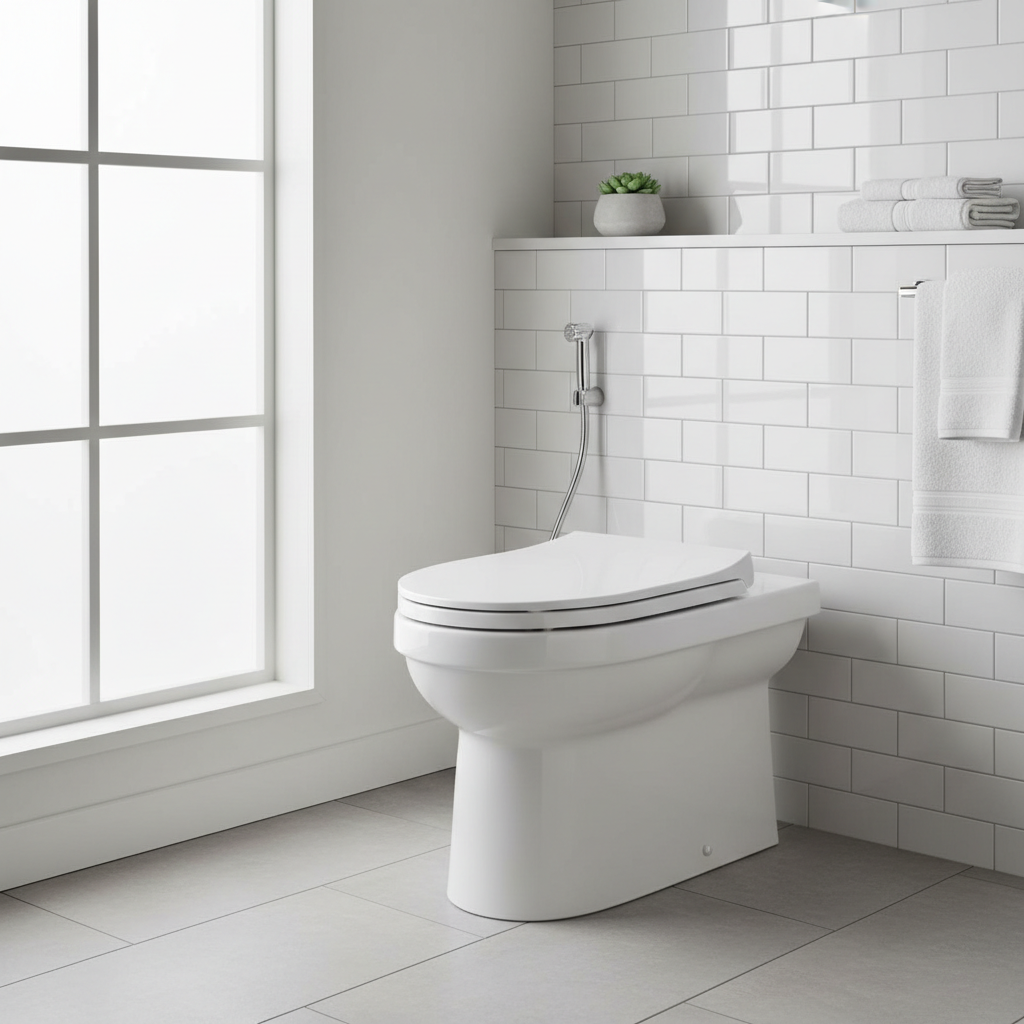
- Legacy 1.6 GPF or Older Toilets: The most direct cause. Any toilet manufactured before the widespread adoption of WaterSense HETs in the mid-to-late 2000s is inherently inefficient by today's standards.
- Silent Leaks: A worn-out or warped flapper is the number one cause of a running toilet. It can allow hundreds of gallons of water to silently leak from the tank into the bowl each day, often going completely unnoticed.
- Incorrect Tank Water Level: If the float mechanism is set too high, the tank will overfill, and excess water will drain down the overflow tube. This wastes water with every single fill cycle.
- The "Double Flush" Habit: Users of older, underperforming 1.6 GPF toilets often resort to flushing twice to clear the bowl, which uses 3.2 gallons and completely defeats the purpose of a low-flow model.
- Inertia and Unawareness: Many homeowners simply don't realize the significant cumulative savings a new toilet can offer. The old toilet isn't "broken," so there's no perceived urgency to replace it, despite the continuous financial drain.
HVAC · High energy usage
| Project category | HVAC |
|---|---|
| Problem type | High energy usage |
| Trade required | HVAC |
| Urgency | Planned project |
| Safety risk | Low safety risk |
| DIY suitability | DIY for experienced homeowners |
| Cost category | High cost |
| Typical timeline | Assessment within weeks; replacement planned off-season |
| Contractor type | Licensed HVAC technician |
Repair option
Duct sealing, insulation, and a tune-up before touching the equipment.
Replacement option
High-efficiency replacement sized by a load calculation, not a rule of thumb.
Common causes
- Aging, low-efficiency equipment
- Leaking ducts losing conditioned air
- Insufficient attic insulation
- Oversized system short-cycling
Relevant tools:project cost estimatorrepair or replace
Published June 5, 2026Last updated August 17, 2026
Tools & materials you'll need
Affiliate linksAs an Amazon Associate FixlyGuide earns from qualifying purchases — at no extra cost to you. Prices and availability are accurate as of publication and subject to change.
Quick Answer
A modern 1.28 GPF (gallons per flush) high-efficiency toilet pays for itself by significantly reducing water consumption. Compared to an older 1.6 GPF model, a WaterSense-certified 1.28 GPF toilet saves 0.32 gallons with every flush. For a family of four, this translates to annual savings of over 2,300 gallons of water and around $85-$90 in utility bills (assuming a combined water/sewer rate of $0.038 per gallon), allowing the initial investment of $220-$300 for the new toilet to be fully recovered in as little as 34 months.
The Problem
That toilet from the late 1990s or 2000s might seem perfectly fine. It flushes, it refills, and it doesn't leak. The problem isn't mechanical; it's financial. It is a relic of a bygone era of water efficiency, quietly siphoning money from your bank account with every single flush. This is the hidden cost of "good enough."
Following the Energy Policy Act of 1992 (EPAct), the United States mandated that all new toilets sold after January 1, 1994, use no more than 1.6 gallons per flush. This was a massive improvement over the 3.5 to 7.0 GPF dinosaurs common before then. For over two decades, the 1.6 GPF toilet was the undisputed standard. However, early versions were plagued with problems. To meet the low-flow mandate, many manufacturers simply reduced the amount of water in the tank without redesigning the bowl or flush mechanics. This resulted in weak flushes, frequent clogs, and the dreaded "double flush," which completely negated any intended water savings.
While the performance of 1.6 GPF models eventually improved, they are now technologically obsolete. Today, the new benchmark for efficiency and performance is the 1.28 GPF High-Efficiency Toilet (HET), particularly those certified by the EPA's WaterSense program. Your 1.6 GPF model uses 25% more water than a new 1.28 GPF toilet. It may not sound like much, but this difference—0.32 gallons—multiplied by dozens of flushes per day, 365 days a year, adds up to a surprising amount of wasted water and money. Sticking with that older model is like choosing to overpay on a utility bill every single month, for years on end. The problem isn't a broken toilet; it's an inefficient one that is actively costing you more than its replacement would.
How It Works
The magic of a modern 1.28 GPF toilet isn't just about using less water; it's about using that water with far greater intelligence and force. Manufacturers have invested heavily in fluid dynamics and engineering to create a powerful flush with a smaller volume of water, solving the performance issues that plagued early low-flow models. This is achieved through a combination of key design improvements.
First, the flush valve, which releases water from the tank into the bowl, has been significantly upsized. Most modern HETs feature a 3-inch or even 3.25-inch flush valve, compared to the traditional 2-inch valve found in older 1.6 GPF toilets. This wider opening allows water to rush into the bowl much faster, creating a powerful surge that clears waste more effectively. It’s about velocity and mass flow rate, not just volume.
Second, the trapway—the snaking channel at the bottom of the bowl that waste exits through—is also larger. Many high-performance models now boast fully glazed trapways of 2-1/8 inches or more. A larger, smoother pathway means less friction and a much lower chance of clogging, a common complaint with first-generation 1.6 GPF toilets. This is why a well-designed 1.28 GPF model can often handle waste better than an older, less-optimized 1.6 GPF unit.
Finally, the bowl itself has been re-engineered using advanced computer modeling. The shape, slope, and water-jet placement are all precisely calculated to create a cyclonic or siphonic action that scrubs the bowl clean and directs all energy toward the trapway. This synergy of a larger flush valve, a wider trapway, and a smarter bowl design is what creates a powerful, effective, and clog-free flush with only 1.28 gallons of water. When you buy a WaterSense-certified model, you're getting a toilet that has been independently tested to meet rigorous standards for both efficiency and performance, ensuring it works better while saving you money.
Step-by-Step Fix
Replacing a toilet is a manageable DIY project that can be completed in an afternoon. The "fix" for your inefficient older model is to swap it out for a new 1.28 GPF high-efficiency unit.
SAFETY NOTE: Always wear gloves when handling an old toilet. Turn off the water supply before starting. Be prepared to lift a heavy and awkward object; ask for help if needed. An improperly set toilet can leak, causing significant water damage.
-
Safety First & Turn Off Water — Begin by closing the toilet shutoff valve, typically located on the wall or floor behind the toilet. Turn it clockwise until it stops. Flush the toilet to drain the tank.
-
Gather Tools and Materials — You will need your new 1.28 GPF toilet, a new wax ring with bolts, an adjustable wrench, a putty knife, a bucket, an old sponge, and some rags or old towels.
-
Drain the Old Toilet Completely — Even after flushing, water will remain in the tank and bowl. Use a sponge to soak up the remaining water from the tank and wring it into a bucket. For the bowl, you can either sponge it out or use a small wet/dry vacuum.
-
Disconnect the Water Supply Line — Place a small bucket or a towel under the connection point. Use an adjustable wrench to unscrew the water supply line from the bottom of the toilet tank. Some water may spill out.
-
Remove the Old Toilet — Pry off the plastic caps at the base of the toilet. Use your wrench to remove the nuts from the two floor bolts (also called closet bolts). Rock the toilet gently to break the seal of the old wax ring. Lift the toilet straight up and set it aside on old towels. This is the heaviest part; bend with your knees.
-
Inspect and Prep the Flange — With the toilet removed, you will see the floor flange. Use a putty knife to scrape all the old wax off the flange. Inspect the flange for cracks or damage. If it is broken, you must call a plumber to have it repaired before proceeding.
-
Install the New Wax Ring & Bolts — Insert the new floor bolts into the slots on the flange, ensuring they are parallel to the wall. The most common and foolproof method is to press the new wax ring directly onto the bottom of the new toilet's outlet horn. Press firmly to ensure it sticks.
-
Set the New Toilet — Carefully lift the new toilet and look down through the base to align the holes over the bolts sticking up from the floor flange. Lower the toilet straight down into place.
-
Secure the Toilet to the Floor — Press down firmly on the toilet with your body weight to compress the wax ring and create a watertight seal. Place the washers and nuts onto the bolts. Tighten the nuts by hand, then use a wrench to tighten them alternately, a half-turn at a time. DO NOT OVERTIGHTEN, as this can crack the porcelain base. The toilet should feel solid and not rock.
-
Reconnect Water and Test for Leaks — Screw the water supply line onto the new toilet tank's fill valve. Hand-tighten, then give it a final quarter-turn with a wrench. Slowly turn the water shutoff valve back on. As the tank fills, inspect every connection point—the supply line at the wall, the supply line at the tank, and the base of the toilet—for any signs of dripping. Flush several times and check again.
-
Install the Seat and Lid — Most toilets do not come with a seat. Follow the manufacturer's instructions to install the toilet seat onto the bowl. Attach the tank lid.
-
Dispose of the Old Toilet — Contact your local waste management authority for instructions on how to properly dispose of an old toilet. Many municipalities have specific rules for porcelain fixtures.
Common Causes
While the primary reason for high water bills from a toilet is an inefficient design, several other factors contribute to excessive water use and the reluctance to upgrade.
- Legacy 1.6 GPF or Older Toilets: The most direct cause. Any toilet manufactured before the widespread adoption of WaterSense HETs in the mid-to-late 2000s is inherently inefficient by today's standards.
- Silent Leaks: A worn-out or warped flapper is the number one cause of a running toilet. It can allow hundreds of gallons of water to silently leak from the tank into the bowl each day, often going completely unnoticed.
- Incorrect Tank Water Level: If the float mechanism is set too high, the tank will overfill, and excess water will drain down the overflow tube. This wastes water with every single fill cycle.
- The "Double Flush" Habit: Users of older, underperforming 1.6 GPF toilets often resort to flushing twice to clear the bowl, which uses 3.2 gallons and completely defeats the purpose of a low-flow model.
- Inertia and Unawareness: Many homeowners simply don't realize the significant cumulative savings a new toilet can offer. The old toilet isn't "broken," so there's no perceived urgency to replace it, despite the continuous financial drain.
- Fear of Poor Performance: Lingering memories of bad early-generation 1.6 GPF toilets make some homeowners skeptical that a 1.28 GPF model could possibly work well. This fear prevents them from upgrading to the vastly superior modern technology.
Common Mistakes
Avoiding these common pitfalls during selection and installation is crucial for a successful toilet upgrade.
- Buying Based on Price Alone: Inexpensive, off-brand toilets may not have the sophisticated engineering of reputable brands. Always check for WaterSense certification and research Maximum Performance (MaP) scores, which rate a toilet's ability to clear solid waste. A score of 800 or higher is recommended.
- Overtightening the Floor Bolts: This is the most catastrophic DIY error. Porcelain is brittle and will crack under too much pressure from the closet bolts. Tighten until the toilet is stable and doesn't rock, but no further.
- Reusing the Old Wax Ring: Never reuse a wax ring. It is a single-use seal designed to be compressed once. Reusing it or failing to install a new one properly is a guarantee of foul-smelling, damaging leaks at the base of your toilet.
- Ignoring the Rough-In Dimension: The "rough-in" is the distance from the center of the toilet drain (the floor flange) to the finished wall. The US standard is 12 inches. Buying a toilet with the wrong rough-in size (e.g., 10" or 14") means it simply will not fit in the existing space.
- Not Shimming a Wobbly Toilet: If the floor is uneven and the toilet rocks even after being bolted down, do not try to fix it by further tightening the bolts. Use plastic toilet shims to create a stable base, then caulk around the bottom.
- Not Performing a Thorough Leak Check: Immediately after turning the water on, and for a few hours after, you must diligently check for leaks. A tiny, slow drip can go unnoticed behind the toilet and cause mold and rot over time. Use a dry paper towel to wipe down every connection and check it for moisture.
Cost & Time Breakdown
The financial payback of a new 1.28 GPF toilet is excellent, especially when done as a DIY project. Here's how the costs and time commitment break down.
| Task | DIY Cost | Pro Cost | Time |
|---|---|---|---|
| New WaterSense 1.28 GPF Toilet | $200 - $450 | $200 - $450 | 1-2 hours (shopping/selection) |
| Wax Ring & Floor Bolts Kit | $10 - $20 | Included in Labor | 30 minutes |
| Braided Steel Water Supply Line | $10 - $25 | Included in Labor | 15 minutes |
| Plumber Installation Labor | $0 | $200 - $400 | N/A |
| TOTAL | $220 - $495 | $420 - $870 | 2-4 hours |
Note: Pro costs can vary significantly based on location and plumbing rates. Some plumbers may have a higher minimum or an hourly rate.
Tips & Prevention
To maximize your savings and the life of your new high-efficiency toilet, follow these tips.
- Look for Utility Rebates: Many water utilities offer substantial rebates (sometimes $50-$100) for replacing an old toilet with an approved WaterSense model. Check your local utility's website before you buy; this can dramatically shorten the payback period.
- Perform the Dye Test: A few times a year, check for silent flapper leaks. Place a few drops of dark food coloring in the toilet tank. Wait 20-30 minutes without flushing. If any color appears in the bowl, your flapper is leaking and needs to be replaced.
- Choose a High MaP Score: Before purchasing, look up the toilet's MaP score online. This independent test measures how much solid waste a toilet can remove in a single flush. Aim for a score of at least 800 grams for peace of mind.
- Consider Dual-Flush Models: For even greater savings, look at 0.8/1.28 GPF dual-flush models. These allow you to use even less water for liquid waste, further enhancing your water conservation efforts.
- Avoid Harsh Chemical Cleaners: Do not use drop-in tank tablets that contain bleach. They can corrode the rubber and plastic components of your flush mechanism, leading to leaks and premature failure.
- Only Flush the 3 P's: A toilet is not a trash can. To prevent clogs, even in a high-performance model, only flush Pee, Poo, and (toilet) Paper. Never flush "flushable" wipes, paper towels, cotton swabs, or feminine hygiene products.
When to Call a Professional
While toilet replacement is a popular DIY project, certain situations warrant a call to a licensed plumber. Attempting to fix these issues without proper experience can lead to much larger, more expensive problems, particularly water damage.
Call a professional if you encounter any of the following: the shutoff valve behind the toilet is seized, won't turn, or leaks when you try to close it. If the floor around the base of the toilet feels soft, spongy, or shows signs of water damage, the subfloor may be rotted and require repair. Additionally, if you remove the old toilet and find that the metal or PVC floor flange is cracked, broken, or rusted through, it must be professionally replaced. This is not a simple cosmetic issue; a damaged flange will not allow for a secure, watertight seal. Finally, if you are not physically capable of or comfortable with safely lifting an 80-100 pound object, it is always better to hire a pro than to risk injury or dropping and breaking your new fixture.
What should this project cost?
Enter your project details for a realistic cost range before you call anyone.
Common repairs run $150–$650; repipes and water-heater replacements reach $1,500–$4,500.
- Regional adjustment
- National average
- Labor share (typical)
- ~$754
- Quotes to collect
- 3 written estimates
Educational estimate based on national averages — not a binding quote. Always confirm with written local estimates.
Fixly Project Decision Box
- DIY difficulty
- Moderate
- Estimated time
- 30 minutes – half a day
- Cost level
- Moderate
Main tools / materials
- Adjustable wrench
- Plunger or drain auger
- Bucket and towels
- Thread tape
When to stop and call a pro
- Water you cannot shut off at the fixture or main
- Sewage backing up into more than one fixture
- Water near electrical panels or outlets
- Gas water heater work beyond relighting a pilot
Need professional help?
Get a Licensed PlumberGet the print-ready PDF of this guide
A clean, ad-free, printable version you can keep on your phone or pin to the workshop wall. Free with a FixlyGuide account.
- Print-optimized layout
- Tools, materials & every step included
- Saved to your account
Recommended for DIYers & woodworkers
Sponsored
The Top 20 Tools for Workshops of Any Budget
No stationary machines or power tools required — plus 3 fundamental tools that can't be bought at any price.
Get the free guide
Ted's Woodworking — The #1 Woodworking Resource
Detailed instructions, dimensioned drawings, materials & cutting lists, and 3D schematics for every skill level.
See the plansSponsored: links above are affiliate links. FixlyGuide may earn a commission on qualifying purchases — at no extra cost to you.
Frequently asked questions
Is a 1.28 GPF toilet really powerful enough to prevent clogs?+
Yes. Modern 1.28 GPF toilets are engineered with larger flush valves and wider, computer-designed trapways that create a high-velocity flush. A well-designed, WaterSense-certified 1.28 GPF model often outperforms older, poorly designed 1.6 GPF toilets, providing a powerful flush that prevents clogs.
What is a WaterSense certified toilet?+
WaterSense is a program sponsored by the U.S. Environmental Protection Agency (EPA). To earn the WaterSense label, a toilet must use 1.28 gallons per flush or less and be independently tested to prove it meets rigorous performance standards for clearing waste effectively. It's a mark of both efficiency and quality.
How much money can I actually save by upgrading my toilet?+
A family of four replacing a 1.6 GPF toilet with a 1.28 GPF model can expect to save over 2,300 gallons of water per year. Based on average national water and sewer rates, this translates to about $85-$90 in annual savings. Plus, many local water utilities offer cash rebates for installing WaterSense toilets, accelerating your return on investment.
What is a toilet's 'rough-in' size and why is it important?+
The 'rough-in' is the distance from the center of the drain pipe in the floor (the closet flange) to the finished wall behind the toilet. The standard measurement in the U.S. is 12 inches. It's critical to measure your existing rough-in before buying a new toilet to ensure that the new model will fit correctly in your space.
Discussion
Loading comments…