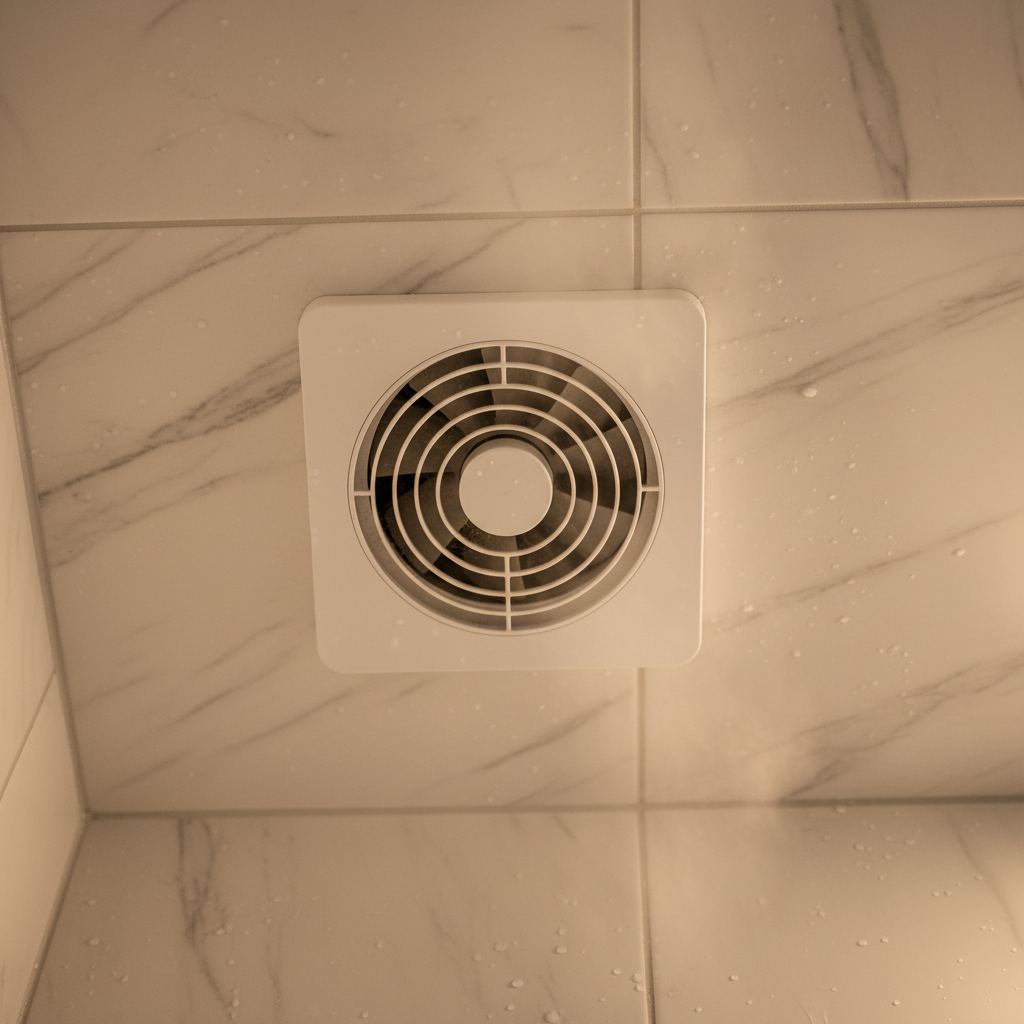
- Builder-Grade Minimums: The most frequent cause is builders installing the absolute cheapest fan that meets the bare minimum code at the time of construction, ignoring real-world moisture loads.
- Ignoring Renovations: A bathroom renovation that adds a steam shower, a larger tub, or simply makes the sealed space bigger increases the moisture load, rendering the old fan instantly obsolete.
- Incorrect Ducting: Using undersized (e.g., 3-inch instead of 4-inch or 6-inch) or excessively long, flexible, and kinked duct runs dramatically increases static pressure and suffocates the fan, crippling its true CFM.
- Blocked Exterior Vents: Louvered exterior vents can get stuck shut with debris, lint, or ice, creating a complete blockage that prevents any air from escaping.
- Lack of "Makeup Air": A fan can't exhaust air if replacement air can't get in. A bathroom sealed too tightly (e.g., a door with no gap at the bottom) can starve the fan, reducing its effectiveness.
General remodeling · Renovation planning
| Project category | General remodeling |
|---|---|
| Problem type | Renovation planning |
| Trade required | General contracting |
| Urgency | Planned project |
| Safety risk | Low safety risk |
| DIY suitability | Pro recommended |
| Cost category | Major investment |
| Typical timeline | Design and permitting often 2–4 months before work starts |
| Contractor type | General contractor |
Repair option
Phase the work and fix the building envelope first.
Replacement option
Full renovation with permits, design, and a general contractor.
Common causes
- Space no longer fits how the household lives
- Resale preparation
- Deferred maintenance stacking up
Relevant tools:project cost estimatorcompare quoteshome improvement material prices
Published June 5, 2026Last updated August 17, 2026
Tools & materials you'll need
Affiliate linksAs an Amazon Associate FixlyGuide earns from qualifying purchases — at no extra cost to you. Prices and availability are accurate as of publication and subject to change.
Quick Answer
Your bathroom exhaust fan is almost certainly too weak. A low CFM (Cubic Feet per Minute) rating, typical in cheap, builder-grade fans, means it can't pull humid air out of the bathroom quickly enough after a shower. This trapped moisture condensates on the coldest surfaces first—not just the mirror, but the hidden side of your drywall and insulation in the attic. This persistent dampness creates the perfect breeding ground for a hidden mold farm, leading to musty smells, potential structural damage, and poor indoor air quality. The solution is to calculate your bathroom's required CFM and install a new fan that meets or exceeds that specific ventilation requirement.
The Problem
The faint, musty odor you can't quite locate. The paint that's starting to peel near the ceiling. The persistent feeling of dampness long after a shower. These aren't just signs of an old bathroom; they're symptoms of a critical ventilation failure. The culprit is almost always an undersized bathroom exhaust fan, a component where builders often cut corners by installing the cheapest, lowest-CFM model available.
A steamy 15-minute shower can introduce over a half-gallon of water vapor into the air. An exhaust fan's job is to move that air out before the vapor finds a cold surface to condense back into liquid water. While you see condensation on your mirror, the real damage happens on surfaces you don't see. The back of your drywall, facing a cooler wall cavity or unconditioned attic, is a prime location. As warm, moist air penetrates the drywall, it hits this cold surface and reverts to water, slowly saturating the paper facing, wood studs, and insulation.
This isn't a one-time event; it happens with every shower. Over months and years, this chronic dampness creates an ideal ecosystem for mold spores (like Stachybotrys chartarum, or black mold) to thrive. You won't see it at first. It grows silently in the dark, feeding on the paper and organic dust in the drywall. The first sign might be a faint smell, followed by discoloration bleeding through the paint, or even warping of the drywall itself. By the time you see visible mold on the bathroom-side wall, the infestation behind it is likely extensive and requires significant remediation. This single CFM mistake transforms your bathroom wall from a simple structure into a hidden, hazardous mold farm.
How It Works
Understanding ventilation hinges on one key metric: CFM, or Cubic Feet per Minute. This number quantifies the volume of air a fan can move. A fan rated at 80 CFM can, in ideal conditions, exhaust 80 cubic feet of air every minute. Proper bathroom ventilation is essentially a process of "air changes," replacing the entire volume of air in the room with fresh, dry air a certain number of times per hour. The Home Ventilating Institute (HVI) sets the professional standard, recommending a minimum of 8 air changes per hour for a bathroom.
There are two primary methods to calculate the correct CFM for your space:
-
The Square Footage Method: This is the most common and simplest calculation for bathrooms under 100 square feet. The rule is 1 CFM for every 1 square foot of floor space. To calculate, simply multiply the length of your bathroom by its width.
- Example: A bathroom that is 8 feet long and 10 feet wide has an area of 80 square feet. Therefore, it requires a fan rated for at least 80 CFM.
-
The Fixture Method: For larger bathrooms (over 100 square feet), the HVI recommends a calculation based on the moisture-producing fixtures in the room. You assign a CFM value to each fixture and add them together.
- Toilet: 50 CFM
- Shower: 50 CFM
- Bathtub: 50 CFM
- Jetted Tub: 100 CFM
- Example: A large bathroom with a separate shower and toilet would require a fan of at least 100 CFM (50 + 50).
CRITICAL NOTE ON DUCTWORK: A fan's stated CFM rating is its performance in a lab with zero resistance. The real-world performance is always lower due to static pressure—the resistance caused by duct length, elbows, and terminations. A long, convoluted run of flexible ducting can slash a fan's effective CFM by 50% or more. For this reason, it's always wise to choose a fan with a CFM rating 20-30% higher than your calculated minimum, use smooth-wall metal ducting, keep the run as short and straight as possible, and ensure the exterior vent cap is clean and operates freely.
Finally, consider the sound level, measured in sones. A rating of 1.0 sone is equivalent to the quiet hum of a refrigerator. Cheaper fans can be 4.0 sones or higher, making them so loud that people avoid using them, defeating the purpose entirely. Look for fans rated at 1.5 sones or less for comfortable operation.
Step-by-Step Fix
Replacing an underpowered bathroom fan is a tangible upgrade that protects your home. This guide covers a standard replacement where wiring and ducting are accessible.
SAFETY FIRST: This project involves electrical wiring. Locate the circuit breaker that controls the bathroom fan and turn it off completely. Use a non-contact voltage tester to confirm there is no power at the fan switch and the fan itself before proceeding.
-
Step 1: Calculate Your Target CFM — Before you buy anything, measure your bathroom's length and width. For a room 7 feet by 9 feet, the area is 63 sq ft. You need a fan rated for at least 63 CFM. Given ductwork losses, selecting a fan in the 80-110 CFM range is a wise, future-proof choice.
-
Step 2: Select Your New Fan — Purchase a fan that meets your CFM needs and has a sone rating of 1.5 or lower. Consider models with built-in humidity sensors that automatically turn the fan on and off, eliminating guesswork. Measure the old fan's housing; finding a new fan with the same size "can" can simplify installation, but don't let it dictate your CFM choice. Cutting drywall is often necessary for a proper upgrade.
-
Step 3: Remove the Old Grille and Motor — Pull down gently on the existing fan grille. Most are held in place by two spring clips. Squeeze the clips together to release them from the slots in the housing. Unplug the motor assembly from the receptacle inside the housing and remove the screw(s) holding it in place. The motor/blower wheel assembly should now lift out.
-
Step 4: Disconnect Wiring and Duct — Inside the housing, unscrew the cover for the electrical junction box. Use your voltage tester one last time. Carefully disconnect the wire nuts connecting the house wiring to the fan. Remove the cable clamp holding the wire in place. From the attic (if possible) or through the opening, detach the flexible duct from the fan housing connector. It's often held by a zip tie or metal clamp.
-
Step 5: Remove the Old Housing — The fan housing is typically secured to a joist with screws or nails. If you have attic access, this is easy. From below, you may need to use a pry bar to carefully detach it from the joist. If you need a larger opening for the new fan, now is the time to mark and cut the drywall with a jab saw.
-
Step 6: Install the New Housing — Position the new, larger fan housing in the opening. Many modern fans come with adjustable brackets that slide out to span between joists. Secure the housing firmly so it is level with the bottom of the drywall and does not vibrate. Follow the manufacturer's specific instructions.
-
Step 7: Connect Ductwork Securely — Attach the duct to the new fan's exhaust port. Do NOT use duct tape. Use a mechanical fastener like a zip tie or clamp, and then seal the connection airtight with a generous application of foil-faced mastic tape. This is a critical step to ensure all moisture is directed outside and doesn't leak into your attic.
-
Step 8: Wire the New Fan — Guide the house wiring into the new housing's junction box and secure it with the clamp. Following the fan's wiring diagram, connect the wires using the provided wire nuts (black to black, white to white, green/copper to green/copper). Securely replace the junction box cover.
-
Step 9: Install Motor and Grille — Plug the new fan motor into the receptacle inside the housing and secure it with its screw(s). Turn the circuit breaker back on temporarily to test the fan's operation. Once confirmed, turn the breaker OFF again.
-
Step 10: Attach the New Grille — Install the new grille by inserting its mounting clips into the corresponding slots in the housing. Push it up until it sits flush against the ceiling.
-
Step 11: Final Test and Seal — Turn the power back on at the breaker and test the fan. From the attic, use a can of spray foam or caulk to air-seal the perimeter of the fan housing to the drywall. This prevents conditioned air from leaking into the attic. Place insulation over and around the fan housing to maintain your ceiling's thermal barrier.
Common Causes
- Builder-Grade Minimums: The most frequent cause is builders installing the absolute cheapest fan that meets the bare minimum code at the time of construction, ignoring real-world moisture loads.
- Ignoring Renovations: A bathroom renovation that adds a steam shower, a larger tub, or simply makes the sealed space bigger increases the moisture load, rendering the old fan instantly obsolete.
- Incorrect Ducting: Using undersized (e.g., 3-inch instead of 4-inch or 6-inch) or excessively long, flexible, and kinked duct runs dramatically increases static pressure and suffocates the fan, crippling its true CFM.
- Blocked Exterior Vents: Louvered exterior vents can get stuck shut with debris, lint, or ice, creating a complete blockage that prevents any air from escaping.
- Lack of "Makeup Air": A fan can't exhaust air if replacement air can't get in. A bathroom sealed too tightly (e.g., a door with no gap at the bottom) can starve the fan, reducing its effectiveness.
Common Mistakes
- Venting Into the Attic: NEVER vent a bathroom fan directly into the attic or a soffit. This simply moves the moisture problem from your bathroom to your attic, leading to mold on the underside of the roof sheathing and rotted trusses.
- Using Flexible Ribbed Ducting: While convenient, the accordion-like ribs on cheap flexible ducting create tremendous air turbulence and resistance. Always opt for smooth-wall metal or PVC ducting for the main run.
- Not Sealing Connections: Failing to use mastic tape on all duct connections and to air-seal the fan housing allows humid air to leak out before it reaches the outdoors.
- Choosing Fan Based on Housing Size: Homeowners often buy a new fan that fits the old housing to avoid cutting drywall, even if it's an undersized fan. A proper upgrade often requires a larger housing and fan.
- Ignoring Sones: Buying a loud fan (above 2.0 sones) because it's cheap is a false economy. If it's too loud, household members won't run it long enough, negating the entire purpose of the upgrade.
- Running it for Too Short a Time: Turning the fan off the moment you step out of the shower leaves a significant amount of residual moisture in the air. The fan should run for 20-30 minutes post-shower.
Cost & Time Breakdown
| Task | DIY Cost | Pro Cost | Time |
|---|---|---|---|
| Standard Fan Replacement (same size) | $80 - $200 | $250 - $450 | 2 hours |
| Upgrade to a Larger Fan (drywall cut) | $120 - $300 | $400 - $650 | 3-4 hours |
| Running New Ductwork (attic) | $50 - $100 | $300 - $600 | 2-5 hours |
| Installing a New Roof/Wall Vent Cap | $30 - $70 | $250 - $500 | 2-4 hours |
| Installing a New GFCI Circuit/Switch | $40 - $80 | $200 - $400 | 2-3 hours |
Tips & Prevention
- Install a Timer Switch: Replace the standard fan switch with a countdown timer switch. Set it for 30 or 60 minutes whenever you shower to ensure a full air exchange.
- Upgrade to a Humidity Sensor: For ultimate control, use a fan with a built-in sensor or a separate humidity-sensing wall switch. It will automatically run the fan only when needed and turn off when the air is dry.
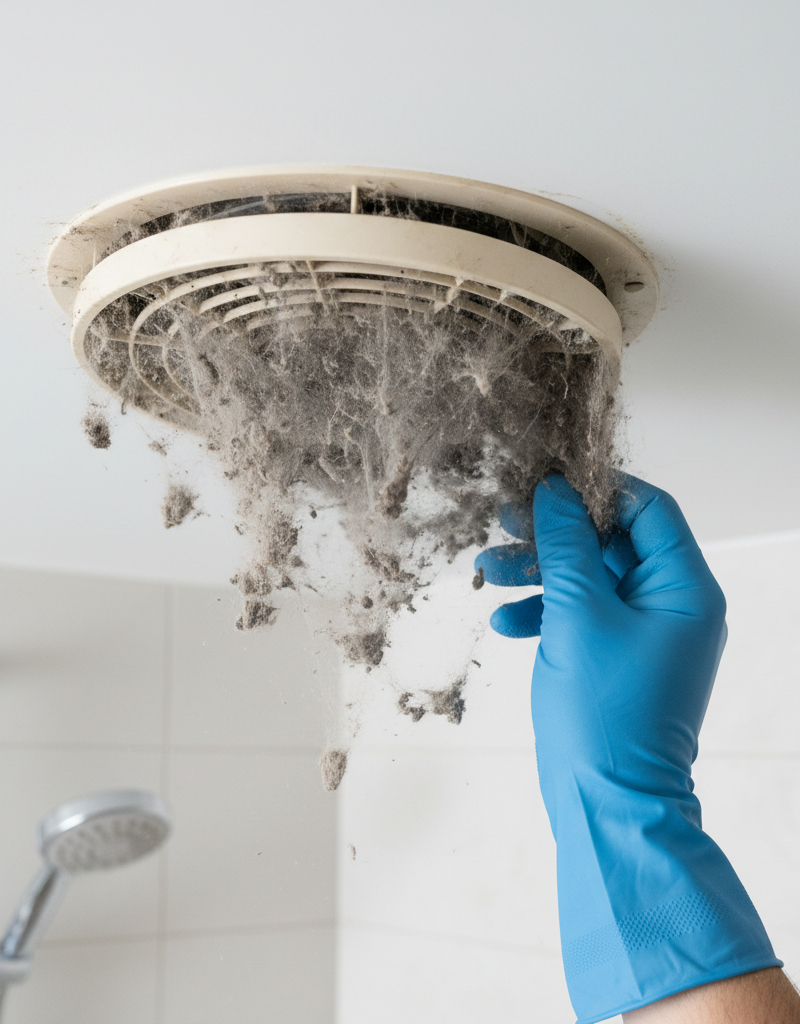
- Clean the Grille Annually: The fan grille can get clogged with dust and lint, restricting airflow. Pull it down and clean it with a vacuum or soap and water at least once a year.
- Check Your Exterior Vent: Twice a year, make sure your exterior wall or roof vent cap is clean and the flapper inside moves freely. Birds and wasps are notorious for building nests in these vents.
- Provide Makeup Air: Ensure there is at least a 1/2-inch to 3/4-inch gap under your bathroom door to allow fresh air to be drawn into the room when the fan is on.
When to Call a Professional
While a direct fan swap can be a DIY project for a handy homeowner, there are several scenarios where calling a licensed electrician or HVAC technician is the safest and most effective choice. If the project requires running a new electrical circuit, altering existing wiring beyond simple reconnection, or if you are unfamiliar with working inside a breaker panel, you must call a pro. Similarly, installing new ductwork, especially if it involves cutting a new termination hole through a roof or exterior wall, is a job best left to professionals to prevent leaks and ensure proper sealing. If you discover significant mold during the removal of the old fan, stop work immediately. Do not disturb the mold. Call a mold remediation specialist to assess the extent of the problem and handle removal safely.
What should this project cost?
Enter your project details for a realistic cost range before you call anyone.
Mid-range remodels commonly $12,000–$22,000; small repairs often under $600.
- Regional adjustment
- National average
- Labor share (typical)
- ~$5,603
- Quotes to collect
- 3 written estimates
Educational estimate based on national averages — not a binding quote. Always confirm with written local estimates.
Get the print-ready PDF of this guide
A clean, ad-free, printable version you can keep on your phone or pin to the workshop wall. Free with a FixlyGuide account.
- Print-optimized layout
- Tools, materials & every step included
- Saved to your account
Recommended for DIYers & woodworkers
Sponsored
The Top 20 Tools for Workshops of Any Budget
No stationary machines or power tools required — plus 3 fundamental tools that can't be bought at any price.
Get the free guide
Ted's Woodworking — The #1 Woodworking Resource
Detailed instructions, dimensioned drawings, materials & cutting lists, and 3D schematics for every skill level.
See the plansSponsored: links above are affiliate links. FixlyGuide may earn a commission on qualifying purchases — at no extra cost to you.
Frequently asked questions
What does CFM mean for a bathroom fan?+
CFM stands for Cubic Feet per Minute. It's a measure of how much air volume a fan can move. The general rule for bathrooms is to have a fan with a CFM rating equal to or greater than the square footage of the room (e.g., an 80 sq ft bathroom needs an 80 CFM fan).
Is it okay to vent my bathroom fan into the attic?+
Absolutely not. Venting a fan into the attic is against building codes in most places and is a major mistake. It simply moves the warm, moist air into a closed space where it will cause condensation, rot, and extensive mold growth on your roof sheathing and trusses. Always vent directly to the outside.
What is a 'sone' and why does it matter?+
A sone is a unit of perceived loudness. A lower sone rating means a quieter fan. 1.0 sone is about the loudness of a quiet refrigerator, while 4.0 sones is like a loud conversation. A quiet fan (under 1.5 sones) is more likely to be used regularly, making it much more effective at its job.
How long should I run my bathroom fan after a shower?+
You should run your bathroom fan for at least 20-30 minutes after you finish showering. This ensures that all the residual humidity is removed from the air, preventing it from condensing on walls, ceilings, and hidden surfaces.

Discussion
Loading comments…