- The Fix: Insulate or Replace the Duct — This is the most critical step.
- Best Option: Replace the entire duct with a new, pre-insulated flexible duct (rated R-6 or R-8). This ensures a continuous vapor barrier and insulation. It’s sold in standard 4-inch, 5-inch, or 6-inch diameters.
- Good Option: If the existing duct is in good shape, you can wrap it with foil-faced fiberglass duct insulation. Make sure to get complete coverage and seal the seams thoroughly with foil tape to create a vapor barrier.
Roofing · Active leak
| Project category | Roofing |
|---|---|
| Problem type | Active leak |
| Trade required | Roofing |
| Urgency | Emergency — act now |
| Safety risk | High safety risk |
| DIY suitability | Pro recommended |
| Cost category | Moderate cost |
| Typical timeline | Emergency tarp same day; permanent repair usually within days |
| Contractor type | Licensed roofing contractor |
Repair option
Targeted flashing or shingle repair once the entry point is traced — water often travels before it drips.
Replacement option
Full replacement when the deck is saturated, the roof is near end of life, or leaks keep reappearing in new spots.
Common causes
- Failed flashing at a chimney, vent, or valley
- Cracked or lifted shingles over the leak path
- Ice damming or clogged gutters backing water under the edge
- Nail pops that opened a hole in the deck
Relevant tools:repair or replace roofemergency checklist
Published April 27, 2026Last updated August 17, 2026
Tools & materials you'll need
Affiliate linksAs an Amazon Associate FixlyGuide earns from qualifying purchases — at no extra cost to you. Prices and availability are accurate as of publication and subject to change.
'''
Quick Answer
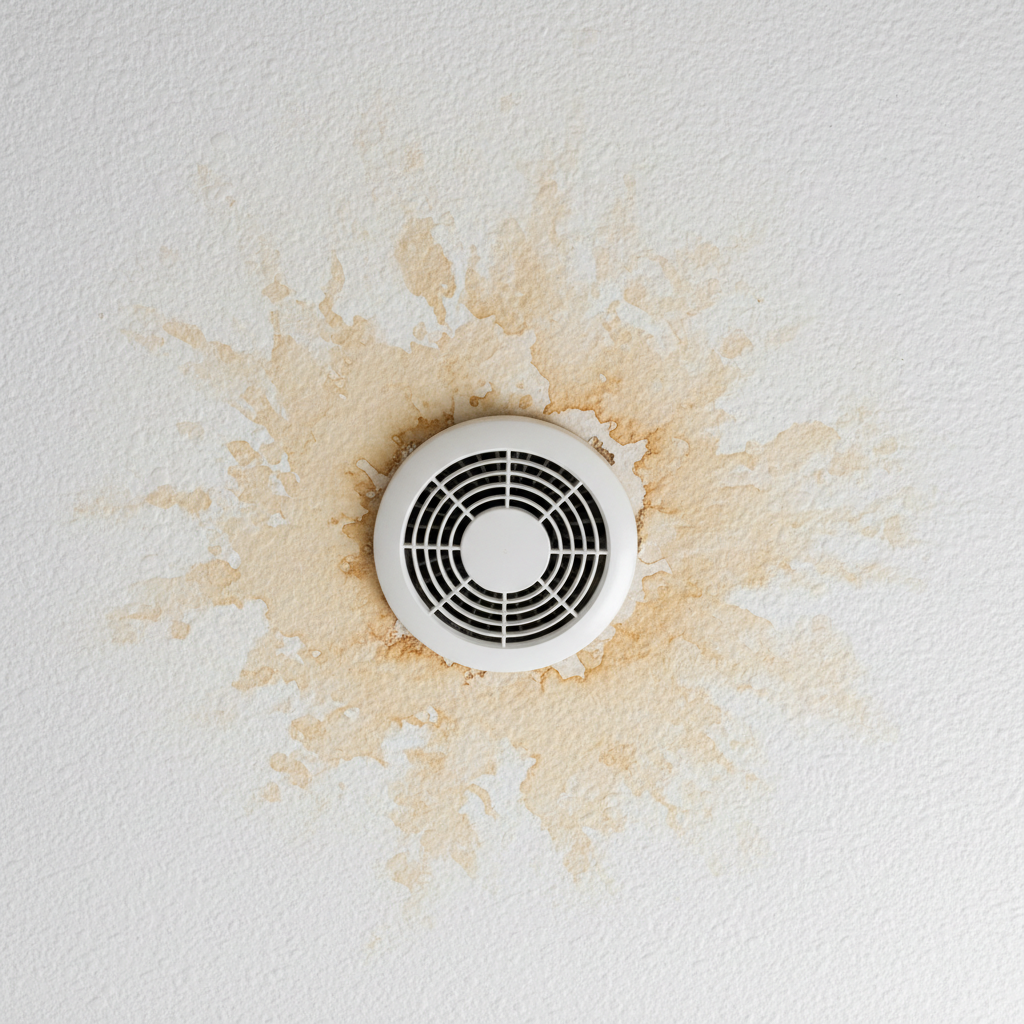
That brown stain on the ceiling under your bathroom vent is most often caused by condensation, not a roof leak. Warm, moist air from your shower travels up the vent duct, cools in the cold attic, and condenses into water. This water then drips back down, dissolving dust and residue into a brown tint, and staining your ceiling. Other, less common, causes include a true roof leak around the vent's flashing or a disconnected duct dumping moisture into the attic.
The Problem
It’s a sight that makes any homeowner’s stomach drop. You look up at the ceiling in your bathroom and see it: a distinct, ugly brown or yellowish ring staining the clean white paint, centered perfectly around your exhaust fan. Immediately, your mind jumps to the worst-case scenario: a roof leak. You picture water seeping in from outside, rotting the sheathing, and a multi-thousand-dollar roofing bill in your near future.
This staining is most common in top-floor bathrooms, directly below the attic and roofline, which only reinforces the roof leak theory. The stain often appears or worsens during the winter, when the temperature difference between your warm, steamy bathroom and the cold attic is at its most extreme. The water damage seems obvious, and the source appears to be the vent penetration through your roof. While a roof leak is certainly a possibility, it’s not the most probable cause. More often than not, the culprit is your own shower, a cold attic, and a simple flaw in your fan's ductwork. Misdiagnosing this common problem can lead to unnecessary, expensive calls to a roofer when the real fix is a simple, inexpensive DIY project you can complete in an afternoon.
How It Works
To understand why this happens, you need to understand the physics of moisture, air temperature, and your home's ventilation systems. The battle is between warm, moist indoor air and cold attic temperatures.
Your bathroom exhaust fan has one job: to move the warm, moisture-laden air produced by a shower or bath out of your home. A typical ten-minute shower can release over half a gallon of water into the air as vapor. The fan sucks this vapor into a duct that runs through your attic and terminates at a vent on the roof or a soffit/gable wall. The problem arises within this duct.
This process is all about the "dew point"—the temperature at which air becomes 100% saturated with water vapor and begins to condense back into liquid water. When you vent warm, humid air into a flexible, uninsulated duct that’s running through a frigid attic, the duct’s surface becomes very cold. The air inside the duct comes into contact with this cold surface, its temperature plummets, and it hits the dew point. The water vapor instantly converts to liquid water droplets on the inside of the duct.
If the duct has any sags or low points, this liquid water pools. Once enough water collects, it overflows and runs back down the duct, following the path of least resistance. It drips from the duct connection at the fan housing, leaks through the fan itself, and onto your drywall ceiling. The water dissolves years of accumulated dust, drywall particles, and manufacturing oils inside the duct and fan, which is what gives the water its characteristic brown, rusty color. It’s not dirty rainwater; it’s clean condensation mixed with household dust.
In contrast, a true roof leak behaves differently. Roof vents are sealed with a flashing system, often a neoprene "boot" that hugs the pipe, integrated into an aluminum flange that sits under the shingles. These can fail when the neoprene cracks from sun exposure or when nails securing the flange back out. If this is the cause, water flow is typically heavier during rain. An inspection in the attic would reveal water stains on the roof decking or rafters around the pipe, not just moisture contained within the ductwork. Proper attic ventilation, following the 1:150 or 1:300 rule (1 sq. ft. of vent area for every 150 or 300 sq. ft. of attic floor space), helps moderate attic temperatures and humidity, but it can’t stop condensation inside a poorly insulated duct.
Step-by-Step Fix
Here is how to diagnose and fix the most common cause of bathroom vent ceiling stains: condensation.
-
Safety First: Power Down and Access the Attic — Turn off the circuit breaker that powers the bathroom fan and light. You do not want the fan to turn on while you are working on it. Place a "Do Not Touch" note on the breaker panel. Safely set up your ladder to access your attic. Wear a dust mask, safety glasses, and gloves, and bring a good flashlight or headlamp. Be careful to only step on the wooden joists or trusses, not the drywall ceiling below.
-
Initial Diagnosis: Wait for Rain — Before you replace anything, perform a simple test. If the stain only appears or worsens on cold, dry days long after it has rained, condensation is almost certainly the culprit. If it only drips actively during a rainstorm, you may have a legitimate roof leak.
-
Inspect the Area Around the Vent Pipe — In the attic, go to the spot directly above your bathroom fan. Using your flashlight, carefully inspect the roof decking and rafters around the pipe where it exits the roof. Look for dark water stains, active drips (if it’s raining), or signs of rot on the wood itself. If the wood is clean and dry, a roof leak is unlikely.
-
Examine the Duct Connection and Path — Trace the flexible duct from the fan housing to its termination point at the roof or wall. Check the connections at both ends. Are they securely attached with clamps or foil mastic tape? A loose connection can spill warm, moist air directly into the attic, causing mold and rot on the surrounding wood. Also, look at the duct’s path. Does it have a significant sag or "belly" between the fan and the exit? This is a P-trap for condensation water.
-
Assess the Duct Insulation — Is the duct a simple, uninsulated plastic or foil tube? Or is it wrapped in a sleeve of fiberglass or foam insulation? A bare, uninsulated duct running through a cold attic is the number one cause of condensation. The thin plastic provides zero thermal barrier, allowing the air inside to cool rapidly.
-
The Fix: Insulate or Replace the Duct — This is the most critical step.
- Best Option: Replace the entire duct with a new, pre-insulated flexible duct (rated R-6 or R-8). This ensures a continuous vapor barrier and insulation. It’s sold in standard 4-inch, 5-inch, or 6-inch diameters.
- Good Option: If the existing duct is in good shape, you can wrap it with foil-faced fiberglass duct insulation. Make sure to get complete coverage and seal the seams thoroughly with foil tape to create a vapor barrier.
-
The Fix: Correct the Duct Run — As you install the new or newly insulated duct, ensure it runs as straight and short as possible. Most importantly, it must have a continuous upward slope from the fan to the exterior vent. This ensures that any incidental condensation that might still form can drain harmlessly outside, not back into your fan. Use duct straps or hangers to support the duct every 4-5 feet and prevent any sags from forming.
-
Verify the Exterior Vent Damper — Go outside and find where the vent terminates. It should have a cap with a small, hinged damper flap. Make sure this flap can open and close freely. Sometimes they get stuck, or birds or insects build nests inside, blocking the airflow. A blocked exit will increase moisture buildup in the line.
-
Repair the Ceiling Stain — Once you have fixed the source of the water, you can repair the cosmetic damage. First, apply a coat of shellac-based or oil-based stain-blocking primer. This is essential; if you use standard latex primer or just paint, the brown stain will bleed through again. After the primer is dry, apply one or two coats of your matching ceiling paint.
Common Causes
- Uninsulated Ductwork: An uninsulated fan duct running through a cold attic is the primary cause of condensation.
- Duct Sags or "Bellies": Low points in the duct run create a perfect trap for condensed water to pool and eventually leak.
- Air Leaks: Poorly sealed connections at the fan housing or the exterior vent cap allow warm, moist air to escape into the attic or allow cold air to infiltrate the duct.
- Actual Roof Leak: Failure of the flashing/boot around the vent stack on the roof can allow rainwater to enter.
- Blocked Exterior Vent: A damper that is stuck shut or clogged with lint or debris prevents moist air from escaping.
- Improper Termination: A duct that is vented directly into the attic space instead of to the outside is a code violation that will cause major moisture and mold problems.
Common Mistakes
- Assuming It's a Roof Leak: The most common mistake is immediately calling a roofer. This can lead to an expensive service call only to be told the roof is fine. Always inspect for condensation first.
- Painting Without Priming: Simply painting over the water stain is a temporary fix. The mineral and dust deposits in the stain will bleed through latex paint within weeks or months.
- Ignoring Duct Sags: Re-installing a duct with a low point guarantees the problem will return, even if the duct is insulated.
- Using Uninsulated Ducting: Installing a new fan or replacing a damaged duct with a new, uninsulated one in a cold climate is setting yourself up for future failure.
- Venting into the Attic: Never terminate a bathroom vent inside the attic. This pumps gallons of water vapor into the space, leading to mold, rotted wood, and ineffective moisture removal from the bathroom.
- Not Running the Fan Long Enough: Turning the fan off immediately after a shower leaves a significant amount of moist air in the room and duct, ready to condense.
Cost & Time Breakdown
| Task | DIY Cost | Pro Cost | Time |
|---|---|---|---|
| Attic Inspection & Diagnosis | $0 | $150 - $300 | 30-60 minutes |
| Insulate/Replace Duct for Condensation | $50 - $100 | $250 - $500 (Handyman/HVAC) | 2-4 hours |
| Repair Ceiling Stain (DIY) | $30 - $60 | $200 - $450 (Painter) | 2-3 hours (plus dry time) |
| Minor Roof Leak Repair at Vent Flashing | N/A | $400 - $800 (Roofer) | 1-3 hours |
Tips & Prevention
- Run Your Fan Longer: Make it a habit to let the fan run for at least 20-30 minutes after every shower to fully clear all humid air from the room and the ductwork.
- Install a Fan Timer Switch: Replace your fan's standard switch with a countdown timer switch. This is an inexpensive upgrade that lets you set the fan to run for a specific duration and forget about it.
- Check Your Fan's Power (CFM): If you have a large bathroom or the fan seems weak, it might be undersized. Look for a CFM (Cubic Feet per Minute) rating. A good rule of thumb is 1 CFM per square foot of bathroom area.
- Always Choose Insulated Ducting: When installing or replacing a bathroom fan, always use insulated ductwork (R-6 or higher) if it will run through an unconditioned space like an attic or crawlspace.
- Clean Your Exterior Vent Cap: Once a year, check the exterior vent cap to ensure the damper is moving freely and clear any lint, leaves, or other debris that might obstruct airflow.
When to Call a Professional
While tackling duct condensation is a manageable DIY project for many, there are clear signs you should call for professional help.
Call a qualified roofer if your attic inspection reveals obvious signs of a roof leak, such as water stains on the underside of the roof deck, damp rafters, or a visible failure in the vent flashing from outside. Do not attempt to make roof repairs yourself, especially on roofs with a steep slope (greater than 6:12), on multi-story homes, or in wet and icy conditions. Fall safety is paramount.
Call a handyman or an HVAC technician if you are not comfortable or physically able to work in a cramped, dark attic space. If the ductwork needs to be rerouted significantly, or if the electrical wiring for the fan appears damaged or needs modification, it is always safest to bring in a professional. If you've followed the steps and the problem persists, a pro can provide a more thorough diagnosis. '''
Related Articles
Keep troubleshooting with these hand-picked guides from FixlyGuide:
- Why Your Roof Only Leaks in Sideways Rain (It's Not the Shingles) — That maddening leak that only appears during severe, wind-driven rain isn't your shingles—it's a sign that water is being forced sideways b…
- Your Insulation Isn't the Problem: Why Your Attic Still Bakes — Even with thick insulation, a hot attic signals a critical ventilation failure that could be silently damaging your roof and driving up you…
- Missing Roof Shingles After a Storm? Here's What to Do — Discover how to safely assess and address missing roof shingles after a storm, including temporary fixes and when to call a professional.
- Those Ugly Black Streaks on Your Roof Aren't Dirt — Those unsightly black streaks are actually a type of algae called Gloeocapsa magma feeding on your shingles, but they can be cleaned and pr…
- Hail-Damaged Siding: A Homeowner's Guide to Inspection & Repair — Discover how to assess and repair hail damage on your home's siding, ensuring your home remains protected and looks its best.
- The Tiny Stain That Betrays a $10,000 Roof Leak (And 5 Ways to Find It) — Discover how to identify subtle signs of a roof leak early, saving your home from extensive and costly water damage before it escalates.
Repair or replace your roof?
Plug in four numbers and see which choice holds up financially.
Free and instant. Educational guidance only — not a quote, inspection, or professional diagnosis.
Estimate your own project cost
National averages are a starting point. Enter your details for a range that fits your house.
Roof replacement cost
- Per square (installed)$604 – $866
Add $500–$2,500 if decking is rotten and needs replacement. Storm damage may be covered by insurance.
Educational estimate only — always confirm with written local bids.
What should this project cost?
Enter your project details for a realistic cost range before you call anyone.
Spot repairs commonly run $400–$1,800; full replacement typically $9,000–$18,000 for an average home.
- Regional adjustment
- National average
- Labor share (typical)
- ~$2,948
- Quotes to collect
- 3 written estimates
Educational estimate based on national averages — not a binding quote. Always confirm with written local estimates.
Fixly Project Decision Box
- DIY difficulty
- Professional Recommended
- Estimated time
- Inspection 1–2 hours · repairs 1–3 days
- Cost level
- High
Main tools / materials
- Binoculars for a ground-level look
- Flashlight for attic checks
- Moisture meter
- Roofing cement (temporary patch only)
When to stop and call a pro
- Active leak near lights, fans, or any wiring
- Sagging, bulging, or water-filled ceiling
- Steep, wet, or two-story roof — do not climb it
- Storm or hail damage you plan to claim on insurance
Need professional help?
Free roof assessment first — no phone calls until you ask for them.
Get Local Roofing HelpGet help with your roof now
Stay off the roof. These free tools help you protect the house and reach the right professional fast.
- Emergency repair checklistThe first steps that limit damage before a pro arrives.Open
- Repair or replace your roof?Answer 10 questions about age, leaks, and damage to get a clear next step.Open
- Get local estimatesSend one request and compare written estimates from vetted pros.Open
Free, no signup required. Estimates are educational guidance, not a quote or an inspection.
Get the print-ready PDF of this guide
A clean, ad-free, printable version you can keep on your phone or pin to the workshop wall. Free with a FixlyGuide account.
- Print-optimized layout
- Tools, materials & every step included
- Saved to your account
Frequently asked questions
Can I just paint over the brown ceiling stain?+
No. If you paint directly over the stain without first fixing the underlying moisture issue, the water will continue to leak and the stain will reappear. Furthermore, even if the leak is fixed, you must use a special stain-blocking primer before painting, otherwise the discoloration will bleed through the new paint.
How long should I run my bathroom fan after a shower?+
You should let the fan run for a minimum of 20-30 minutes after you finish showering. This ensures all the warm, humid air is completely removed from the bathroom and the ductwork, preventing condensation.
Is it a big deal if the vent duct is disconnected in the attic?+
Yes, it is a very serious problem. A disconnected duct pumps all the moisture from your bathroom directly into your attic. This can lead to widespread mold growth on your rafters and insulation, wood rot, and can compromise your home's structure over time. It must be fixed immediately.
Why does the ceiling stain seem worse in the winter?+
The stain is worse in the winter because the condensation effect is much stronger. The temperature difference between the warm, moist air from your shower and the frigid air in your attic is at its peak. This causes more water to condense inside the duct, leading to more dripping.
Discussion
Loading comments…