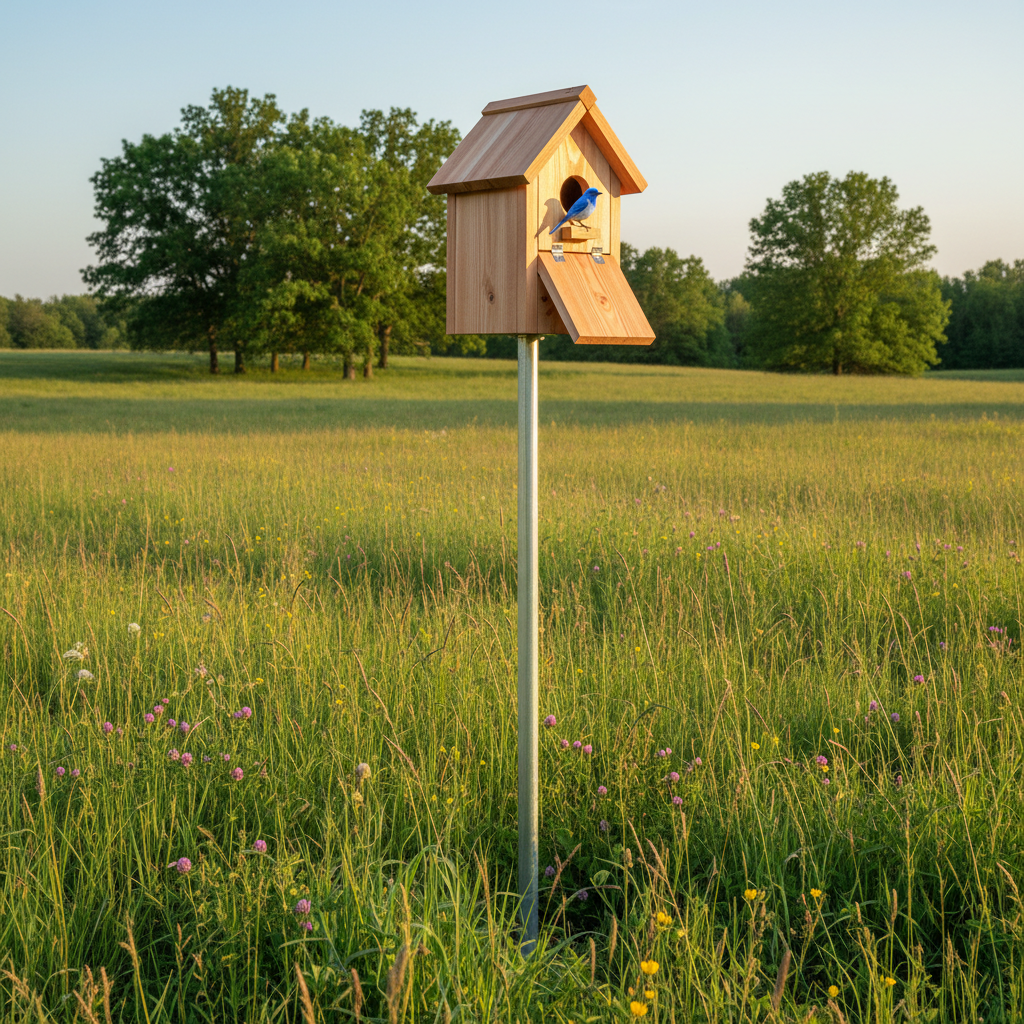
- Select and Prepare Your Cedar Board – Start with a single 1x6 cedar board, typically 6 to 8 feet long. Inspect it for significant knots or cracks that could compromise the house's integrity.
- Tool Tip: Use a tape measure and pencil for accurate marking. A square will ensure your lines are straight.
- Material Note: Look for rough-cut cedar if possible; the textured interior aids fledglings.
Published May 8, 2026Last updated August 17, 2026
Tools & materials you'll need
Affiliate linksAs an Amazon Associate FixlyGuide earns from qualifying purchases — at no extra cost to you. Prices and availability are accurate as of publication and subject to change.
Quick Answer
Attracting beautiful bluebirds to your backyard can be as simple as building them the right home. A well-designed bluebird house, constructed from a single cedar board, provides the specific entry hole size, internal dimensions, and ventilation necessary to create a safe and appealing nesting site. This approach ensures durability, natural aesthetics, and a clean environment, maximizing your chances of hosting a bluebird family and enjoying their presence season after season.
The Problem
Many common birdhouses, while well-intentioned, fail to meet the specific needs of bluebirds. Incorrect entry hole sizes can allow larger, more aggressive birds like starlings to take over, or predators to access the nest. Inadequate ventilation leads to overheating and can stress young birds. Furthermore, materials that aren't weather-resistant or properly assembled can quickly deteriorate, becoming unsafe or unusable. Homeowners often struggle to find a balance between an aesthetically pleasing birdhouse and one that genuinely serves as a functional, safe haven for bluebirds, leading to frustration and empty nest boxes.
How It Works
Bluebirds are secondary cavity nesters, meaning they don't excavate their own nests like woodpeckers do. Instead, they rely on existing tree cavities or man-made nest boxes. The principles behind a successful bluebird house revolve around mimicking these natural cavities while providing crucial protections.
Firstly, the choice of material is key. Cedar is ideal because it's naturally rot-resistant, durable, and provides good insulation without needing chemical treatments that could harm birds. Its natural oils deter insects, and its rough texture on the interior allows nestlings to climb out safely when they fledge.
Secondly, dimensions are critical. An entry hole with a precise 1-1/2 inch diameter is too small for starlings (an invasive species) but perfectly sized for bluebirds. Placing this hole 6 inches above the floor prevents predators with longer arms from reaching into the nest. The interior floor space, typically 4x4 or 5x5 inches, gives the nest enough room without being excessively large, which can lead to larger clutches than the parents can effectively feed.
Thirdly, ventilation and drainage are essential. Small gaps or drilled holes near the top allow heat to escape, preventing the box from becoming an oven on hot days. Recessed or angled air gaps just under the roof overhang provide further air circulation. Drainage holes in the floor prevent water from pooling after rain, keeping the nest dry and preventing mildew. A slightly sloped roof ensures water runs off efficiently.
Finally, a hinged or easily removable side panel is vital for monitoring and cleaning. Bluebirds typically have two to three broods per season, and cleaning out old nests after each brood is crucial to prevent parasites and disease, preparing the box for the next clutch. The absence of a perch below the entry hole deters predators and discouraging other non-native species from lingering.
Step-by-Step Fix
Carefully building a bluebird house from a single cedar board is a rewarding project that significantly improves your chances of hosting these beautiful birds. Follow these steps for success.
-
Select and Prepare Your Cedar Board – Start with a single 1x6 cedar board, typically 6 to 8 feet long. Inspect it for significant knots or cracks that could compromise the house's integrity.
- Tool Tip: Use a tape measure and pencil for accurate marking. A square will ensure your lines are straight.
- Material Note: Look for rough-cut cedar if possible; the textured interior aids fledglings.
-
Cut the Components – Accurately cut the cedar board into the following pieces:
- Front: 9-1/4 inches long
- Back: 11-1/4 inches long (angled top edge to meet roof slope)
- Sides (x2): 9 inches long (angled top edge from 9-1/4 inches at front to 8-1/4 inches at back to create roof slope)
- Floor: 4x4 inches
- Roof: 7-1/4 inches long
- Safety Note: Always wear safety glasses and use ear protection when operating a saw. Ensure the wood is clamped securely before cutting.
-
Create the Entry Hole – Mark the center of the front panel, 6 inches up from the bottom edge. Use a 1-1/2 inch spade bit or hole saw to drill the entry hole. Smooth any rough edges with sandpaper.
- Important: This precise diameter is critical. Do not make it larger.
- Tip: Drill from both sides a short way in to prevent tear-out.
-
Add Ventilation and Drainage – Drill four 1/4-inch diameter holes near the top edge of each side panel, just below where the roof will connect. Drill four 1/4-inch diameter holes in each corner of the floor panel for drainage.
- Alternative: For drainage, you can also cut a small corner off the floor or bevel the edges slightly.
-
Assemble the Sides and Front/Back – Attach one side panel to the front panel using corrosion-resistant screws (like stainless steel or exterior-grade deck screws), ensuring edges are flush. Then attach the floor, positioning it so it's recessed about 1/4 inch from the bottom edge of the side panels, allowing a slight overhang for the front and back. Attach the other side panel, followed by the back panel.
- Pre-Drill: Always pre-drill pilot holes to prevent the cedar from splitting.
- If this doesn't work: If wood splits, use a slightly smaller drill bit for pilot holes or move to a new section of wood.
-
Attach the Roof – Position the roof panel so it overhangs the front and sides of the house by approximately 1 inch. This overhang provides protection from rain and sun. Secure it with screws.
- Sealant: For added weather protection, you can run a bead of silicone caulk along the top seams on the exterior only, avoiding chemical exposure inside the box.
-
Create a Hinged Side for Cleaning – Instead of permanently attaching one of the side panels, secure it loosely with only two screws at the top and bottom or use a small hinge. This allows the side to pivot open for easy cleaning and inspection. Install a small latch (e.g., a hook and eye) to keep the side securely closed.
- Advantage: This makes annual cleaning simple, which is vital for bluebird health.
-
Mounting Considerations – Do not add a perch. Bluebirds do not need one, and perches can attract predators or aggressive birds. Mount the finished bluebird house on a pole 5 to 7 feet high in an open, grassy area with scattered trees, facing the hole away from prevailing winds.
- Predator Guard: Consider adding a stovepipe baffle or cone-shaped guard below the box to deter climbing predators like snakes and raccoons.
- Post: Use a metal conduit or a pressure-treated 4x4 post, ensuring it's stable.
Common Causes
- Incorrect Hole Size: The most frequent reason for bluebird houses remaining empty or being taken over by non-native species like starlings or house sparrows. A perfect 1-1/2 inch (3.8 cm) diameter is crucial for Eastern Bluebirds; subtle regional variations exist for Western (1-9/16 inch) and Mountain (1-9/16 inch) Bluebirds, but 1-1/2 inch is generally suitable for all three. Starlings require a 1-1/2 inch hole, but if the hole is 1 5/8 inch or larger, they can easily enter. House sparrows can enter any hole 1 1/2 inch or larger, so sparrow control is usually needed.
- Lack of Ventilation: Without proper air circulation, the interior of the house can become dangerously hot, especially during summer nesting, leading to heat stress and mortality for nestlings.
- Poor Drainage: Water collecting in the bottom of the box creates a damp, unhealthy environment, promoting mold and mildew, which can harm baby birds.
- Insecure Cleaning Access: Without an easy way to open and clean the box, old nests accumulate, becoming breeding grounds for parasites and disease, deterring future nesting attempts.
- Wrong Location/Mounting: Mounting a bluebird house too low, in dense woods, or with a perch, makes it unsuitable for bluebirds and vulnerable to predators.
- Unsuitable Materials: Using treated woods, thin plywood, or materials with strong chemical odors can be toxic or inadequate for insulation and durability.
Common Mistakes
- Adding a Perch: While common on many birdhouses, perches are detrimental for bluebird houses. They provide an easy landing spot for predators and can allow larger, aggressive birds to dominate the box. Bluebirds do not need a perch to enter their nests.
- Using Untreated Pine or Plywood: These materials often lack the natural rot resistance of cedar or redwood. They can quickly degrade, especially when exposed to weather, leading to a flimsy or unsafe structure. Moreover, plywood often contains glues that can emit volatile organic compounds (VOCs) that are harmful to birds.
- Making the Hole Too Large: Even a slightly oversized entry hole (e.g., 1-3/4 inches instead of 1-1/2 inches) can allow starlings to enter, competing with or harming bluebirds and their young. Precision is vital here.
- Ignoring Ventilation and Drainage: Forgetting to drill ventilation holes near the top or drainage holes in the floor can turn the birdhouse into a heat trap or a flooded deathtrap during adverse weather, greatly increasing nestling mortality.
- Mounting Too Low or Near Dense Cover: Bluebirds prefer open fields and scattered trees. Mounting a house near dense bushes or low to the ground provides easy access for predators like cats and raccoons, and creates an environment bluebirds instinctively avoid.
- Not Cleaning the Box Regularly: Bluebirds often have multiple broods. Failing to remove old nests after each brood creates a breeding ground for mites, blowflies, and other parasites, reducing the chances of subsequent successful broods.
Cost & Time Breakdown
| Task | DIY cost | Pro cost | Time |
|---|---|---|---|
| Cedar board (single 1x6) | $15–$30 | N/A | 15 mins |
| Screws & latch | $5–$10 | N/A | 5 mins |
| Tools (saw, drill, bits) | $0–$100+ | N/A | 0 mins |
| Assembly | N/A | N/A | 1–2 hours |
| Mounting pole & predator guard | $20–$50 | N/A | 30–60 mins |
| Total | $40–$190+ | N/A | 2–3.5 hours |
Tips & Prevention
- Monitor Annually: Even after setting up, regularly check your bluebird house. Look for signs of wear, insect infestations, or if the latch is still secure. Replace any rusted screws.
- Clean Between Broods: After the nestlings have fledged (typically in late spring to mid-summer for the first brood, and late summer to early fall for later broods), open the side panel, remove the old nest material, and gently scrape any dried droppings. This prepares the box for the next brood and prevents parasite build-up. Wear gloves when handling old nests.
- Install Predator Guards: A simple stovepipe baffle around the mounting pole is highly effective at deterring snakes, raccoons, and cats, significantly increasing nesting success. Position it at least 2 feet below the box.
- Avoid Pesticides in Your Yard: Bluebirds primarily eat insects, especially during breeding season. Using pesticides in your yard reduces their food supply and can expose them to harmful chemicals.
- Check Hole Reducer Options: If starlings become a persistent problem, research and install a metal hole reducer that maintains the precise 1-1/2 inch opening while reinforcing the entrance against pecking.
- Consider Multiple Boxes: If you have enough suitable habitat, consider installing multiple houses, spaced at least 100 yards apart, as bluebird pairs can be territorial during nesting season but can tolerate closer boxes if food is abundant.
When to Call a Professional
Building a bluebird house is a straightforward DIY project for most homeowners. However, if you are uncomfortable using power tools, particularly a saw or drill, or if you consistently find that your bluebird houses are failing (e.g., persistent predator issues despite guards, unexplainable abandonment, or structural failures), it might be beneficial to consult with a local carpenter or a bird conservation organization. These experts can provide guidance on construction, optimal placement, and advanced predator deterrence, ensuring bluebirds thrive in your habitat, especially if you're looking to establish a larger bluebird trail or have specific property challenges that require tailored solutions beyond standard DIY instructions. They can help troubleshoot persistent problems or provide pre-built, high-quality boxes that meet all bluebird-specific requirements if you lack the time or tools for construction.
Related Articles
Keep troubleshooting with these hand-picked guides from FixlyGuide:
- 7 Hidden Equity Drains Costing You Thousands Annually — Your home is an asset, but silent problems like minor leaks, poor insulation, and deferred maintenance can drain its value. Discover the se…
- The Secret Power Tool Hiding in Your Garage for a Speedier Clean — Unlock the hidden potential of your cordless drill to tackle stubborn household grime, soap scum, and dirt with specialized cleaning attach…
- The Surprising Yard Tool That Vaporizes Weeds (No Chemicals Needed) — A weed torch offers an efficient, chemical-free method for removing unwanted plants from hardscaped areas like driveways, patios, and grave…
- Is a Wall-Mounted Pressure Washer Right for Your Garage? The Unvarnished Truth — Discover if a wall-mounted pressure washer is the right cleaning solution for your home, offering a powerful and space-saving alternative t…
- The 12 Checks That Prevent 80% of Costly Home Repairs — Don't wait for a disaster. Our comprehensive monthly home maintenance checklist reveals the surprising, simple tasks that catch small issue…
- The 4-Step Drywall Patch Secret That Makes Large Holes Vanish — Discover how to flawlessly repair a large hole in drywall using a simple, effective method that makes the damage disappear without a trace.
Should you do this yourself?
Answer five quick questions before you start. Safety outranks savings every time.
Your experience with work like this
How high do you have to work?
Does the job involve any of these?
Will it need a permit?
Specialty tools
Free and instant. Educational guidance only — not a quote, inspection, or professional diagnosis.
What should this project cost?
Enter your project details for a realistic cost range before you call anyone.
Cost depends heavily on which system turns out to be the source.
- Regional adjustment
- National average
- Labor share (typical)
- ~$1,620
- Quotes to collect
- 3 written estimates
Educational estimate based on national averages — not a binding quote. Always confirm with written local estimates.
Before you start
Check the difficulty, permits, and safety risk — then decide whether to call a pro.
- Estimate this projectGet a cost range for your scope and ZIP before you call anyone.Open
- Get local estimatesSend one request and compare written estimates from vetted pros.Open
Free, no signup required. Estimates are educational guidance, not a quote or an inspection.
Get the print-ready PDF of this guide
A clean, ad-free, printable version you can keep on your phone or pin to the workshop wall. Free with a FixlyGuide account.
- Print-optimized layout
- Tools, materials & every step included
- Saved to your account
This article was independently written by FixlyGuide based on the source topic.
Frequently asked questions
What is the best type of wood for a bluebird house?+
Cedar is widely considered the best wood for a bluebird house due to its natural rot resistance, durability, insulating properties, and resistance to insects. Its rough interior surface also helps fledglings climb out of the nest.
What size hole does a bluebird house need?+
For Eastern Bluebirds, the entry hole should be a precise 1-1/2 inches (3.8 cm) in diameter. Slightly larger sizes (1-9/16 inches) are also common for Western and Mountain Bluebirds, but 1-1/2 inches generally works for all. This size deters larger, invasive birds like starlings.
How high should a bluebird house be mounted?+
Bluebird houses should typically be mounted on a pole 5 to 7 feet (1.5 to 2.1 meters) high. This height is ideal for bluebirds and helps deter certain predators.
Do I need to clean a bluebird house?+
Yes, regular cleaning is crucial. Bluebirds often have multiple broods in a season. You should clean out old nest material after each brood to prevent the buildup of parasites and diseases, ensuring a healthy environment for subsequent broods.
Discussion
Loading comments…