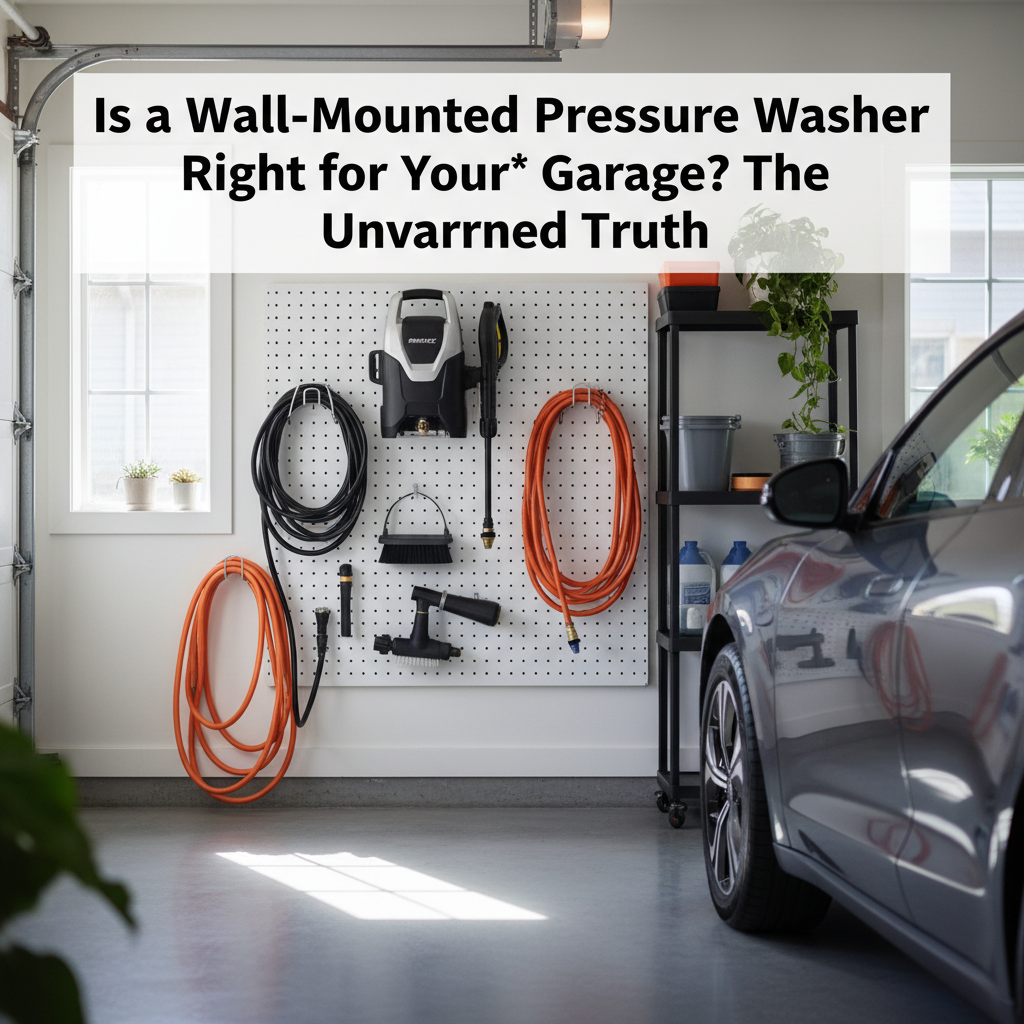
- Garage Clutter and Disorganization: Many portable pressure washers contribute significantly to garage clutter, with hoses, wands, and accessories strewn about. A wall-mounted unit solves this by providing dedicated, tidy storage.
- Frequent Outdoor Cleaning Needs: Homeowners with large driveways, multiple vehicles, boats, or extensive patio areas will find the easy deployment of a wall-mounted system encourages more frequent cleaning, preventing heavy build-up.
- Desire for Consistent Power and Reliability: Integrated systems often feature robust motor and pump assemblies designed for extended use, potentially offering more consistent power output than some entry-level portable units.
- Seeking Ergonomic and Convenient Operation: The elimination of lifting and dragging a heavy machine, combined with automatic hose retraction, makes the cleaning process much less physically demanding and more enjoyable.
- Limited Storage Space: While wall-mounted, these units free up valuable floor space that a bulky portable unit would occupy, making them ideal for smaller garages where every square foot counts.
Published May 8, 2026Last updated September 4, 2026
Tools & materials you'll need
Affiliate linksAs an Amazon Associate FixlyGuide earns from qualifying purchases — at no extra cost to you. Prices and availability are accurate as of publication and subject to change.
Quick Answer
A wall-mounted pressure washer can revolutionize your home cleaning routine, providing powerful, convenient, and organized outdoor cleaning. Unlike bulky portable units, these systems mount directly to your garage wall, keeping hoses neatly retracted and the unit out of the way. This setup significantly reduces clutter, streamlines access for frequent jobs, and often provides consistent, high-powered performance for tasks like washing vehicles, cleaning driveways, siding, and outdoor furniture without the hassle of uncoiling and recoiling long hoses.
The Problem
Traditional portable pressure washers, while effective, often present a few recurring headaches for homeowners. They're typically bulky, requiring dedicated storage space in an already crowded garage or shed. The hoses and power cords frequently tangle, creating a frustrating setup and takedown process that can deter frequent use. Furthermore, lugging a heavy unit around your property, especially up and down steps or over uneven terrain, can be physically demanding. Many homeowners find themselves less inclined to use their pressure washer as often as they should because of these inherent inconveniences, letting grime and dirt build up on driveways, patios, and siding.
How It Works
Wall-mounted pressure washers operate on the same fundamental principle as their portable counterparts but with a significant design difference: their permanent installation. At its core, a pressure washer utilizes a powerful electric motor (or sometimes a gas engine, though less common for wall-mounted residential units) to drive a pump. This pump rapidly accelerates water from your garden hose connection, forcing it through a small nozzle at extremely high pressure – often ranging from 1,800 to over 2,200 PSI (Pounds per Square Inch) for residential models.
This high-pressure stream effectively blasts away dirt, grime, mold, mildew, and other stubborn contaminants from surfaces. The key components include the motor, the pump, a detergent reservoir (on many models), a high-pressure hose, and a spray gun with interchangeable nozzles.
For a wall-mounted unit, the motor and pump assembly are housed in a durable casing designed to be bolted securely to a garage or utility room wall. Most higher-end models integrate an automatic hose reel, which is perhaps their most compelling feature. This reel neatly stores the high-pressure hose, often up to 50 or 100 feet long. When you need to use it, you simply pull the required length of hose from the reel, and it locks into place. When finished, a gentle tug or press of a button activates a spring-loaded or motorized mechanism to retract the hose, ensuring it's always tidy and ready for the next use. The power cord typically wraps around a built-in cleat or also retracts. Water is supplied via a standard garden hose connected to an inlet on the unit, and a power cord plugs into a dedicated GFCI-protected 120V outlet. This integration of components and a fixed location drastically improves convenience and longevity compared to frequently moving and storing portable units.
Step-by-Step Fix
(This article describes the installation and benefits of a wall-mounted pressure washer, not a specific "fix." The steps below guide the homeowner through the installation process.)
-
Choose Your Location Wisely – Select a sturdy wall in your garage or utility area, ideally near a GFCI-protected electrical outlet and a cold water spigot. The location should allow easy access to all sides of your typical cleaning area (e.g., driveway, patio, vehicles). Ensure there's enough clearance for the unit itself and the full extension of its hoses.
- Safety First: Verify the wall stud locations using a stud finder to ensure secure mounting.
- Consider Drainage: Position the unit where any minor leaks or drips won't cause damage or create slippery electrical hazards.
-
Mount the Wall Bracket – Most units come with a robust mounting bracket. Hold the bracket against the wall at your desired height (typically eye-level for easy access). Use a level to ensure it's perfectly straight. Mark the drilling points through the pre-drilled holes in the bracket. Drill pilot holes into the wall studs using an appropriate drill bit size (check your unit's manual). Secure the bracket firmly with lag screws and washers, ensuring it's solid and won't budge.
- Tools: Stud finder, level, drill, appropriate drill bits, socket wrench or impact driver.
- If this doesn't work: If you can't hit studs, you'll need heavy-duty toggle bolts or specialized concrete anchors, but directly into studs is always preferred for maximum stability.
-
Attach the Pressure Washer Unit – Carefully lift the main pressure washer unit and align it with the mounted bracket. It usually slides down onto the bracket or bolts directly into it. Follow your specific model's instructions for secure attachment. Double-check that all fasteners are tightened according to the manufacturer's specifications.
-
Connect Water Supply – Use a standard garden hose to connect your cold water spigot to the pressure washer's water inlet. Ensure the connection is tight and free of leaks. You may want to use a quick-connect fitting for easier attachment and detachment.
- Tip: If your spigot is far, use a high-quality, reinforced garden hose that can withstand consistent water pressure.
-
Connect High-Pressure Hose and Gun – Uncoil the main high-pressure hose that comes with the unit (if it's not already integrated into an automatic reel). Connect one end to the pressure outlet on the machine and the other end to the spray gun. Ensure all connections are hand-tightened, then snugged with a wrench if necessary, for a leak-free seal. Attach your preferred spray nozzle to the gun.
-
Plug In and Test – Plug the pressure washer's power cord into a dedicated GFCI-protected 120V electrical outlet. Turn on the water spigot. Before turning on the pressure washer, squeeze the spray gun trigger to purge air from the system until a steady stream of water emerges. Then, turn on the pressure washer and begin cleaning.
- Safety Note: Always wear appropriate eye protection and closed-toe shoes when operating a pressure washer. Never point the spray gun at people, pets, or electrical outlets.
Common Causes
(This section will discuss the reasons homeowners consider a wall-mounted pressure washer.)
- Garage Clutter and Disorganization: Many portable pressure washers contribute significantly to garage clutter, with hoses, wands, and accessories strewn about. A wall-mounted unit solves this by providing dedicated, tidy storage.
- Frequent Outdoor Cleaning Needs: Homeowners with large driveways, multiple vehicles, boats, or extensive patio areas will find the easy deployment of a wall-mounted system encourages more frequent cleaning, preventing heavy build-up.
- Desire for Consistent Power and Reliability: Integrated systems often feature robust motor and pump assemblies designed for extended use, potentially offering more consistent power output than some entry-level portable units.
- Seeking Ergonomic and Convenient Operation: The elimination of lifting and dragging a heavy machine, combined with automatic hose retraction, makes the cleaning process much less physically demanding and more enjoyable.
- Limited Storage Space: While wall-mounted, these units free up valuable floor space that a bulky portable unit would occupy, making them ideal for smaller garages where every square foot counts.
- Aesthetic Preference: For homeowners who pride themselves on a clean and organized garage, a sleek, wall-mounted unit looks far more professional and integrated than a standalone machine.
Common Mistakes
- Improper Mounting to Drywall Only: Relying solely on drywall anchors without hitting studs is a recipe for disaster. The weight of the unit, plus the torque from hose retraction, requires a secure connection to structural framing. Always locate and drill into wooden studs for maximum stability.
- Neglecting GFCI Protection: Pressure washers combine water and electricity, making GFCI (Ground Fault Circuit Interrupter) protection absolutely critical. Plugging into a non-GFCI outlet or an overloaded circuit poses a severe electrocution risk. Ensure your chosen outlet is GFCI-protected.
- Using Too High a Pressure Setting on Delicate Surfaces: Not all surfaces can withstand the same pressure. Using a narrow, high-pressure nozzle on siding, painted wood, or certain types of masonry can cause permanent damage. Always start with a wider fan nozzle or lower pressure and test in an inconspicuous area.
- Forgetting to Purge Air from the System: Running the pump dry or with air in the lines before water flows through can damage the pump. Always connect the water supply, turn on the spigot, and squeeze the trigger until a steady stream of water comes out before powering on the unit.
- Ignoring Winterization: If you live in a climate where temperatures drop below freezing, failing to properly winterize your pressure washer (siphon in pump protector fluid or completely drain all water) can lead to cracked pumps and hoses, rendering your unit useless.
- Using the Wrong Detergent: Only use detergents specifically designed for pressure washers. Household cleaners can damage the pump seals or simply won't be effective when applied through the unit's detergent dispenser.
Cost & Time Breakdown
| Task | DIY cost | Pro cost | Time |
|---|---|---|---|
| Purchase Wall-Mounted Unit | $300–$800 | N/A | N/A |
| Basic Installation (DIY) | $0–$20 | $150–$300 | 1–2 hours |
| Electrical Outlet Install (Pro) | N/A | $150–$400 | 1–3 hours |
| Water Spigot Install (Pro) | N/A | $150–$350 | 1–2 hours |
| Total (DIY, basic) | $300–$820 | N/A | 1–2 hours |
| Total (Pro Install, if needed) | $450–$800+ | $450–$1,050+ | 2–5 hours |
Tips & Prevention
- Regular Nozzle Cleaning: Clogged nozzles can reduce pressure and strain the pump. Periodically remove nozzles and clean them with the provided needle tool or a paperclip.
- Hose Management: Even with an automatic reel, occasionally pull the hose out fully and inspect it for wear, kinks, or damage. Repair or replace as needed to prevent leaks.
- Filter Checks: Many units have an inlet water filter. Check and clean this filter regularly to prevent sediment from entering and damaging the pump.
- Proper Storage: If your garage is unheated, always perform a full winterization (draining and possibly adding pump saver) before freezing temperatures hit.
- Read the Manual: This isn't just filler – the manufacturer's manual contains crucial model-specific information on operation, maintenance, and troubleshooting.
- GFCI Test: Periodically test your GFCI outlet (usually a "Test" and "Reset" button) to ensure it's functioning correctly and providing critical electrical protection.
When to Call a Professional
While installing a wall-mounted pressure washer is a manageable DIY project for many homeowners, there are specific scenarios where calling a licensed professional is essential for safety and optimal function. If your desired mounting location lacks a nearby GFCI-protected electrical outlet, you must call a licensed electrician to install one. Attempting to run high-power outdoor equipment on an ungrounded or non-GFCI protected circuit is extremely dangerous and carries a significant risk of electrocution. Similarly, if there isn't a convenient outdoor or garage water spigot, a licensed plumber should be consulted to run a new water line. Improper plumbing can lead to leaks, water damage, or even burst pipes. Finally, if you encounter any persistent electrical issues with the unit itself, such as tripping breakers, burning smells, or erratic power, unplug it immediately and contact a qualified appliance repair technician or electrician; never attempt to diagnose or repair internal electrical components yourself. Prioritizing correct electrical and plumbing installations prevents severe hazards and ensures your pressure washer operates safely and reliably for years to come.
Related Articles
Keep troubleshooting with these hand-picked guides from FixlyGuide:
- 7 Hidden Equity Drains Costing You Thousands Annually — Your home is an asset, but silent problems like minor leaks, poor insulation, and deferred maintenance can drain its value. Discover the se…
- The Secret Power Tool Hiding in Your Garage for a Speedier Clean — Unlock the hidden potential of your cordless drill to tackle stubborn household grime, soap scum, and dirt with specialized cleaning attach…
- The Surprising Trick to Cutting Your Dryer Bill By $100 Per Year — Installing a clothesline can significantly reduce your energy bills and add a fresh scent to your laundry. This guide covers how to choose…
- The 12 Checks That Prevent 80% of Costly Home Repairs — Don't wait for a disaster. Our comprehensive monthly home maintenance checklist reveals the surprising, simple tasks that catch small issue…
- 7 Inspection Red Flags That Secretly Signal a $20,000 Bill — Don't let your dream home become a money pit. Many buyers and even some inspectors overlook subtle home inspection red flags that lead to f…
- Can Your Kitchen Wiring Handle a High-CFM Range Hood? — Discover if your home's existing electrical circuit can support a powerful, high-CFM range hood upgrade without the need for a costly, comp…
What should this project cost?
Enter your project details for a realistic cost range before you call anyone.
Cost depends heavily on which system turns out to be the source.
- Regional adjustment
- National average
- Labor share (typical)
- ~$1,620
- Quotes to collect
- 3 written estimates
Educational estimate based on national averages — not a binding quote. Always confirm with written local estimates.
Get the print-ready PDF of this guide
A clean, ad-free, printable version you can keep on your phone or pin to the workshop wall. Free with a FixlyGuide account.
- Print-optimized layout
- Tools, materials & every step included
- Saved to your account
This article was independently written by FixlyGuide based on the source topic.
Frequently asked questions
What is the main benefit of a wall-mounted pressure washer?+
The primary benefit is superior organization and convenience. The unit is securely mounted, often with an automatic hose reel, eliminating clutter, tangles, and the need to drag a heavy machine around. It makes frequent cleaning much easier and more enjoyable.
Can I install a wall-mounted pressure washer myself?+
Yes, if you have basic DIY skills, the installation is straightforward. It mainly involves mounting a bracket to wall studs, connecting water, and plugging it in. However, if you need a new electrical outlet or water spigot, it's best to hire a professional.
Do wall-mounted pressure washers offer more power?+
Not inherently more powerful than all portable units, but many models designed for permanent installation are built for durability and consistent performance. They often come with higher-end motors and pumps suitable for regular, demanding tasks.
What kind of maintenance do they require?+
Maintenance is similar to portable units: cleaning nozzles, checking the inlet filter, and proper winterization if you live in a freezing climate. The biggest difference is the reduced wear and tear from not having to move the unit around.
Discussion
Loading comments…