- Hard Food Objects: Items like fruit pits, bones, corn cobs, and even fibrous vegetables (celery, potato peels) are common culprits. They're too tough for the disposal to grind effectively and can get wedged.
- Non-Food Items: Silverware, bottle caps, pull tabs, twist ties, small toys, or cleaning sponges accidentally falling into the drain are frequent causes of jams. Always be careful around the open drain.
- Lack of Water: Running the disposal without sufficient cold water can lead to food accumulation and jamming. Cold water helps flush food particles and solidifies any grease, making it easier to grind.
- Overloading: Trying to cram too much food down the disposal at once, especially large quantities of fibrous or starchy items, can overwhelm the motor and cause it to seize.
- Grease Buildup: While not a direct jam, solidified grease can trap small food particles, creating a sticky mass that eventually reduces the disposal's efficiency and predisposes it to jams.
Plumbing · Leak
| Project category | Plumbing |
|---|---|
| Problem type | Leak |
| Trade required | Plumbing |
| Urgency | Emergency — act now |
| Safety risk | High safety risk |
| DIY suitability | DIY for experienced homeowners |
| Cost category | Low cost |
| Typical timeline | Shut water off now; repair usually same or next day |
| Contractor type | Licensed plumber |
Repair option
Isolate at the shutoff, replace the failed component, and dry the cavity fully.
Replacement option
Repipe the run or the branch when corrosion is widespread.
Common causes
- Failed supply line or shutoff valve
- Worn washers, cartridges, or P-trap connections
- Pinhole corrosion in older copper
Relevant tools:emergency checklistdiy or hire a pro
Published May 8, 2026Last updated August 17, 2026
Tools & materials you'll need
Affiliate linksNo materials required.
As an Amazon Associate FixlyGuide earns from qualifying purchases — at no extra cost to you. Prices and availability are accurate as of publication and subject to change.
Quick Answer
If your garbage disposal hums but doesn't spin, the most common cause is a jammed shredder plate or flywheel. This can typically be resolved by cutting the power, clearing any visible obstructions with pliers, and then using an Allen wrench to manually rotate the flywheel from the bottom of the unit. Finally, reset the disposal’s overload protector button.
The Problem
You're rinsing dishes, you flip the switch for the garbage disposal, and instead of the familiar whirring sound, you hear a low, persistent hum. The motor is clearly trying to work, but nothing is spinning, and your drain remains blocked. This frustrating situation almost always indicates that the shredder plate – the spinning component inside the disposal – is jammed. Typically, a piece of food waste, a utensil, or another foreign object has become lodged between the plate and the grinding ring, immobilizing the motor. Ignoring the hum or repeatedly flipping the switch can lead to motor burnout, so addressing the issue promptly is key.
How It Works
A garbage disposal works by using a rapidly spinning plate, called a flywheel or shredder plate, to push food waste against a stationary grinding ring. The flywheel is connected directly to a high-torque electric motor. When you turn on the disposal, the motor spins the flywheel, which then grinds food into small particles that can be flushed down the drain with water. There are no sharp blades in a typical household disposal; instead, impellers (small lugs or teeth) on the flywheel pulverize the food against the grinding ring's textured surface. Below the motor, usually on the underside of the disposal unit, is a reset button. This is a thermal overload protector designed to trip and cut power to the motor if it overheats or draws too much current, such as when it's struggling against a jam. This safety mechanism prevents the motor from burning out. Many disposals also feature a hexagonal hole in the center of the bottom plate, which provides access to manually turn the motor shaft in case of a jam.
Step-by-Step Fix
Safety First! Before attempting any work inside the disposal, ALWAYS ensure the power is off. Flip the wall switch to the 'off' position AND, ideally, flip the circuit breaker for the disposal. This prevents accidental activation and serious injury.
-
Cut the Power – Locate and flip the circuit breaker.
- Go to your home's electrical panel and find the breaker labeled for the kitchen disposal (often 15A or 20A). Flip it to the 'off' position. This is a critical safety step to prevent accidental electrocution or severe injury.
-
Look for Visible Obstructions – Inspect the drain opening.
- Using a flashlight, peer down into the disposal's drain opening. Look for any obvious culprits like silverware, bottle caps, or exceptionally hard food items (e.g., peach pits, bones). Do NOT put your hand into the disposal.
-
Remove Obstructions Safely – Use tongs or pliers.
- If you spot an obstruction, use long-nosed pliers, tongs, or even a sturdy pair of tweezers to carefully remove it. Avoid forcing anything out, as this can damage the shredder plate. Clear all visible debris before proceeding.
-
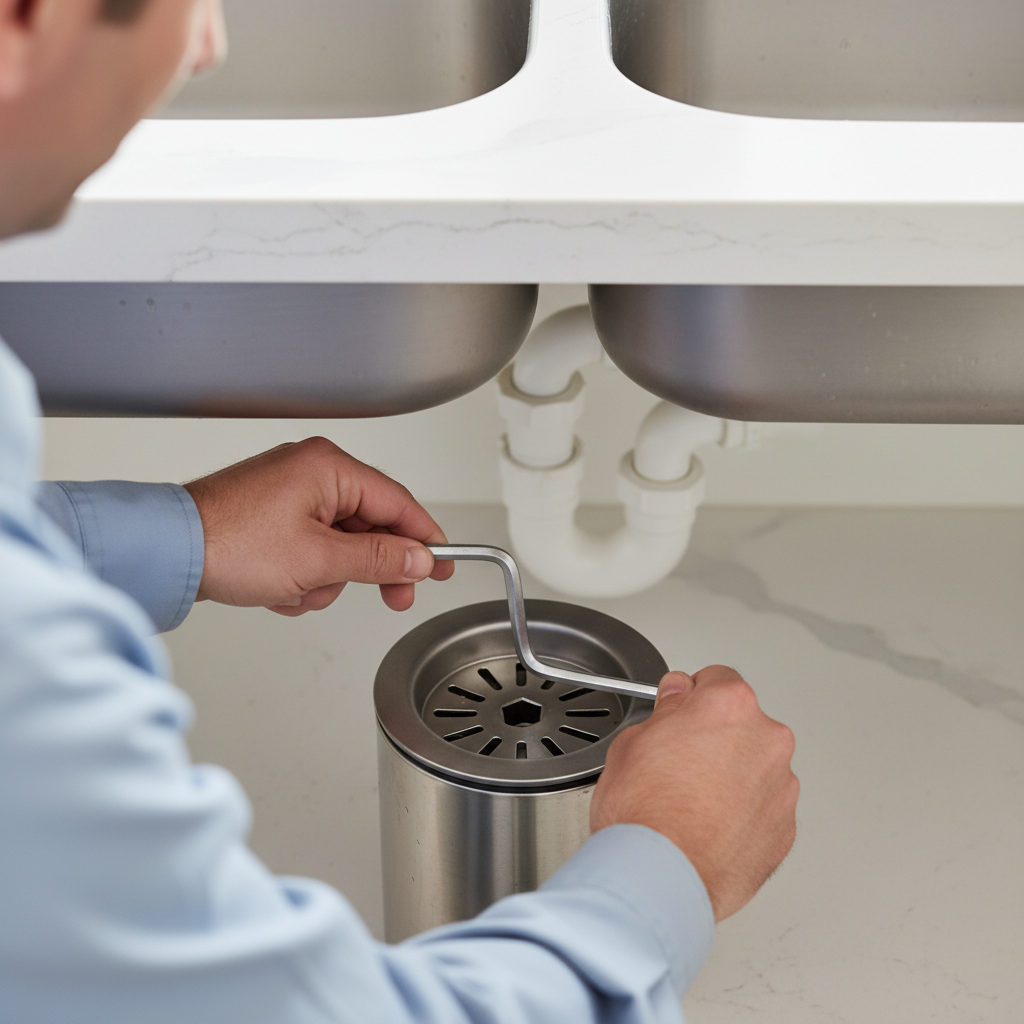
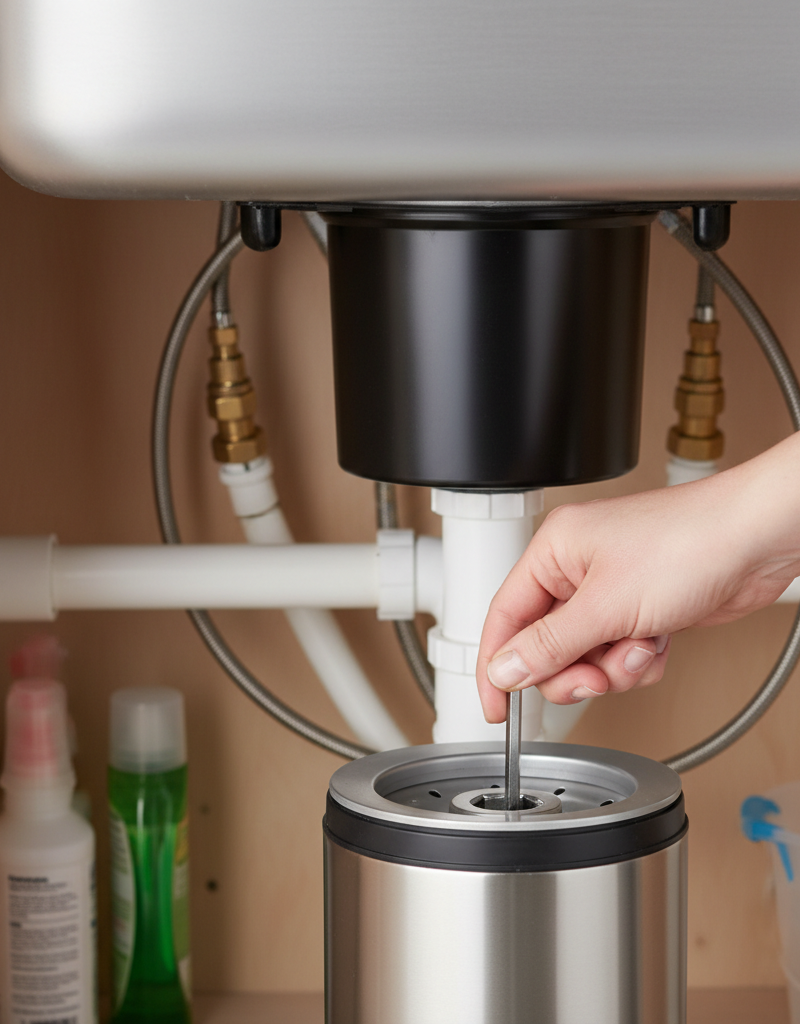
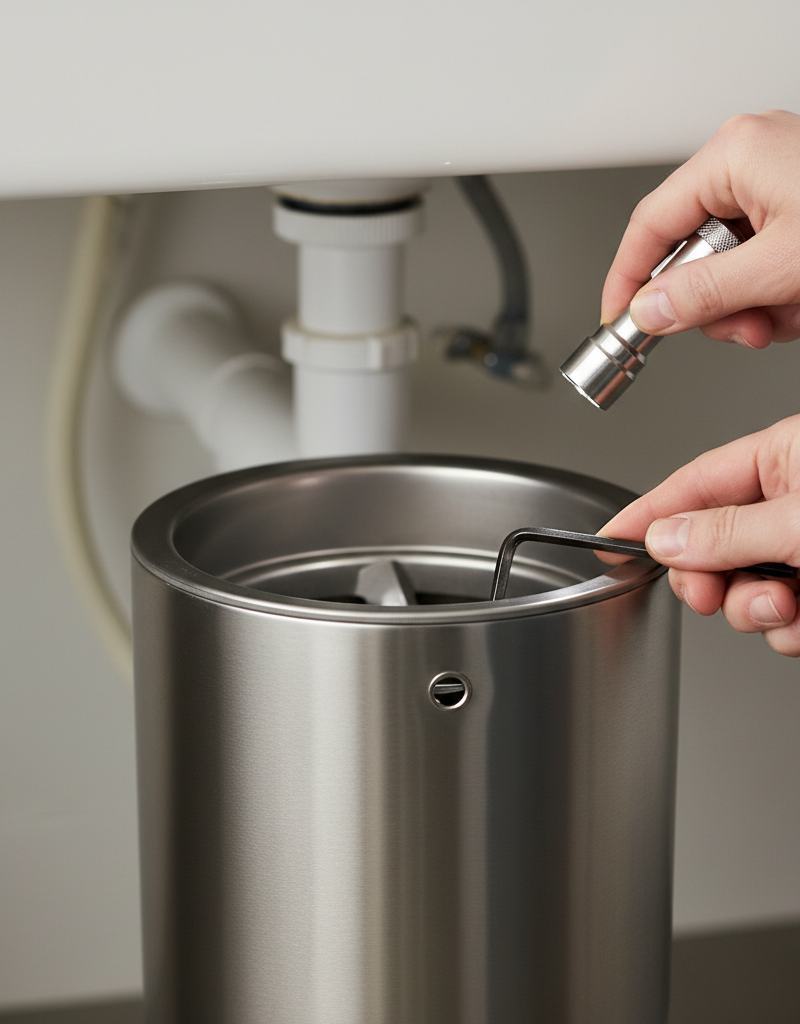
Insert the Allen Wrench – Locate the hexagonal hole on the bottom.
- Underneath the disposal unit, usually in the very center, you'll find a small hexagonal hole. This is where you'll insert the ¼-inch Allen wrench (most disposals come with one, or you can find one in a standard set).
-
Manually Turn the Flywheel – Wiggle the wrench back and forth.
- Insert the Allen wrench firmly into the hole. Twist it back and forth, clockwise and counter-clockwise, until you feel the flywheel free up and turn somewhat easily. You might hear a 'clunk' as the obstruction dislodges. This step directly addresses the jam.
-
Check for Grind Plate Movement – Look inside the drain again.
- After manually turning, use your flashlight to look down into the disposal. The shredder plate should now be able to spin freely. You might even see the obstruction that was causing the jam.
-
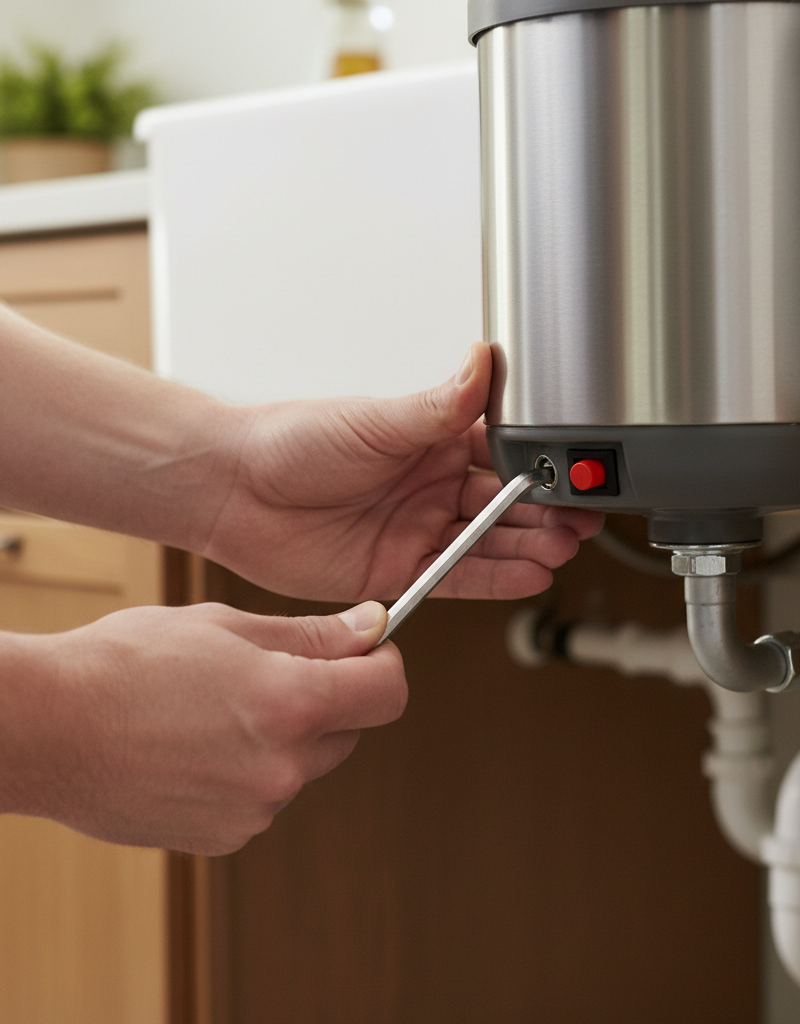
Reset the Overload Protector – Press the red button.
- Still underneath the disposal, locate the small red or black button, typically near the Allen wrench hole. This is the overload protector. It's likely popped out. Push it firmly back in until it clicks. This restores power to the motor.
-
Restore Power & Test – Flip the breaker and run water.
-
Return to your electrical panel and flip the circuit breaker back to the 'on' position. Go back to the kitchen, turn on the cold water, and then flip the disposal wall switch. It should now spin normally. Let it run for about 15-20 seconds with cold water to ensure everything is clear.
-
If it still hums: Turn off power immediately. Repeat steps 2-7, looking even more carefully for stubborn obstructions or checking for a loose motor component if the unit is older. It might be a more deeply lodged item or a seized bearing, which typically means a professional or replacement is needed.
-
If it runs but leaks: Turn off power. Inspect drain connections beneath the sink. Tighten mounting bolts or check the rubber gasket seal at the top. A minor leak might just need a tightening; a steady drip could indicate a cracked housing, requiring replacement.
-
Common Causes
- Hard Food Objects: Items like fruit pits, bones, corn cobs, and even fibrous vegetables (celery, potato peels) are common culprits. They're too tough for the disposal to grind effectively and can get wedged.
- Non-Food Items: Silverware, bottle caps, pull tabs, twist ties, small toys, or cleaning sponges accidentally falling into the drain are frequent causes of jams. Always be careful around the open drain.
- Lack of Water: Running the disposal without sufficient cold water can lead to food accumulation and jamming. Cold water helps flush food particles and solidifies any grease, making it easier to grind.
- Overloading: Trying to cram too much food down the disposal at once, especially large quantities of fibrous or starchy items, can overwhelm the motor and cause it to seize.
- Grease Buildup: While not a direct jam, solidified grease can trap small food particles, creating a sticky mass that eventually reduces the disposal's efficiency and predisposes it to jams.
- Motor Issues: Less common, but a humming without spinning can also indicate a failing motor or seized bearings. If no jam is present after manual rotation, and the reset button trips repeatedly, the motor might be failing.
Common Mistakes
- Using Your Hand to Clear Jams: NEVER put your hand into the disposal, even if the power is off. The impellers can still be incredibly sharp, and an accidental power restoration could cause severe injury. Always use tools.
- Ignoring the Hum: Continuing to run the disposal while it's humming will quickly burn out the motor. The hum indicates the motor is straining against a blockage; turn it off immediately.
- Not Cutting Power at the Breaker: Simply flipping the wall switch isn't enough. An accidental bump or malfunction could turn the disposal back on while you're working, leading to a serious accident. Always cut power at the breaker.
- Using Hot Water: While running the disposal, always use cold water. Hot water can melt grease, allowing it to solidify further down the drain and cause clogs in your pipes, not just the disposal.
- Putting Inappropriate Items Down: Avoid starchy foods (pasta, rice), fibrous foods (celery, asparagus), coffee grounds, eggshells, bones, fruit pits, and cooking grease. These are common culprits for jams and clogs.
- Not Using Enough Water: Always run a strong stream of cold water before, during, and for 15-20 seconds after using the disposal. This helps flush all ground particles completely through your drain system.
Cost & Time Breakdown
| Task | DIY Cost | Pro Cost | Time |
|---|---|---|---|
| Clearing a Jam | $0–$15 | $100–$250 | 15–30 min |
| Replacing Allen Wrench (if lost) | $5–$10 | N/A | 5 min to buy |
| Motor Replacement (DIY if skilled) | $80–$200 | N/A | 1–2 hours |
| New Disposal Installation | $100–$300 (unit) | $250–$600 (total) | 1–3 hours |
Tips & Prevention
- Use Cold Water: Always run a strong stream of cold water before, during, and for at least 15-20 seconds after using the disposal. Cold water keeps grease solidified, making it easier to grind and flush away.
- Grind Small Batches: Avoid overloading the disposal. Feed food waste gradually rather than dumping large amounts at once. This allows the motor to process everything efficiently.
- Know What NOT to Grind: Never put bones, fruit pits, corn cobs, artichokes, fibrous vegetables (celery, asparagus), coffee grounds, eggshells, pasta, rice, or cooking grease down the disposal. These are prime causes of jams and clogs.
- Regular Cleaning: To prevent buildup and odors, grind citrus peels (lemon, orange) or a tray of ice cubes periodically. The ice helps to clean the grinding components, and the citrus provides a fresh scent.
- Check for Silverware: Before turning on the disposal, quickly scan the sink basin for any fallen silverware, bottle caps, or other small non-food items.
- Run It Often: Even if you don't use it for food waste, occasionally run your disposal with cold water for a few seconds to keep the components free and prevent corrosion.
When to Call a Professional
While most disposal jams are a straightforward DIY fix, there are several situations where calling a licensed plumber is the wisest course of action. If you've followed all the troubleshooting steps, manually rotated the flywheel, reset the button, and the disposal still only hums or immediately trips the breaker, the motor itself may be burned out or have internal damage. Repeated leaks from the bottom of the disposal or around the sink flange, especially after clearing a jam, can indicate a cracked housing or a failure in the internal seals, which usually necessitates a replacement by a professional. Any signs of electrical issues, such as burning smells, sparks, or repeated tripping of the main circuit breaker (not just the disposal's reset), should be handled by a qualified electrician and possibly a plumber, as this indicates a serious electrical fault or a severely damaged motor. Never attempt to diagnose or repair electrical problems beyond resetting a simple breaker.
Related Articles
Keep troubleshooting with these hand-picked guides from FixlyGuide:
- The 30-Second Fix for a Humming Garbage Disposal (Plumbers Don't Want You to Know) — Before you call a plumber, try these simple steps to unjam a humming garbage disposal in under a minute and save yourself a service call.
- The One Trick to Silence a Humming Garbage Disposal (Without Calling a Plumber) — A humming garbage disposal is usually jammed. Learn how to quickly and safely clear the obstruction yourself with basic tools.
- The Nasty Truth: Your Stinky Garbage Disposal Isn't Just Food Scraps — A persistent odor from your garbage disposal often points to a deeper, more stubborn problem than just old food, impacting your kitchen's f…
- That Annoying Water Heater Popping Sound? It's Trying to Tell You This One Thing — A popping water heater usually signals a common issue: sediment buildup. Learn why it happens and how to fix it with a simple flush.
- The 5-Minute Trick to Fix a Kitchen Sink Sprayer's Weak Stream — A weak kitchen sink sprayer can be frustrating, but often a simple cleaning or adjustment can restore full pressure in minutes.
- The #1 Mistake Jamming Your Garbage Disposal for Good — Constantly resetting your humming, jammed garbage disposal? The culprit might be your daily routine. We'll reveal the common mistake that w…
What should this project cost?
Enter your project details for a realistic cost range before you call anyone.
Common repairs run $150–$650; repipes and water-heater replacements reach $1,500–$4,500.
- Regional adjustment
- National average
- Labor share (typical)
- ~$754
- Quotes to collect
- 3 written estimates
Educational estimate based on national averages — not a binding quote. Always confirm with written local estimates.
Get the print-ready PDF of this guide
A clean, ad-free, printable version you can keep on your phone or pin to the workshop wall. Free with a FixlyGuide account.
- Print-optimized layout
- Tools, materials & every step included
- Saved to your account
Frequently asked questions
Why does my garbage disposal just hum?+
A humming sound without the motor spinning almost always indicates a jammed shredder plate. A foreign object, or even tough food waste, is preventing the internal components from rotating.
Where is the reset button on a garbage disposal?+
The reset button is typically a small red or black button located on the very bottom of the garbage disposal unit, usually in the center or slightly off to one side. It's designed to pop out when the motor overloads.
What kind of wrench do I need for a jammed garbage disposal?+
Most garbage disposals use a 1/4-inch hex head T-shaped Allen wrench to manually clear jams from the bottom. Many disposals come with this wrench when purchased.
Can I use hot water in a garbage disposal?+
No, always use cold water when running a garbage disposal. Hot water can melt grease, allowing it to accumulate and solidify in your pipes, leading to clogs. Cold water helps solidify grease, making it easier to grind and flush away.
How do I know if my garbage disposal motor is burnt out?+
If you've cleared all visible jams, manually turned the flywheel, reset the button, and the disposal still only hums faintly, makes no sound, or immediately trips the circuit breaker again, the motor is likely burnt out and needs professional replacement or a new unit.
Discussion
Loading comments…