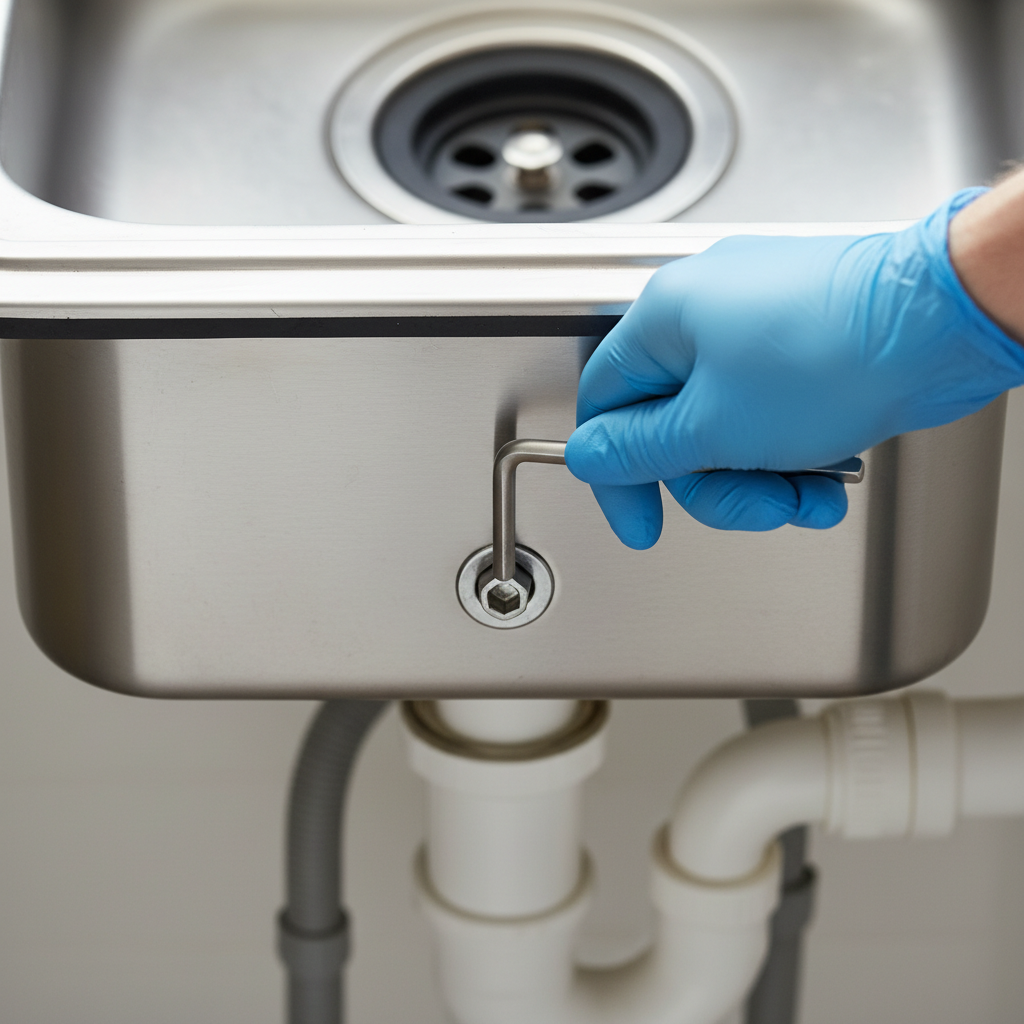
- Use the Hex Wrench – The secret weapon for spinning the flywheel.
- Too much resistance? Some jams are exceptionally stubborn. Apply steady, strong force, but avoid stripping the hex hole. You might hear a "pop" or "clunk" as the item breaks free.
- Can't find the wrench? Most hardware stores sell universal garbage disposal wrenches for a few dollars.
Plumbing · Leak
| Project category | Plumbing |
|---|---|
| Problem type | Leak |
| Trade required | Plumbing |
| Urgency | Emergency — act now |
| Safety risk | High safety risk |
| DIY suitability | DIY for experienced homeowners |
| Cost category | Low cost |
| Typical timeline | Shut water off now; repair usually same or next day |
| Contractor type | Licensed plumber |
Repair option
Isolate at the shutoff, replace the failed component, and dry the cavity fully.
Replacement option
Repipe the run or the branch when corrosion is widespread.
Common causes
- Failed supply line or shutoff valve
- Worn washers, cartridges, or P-trap connections
- Pinhole corrosion in older copper
Relevant tools:emergency checklistdiy or hire a pro
Published April 28, 2026Last updated August 17, 2026
Tools & materials you'll need
Affiliate linksNo materials required.
As an Amazon Associate FixlyGuide earns from qualifying purchases — at no extra cost to you. Prices and availability are accurate as of publication and subject to change.
Quick Answer
A humming but not spinning garbage disposal is almost always caused by a jam in the grinding chamber. The motor is attempting to function, but it's encountering resistance from an obstruction. The quickest and most common solution involves three steps: first, immediately cut all power to the disposal; second, manually clear the jam using an Allen wrench inserted into the flywheel hole on the bottom of the unit; and third, press the red reset button, typically located on the bottom or side of the disposal. Most homeowners can fix this common issue in less than a minute, saving significant money on a professional service call.
The Problem
You hear the familiar "hnnnnn" of your garbage disposal motor, but instead of the powerful grinding sound, there's silence from the grinding chamber. No water is draining, and peering inside reveals stagnant water or visible food scraps. Attempting to run it again yields the same frustrating hum. This scenario signals a stalled flywheel, likely due to a hard object or fibrous material caught between the spinning impellers and the grinding ring. The motor is receiving power and trying to turn, but the obstruction prevents the grinding plate from rotating, causing the motor to hum and potentially overheat if left running. Ignoring this issue can lead to a tripped circuit breaker, a burned-out motor, or even a damaged disposal unit if you repeatedly try to force it to run when jammed.
How It Works
Understanding how your garbage disposal operates helps in diagnosing and fixing jams. Inside the disposal's chamber, a rapidly spinning plate, called the flywheel, is equipped with two "impellers." These impellers aren't sharp blades; instead, they act as blunt hammers, repeatedly forcing food scraps against the stationary grinding ring along the chamber's wall. This action pulverizes the food into tiny particles that are then flushed down the drain with water. The flywheel is connected to an electric motor below the chamber. When you flip the switch, the motor spins the flywheel at high RPMs. If a hard object like a metal spoon, a bone, or a piece of silverware, or if fibrous materials like celery stalks or corn husks, get wedged between the impellers and the grinding ring, the flywheel cannot complete its rotation. The motor still receives power and tries to turn, generating the humming noise, but its rotation is stopped. To prevent damage to the motor, disposals are equipped with a thermal overload protector, a safety mechanism that automatically trips and cuts power to the motor if it detects excessive heat from the motor struggling against a jam. This is why, after repeated attempts, your disposal might go completely silent, requiring a manual reset.
Step-by-Step Fix
Safety First — Always shut off power at the circuit breaker before reaching into the disposal. Never use your hands to clear a jam.
-
Cut the Power – Locate the switch, then the breaker. The very first step is to completely remove power to the disposal. Flip the wall switch that operates the disposal to the "off" position. To be absolutely safe, especially if you plan to get your hands near the drain, go to your home's electrical panel and switch off the circuit breaker that controls the kitchen outlet or disposal. This ensures no accidental power is restored while you're working.
- Safety Note: Always verify power is off by trying to flip the wall switch once more after turning off the breaker. If the motor doesn't respond, power is cut.
-
Look for the Culprit – A quick visual inspection. With the power off, shine a flashlight into the drain opening. Look for any obvious objects that might be causing the jam. You might see a piece of silverware, a bottle cap, or a food item visibly lodged. If you see something, proceed to step 3.
-
Remove Visible Obstructions – Tongs are your friend, not fingers. If you can see an object, carefully try to remove it using long-handled tongs, pliers, or a grabber tool. Never, ever use your bare hands to reach into the disposal, even with the power off. The impellers, though blunt, can become sharp-edged and cause severe injury if they were to unexpectedly rotate. Try to dislodge the item gently.
- If you can't see or remove an object: Proceed to step 4.
-
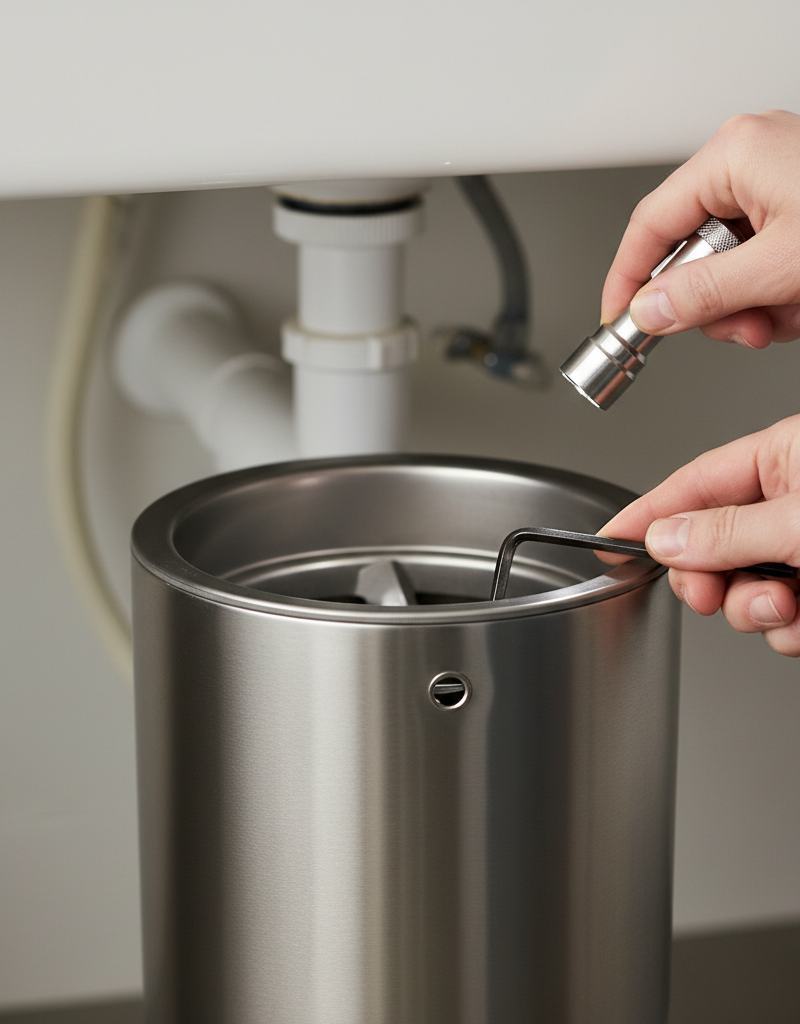
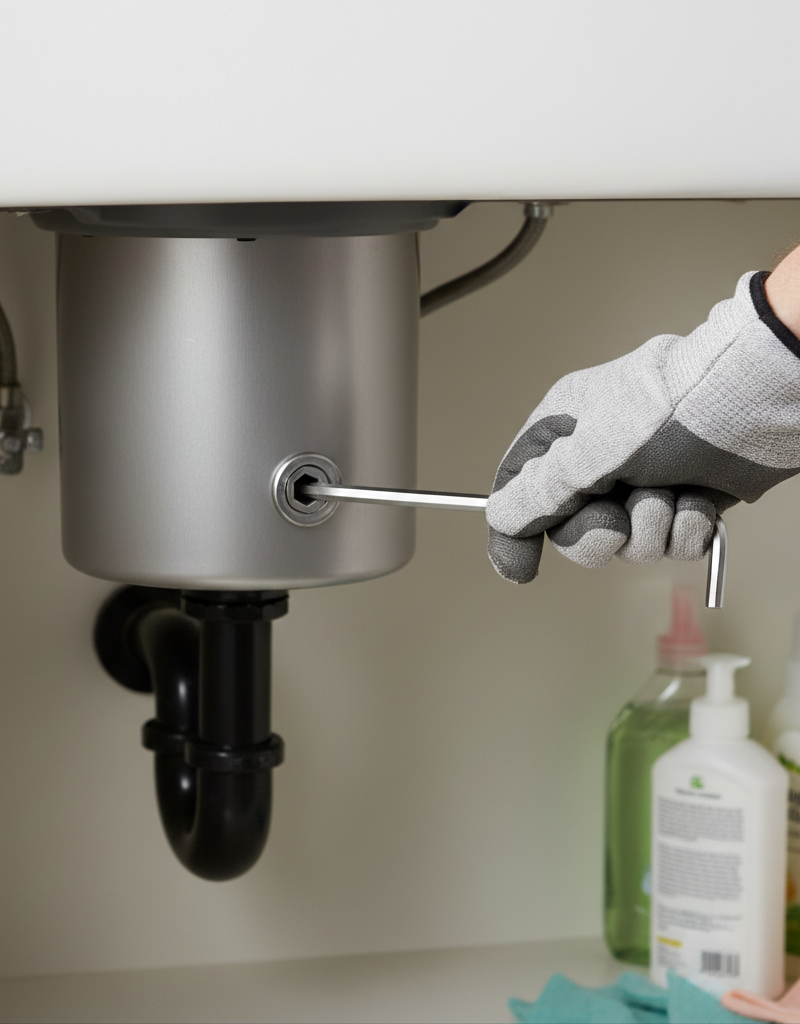
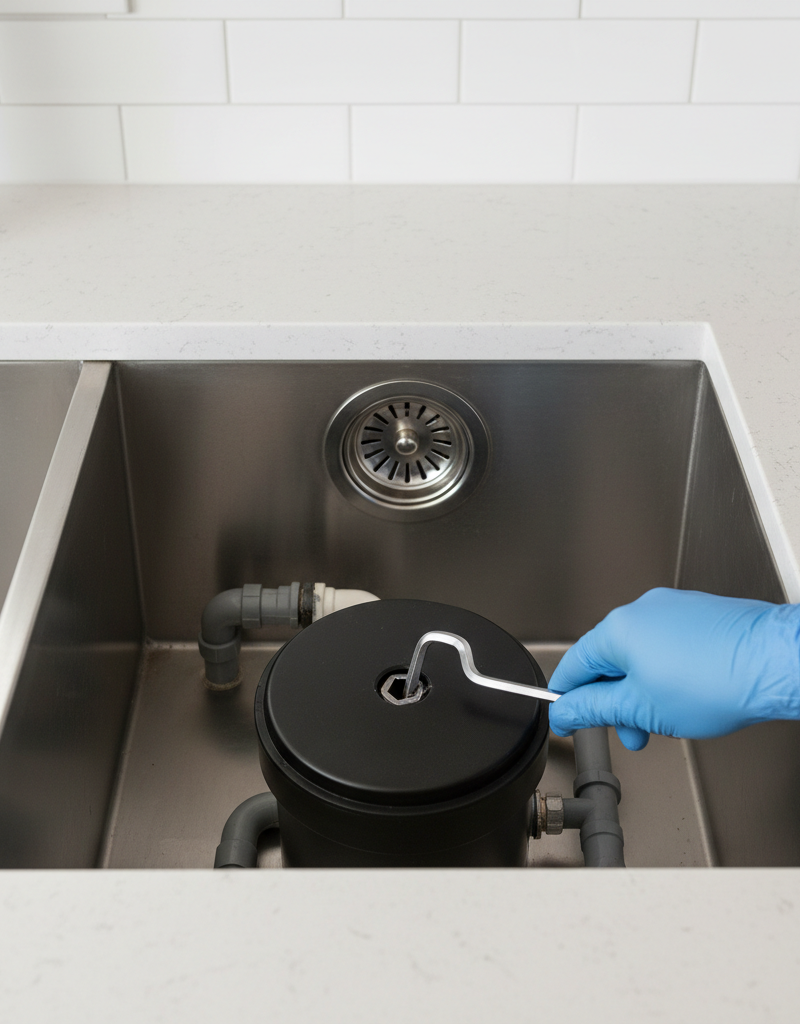
Use the Hex Wrench – The secret weapon for spinning the flywheel. Locate the small hexagonal hole in the very center of the bottom of your garbage disposal unit. This is the manual override port. Insert the specialized 1/4-inch hex (Allen) wrench that came with your disposal (or a universal one). Twist the wrench back and forth forcefully, clockwise and counter-clockwise. You should feel resistance as you work the flywheel free. Keep turning until you can make a full rotation in both directions. This action will dislodge the trapped item.
- Too much resistance? Some jams are exceptionally stubborn. Apply steady, strong force, but avoid stripping the hex hole. You might hear a "pop" or "clunk" as the item breaks free.
- Can't find the wrench? Most hardware stores sell universal garbage disposal wrenches for a few dollars.
-
Clear Remaining Debris – Flush it out. After manually dislodging the jam, remove the Allen wrench. Use your tongs or pliers to scope out any broken pieces of the original obstruction or other debris that might now be loose in the chamber. You want the chamber as clear as possible before restoring power.
-
Reset the Overload Protector – The little red button. On the bottom or side of your disposal unit, you'll find a small, usually red, button. This is the thermal overload reset button. If your disposal was humming and then went silent, this button likely popped out due to overheating. Press it firmly until you hear or feel a click. If it doesn't stay in, the motor may still be too hot, or there might be an electrical issue beyond a simple jam. Wait 5-10 minutes and try again.
-
Restore Power and Test – Cross your fingers. Go back to your electrical panel and flip the circuit breaker back to the "on" position. Return to the kitchen and turn on the wall switch. Immediately run cold water into the disposal before turning it on. Then, flip the disposal switch. It should now hum healthily and spin without issue. Let the cold water run for 10-15 seconds while the disposal clears out any remaining fine particles.
- Does it still hum? Repeat steps 1 through 7. The jam might not be fully cleared, or a small piece remains. Consider rotating the impellers with a wooden spoon through the drain opening to ensure they move freely.
- Circuit breaker trips immediately? There could be a deeper electrical problem or a severe, unyielding jam. Discontinue DIY and call a professional.
Common Causes
- Hard Objects: Silverware (spoons, forks), bottle caps, bones, fruit pits (peach, avocado), small toys, or hardware accidentally dropped into the drain are the most frequent culprits. These get wedged between the impellers and the grinding ring, bringing the flywheel to a complete halt.
- Fibrous Foods: While not as common as hard objects, long, stringy, or fibrous foods can wrap around the impellers and shaft, preventing rotation. Examples include celery stalks, corn husks, artichokes, onion skins, and even certain fruit peels (like banana peels). These don't necessarily jam but rather entangle, creating significant resistance.
- Grease Buildup: While not directly causing a jam, excessive grease and fat poured down the drain can solidify inside the disposal and drainage pipes over time. This creates a sticky, sludgy coating that can impede the free movement of the impellers and restrict water flow, making jams more likely and harder to clear.
- Lack of Water: Running the disposal without sufficient cold water is a common mistake. Cold water helps to flush food particles through the grinding chamber and pipes, and also helps solidify any grease enough for it to be ground and washed away. Without enough water, food can accumulate and lead to clogs and jams.
- Overloading: Trying to grind too much food at once, especially dense items, can overwhelm the motor and grinding mechanism, causing it to stall and jam.
Common Mistakes
- Using Your Hands to Clear Jams: This is the most dangerous and common mistake. Even with the power off, the impellers can have sharp edges or suddenly shift, causing severe cuts or crush injuries. Always use tongs, pliers, or the hex wrench.
- Not Cutting Power First: Forgetting to flip the wall switch and, more importantly, the circuit breaker before attempting any manual intervention. An accidental flick of the switch or a faulty wiring issue could activate the disposal while your hand or tools are inside.
- Pouring Bleach or Chemical Drain Cleaners: Never use chemical drain cleaners in a garbage disposal. They can damage rubber seals, plastic components, and even corrode metal parts, leading to leaks and premature failure. They also don't effectively clear solid jams and can create dangerous fumes.
- Ignoring the Hum: Continuously trying to run a humming disposal can lead to serious motor damage, burning out the motor windings, or tripping the circuit breaker repeatedly. The hum is a warning sign that the motor is struggling.
- Failing to Use Cold Water: Operating the disposal without a steady stream of cold water. Cold water helps solidify grease so it can be ground and flushed away, and it also lubricates the grinding chamber and flushes food particles, preventing clogs.
- Forgetting the Reset Button: After clearing a jam, many homeowners forget to press the manual reset button, assuming the disposal is still broken when it's merely in a tripped state.
Cost & Time Breakdown
| Task | DIY Cost | Pro Cost | Time |
|---|---|---|---|
| Clear simple jam (hex wrench) | $0–$10 | $75–$150 | 5–15 minutes |
| Replacement Allen wrench | $5–$10 | Included | N/A |
| Remove complex jam | $10–$25 | $100–$200 | 15–30 minutes |
| Motor replacement | $150–$300 | $250–$500+ | 1–2 hours |
Tips & Prevention
- Always use cold water: Run cold water before, during, and for 10-15 seconds after using the disposal. This keeps everything flowing and flushes particles down the drain.
- Grind in small batches: Don't overload the disposal. Feed food scraps slowly and in small amounts rather than dumping a large quantity in at once.
- Avoid problematic foods: Never put bones, fruit pits, corn husks, celery stalks, fibrous vegetables, or non-food items (like metal, glass, plastic) into the disposal.
- Regular cleaning: Grind a tray of ice cubes occasionally to sharpen the impellers and scour the grinding chamber. Follow with half a lemon or orange to naturally deodorize.
- Check for leaks: Periodically inspect the underside of your disposal for any signs of small leaks, which can indicate failing seals or connections.
- Know your disposal's limits: Understand what your particular model can handle. Higher horsepower units (3/4 HP or 1 HP) are generally more robust than smaller (1/3 HP or 1/2 HP) models.
When to Call a Professional
While most humming garbage disposal issues can be resolved with the steps outlined above, there are specific situations where professional help is warranted. If, after following all the troubleshooting steps, your disposal still hums but doesn't spin, or if the reset button continues to trip immediately after being pressed, it could indicate a more serious electrical problem or a seized motor. If you notice any scorching smell or smoke emanating from the unit, immediately disconnect power at the circuit breaker and call a licensed electrician or plumber to prevent fire hazards. Furthermore, if you've cleared the jam but now notice water leaking from the bottom or sides of the disposal, the internal seals may have failed, or the housing could be cracked, requiring professional diagnosis and potential replacement. Plumbers have specialized tools and expertise to handle stubborn jams, diagnose electrical faults, and safely replace or repair faulty units, ensuring your kitchen plumbing remains safe and functional. Do not attempt complex electrical repairs or full unit replacements if you are not experienced, as this can lead to further damage or injury.
Related Articles
Keep troubleshooting with these hand-picked guides from FixlyGuide:
- The One Trick to Silence a Humming Garbage Disposal (Without Calling a Plumber) — A humming garbage disposal is usually jammed. Learn how to quickly and safely clear the obstruction yourself with basic tools.
- The $2 Trick to Stop a Running Toilet (Plumbers Don't Want You to Know) — Discover the simple, two-dollar fix that can stop your running toilet in minutes, saving water and preventing costly repairs.
- The $5 Single-Handle Faucet Fix Plumbers Don't Want You to Know — Stop that annoying drip! Most single-handle faucet leaks are caused by worn-out O-rings or seals, a repair homeowners can easily tackle in…
- The 30-Second Toilet Fix Plumbers Don't Want You to Know — Stop that phantom-flushing toilet with this quick guide to diagnosing and fixing the most common silent water leaks.
- Why Is My Toilet Running? 7 Quick Fixes Before Calling a Plumber — A constantly running toilet wastes up to 200 gallons of water a day. Here are the 7 most common causes and how to fix each one yourself in…
- The #1 Mistake Jamming Your Garbage Disposal for Good — Constantly resetting your humming, jammed garbage disposal? The culprit might be your daily routine. We'll reveal the common mistake that w…
Should you do this yourself?
Answer five quick questions before you start. Safety outranks savings every time.
Your experience with work like this
How high do you have to work?
Does the job involve any of these?
Will it need a permit?
Specialty tools
Free and instant. Educational guidance only — not a quote, inspection, or professional diagnosis.
What should this project cost?
Enter your project details for a realistic cost range before you call anyone.
Common repairs run $150–$650; repipes and water-heater replacements reach $1,500–$4,500.
- Regional adjustment
- National average
- Labor share (typical)
- ~$754
- Quotes to collect
- 3 written estimates
Educational estimate based on national averages — not a binding quote. Always confirm with written local estimates.
Fixly Project Decision Box
- DIY difficulty
- Moderate
- Estimated time
- 30 minutes – half a day
- Cost level
- Moderate
Main tools / materials
- Adjustable wrench
- Plunger or drain auger
- Bucket and towels
- Thread tape
When to stop and call a pro
- Water you cannot shut off at the fixture or main
- Sewage backing up into more than one fixture
- Water near electrical panels or outlets
- Gas water heater work beyond relighting a pilot
Need professional help?
Get a Licensed PlumberGet the print-ready PDF of this guide
A clean, ad-free, printable version you can keep on your phone or pin to the workshop wall. Free with a FixlyGuide account.
- Print-optimized layout
- Tools, materials & every step included
- Saved to your account
Frequently asked questions
Why is my garbage disposal humming but not spinning?+
The most common reason is a jam in the grinding chamber. Something is lodged between the impellers and the grinding ring, preventing the motor from turning the flywheel. The motor still receives power, causing the humming sound.
What is the little red button on the bottom of my garbage disposal?+
That's the thermal overload reset button. It's a safety feature that trips and cuts power to the motor if it overheats while struggling against a jam. Pushing it firmly after clearing the jam restores power.
Can I use my hand to clear a garbage disposal jam?+
**Absolutely not!** Never put your hand into a garbage disposal. Even with the power off, the impellers can be sharp or unexpectedly shift, causing serious injury. Always use long-handled tongs, pliers, or the manufacturer-provided hex wrench.
What kind of wrench do I need to fix a jammed garbage disposal?+
Most garbage disposals use a 1/4-inch hex (Allen) wrench to manually turn the flywheel from the bottom. This wrench usually comes with the disposal, but universal wrenches are widely available at hardware stores.
Discussion
Loading comments…