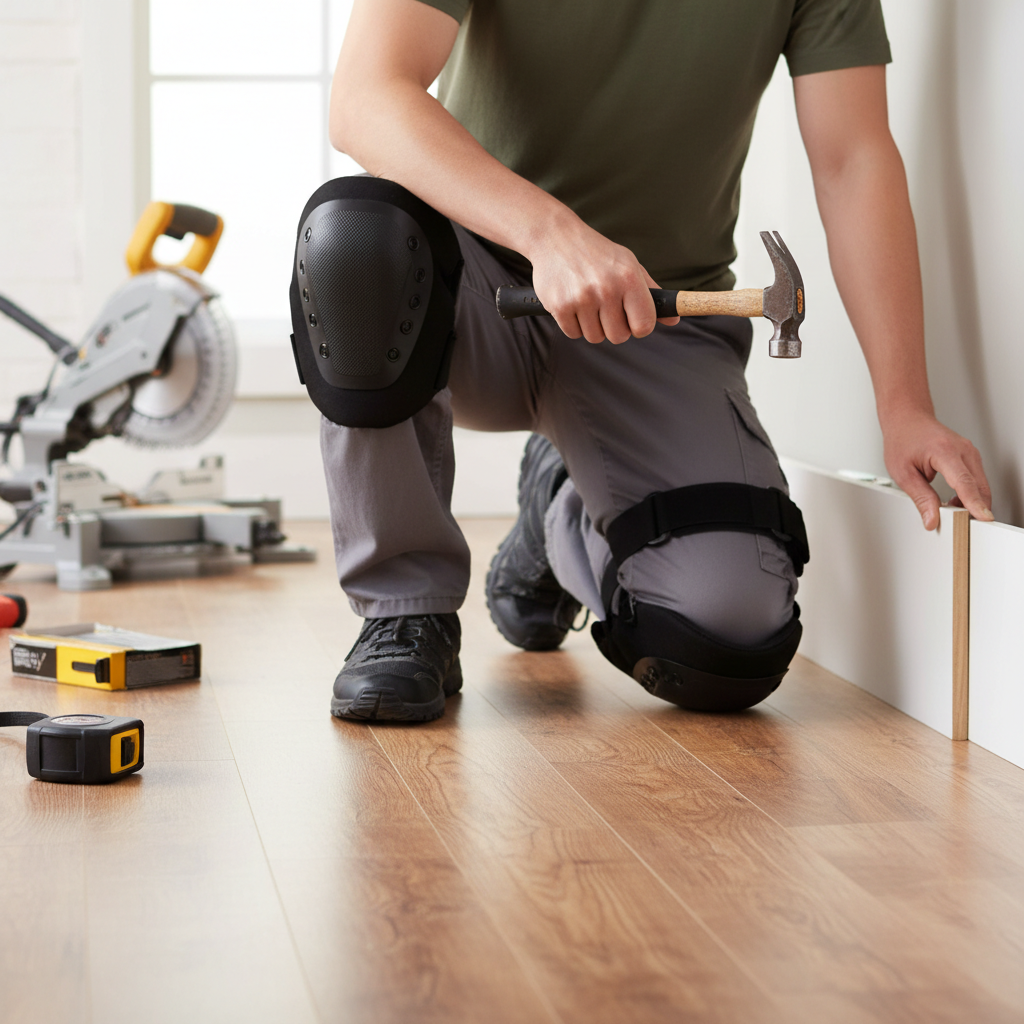
- For rough, outdoor, or abrasive work (concrete, gravel, roofing): Choose hard-cap knee pads for maximum durability and slide.
- For indoor, delicate, or finished surfaces (hardwood, tile, laminate): Opt for soft-cap or non-marring pads to prevent scratches.
- For extended, heavy-duty work: Consider professional-grade pads with thick gel or multi-density foam cushioning for superior comfort and support.
Flooring · Water damage or worn flooring
| Project category | Flooring |
|---|---|
| Problem type | Water damage or worn flooring |
| Trade required | Flooring |
| Urgency | Soon — within weeks |
| Safety risk | Low safety risk |
| DIY suitability | DIY for experienced homeowners |
| Cost category | Moderate cost |
| Typical timeline | 2–5 days depending on square footage and cure time |
| Contractor type | Flooring installer |
Repair option
Board replacement or refinishing after the moisture source is fixed.
Replacement option
Full replacement when the subfloor is compromised.
Common causes
- Moisture from a leak or slab vapor
- Subfloor movement
- Normal wear past refinishing
Relevant tools:project cost estimatordiy difficulty
Published May 10, 2026Last updated August 17, 2026
Tools & materials you'll need
Affiliate linksAs an Amazon Associate FixlyGuide earns from qualifying purchases — at no extra cost to you. Prices and availability are accurate as of publication and subject to change.
Quick Answer
Protecting your knees during home improvement tasks isn't just about comfort; it's about preventing long-term damage like bursitis, arthritis, and meniscus tears. The right knee pads provide essential cushioning and impact absorption, allowing you to work longer and safer. Choosing the correct type—hard-cap for abrasive surfaces or soft-cap for finished floors—and ensuring a proper, secure fit are the most critical factors for any DIYer.
The Problem
Many common home repair and maintenance tasks require homeowners to spend significant time on their knees. Whether you're laying tile, installing flooring, weeding the garden, cleaning baseboards, painting low walls, or repairing a leaky pipe under the sink, the repeated pressure and impact on your patella (kneecap) and surrounding soft tissues can lead to immediate discomfort and serious chronic conditions. Without adequate protection, kneeling on hard, uneven, or abrasive surfaces can cause acute pain, bruising, and tendonitis within minutes. Over time, this constant stress can accelerate wear and tear on cartilage, leading to conditions like prepatellar bursitis (also known as 'housemaid's knee'), patellofemoral pain syndrome, and even exacerbate underlying arthritic conditions. Ignoring these signs can result in persistent pain, reduced mobility, and the need for more invasive medical interventions. Many homeowners either forgo knee protection entirely, opting for an old towel or cushion that quickly shifts, or they use ill-fitting or inappropriate knee pads that cause more frustration than relief, leading to them being cast aside after a single use.
How It Works
Knee pads function by distributing weight and absorbing impact across a larger surface area, reducing concentrated pressure on the kneecap and surrounding soft tissues. Most knee pads feature a multi-layered design. The outermost layer, or 'shell,' varies depending on the intended use. Hard-cap knee pads typically use robust, impact-resistant plastics like polypropylene or high-density polyethylene. These hard shells are designed to withstand punctures from sharp objects, resist abrasion from rough surfaces like concrete or gravel, and allow the wearer to slide easily without catching. The rounded shape helps deflect debris and distribute weight evenly. In contrast, soft-cap knee pads utilize durable, non-marring materials like neoprene, high-density foam, or specialized gel compounds. These are preferred for work on finished surfaces such as hardwood floors, laminate, or delicate tile, where a hard cap could scratch or damage the material. They prioritize grip and surface protection over impact deflection.
Beneath the shell lies the cushioning layer, which is critical for comfort and shock absorption. This layer is often made of EVA foam, gel inserts, or a combination of materials. EVA (ethylene-vinyl acetate) foam is lightweight and provides excellent resilience, conforming to the knee's shape over time. Gel inserts, sometimes used in conjunction with foam, offer superior shock absorption and pressure dispersion, molding more closely to the unique contours of the knee. Some advanced knee pads incorporate articulated designs or multiple foam densities to enhance flexibility and support. The final component is the strapping system. Most knee pads utilize adjustable elastic straps with buckles or hook-and-loop fasteners (Velcro). A well-designed strap system aims to secure the pad firmly in place without pinching, restricting circulation, or sliding down the leg. Some designs feature a single wide strap, others two narrower straps—one above and one below the knee—to prevent rotation and maintain positioning during dynamic movements. The goal is to provide a snug fit that stays put through kneeling, crawling, and shifting weight, ensuring continuous protection where it's needed most.
Step-by-Step Fix
1. Assess Your Project Needs – Determine the type of surface and duration of work.
- For rough, outdoor, or abrasive work (concrete, gravel, roofing): Choose hard-cap knee pads for maximum durability and slide.
- For indoor, delicate, or finished surfaces (hardwood, tile, laminate): Opt for soft-cap or non-marring pads to prevent scratches.
- For extended, heavy-duty work: Consider professional-grade pads with thick gel or multi-density foam cushioning for superior comfort and support.
2. Measure for the Right Fit – Ensure the pads align correctly with your kneecap.
- While most knee pads are 'one size fits most,' some brands offer different sizes. Check the manufacturer's sizing guide if available. The pad should ideally cover your kneecap and extend slightly above and below it, without being overly bulky or restrictive. Poor fit is the #1 reason for discomfort and slippage.
3. Adjust the Straps Properly – Secure the pads without cutting off circulation.
- Sit or stand with a slightly bent knee. Position the center of the pad directly over your kneecap. Fasten the straps, starting with the lower one. Tighten until snug, but not uncomfortably so. You should be able to flex your leg without feeling pinched. If using a two-strap system, the lower strap prevents the pad from sliding down, and the upper strap prevents it from gapping open.
- Safety Note: Straps that are too tight can restrict blood flow, while straps that are too loose will cause the pads to slip, negating their protective function and becoming a tripping hazard.
4. Test for Mobility and Comfort – Simulate movement to check stability.
- Kneel, stand, walk a few steps, and then kneel again. The knee pads should stay in place without needing constant readjustment. They should allow for full range of motion without pinching or feeling restrictive. If they slip, readjust the straps or consider a different style.
- If this doesn't work: If the pads consistently slip despite proper strap adjustment, the design might not be suitable for your leg shape, or the straps may be too stretched out (a common issue with older pads).
5. Clean and Maintain Regularly – Extend the life of your knee pads.
- After each use, wipe down hard-cap pads with a damp cloth to remove dirt and debris. For soft-cap pads, check for embedded particles that could scratch delicate surfaces later. Allow them to air dry completely before storing to prevent mildew.
- Inspect straps for wear and tear, Fraying or loss of elasticity can compromise security.
Common Causes (Why your knees hurt without protection)
- Direct Impact & Pressure: Repetitive or prolonged kneeling on hard surfaces (concrete, wood, tile) creates immense pressure on the kneecap (patella) and the prepatellar bursa, a fluid-filled sac that cushions the front of the knee. This can lead to inflammation (bursitis) or direct bruising.
- Abrasive Surfaces: Rough textures like asphalt, gravel, or unfinished wood can abrade the skin and increase friction, causing skin irritation, cuts, and scrapes.
- Sharp Objects: Kneeling on small, sharp objects such as nails, screws, gravel, or splinters without a protective barrier can lead to punctures and deeper tissue injuries.
- Lack of Weight Distribution: Without knee pads, your body weight is concentrated on a small area of the knee, leading to localized stress and discomfort. Pads distribute this weight over a larger, cushioned surface.
- Repetitive Motion: Tasks requiring repeated kneeling, crawling, or shifting weight put continuous strain on knee joints, tendons, and ligaments, potentially leading to overuse injuries like tendonitis or exacerbating degenerative conditions.
Common Mistakes
- Wearing the Wrong Type of Pad: Using hard-cap pads on finished hardwood floors can cause scratches and damage. Using soft, thin pads on concrete or sharp debris provides insufficient protection.
- Not Adjusting Straps Correctly: Straps that are too loose cause pads to slip down, offering no protection, becoming a tripping hazard, and requiring constant readjustment. Straps that are too tight can cut off circulation and cause discomfort.
- Ignoring Wear and Tear: Over time, cushioning material compresses and loses effectiveness, and straps lose elasticity. Continuing to use worn-out pads dramatically reduces their protective capabilities.
- Buying Based on Price Alone: Cheaper pads often lack adequate cushioning, durable materials, or effective strapping, leading to discomfort, frequent replacement, and inadequate protection.
- **Skipping Them for
Related Articles
Keep troubleshooting with these hand-picked guides from FixlyGuide:
- The Secret to Lush Raised Beds? It's Not Just About How You Water — Smart irrigation for raised garden beds isn't just about automation; it's about delivering the right amount of water precisely when your pl…
- The 5 Essential Tools Every New Gardener Needs (And 3 You Can Skip) — Starting a garden doesn't require a huge investment in tools; savvy new gardeners can thrive with just a few key items and save money by kn…
- The Hidden Reason Your GFCI Trips (It's Not Always a Faulty Outlet) — A continuously tripping GFCI outlet is a critical safety warning, often indicating moisture, a faulty appliance, or a wiring problem that r…
- The 6-Minute Secret to a Sparkling Bathroom (It’s Not What You Think) — Unleash the hidden power of your cordless drill to tackle stubborn household grime, from tile grout to dryer vents, with specialized attach…
- The 4 Common Hummingbird Food Mistakes (And How to Make Nectar They'll Love) — Avoid common pitfalls when making hummingbird food to ensure a healthy and attractive treat for your backyard visitors.
- The #1 Mistake Homeowners Make After Finding Missing Shingles (And How to Fix It Right) — Discover the crucial steps to take after a storm rips shingles from your roof, ensuring a proper, lasting repair and preventing costly futu…
What should this project cost?
Enter your project details for a realistic cost range before you call anyone.
Cost depends heavily on which system turns out to be the source.
- Regional adjustment
- National average
- Labor share (typical)
- ~$1,620
- Quotes to collect
- 3 written estimates
Educational estimate based on national averages — not a binding quote. Always confirm with written local estimates.
This article was independently written by FixlyGuide based on the source topic.
Frequently asked questions
How do I choose the right size knee pads?+
Most knee pads are 'one-size-fits-most' with adjustable straps. However, some brands offer different sizes. The key is to ensure the pad sits centered over your kneecap and covers enough area for protection without being overly bulky. Always try them on and test mobility before purchase.
Can I wash my knee pads?+
It depends on the type. Hard-cap pads can usually be wiped clean with a damp cloth and mild soap. Some fabric-based soft-cap pads or inserts might be machine washable, but always check the manufacturer's care instructions. Air drying is almost always recommended to prevent material degradation.
How often should I replace my knee pads?+
Replace knee pads when the cushioning starts to flatten and lose its bounce, when the outer shell is cracked or severely worn, or when the straps lose elasticity and can no longer hold the pad securely in place. For frequent users, this could be every 1-2 years; for occasional users, they might last many years.
Discussion
Loading comments…