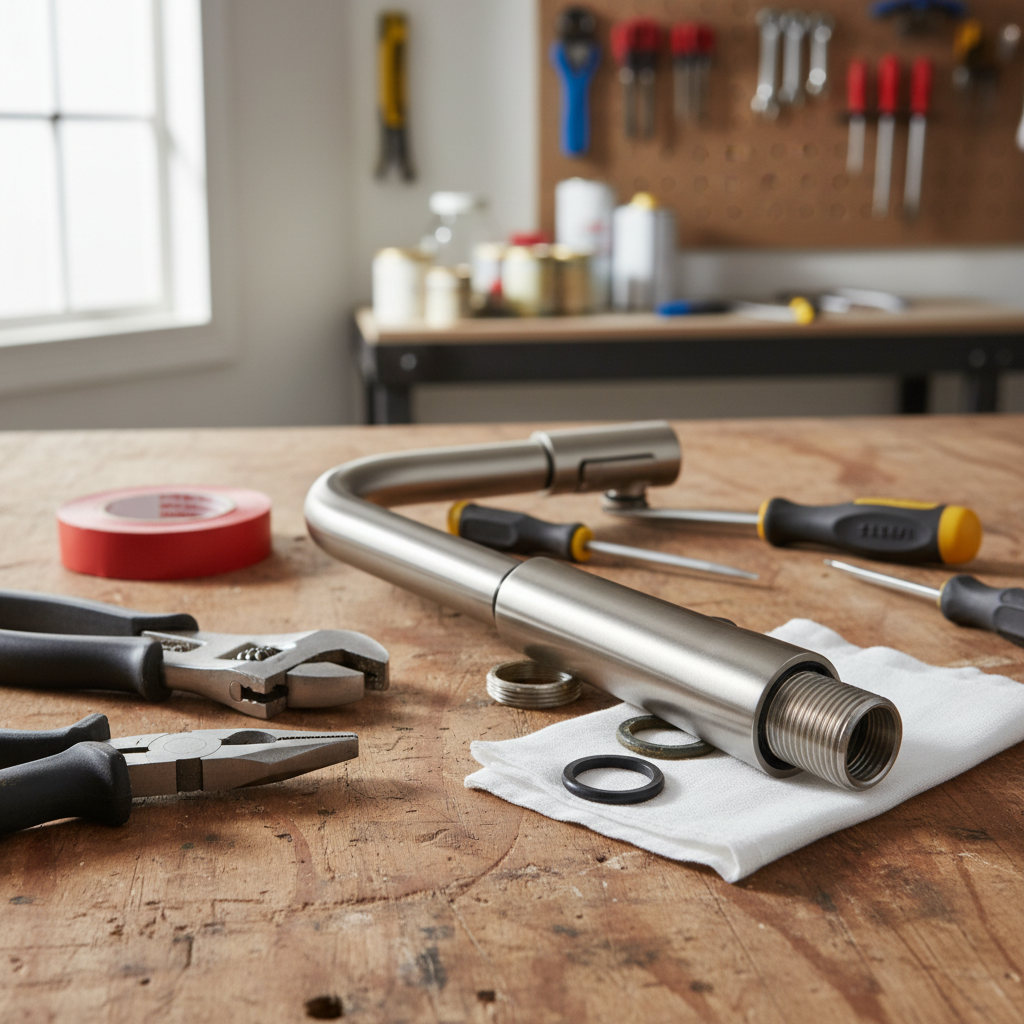
- You will now see the exposed stem of the faucet body with two or three rubber O-rings sitting in small grooves. This is the source of your leak. Examine them closely. On a new faucet, you are unlikely to see cracking, but you might see:
- A "dry" or chalky appearance.
- A visible piece of debris or grit stuck to a ring.
- An O-ring that looks twisted or isn't sitting flat in its groove.
Plumbing · Leak
| Project category | Plumbing |
|---|---|
| Problem type | Leak |
| Trade required | Plumbing |
| Urgency | Emergency — act now |
| Safety risk | High safety risk |
| DIY suitability | DIY for experienced homeowners |
| Cost category | Low cost |
| Typical timeline | Shut water off now; repair usually same or next day |
| Contractor type | Licensed plumber |
Repair option
Isolate at the shutoff, replace the failed component, and dry the cavity fully.
Replacement option
Repipe the run or the branch when corrosion is widespread.
Common causes
- Failed supply line or shutoff valve
- Worn washers, cartridges, or P-trap connections
- Pinhole corrosion in older copper
Relevant tools:emergency checklistdiy or hire a pro
Published May 5, 2026Last updated August 17, 2026
Tools & materials you'll need
Affiliate linksAs an Amazon Associate FixlyGuide earns from qualifying purchases — at no extra cost to you. Prices and availability are accurate as of publication and subject to change.
Quick Answer
A brand new kitchen faucet most often drips at the base because the rubber O-rings that seal the connection between the swiveling spout and the faucet body are dry, twisted, or have debris on them from the factory. This allows water to weep out when the faucet is on. The fix doesn't require replacing the faucet; it involves removing the spout, cleaning the O-rings, applying silicone plumber's grease, and carefully reinstalling the spout to ensure a perfect seal.
The Problem
It’s a uniquely frustrating scenario. You’ve just spent $300, $400, or more on a beautiful new pull-down kitchen faucet. You or your plumber invested a couple of hours installing it, carefully tightening the supply lines and mounting nuts. You turn on the water, run the faucet, and everything seems perfect. But then you notice it: a small, persistent puddle of water forming right at the base of the faucet, sitting on your new granite countertop or stainless steel sink deck.
Your first instinct is to grab a wrench and tighten the mounting hardware from underneath the sink. You might even disconnect and reconnect the hot and cold water supply lines, thinking a fitting must be loose. Yet, the leak persists. It’s not coming from underneath the sink—the cabinet is bone dry. It’s coming from above the counter, right where the main body of the faucet meets the swiveling spout. This is maddening. How can a brand-new, expensive piece of hardware leak from day one? The cause is almost never a major defect, but rather a tiny, overlooked component that’s vital for a dynamic, moving seal: the spout O-rings.
How It Works
To understand why your new kitchen faucet drips at the base, you need to appreciate its two-part design. You have the fixed faucet body—the part that is securely bolted to the countertop—and the moving spout, which swivels 360 degrees or pulls down for use. The magic that allows the spout to move freely while pressurized water flows through it happens at the junction between these two parts.
Inside the base of the spout and around the stem of the faucet body, there are several small channels machined into the brass. Inside these channels sit two or three pliable rubber rings called O-rings. When the spout is slipped over the faucet body, these O-rings are compressed slightly, forming a watertight seal. This is a dynamic seal—meaning it’s designed to remain watertight even while one part (the spout) moves against the other (the body).
Hot and cold water flows up through the faucet body, is mixed in the cartridge, and is then diverted into the spout, passing through this O-ring sealed area. If these O-rings are perfectly clean, lubricated, and seated, the seal is perfect. However, here’s what often goes wrong during manufacturing and installation:
- Dry Installation: While many manufacturers apply a bit of silicone grease at the factory, it’s often not enough. Or, it can dry out during shipping and storage. When a dry spout is forced onto the body during installation, the dry O-rings can stretch, twist, or get tiny abrasions. This compromises the seal.
- Debris: Tiny bits of plastic from the packaging, metal shavings from manufacturing, or even a stray grain of sand can get lodged on an O-ring. This creates a microscopic channel for water to escape.
- Twisted or Pinched Ring: If the spout isn't pushed down with a slight twisting motion, an O-ring can "roll" in its channel and become pinched. A pinched O-ring cannot create a uniform seal, leading to a slow weep right at the base.
This leak is different from others. A leak from the handle typically indicates a failed cartridge. A leak from under the sink points to a loose supply line or mounting nut. But a puddle on top of the counter, at the faucet's base, almost always points directly to these small, crucial O-rings.
Step-by-Step Fix
This fix is surprisingly simple and requires minimal plumbing skill. The key is to be gentle and methodical.
SAFETY NOTE: This repair involves working under the sink and with your water supply. Ensure you have good lighting and clear out the cabinet for easy access. Always turn off the water supply before beginning any plumbing repair.
-
Safety First: Shut Off the Water
- Reach under the sink and locate the two water supply shut-off valves (one for hot, one for cold) that lead to the faucet. Turn the handles clockwise until they are fully closed. If you have older, non-functional valves, you will need to shut off the main water supply to your entire house.
-
Relieve Water Pressure
- Go back to the faucet and move the handle to the "on" position in the center (mixed hot/cold). A small trickle of water will come out and then stop. This releases the pressure in the lines, preventing a spray of water in the next steps.
-
Locate the Spout Set Screw
- Look closely at the back of the faucet body, near the base where it meets the countertop. You are looking for a very small, recessed screw. This is the set screw that holds the spout in place. It is typically a hex (Allen) screw, but can sometimes be a small Phillips head. Use a flashlight to find it.
-
Loosen the Set Screw
- Select the correct size Allen wrench from your set. Insert it into the set screw and turn it counter-clockwise. You only need to loosen it two or three full turns; you do not need to remove it completely. If you remove it, it’s tiny and easily lost.
-
Remove the Faucet Spout
- With the set screw loose, grasp the spout firmly. Pull straight up while gently twisting it back and forth. It should slide off the faucet body. Be prepared for a small amount of residual water to dribble out. Place a microfiber towel around the base to catch it.
-
Inspect the O-Rings
- You will now see the exposed stem of the faucet body with two or three rubber O-rings sitting in small grooves. This is the source of your leak. Examine them closely. On a new faucet, you are unlikely to see cracking, but you might see:
- A "dry" or chalky appearance.
- A visible piece of debris or grit stuck to a ring.
- An O-ring that looks twisted or isn't sitting flat in its groove.
- You will now see the exposed stem of the faucet body with two or three rubber O-rings sitting in small grooves. This is the source of your leak. Examine them closely. On a new faucet, you are unlikely to see cracking, but you might see:
-
The Secret Fix: Clean and Lubricate
- This is the most critical step. Take a clean, dry paper towel or microfiber cloth and wipe down each O-ring and the grooves they sit in. Also, wipe the inside of the spout you just removed. The goal is to remove any moisture, factory dust, or debris. Now, take a small dab of 100% silicone plumber's grease on your fingertip. Apply a thin, even layer of grease to each O-ring, ensuring they are fully coated.
-
Re-seat the Spout
- Carefully align the spout with the faucet body. Push it down onto the O-rings with a firm, even pressure. As you push down, give the spout a slight twisting motion. This helps the lubricated O-rings slide and seat correctly within the spout body, rather than getting pinched or rolled.
-
Tighten the Set Screw
- Once the spout is fully seated and flush with the faucet base, tighten the set screw at the back. It only needs to be snug—do not over-tighten, as you could strip the screw or damage the faucet body.
-
Slowly Restore Water and Test
- Reach under the sink and turn the water shut-off valves back on by turning them counter-clockwise. Open them slowly to prevent water hammer. Check immediately for any obvious leaks under the sink.
-
Perform the Final Swivel Test
- Turn the faucet on and let it run for a minute. Now, with the water running, swivel the spout slowly from the far left to the far right several times. Dry the base of the faucet completely with a paper towel, and then watch the seam for 1-2 minutes. The dripping should be gone.
Common Causes
- Insufficient Factory Lubrication: The most common cause. The grease applied at the factory is often minimal and insufficient for a smooth, leak-proof installation.
- Debris on the Seal: A tiny fleck of plastic from the packaging or a brass burr from manufacturing can get lodged on an O-ring, creating a path for water.
- Pinched or Rolled O-Ring: Forcing the spout on without lubrication or a twisting motion can cause an O-ring to roll out of its groove and get pinched, ruining the seal.
- Incorrect O-Ring Size: Very rarely, a manufacturer may install an O-ring that is slightly too small or too thin for the groove, leading to a leak from day one.
- Scratched Mating Surface: If either the faucet body stem or the inside of the spout has a scratch or gouge, it can prevent the O-ring from sealing properly.
Common Mistakes
- Using Petroleum Jelly (Vaseline): Never use a petroleum-based lubricant on rubber O-rings. It can cause the rubber to swell and break down over time, making the leak worse in the long run. Only use 100% silicone grease.
- Over-tightening the Under-Sink Mounts: Cranking down on the nuts that hold the faucet to the counter will not solve a spout O-ring leak. The leak is happening above the counter, and this will only risk cracking your countertop.
- Assuming the Faucet is Defective: Many perfectly good faucets are returned to the store because of this simple O-ring issue. This lubrication step is often considered part of a proper professional installation.
- Not Cleaning Surfaces: Simply adding grease on top of existing debris will not solve the problem. The O-rings and mating surfaces must be wiped clean first.
- Losing the Set Screw: These screws are tiny. Loosening it without fully removing it is the safest approach.
- Forgetting to Relieve Pressure: If you loosen the spout without opening the faucet handle first, you will get a surprising and messy spray of pressurized water.
Cost & Time Breakdown
| Task | DIY Cost | Pro Cost | Time Involved |
|---|---|---|---|
| Inspect & Lubricate O-Rings | $5 - $10 (for silicone grease) | $125 - $200 (service call) | 30-45 minutes |
| Replace Spout O-Rings | $10 - $15 (grease + O-ring kit) | $150 - $225 | 45-60 minutes |
| Plumber Investigates General Leak | N/A | $150 - $250+ | 1-2 hours |
| Replace Entire Faucet | Faucet Cost + $10 in supplies | Faucet Cost + $200 - $400 | 2-3 hours |
Tips & Prevention
- Lubricate Before You Install: Even on a brand new faucet, perform the spout lubrication step before you mount the faucet to the sink. It’s much easier to do when it’s not yet installed.
- Keep Silicone Grease in Your Kit: A small tube of plumber's grease is an essential part of any homeowner's DIY tool kit. It’s useful for faucet repairs, toilet seals, and more.
- Take a "Before" Photo: Before you start messing with the O-rings, snap a quick photo with your phone. This helps you remember the correct order and orientation.
- Don't Force It: The spout should slide off and on with firm, gentle pressure. If you have to apply excessive force, something is wrong. Stop and re-examine the set screw.
- Find the Exploded Diagram: Most faucet instruction manuals include an "exploded view" or parts diagram. This is invaluable for identifying the spout O-rings (sometimes called "spout seals") and their part number if you need to order replacements.
When to Call a Professional
While the O-ring fix is highly effective, there are times when it’s best to call in a licensed plumber. Make the call if:
- You perform the lubrication fix and the kitchen faucet drips at the base still. This could indicate a deeper problem, like a hairline crack in the faucet body or a defective cartridge that is diverting water incorrectly.
- The leak is actually coming from the flexible braided hoses or the copper supply lines under the sink. These connections need to be perfect to prevent major water damage.
- You cannot loosen the set screw, or you strip it. A plumber has tools to extract a damaged screw without harming the faucet.
- The faucet is old and corroded, making disassembly difficult or risky. Forcing old parts can cause them to break.
- You simply aren’t comfortable performing the repair. A plumber can typically diagnose and fix a spout O-ring leak in under an hour, and the peace of mind is well worth the service call fee.
Related Articles
Keep troubleshooting with these hand-picked guides from FixlyGuide:
- Swap Your Leaky Faucet This Weekend, No Plumber Needed — Ready to stop that annoying drip and give your kitchen an instant upgrade? This guide shows you how to replace a kitchen faucet yourself. W…
- That Puddle By Your Shower? The Seal Trick You Don't Know — Stop that frustrating puddle on your bathroom floor by understanding the real reason your beautiful frameless shower door leaks and how a s…
- The 5-Minute Trick to Making Drywall Holes Disappear (Without Sanding!) — Discover a surprisingly fast and clean method for patching small drywall holes that bypasses messy sanding, leaving a smooth, professional…
- This Caulking Trick Stops Bathtub Mold & Cracks for Good — Tired of cracked, moldy caulk around your tub? Our guide reveals the pro secrets to a durable, waterproof seal. Learn the right material to…
- That 'Wet Edge' Trick: Paint a Room in a Single Day — Tired of paint jobs that drag on all weekend? The secret to a flawless, fast finish isn't working harder—it's using the pro 'wet edge' syst…
- The Secret Culprit Behind Your Waning Kitchen Sprayer Pressure (It’s Not Clogging) — Low water pressure from your kitchen sink sprayer often stems from a surprisingly simple issue: a clogged diverter valve or a faulty O-ring…
Should you do this yourself?
Answer five quick questions before you start. Safety outranks savings every time.
Your experience with work like this
How high do you have to work?
Does the job involve any of these?
Will it need a permit?
Specialty tools
Free and instant. Educational guidance only — not a quote, inspection, or professional diagnosis.
Questions to ask before you sign
Ask every contractor the same questions and the cheapest bid stops looking cheapest. Check them off as you go — your progress is saved on this device.
Free, no signup. Bring this to every walkthrough so you compare bids on the same terms.
What should this project cost?
Enter your project details for a realistic cost range before you call anyone.
Cosmetic refreshes start near $5,000; full remodels commonly $25,000–$45,000.
- Regional adjustment
- National average
- Labor share (typical)
- ~$8,550
- Quotes to collect
- 3 written estimates
Educational estimate based on national averages — not a binding quote. Always confirm with written local estimates.
Fixly Project Decision Box
- DIY difficulty
- Moderate
- Estimated time
- 30 minutes – half a day
- Cost level
- Moderate
Main tools / materials
- Adjustable wrench
- Plunger or drain auger
- Bucket and towels
- Thread tape
When to stop and call a pro
- Water you cannot shut off at the fixture or main
- Sewage backing up into more than one fixture
- Water near electrical panels or outlets
- Gas water heater work beyond relighting a pilot
Need professional help?
Get a Licensed PlumberHandle this before it gets worse
First steps that limit damage, then a way to reach a qualified pro.
- Emergency repair checklistThe first steps that limit damage before a pro arrives.Open
- Get local estimatesSend one request and compare written estimates from vetted pros.Open
- Estimate this projectGet a cost range for your scope and ZIP before you call anyone.Open
Free, no signup required. Estimates are educational guidance, not a quote or an inspection.
Get the print-ready PDF of this guide
A clean, ad-free, printable version you can keep on your phone or pin to the workshop wall. Free with a FixlyGuide account.
- Print-optimized layout
- Tools, materials & every step included
- Saved to your account
Recommended for DIYers & woodworkers
Sponsored
The Top 20 Tools for Workshops of Any Budget
No stationary machines or power tools required — plus 3 fundamental tools that can't be bought at any price.
Get the free guide
Ted's Woodworking — The #1 Woodworking Resource
Detailed instructions, dimensioned drawings, materials & cutting lists, and 3D schematics for every skill level.
See the plansSponsored: links above are affiliate links. FixlyGuide may earn a commission on qualifying purchases — at no extra cost to you.
Frequently asked questions
Can I use Vaseline or WD-40 on my faucet O-rings?+
Absolutely not. Petroleum-based products like Vaseline and WD-40 cause rubber O-rings to swell and degrade over time, leading to a failed seal and a worse leak. You must use 100% silicone plumber's grease, which is designed to lubricate and protect the rubber.
I can't find the set screw to remove the spout. Where else could it be?+
On 95% of modern swivel faucets, the set screw is hidden at the back of the faucet body, near the bottom. On some designer models, it might be covered by a small decorative cap you need to pry off. If you truly can't find it, consult your faucet's installation manual, which will show its location in a diagram.
I lubricated the O-rings but my new faucet still drips at the base. Now what?+
If you've properly cleaned and lubricated the O-rings and the leak persists, there are two possibilities. First, one of the O-rings may have a tiny, invisible tear from the factory; try replacing them with new ones from the manufacturer or a hardware store. Second, the leak may be coming from the internal faucet cartridge. If a seal in the cartridge fails, it can sometimes divert water down the faucet body instead of out the spout. Replacing the cartridge would be the next step.
Do I need to replace the O-rings or just grease them?+
On a brand new faucet, the O-rings themselves are almost never the problem. The issue is a lack of lubrication or a bit of debris. In this case, you only need to clean and grease them. If your faucet is several years old and starts leaking from the base, the O-rings may have hardened or cracked, and in that situation, you should replace them.
Discussion
Loading comments…