- The 4-Inch Drywall Hole Fix: Why Spackle Alone Always Fails — Learn the right way to patch a small drywall hole (up to 4 inches) to ensure a strong, invisible repair that spackle alone can't achieve.
- The Secret to a Flawless Drywall Patch Is In the Paper — Frustrated by drywall patches that always show through? That telltale bump or sanding mark can ruin a perfect wall. Discover the 'Californi…
- The 4-Step Drywall Patch Secret That Makes Large Holes Vanish — Discover how to flawlessly repair a large hole in drywall using a simple, effective method that makes the damage disappear without a trace.
- The 4-Inch Drywall Hole Fix: Why Most DIY Patches Fail (And How to Do It Right) — Don't let a small drywall hole become a recurring nightmare – discover the secret to a seamless, lasting repair that disappears into your w…
- That 'Wet Edge' Trick: Paint a Room in a Single Day — Tired of paint jobs that drag on all weekend? The secret to a flawless, fast finish isn't working harder—it's using the pro 'wet edge' syst…
General remodeling · Renovation planning
| Project category | General remodeling |
|---|---|
| Problem type | Renovation planning |
| Trade required | General contracting |
| Urgency | Planned project |
| Safety risk | Low safety risk |
| DIY suitability | Pro recommended |
| Cost category | Major investment |
| Typical timeline | Design and permitting often 2–4 months before work starts |
| Contractor type | General contractor |
Repair option
Phase the work and fix the building envelope first.
Replacement option
Full renovation with permits, design, and a general contractor.
Common causes
- Space no longer fits how the household lives
- Resale preparation
- Deferred maintenance stacking up
Relevant tools:project cost estimatorcompare quoteshome improvement material prices
Published April 27, 2026Last updated August 17, 2026
Tools & materials you'll need
Affiliate linksAs an Amazon Associate FixlyGuide earns from qualifying purchases — at no extra cost to you. Prices and availability are accurate as of publication and subject to change.
How it works
Drywall, or gypsum board, forms the interior walls of most modern homes. It consists of a core of hardened gypsum plaster compressed between two thick sheets of paper facer. This composition makes it relatively lightweight and easy to install, but also susceptible to punctures, dents, and holes. When damage occurs, the paper facer is torn and the gypsum core is crushed or exposed, compromising both the wall's aesthetic and its surface integrity.
This no-sand repair method hinges on two key components: a self-adhesive fiberglass mesh patch and a precise application technique using joint compound. The mesh patch acts as a structural bridge over the void. Its open weave allows the joint compound to penetrate through and bond directly to the stable drywall surrounding the hole, while the fiberglass strands provide tensile strength, distributing stress and preventing future cracks from forming at the repair site.
The "no-sand" aspect is achieved not by a special product, but through a meticulous skimming and feathering technique. Instead of applying a thick mound of compound and sanding it down, this method involves applying very thin, controlled layers. After each application, a wide drywall knife is used at a low angle to scrape off nearly all the excess compound, leaving a smooth, tapered transition—or "feathered edge"—that blends seamlessly into the existing wall surface. This controlled removal of wet material eliminates the high spots and ridges that would otherwise require aggressive sanding to level once dry.
Step-by-Step Fix
1. Assess Damage and Prepare the Hole — Gently press on the area around the hole. If the drywall feels soft or flexes, the damage may be too extensive for this method. For a solid wall, use a utility knife to carefully trim away any loose paper or jagged pieces of gypsum protruding from the hole. The goal is to create a clean, stable opening. Lightly depress the edges of the hole with the handle of your putty knife, creating a very slight concave dimple; this allows the patch and compound to sit flush or slightly below the wall surface.
- Tools: Utility knife, putty knife.
- Safety: Always cut away from your body with the utility knife. Wear safety glasses to protect from any falling debris.
2. Clean the Surface — Dampen a clean cloth or sponge and wipe down the area around the hole, extending about 6 inches in all directions. This removes any dust, grease, or grime that could prevent the patch and compound from adhering properly. Allow the wall to dry completely, which should only take a few minutes.
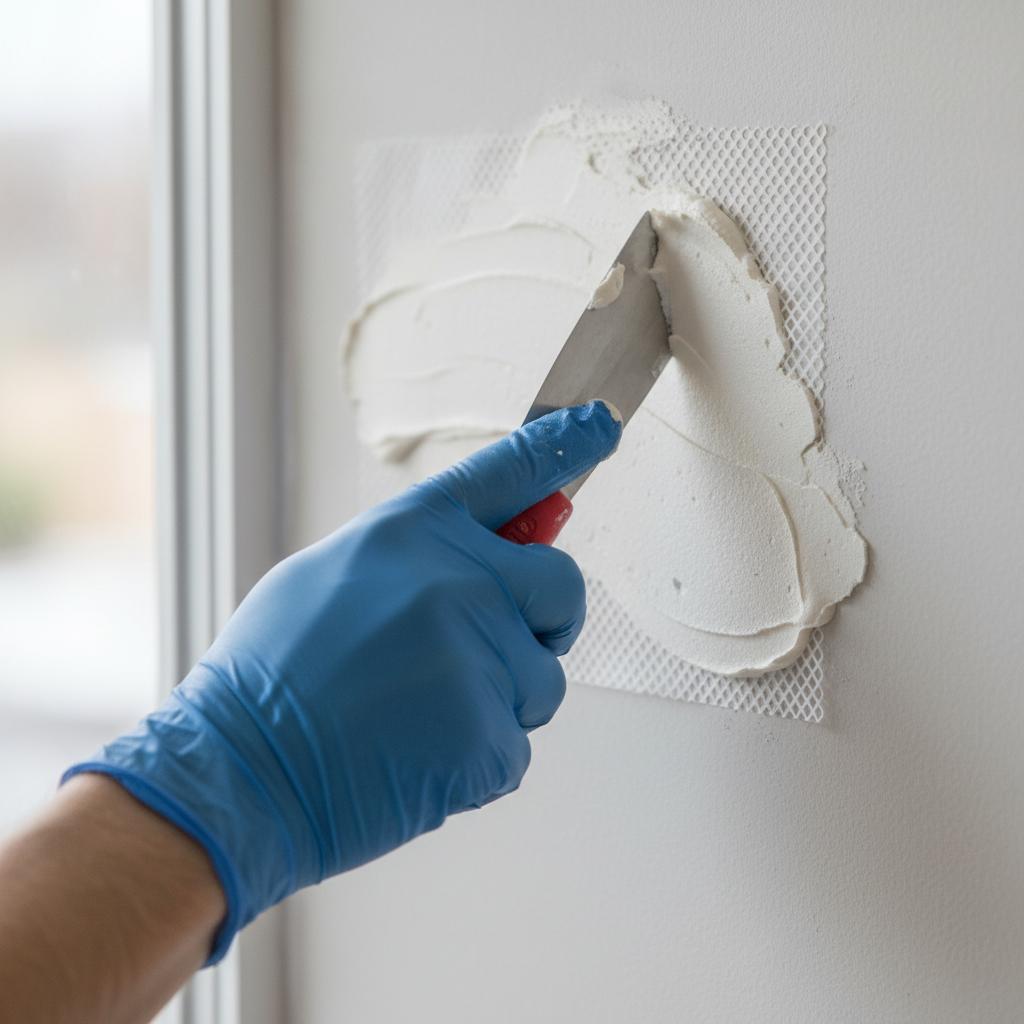
3. Select and Apply the Mesh Patch — Choose a self-adhesive fiberglass mesh patch that is at least 1 inch larger than the hole on all sides. For a 1-inch hole, a 3x3 or 4x4-inch patch is ideal. Peel the backing off the patch, center it over the prepared hole, and press it firmly against the wall. Use your fingers or the flat of your putty knife to smooth it from the center outwards, removing any air bubbles and ensuring the adhesive has full contact with the wall.
4. Apply the First Thin Coat of Compound — Using a 4-inch flexible putty knife, scoop a small amount of lightweight, fast-drying joint compound or spackling. Apply a tight, thin coat directly over the mesh, using firm pressure. The goal is to press the compound through the mesh openings to fill the void behind it and create a strong bond with the drywall. Cover the entire patch and extend the compound about half an inch beyond its edges.
- Tool Tip: Lightweight joint compound is preferable for this method as it shrinks less, dries faster, and is easier to smooth than all-purpose compound.
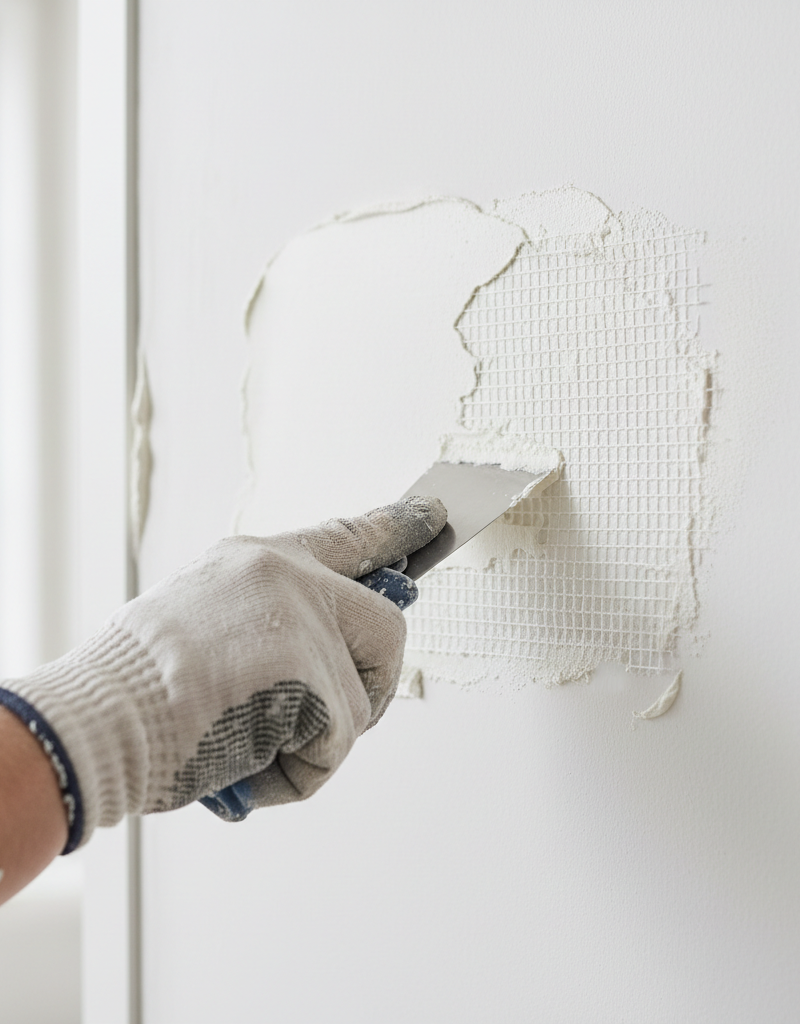
5. Perform the First Skim — Immediately after applying the first coat, switch to a wider drywall knife (6-inch is ideal, 8-inch is even better). Hold the knife at a low 15- to 20-degree angle to the wall. Starting just outside the compounded area, pull the knife across the patch in one smooth, continuous stroke. This action scrapes off the excess compound, leaving only what has filled the mesh and a very thin, translucent layer on top. The mesh pattern will still be clearly visible. Wipe the knife clean after each pass.
6. Allow for Full Drying — Let the first coat dry completely. Drying time varies based on humidity and temperature, but a thin coat of lightweight compound may be dry to the touch in as little as 30-60 minutes. Do not proceed until it is uniformly white and hard. The patch may look slightly sunken as the compound shrinks; this is expected and will be corrected with the next coat.
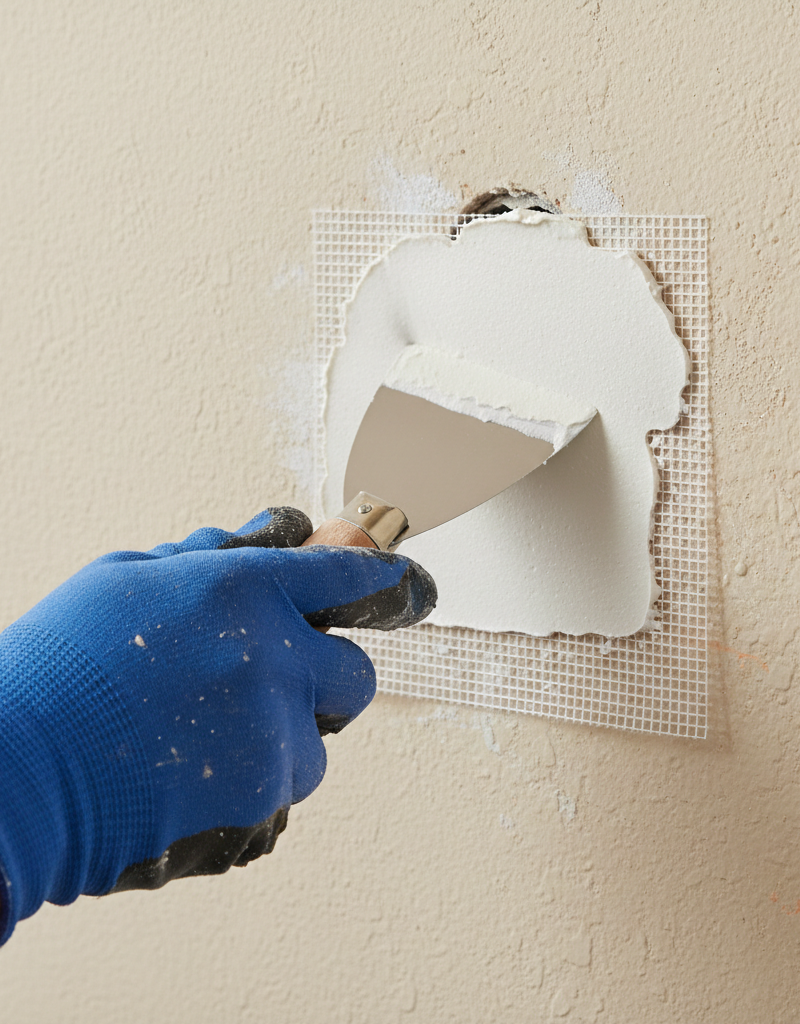
7. Apply the Second Skim Coat — With your wide (6-inch or larger) drywall knife, apply another very thin layer of compound. This time, focus on the area extending from the center of the patch to about 2 inches beyond its edges. The goal of this coat is to fill the slight depression from the first coat's shrinkage and to begin building out the feathered edge. Use long, smooth strokes.
8. Execute the Final Feathering — Immediately after applying the second coat, perform the final skim. With your clean, wide knife held nearly flat against the wall (a 5- to 10-degree angle), start your stroke outside the wet compound and pull inwards towards the center of the patch. Overlap your strokes slightly. This technique pulls the compound thin at the edges, creating an imperceptible transition to the existing wall plane. Clean the knife blade after every single pass to avoid leaving ridges.
9. Inspect and Touch Up Without Sanding — Once the second coat is completely dry (allow 2-4 hours), inspect the repair. Shine a flashlight at a low angle across the surface to reveal any imperfections. If you see minor ridges or tool marks, gently scrape them off with the sharp edge of your putty knife or use a lightly dampened sponge to smooth them out. This wet-sanding technique removes imperfections without creating dust.
10. Match Wall Texture (If Necessary) — Most walls are not perfectly smooth. To make the repair invisible, you must match the existing texture. For "orange peel" or "splatter" textures, use an aerosol wall texture spray. Mask the surrounding area, spray a light coat, and feather the edges. For "knockdown" texture, apply the aerosol texture and, after it has set for 1-2 minutes, gently glide a wide putty knife over the surface to flatten the peaks. Practice on a piece of cardboard first.
11. Prime the Repaired Area — This is a non-negotiable step. New joint compound is extremely porous and will absorb paint differently than the surrounding wall, an effect called "flashing" that results in a dull, splotchy finish. Apply a coat of quality drywall primer-sealer (such as a PVA or shellac-based primer) over the entire patch and any overspray from the texture.
12. Apply Finish Paint — Once the primer is dry, apply two coats of your matching wall paint. Use a small, low-nap roller or the same tool used to paint the wall originally to best match the final sheen and texture. Feather the edges of the painted area to blend it into the rest of the wall.
Common mistakes
- Applying Too Much Compound. The most common error is loading the knife with a large glob of compound and smearing it on thickly. This creates a prominent hump that is impossible to hide without aggressive, dusty sanding, defeating the purpose of this method. Instead, use multiple thin coats, scraping off almost all the compound with each pass.
- Skipping Primer. Homeowners eager to finish often paint directly over the dried compound. This results in "flashing," where the patched area appears as a dull or variably-sheened spot on the wall. The porous compound absorbs the paint's binder, changing its appearance. Always seal the repair with a dedicated drywall primer.
- Using a Knife That Is Too Small. Attempting to feather a 4-inch patch with a 2-inch putty knife is an exercise in frustration. A blade narrower than the patch cannot bridge the repair area, making it impossible to create a flat plane. A 6-inch or wider knife is essential for skimming and feathering smoothly.
- Ignoring Wall Texture. A perfectly smooth, glassy patch on a wall with an orange-peel or knockdown texture is just as noticeable as the original hole. Failing to replicate the surrounding texture is a telltale sign of a DIY repair. Use aerosol texture sprays or thinned compound to blend the patch into its surroundings.
- Not Preparing the Hole Adequately. Leaving loose paper flaps, dust, or jagged gypsum bits around the hole's perimeter creates a weak foundation for the repair. The mesh patch will not adhere properly, and a "bubble" or delamination can occur later as the loose paper absorbs moisture from the compound and swells.
- Rushing Dry Times. Applying a subsequent coat of compound before the previous one is fully cured can re-wet and tear the underlying layer, creating gouges and a lumpy mess. Be patient and ensure each coat is completely dry to the touch and uniform in color before proceeding.
Cost & time breakdown
This breakdown covers the repair of 2-3 small holes (up to 3 inches in diameter).
| Task | DIY Cost | Pro Cost | Time |
|---|---|---|---|
| Material Acquisition | $30 - $50 | Included in total | 30 minutes |
| Hole Prep & Patching | Included in materials | $125 - $200 (min. call) | 30 min active; 2-8 hrs dry time |
| Texture Matching | $15 (1 can of spray) | Included in total | 15 min active; 1 hr dry time |
| Priming & Painting | $25 (quart of primer) | Included in total | 30 min active; 2-4 hrs dry time |
| --- | --- | --- | --- |
| Total Project | $70 - $90 | $150 - $275 | ~1.5 hrs active over 1-2 days |
When to call a pro
While this method is excellent for small imperfections, certain situations warrant a professional drywall contractor.
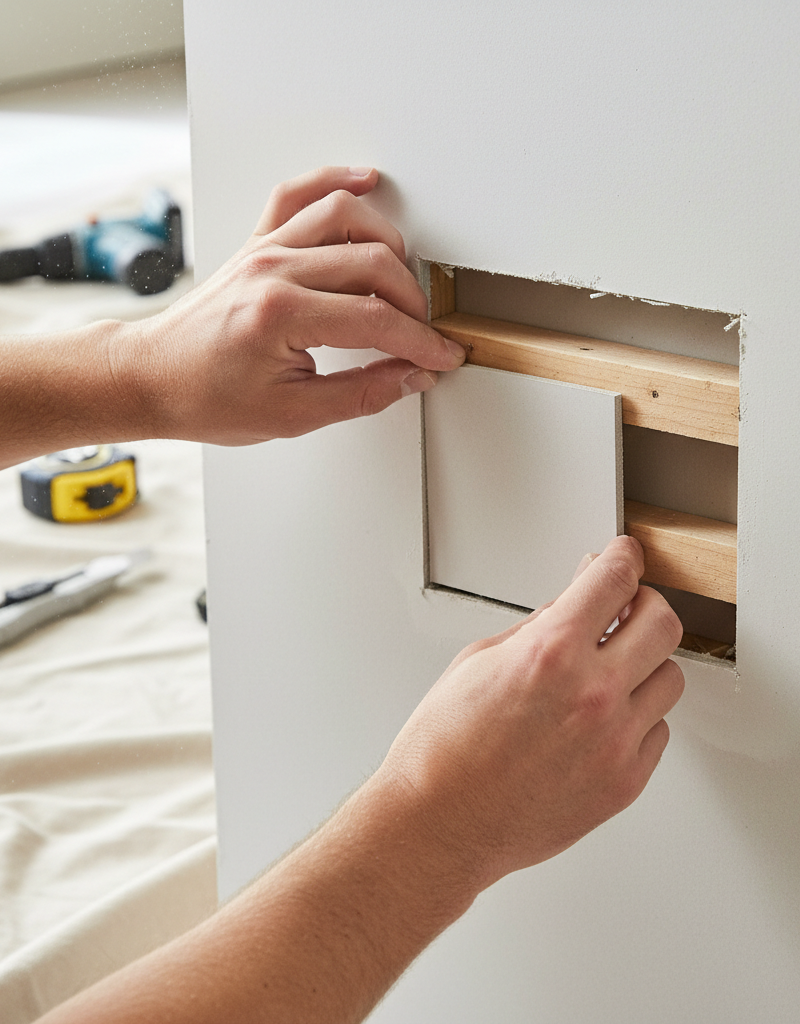
If the hole is larger than 5-6 inches in diameter, a simple mesh patch lacks the structural integrity to prevent flexing and eventual cracking. A professional will use a more robust technique, such as the "California patch" or cutting a larger rectangular section and screwing a new piece of drywall to backing boards. Furthermore, if you see any brown or yellow discoloration, mold, or softness in the drywall around the hole, this indicates a water leak. A professional should be called to identify and fix the source of the moisture before any cosmetic wall repair is attempted.
Walls made of lath and plaster, common in homes built before the 1950s, require a different repair approach using plaster compounds and bonding agents. Applying drywall joint compound directly to plaster can result in a failed repair. Finally, if you have numerous holes spread across multiple rooms or if your walls feature a complex, hand-troweled texture, a professional can complete the job far more efficiently and with a higher-quality, seamless finish.
Prevention & maintenance
- Install and Maintain Door Stops. The most common cause of doorknob-sized holes is a missing or failed door stop. Install spring, rigid, or hinge-pin stops on every door and periodically check that they are secure and functioning correctly.
- Use Furniture Bumpers. Place self-adhesive felt pads or clear rubber bumpers on the back corners of headboards, sofas, and bookcases. This creates a small air gap and prevents the furniture from scuffing, denting, or impacting the wall during movement.
- Be Mindful When Moving. When carrying large items, be aware of your corners and clearance. For tight hallways or stairwells, consider temporarily taping cardboard or moving blankets to the walls to absorb any accidental impacts.
- Choose Appropriate Wall Hangers. For hanging heavy pictures or mirrors (over 10 lbs), do not rely on a simple nail in drywall. Use a stud finder to locate a wall stud for secure anchoring. If a stud isn't available, use a drywall anchor properly rated for the item's weight to prevent tear-out.
- Install Corner Guards in High-Traffic Zones. In busy hallways, mudrooms, or garages, outside corners are especially vulnerable to damage. Clear plastic or paintable metal corner guards can be installed to protect these edges from chips, dents, and scrapes.
- Regular Visual Inspections. Once a year, walk through your home and look for small dings, dents, or scuffs. Addressing these minor issues with a small amount of spackling is far quicker and easier than waiting for them to become larger, more noticeable problems.
Related Articles
Keep troubleshooting with these hand-picked guides from FixlyGuide:
- The 4-Inch Drywall Hole Fix: Why Spackle Alone Always Fails — Learn the right way to patch a small drywall hole (up to 4 inches) to ensure a strong, invisible repair that spackle alone can't achieve.
- The Secret to a Flawless Drywall Patch Is In the Paper — Frustrated by drywall patches that always show through? That telltale bump or sanding mark can ruin a perfect wall. Discover the 'Californi…
- The 4-Step Drywall Patch Secret That Makes Large Holes Vanish — Discover how to flawlessly repair a large hole in drywall using a simple, effective method that makes the damage disappear without a trace.
- The 4-Inch Drywall Hole Fix: Why Most DIY Patches Fail (And How to Do It Right) — Don't let a small drywall hole become a recurring nightmare – discover the secret to a seamless, lasting repair that disappears into your w…
- That 'Wet Edge' Trick: Paint a Room in a Single Day — Tired of paint jobs that drag on all weekend? The secret to a flawless, fast finish isn't working harder—it's using the pro 'wet edge' syst…
- The 5-Minute Trick to Fix a Window That Won't Stay Open (No Tools Needed!) — Discover the surprisingly simple reasons why your window keeps sliding shut and how to fix it in minutes, often without any tools.
What should this project cost?
Enter your project details for a realistic cost range before you call anyone.
Cost depends heavily on which system turns out to be the source.
- Regional adjustment
- National average
- Labor share (typical)
- ~$1,620
- Quotes to collect
- 3 written estimates
Educational estimate based on national averages — not a binding quote. Always confirm with written local estimates.
Recommended for DIYers & woodworkers
Sponsored
The Top 20 Tools for Workshops of Any Budget
No stationary machines or power tools required — plus 3 fundamental tools that can't be bought at any price.
Get the free guide
Ted's Woodworking — The #1 Woodworking Resource
Detailed instructions, dimensioned drawings, materials & cutting lists, and 3D schematics for every skill level.
See the plansSponsored: links above are affiliate links. FixlyGuide may earn a commission on qualifying purchases — at no extra cost to you.
Frequently asked questions
Can I really patch a drywall hole without sanding?+
Yes, for small holes using a mesh patch, careful application of thin, feathered coats of joint compound can often eliminate the need for sanding entirely. The key is to apply the compound gradually and blend the edges seamlessly.
Discussion
Loading comments…