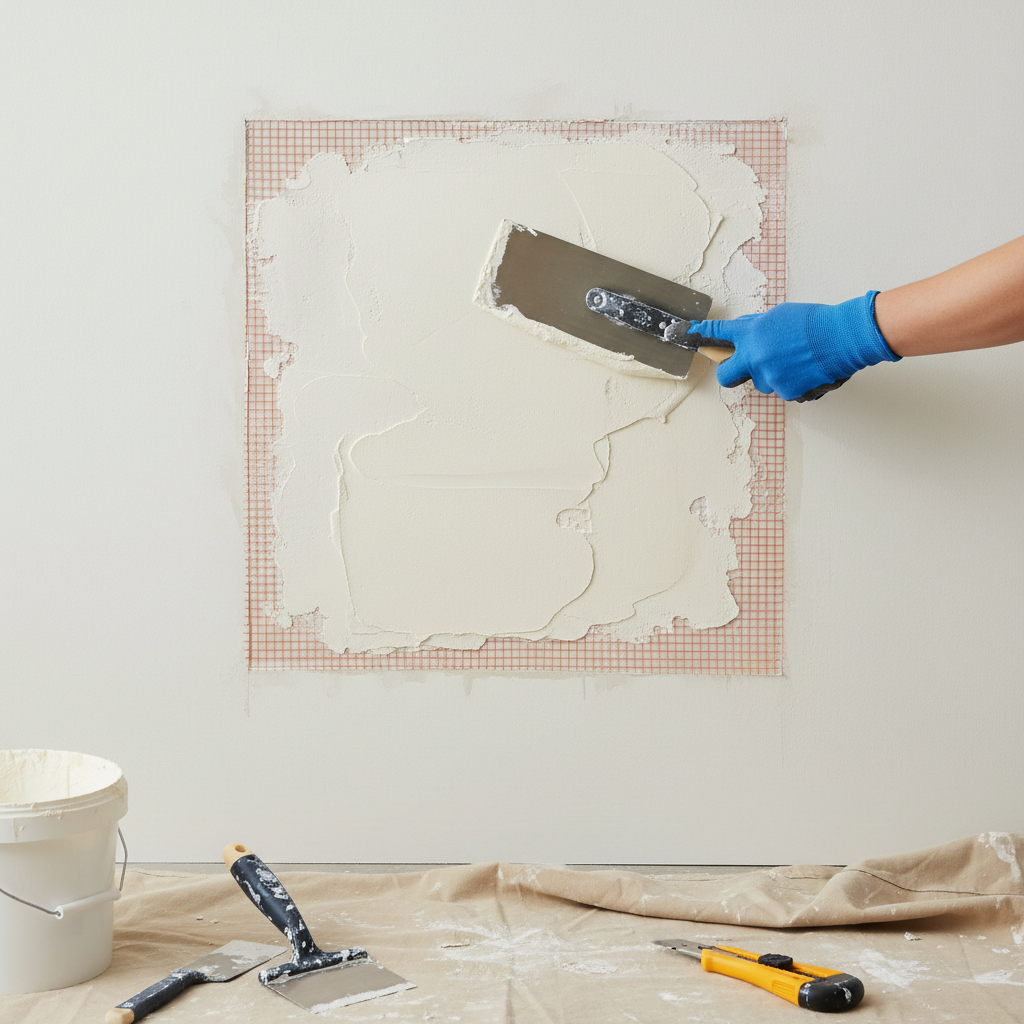
- Apply Second and Third Coats of Joint Compound—Build up and blend for invisibility.
- Feathering is key: Each subsequent coat should be wider and thinner than the last to eliminate visible edges.
- Lighting Check: Use a bright work light held at an angle to highlight imperfections and shadows that need more sanding or compound.
General remodeling · Renovation planning
| Project category | General remodeling |
|---|---|
| Problem type | Renovation planning |
| Trade required | General contracting |
| Urgency | Planned project |
| Safety risk | Low safety risk |
| DIY suitability | Pro recommended |
| Cost category | Major investment |
| Typical timeline | Design and permitting often 2–4 months before work starts |
| Contractor type | General contractor |
Repair option
Phase the work and fix the building envelope first.
Replacement option
Full renovation with permits, design, and a general contractor.
Common causes
- Space no longer fits how the household lives
- Resale preparation
- Deferred maintenance stacking up
Relevant tools:project cost estimatorcompare quoteshome improvement material prices
Published June 1, 2026Last updated August 17, 2026
Tools & materials you'll need
Affiliate linksAs an Amazon Associate FixlyGuide earns from qualifying purchases — at no extra cost to you. Prices and availability are accurate as of publication and subject to change.
Quick Answer
Repairing a large hole in drywall, defined as anything bigger than 6 inches in diameter, goes beyond simple spackling. It requires cutting out the compromised section to create a clean, regular opening, installing wood backing for structural support, precisely cutting and fitting a new piece of drywall, and then meticulously applying multiple thin coats of joint compound and tape. The success of the repair hinges on careful preparation, correct material application, and thorough sanding to ensure the patched area is indistinguishable from the surrounding wall.
The Problem
Large holes in drywall—often caused by aggressive door handles, falling objects, or accidental impacts—are more than just a cosmetic nuisance. They compromise the integrity and insulation of your wall, allowing drafts, pests, and noise to penetrate more easily. A poorly patched large hole will not only remain visible but can also sag, crack, or even fall out over time, especially if it lacks proper structural support. Unlike small nail holes or minor dents, a significant breach requires a systematic approach to ensure a durable, invisible repair that restores the wall's original strength and appearance. Ignoring these larger holes can lead to further damage, increased energy costs, and a perpetually unfinished look in your home.
How It Works
Patching a large drywall hole (typically 6 inches or more across) is essentially miniature drywall installation. It starts with creating a stable, square, or rectangular opening around the damage. This geometric shape is easier to work with than an irregular tear and allows for precise cutting of the patch. Once the damaged area is removed, the next crucial step is to provide internal backing. This is usually achieved by screwing small strips of wood (furring strips or scrap lumber) to the inside edges of the existing drywall, creating a sturdy frame onto which the new drywall patch can be attached. Without this backing, the new patch would have no structural support and would inevitably sag or crack after drying. The new piece of drywall is then cut to precisely fit this opening, creating a flush surface with the existing wall. Once the patch is screwed into the wood backing, the seams are reinforced with self-adhesive mesh tape or paper tape. Finally, multiple thin layers of joint compound (often called "mud") are applied over the tape and screw heads, feathered out progressively wider with each coat. The first coat fills the seam and covers the tape, the second coat smooths the area, and the third (or more) feathers the edges out several inches to blend the repair seamlessly into the wall. Each coat must dry completely and be lightly sanded before the next is applied to achieve a smooth, invisible finish. Primer is then essential to ensure uniform paint absorption and prevent "flashing," where the repair remains subtly visible through new paint.
Step-by-Step Fix
-
Prepare the Area—Clear the scene for a clean repair. Move furniture away, lay down a drop cloth to protect the floor, and ensure good lighting. Use a utility knife to score around the damaged area, making a square or rectangular outline that extends at least 1-2 inches beyond the damage. This creates a neat, workable edge.
- Safety Note: Always wear work gloves and safety glasses when cutting drywall to protect against dust and sharp edges.
-
Cut Out the Damaged Section—Make a clean break for a fresh start. Using a drywall saw or the utility knife (for smaller, easily accessible cuts), carefully cut along your marked lines. Remove the damaged drywall piece. Be mindful of any electrical wires or plumbing pipes that might be behind the wall, especially if the hole is near outlets, switches, or water fixtures. If you encounter any resistance, stop and investigate with a flashlight.
- If you hit a wire/pipe: Stop immediately. This repair is beyond DIY. Call a licensed electrician or plumber to assess and relocate the obstacle before proceeding.
-
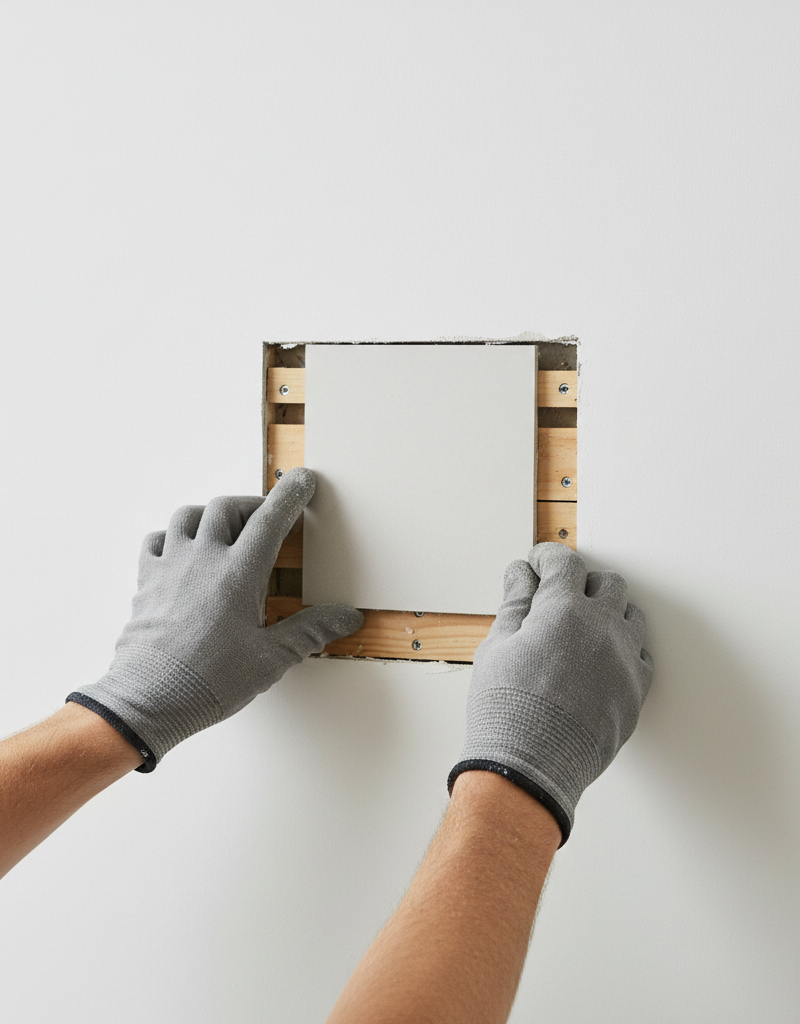
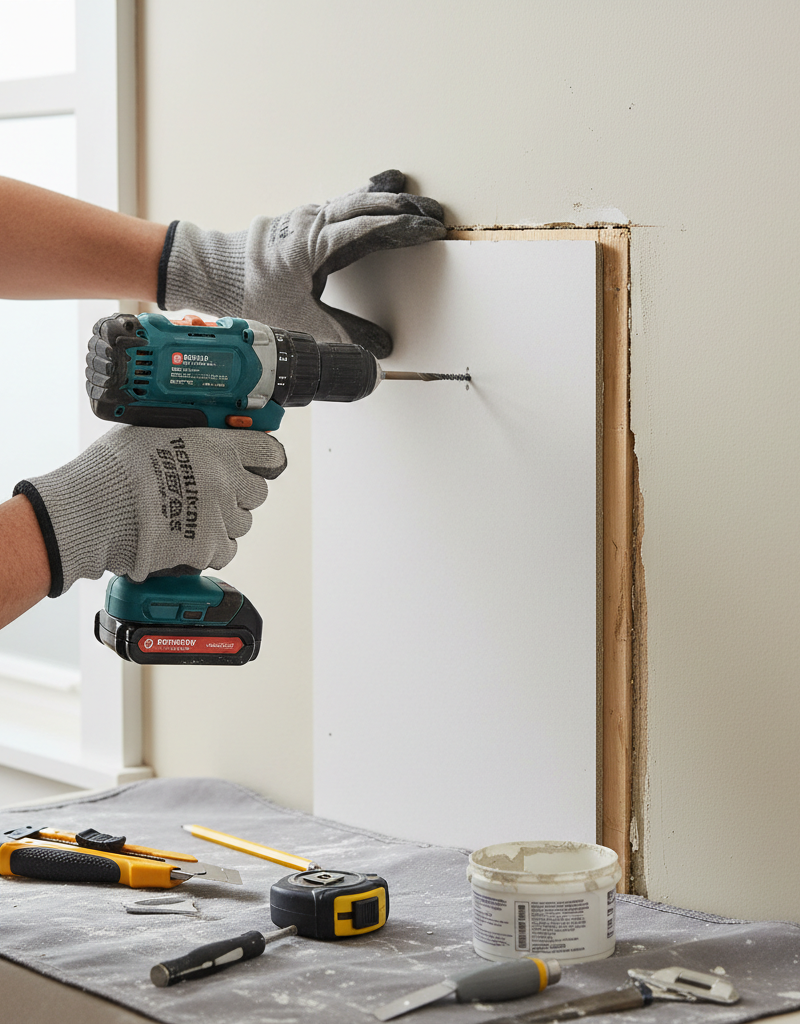
Install Wood Backing—Create unseen support for a lasting patch. Cut two strips of 1x2 or 1x3 lumber, each approximately 6-8 inches longer than the height of your hole. Insert one strip behind the existing drywall on one side of the opening, centering it so that half its width overlaps the existing drywall edge and the other half extends into the opening. Secure it with 1 1/4-inch drywall screws driven through the existing drywall into the wood strip. Repeat this process for the opposite side. The wood strips should now frame the opening from behind, providing a surface to attach your new drywall patch.
- Pro Tip: Use self-tapping drywall screws for easier penetration.
-
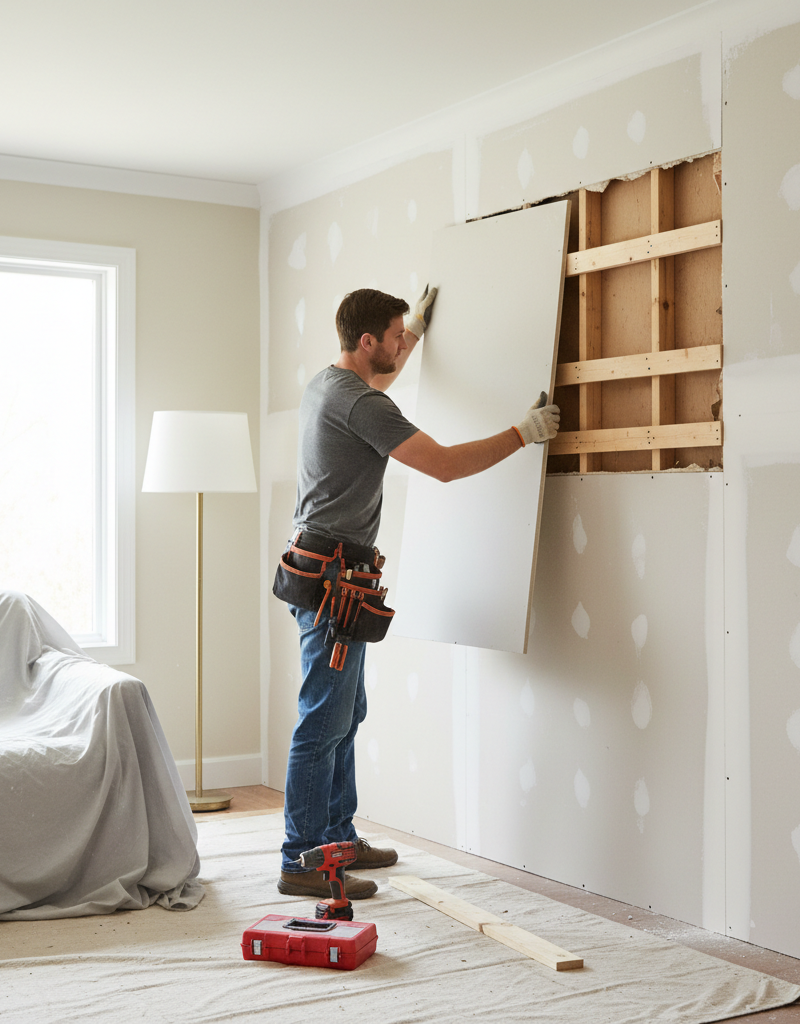
Cut and Install the Drywall Patch—Fit the new piece precisely. Measure the exact dimensions of your cutout opening. Transfer these measurements to a new piece of drywall. Score the drywall with a utility knife along your cut lines, snap the piece, and cut through the paper backing on the other side. Test-fit your patch; it should slide in snugly but without forcing. If it's too tight, trim it slightly. Once it fits, secure the patch to the installed wood backing strips with 1 1/4-inch drywall screws, spacing them every 6-8 inches along the edges.
- Check for flushness: Ensure the new patch is perfectly flush with the existing wall surface. If it protrudes or sinks, adjust the screws on the wood backing or consider shimming with thin cardboard if slightly recessed.
-
Apply Joint Tape—Reinforce seams to prevent future cracks. Apply self-adhesive fiberglass mesh tape directly over all seams where the new patch meets the existing drywall. Press it down firmly to ensure good adhesion. If using paper tape, apply a thin layer of joint compound first, then embed the paper tape into the wet compound, smoothing it with a drywall knife, squeezing out excess compound and bubbles.
- Mistake to avoid: Don't leave air bubbles under paper tape; they will crack later.
-
Apply First Coat of Joint Compound—Fill the gaps, cover the tape. Load a 6-inch drywall knife with a moderate amount of all-purpose joint compound. Apply a thin, even coat over all taped seams and screw heads, feathering the edges slightly. Aim for complete coverage of the tape and screw heads without thick buildups. Let this coat dry completely (typically 4-6 hours, but check product instructions).
- Drying Time Variability: Humidity and temperature significantly impact drying time. A fan can help, but avoid heating the compound directly.
-
Sand the First Coat—Smooth imperfections before the next layer. Once completely dry, lightly sand the patched areas with 120-grit sandpaper on a sanding sponge or pole sander. The goal is to knock down any high spots and smooth rough edges, not to remove all the compound. Wipe away dust with a damp cloth.
- Safety Note: Wear a dust mask or respirator during sanding to avoid inhaling drywall dust.
-
Apply Second and Third Coats of Joint Compound—Build up and blend for invisibility. For the second coat, use an 8-inch or 10-inch drywall knife. Apply another thin, even layer of joint compound, extending it approximately 2-4 inches wider than the first coat. This feathers the repair further into the existing wall. Let it dry completely and then sand lightly with 180-grit sandpaper. Repeat this process for a third coat, using a 10-inch or 12-inch knife and feathering even wider to achieve a seamless blend. You may need a fourth coat for a truly invisible finish, especially if you're new to drywall repair.
- Feathering is key: Each subsequent coat should be wider and thinner than the last to eliminate visible edges.
- Lighting Check: Use a bright work light held at an angle to highlight imperfections and shadows that need more sanding or compound.
-
Final Sanding and Priming—Prepare for paint, make it disappear. After the final coat of compound is completely dry, perform a thorough final sanding with 220-grit sandpaper until the area is perfectly smooth and perfectly flush with the surrounding wall. Run your hand over the repair—you shouldn't feel any bumps or depressions. Wipe away all dust. Apply a high-quality PVA (polyvinyl acetate) drywall primer to the entire patched area. This seals the porous joint compound and ensures that your final paint coat adheres evenly and doesn't "flash" differently over the patch than the rest of the wall.
Common Causes
- Impact Damage: The most frequent culprit. This includes door handles slamming into walls, dropped heavy objects (especially in garages or utility rooms), or accidental collisions during furniture moving. Kids playing inside can also be a common cause for smaller, but still significant, holes.
- Water Damage: Leaks from plumbing, roofs, or overflowing sinks can saturate drywall, causing it to soften, swell, and eventually collapse or break apart under minimal pressure. This often leads to larger, irregularly shaped holes.
- Pest Infestations: Rodents (rats, mice) can chew through drywall to create nesting tunnels or access areas. While the initial holes might be small, repeated activity can enlarge them significantly.
- Rough Removals: When removing wall-mounted fixtures, televisions, shelves, or even old wallpaper, if not done carefully, sections of drywall can tear out, leaving holes or significant surface damage.
- Previous Poor Repairs: Patching a large hole inadequately the first time, especially without proper backing, can lead to the patch failing over time, resulting in an even larger or more difficult repair.
Common Mistakes
- Not Using Backing: Directly applying a large patch to a hole without any internal wood or metal backing is a recipe for disaster. The patch will lack structural integrity, sag, crack, and eventually fail, leaving you with an even bigger problem. Instead: Always install sturdy wood strips or metal channels behind the existing drywall to screw your new patch into.
- Applying Too Much Joint Compound at Once: Thick layers of mud dry slowly, shrink excessively, and are prone to cracking. They also become incredibly difficult to sand smooth without leaving noticeable ridges. Instead: Always apply multiple thin, even coats of joint compound. Patience is key; let each coat dry fully before adding the next.
- Inadequate Sanding Between Coats: Rushing the sanding process or skipping it entirely leaves bumps, ridges, and inconsistencies that will show through every subsequent layer of compound and, ultimately, through the paint. Instead: Lightly sand every dried coat of compound to knock down high spots and ensure a super smooth surface for the next application. Wipe away dust thoroughly.
- Starting with Too Small a Drywall Knife: Trying to apply and feather joint compound over a large repair with a 4- or 6-inch knife makes it almost impossible to achieve a smooth, blended transition. You'll end up with noticeable edges. Instead: Start with a 6-inch knife for the first fill, then progressively move to 8-inch, 10-inch, and even 12-inch knives for successive coats to properly feather the edges out over a wider area.
- Skipping Primer: Joint compound is more porous than drywall paper. If you paint directly over a patched area without priming, the new paint will absorb differently into the compound versus the surrounding drywall, resulting in "flashing" or a dull, visible patch. Instead: Always apply a good quality PVA drywall primer over the entire patched area after final sanding and before painting. This creates a uniform surface for paint.
Cost & Time Breakdown
| Task | DIY Cost | Pro Cost | Time |
|---|---|---|---|
| Materials (Drywall, Mud, Tape) | $20–$40 | Included in labor | N/A |
| Basic Tools (Saw, Knives) | $30–$60 (one-time) | Included in labor | N/A |
| Preparation & Initial Cut | $0 | $50–$100 | 30–60 minutes |
| Backing & Patch Installation | $0 | $100–$200 | 1–2 hours |
| Taping & First Mud Coat | $0 | $100–$150 | 1–1.5 hours |
| Subsequent Mud Coats & Drying | $0 | $150–$300 | 4–8 hours (over days) |
| Final Sanding & Priming | $0 | $100–$150 | 1–2 hours |
| TOTAL (approx.) | $50–$100 | $500–$900+ | 6–15 hours (over 2-3 days) |
Tips & Prevention
- Door Stopper Installation: For holes caused by door handles, install or replace rubber-tipped door stoppers behind doors to prevent future impact damage. Wall-mounted or baseboard-mounted stoppers are inexpensive and highly effective.
- Furniture Placement: Be mindful of placing heavy or sharp furniture items too close to walls, especially in high-traffic areas. Use furniture pads or reconfigure layouts to prevent accidental bumps.
- Regular Inspections: Periodically check areas prone to impact or moisture (e.g., behind toilets, under sinks, near windows) for early signs of drywall damage. Addressing small issues prevents them from becoming large holes.
- Sizing Your Patch: When cutting out the damaged section, aim for the smallest square or rectangular patch possible. This minimizes the amount of new material and mudding required, simplifying the repair.
- Use Drywall Clips for Small-to-Medium Holes: For holes between 4-6 inches that don't quite warrant full wood backing, specialized spring-loaded "drywall clips" or "backer plates" can provide excellent support. They hold the patch in place from the back until the mud dries.
- Keep Spare Drywall: If you have an attic or garage, consider keeping a small piece of drywall (e.g., 2 ft x 2 ft) on hand after a renovation project. Having the exact thickness and type (e.g., 1/2-inch regular) makes quick repairs much easier.
When to Call a Professional
While patching a large drywall hole is a DIY-friendly project, there are specific situations where calling a licensed professional is essential for safety, structural integrity, or a quality finish. You should immediately call a professional if: the hole exposes electrical wiring or plumbing pipes, as these require licensed tradespeople to safely inspect, repair, or relocate. If the drywall damage appears to be related to a larger structural issue, such as bowing walls or cracks extending from the ceiling, a general contractor or structural engineer should be consulted. Additionally, if the hole is exceptionally large (e.g., several feet across), is located on a ceiling, or if you simply lack the time, tools, or confidence to achieve a professional-looking, seamless repair, a drywall contractor will ensure a flawless and lasting result. They have the specialized tools and expertise to handle complex patches, texture matching, and large-scale repairs efficiently and safely.
Related Articles
Keep troubleshooting with these hand-picked guides from FixlyGuide:
- The Invisible Drywall Hole Fix: 3 Secrets to a Seamless Patch — Patching a large drywall hole can be daunting, but with the right technique, you can achieve a seamless repair that disappears into your wa…
- The 4-Step Drywall Patch Secret That Makes Large Holes Vanish — Discover how to flawlessly repair a large hole in drywall using a simple, effective method that makes the damage disappear without a trace.
- The Giant Drywall Hole: 3 Hidden Mistakes That Make Fixing It Worse — Don’t just spackle over that huge drywall hole; learn the right way to repair it and avoid common mistakes that lead to an even bigger head…
- The 4-Inch Drywall Hole Fix: Why Most DIY Patches Fail (And How to Do It Right) — Don't let a small drywall hole become a recurring nightmare – discover the secret to a seamless, lasting repair that disappears into your w…
- The 3 Hidden Drywall Mistakes That Can Send Your Heavy Mirror Crashing Down — Discover the crucial steps to safely hang a heavy mirror on drywall, avoiding common mistakes that can lead to damage or disaster.
- The #1 Mistake Homeowners Make Caulking a Bathroom Sink (And How to Fix It) — Discover the most common caulking mistake homeowners make around bathroom sinks and how to achieve a waterproof, professional-looking seal…
What should this project cost?
Enter your project details for a realistic cost range before you call anyone.
Cost depends heavily on which system turns out to be the source.
- Regional adjustment
- National average
- Labor share (typical)
- ~$1,620
- Quotes to collect
- 3 written estimates
Educational estimate based on national averages — not a binding quote. Always confirm with written local estimates.
Get the print-ready PDF of this guide
A clean, ad-free, printable version you can keep on your phone or pin to the workshop wall. Free with a FixlyGuide account.
- Print-optimized layout
- Tools, materials & every step included
- Saved to your account
Recommended for DIYers & woodworkers
Sponsored
The Top 20 Tools for Workshops of Any Budget
No stationary machines or power tools required — plus 3 fundamental tools that can't be bought at any price.
Get the free guide
Ted's Woodworking — The #1 Woodworking Resource
Detailed instructions, dimensioned drawings, materials & cutting lists, and 3D schematics for every skill level.
See the plansSponsored: links above are affiliate links. FixlyGuide may earn a commission on qualifying purchases — at no extra cost to you.
Frequently asked questions
How big of a hole in drywall can I patch myself?+
You can typically patch holes up to about 12-18 inches in diameter yourself with proper technique and backing. Anything larger than that becomes more challenging to make invisible and might be better handled by a professional drywaller.
Do I need to use mesh tape or paper tape for a large drywall patch?+
Self-adhesive fiberglass mesh tape is generally easier for DIYers as it sticks in place. Paper tape requires a thin layer of mud first, but pros often prefer it for its strength and thinner profile. Either can work for a large patch, but ensure good adhesion and embedment for both.
How many coats of joint compound do I need for a large patch?+
For a large patch, you typically need at least three thin coats of joint compound to achieve a smooth, seamless finish. The first embeds the tape, the second smooths, and the third feathers the edges. You may need a fourth for perfection, especially if new to drywall finishing.
Why is my drywall patch still visible after painting?+
This is usually due to inadequate sanding, not feathering the edges wide enough, or failing to prime the patched area. Joint compound absorbs paint differently than drywall paper, so a good quality PVA primer is crucial to create a uniform surface for paint adhesion and prevent 'flashing.'
Can I use spackle for a large drywall hole?+
No, spackle is only suitable for small nail holes, screw holes, and very minor dents (typically smaller than half an inch). For a large drywall hole, you need to use joint compound (also called drywall mud) as it's designed for structural filling, taping, and creating a seamless finish over broad areas.
How long does new drywall patch take to dry before painting?+
Each coat of joint compound typically takes 4-6 hours to dry, sometimes longer in humid conditions. Allow at least 24 hours after the final coat and sanding before applying primer, and then another 1-2 hours for the primer to dry before painting.
Discussion
Loading comments…