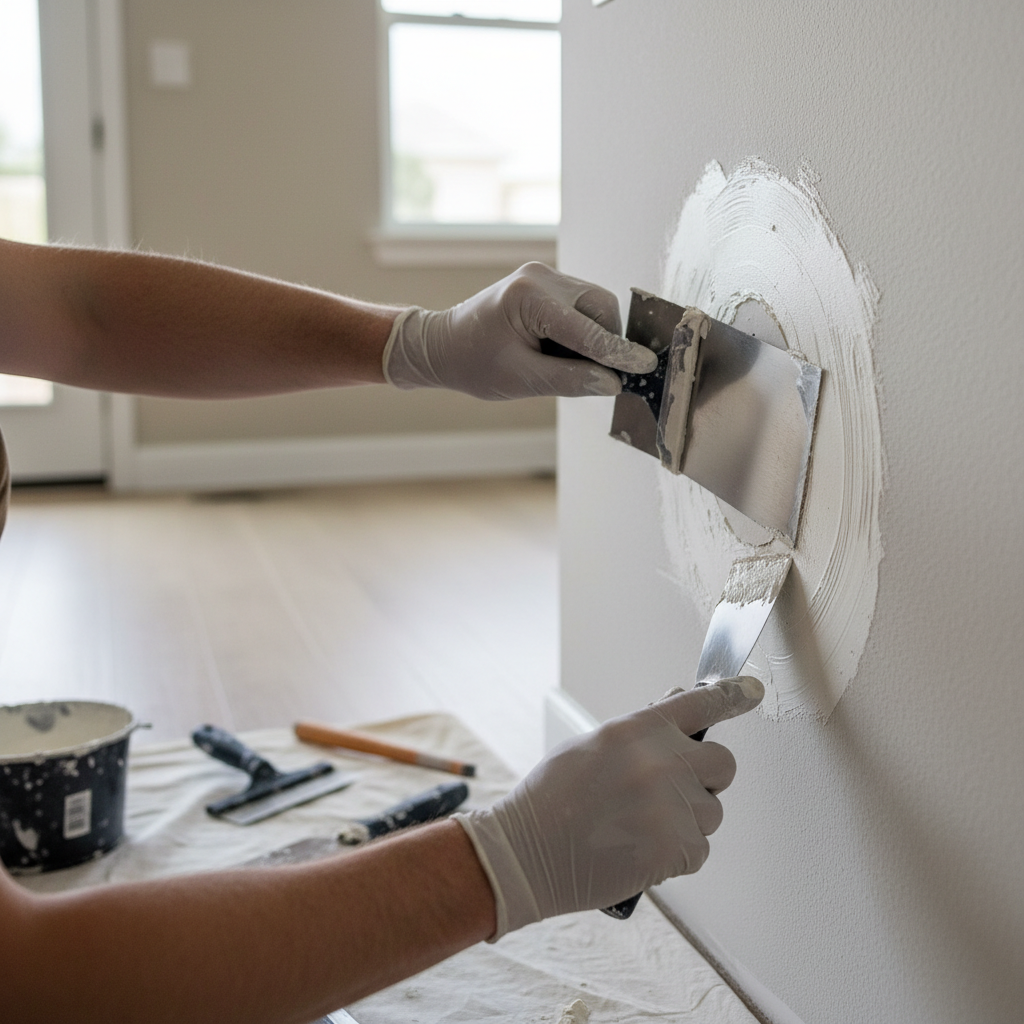
- Plumbing Repairs: Accessing leaky pipes, upgrading fixtures, or rerouting lines often requires cutting into drywall, leaving large, sometimes irregularly shaped holes.
- Electrical Work: Installing new outlets, running wires, or troubleshooting electrical issues behind walls frequently necessitates removing sections of drywall.
- Accidental Impact: Moving furniture, playful kids, or even pets can create significant holes in drywall, especially in high-traffic areas.
- Moisture Damage: Water leaks can weaken drywall, leading to soft spots or crumbling sections that need to be cut out and replaced.
- Pest Infestations: In extreme cases, pest removal or damage from rodents can require removal of contaminated or chewed-through drywall sections.
General remodeling · Renovation planning
| Project category | General remodeling |
|---|---|
| Problem type | Renovation planning |
| Trade required | General contracting |
| Urgency | Planned project |
| Safety risk | Low safety risk |
| DIY suitability | Pro recommended |
| Cost category | Major investment |
| Typical timeline | Design and permitting often 2–4 months before work starts |
| Contractor type | General contractor |
Repair option
Phase the work and fix the building envelope first.
Replacement option
Full renovation with permits, design, and a general contractor.
Common causes
- Space no longer fits how the household lives
- Resale preparation
- Deferred maintenance stacking up
Relevant tools:project cost estimatorcompare quoteshome improvement material prices
Published May 31, 2026Last updated August 17, 2026
Tools & materials you'll need
Affiliate linksAs an Amazon Associate FixlyGuide earns from qualifying purchases — at no extra cost to you. Prices and availability are accurate as of publication and subject to change.
Quick Answer
Repairing a large drywall hole (anything larger than a few inches to about 12x12 inches) doesn't require tearing down an entire section of wall. The most efficient and professional-looking method for larger holes is often the 'California patch' or 'butterfly patch.' This technique uses a slightly oversized piece of new drywall to create its own backing, providing a strong, seamless repair without the fuss of cutting and fitting separate wooden strips. It’s ideal for holes left after plumbing or electrical repairs, where you need a clean, stable surface for finishing.
The Problem
Accidents happen, or sometimes, necessary home repairs leave behind significant damage to your drywall. Whether it's a forgotten hammer creating a softball-sized crater, a pipe burst requiring a large section cut out, or an electrical upgrade necessitating access behind the wall, you're left with an unsightly, structural void. A simple spackle won't do; the area needs proper reinforcement and a new piece of drywall integrated into the existing wall. The challenge is often creating a strong, flush patch that won't crack later and blends perfectly with the surrounding wall, all without calling in a professional for what seems like a manageable DIY task. Traditional methods involving separate wood backing can be cumbersome and add extra steps, making homeowners look for a more streamlined solution.
How It Works
Most homeowners envision cutting out a perfect square around the hole, then cutting a matching square of drywall, and finally, figuring out how to attach it. The 'California patch,' also known as a 'butterfly patch,' simplifies this by creating a self-supporting patch. Instead of cutting a piece of drywall to precisely fit inside the hole, you cut a piece that's larger than the hole itself. Then, you carefully trim the gypsum from the edges of this larger patch, leaving the paper facing intact. This creates a 'flange' of paper around the gypsum core.
When you insert this prepared patch into the existing hole, the gypsum core fits snugly, and the paper flanges overlap the existing drywall around the perimeter of the hole. These paper flanges are then mudded and sanded, effectively becoming part of the original wall surface. This method leverages the strength of the drywall itself and the adhesive properties of joint compound and tape. The paper acts as a built-in mesh, providing excellent adhesion and preventing future cracking along the seam. It's a clever way to create a strong, level repair with fewer pieces and a more straightforward application, especially for irregular or larger openings where internal blocking would be difficult to install securely.
Step-by-Step Fix
1. Prepare the Hole — *Square up and clean the damaged area. * Begin by identifying the true extent of the damage. Use a drywall saw to cut a clean, square, or rectangular opening around the damaged area. Don't try to force a patch into an irregular shape. Cut at least an inch beyond all damaged edges. Use a utility knife to trim any frayed paper or loose gypsum. Wipe down the edges with a damp cloth to remove dust and ensure clean adhesion. The sharper and cleaner your edges, the better your patch will fit. * Safety Note: Always wear safety glasses and a dust mask when cutting drywall. Ensure no electrical wires or plumbing lines are behind the wall before cutting. * If your hole is near a stud: Adjust your cut so one or more sides of the hole neatly align with the center of an existing wall stud. This allows you to screw directly into the stud for added support on that side. This isn't strictly necessary for a California patch, but it can provide extra rigidity for very large patches.
2. Craft the California Patch — *Create a self-supporting drywall insert. * Measure the exact dimensions of your freshly cut hole. Cut a piece of new drywall that is at least 4 inches larger in both length and width than your hole. For example, if your hole is 8x10 inches, cut a piece of new drywall that is 12x14 inches. Now, on the back side of this new piece, trace the exact dimensions of your hole in the center. Carefully score along this line with your utility knife, cutting only through the paper backing and the gypsum, but not the front paper facing. Snap out the gypsum core along these lines, leaving a 2-inch paper flange around the entire perimeter of your patch. This flange is crucial for the strength of the repair. * Pro Tip: Use a drywall T-square for precise, straight cuts on your patch. Take your time scoring and snapping – a clean flange is key. * Check fit: Dry-fit the patch into the hole. The gypsum core should fit snugly, and the paper flanges should lie flat against the existing wall without buckling. Trim any excess paper carefully if needed.
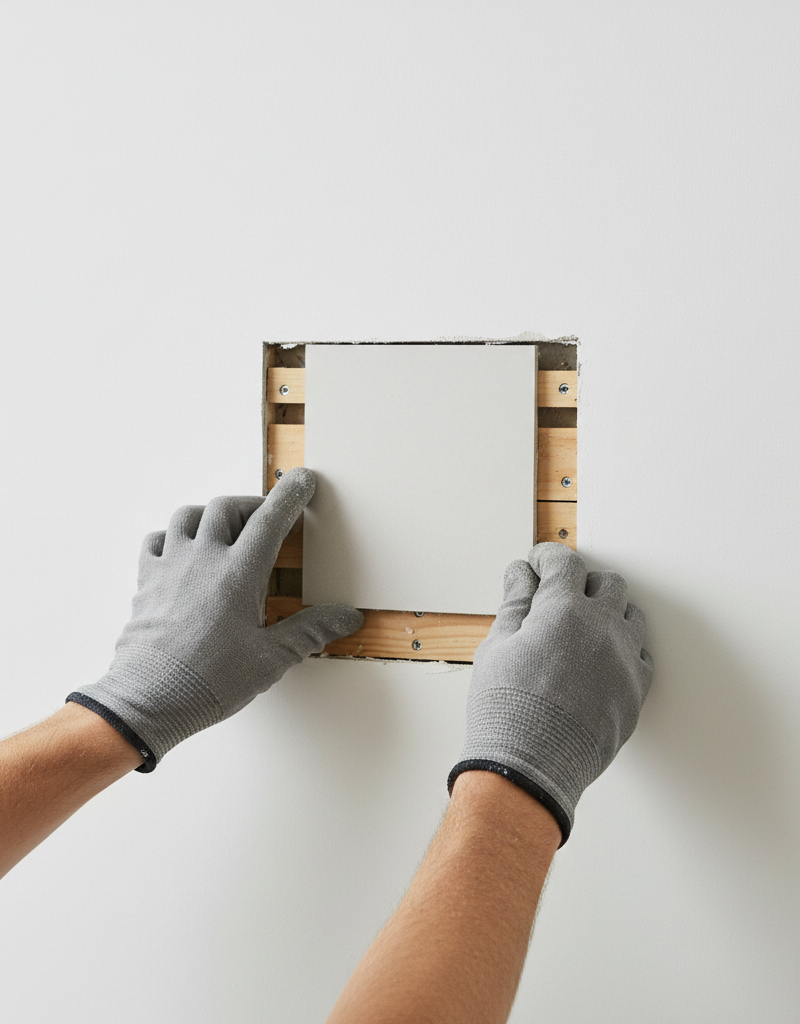
3. Position and Secure the Patch — *Apply joint compound and firmly press the patch. * Using a 4-inch or 6-inch putty knife, apply a generous, even layer of all-purpose joint compound (or setting-type compound for faster drying) around the inside edges of your existing wall, where the paper flanges of the patch will rest. Don't be shy with the compound; you want good adhesion. Insert your crafted drywall patch into the hole, ensuring the gypsum core fits perfectly. Press firmly and evenly on the face of the patch, allowing the joint compound to squeeze out from under the paper flanges. Wipe away any excess compound immediately with your putty knife. The goal is to create a flush surface. * For added security (optional but recommended for larger patches): If your patch is particularly large (e.g., 10x10 inches or more), consider driving a few drywall screws through the paper flanges and into the existing studs if they align, or through the flanges and into the drywall creating a bit of a dimple (which you will then fill later). Be careful not to overtighten. * Let it dry: Allow the joint compound to dry completely. This can take several hours, or even overnight, depending on humidity and the type of compound used. Setting-type compounds dry faster but are harder to sand.
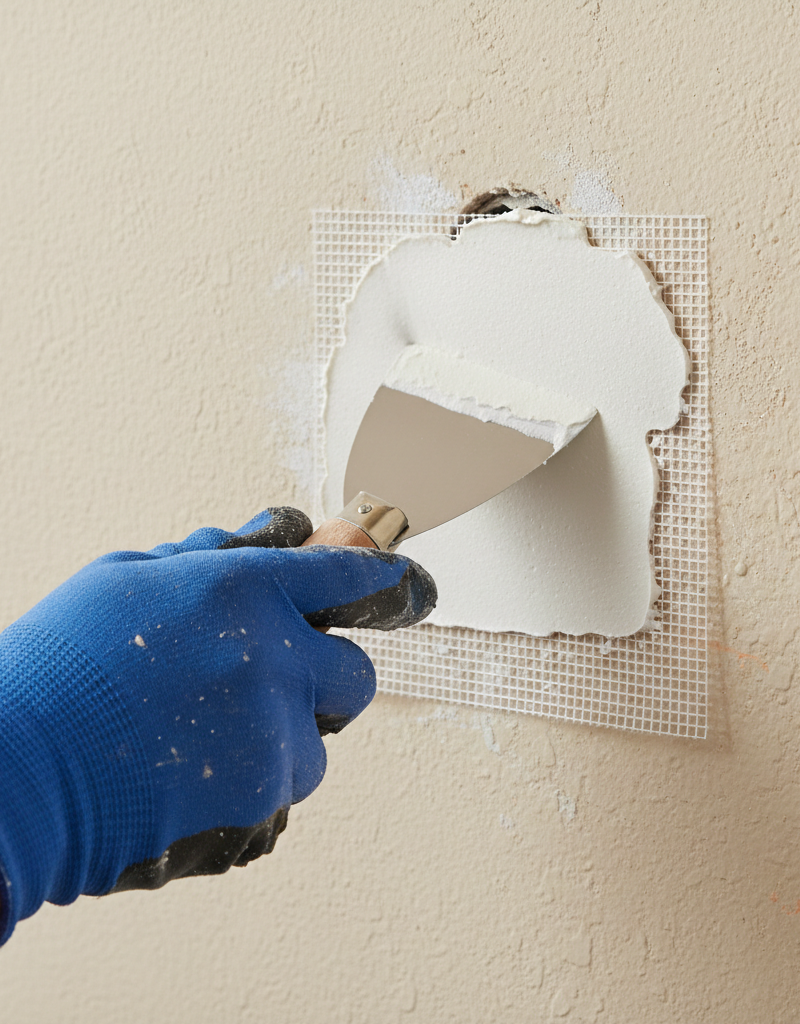
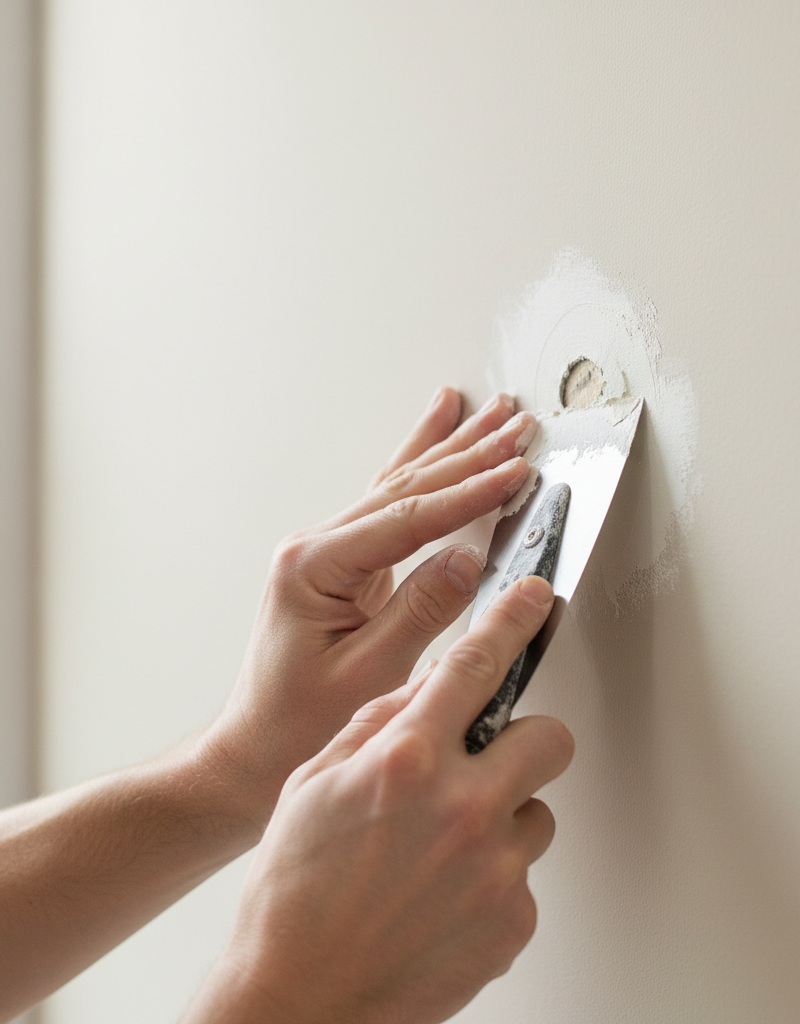
4. Finish the Repair — *Tape, mud, and sand for a seamless blend. * Once the first layer of joint compound is dry, apply a thin, even coat of compound over the paper flanges and the surrounding wall. Immediately embed a strip of paper joint tape directly over the seams, pressing it firmly into the wet compound with your putty knife. Ensure there are no air bubbles beneath the tape. Apply a second, very thin coat of compound directly over the tape, feathering the edges outward. Let this dry completely. For the third and final coat, use a wider 10-inch or 12-inch taping knife to apply a very thin, broad layer of joint compound, extending it further out from the patch edges to create a perfectly flat, blended surface. Once completely dry, lightly sand the entire area with 150-grit or 180-grit sandpaper until it's smooth and flush with the existing wall. Avoid over-sanding the paper tape. * Inspection: Run your hand over the patched area. It should feel perfectly smooth and flat. Any ridges or depressions will show through paint. Apply additional thin coats of compound and sand if needed. * Prime before painting: Always prime the patched area with a good quality primer before painting. This ensures uniform paint absorption and prevents 'flashing' (where the patch shows through the paint).
Common Causes
- Plumbing Repairs: Accessing leaky pipes, upgrading fixtures, or rerouting lines often requires cutting into drywall, leaving large, sometimes irregularly shaped holes.
- Electrical Work: Installing new outlets, running wires, or troubleshooting electrical issues behind walls frequently necessitates removing sections of drywall.
- Accidental Impact: Moving furniture, playful kids, or even pets can create significant holes in drywall, especially in high-traffic areas.
- Moisture Damage: Water leaks can weaken drywall, leading to soft spots or crumbling sections that need to be cut out and replaced.
- Pest Infestations: In extreme cases, pest removal or damage from rodents can require removal of contaminated or chewed-through drywall sections.
Common Mistakes
- Not Squaring the Hole: Trying to patch an irregularly shaped hole makes it almost impossible to get a flush, professional-looking result. Always cut a clean, square or rectangular opening.
- Cutting the Patch Too Small: A patch that's too small won't have enough surface area for the flanges to adhere properly, leading to a weak repair that can crack or pop out.
- Not Feathering the Joint Compound: Applying thick, noticeable edges of joint compound around the patch will create visible bumps under paint. Always feather the compound out wide and thin.
- Skipping Joint Tape: For large patches, skipping joint tape is a recipe for disaster. The patch will almost certainly crack along the seams over time. Tape provides crucial reinforcement.
- Not Letting Compound Dry Fully: Rushing the drying process between coats leads to compound shrinking, cracking, or crumbling, making it impossible to sand smoothly.
- Poor Sanding: Over-sanding can expose the paper tape, while under-sanding leaves ridges and bumps. Aim for a smooth, flat surface by hand-sanding with a block.
Cost & Time Breakdown
| Task | DIY Cost | Pro Cost | Time |
|---|---|---|---|
| Gather Tools & Materials | $20–$50 | N/A | 15–30 min |
| Prepare Hole & Cut Patch | $0 | N/A | 30–60 min |
| Apply Patch & First Mud Coat | $0 | N/A | 20–40 min |
| Apply Tape & Second Mud Coat | $0 | N/A | 20–30 min |
| Final Mud Coat & Sanding | $0 | N/A | 30–60 min |
| Total | $20–$50 | $150–$400+ | 2–4 hours active |
Note: Professional costs can vary significantly based on location, contractor, and the complexity/number of patches. This estimate is for a single, straightforward large patch.
Tips & Prevention
- Keep Scrap Drywall: If you have leftover drywall from a renovation, save a few pieces. Having matching material on hand makes repairs quicker.
- Use Setting-Type Compound for Speed: For impatient DIYers, a setting-type joint compound (like 'hot mud') dries much faster and allows for multiple coats in a single day. However, it's harder to sand, so work quickly and precisely.
- Layer Thin Coats: Always apply multiple thin coats of joint compound rather than one thick coat. Thin coats dry faster, crack less, and are easier to sand to a smooth finish.
- Proper Lighting is Key: Use a strong work light or flashlight held at an angle to the wall when mudding and sanding. This will highlight any imperfections, shadows, or bumps that you might otherwise miss.
- Clean Tools Immediately: Joint compound dries quickly on tools. Clean your putty knives and trowels immediately after use with warm water to prevent hardened residue.
- Practice on Scrap: If you're new to drywall repair, practice the California patch technique on a piece of scrap drywall before tackling your wall.
When to Call a Professional
While the California patch is an excellent DIY solution for most large holes, there are situations where calling a licensed professional is the smarter choice. If the drywall damage extends across multiple studs, involves a corner, or impacts areas that require structural integrity (e.g., behind a heavy wall-mounted TV or shelving), a professional can ensure proper blocking and reinforcement. If the hole is a result of hidden water damage from a persistent leak that hasn't been fully resolved, or if there's any sign of mold growth, do not attempt the repair yourself; contact a plumber and a mold remediation specialist first. Additionally, for very high ceilings, stairwells, or exceptionally large areas (e.g., an entire drywall sheet needs replacing), the complexity, safety risks, and need for specialized tools often outweigh the DIY savings. A professional drywall contractor will also ensure a perfectly smooth, level five finish, which can be challenging for inexperienced DIYers on large repairs.
Related Articles
Keep troubleshooting with these hand-picked guides from FixlyGuide:
- The 4-Step Drywall Patch Secret That Makes Large Holes Vanish — Discover how to flawlessly repair a large hole in drywall using a simple, effective method that makes the damage disappear without a trace.
- The Secret to a Flawless Drywall Patch Is In the Paper — Frustrated by drywall patches that always show through? That telltale bump or sanding mark can ruin a perfect wall. Discover the 'Californi…
- The Invisible Drywall Hole Fix: 3 Secrets to a Seamless Patch — Patching a large drywall hole can be daunting, but with the right technique, you can achieve a seamless repair that disappears into your wa…
- Skip the Demo: The Secret to Tiling Over Existing Floors — Discover the professional method for tiling directly over your existing bathroom floor, saving you thousands on messy, expensive demolition…
- That Peeling Caulk Hides a $2,000 Mistake. Here's the Fix. — Stop re-caulking your shower every year. Discover the professional method, from meticulous prep to the right materials, for a waterproof ba…
- That Drywall Hole Isn't Just Ugly, It's a Bat Signal — Learn the pro-approved method for patching drywall holes of any size. We cover the surprising science behind a lasting repair and common mi…
What should this project cost?
Enter your project details for a realistic cost range before you call anyone.
Cost depends heavily on which system turns out to be the source.
- Regional adjustment
- National average
- Labor share (typical)
- ~$1,620
- Quotes to collect
- 3 written estimates
Educational estimate based on national averages — not a binding quote. Always confirm with written local estimates.
Fixly Project Decision Box
- DIY difficulty
- Moderate
- Estimated time
- 30 minutes – half a day
- Cost level
- Moderate
Main tools / materials
- Adjustable wrench
- Plunger or drain auger
- Bucket and towels
- Thread tape
When to stop and call a pro
- Water you cannot shut off at the fixture or main
- Sewage backing up into more than one fixture
- Water near electrical panels or outlets
- Gas water heater work beyond relighting a pilot
Need professional help?
Get a Licensed PlumberRecommended for DIYers & woodworkers
Sponsored
The Top 20 Tools for Workshops of Any Budget
No stationary machines or power tools required — plus 3 fundamental tools that can't be bought at any price.
Get the free guide
Ted's Woodworking — The #1 Woodworking Resource
Detailed instructions, dimensioned drawings, materials & cutting lists, and 3D schematics for every skill level.
See the plansSponsored: links above are affiliate links. FixlyGuide may earn a commission on qualifying purchases — at no extra cost to you.
Frequently asked questions
What is a California patch for drywall?+
A California patch, also known as a butterfly patch, is a self-supporting drywall repair method for larger holes. It involves cutting a new piece of drywall larger than the hole, then removing the gypsum from the edges, leaving a paper flange. This flange overlaps the existing wall, creating a strong, seamless bond when mudded and taped, eliminating the need for separate backing strips.
How big of a hole can you California patch?+
The California patch method is ideal for holes ranging from a few inches up to about 12x12 inches. For holes larger than this, or those spanning multiple studs, it's generally more efficient and structurally sound to replace a larger section of drywall or consider professional assistance that might involve more extensive blocking.
Do I need to tape a California patch?+
Yes, joint tape is crucial for a durable California patch. Once the initial joint compound holding the paper flanges is dry, apply paper joint tape over all the seams, embedding it in a new layer of wet joint compound. This prevents cracking along the edges of the patch over time and ensures a smooth, strong repair.
How long does a drywall patch take to dry?+
The drying time for a drywall patch depends on the type of joint compound used and local humidity. All-purpose joint compound typically requires 4-24 hours per coat. Setting-type compounds (like 'hot mud') dry much faster, often within 20-90 minutes, allowing for multiple coats in a single day. Always ensure each coat is fully dry before applying the next.
Discussion
Loading comments…