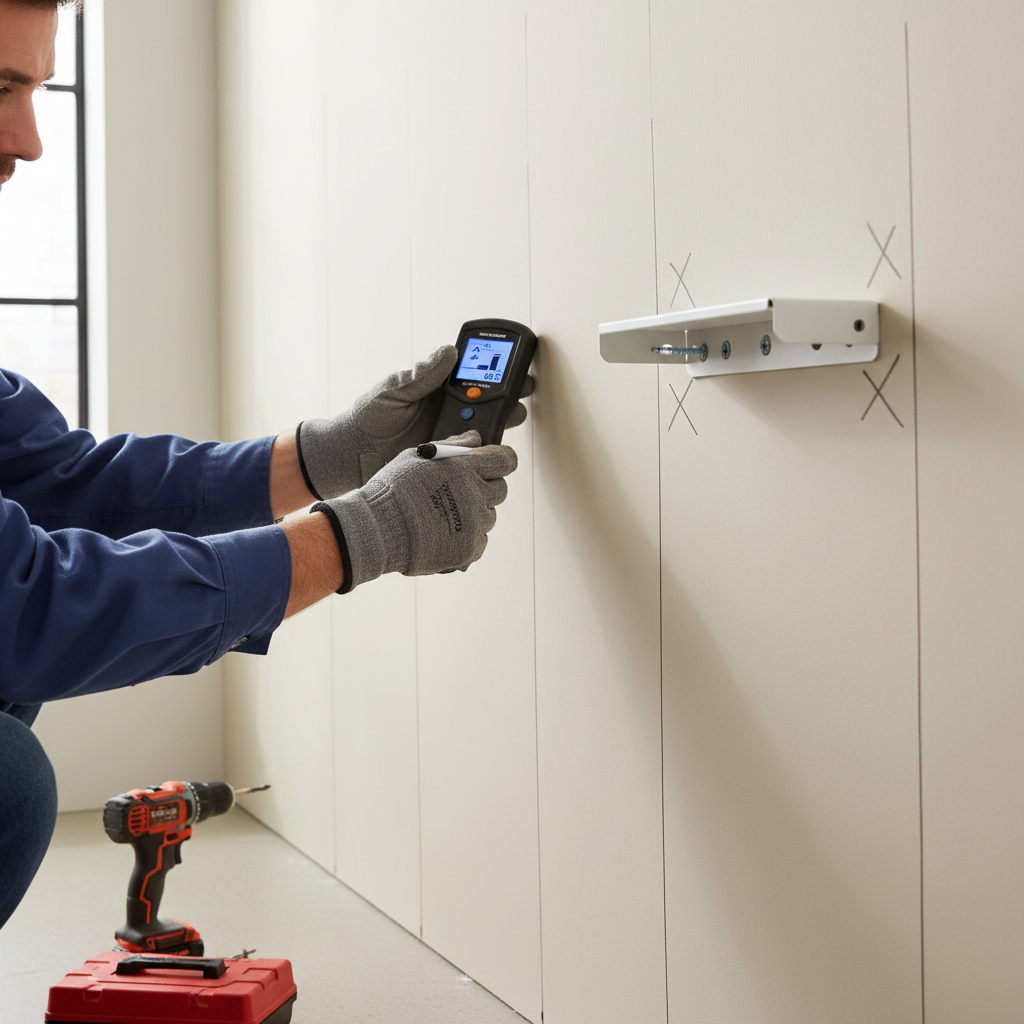
- Locate Your Studs – A secure foundation is key.
- Tip: Sometimes, tapping the wall can help. A solid sound indicates a stud, while a hollow sound signifies open drywall. However, this is less reliable than a stud finder.
- If this doesn't work: If your stud finder gives inconsistent readings, try using a strong magnet to locate the drywall screws or nails that secure the drywall to the studs. These are usually in a vertical line down the center of the stud.
General remodeling · Renovation planning
| Project category | General remodeling |
|---|---|
| Problem type | Renovation planning |
| Trade required | General contracting |
| Urgency | Planned project |
| Safety risk | Low safety risk |
| DIY suitability | Pro recommended |
| Cost category | Major investment |
| Typical timeline | Design and permitting often 2–4 months before work starts |
| Contractor type | General contractor |
Repair option
Phase the work and fix the building envelope first.
Replacement option
Full renovation with permits, design, and a general contractor.
Common causes
- Space no longer fits how the household lives
- Resale preparation
- Deferred maintenance stacking up
Relevant tools:project cost estimatorcompare quoteshome improvement material prices
Published June 2, 2026Last updated August 18, 2026
Tools & materials you'll need
Affiliate linksAs an Amazon Associate FixlyGuide earns from qualifying purchases — at no extra cost to you. Prices and availability are accurate as of publication and subject to change.
Quick Answer
The most common mistake when installing floating shelves into drywall is failing to locate and anchor into wall studs. This leads to wobbly shelves, damaged drywall, and potential hazards. To properly install floating shelves, first use a reliable stud finder to locate and mark at least one, preferably two, vertical studs within the desired shelf's span. If studs are inaccessible for all mounting points, or if only one stud can be used, heavily rely on heavy-duty, weight-rated toggle anchors (not simple plastic drywall anchors) to secure any bracket mounting points directly into the drywall. Always over-estimate the weight capacity needed to avoid future sagging or detachment.
The Problem
Floating shelves offer a sleek, minimalist look, but their aesthetic appeal often belies a significant installation challenge: how to securely mount them into hollow drywall. The perceived simplicity often leads homeowners to make critical mistakes, primarily relying on inadequate anchors or neglecting to find wall studs. The result is a shelf that sags, pulls away from the wall, or even collapses, leaving behind unsightly holes and potentially damaged items. This issue is particularly frustrating because a poorly installed shelf can turn a functional and decorative element into a constant source of worry and a recurring repair project. The problem isn't just about the shelf itself; it's about the security of your belongings and, more importantly, the safety of your home's occupants. Understanding the underlying structure of your walls and the mechanics of proper anchoring is key to transforming this common DIY headache into a successful home improvement.
How It Works
Behind every drywall surface in your home is a framework of wooden or metal studs, typically spaced 16 or 24 inches apart on center. These studs are the structural backbone of your wall, designed to bear weight. Drywall, on the other hand, is essentially gypsum plaster pressed between two sheets of paper; it offers very little structural support on its own. When you attempt to hang something heavy, like a floating shelf laden with books or decor, directly into drywall without hitting a stud, you’re relying solely on the gripping power of a small anchor in a relatively soft material. Standard plastic conical or ribbed drywall anchors, while suitable for light items like pictures, are insufficient for the shear and pulling forces exerted by a loaded floating shelf.
A floating shelf works by attaching a hidden mounting bracket directly to the wall, and then the shelf body slides over this bracket, concealing it. The integrity of the entire system hinges on that bracket's attachment. When the bracket is secured into a stud, the screws bite into solid wood, distributing the load efficiently across the strong structural member. When attached to drywall using specialized anchors, the anchor itself must create a robust connection by expanding, toggling, or wedging behind the drywall, effectively increasing the surface area holding the screw. Toggle bolts, for instance, deploy metal wings behind the drywall, creating a much larger and more stable point of contact than a simple friction-fit plastic anchor. Understanding this distinction—studs for maximum strength, and specialized anchors for substantial, but still limited, drywall-only support—is paramount to a successful installation that avoids the common pitfalls of sagging and detachment.
Step-by-Step Fix
Before you begin, thoroughly assess the weight of the items you plan to place on your floating shelf. This will dictate the type of anchors you'll need. Always err on the side of caution with weight ratings.
-
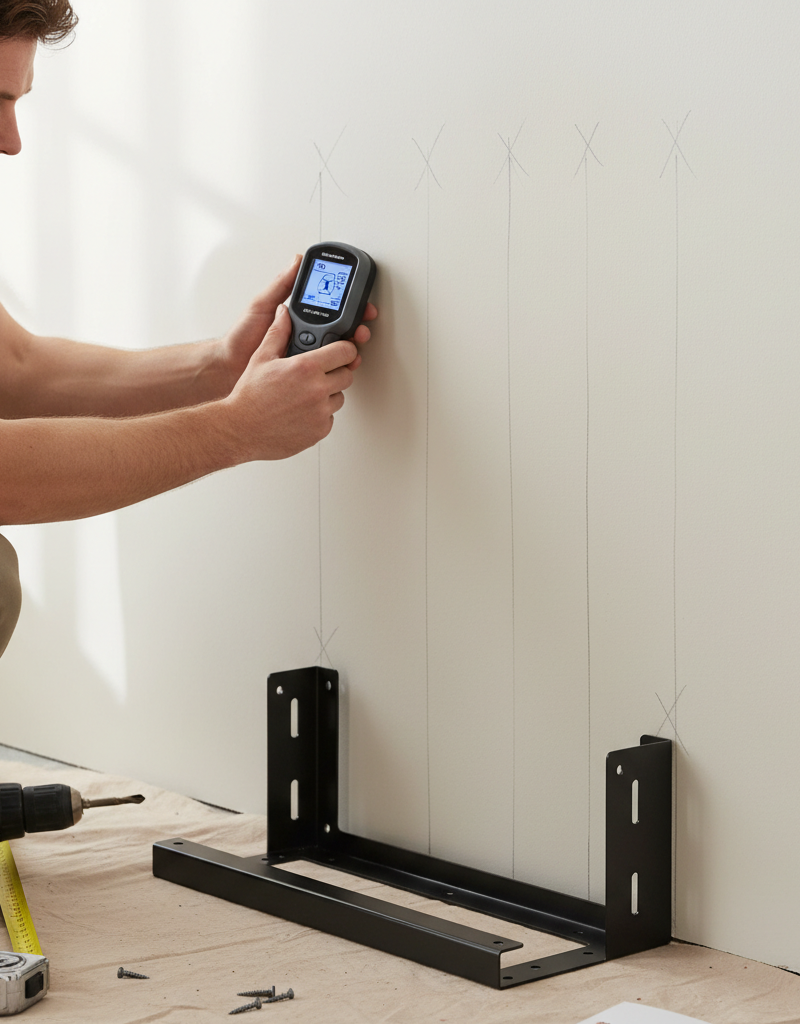
Locate Your Studs – A secure foundation is key.
- Use a reliable electronic stud finder to sweep the general area where you plan to install your shelf. Move it horizontally across the wall. Mark the edges of the studs lightly with a pencil. A good stud finder will also indicate the center. Aim to hit at least one stud, preferably two, for maximum stability.
- Tip: Sometimes, tapping the wall can help. A solid sound indicates a stud, while a hollow sound signifies open drywall. However, this is less reliable than a stud finder.
- If this doesn't work: If your stud finder gives inconsistent readings, try using a strong magnet to locate the drywall screws or nails that secure the drywall to the studs. These are usually in a vertical line down the center of the stud.
-
Mark Shelf Placement and Bracket Points – Precision prevents re-drilling.
- Hold your shelf or mounting bracket against the wall at the desired height. Use a level to ensure it's perfectly horizontal. Lightly mark the top and bottom edges of the shelf or bracket, and then mark the precise locations for each screw hole through the bracket's pre-drilled holes.
- Safety Note: Double-check for electrical wires or plumbing pipes using a non-contact voltage detector and listening for water flow before drilling, especially if drilling near outlets or plumbing fixtures.
-
Pre-Drill Pilot Holes – Guide your screws and protect your drywall.
- For stud locations: Select a drill bit slightly smaller than the diameter of your mounting screws (check the shelf instructions for recommended size). Drill pilot holes through your marks and into the center of the studs.
- For drywall-only locations: If you're using heavy-duty toggle bolts or self-drilling anchors, follow the manufacturer's instructions for the correct drill bit size. Toggle bolts typically require a larger hole to insert the toggle mechanism.
- Important: Drill straight and only as deep as necessary. Too deep can hit wires or pipes; too shallow won't allow the screw to seat properly.
-
Install Drywall Anchors (If Necessary) – Secure non-stud points with confidence.
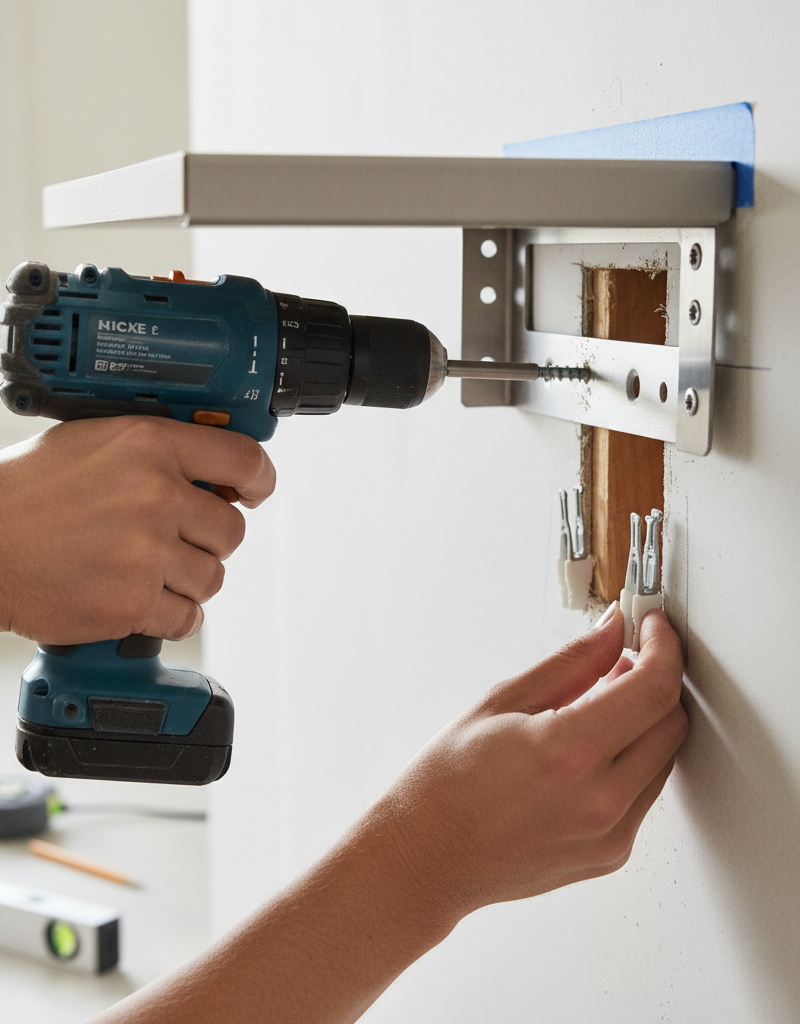
- If any of your mounting points miss a stud, install appropriate heavy-duty drywall anchors. For floating shelves, avoid simple plastic expansion anchors. Opt for robust toggle bolts (e.g., Strap Toggle, Snaptoggle) or heavy-duty self-drilling metal anchors.
- Insert the toggle bolt mechanism through the pre-drilled hole, ensuring the wings fully expand behind the drywall. Pull the plastic straps firmly until the toggle is flush against the backside of the drywall, then snap off the straps even with the wall surface.
- Screw the dedicated machine screws into the toggle, but don't tighten fully yet.
-
Mount the Floating Shelf Bracket – This is where the strength comes from.
- Align the shelf bracket with your pre-drilled holes. Insert screws into both the stud pilot holes and the installed drywall anchors.
- For screws going into studs: Drive them in securely with a drill/driver or screwdriver until the bracket is flush and firm against the wall. Do not overtighten, which can strip the wood or damage the screw head.
- For screws going into toggle anchors: Hand-tighten these screws until you feel resistance and the bracket is snug. Overtightening toggle bolts can crush the drywall and weaken the hold.
- Check: Once all screws are in, give the bracket a firm wiggle. It should feel completely solid. If there's any movement, re-evaluate your anchors or stud connections.
-
Slide on the Shelf Body – Conceal the hardware for a clean look.
- Carefully slide the floating shelf body over the installed bracket. Many shelves have a snug fit, so you may need to apply gentle, even pressure.
- Ensure the shelf is fully seated against the wall. Most floating shelves have small set screws on the bottom or side to secure the shelf body to the bracket. Tighten these with the provided Allen wrench or screwdriver.
-
Test the Load – Confirm your hard work paid off.
- Before loading the shelf with your desired items, apply some downward pressure with your hands to test its stability. Incrementally add some weight, like a few books, and observe if there's any flexing or movement.
- gradually add your decorative items or books, keeping the weight distribution as even as possible. If the shelf displays any sign of sagging or pulling away, remove the weight immediately and reassess your anchoring.
Common Causes
- Ignoring Wall Studs: This is by far the biggest culprit. Drywall offers minimal support on its own. Failure to locate and utilize wall studs for primary support points is a recipe for disaster with floating shelves.
- Using Inadequate Drywall Anchors: Simple plastic conical anchors are designed for very light loads (e.g., picture frames under 5-10 lbs). For floating shelves, which exert significant shear and pull-out forces, these anchors will fail quickly. Heavy-duty toggle bolts or self-drilling metal anchors with high weight ratings are essential for drywall-only applications.
- Overloading the Shelf: Even with proper installation into studs and adequate anchors, every shelf has a weight limit. Exceeding this limit will stress the fasteners and eventually cause failure, often leading to bowed shelves or pulled-out anchors.
- Improper Pilot Hole Sizing: Drilling a pilot hole that's too small for the screw can split the stud, reducing holding power. A pilot hole that's too large for an anchor will prevent it from gripping correctly, leading to a loose fit.
- Poorly Constructed Shelf Bracket: Some economy floating shelf brackets are made from thin metal or poorly welded components. A flimsy bracket itself can be the point of failure, regardless of how well it's anchored to the wall.
- Not Using a Level: A crooked shelf isn't just an aesthetic problem; an uneven load distribution can put undue stress on certain anchor points, hastening failure.
Common Mistakes
- Mistake: Skipping the stud finder entirely.
- Instead: Always use a reliable stud finder. Not every mounting point needs to hit a stud, but aiming for at least one or two significantly increases stability and weight capacity. Mark their centers precisely.
- Mistake: Using the wrong type of drywall anchor.
- Instead: Avoid basic plastic anchors for floating shelves. Invest in heavy-duty toggle bolts (metal or strong plastic) or robust self-drilling metal anchors specifically rated for significant weight (check the packaging for pull-out strength). These cost more but are crucial for security.
- Mistake: Overtightening screws into drywall anchors.
- Instead: Hand-tighten screws into drywall anchors until snug. Mechanical expansion anchors (like toggles) can crush the drywall if overtightened, weakening their grip. A power drill used on high torque can easily strip the drywall or the anchor itself.
- Mistake: Estimating weight capacity instead of calculating.
- Instead: Be realistic about what you'll put on the shelf. Books are surprisingly heavy (a foot of books can weigh 20-30 lbs). Factor in the shelf's own weight and then select anchors and a bracket rated well above your estimated total. When in doubt, round up significantly.
- Mistake: Installing the shelf off-level.
- Instead: Use a long level across the entire shelf or bracket during marking and installation. Even a slight tilt can be very noticeable and creates uneven stress on the mounting points.
- Mistake: Not testing the shelf's stability before fully loading.
- Instead: After installation, apply varying downward pressure by hand. Then, gradually add weight incrementally. If you notice any give, sagging, or hear creaking, stop immediately and reinforce or re-anchor.
Cost & Time Breakdown
| Task | DIY cost | Pro cost | Time |
|---|---|---|---|
| Stud finder (if needed) | $20–$50 | N/A | 5–10 minutes |
| Heavy-duty anchors (pack of 6) | $8–$15 | Included in labor | 10–20 minutes |
| Drill & bits (if needed) | $30–$80 | N/A | 10–15 minutes |
| Floating shelf itself | $20–$200+ | Included in quote | 1–2 hours |
| Total Installation | $50–$300+ | $150–$400+ | 1–2 hours |
DIY cost assumes you have basic tools like a drill and level. Pro cost includes shelf installation only, not the cost of the shelf. Time excludes shopping for the shelf. Your costs will vary significantly based on the quality and size of the floating shelf purchased. The anchors themselves are a relatively small part of the overall cost but are critical for success.
Tips & Prevention
- Choose the Right Shelf: Not all floating shelves are created equal. Look for shelves with robust, often metal, internal mounting brackets designed for substantial loads. Cheaper shelves often come with flimsy hardware.
- Pre-Plan Your Placement: Before drilling, consider the weight and size of items you will place on the shelf. Imagine the stud locations and how they align with your desired shelf length. Sometimes, adjusting the shelf length or location by a few inches can allow you to hit two studs instead of one or none.
- Use the Longest Shelf Bracket Possible: Longer brackets distribute weight over a greater area of the wall, engaging more studs or allowing for more widely spaced anchors, increasing stability.
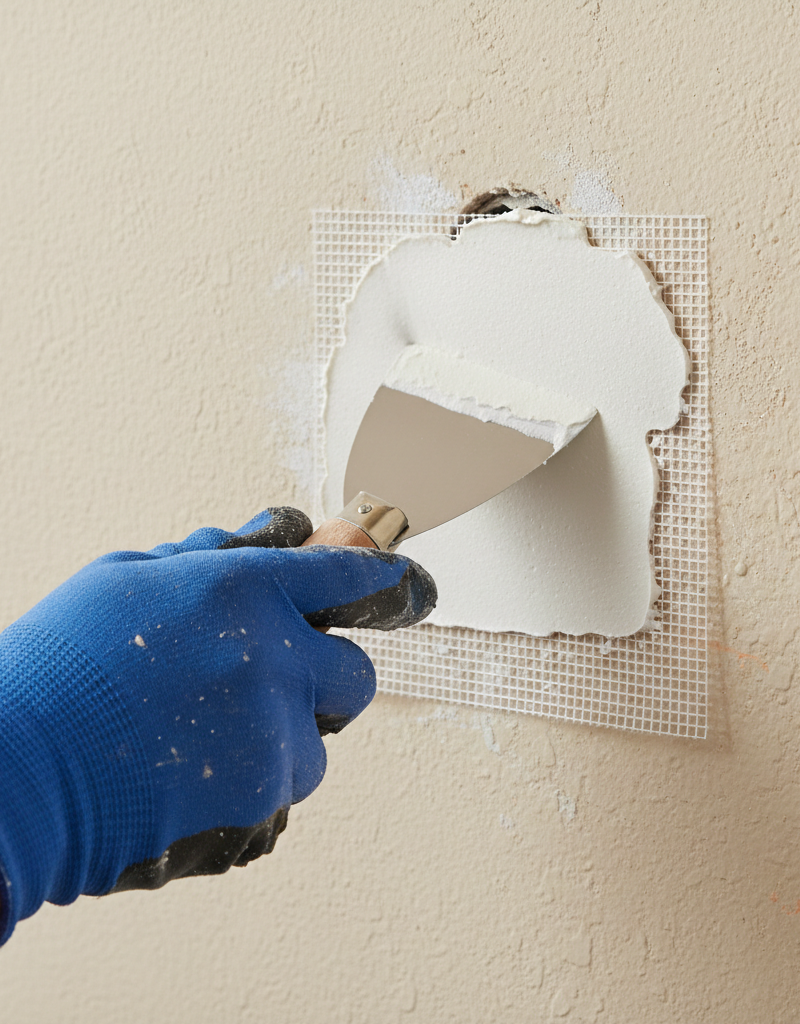
- Color-match Drywall Repair: Keep a small amount of spackling paste and touch-up paint on hand. Even with careful installation, minor scrapes or missed pilot holes can happen. Immediate repair makes them disappear.
- Regularly Check for Wobble: Periodically test your floating shelves by gently wiggling them. If you notice any movement or hear creaking, empty the shelf and retighten all screws. If the issue persists, you might need to explore stronger anchoring solutions.
- Don't Overload: Always keep the weight rating in mind. If you're displaying heavy objects, make decorative choices that prioritize safety: fewer items, lighter materials. Ceramic plates, for example, can be surprisingly heavy when stacked.
When to Call a Professional
While installing floating shelves is a common DIY task, there are specific situations where calling a licensed handyman or general contractor is the smartest and safest option. If you struggle to consistently locate wall studs, especially in older homes with irregular framing, a professional has specialized tools like boroscopes that can see behind walls to accurately map out studs and avoid hidden obstacles. If your shelf location absolutely requires mounting into a challenging area, such as directly above a window or door frame where framing might be complex, or if you suspect hidden electrical wiring or plumbing, a professional can install blocking or use specialized anchoring techniques safely. Furthermore, if you plan to install very large, heavy, or custom-built floating shelves, especially those designed to hold significant weight (e.g., a collection of cast iron cookware or a large library), the structural integrity becomes critical. A professional can ensure the wall can bear the load, potentially reinforcing the wall cavity if necessary, providing peace of mind that your investment and safety are protected.
Related Articles
Keep troubleshooting with these hand-picked guides from FixlyGuide:
- The #1 Mistake Homeowners Make Installing Floating Shelves (and How to Fix It) — Discover the crucial error many DIYers make when mounting floating shelves into drywall and learn the simple steps to ensure a secure, sag-…
- The #1 Mistake Homeowners Make Installing Floating Shelves (and How to Fix It) — Discover the crucial error most homeowners make when mounting floating shelves into drywall, leading to sagging or collapse, and learn the…
- The #1 Mistake Homeowners Make Installing Floating Shelves (and How to Fix It) — Discover the crucial mistake homeowners make installing floating shelves into drywall and learn the correct, secure method to prevent saggi…
- The #1 Mistake Homeowners Make Installing Floating Shelves (and How to Fix It) — Discover the most common error DIYers make when mounting floating shelves into drywall and how to ensure your shelves are sturdy and secure.
- The #1 Mistake Homeowners Make Installing Floating Shelves (and How to Avoid It) — Learn the proper techniques for securely installing floating shelves into drywall, avoiding common mistakes that lead to costly damage or w…
- The #1 Mistake Homeowners Make With HVAC Filters (And How Often to Really Change Them) — Discover the crucial mistake most homeowners make with HVAC filters and the specific schedule you should follow to avoid costly HVAC issues…
Should you do this yourself?
Answer five quick questions before you start. Safety outranks savings every time.
Your experience with work like this
How high do you have to work?
Does the job involve any of these?
Will it need a permit?
Specialty tools
Free and instant. Educational guidance only — not a quote, inspection, or professional diagnosis.
What should this project cost?
Enter your project details for a realistic cost range before you call anyone.
Cost depends heavily on which system turns out to be the source.
- Regional adjustment
- National average
- Labor share (typical)
- ~$1,620
- Quotes to collect
- 3 written estimates
Educational estimate based on national averages — not a binding quote. Always confirm with written local estimates.
Before you start
Check the difficulty, permits, and safety risk — then decide whether to call a pro.
- Estimate this projectGet a cost range for your scope and ZIP before you call anyone.Open
- Get local estimatesSend one request and compare written estimates from vetted pros.Open
Free, no signup required. Estimates are educational guidance, not a quote or an inspection.
Get the print-ready PDF of this guide
A clean, ad-free, printable version you can keep on your phone or pin to the workshop wall. Free with a FixlyGuide account.
- Print-optimized layout
- Tools, materials & every step included
- Saved to your account
Recommended for DIYers & woodworkers
Sponsored
The Top 20 Tools for Workshops of Any Budget
No stationary machines or power tools required — plus 3 fundamental tools that can't be bought at any price.
Get the free guide
Ted's Woodworking — The #1 Woodworking Resource
Detailed instructions, dimensioned drawings, materials & cutting lists, and 3D schematics for every skill level.
See the plansSponsored: links above are affiliate links. FixlyGuide may earn a commission on qualifying purchases — at no extra cost to you.
Frequently asked questions
Can I install floating shelves directly into drywall?+
Yes, but only with appropriate heavy-duty drywall anchors specifically rated for the weight of the shelf and its contents. Never use simple plastic anchors. It's always best to hit at least one wall stud if possible.
What kind of anchors should I use for floating shelves?+
For floating shelves in drywall where studs aren't available, you should use heavy-duty toggle bolts (like Strap Toggles or Snaptoggles) or robust self-drilling metal anchors. Check the product's weight rating carefully; it should be significantly higher than your estimated load.
How do I find studs in a wall without a stud finder?+
You can try tapping the wall (solid sound indicates a stud), looking for electrical outlets or light switches (they are often mounted on studs), or using a strong magnet to locate the drywall screws/nails that secure the drywall to the studs. However, a good electronic stud finder is the most reliable method.
How much weight can a floating shelf hold in drywall?+
The weight a floating shelf can hold in drywall depends entirely on the type and quality of the anchors used and the number of anchors. Basic plastic anchors hold very little (5-10 lbs). Heavy-duty toggle bolts can often hold 50-100 lbs or more per anchor point if installed correctly and the drywall is in good condition. Always check the anchor's specific weight rating.
My floating shelf is wobbly, what should I do?+
First, empty the shelf. Then, check all the mounting screws and tighten them. If the wobbling persists, it likely means the anchors are insufficient or have pulled loose. You'll need to remove the shelf, repair the old holes, and reinstall it using stronger anchors or by repositioning to hit a wall stud.
Discussion
Loading comments…