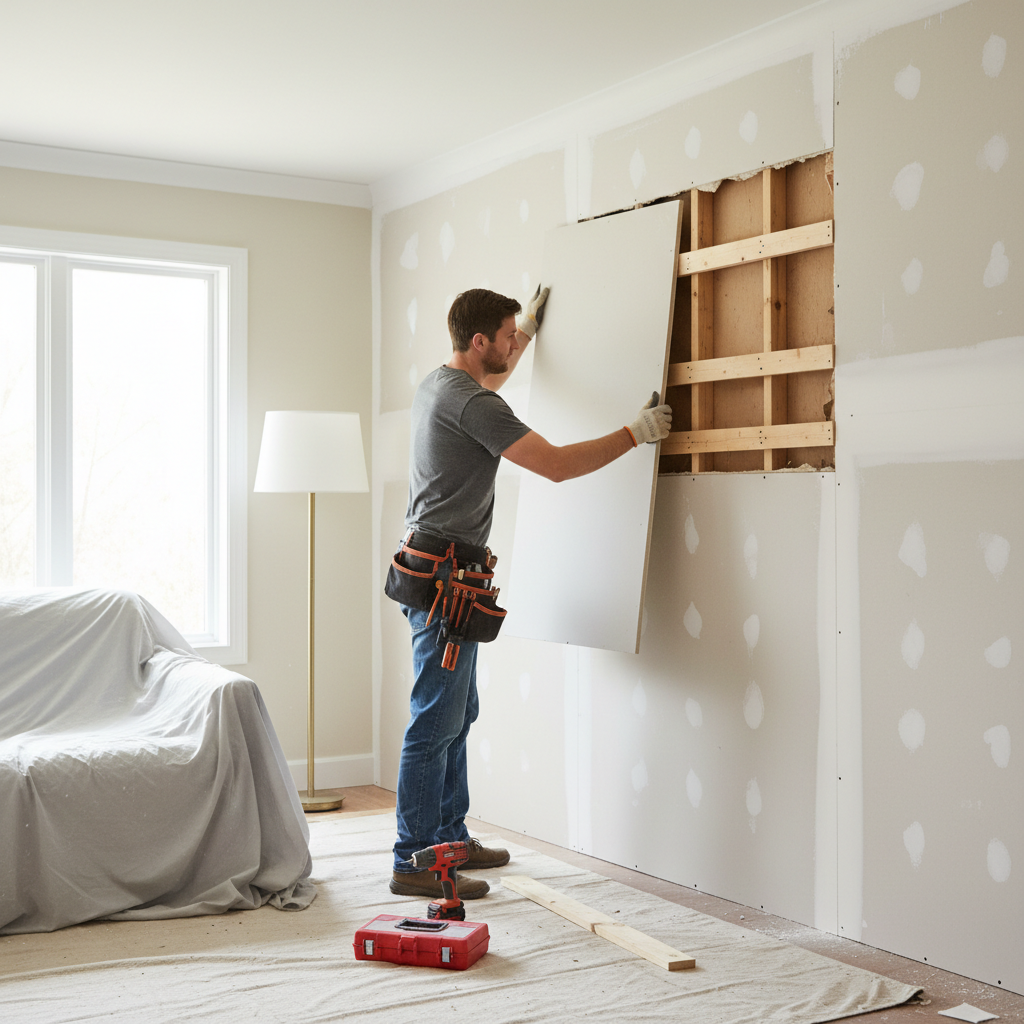
- Impact Damage: This is by far the most common cause. Moving furniture, leaning heavy objects, or accidental collisions can easily punch holes through drywall, especially in high-traffic areas like hallways or children's rooms.
- Pest Infestations: While less common, large rodents like rats can chew through drywall to create entry points or nests, leaving irregularly shaped, sizable holes.
- Renovation Mistakes: During demolitions or renovations, accidental impacts from tools, falling debris, or incorrect removal techniques can lead to significant unplanned damage.
General remodeling · Renovation planning
| Project category | General remodeling |
|---|---|
| Problem type | Renovation planning |
| Trade required | General contracting |
| Urgency | Planned project |
| Safety risk | Low safety risk |
| DIY suitability | Pro recommended |
| Cost category | Major investment |
| Typical timeline | Design and permitting often 2–4 months before work starts |
| Contractor type | General contractor |
Repair option
Phase the work and fix the building envelope first.
Replacement option
Full renovation with permits, design, and a general contractor.
Common causes
- Space no longer fits how the household lives
- Resale preparation
- Deferred maintenance stacking up
Relevant tools:project cost estimatorcompare quoteshome improvement material prices
Published June 1, 2026Last updated August 17, 2026
Tools & materials you'll need
Affiliate links- AmazonDrywall screws1 1/4 inch
- AmazonWood furring strips (1x2s or plywood scraps)approx. 4-6 linear feet
- AmazonDrywall sheets (1/2 inch or 5/8 inch)Match existing thickness, a 2x2 ft piece is usually enough
- AmazonFiberglass mesh drywall tape1 roll
- AmazonAll-purpose joint compound1 quart or 1 gallon tub
- AmazonMedium-grit sandpaper (150-grit)several sheets or sanding sponge
As an Amazon Associate FixlyGuide earns from qualifying purchases — at no extra cost to you. Prices and availability are accurate as of publication and subject to change.
Quick Answer
Repairing a large drywall hole (larger than 6 inches) effectively requires cutting a neat, larger square around the damage, creating a backer support system, cutting a new drywall patch to fit precisely, and then mudding and sanding for an invisible finish. This method ensures structural integrity and a smooth surface for painting.
The Problem
That accidental impact – perhaps from moving furniture, a playful child, or even a misguided elbow – has left a gaping maw in your drywall, far too big for a simple spackle job. We're talking about holes larger than six inches in diameter. These aren't just cosmetic blemishes; they compromise the structural integrity of the wall section and can let in drafts, pests, or even diminish your home's soundproofing. A small patch kit won't cut it, and simply globbing on joint compound will crack, sag, and ultimately fail. The challenge is to create a repair that is not only strong but also blends in so perfectly that even you forget where the damage once was.
How It Works
Large drywall hole repair, often called a "California patch" or "hot patch," relies on a few key principles to achieve an invisible repair. First, the damaged area is removed cleanly to create a uniform opening. This allows for a precise cut of a new piece of drywall. The critical component is the backing system. Unlike small patches that might use mesh or self-adhesive grids, large patches require solid support behind the new piece of drywall. This support is typically provided by wood furring strips or scrap pieces of plywood/drywall that are secured to the existing drywall from behind. These strips act as cleats, providing a surface for both the existing wall and the new patch to screw into, ensuring a flush and stable repair. Once the new drywall patch is fastened, the seams are tapered (feathered out with joint compound) and sanded smooth. The joint compound fills the tiny gaps, embeds the fiberglass mesh tape, and creates a seamless transition. The goal is to blend the new material perfectly with the old, so paint adheres uniformly across the entire surface.
Step-by-Step Fix
Safety First – Always use appropriate safety gear.
Before starting any work, put on your safety glasses, dust mask, and gloves. If working in an older home, be mindful of potential lead paint or asbestos. If you suspect either, test the area or consult a professional.
1. Square Up the Damage – Create a clean, manageable opening.
Start by using a pencil and a drywall T-square or level to draw a perfect square or rectangle around the damaged area. Make sure your lines extend into solid, undamaged drywall. The goal is to remove all the compromised material and create straight edges for an easier patch. A common mistake is to cut too small; aim for at least 1-2 inches of good drywall around the hole. For example, if your hole is 8 inches, cut a 10x10-inch square.
- Tool Tip: A sharp utility knife is essential. Make several shallow passes along your lines rather than one deep cut to avoid tearing the paper face.
- If this doesn't work: If the damage is irregular or extends into a corner, adapt your patch shape. Sometimes an L-shaped patch is easier than trying to force a rectangle into a tight spot.
2. Install Backer Supports – Create a sturdy base for your new patch.
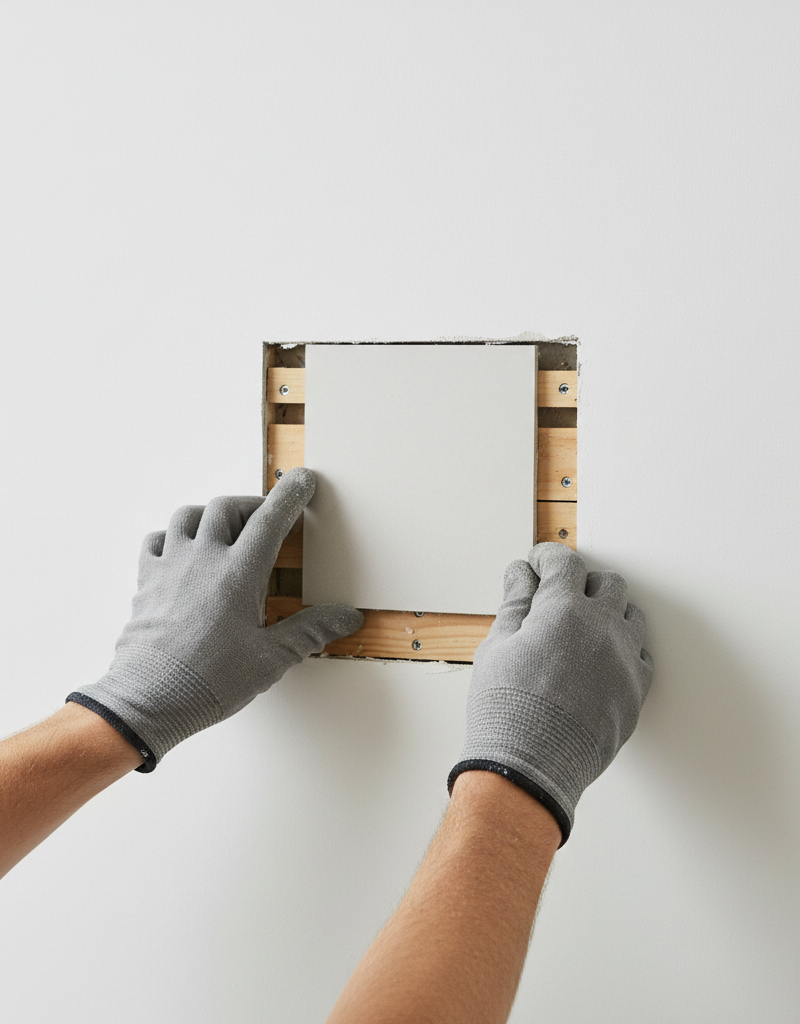
Cut two pieces of scrap wood (1x2s or plywood) roughly 6-8 inches longer than the height of your hole. Insert the first piece of wood horizontally into the hole, centering it behind the top edge of your cut-out. Secure it by drilling two drywall screws through the existing drywall and into the wood backer. Make sure the screw heads are slightly countersunk below the surface. Repeat this for the bottom edge of the hole. These backers should create a lip for your new patch to rest on and screw into. For very large patches (over 18x18 inches), you may need studs to hold the patch, or additional vertical backers.
- Material Tip: Drywall screws are specifically designed to hold drywall. Do not use wood screws or nails, as they don't provide the same holding power and can pop out.
- Important: Ensure the wood backers are flush with the back of the existing drywall so the new patch sits level.
3. Cut and Fasten the Patch – Insert your new piece of drywall.
Measure the exact dimensions of your cut-out. Transfer these measurements to a new piece of drywall and cut it precisely using your utility knife and T-square. Test-fit the patch. It should slide in snugly without forcing it. If it's too tight, shave small amounts off the edges with your utility knife until it fits perfectly. Once it fits, place the patch into the opening and secure it with drywall screws into your newly installed wood backers. Space screws every 6-8 inches along all four edges of the patch, ensuring they penetrate the wood backers.
- Pro Tip: Use a rasp or sandpaper to slightly bevel the edges of the new patch (and the existing drywall) for better joint compound adhesion.
- If you made a mistake: If the patch is too small, you'll have a gap. Fill gaps up to 1/8 inch with joint compound. For larger gaps, you may need to recut your patch or apply additional layers of compound.
4. Tape, Mud, and Sand – Achieve an invisible finish.
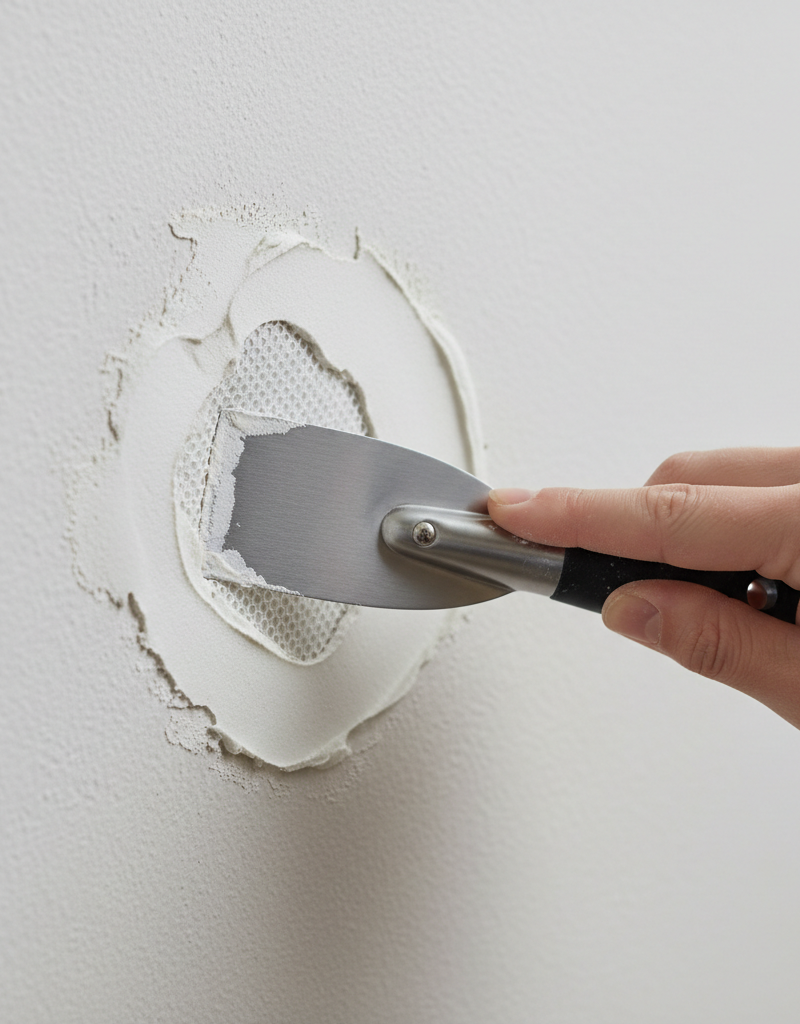
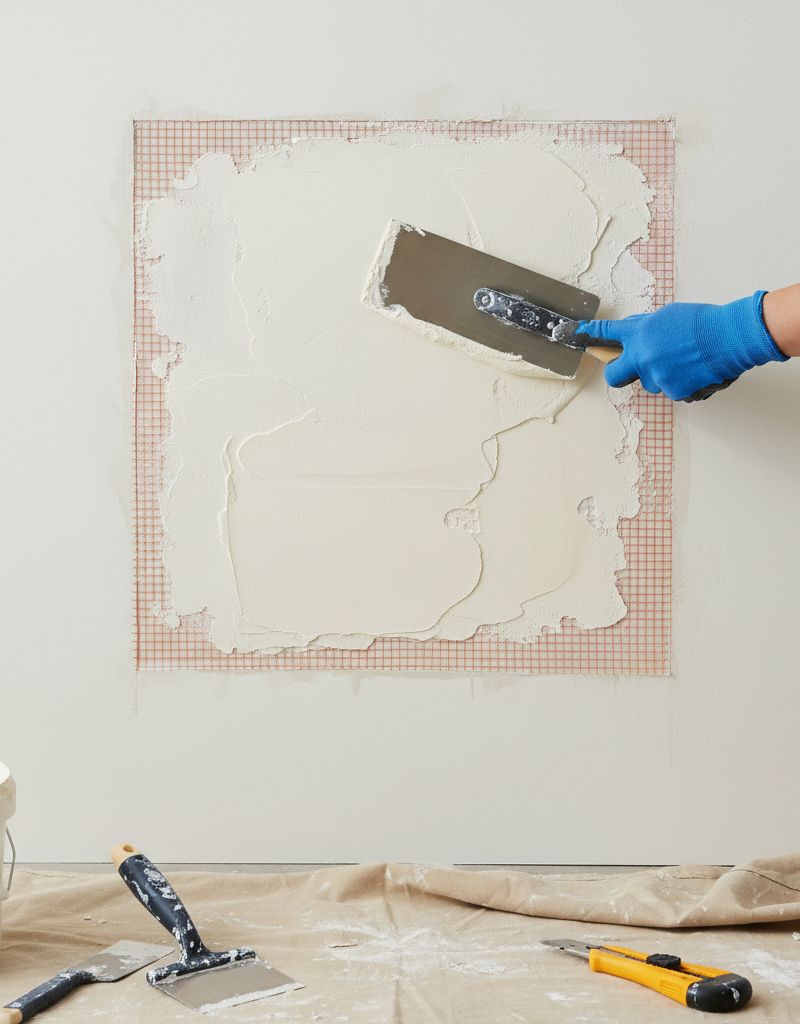
Apply self-adhesive fiberglass mesh tape over all four seams where the new patch meets the existing drywall. Press it firmly. Now, apply a thin, even coat of all-purpose joint compound over the tape, feathering it out about 2-3 inches beyond the tape lines with a 6-inch drywall knife. Let it dry completely (4-6 hours or overnight). Apply a second, wider coat (10-inch knife), feathering it out further. Let dry. For the third coat, use a 12-inch knife if available, making it as smooth and wide as possible. After the final coat is dry, lightly sand the entire patched area with 150-grit sandpaper until it's smooth and perfectly flush with the surrounding wall. Wipe away dust with a damp cloth before priming and painting.
- Technique Tip: When applying joint compound, aim for a thin, even coat. It's better to apply multiple thin coats than one thick coat, which will crack and take forever to dry.
- Common Issue: If you see any ridges or screw heads after sanding, apply a very thin fourth coat of joint compound, let it dry, and sand again.
Common Causes
- Impact Damage: This is by far the most common cause. Moving furniture, leaning heavy objects, or accidental collisions can easily punch holes through drywall, especially in high-traffic areas like hallways or children's rooms.
- Plumbing or Electrical Access: Plumbers and electricians often have to cut large holes in drywall to access pipes, wires, or junction boxes during repairs or installations. While they usually patch it, a homeowner might inherit a poorly patched or unpatched hole.
- Water Damage: Prolonged water leaks from a roof, plumbing, or overflowing fixtures can saturate drywall, making it soft and crumbly. Once the moisture is present, the weight of the water or the slightest touch can cause a large section to collapse.
- Pest Infestations: While less common, large rodents like rats can chew through drywall to create entry points or nests, leaving irregularly shaped, sizable holes.
- Renovation Mistakes: During demolitions or renovations, accidental impacts from tools, falling debris, or incorrect removal techniques can lead to significant unplanned damage.
Common Mistakes
- Not Squaring the Hole: Trying to patch an irregularly shaped hole is incredibly difficult. Always cut the hole into a perfect square or rectangle to simplify patch cutting and fitting.
- Skipping Backer Boards: Without solid wood or drywall backers, your patch will lack structural support, leading to cracks, sagging, or the patch falling out entirely over time. Don't rely solely on tape for large repairs.
- Not Countersinking Screws: If screw heads protrude even slightly, they will create bumps that show through paint. Ensure all screw heads are slightly below the surface of the drywall.
- Applying Too Much Joint Compound: Thick layers of joint compound take ages to dry, are prone to cracking, and are much harder to sand smooth. Thin, multiple coats are always better.
- Bad Taping Technique: Not using mesh tape or applying it incorrectly (e.g., bubbles under the tape) will lead to visible seams and eventual cracking of the patch.
- Insufficient Sanding: Rush sanding, or not sanding wide enough, will leave tell-tale ridges and uneven textures that become glaringly obvious once painted, especially under certain lighting.
Cost & Time Breakdown
| Task | DIY Cost | Pro Cost | Time |
|---|---|---|---|
| Tools & Materials (reusable) | $30–$60 | N/A | N/A |
| Cut Out & Install Backers | $0–$5 | ~$75–$150 | 30–60 minutes |
| Cut & Fasten Patch | $0–$10 | ~$50–$100 | 20–40 minutes |
| Tape & First Coat Mud | $5–$15 | ~$100–$200 | 45–90 minutes |
| Second & Third Coat Mud | $5–$15 | ~$150–$250 | 2–4 hours (incl. drying) |
| Sanding & Prep for Paint | $0–$5 | ~$75–$125 | 30–60 minutes |
| Total Estimate | $40–$110 | $450–$825 | 4–8 hours active + drying |
Tips & Prevention
- Measure Twice, Cut Once: This old adage is especially true for drywall patches. Precise measurements save time and frustration.
- Keep Scrap Drywall: When doing any remodeling, save any usable scraps of drywall. They are perfect for patching jobs and save you a trip to the hardware store.
- Practice on Scraps: If you're new to drywall repair, practice cutting and mudding on a scrap piece of drywall first. It helps build confidence and technique.
- Feathering is Key: The secret to an invisible patch is 'feathering' the joint compound – applying increasingly wider and thinner coats with each pass, blending seamlessly into the existing wall.
- Good Lighting: Use a bright work light positioned at an angle to the wall when sanding. This will highlight any imperfections (lumps or ridges) that you might otherwise miss.
- Use a Primer: Always prime the patched area before painting. Primer helps seal the patch, ensures uniform paint absorption, and hides slight texture differences.
When to Call a Professional
While patching a large drywall hole is a DIY-friendly task, there are specific situations where calling a licensed professional is the smarter and safer choice. If the hole is part of a much larger structural issue, such as significant water damage that has compromised the wall studs or ceiling joists, a professional can assess and address the underlying problem before patching. Similarly, if the hole exposes electrical wiring that appears damaged or gas lines, do not attempt to fix it yourself; immediately contact a licensed electrician or plumber to ensure safety and code compliance. Finally, if the damaged area is exceptionally large (e.g., an entire sheet of drywall) or if you need a level-5 smooth finish for a high-end application, a professional drywall installer has the specialized tools and experience to achieve a flawless result with greater efficiency.
Related Articles
Keep troubleshooting with these hand-picked guides from FixlyGuide:
- The 4-Inch Drywall Hole Fix: Why Spackle Alone Always Fails — Fix a small drywall hole (up to 4 inches) properly with a simple patch kit and avoid common mistakes that lead to visible repairs.
- The 15-Minute Drywall Patch Secret (No Mudding Skills Required) — Discover how to quickly and easily patch a small hole in drywall using a simple method that doesn't require advanced mudding skills.
- The #1 Mistake Homeowners Make Installing Floating Shelves (and How to Fix It) — Discover the most common error DIYers make when mounting floating shelves into drywall and how to ensure your shelves are sturdy and secure.
- The 7 Critical Mistakes Almost Everyone Makes When Painting a Room — Unlock the secrets to a flawless, professional-looking paint job by avoiding common pitfalls and mastering essential techniques for perfect…
- The 4-Step Drywall Patch Secret That Makes Large Holes Vanish — Discover how to flawlessly repair a large hole in drywall using a simple, effective method that makes the damage disappear without a trace.
- The #1 Reason Your Gutters Overflow (It's Not Clogging) — Discover the surprising true cause of overflowing gutters during heavy rain and how a simple fix can prevent costly water damage to your ho…
Should you do this yourself?
Answer five quick questions before you start. Safety outranks savings every time.
Your experience with work like this
How high do you have to work?
Does the job involve any of these?
Will it need a permit?
Specialty tools
Free and instant. Educational guidance only — not a quote, inspection, or professional diagnosis.
What should this project cost?
Enter your project details for a realistic cost range before you call anyone.
Cost depends heavily on which system turns out to be the source.
- Regional adjustment
- National average
- Labor share (typical)
- ~$1,620
- Quotes to collect
- 3 written estimates
Educational estimate based on national averages — not a binding quote. Always confirm with written local estimates.
Fixly Project Decision Box
- DIY difficulty
- Moderate
- Estimated time
- 30 minutes – half a day
- Cost level
- Moderate
Main tools / materials
- Adjustable wrench
- Plunger or drain auger
- Bucket and towels
- Thread tape
When to stop and call a pro
- Water you cannot shut off at the fixture or main
- Sewage backing up into more than one fixture
- Water near electrical panels or outlets
- Gas water heater work beyond relighting a pilot
Need professional help?
Get a Licensed PlumberRecommended for DIYers & woodworkers
Sponsored
The Top 20 Tools for Workshops of Any Budget
No stationary machines or power tools required — plus 3 fundamental tools that can't be bought at any price.
Get the free guide
Ted's Woodworking — The #1 Woodworking Resource
Detailed instructions, dimensioned drawings, materials & cutting lists, and 3D schematics for every skill level.
See the plansSponsored: links above are affiliate links. FixlyGuide may earn a commission on qualifying purchases — at no extra cost to you.
Frequently asked questions
How big of a hole can you patch in drywall?+
You can effectively patch drywall holes of almost any size, from small nail holes to large openings several feet across. For holes larger than 6 inches, you'll need to use a method that involves cutting a new patch and installing backer supports for structural integrity.
What tools do I need to patch a large drywall hole?+
You will need a utility knife, a drywall T-square or level, a drill, drywall screws, joint compound, fiberglass mesh tape, drywall knives (6-inch, 10-inch, 12-inch recommended), and sandpaper (150-grit).
Can I use spackle for a large drywall hole?+
No, spackle is only suitable for very small holes like nail or screw holes (typically 1/2 inch or less). For a large drywall hole, spackle will sag, crack, and not provide the necessary structural repair. You must use a drywall patch with joint compound.
Discussion
Loading comments…