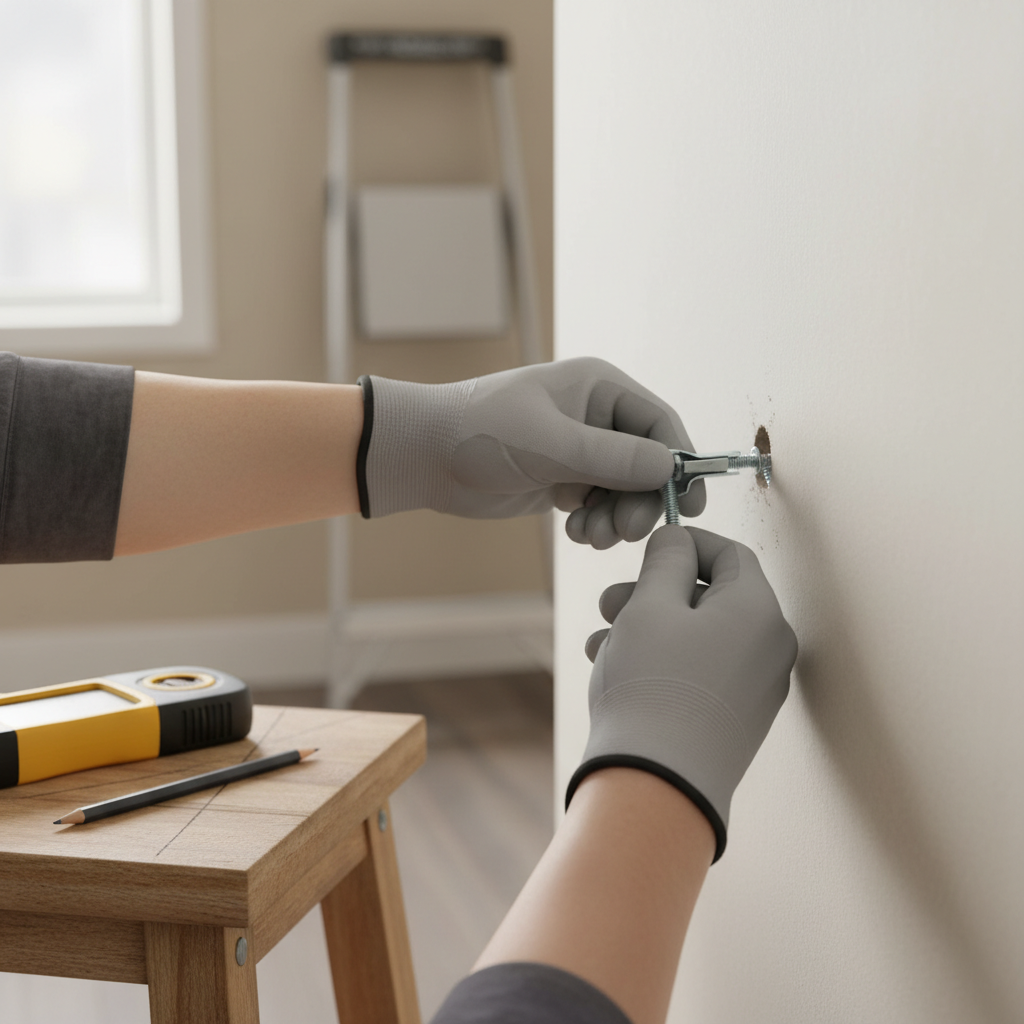
- Carefully weigh your mirror. Use a bathroom scale if available, or estimate based on its size and materials. A good rule of thumb: glass weighs about 6-7 pounds per square foot per 1/4 inch thickness. Add extra for heavy frames.
- Inspect the frame: Look for D-rings, wire, or keyhole hangers. Ensure they are securely attached to the mirror's frame and in good condition. If using wire, ensure it's heavy-gauge and properly twisted.
- Safety Note: Always handle large mirrors with care. Recruit help if necessary to avoid dropping or breaking the mirror, which can cause serious injury.
General remodeling · Renovation planning
| Project category | General remodeling |
|---|---|
| Problem type | Renovation planning |
| Trade required | General contracting |
| Urgency | Planned project |
| Safety risk | Low safety risk |
| DIY suitability | Pro recommended |
| Cost category | Major investment |
| Typical timeline | Design and permitting often 2–4 months before work starts |
| Contractor type | General contractor |
Repair option
Phase the work and fix the building envelope first.
Replacement option
Full renovation with permits, design, and a general contractor.
Common causes
- Space no longer fits how the household lives
- Resale preparation
- Deferred maintenance stacking up
Relevant tools:project cost estimatorcompare quoteshome improvement material prices
Published May 26, 2026Last updated August 17, 2026
Tools & materials you'll need
Affiliate linksAs an Amazon Associate FixlyGuide earns from qualifying purchases — at no extra cost to you. Prices and availability are accurate as of publication and subject to change.
Quick Answer
Many homeowners believe simply finding a stud or using a single heavy-duty anchor is enough for a large, heavy mirror. However, the true challenge lies in understanding and counteracting the leverage effect a heavy object exerts on the wall. The most common mistake isn't just missing a stud, but underestimating how a mirror's weight can pull out from the wall, even with an anchor rated for its static weight. The solution involves distributing the load across multiple points, ideally into studs, or using an array of appropriate drywall anchors designed for shear and pull-out strength, not just static hanging weight.
The Problem
Drywall, by itself, is a relatively weak material, essentially pulverized gypsum pressed between two sheets of paper. It offers excellent surface for paint and insulation, but very little structural integrity for bearing significant weight, especially when that weight is pulling directly away from the wall. Hanging a heavy mirror, often weighing 30 pounds or more, presents a unique challenge. A single incorrectly installed anchor, or an anchor rated for static pull but not for the dynamic stresses of leverage, can lead to the mirror slowly pulling away from the wall, creating unsightly holes, or worse, crashing down and shattering. The problem isn't just the sheer weight, but how that weight applies force – often as outward leverage rather than a straight down pull, putting immense stress on the drywall's integrity.
How It Works
When you hang a mirror, gravity pulls it downwards. If the mirror is flat against the wall, this is primarily a shear force. However, mirrors often have a depth to their frame, causing the center of gravity to be slightly away from the wall. This offset creates a lever effect. Imagine a crowbar. A small force at the end of a long crowbar can exert a huge force at the pivot point. Similarly, even a few inches of depth on a mirror frame can amplify the stress on the wall anchor, turning a downward pull into a strong outward pull. Standard picture hangers or flimsy plastic anchors are simply not designed to withstand these amplified forces. They can hold a lightweight picture frame, but for a heavy mirror, they will gradually deform the drywall, pull through, or snap.
Wall studs, typically 2x4s or 2x6s, are the structural backbone behind your drywall. They are designed to support significant loads. When you screw directly into a stud, the screw thread bites into solid wood, providing a much stronger anchor point that can resist both shear and pull-out forces. When studs aren't available at the desired hanging location, specialized drywall anchors must be used. These anchors work in various ways: some expand behind the drywall (toggle bolts, molly bolts), some grip the drywall as they are screwed in (self-drilling anchors), and some create a strong connection by expanding an internal mechanism. The key is to choose an anchor with a significantly higher weight rating than your mirror's actual weight to account for the leverage and dynamic forces.
Step-by-Step Fix
1. Assess Mirror Weight & Frame — Thoroughly understand your mirror's needs.
- Carefully weigh your mirror. Use a bathroom scale if available, or estimate based on its size and materials. A good rule of thumb: glass weighs about 6-7 pounds per square foot per 1/4 inch thickness. Add extra for heavy frames.
- Inspect the frame: Look for D-rings, wire, or keyhole hangers. Ensure they are securely attached to the mirror's frame and in good condition. If using wire, ensure it's heavy-gauge and properly twisted.
- Safety Note: Always handle large mirrors with care. Recruit help if necessary to avoid dropping or breaking the mirror, which can cause serious injury.
2. Locate Wall Studs — The most secure option for heavy items.
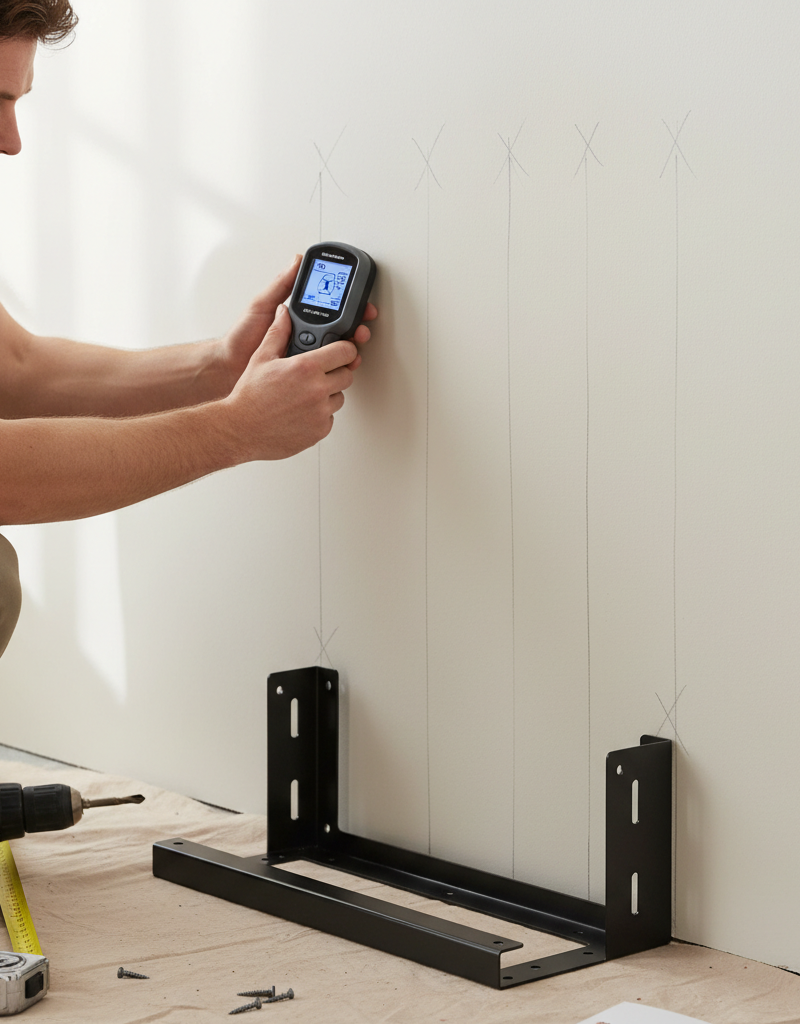
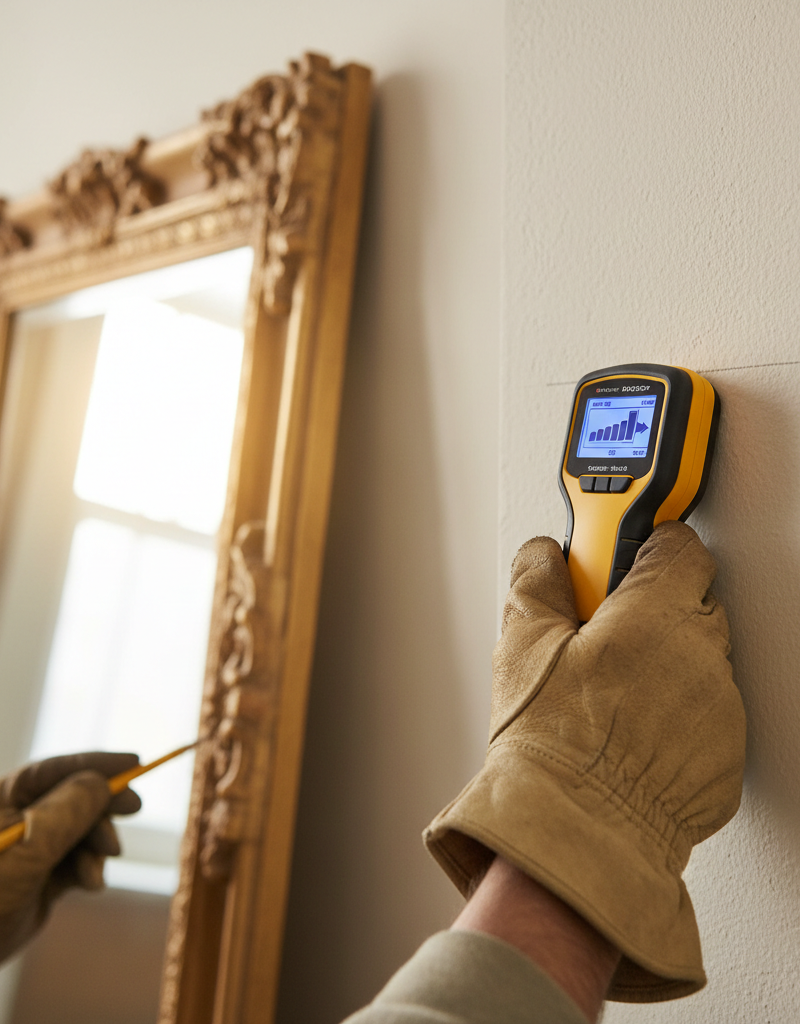
- Use a stud finder to locate at least one, and ideally two, vertical wall studs behind your drywall. Run the stud finder horizontally across the wall at the desired hanging height. Mark the edges of the studs with a pencil.
- Verify stud location by gently tapping the wall and listening for a solid sound, or by using a small nail to confirm wood behind the drywall. Use a level to draw a faint vertical line along the center of each stud you find.
- If no studs are found where desired: Proceed to step 3, focusing on heavy-duty drywall anchors. Do not attempt to use light-duty anchors for a heavy mirror in drywall alone.
3. Plan Hanging Points & Anchor Types — Crucial for load distribution.
- Measure the distance between the hanging points on your mirror (D-rings, wire, etc.). Transfer these measurements to your wall, ensuring they align with your stud marks or desired anchor positions.
- For stud mounting: Drill pilot holes slightly smaller than your screw diameter into the center of the stud marks.
- For drywall anchors (no studs): Select anchors rated for at least double your mirror's weight for each hanging point, to account for leverage and safety margin. Common robust options include toggle bolts or heavy-duty self-drilling metal anchors (like Toggler Snaptoggles or Cobra anchors). Avoid plastic expansion anchors.
- Example: For a 50 lb mirror, you'll need two anchors each rated for at least 50 lbs, totaling 100 lbs of holding power. This redundancy is key.
4. Install Anchors / Screws — Precision prevents re-dos.
- For stud mounting: Drive robust wood screws (2.5-3 inches long, #10 or #12 gauge) directly into your pilot holes in the studs. Leave enough of the screw head protruding to securely engage your mirror's hanging hardware.
- For drywall anchors: Follow the manufacturer's specific instructions. This typically involves drilling an appropriately sized pilot hole, inserting the anchor, and securing it until it's flush or engaged correctly.
- Important: Ensure all anchors are installed perfectly level and at the correct spacing. Use a level and tape measure repeatedly during this step.
5. Add Hardware & Prepare for Hanging — Double-check everything before lifting.
- If using D-rings and wire, ensure the wire is taut and centered between the D-rings. For maximum security, instead of using wire, consider hanging directly from two D-rings into two separate screws/anchors, distributing the weight more directly.
- Attach any hanging hardware to your anchors or screws on the wall. For instance, if using a French cleat system (highly recommended for very heavy mirrors), mount the wall-side cleat securely, ensuring it is perfectly level.
6. Enlist Help & Hang the Mirror — Safety in numbers.
- With the help of a second person, carefully lift the mirror into position, aligning its hanging hardware with the screws or anchors on the wall.
- Gently lower the mirror, ensuring all hanging points are fully engaged. Have one person guide the bottom of the mirror while the other aligns the top.
- Check for Security: Gently pull on the bottom corners of the mirror to ensure it feels firmly attached to the wall and does not wobble.
7. Fine-Tune Leveling — The finishing touch.
- Once the mirror is hung, use a level to double-check its horizontal alignment. Make minor adjustments as needed by slightly shifting the mirror on its hanging points or by adjusting the tightness of screw hooks if applicable.
Common Causes
- Under-rated Anchors: Using plastic anchors or small nails for heavy items. These are simply not designed for the weight and leverage of a substantial mirror.
- Missing Studs: Not bothering to locate studs, or assuming drywall anchors alone are always sufficient for any weight.
- Single Point Hanging: Relying on a single hook or anchor, which concentrates all the stress onto one small area of drywall, making failure more likely.
- Incorrect Anchor Installation: Failing to follow manufacturer instructions for specialized anchors, leading to improper expansion or engagement within the drywall.
- Ignoring Leverage: Not accounting for the mirror's depth and how it creates an outward pulling force on the top of the hanging point, even with adequate downward holding capacity.
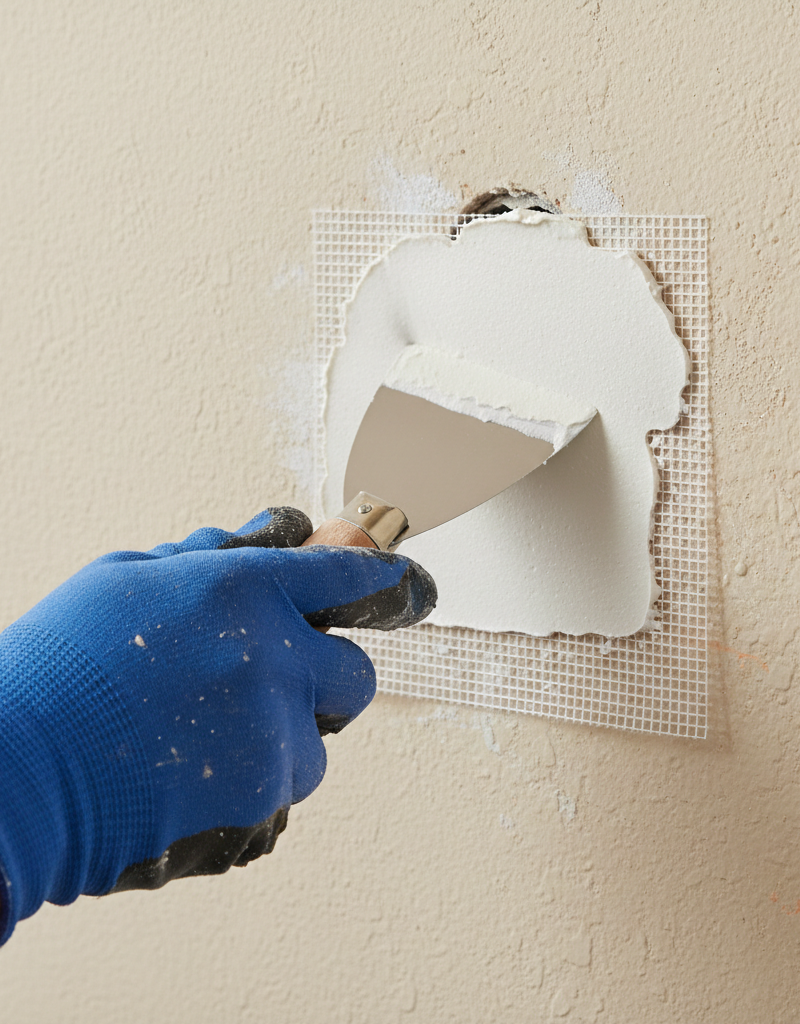
- Damaged Drywall: Hanging a heavy mirror in an area with pre-existing drywall damage, which further compromises its ability to hold weight.
Common Mistakes
- Using a Nail for Anything Over 10 lbs: Never use a standard picture-hanging nail for a heavy mirror. They are designed for lightweight items and will bend, pull out, or damage drywall under stress.
- Assuming All Drywall Anchors Are Equal: Plastic conical anchors are generally for very light items (under 10 lbs). Heavy mirrors require toggle bolts, Molly bolts, or robust self-drilling metal anchors, correctly sized and rated.
- Eyeballing Leveling: Trusting your eyes for level placement. Even a slightly crooked mirror will look amateurish and can create uneven stress on hanging points. Always use a spirit level or laser level.
- Drilling Without Checking for Wires/Pipes: Before drilling, especially near outlets or plumbing fixtures, use a stud finder with AC detection or consider a wall scanner to avoid hitting electrical wires or water pipes. Damaging these can be dangerous and costly.
- Not Weighing the Mirror: Guessing the weight is a recipe for disaster. An accurate weight measurement is critical for selecting the correct anchors and hardware.
- Ignoring the Back of the Mirror: Failing to inspect existing mirror hanging hardware for security. Old, rusty, or flimsy D-rings/wire should be replaced before hanging.
Cost & Time Breakdown
| Task | DIY cost | Pro cost | Time |
|---|---|---|---|
| Stud Finder | $20–$50 | N/A | 0 |
| Heavy-Duty Drywall Anchors | $10–$25 | Included | 10–20 min |
| Wood Screws | $5–$10 | Included | 0 |
| Drill & Bits | $0–$50 | Included | 0 |
| Total (DIY if buying tools) | $35–$135 | $100–$250+ | 30–60 min |
| Total (DIY with existing tools) | $15–$35 |
Pro costs typically include their labor, travel, and materials for hanging one or more mirrors.
Tips & Prevention
- Overestimate, Don't Underestimate: Always round up when estimating mirror weight and choose anchors rated for significantly more than the mirror's actual weight. This provides a crucial safety margin.
- Use Two Mounting Points: Whenever possible, use two separate hanging points (screws into studs, or two heavy-duty anchors). This distributes the weight and reduces stress on any single point.
- French Cleats for Very Heavy Mirrors: For mirrors over 75 lbs or those with intricate frames, a French cleat system offers superior security. It distributes weight across a long horizontal plane into multiple studs or anchors.
- Test the Installation: After hanging, gently but firmly tug on the bottom corners of the mirror without pulling it forward. It should feel absolutely solid and not shift or creak.
- Regular Checks: Periodically (e.g., annually) check the mirror's stability. Look for any signs of drywall bulging, anchors appearing to loosen, or the mirror subtly tilting.
- Consider Mirror Placement: Avoid hanging very heavy mirrors directly above beds or areas where people frequent, purely as a precaution, even with proper installation.
When to Call a Professional
While hanging a heavy mirror can be a satisfying DIY project, there are clear instances when a professional is the safer and smarter choice. If your mirror is exceptionally large or heavy (over 75-100 lbs), or if its placement requires navigating complex wall conditions (e.g., plaster and lath walls, walls with unknown internal structures, or precise alignment with architectural features), a professional installer or handyman is highly recommended. They have the specialized tools, experience, and liability insurance to ensure a secure, damage-free installation. You should also call a pro if you're uncomfortable using power tools, can't locate studs, or simply don't have the physical strength or a second helper to lift and position the mirror safely. An experienced professional can also advise on the best hanging methods for your specific wall type and mirror, preventing costly mistakes and potential injury from a falling mirror.
Related Articles
Keep troubleshooting with these hand-picked guides from FixlyGuide:
- The #1 Mistake Hanging a Heavy Mirror on Drywall (and a $5 Fix) — Avoid costly damage by learning the common mistake homeowners make when hanging heavy mirrors on drywall and how to fix it with a simple, i…
- The 3 Drywall Anchors That Will NEVER Fail Your Heavy Mirror (And 2 to Avoid) — Safely hanging a heavy mirror on drywall requires choosing the right anchors and proper installation to prevent frustrating falls and damag…
- The #1 Mistake Homeowners Make Installing Floating Shelves (and How to Fix It) — Discover the most common error DIYers make when mounting floating shelves into drywall and how to ensure your shelves are sturdy and secure.
- The #1 Mistake Homeowners Make Installing Floating Shelves (and How to Fix It) — Discover the crucial error many DIYers make when mounting floating shelves into drywall and learn the simple steps to ensure a secure, sag-…
- The 3 Common Floating Shelf Mistakes That Lead to Wall Damage — Learn the critical mistakes homeowners make when installing floating shelves into drywall and how to avoid them for a secure, lasting mount.
- The 3 Hidden Reasons Your Baseboards Are Pulling Away (And How to Fix It FAST) — Don't ignore separating baseboards—they’re not just an eyesore. Learn the surprising culprits behind the gaps and how to permanently fix th…
What should this project cost?
Enter your project details for a realistic cost range before you call anyone.
Cost depends heavily on which system turns out to be the source.
- Regional adjustment
- National average
- Labor share (typical)
- ~$1,620
- Quotes to collect
- 3 written estimates
Educational estimate based on national averages — not a binding quote. Always confirm with written local estimates.
Recommended for DIYers & woodworkers
Sponsored
The Top 20 Tools for Workshops of Any Budget
No stationary machines or power tools required — plus 3 fundamental tools that can't be bought at any price.
Get the free guide
Ted's Woodworking — The #1 Woodworking Resource
Detailed instructions, dimensioned drawings, materials & cutting lists, and 3D schematics for every skill level.
See the plansSponsored: links above are affiliate links. FixlyGuide may earn a commission on qualifying purchases — at no extra cost to you.
Frequently asked questions
What kind of anchors do I need for a heavy mirror on drywall?+
For heavy mirrors (over 20-25 lbs) on drywall without studs, you need heavy-duty anchors like toggle bolts, Molly bolts, or robust self-drilling metal anchors. Always choose anchors rated for at least double your mirror's actual weight to account for leverage and safety.
Can I hang a 50 lb mirror on drywall?+
Yes, you can hang a 50 lb mirror on drywall, but it requires the correct approach. You must use multiple heavy-duty drywall anchors (like toggle bolts or Snaptoggles) rated for at least 50 lbs each, so their combined capacity far exceeds the mirror's weight, or ideally, secure it directly into wall studs.
How do you hang a heavy mirror evenly?+
To hang a heavy mirror evenly, first measure the distance between the mirror's hanging points. Transfer these measurements precisely to your wall, ensuring your marked points are perfectly level using a spirit or laser level. Drill pilot holes or install anchors at these exact, level marks before lifting the mirror.
Should I use a French cleat for a heavy mirror?+
Yes, a French cleat system is an excellent choice for very heavy mirrors (especially over 75 lbs or those with awkward shapes). It distributes the weight horizontally across a wider area of the wall, often into multiple studs, providing superior security and making installation easier.
What if I can't find a stud where I want to hang the mirror?+
If you can't find a stud in your desired mirror location, you must rely on heavy-duty drywall anchors. Do not use flimsy plastic anchors. Instead, opt for strong toggle bolts, Molly bolts, or substantial self-drilling metal anchors, ensuring each anchor's weight rating individually exceeds half of your mirror's weight.
Discussion
Loading comments…