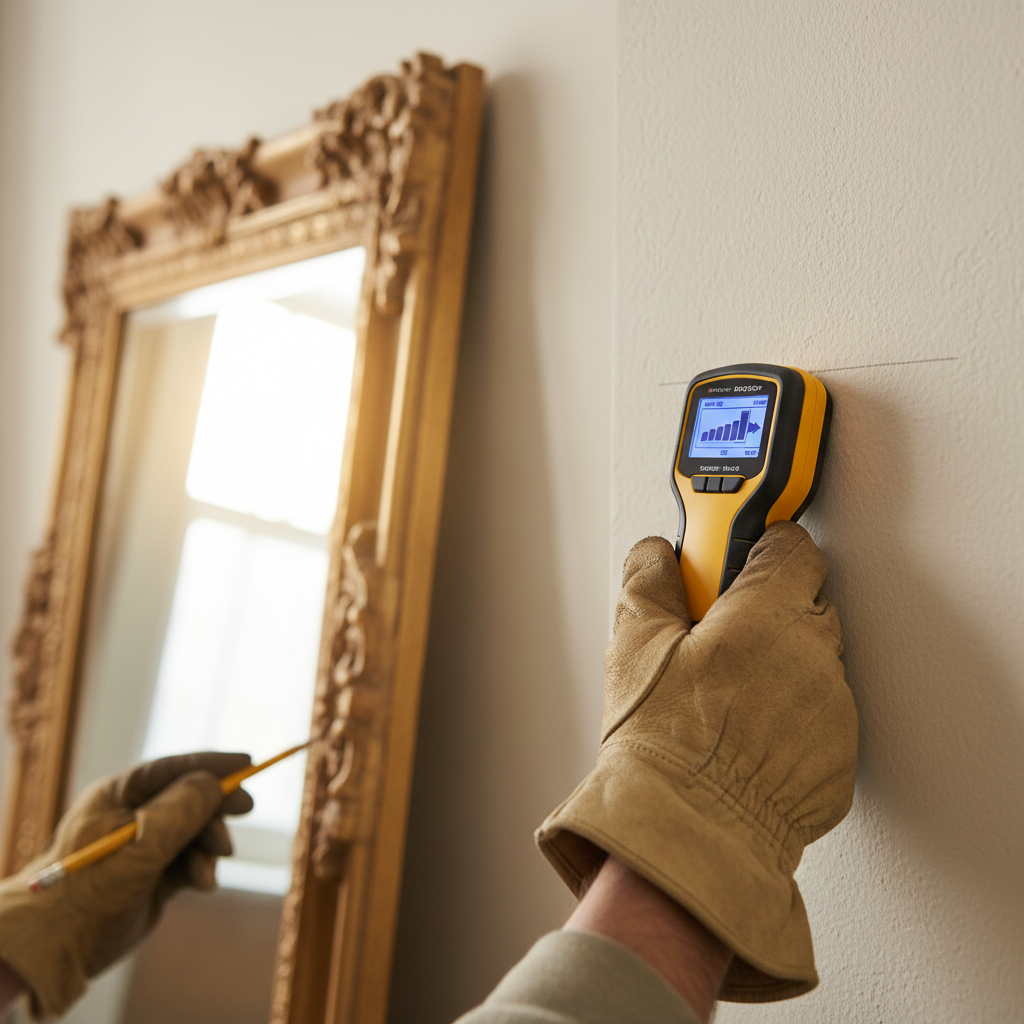
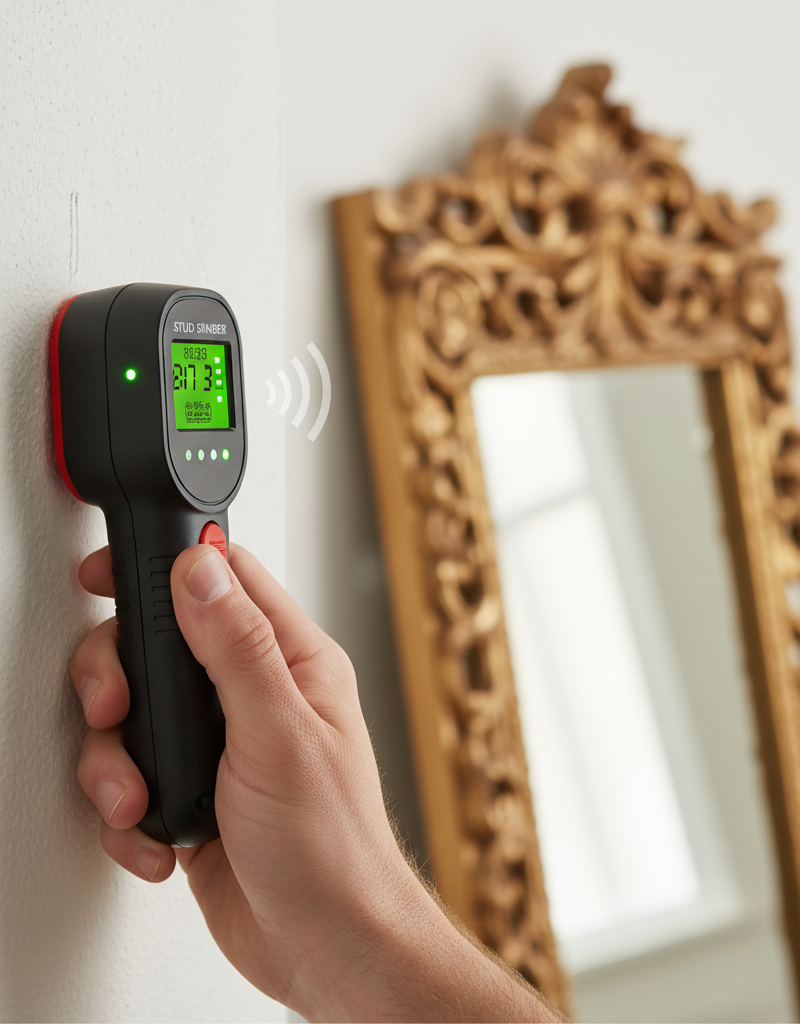
- Use a reliable stud finder to scan the wall horizontally along the desired hanging height. Mark the edges of any detected studs with a pencil. Studs are typically 1.5 inches wide.
- If you don't have a stud finder, you can often locate studs by knocking on the wall (a solid sound indicates a stud, hollow indicates open drywall) or by looking for electrical outlets and light switches, which are usually mounted to studs.
- If a stud is perfectly aligned: You've hit the jackpot. Mark the exact center of the stud for optimal screw placement. Proceed to step 4.
General remodeling · Renovation planning
| Project category | General remodeling |
|---|---|
| Problem type | Renovation planning |
| Trade required | General contracting |
| Urgency | Planned project |
| Safety risk | Low safety risk |
| DIY suitability | Pro recommended |
| Cost category | Major investment |
| Typical timeline | Design and permitting often 2–4 months before work starts |
| Contractor type | General contractor |
Repair option
Phase the work and fix the building envelope first.
Replacement option
Full renovation with permits, design, and a general contractor.
Common causes
- Space no longer fits how the household lives
- Resale preparation
- Deferred maintenance stacking up
Relevant tools:project cost estimatorcompare quoteshome improvement material prices
Published July 22, 2026Last updated August 17, 2026
Tools & materials you'll need
Affiliate links- AmazonStud finderElectronic stud finder
- AmazonPencil
- AmazonMeasuring tape
- AmazonLevelAt least 24 inches long for larger mirrors
- AmazonDrill/driver
- AmazonDrill bit setVarious sizes to match anchor instructions
- AmazonNon-contact voltage testerFor checking electrical wires
- AmazonHelperCrucial for lifting and leveling heavy mirrors
As an Amazon Associate FixlyGuide earns from qualifying purchases — at no extra cost to you. Prices and availability are accurate as of publication and subject to change.
Quick Answer
To safely hang a heavy mirror on drywall, you must either secure it directly into a wall stud or use appropriate heavy-duty drywall anchors if a stud isn't accessible at your desired location. Standard picture hangers or small screws driven directly into drywall paper and gypsum core will fail under the weight of a heavy mirror, leading to damage. Always verify the anchor's weight rating and consider using multiple secure points for larger, heavier pieces.
The Problem
You've found the perfect spot for that stunning, heavy mirror – perhaps a decorative piece weighing 30 pounds, or a full-length mirror tipping the scales at 70 pounds. The problem arises when you attempt to hang it directly onto what seems like solid drywall, only to find that standard picture hangers or small screws don't provide the necessary grip. The drywall, a relatively soft material, cannot bear significant weight on its own. Attempting to do so often results in the mirror pulling away from the wall, leaving unsightly holes, and risking the mirror crashing down, potentially causing injury or costly destruction. Many homeowners discover this issue only after the fact, when their cherished decor hits the floor.
How It Works
Drywall, also known as gypsum board, is composed of a gypsum plaster core pressed between two sheets of heavy paper. It's an excellent surface for finishing walls but has limited structural integrity when it comes to supporting concentrated weight. The strength of a wall comes from its framing – typically wooden studs (2x4s or 2x6s) spaced 16 or 24 inches on center behind the drywall.
When you drive a screw or nail directly into drywall without hitting a stud, the fastener is only gripping the relatively thin paper and the crumbly gypsum core. Any significant pulling force, such as the weight of a heavy mirror, will cause the fastener to tear through the drywall, creating a larger hole and compromising the mounting point. This is why standard picture hangers are designed for lighter objects (usually under 20-30 pounds, depending on the hanger type and number of fastening points) that distribute their weight more broadly or have multiple small fasteners. For heavy objects like mirrors that often concentrate their weight at one or two top hanging points, direct drywall attachment is a recipe for disaster.
Effective hanging relies on transferring the mirror's load to a strong, load-bearing part of the wall. The ideal method is to fasten directly into a wooden stud. Studs are vertical lumber pieces that frame the walls, providing solid wood for screws to bite into, offering maximum holding power. If a stud isn't precisely where you need it, specialized heavy-duty drywall anchors act as a bridge. These anchors work by expanding or toggling behind the drywall, distributing the weight over a larger surface area or creating a mechanical lock that prevents pull-out, significantly increasing the weight capacity compared to a simple screw in gypsum.
Step-by-Step Fix
1. Assess Mirror Weight & Hanging Hardware – Understand your mirror's specific needs.
- Carefully read the mirror's packaging or weigh it manually (stand on a scale holding the mirror, then subtract your weight). This determines the minimum weight capacity required for your hanging solution.
- Examine the mirror's existing hanging hardware. Does it have D-rings, a French cleat, a wire, or keyhole slots? D-rings and French cleats offer robust direct attachment points, while a wire requires more careful consideration of its strength and how it distributes weight.
- Safety Note: Always lift heavy mirrors with a helper to avoid back strain or dropping the mirror.
2. Locate Wall Studs – Find hidden structural support.
- Use a reliable stud finder to scan the wall horizontally along the desired hanging height. Mark the edges of any detected studs with a pencil. Studs are typically 1.5 inches wide.
- If you don't have a stud finder, you can often locate studs by knocking on the wall (a solid sound indicates a stud, hollow indicates open drywall) or by looking for electrical outlets and light switches, which are usually mounted to studs.
- If a stud is perfectly aligned: You've hit the jackpot. Mark the exact center of the stud for optimal screw placement. Proceed to step 4.
3. Choose the Right Drywall Anchor (If No Stud) – Select anchors based on weight and mirror type.
- For mirrors 20-50 lbs: Good options include heavy-duty self-drilling anchors (ensure they are rated for the mirror's weight or more) or standard plastic expansion anchors with a high weight rating. For better security, consider toggle bolts.
- For mirrors 50-100+ lbs: Toggle bolts (spring-wing or strap-style) or heavy-duty molly bolts are generally the most secure options for drywall. French cleat hanging systems, which distribute weight over a wider area with multiple screws, are also excellent here and often utilize toggle bolts.
- Ensure the chosen anchor's stated weight rating is at least double the actual weight of your mirror to account for static load, minor impacts, and uneven weight distribution.
- If this doesn't work: If you're unsure about the anchor's capacity or the wall's integrity, err on the side of caution and opt for a professional installation, especially for very expensive or fragile mirrors.
4. Mark Hanging Points and Pre-Drill – Prepare for installation.
- Hold the mirror up to the wall, have a helper verify the height and level, and mark the exact points where the hanging hardware will attach to the wall. For a wire, mark two points equidistant from the center where the wire will rest on hooks.
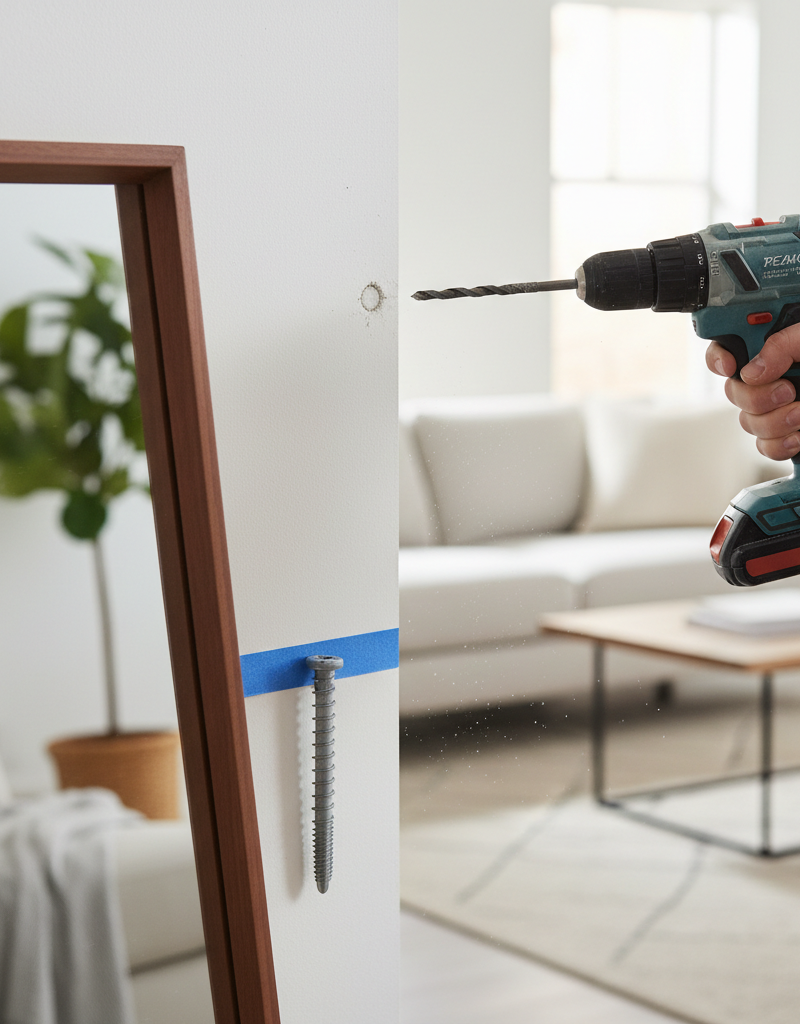
- Using a drill, pre-drill pilot holes. The drill bit size for studs should be slightly smaller than the screw shank (the part without threads). For drywall anchors, follow the manufacturer's specific instructions for drill bit size – it's crucial for the anchor to seat correctly.
- Safety Note: Before drilling, use a non-contact voltage tester to check for live wires behind your marked spots, especially near outlets or switches. Avoid plumbing pipes by sticking to standard stud spacing and avoiding areas directly above/below sinks.
5. Install Mounting Hardware (Studs or Anchors) – Secure the chosen hardware.
- For studs: Drive appropriate length screws (at least 1.5 inches for good bite into a 2x4) directly into the pilot holes in the stud. Use multiple screws if your mirror's hardware allows for it (e.g., a French cleat).
- For drywall anchors: Insert the anchors according to manufacturer instructions. This often involves gently tapping them in, expanding them with a screw, or pushing a toggle bolt's wings through the hole and letting them spring open. Ensure they are flush and secure.
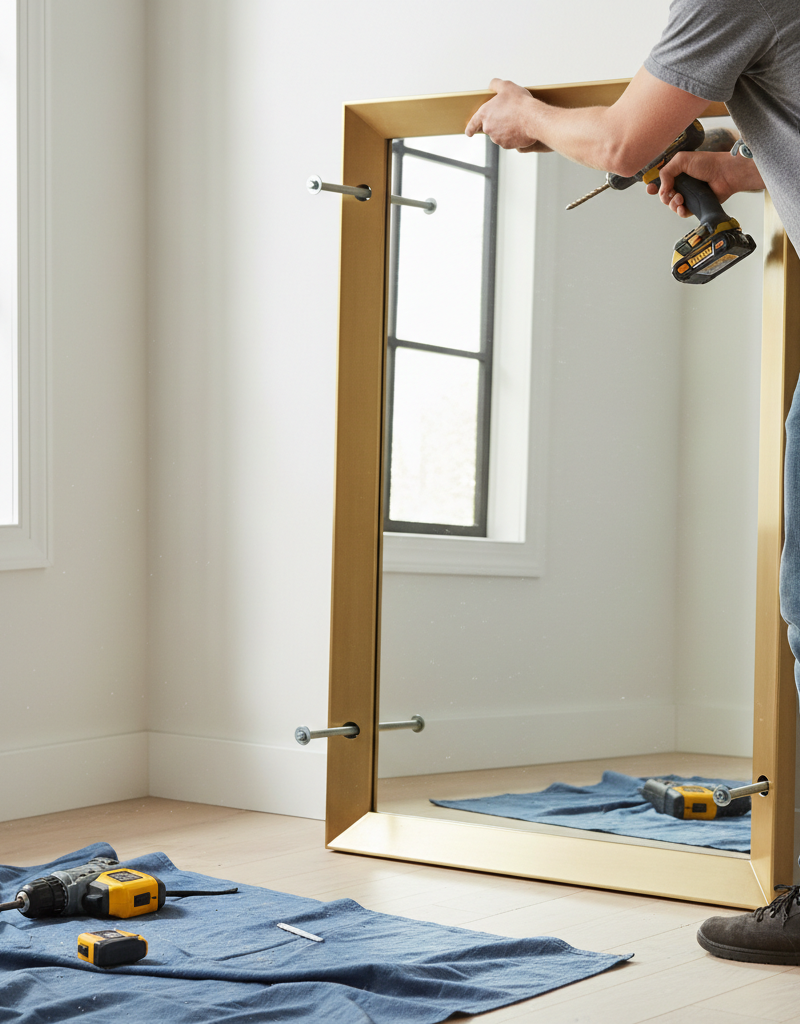
- Attach the mirror hanging hardware (e.g., picture hooks, D-ring hangers, cleat receivers) to the installed screws or anchors.
6. Hang the Mirror and Test Security – Final check for stability.
- With a helper, carefully lift the mirror and align its hanging hardware with the installed wall mounts.
- Gently lower the mirror onto the hooks/cleats. If using a wire, ensure it is centered on the hooks.
- Once the mirror is in place, gently push down and slightly wiggle the mirror to confirm it feels secure and doesn't shift or creak. Listen for any signs of instability.
- Use a level to ensure the mirror is perfectly straight.
- If this doesn't work: If the mirror feels loose, tilts, or you hear cracking sounds, immediately take it down. Re-evaluate your anchor choice, installation, or consider relocating to a stud. Do not leave a precariously hung mirror.
Common Causes
- Underestimating Mirror Weight: Homeowners often misjudge how heavy a large mirror truly is, leading them to use inadequate hanging hardware. A decorative frame adds significant weight.
- Ignoring Wall Studs: Failing to locate and utilize wall studs, which are the strongest points in a drywall wall, is the most frequent cause of mirror mishaps.
- Using Standard Picture Hangers for Heavy Items: While convenient for lighter frames, small nails or thin picture hooks designed for plaster or light artwork are completely insufficient for heavy mirrors on drywall.
- Incorrect Drywall Anchor Selection: There's a vast range of drywall anchors, many of which are designed for light-duty applications (e.g., small picture frames, lightweight shelves). Using the wrong type, or an anchor with an insufficient weight rating, is a common error.
- Improper Anchor Installation: Drywall anchors must be installed precisely according to manufacturer specifications. Over-tightening, under-tightening, or using the wrong drill bit size can severely reduce their holding power.
- Reliance on a Single Point of Attachment: Large or heavy mirrors should ideally have multiple points of attachment to distribute the weight and prevent rotation or stress on a single anchor. Mirrors with a single wire hanger can put immense strain on the center point.
Common Mistakes
- Mistake #1: Guessing where studs are. Instead: Always use a stud finder or reliable methods to verify stud locations. Guessing can lead to unnecessary holes and a flimsy installation.
- Mistake #2: Over-tightening drywall screws. Instead: Stop turning the screw when the anchor feels snug and secure. Over-tightening can strip the anchor from the drywall or deform the anchor, reducing its holding strength.
- Mistake #3: Using the wrong drill bit size for anchors. Instead: Carefully read the anchor's instructions. A hole that's too small won't allow the anchor to fully insert; a hole that's too large will prevent the anchor from expanding or gripping effectively.
- Mistake #4: Hanging a very wide mirror with only a center wire on a single anchor. Instead: For wide mirrors (over 24-36 inches), even with a wire, use two widely spaced hooks/anchors to support the wire, distributing the load and preventing sway. French cleats are ideal for wide, heavy pieces.
- **Mistake #5: Assuming all
Related Articles
Keep troubleshooting with these hand-picked guides from FixlyGuide:
- The #1 Mistake Hanging a Heavy Mirror on Drywall (and a $5 Fix) — Avoid costly damage by learning the common mistake homeowners make when hanging heavy mirrors on drywall and how to fix it with a simple, i…
- The #1 Drywall Mistake When Hanging a Heavy Mirror (And How to Avoid Disaster) — Avoid costly damage and safely hang a heavy mirror on drywall by understanding the critical mistake many homeowners make and how to prevent…
- The 3 Drywall Anchors That Will NEVER Fail Your Heavy Mirror (And 2 to Avoid) — Safely hanging a heavy mirror on drywall requires choosing the right anchors and proper installation to prevent frustrating falls and damag…
- The #1 Mistake Homeowners Make Installing Floating Shelves (and How to Fix It) — Discover the crucial error many DIYers make when mounting floating shelves into drywall and learn the simple steps to ensure a secure, sag-…
- The 3 Hidden Mistakes That Make Floating Shelves Sag (and How to Fix Them) — Prevent floating shelves from sagging in drywall by avoiding common installation mistakes and using the right anchors and techniques.
- The #1 Mistake When Fixing Baseboards That Pull Away From Walls — Discover the crucial mistake homeowners make when reattaching baseboards and how to properly secure them for a lasting fix.
Should you do this yourself?
Answer five quick questions before you start. Safety outranks savings every time.
Your experience with work like this
How high do you have to work?
Does the job involve any of these?
Will it need a permit?
Specialty tools
Free and instant. Educational guidance only — not a quote, inspection, or professional diagnosis.
What should this project cost?
Enter your project details for a realistic cost range before you call anyone.
Cost depends heavily on which system turns out to be the source.
- Regional adjustment
- National average
- Labor share (typical)
- ~$1,620
- Quotes to collect
- 3 written estimates
Educational estimate based on national averages — not a binding quote. Always confirm with written local estimates.
Before you start
Check the difficulty, permits, and safety risk — then decide whether to call a pro.
- Estimate this projectGet a cost range for your scope and ZIP before you call anyone.Open
- Get local estimatesSend one request and compare written estimates from vetted pros.Open
Free, no signup required. Estimates are educational guidance, not a quote or an inspection.
Recommended for DIYers & woodworkers
Sponsored
The Top 20 Tools for Workshops of Any Budget
No stationary machines or power tools required — plus 3 fundamental tools that can't be bought at any price.
Get the free guide
Ted's Woodworking — The #1 Woodworking Resource
Detailed instructions, dimensioned drawings, materials & cutting lists, and 3D schematics for every skill level.
See the plansSponsored: links above are affiliate links. FixlyGuide may earn a commission on qualifying purchases — at no extra cost to you.
Frequently asked questions
What is the best way to hang a heavy mirror on drywall without a stud?+
The best way to hang a heavy mirror on drywall without a stud is to use heavy-duty drywall anchors specifically designed for significant weight. Options like toggle bolts (spring-wing or strap-style) or heavy-duty molly bolts provide excellent holding power by expanding or locking behind the drywall. Always choose anchors rated for at least double your mirror's weight.
How do I know if my mirror is too heavy for drywall anchors?+
You should check the mirror's weight and compare it to the specific weight rating of the drywall anchors you plan to use. If your mirror weighs more than 50-75 pounds, or if you're using cheaper, smaller anchors, it's safer to either locate a stud or use a French cleat system with multiple heavy-duty anchors to distribute the load.
Can I use command strips for a heavy mirror?+
No, Command strips are generally not recommended for truly heavy mirrors. While some heavy-duty Command strips exist, they rely on adhesive and are best suited for lighter framed items or mirrors with a very flat, smooth backing. For substantial weight and long-term security, mechanical fasteners like screws into studs or heavy-duty anchors are always superior.
How far apart should anchors be for a heavy mirror?+
For optimal stability and weight distribution, anchors for a heavy mirror should be spaced as widely as possible, corresponding to the mirror's hanging hardware. If using a wire, two hooks spaced 1/3 in from each end of the mirror's width will provide good balance. For D-rings or keyhole slots, use the existing hardware's spacing. French cleats naturally distribute the load along their length, requiring multiple fasteners into studs or heavy-duty anchors every 16-24 inches.
Discussion
Loading comments…