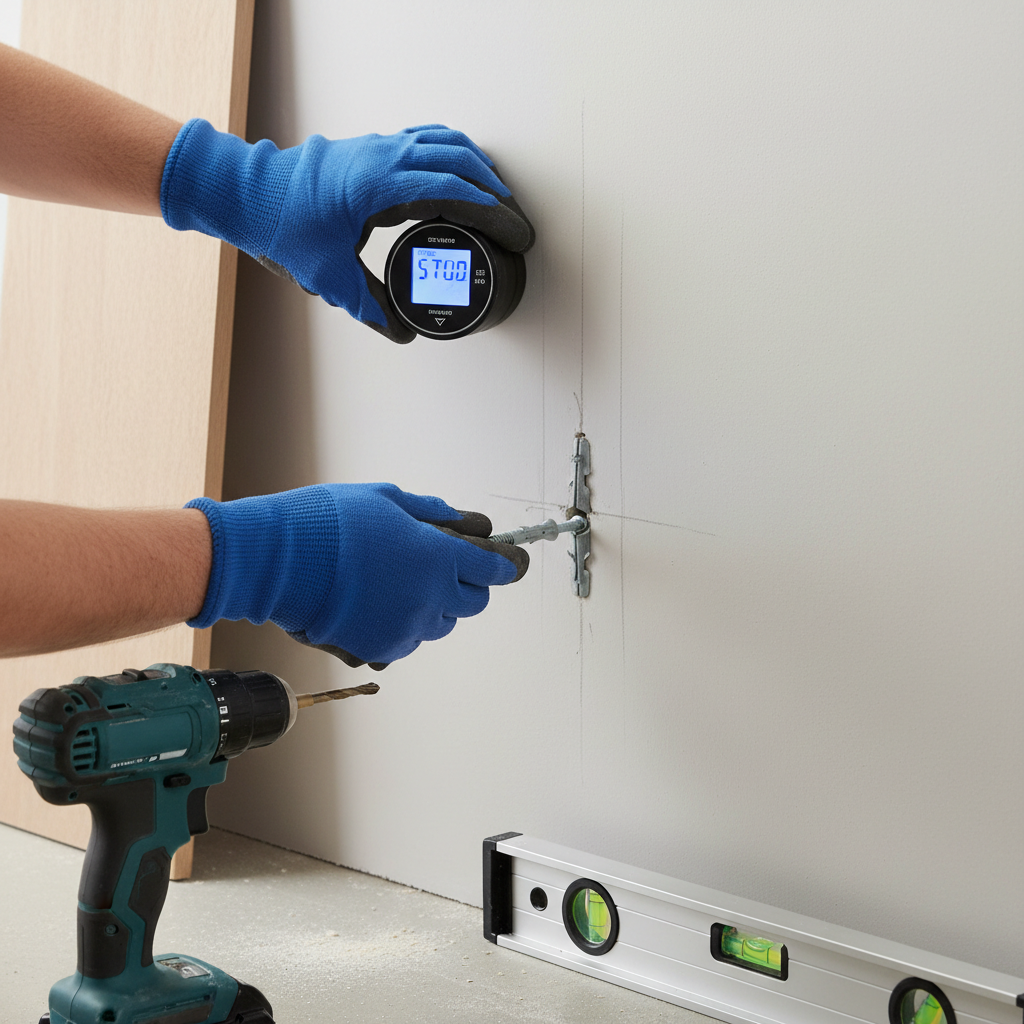
- Missing Wall Studs: The most frequent culprit. Relying solely on drywall for support, especially with standard anchors, guarantees failure under load.
- Using Incorrect or Undersized Drywall Anchors: Plastic expansion anchors are fine for very light picture frames, but woefully inadequate for the leverage and weight of a floating shelf.
- Insufficient Number of Anchors/Screws: Not using enough fasteners across the mounting bracket, even if some hit studs, can lead to uneven load distribution and sagging.
- Overloading the Shelf: Even perfectly installed shelves have a weight limit. Exceeding this limit, especially with dense items like books or canned goods, will eventually lead to failure.
- Improper Installation of Anchors: Incorrect pilot hole size, not fully expanding anchors, or stripping screws can compromise holding strength.
General remodeling · Renovation planning
| Project category | General remodeling |
|---|---|
| Problem type | Renovation planning |
| Trade required | General contracting |
| Urgency | Planned project |
| Safety risk | Low safety risk |
| DIY suitability | Pro recommended |
| Cost category | Major investment |
| Typical timeline | Design and permitting often 2–4 months before work starts |
| Contractor type | General contractor |
Repair option
Phase the work and fix the building envelope first.
Replacement option
Full renovation with permits, design, and a general contractor.
Common causes
- Space no longer fits how the household lives
- Resale preparation
- Deferred maintenance stacking up
Relevant tools:project cost estimatorcompare quoteshome improvement material prices
Published May 12, 2026Last updated August 17, 2026
Tools & materials you'll need
Affiliate linksAs an Amazon Associate FixlyGuide earns from qualifying purchases — at no extra cost to you. Prices and availability are accurate as of publication and subject to change.
Quick Answer
Floating shelves commonly sag in drywall because they aren't properly anchored to wall studs or the wrong type of drywall anchors are used for the weight the shelf will bear. To prevent sagging, always prioritize attaching the mounting bracket directly to at least one wall stud. If studs aren't accessible for all bracket points, use heavy-duty toggle bolts or specialized floating shelf anchors designed for substantial weight in drywall. Never rely on standard plastic anchors for anything more than very light decorative items.
The Problem
You've carefully measured, drilled, and mounted your sleek new floating shelves, only to walk into the room a few weeks later and find them tilting downwards, a clear sign of sagging. This isn't just an aesthetic issue; a sagging shelf can be a safety hazard, leading to items falling, damage to the wall, or even the shelf completely ripping out. The frustration is palpable – you followed the directions, so why isn't it holding? The root cause almost always lies in the anchoring method within the drywall, either by missing critical structural support or by using inadequate fasteners for the shelf's intended load.
Understanding how to correctly secure these shelves, especially when working with the often-challenging medium of drywall, is crucial for a stable, long-lasting installation. This guide will walk you through diagnosing why your shelves might be sagging and provide a robust, step-by-step method to ensure they stay perfectly level.
How It Works
Drywall, also known as gypsum board, is a common interior wall material made from gypsum plaster pressed between two sheets of thick paper. While excellent for creating smooth, flat wall surfaces, drywall itself is not a structural material. It has very limited holding power for screws or nails when subjected to shear forces (weight pulling down) or pull-out forces (weight pulling away from the wall). This is why direct attachment to wall studs is always the gold standard for anything heavy you want to hang.
Wall studs are the vertical framing members (typically 2x4s or 2x6s) that form the skeleton of your wall. In most modern homes, they are spaced either 16 inches or 24 inches on center. When you drive a screw into a stud, the screw threads bite securely into the solid wood, providing a very strong anchor point. Floating shelves, by their very nature, exert significant leverage on their mounting points. The farther the shelf extends from the wall and the more weight it carries, the greater the rotational force (torque) applied to the fasteners. This torque constantly tries to pull the top of the bracket away from the wall and push the bottom into the wall, or simply pull the entire bracket downwards.
When a floating shelf bracket is attached only to drywall, even with seemingly robust anchors, the drywall can deform, compress, or simply pull apart around the anchor points under sustained load. Traditional plastic expansion anchors work by expanding behind the drywall, creating a friction fit. However, the drywall itself is the weak link. Toggle bolts and molly bolts, designed for heavier loads, create a wider, more secure bite behind the drywall. Toggle bolts use a spring-loaded wing that expands open, distributing the load over a larger area of the drywall. Molly bolts (or expansion anchors) use a sleeve that expands as a screw is driven in, creating a strong grip. The ultimate goal is to transfer the shelf's load from the drywall surface to something more substantial – ideally a wood stud, or failing that, a robust anchor that distributes the weight effectively across a larger section of the drywall.
Step-by-Step Fix
Safety First: Before drilling into any wall, always use a reliable stud finder to check for electrical wires or plumbing pipes behind the wall, especially if you're drilling horizontally.
1. Assess the Damage and Remove the Shelf
— Carefully remove any items from the sagging shelf. Inspect the shelf and the wall for visible damage. Look for enlarged screw holes, cracks in the drywall around the mounting points, or bent brackets. Take photos if you plan to contact the manufacturer or need to show a professional. Unmount the shelf from its bracket.
- If the mounting screws are stripped: You may need to use a screw extractor.
- If the drywall is severely damaged: You'll need to patch the drywall before remounting. Consider moving the shelf location slightly if possible.
2. Locate Wall Studs
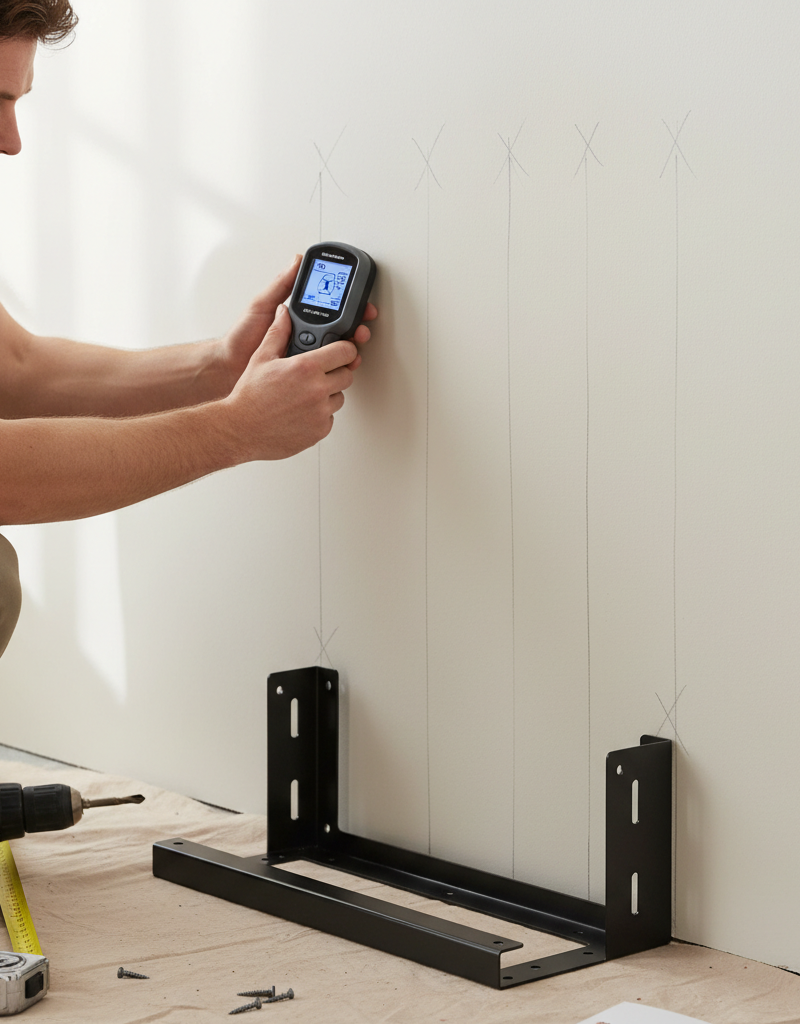
— This is the most crucial step. Use a stud finder to accurately locate the center of any wall studs where your shelf's mounting bracket will go. Mark these locations precisely with a pencil. Studs are typically 16 or 24 inches apart on center. Look for electrical outlets, which are usually mounted to a stud.
- Pro Tip: To confirm a stud, use a small finishing nail. If it hits wood, you've found a stud. If it goes through easily, you've hit open cavity. Use a tiny bit of spackle to fill the test holes.
- If there are no studs where your shelf needs to go: You'll need to rely entirely on heavy-duty drywall anchors. Skip to Step 4 for anchor selection.
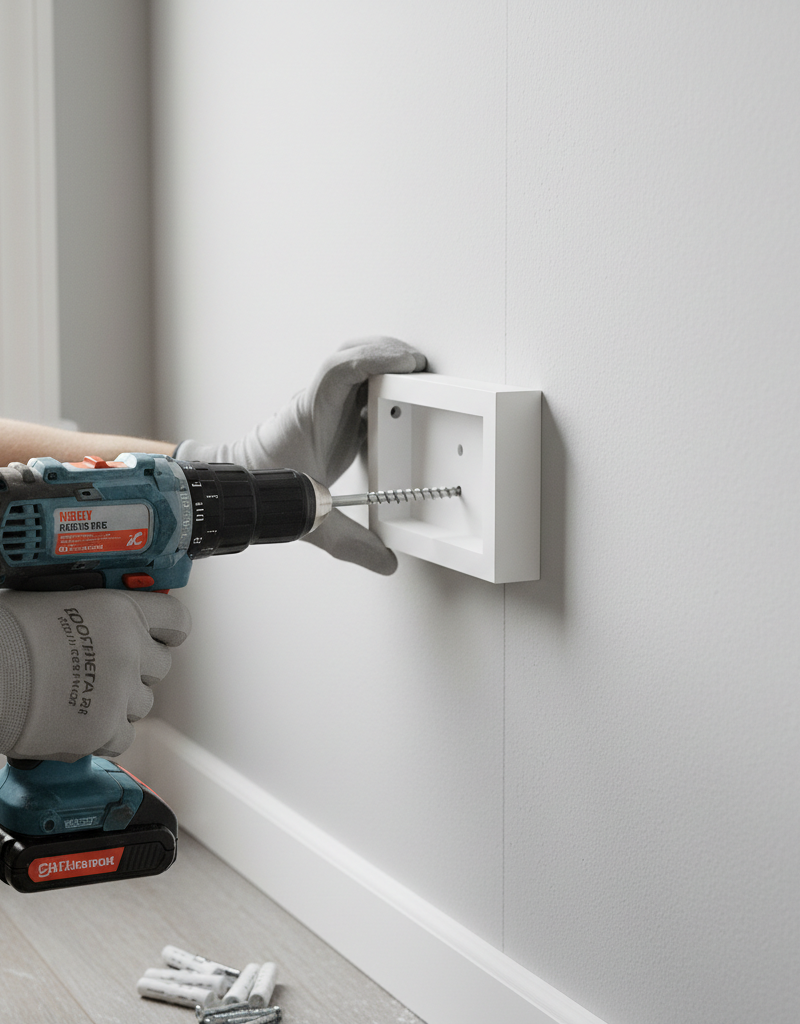
3. If Attaching to Studs: Drill Pilot Holes and Mount
— If you've found studs that align with your shelf’s mounting bracket holes, drill pilot holes through the bracket and into the center of the stud using a drill bit slightly smaller than your mounting screws. This prevents splitting the stud and ensures a clean, strong attachment. Use structural wood screws (e.g., #8 or #10, 2-3 inches long) that are long enough to penetrate at least 1.5 inches into the stud.
- Screws must be suited for load: Do not use drywall screws, which are brittle and can snap under shear forces.
- Ensure level and plumb: Use a level to ensure the bracket is perfectly level before fully tightening all screws.
4. If No Studs or Partial Stud Coverage: Choose the Right Drywall Anchors
— If you can't hit a stud, or only hit one stud for a long bracket, you must use appropriate heavy-duty drywall anchors for the remaining mounting points. Never use standard plastic tapered anchors for floating shelves. For serious load-bearing, consider these options:
- Toggle Bolts (Spring or Strap-Type): These are considered the strongest drywall anchors. They require a larger hole but provide excellent pull-out strength. The metal wings open behind the drywall, distributing weight over a wide area. A 1/8-inch toggle bolt can hold around 50 lbs in 1/2-inch drywall.
- Molly Bolts (Metal Expansion Anchors): Good for medium to heavy loads. They install flush and create a secure grip. A 1/4-inch molly bolt can hold around 25-35 lbs.
- Self-Drilling / Threaded Anchors (Metal): These are easier to install but have less shear strength than toggles or mollies. Use for lighter floating shelves or where space behind the wall is limited. Plastic versions are generally not recommended for floating shelves.
- Consult packaging: Always check the load rating on the anchor packaging. Remember that the listed weight is for ideal conditions and often for pull-out strength; dynamic loads or shear forces will reduce this. Always factor in the weight of the shelf itself plus the items you plan to place on it.
5. Install Drywall Anchors
— Follow the specific instructions for your chosen anchors carefully. This typically involves:
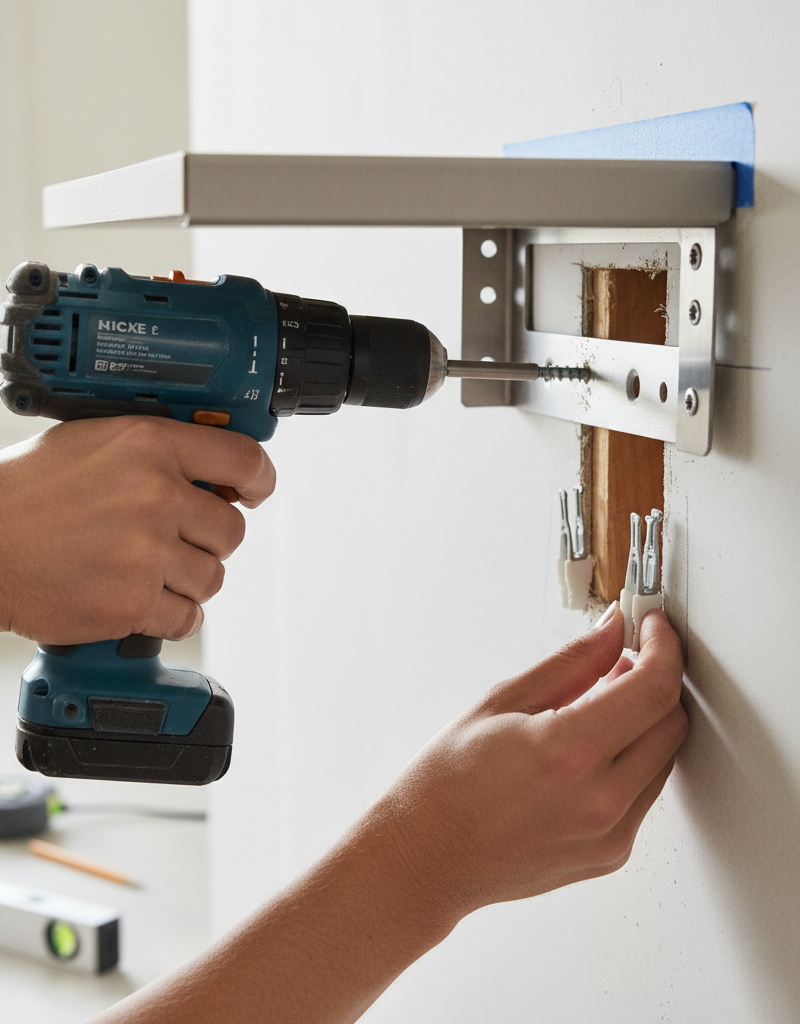
- Toggle Bolts: Drill the specified hole size, fold the toggle wings, insert through the hole, and let the wings spring open inside the wall. Then insert the screw and tighten.
- Molly Bolts: Drill a pilot hole, tap the molly bolt gently into the hole until its flange is flush with the drywall, then insert a screw and tighten. This expands the anchor behind the wall. Once the anchor is secure, you can remove the screw, mount your bracket, and re-insert the screw.
- Self-Drilling Anchors: Drive them directly into the drywall with a Phillips head screwdriver or drill until flush. Then drive your mounting screw into the anchor.
6. Mount the Shelf Bracket Securely
— Once all studs are utilized with structural screws and all drywall anchor points are installed and tightened, attach the shelf mounting bracket to the wall. Double-check that it is perfectly level using a spirit level before fully tightening all screws. Apply firm, but not excessive, pressure. Overtightening can strip screw heads or damage drywall.
- Use a long level: For longer shelves, use a 4-foot level to ensure accuracy across the entire span.
7. Install the Floating Shelf Onto the Bracket
— Carefully slide or attach the floating shelf body onto the now-securely mounted bracket. Many floating shelves have small set screws on the underside to lock them onto the bracket. Tighten these set screws gently but firmly. If your shelf design doesn't have set screws, ensure it fits snugly and doesn't wobble.
- Check for play: Gently push up and down on the shelf to confirm there's no movement or play.
8. Test and Load Gradually
— Before placing all your items back, perform a weight test. Start by placing a few lighter items on the shelf and observe for any immediate deflections or signs of stress. Gradually add more weight, periodically checking the shelf's level and the integrity of the mounting points. Distribute weight evenly across the shelf; avoid piling all heavy items in one spot.
Common Causes
- Missing Wall Studs: The most frequent culprit. Relying solely on drywall for support, especially with standard anchors, guarantees failure under load.
- Using Incorrect or Undersized Drywall Anchors: Plastic expansion anchors are fine for very light picture frames, but woefully inadequate for the leverage and weight of a floating shelf.
- Insufficient Number of Anchors/Screws: Not using enough fasteners across the mounting bracket, even if some hit studs, can lead to uneven load distribution and sagging.
- Overloading the Shelf: Even perfectly installed shelves have a weight limit. Exceeding this limit, especially with dense items like books or canned goods, will eventually lead to failure.
- Improper Installation of Anchors: Incorrect pilot hole size, not fully expanding anchors, or stripping screws can compromise holding strength.
- Shelf Material or Bracket Quality: Flimsy particle board shelves or thin, bendable metal brackets won't hold up, even with perfect wall attachment.
Common Mistakes
- **Relying on
Related Articles
Keep troubleshooting with these hand-picked guides from FixlyGuide:
- The 3 Hidden Reasons Your Floating Shelf Sags (and the Easy Fix) — Discover the real reasons your floating shelves sag and learn the simple, effective fixes to ensure they stay level and secure in drywall.
- The 3 Common Floating Shelf Mistakes That Lead to Wall Damage — Learn the critical mistakes homeowners make when installing floating shelves into drywall and how to avoid them for a secure, lasting mount.
- The #1 Mistake Homeowners Make Installing Floating Shelves (and How to Fix It) — Discover the crucial mistake homeowners make installing floating shelves into drywall and learn the correct, secure method to prevent saggi…
- The #1 Mistake Homeowners Make Installing Floating Shelves (and How to Fix It) — Discover the crucial error many DIYers make when mounting floating shelves into drywall and learn the simple steps to ensure a secure, sag-…
- The #1 Mistake Homeowners Make Installing Floating Shelves (and How to Fix It) — Discover the most common error DIYers make when mounting floating shelves into drywall and how to ensure your shelves are sturdy and secure.
- Is Your Gutter Sagging After Every Storm? The Hidden Flaw Most Homeowners Miss — Discover the overlooked reason your gutters sag after every storm and learn the lasting fix that most homeowners miss.
Should you do this yourself?
Answer five quick questions before you start. Safety outranks savings every time.
Your experience with work like this
How high do you have to work?
Does the job involve any of these?
Will it need a permit?
Specialty tools
Free and instant. Educational guidance only — not a quote, inspection, or professional diagnosis.
What should this project cost?
Enter your project details for a realistic cost range before you call anyone.
Cost depends heavily on which system turns out to be the source.
- Regional adjustment
- National average
- Labor share (typical)
- ~$1,620
- Quotes to collect
- 3 written estimates
Educational estimate based on national averages — not a binding quote. Always confirm with written local estimates.
Before you start
Check the difficulty, permits, and safety risk — then decide whether to call a pro.
- Estimate this projectGet a cost range for your scope and ZIP before you call anyone.Open
- Get local estimatesSend one request and compare written estimates from vetted pros.Open
Free, no signup required. Estimates are educational guidance, not a quote or an inspection.
Recommended for DIYers & woodworkers
Sponsored
The Top 20 Tools for Workshops of Any Budget
No stationary machines or power tools required — plus 3 fundamental tools that can't be bought at any price.
Get the free guide
Ted's Woodworking — The #1 Woodworking Resource
Detailed instructions, dimensioned drawings, materials & cutting lists, and 3D schematics for every skill level.
See the plansSponsored: links above are affiliate links. FixlyGuide may earn a commission on qualifying purchases — at no extra cost to you.
Frequently asked questions
How do you reinforce a floating shelf in drywall?+
To reinforce a floating shelf in drywall, the best approach is to secure its mounting bracket to wall studs whenever possible. If studs aren't available for all mounting points, use heavy-duty toggle bolts or molly bolts specifically rated for the shelf's intended weight. Ensure these anchors are installed correctly and that the load is distributed evenly across multiple anchor points.
What kind of anchors do you use for floating shelves in drywall?+
For floating shelves in drywall, avoid standard plastic anchors. Use heavy-duty anchors like toggle bolts (spring-wing or strap-type) or molly bolts (metal expansion anchors). Always check the weight rating on the anchor packaging and factor in both the shelf's weight and the items you plan to store on it.
How much weight can a floating shelf hold in drywall?+
The weight a floating shelf can hold in drywall varies greatly depending on the type and number of anchors used, and whether it's anchored to studs. A shelf securely mounted into studs can hold 50-100+ lbs per stud. With heavy-duty toggle bolts in drywall *without* studs, a typical shelf might support 15-30 lbs per anchor point, but this can vary. Always consult anchor packaging and err on the side of caution.
Can you put a floating shelf on just drywall?+
Yes, you can install a floating shelf on just drywall, but it requires specific heavy-duty anchors like toggle bolts or molly bolts, and careful attention to the shelf's weight capacity. Never use standard plastic anchors for floating shelves. Prioritizing attachment to wall studs is always recommended for maximum strength and stability.
How do I make my floating shelf stronger?+
To make a floating shelf stronger, ensure its mounting bracket is securely fastened into wall studs using structural wood screws. Where studs aren't available, use the strongest possible drywall anchors, such as large toggle bolts, and use as many anchor points as the bracket allows. Consider adding an extra hidden support brace beneath the shelf if its design permits, or choosing a shelf with a robust internal bracket system.
Discussion
Loading comments…