- For a hanging wire: Aim for one central stud if possible. If not, use one or two heavy-duty toggle bolts spaced 6-12 inches apart to distribute the weight.
- For D-rings or a French cleat: Try to align at least one of the attachment points with a stud. If you have two D-rings, aim to span two studs if possible. Otherwise, space your chosen anchors evenly for maximum stability.
- Consider the mirror's width: If your mirror is narrower than 16 inches, hitting two studs might be impossible. This is where heavy-duty drywall anchors become essential.
General remodeling · Renovation planning
| Project category | General remodeling |
|---|---|
| Problem type | Renovation planning |
| Trade required | General contracting |
| Urgency | Planned project |
| Safety risk | Low safety risk |
| DIY suitability | Pro recommended |
| Cost category | Major investment |
| Typical timeline | Design and permitting often 2–4 months before work starts |
| Contractor type | General contractor |
Repair option
Phase the work and fix the building envelope first.
Replacement option
Full renovation with permits, design, and a general contractor.
Common causes
- Space no longer fits how the household lives
- Resale preparation
- Deferred maintenance stacking up
Relevant tools:project cost estimatorcompare quoteshome improvement material prices
Published May 8, 2026Last updated August 17, 2026
Tools & materials you'll need
Affiliate linksAs an Amazon Associate FixlyGuide earns from qualifying purchases — at no extra cost to you. Prices and availability are accurate as of publication and subject to change.
Quick Answer
To safely hang a heavy mirror on drywall, you must locate and securely fasten into at least one wall stud. If a stud isn't perfectly centered, use a toggle bolt or heavy-duty drywall anchor designed for significant weight capacity, always distributing the load across multiple points when possible. Always verify the weight rating of your chosen hardware and ensure it exceeds the mirror's actual weight. Relying on inadequate anchors or missing a stud entirely are common — and costly — mistakes.
The Problem
That beautiful, heavy mirror you just bought isn't just a decorative piece; it's a significant weight that, if installed improperly, can become a dangerous liability. Drywall itself offers very little structural support. It's essentially compressed gypsum plaster sandwiched between paper. A small picture hook or a basic plastic drywall anchor might be sufficient for a lightweight picture frame, but for a mirror weighing 20, 30, or even 50+ pounds, these methods are an invitation for disaster. The problem isn't just the mirror falling and breaking; it's the potential for serious injury, especially if it lands on a pet, child, or even just your foot. Homeowners often underestimate the sheer force a heavy object exerts over time, leading to gradual failure of inadequate fasteners and a sudden, unwelcome crash. The key is understanding how to safely transfer that weight from the mirror to the studs behind the drywall, or, failing that, to use specialized hardware designed to distribute the load across a larger area of the drywall, making it strong enough to hold.
How It Works
Standard drywall, typically 1/2-inch thick, is screwed or nailed to vertical wooden or metal studs, usually spaced 16 or 24 inches apart on center. These studs are the structural backbone of your wall and are the strongest points for anchoring anything heavy. When you hang something on a stud, the screw or nail bites directly into the solid wood, providing maximum holding power. The strength is limited only by the pull-out strength of the fastener from the wood itself, which is significant for a proper screw.
When a stud isn't available exactly where you need it, you must rely on drywall anchors. These work by expanding or toggling behind the drywall, creating a larger surface area to distribute the weight. Mechanical anchors, like self-drilling anchors or expansion anchors, spread the load across the front of the drywall as they expand. Toggle bolts, on the other hand, open up behind the drywall, creating a much larger brace that effectively sandwiches the drywall between the bolt head and the toggle itself. This provides a much stronger hold than simple expansion anchors. The holding strength of any drywall anchor is always rated for shear (pulling straight down) and tension (pulling straight out). For a mirror, you're primarily concerned with shear strength, but tension can come into play if the mirror leans out significantly. The integrity of the drywall itself becomes the limiting factor in these cases, which is why choosing the right anchor for the weight is paramount.
Step-by-Step Fix
1. Assess Your Mirror's Weight & Hardware — Know before you hang
Start by accurately weighing your mirror. Most bathroom scales can handle this. Also, inspect the back of the mirror: does it have a wire, D-rings, or a French cleat? The hanging mechanism will dictate your hardware choices. A single wire needs a strong central anchor, while D-rings or cleats allow for wider weight distribution.
- Safety Note: If the mirror is very large or awkward, enlist a helper for weighing and positioning.
2. Locate the Wall Studs — The strongest anchor point
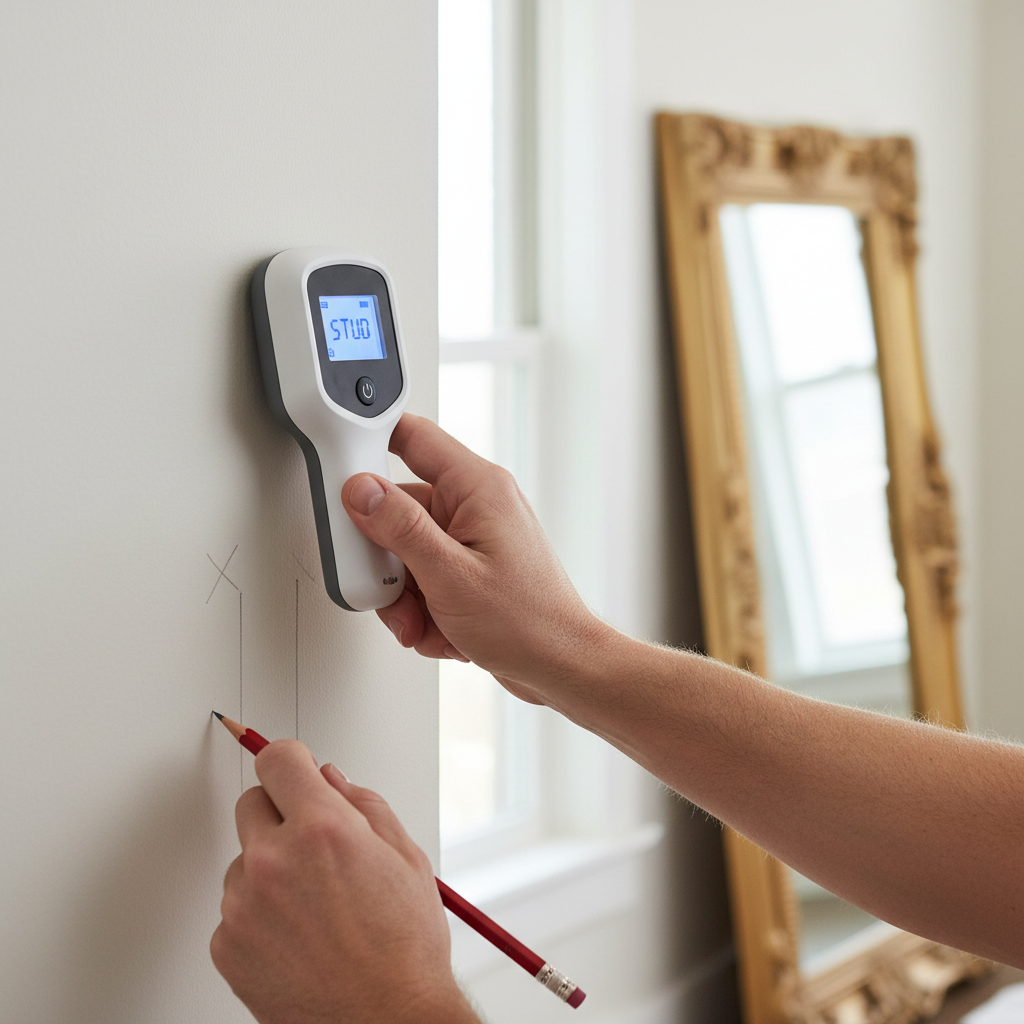
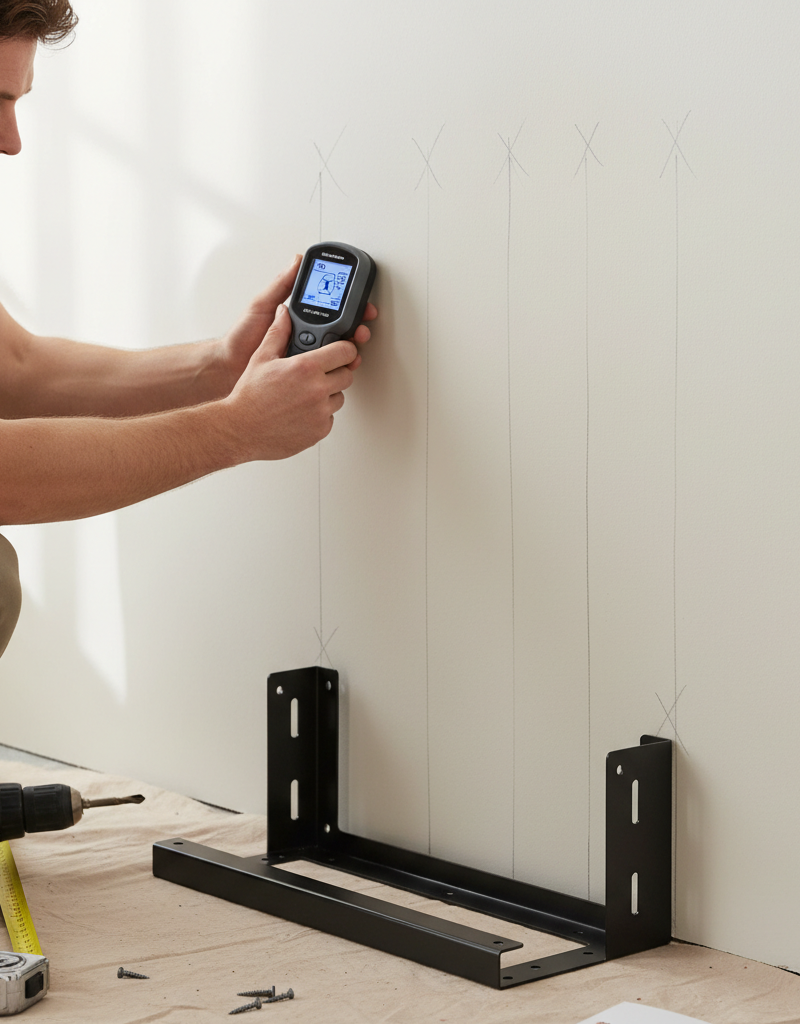
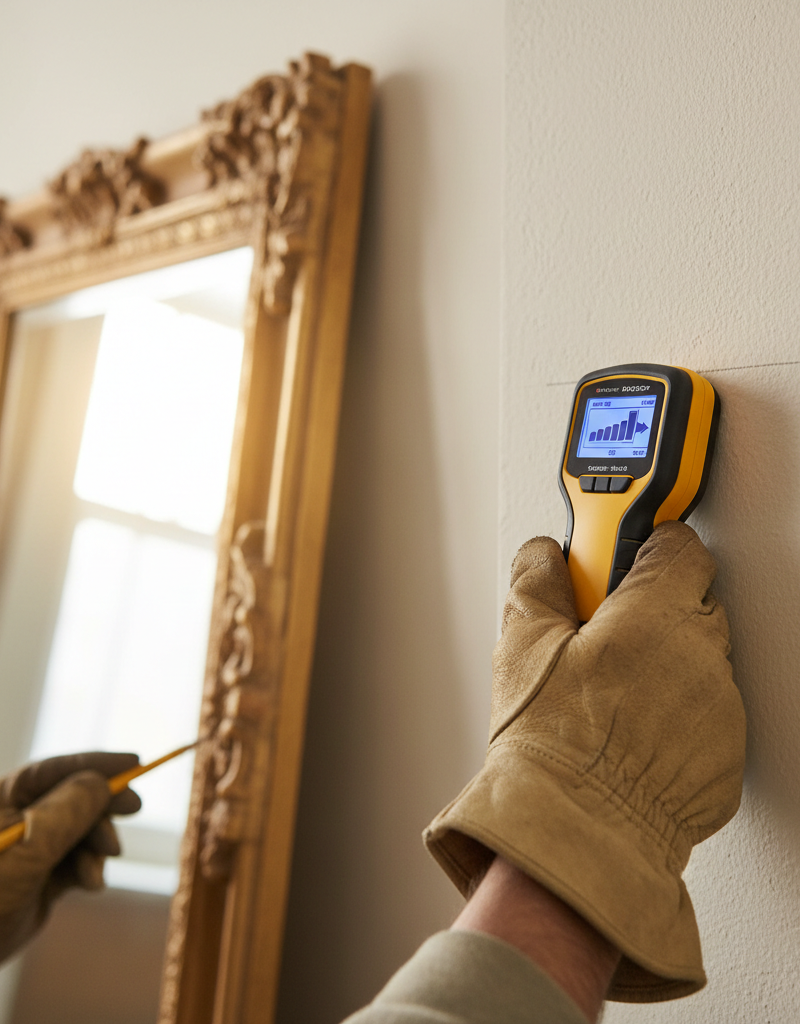
Even if you plan to use drywall anchors, always try to hit at least one stud, especially for heavier mirrors. Use a reliable stud finder to locate the center of the studs in your desired hanging area. Mark their edges and centers with a pencil. Studs are typically 16 or 24 inches apart on center (from the middle of one stud to the middle of the next).
- If your stud finder struggles: Try tapping the wall lightly. A solid sound indicates a stud, a hollow sound is drywall. Verify with a small finish nail – if it goes in easily, you're in drywall; if it stops, you've found a stud.
- Pro Tip: Run your stud finder horizontally at different heights. Electrical wires often run horizontally just above outlets and switches, or vertically up from them. Stay clear.
3. Plan Your Hanging Points — Distribute the load
Once you know where the studs are and what type of hanging hardware your mirror has, decide on your anchor points.
- For a hanging wire: Aim for one central stud if possible. If not, use one or two heavy-duty toggle bolts spaced 6-12 inches apart to distribute the weight.
- For D-rings or a French cleat: Try to align at least one of the attachment points with a stud. If you have two D-rings, aim to span two studs if possible. Otherwise, space your chosen anchors evenly for maximum stability.
- Consider the mirror's width: If your mirror is narrower than 16 inches, hitting two studs might be impossible. This is where heavy-duty drywall anchors become essential.
4. Mark Your Anchor Points Precisely — Measure twice, drill once
With the mirror held against the wall (use a helper!), mark the exact spots where your hooks or fasteners will go. For a hanging wire, mark the top center. For D-rings, mark where each ring would rest. For a French cleat, mark the top edge. Use a level to ensure your marks are perfectly horizontal.
- When marking: Remember that the hanging point on the wall will be below the top of the mirror if using a wire or D-rings. Measure from the top of the mirror down to the wire/rings when it's tensioned to get the correct wall height.
5. Install Your Chosen Anchors — The right hardware for the job
Option A: Attaching to a Stud
- For wooden studs: Simply drive a sturdy wood screw (2-3 inches long, appropriately gauged for your hanger) directly into the center of your marked stud. Ensure the screw head fits through any hanging bracket or wire adequately. You might want to pre-drill a pilot hole slightly smaller than the screw's diameter to prevent splitting the stud, especially with harder woods.
- For metal studs: Use self-tapping metal screws specifically designed for metal studs. These typically have a sharper point and finer threads. Again, pre-drilling might be beneficial.
Option B: Using Toggle Bolts (e.g., Snaptoggle, Toggler, etc.)
- Drill the correct size hole: Check your toggle bolt packaging for the exact drill bit size required. It's usually larger than a standard drill bit to accommodate the toggle mechanism. Drill clean holes at your marked locations.
- Insert the toggle: Fold the toggle mechanism and push it through the drilled hole until it expands behind the drywall. Pull the plastic straps firmly until the metal channel is flush behind the wall. Slide the plastic cap along the straps until it's against the drywall and snap off the excess straps.
- Attach the screw: Now you have a threaded anchor point. Thread your screw (usually provided with the toggle bolt) into the anchor. Leave enough of the screw exposed to attach your mirror hardware.
- Safety Note: These anchors have very high weight ratings, but they rely on the integrity of the drywall itself. Ensure the drywall isn't damaged or crumbling around the hole.
Option C: Using Heavy-Duty Self-Drilling Anchors (e.g., Cobra Triple Grip, plastic winged anchors)
- Self-drilling type: These anchors typically screw directly into the drywall. Use a Phillips head screwdriver or a drill with a low torque setting to install them until they are flush with the wall. Do not overtighten, or you can strip the drywall.
- Pre-drilled expansion type: For some winged anchors, you might need to pre-drill a small pilot hole (check instructions). Insert the anchor and then drive a screw into it to expand the wings behind the drywall.
- Weight Limits: Always double-check the manufacturer's stated weight limit for tension and shear for these anchors. They are generally less strong than toggle bolts.
6. Install Your Hanging Hardware — Secure the connection
Attach your mirror's hanging hardware (picture hooks, D-ring hangers, cleat receivers) to the installed screws or anchors. Ensure they are firmly seated and can't easily dislodge. For wire-hung mirrors, ensure the wire is robust and securely twisted around the hooks.
7. Hang the Mirror & Test — The moment of truth
With a helper, carefully lift the mirror and position it onto your wall hangers. Gently lower it, ensuring the hanging mechanisms are properly seated. Once it's hanging, give it a few gentle tugs and wiggles (without yanking it off the wall) to confirm it feels secure. Step back and admire your safely hung mirror!
- If it feels wobbly or loose: Take it down immediately. Re-evaluate your anchor points and hardware. Do not proceed until you are confident in its security.
Common Causes
- Underestimating Mirror Weight: Many homeowners simply don't realize how heavy large mirrors can be, leading them to choose inadequate hanging hardware. A large framed mirror with beveled glass can easily exceed 40 pounds.
- Relying on Small Nails/Hooks Alone: Standard picture nails or small, decorative hooks are designed for very lightweight items (under 5-10 pounds) and will inevitably fail under the stress of a heavy mirror.
- Using Basic Plastic Anchors: The small, ribbed plastic anchors included with many lightweight picture frames are not designed for significant loads. They often pull out or strip the drywall, leaving a larger, weaker hole.
- Missing a Stud Entirely: Believing you've hit a stud when you've only hit drywall is a common mistake that leads to immediate or eventual failure.
- Improper Anchor Installation: Even the correct anchor can fail if not installed according to manufacturer instructions. Over-tightening self-drilling anchors can strip the drywall; not expanding toggle bolts fully renders them useless.
- Damaged or Weak Drywall: Older drywall, drywall that has been patched multiple times, or drywall exposed to moisture may not have the integrity to hold even properly installed anchors.
Common Mistakes
- Buying the Cheapest Anchors: Generic, cheap plastic anchors are often rated for optimistic loads and can fail prematurely. Invest in reputable brands like Toggler, Cobra, or similar heavy-duty options.
- Not Using a Stud Finder: Guessing where studs are is a recipe for disaster. Always use a stud finder or a reliable tapping method to locate the structural elements of your wall.
- Overloading a Single Anchor Point: Even a strong anchor has limits. For very heavy or large mirrors, aim to distribute the weight across two or more anchor points, ideally hitting at least one stud.
- Ignoring the Mirror's Specific Hardware: If your mirror comes with D-rings, use them. Don't try to jury-rig a single wire if it wasn't designed for it. Always work with the mirror's intended hanging method.
- Drilling a Pilot Hole Too Large/Small: For drywall anchors, the pilot hole size is critical. Too small, and the anchor can't expand; too large, and it won't grip the drywall at all. Always check the anchor's instructions.
- Using a Drill Instead of a Screwdriver for Self-Drilling Anchors: While a drill can be used with a clutch set to a very low torque, using a screwdriver gives you better feel and control, preventing you from stripping out the drywall as the anchor seats.
Cost & Time Breakdown
| Task | DIY cost | Pro cost | Time |
|---|---|---|---|
| Stud finder (if needed) | $15–$30 | N/A | N/A |
| Heavy-duty wall anchors | $5–$20 | Included | 5–10 min |
| Mounting screws/hooks | $2–$10 | Included | 5 min |
| General labor | $0 | $75–$150/hour | 20–40 min |
| Total (DIY) | $7–$60 | $75–$200+ | 20–40 min |
Tips & Prevention
- Regular Checks: Periodically check your hung mirror for any signs of loosening. Gently push up on the bottom edge; if it moves excessively, the anchors might be failing. Look for cracks in the drywall around the mounting points.
- Dusting Technique: When dusting or cleaning the mirror, do not pull it away from the wall. Always support it if you need to access behind it.
- Know Your Walls: Understand whether your walls are plaster or drywall. Plaster walls require different hanging techniques and often specialized anchors (e.g., toggle bolts designed for thicker walls).
- Over-Engineer for Safety: When in doubt, choose an anchor with a higher weight rating than you think you need. It's always better to be safe than sorry with heavy items.
- Avoid High-Traffic Areas (if possible): If you're hanging an extremely heavy or fragile mirror, consider its placement. Avoiding areas where it might be bumped accidentally can reduce the risk of structural failure over time.
When to Call a Professional
If your mirror is exceptionally large, unusually heavy (e.g., over 75 pounds), or if you are dealing with unfamiliar wall construction (such as lath and plaster, or concrete block that has been drywalled over), it's highly advisable to call a professional. A handyman or an art installer specializing in heavy objects will have the correct tools, specialized knowledge, and experience to assess the unique challenges of your wall and mirror. They can identify optimal anchor points you might miss, ensure the load is distributed correctly, and guarantee the mirror is hung securely, preventing potential damage or injury. Do not attempt to hang extremely valuable, antique, or custom-built mirrors yourself if you have any doubts about your ability to secure them. The cost of a professional's service is significantly less than the cost of replacing a broken mirror or repairing severe wall damage, not to mention avoiding potential medical expenses from an accidental fall.
Related Articles
Keep troubleshooting with these hand-picked guides from FixlyGuide:
- The 3 Drywall Anchors That Will NEVER Fail Your Heavy Mirror (And 2 to Avoid) — Safely hanging a heavy mirror on drywall requires choosing the right anchors and proper installation to prevent frustrating falls and damag…
- That 'Stud-Only' Belief? A Myth for Heavy Shelves — Tired of shelves ripping out of your drywall? The common advice to 'only use studs' is incomplete. Discover the modern anchoring techniques…
- The Giant Drywall Hole: 3 Hidden Mistakes That Make Fixing It Worse — Don’t just spackle over that huge drywall hole; learn the right way to repair it and avoid common mistakes that lead to an even bigger head…
- That Heavy Mirror? It Needs More Than Just a Nail — Stop guessing with drywall anchors; the physics of shear force and toggle bolt ratings are the secret to keeping your heavy mirror securely…
- The 4-Step Drywall Patch Secret That Makes Large Holes Vanish — Discover how to flawlessly repair a large hole in drywall using a simple, effective method that makes the damage disappear without a trace.
- The #1 Sprinkler Winterization Mistake That Costs Homeowners Thousands — Discover the crucial mistake many homeowners make winterizing sprinklers and how to avoid costly freeze damage with proper blowout techniqu…
What should this project cost?
Enter your project details for a realistic cost range before you call anyone.
Cost depends heavily on which system turns out to be the source.
- Regional adjustment
- National average
- Labor share (typical)
- ~$1,620
- Quotes to collect
- 3 written estimates
Educational estimate based on national averages — not a binding quote. Always confirm with written local estimates.
Recommended for DIYers & woodworkers
Sponsored
The Top 20 Tools for Workshops of Any Budget
No stationary machines or power tools required — plus 3 fundamental tools that can't be bought at any price.
Get the free guide
Ted's Woodworking — The #1 Woodworking Resource
Detailed instructions, dimensioned drawings, materials & cutting lists, and 3D schematics for every skill level.
See the plansSponsored: links above are affiliate links. FixlyGuide may earn a commission on qualifying purchases — at no extra cost to you.
Frequently asked questions
What's the best way to hang a heavy mirror on drywall without a stud?+
The best way to hang a heavy mirror on drywall without a stud is to use heavy-duty toggle bolts, such as Snaptoggles or similar brands. These anchors expand behind the drywall to create a very secure hold, distributing the weight across a larger surface area of the wall. Ensure the toggle bolt's weight rating exceeds your mirror's actual weight.
How much weight can drywall hold for a mirror?+
Standard 1/2-inch drywall itself holds very little weight (a few pounds at most) without proper anchoring. With the right heavy-duty anchors, like toggle bolts, drywall can safely hold 50-100+ pounds per anchor point, depending on the anchor and drywall condition. Always check the specific weight rating of your chosen anchor, and aim to distribute the weight across multiple anchors or, ideally, into a wall stud.
Can I use those small plastic drywall anchors for a heavy mirror?+
No, you should never use small, ribbed plastic drywall anchors for a heavy mirror. These anchors are designed for very lightweight items (typically under 10-15 pounds) and will almost certainly fail under the weight of a heavy mirror, potentially causing damage to your mirror and wall, or even injury. Always opt for heavy-duty options like toggle bolts or hit a wall stud.
Discussion
Loading comments…