- Use Caution When Moving Furniture: Plan your path before moving couches, dressers, or bed frames. Use two people. Applying adhesive felt or rubber corner guards to furniture during a move can prevent deep gouges.
- Address Pest Issues Immediately: Termites and carpenter ants can destroy the wood studs to which your drywall is fastened. A weakened structure can lead to stress cracks and makes the wall more susceptible to impact damage.
- Establish "House Rules": Discourage activities like throwing balls, roughhousing near walls, or riding scooters indoors to minimize the chance of accidental, high-force impacts.
General remodeling · Renovation planning
| Project category | General remodeling |
|---|---|
| Problem type | Renovation planning |
| Trade required | General contracting |
| Urgency | Planned project |
| Safety risk | Low safety risk |
| DIY suitability | Pro recommended |
| Cost category | Major investment |
| Typical timeline | Design and permitting often 2–4 months before work starts |
| Contractor type | General contractor |
Repair option
Phase the work and fix the building envelope first.
Replacement option
Full renovation with permits, design, and a general contractor.
Common causes
- Space no longer fits how the household lives
- Resale preparation
- Deferred maintenance stacking up
Relevant tools:project cost estimatorcompare quoteshome improvement material prices
Published April 27, 2026Last updated August 17, 2026
Tools & materials you'll need
Affiliate linksAs an Amazon Associate FixlyGuide earns from qualifying purchases — at no extra cost to you. Prices and availability are accurate as of publication and subject to change.
How it works
Drywall, also known as gypsum board or wallboard, is a simple but effective building material. It consists of a core of solidified gypsum (calcium sulfate dihydrate) pressed between two thick sheets of paper. This construction gives it excellent fire resistance and sound-dampening qualities. However, its structural strength is limited. While strong under compression, drywall is brittle and has very little tensile strength, meaning it cracks and breaks easily when pushed, pulled, or impacted.
A large hole completely compromises the integrity of a drywall panel. The continuous surface that distributes minor loads and vibrations is broken. The edges of the hole are unsupported, creating a weak point in the wall system. Applying a filler like spackle or joint compound directly into this void is destined to fail. These materials are designed for filling small, stable depressions like screw dimples or the tapered joints between securely fastened sheets of drywall. They have no structural strength on their own. When applied over a large gap, the compound will sag under its own weight, shrink significantly as it dries, and ultimately crack with the slightest wall flex or even a change in humidity.
The correct repair method focuses on recreating the original, stable structure of the wall. This is achieved by providing a solid backing behind the hole. This backing, typically made of wood strips or a piece of scrap drywall, bridges the gap and anchors to the stable, surrounding wallboard. The new drywall patch is then fastened to this backing, not just floated in place. This creates a solid, continuous substrate. The joint compound and tape that follow are then only required to do their intended job: seamlessly blending the joint between two stable panels (the old wall and the new patch).
Step-by-Step Fix
This method uses wood backing strips, which provides the most durable and reliable repair for holes ranging from 3 inches to over a foot wide.
-
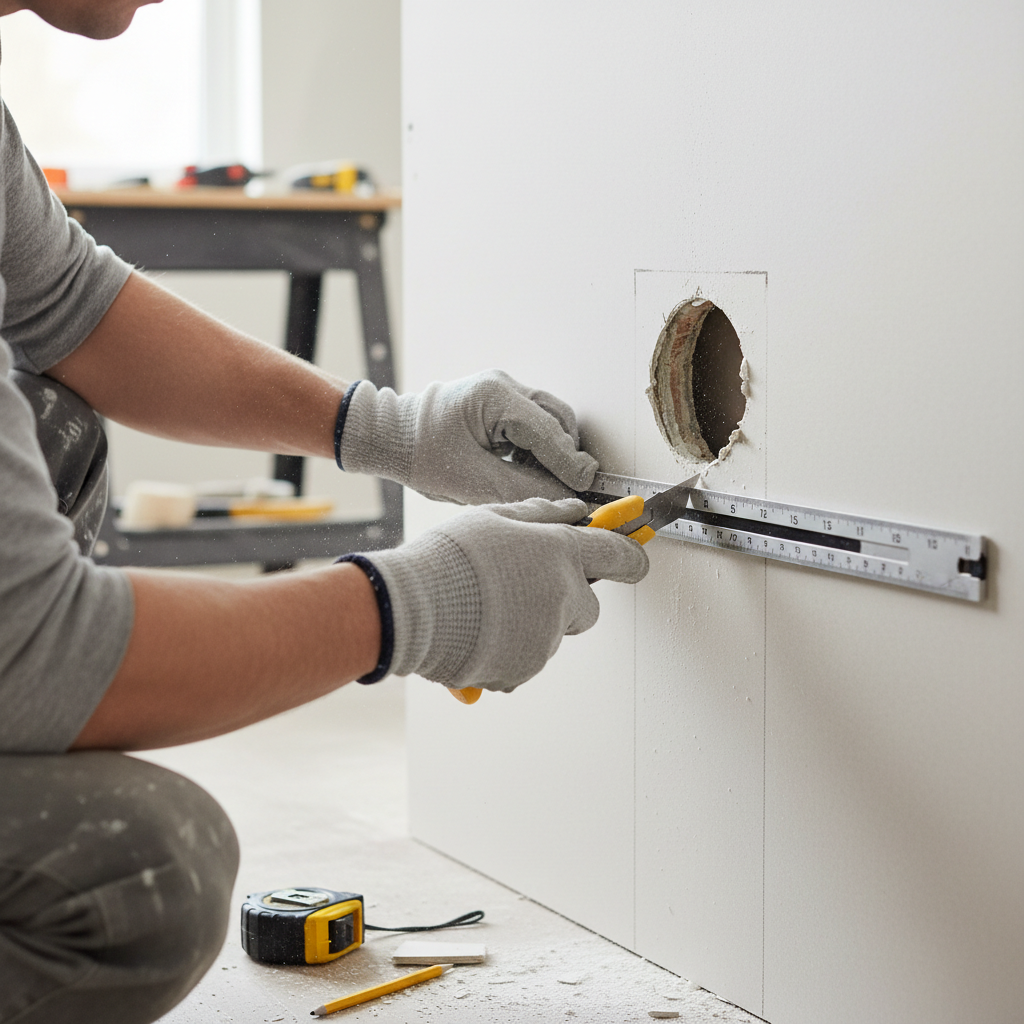
Clear the Area and Square the Hole — Lay drop cloths on the floor and mask off any adjacent trim or baseboards. Use a carpenter's square or straightedge and a pencil to draw a clean rectangle around the irregular hole. Using a sharp utility knife, score the lines deeply. For thicker 5/8-inch drywall, or to speed up the process, use a keyhole-style drywall saw to cut along your lines. Remove the damaged section.
- Tools: Utility knife, carpenter's square, pencil, drywall saw.
- Safety: Before cutting, inspect the hole for wires or plumbing. If you suspect any utilities are present, proceed with extreme caution or call a professional. Wear safety glasses.
-
Measure and Cut Wood Backing — Measure the height of the rectangular hole. Cut two pieces of 1x3 or 1x2 wood furring strip about 4 inches longer than this measurement. These will serve as reinforcement cleats inside the wall cavity.
-
Install the First Backing Strip — Angle one wood strip and insert it into the hole. Pull it tight against the inside surface of the drywall, centering it behind one of the vertical edges of the cutout. It should extend about 2 inches above and below the hole. Drive two 1-1/4-inch coarse-thread drywall screws through the existing drywall (one above the hole, one below) and into the wood strip to secure it firmly in place.
-
Install the Second Backing Strip — Repeat the process with the second wood strip on the opposite vertical edge of the hole. You should now have two solid wood anchors inside the wall, ready to receive the patch.
-
Measure and Cut the Drywall Patch — Carefully measure the height and width of the rectangular hole you cut. Transfer these dimensions to a new piece of drywall that has the same thickness as your wall (most interior walls use 1/2-inch drywall; ceilings and fire-rated walls often use 5/8-inch). Cut the patch to size. To do this, score the face paper with a utility knife and a straightedge, then apply firm pressure to snap the board along the score line. Cut through the back paper to complete the separation.
-
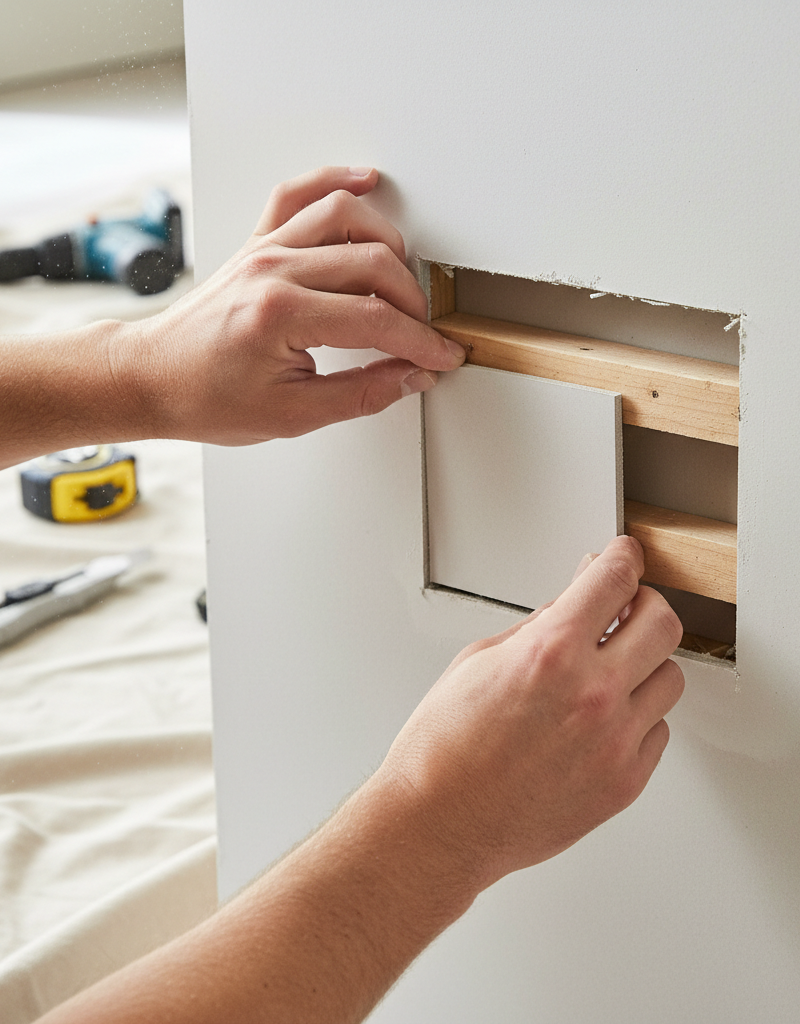
Test Fit and Secure the Patch — Test the fit of your patch in the hole. It should slide in easily with a minimal gap (about 1/8-inch) around the perimeter. If it's too tight, shave the edges with your utility knife. Once the fit is correct, place the patch in the hole and secure it by driving drywall screws through it and into the wood backing strips. Place screws every 4-6 inches, sinking the heads just enough to create a slight dimple below the surface without tearing the paper.
-
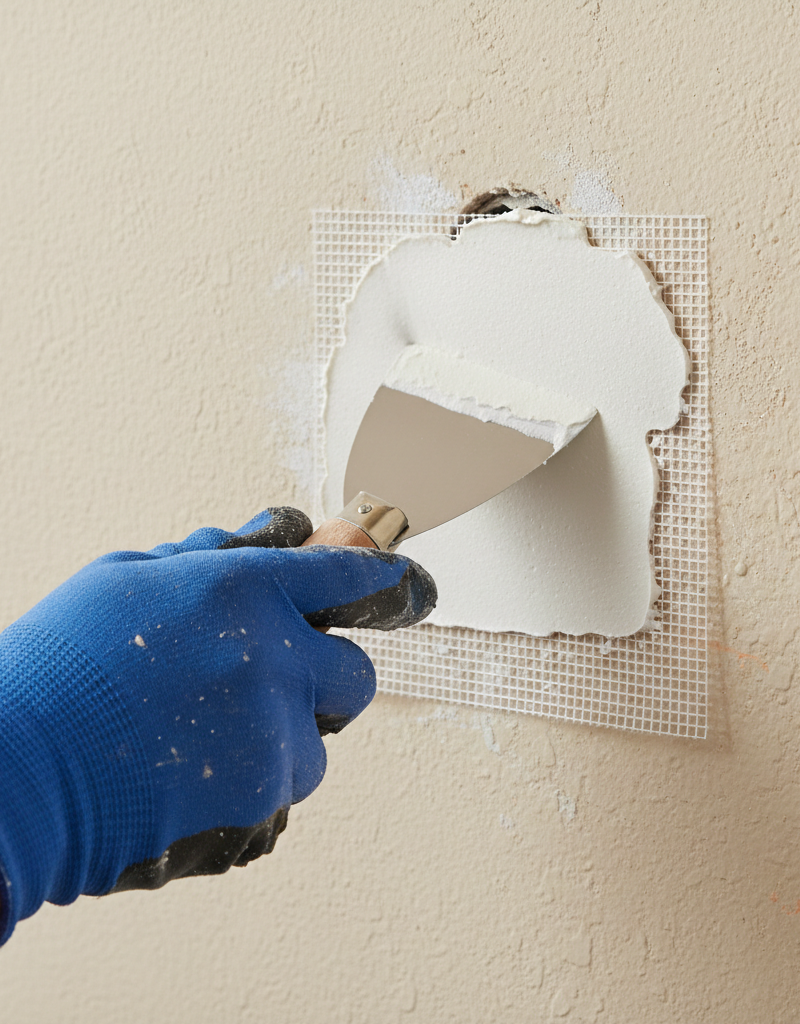
Tape the Seams — Using a 6-inch drywall taping knife, apply a layer of all-purpose joint compound to all four seams of the patch. Center fiberglass mesh tape or paper tape over the joint, and press it firmly into the compound with your knife. Immediately apply a thin skim coat of compound over the tape to embed it fully. At the same time, fill all the screw dimples.
-
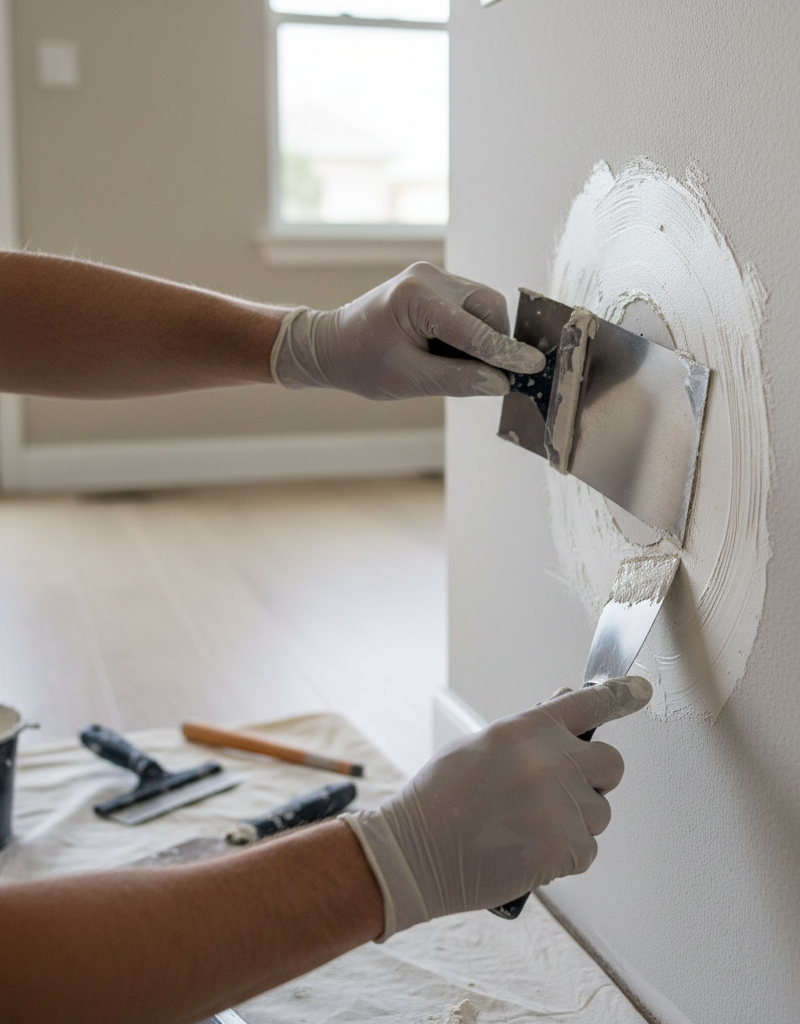
Apply the First Fill Coat — Allow the taping coat to dry completely (typically 12-24 hours). Lightly sand off any major ridges or bumps with 120-grit sandpaper. Using a 10-inch drywall knife, apply a wider coat of compound, feathering the edges beyond the tape line by several inches. The goal is to build up the recessed joint and start blending it with the surrounding wall surface.
-
Apply the Finish Coat — Once the fill coat is fully dry, perform another light sanding. For the final coat, use your 10-inch or a 12-inch taping knife to apply a very thin skim coat. Hold the knife at a low angle and pull the compound tightly across the surface to fill any remaining imperfections. Feather the outer edges another few inches into the existing wall to create a wide, imperceptible transition.
-
Perform the Final Sanding — Let the finish coat dry completely. Using a 220-grit sandpaper on a sanding block or pole sander, sand the entire patched area until it is perfectly smooth and flush with the wall. Use a bright light held at a low angle to the wall to reveal any high or low spots. When finished, wipe the entire area with a damp cloth or tack cloth to remove all sanding dust.
-
Prime and Paint — Wiping away dust is critical for paint adhesion. Prime the entire repaired area with a dedicated PVA (polyvinyl acetate) or shellac-based drywall primer. This seals the porous joint compound, preventing it from absorbing paint differently than the surrounding wall, a phenomenon known as "flashing." Once the primer is dry, apply at least two coats of your matching wall paint, feathering the edges of your paint job to help it blend.
Common mistakes
- Using the Wrong Filler. Reaching for lightweight spackle or vinyl patching paste is the most common error. These products are for minor nail holes and will shrink, crack, and fail on a large patch. Instead: Use all-purpose or taping joint compound, which is designed for strength and adhesion at drywall seams.
- Creating a "Floating" Patch. Simply cutting a patch and trying to hold it in place with mud and tape will not work. The patch has no support and will flex and crack at the seams. Instead: Always provide structural backing, either with wood strips as described above or by creating a self-supporting "California Patch" for smaller holes (4-6 inches).
- Applying Compound Too Thickly. Laying on a single, heavy coat of mud seems like a time-saver, but it will take days to dry, is prone to severe shrinkage and cracking, and creates a difficult-to-sand mound. Instead: Apply three or more thin coats, allowing each to dry completely. This builds a stronger, flatter, and more stable repair.
- Ignoring Wall Thickness. Using 1/2-inch drywall to patch a 5/8-inch wall (or vice-versa) creates a permanent recess or bulge that no amount of joint compound can effectively hide. Instead: Cut a small sample from the damaged area and measure it, or check an inconspicuous spot like a closet, to ensure you buy a patch of the correct thickness.
- Skipping the Primer. Painting directly over raw joint compound results in a dull, porous spot (flashing) that shows through the topcoat, making the repair obvious. Instead: Always seal the repair with a quality PVA drywall primer before applying your finish paint. This equalizes the surface porosity for a uniform sheen.
- Oversanding the Finish. Being too aggressive with the final sanding can scuff the paper face of the drywall surrounding the patch or even wear through the compound and tape, compromising the joint. Instead: Use a fine-grit (220) sandpaper, apply light and even pressure, and use a light source to check for smoothness rather than sanding by feel alone. A final wipe with a damp sponge can smooth minor imperfections without aggressive sanding.
Cost & time breakdown
Costs assume you have basic tools like a drill. Pro costs are a national average and can vary by location and the complexity of the finish texture.
| Task | DIY cost | Pro cost | Time |
|---|---|---|---|
| Area Prep & Hole Cleanup | $5 (knife blades) | Part of labor | 30 minutes |
| Install Backing & Drywall Patch | $15-$25 (scrap drywall, 1x3 board, screws) | Part of labor | 45-60 minutes |
| Taping & Mudding (3 Coats) | $20-$30 (joint compound, tape, knives) | Part of labor | 1.5 hours active, 24-72 hours total |
| Final Sand, Prime, & Paint | $30-$50 (primer, sandpaper, paint sample) | Part of labor | 2 hours active, 4-8 hours total |
| Total Project | $70 - $110 | $250 - $500 | 2-4 days (mostly drying time) |
When to call a pro
While this is a manageable DIY project, certain situations warrant a professional drywall contractor.
- Evidence of Water Damage: If the drywall is soft, discolored, or shows signs of mold growth, the hole is a symptom of a larger problem. A professional needs to assess the source of the leak and determine the extent of damage to insulation and framing before any cosmetic repair is made.
- Presence of Electrical or Plumbing: If you discover wires, junction boxes, or any type of plumbing pipe within the wall cavity near the damage, stop work immediately. A professional can safely work around these systems without risking electrocution, fire, or a flood.
- Plaster and Lath Walls: If your home was built before the 1950s, you may have plaster walls, not drywall. Repairing plaster is a fundamentally different process requiring specialized materials (like plaster of Paris or structuring compounds) and techniques. A drywall patch will not adhere properly and will fail.
- Complex Wall Textures: If your wall has a knockdown, orange peel, swirl, or popcorn texture, achieving an invisible blend is extremely difficult without the right tools and experience. Professionals have hopper guns and specialized techniques to perfectly match the existing texture.
- Widespread Damage: If you have multiple large holes or damage covering a significant portion of a wall, it is often more cost-effective and provides a better result for a pro to remove the entire damaged sheet and install a new one, rather than attempting numerous large patches.
Prevention & maintenance
Preventing drywall holes is far easier than repairing them. Most damage is avoidable with a few simple precautions.
- Install and Maintain Doorstops: The most common impact hole is caused by a doorknob. Ensure every door has a functional doorstop, whether it's a baseboard-mounted spring or solid post, a hinge-pin stop, or a wall-mounted disc bumper. Check them periodically to ensure they are secure.
- Use Caution When Moving Furniture: Plan your path before moving couches, dressers, or bed frames. Use two people. Applying adhesive felt or rubber corner guards to furniture during a move can prevent deep gouges.
- Protect High-Traffic Zones: In garages, hallways, and kids' playrooms, consider installing protective elements. A simple chair rail can prevent chairs from bumping the wall, while wainscoting or durable FRP (Fiberglass Reinforced Plastic) panels can protect the lower half of walls in workshops and utility areas.
- Address Pest Issues Immediately: Termites and carpenter ants can destroy the wood studs to which your drywall is fastened. A weakened structure can lead to stress cracks and makes the wall more susceptible to impact damage.
- Manage Humidity Levels: Chronically high humidity, especially in bathrooms and basements, can soften the gypsum core and weaken the paper facing over time, making the drywall less resilient. Always use ventilation fans during and after showers.
- Establish "House Rules": Discourage activities like throwing balls, roughhousing near walls, or riding scooters indoors to minimize the chance of accidental, high-force impacts.
Related Articles
Keep troubleshooting with these hand-picked guides from FixlyGuide:
- The Giant Drywall Hole: 3 Hidden Causes (And The Best Permanent Fix) — Don’t just slap a patch on a large drywall hole—understand the common causes and learn the most durable repair method homeowners can tackle.
- The Giant Drywall Hole: 3 Hidden Mistakes That Make Fixing It Worse — Don’t just spackle over that huge drywall hole; learn the right way to repair it and avoid common mistakes that lead to an even bigger head…
- The 4-Inch Drywall Hole Fix: Why Spackle Alone Always Fails — Learn the right way to patch a small drywall hole (up to 4 inches) to ensure a strong, invisible repair that spackle alone can't achieve.
- The 4-Inch Drywall Hole Fix: Why Most DIY Patches Fail (And How to Do It Right) — Don't let a small drywall hole become a recurring nightmare – discover the secret to a seamless, lasting repair that disappears into your w…
- The 4-Step Drywall Patch Secret That Makes Large Holes Vanish — Discover how to flawlessly repair a large hole in drywall using a simple, effective method that makes the damage disappear without a trace.
- That Drywall Hole Isn't Just Ugly, It's a Bat Signal — Learn the pro-approved method for patching drywall holes of any size. We cover the surprising science behind a lasting repair and common mi…
Should you do this yourself?
Answer five quick questions before you start. Safety outranks savings every time.
Your experience with work like this
How high do you have to work?
Does the job involve any of these?
Will it need a permit?
Specialty tools
Free and instant. Educational guidance only — not a quote, inspection, or professional diagnosis.
What should this project cost?
Enter your project details for a realistic cost range before you call anyone.
Cost depends heavily on which system turns out to be the source.
- Regional adjustment
- National average
- Labor share (typical)
- ~$1,620
- Quotes to collect
- 3 written estimates
Educational estimate based on national averages — not a binding quote. Always confirm with written local estimates.
Get the print-ready PDF of this guide
A clean, ad-free, printable version you can keep on your phone or pin to the workshop wall. Free with a FixlyGuide account.
- Print-optimized layout
- Tools, materials & every step included
- Saved to your account
Recommended for DIYers & woodworkers
Sponsored
The Top 20 Tools for Workshops of Any Budget
No stationary machines or power tools required — plus 3 fundamental tools that can't be bought at any price.
Get the free guide
Ted's Woodworking — The #1 Woodworking Resource
Detailed instructions, dimensioned drawings, materials & cutting lists, and 3D schematics for every skill level.
See the plansSponsored: links above are affiliate links. FixlyGuide may earn a commission on qualifying purchases — at no extra cost to you.
Frequently asked questions
How big of a drywall hole can I patch myself?+
You can effectively patch drywall holes up to about 6-8 inches in diameter using the methods described. For anything larger, or if the damage involves a stud, it might be more efficient to cut out a larger section and replace it, or call a professional.
Can I use just joint compound to fix a large hole?+
No. Joint compound, while essential for finishing, lacks the structural integrity to bridge a large gap on its own. It will almost certainly crack, sag, or fall out over time and will not provide a durable repair. You always need a solid backing or a patch with its own support system.
How long does drywall patch take to dry?+
Drying times vary based on humidity, temperature, and compound thickness. Each coat of joint compound typically needs 24 hours to dry completely. Rapid-setting compounds ('hot mud') can dry in as little as 20-90 minutes, but still require subsequent layers and sanding.
Discussion
Loading comments…