- Locate your electrical panel – This is usually in a basement, garage, utility closet, or outside wall.
- Identify GFCI breakers – Some circuit breakers have a small 'TEST' button on them, indicating they are GFCI or AFCI breakers. Look for these and check their position.
- Reset GFCI breakers – If a GFCI breaker is tripped, its switch will likely be in an intermediate position, not fully 'OFF'. To reset it, firmly push the switch all the way to 'OFF' first, then firmly push it all the way to 'ON'.
- Test the outlet – Re-test the dead outlet after resetting any GFCI breakers.
Electrical · Breaker keeps tripping
| Project category | Electrical |
|---|---|
| Problem type | Breaker keeps tripping |
| Trade required | Electrical |
| Urgency | Urgent — within days |
| Safety risk | High safety risk |
| DIY suitability | Pro recommended |
| Cost category | Low cost |
| Typical timeline | Diagnosis in a single visit |
| Contractor type | Licensed electrician |
Repair option
Isolate the load, then repair the fault or replace the breaker.
Replacement option
New dedicated circuit when the load simply exceeds what the circuit was built for.
Common causes
- Genuine overload on a shared circuit
- Ground fault from moisture in an exterior box
- Failing breaker or a damaged appliance cord
Relevant tools:diy or hire a prodiy difficulty
Published May 4, 2026Last updated August 17, 2026
Tools & materials you'll need
Affiliate linksAs an Amazon Associate FixlyGuide earns from qualifying purchases — at no extra cost to you. Prices and availability are accurate as of publication and subject to change.
Quick Answer
When an electrical outlet suddenly stops providing power, yet the corresponding circuit breaker at your service panel remains resolutely in the 'ON' position, it's a frustrating head-scratcher. The most frequent cause for this perplexing situation is a tripped Ground Fault Circuit Interrupter (GFCI) device. This isn't always the GFCI outlet you're trying to use; GFCIs can protect a series of 'downstream' outlets, meaning a tripped GFCI in your bathroom could be the reason an outlet in a nearby bedroom or even an outdoor outlet has no power. Other less common but equally important considerations include a loose wire connection within the outlet itself or its electrical box, the failure of the outlet receptacle itself, or an open circuit in the wiring leading to the outlet.
The Problem
Imagine plugging in your phone charger or a lamp, only to be met with silence and no power, despite confirming that the circuit breaker hasn't tripped. This scenario is incredibly common and can be a source of confusion and mild panic for homeowners. The immediate assumption is often that a breaker has tripped, but when that's clearly not the case, diagnosis can feel like searching for a needle in a haystack. The danger lies in not understanding why. Simply ignoring the issue or attempting a fix without proper safety precautions could lead to electrical shocks, damage to appliances, or even fire hazards. This guide will walk you through the most likely causes and the systematic steps to diagnose and safely resolve the issue, focusing heavily on the often-overlooked GFCI connection.
How It Works
To understand why an outlet might be dead even when its breaker is on, it's helpful to grasp a few fundamental concepts of your home's electrical system.
Your home's electricity flows from the utility pole, through your electrical meter, and into your service panel (breaker box). Inside the service panel, main breakers control the power to the entire house, while individual circuit breakers protect specific circuits, each feeding power to a group of outlets, lights, or appliances. When a circuit overloads or experiences a short circuit, its breaker 'trips' to prevent damage and fire, cutting off power to that circuit.
However, there's another crucial layer of protection: Ground Fault Circuit Interrupter (GFCI) devices. Unlike standard breakers that respond to overloads or short circuits, GFCIs are designed to protect against ground faults – a potentially deadly situation where electricity deviates from its intended path, often through a person. A GFCI continuously monitors the current flowing out on the hot wire and returning on the neutral wire. If it detects even a tiny imbalance (as little as 5 milliamps), it assumes current is leaking to the ground (which could be through you!) and trips in a fraction of a second, cutting off power to prevent electric shock. GFCI protection can be built into individual receptacles (GFCI outlets) or integrated into a circuit breaker (GFCI breakers) at the service panel. Crucially, a single GFCI outlet can provide 'downstream' protection to all standard outlets wired on the same circuit after it. This means if a GFCI outlet trips, it can cut power to several other seemingly unrelated outlets, even if they aren't GFCI protected themselves and even if they are in a different room or even outside.
Arc Fault Circuit Interrupters (AFCIs) are another type of protective device, sometimes combined with GFCIs, that detect dangerous electrical arcs (sparks) that can lead to fires. While they also reside on the circuit, a tripped AFCI breaker would generally manifest as a tripped breaker at the panel, which is not the scenario we're focusing on here. The key takeaway is that an outlet's power can be interrupted by a local protective device (like a GFCI outlet) without the main circuit breaker at the panel ever flipping.
Step-by-Step Fix
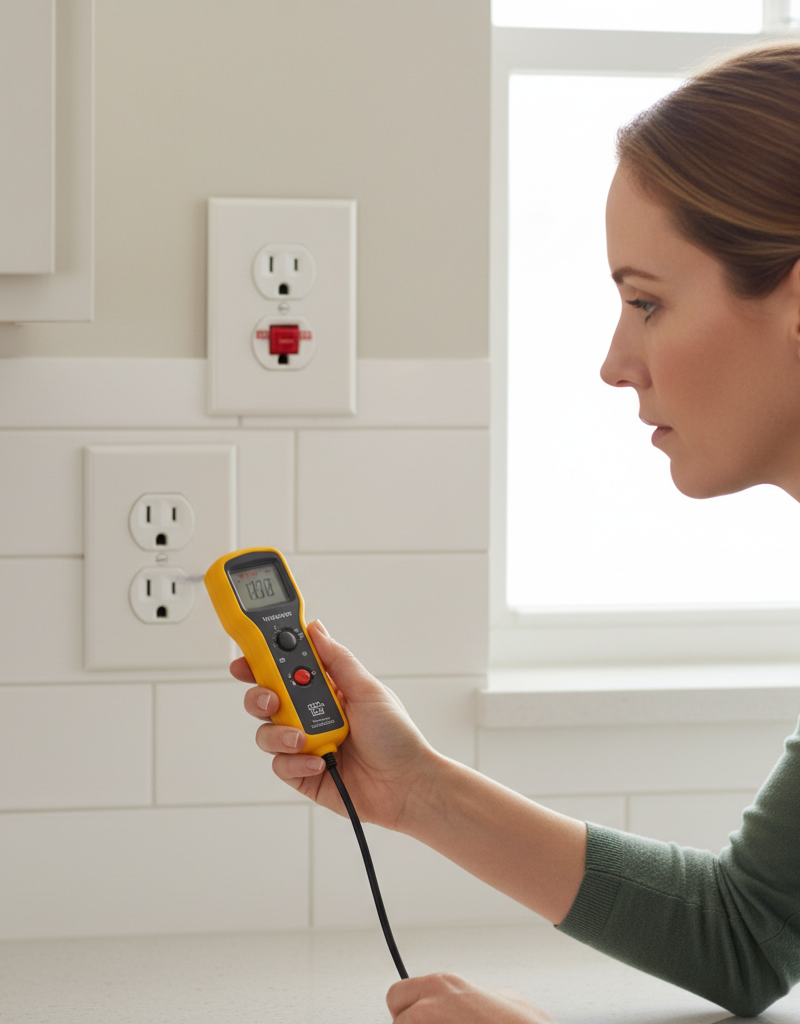
Safety First: Before attempting any electrical diagnosis or repair, always turn off the power to the affected circuit at the main service panel. Verify power is off using a non-contact voltage tester. Never work on live electrical circuits. If you are ever unsure, call a licensed electrician.
1. Identify the Affected Outlets
*   **Test all nearby outlets** – Plug a known working lamp or small appliance into the dead outlet. If it doesn't work, test other outlets in the same room, adjacent rooms, and even outdoor outlets. Make a mental or written note of all dead outlets. This can help you trace the circuit.
*   **Check lights on the same circuit** – Sometimes an outlet and a light fixture share a circuit. Check if any lights are also out.
2. Reset All GFCI Outlets
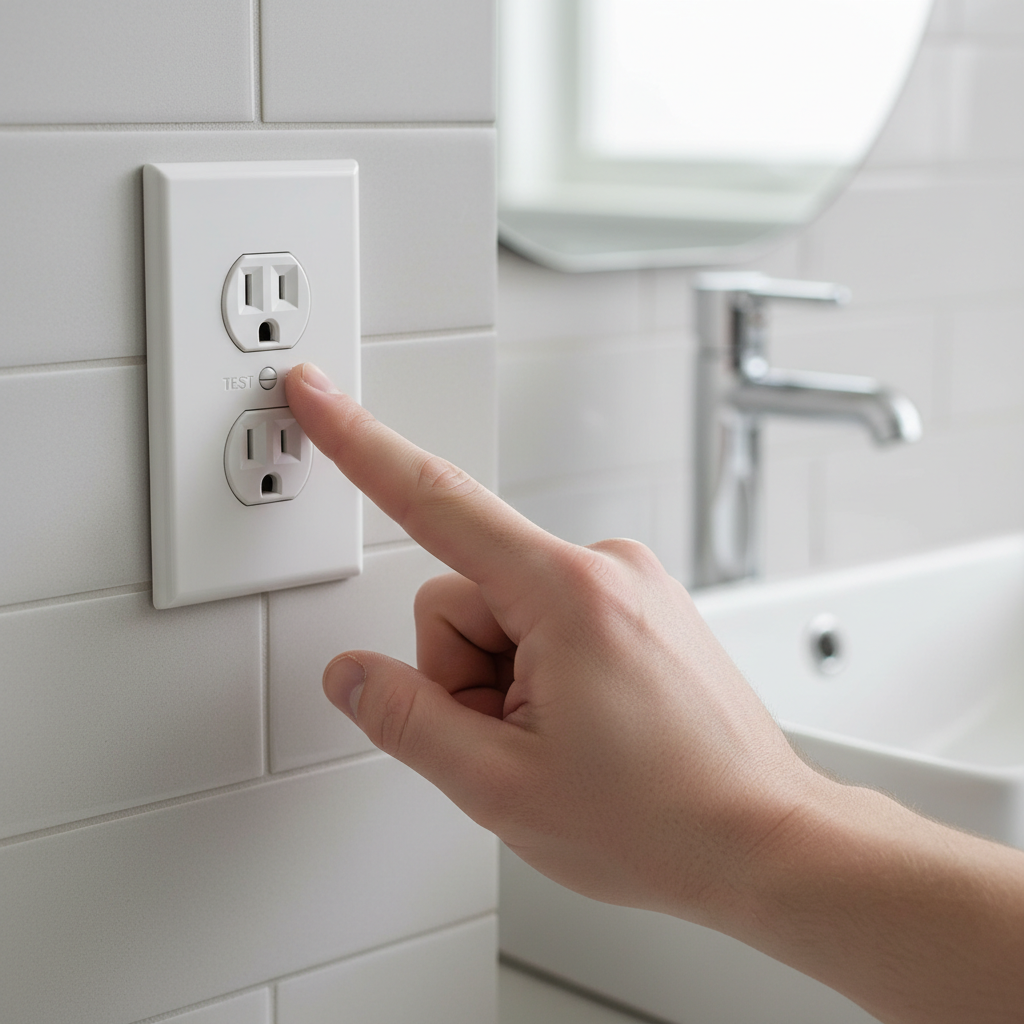
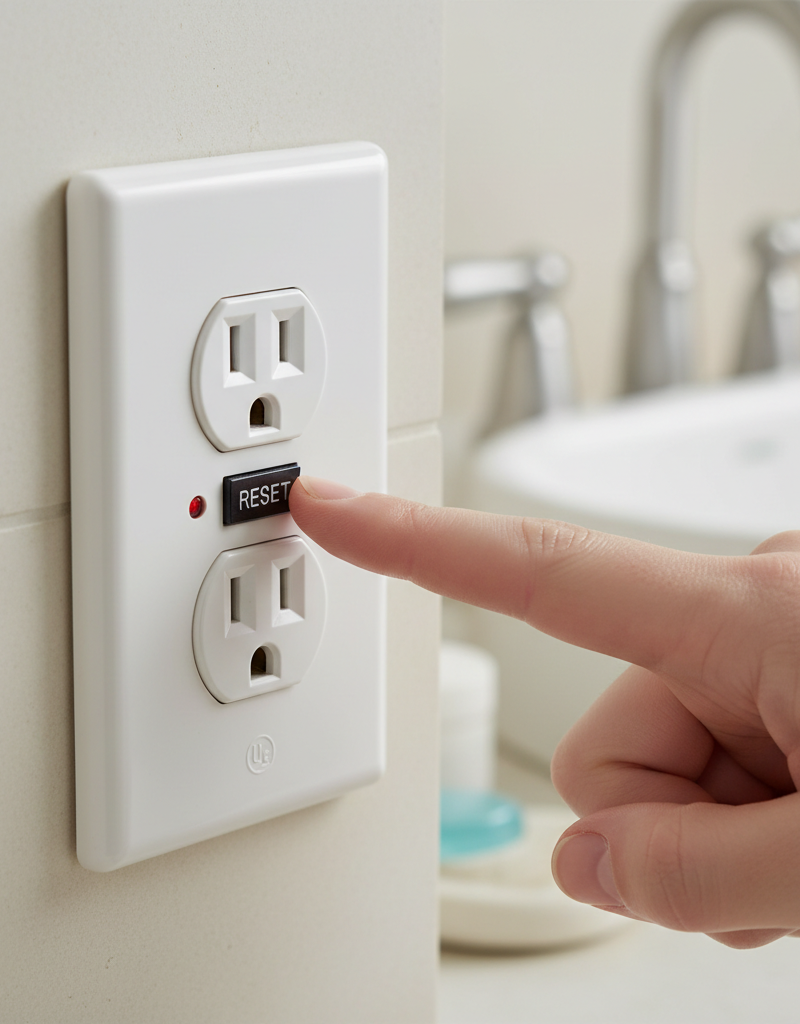
*   **Locate all GFCI outlets** – These are typically found in kitchens, bathrooms, garages, basements, and outdoor locations. They are easily identified by the 'TEST' and 'RESET' buttons on their face. You might have more than you think, especially if the house is newer or has been updated.
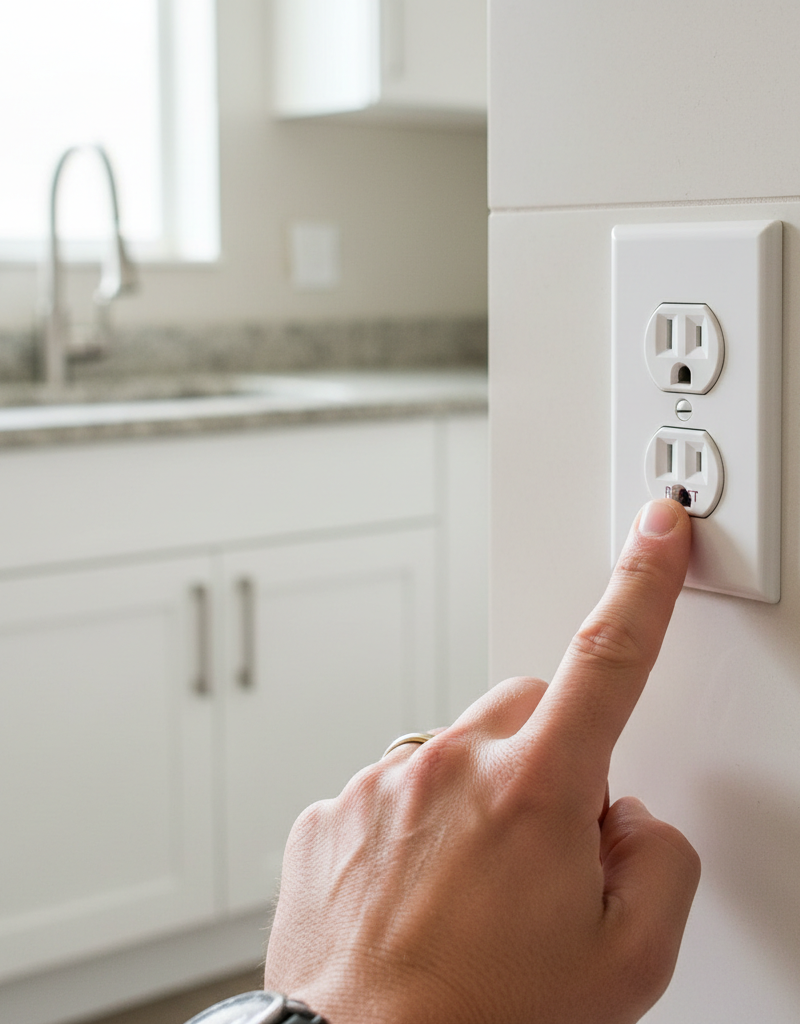
*   **Press 'RESET' firmly** – Go to *every* GFCI outlet you can find, even those not directly in the area of the dead outlet, and press the 'RESET' button firmly. You should hear a click. If the button doesn't stay in or immediately trips again, there might be a wiring issue or a ground fault still present on the circuit. This is the most common solution.
*   **Test the dead outlet** – After resetting all GFCIs, go back and test the original dead outlet. If it now works, you've likely found the culprit.
*   **Troubleshoot recurring trips** – If a GFCI immediately trips again after resetting, unplug all appliances from the entire circuit and try resetting it. If it holds, plug in appliances one by one to identify the faulty device. If it still trips with nothing plugged in, there's a wiring fault on that circuit requiring professional attention.
3. Check for Tripped GFCI Breakers
*   **Locate your electrical panel** – This is usually in a basement, garage, utility closet, or outside wall.
*   **Identify GFCI breakers** – Some circuit breakers have a small 'TEST' button on them, indicating they are GFCI or AFCI breakers. Look for these and check their position.
*   **Reset GFCI breakers** – If a GFCI breaker is tripped, its switch will likely be in an intermediate position, not fully 'OFF'. To reset it, firmly push the switch all the way to 'OFF' first, then firmly push it all the way to 'ON'.
*   **Test the outlet** – Re-test the dead outlet after resetting any GFCI breakers.
4. Inspect the Outlet for Loose Wires (If Confident and Safe)
*   **Turn off power at the main breaker** – Locate the circuit breaker for the dead outlet and switch it to the 'OFF' position. Double-check with your non-contact voltage tester.
*   **Remove the cover plate** – Unscrew and remove the faceplate of the dead outlet.
*   **Carefully pull the outlet out** – Gently pull the outlet receptacle out of the electrical box, holding it by its mounting tabs, not the wires.
*   **Check wire connections** – Look for any loose, burnt, or disconnected wires. Wires should be securely fastened under screws (tightened clockwise) or fully inserted into back-stab holes. *Safety Note: While back-stab connections are common, they are notoriously unreliable over time. If you find them, consider moving the wires to the screw terminals for a more secure connection.*
*   **Tighten loose connections** – If you find any loose wires, tighten the screw terminals securely. For back-stab connections, it's best to snip the end, strip a fresh 3/4 inch of insulation, form a hook with needle-nose pliers, and connect it to the corresponding screw terminal.
*   **Inspect for damage** – Look for signs of burning or melting on the outlet or wires. If found, the outlet is likely faulty and needs replacement.
*   **Reinstall the outlet** – Carefully fold the wires back into the box, ensuring no wires are pinched. Secure the outlet with its screws, replace the cover plate, and restore power at the breaker.
*   **Test the outlet** – Verify power has returned.
5. Replace a Faulty Outlet (If Necessary)
*   **Turn off power at the main breaker** – Crucial for safety. Verify with your voltage tester.
*   **Remove the old outlet** – After checking wiring, if the outlet shows signs of damage or still doesn't work after tightening connections, it might be faulty. Disconnect all wires, noting which wire goes to which screw (black to brass/dark screw, white to silver/light screw, bare/green to green screw).
*   **Connect the new outlet** – Strip wires to 3/4 inch if needed. Create hooks and securely attach them to the correct screw terminals on the new outlet, tightening clockwise. Ensure no bare copper is exposed beyond the screw head.
*   **Install the new outlet** – Gently push the new outlet back into the box, secure it, replace the cover plate, and restore power.
*   **Test the new outlet** – Confirm it's working.
6. Consider an Open Circuit or Other Hidden Issues
*   **If all else fails** – If you've reset all GFCIs, checked the breaker, and even inspected/replaced the outlet, and it still doesn't work, there might be a break in the wiring anywhere between the breaker and the outlet. This is known as an 'open circuit' and is difficult for a homeowner to diagnose without specialized tools.
*   **Hidden junction boxes** – Wires sometimes run through junction boxes hidden behind drywall or in attics/basements. A loose connection in one of these could affect downstream outlets.
*   **Pro assessment** – At this point, it's safer and more efficient to call a licensed electrician. They have tools like circuit tracers to precisely locate breaks in the wiring.
Common Causes
- Tripped GFCI Outlet (Most Common): A GFCI outlet, often located in wet areas like kitchens, bathrooms, garages, or basements, has tripped due to a ground fault. Remember, one GFCI can protect multiple 'downstream' standard outlets.
- Tripped GFCI Breaker: Similar to a GFCI outlet, but the protection is at the service panel. These breakers have a 'TEST' button and will trip to an intermediate position.
- Loose Wire Connection: Over time, wires can come loose from screw terminals or back-stab connections inside the outlet box, or at a junction box, interrupting the flow of electricity.
- Faulty Outlet Receptacle: The outlet itself can fail due to age, wear, internal damage, or a surge.
- Open Circuit: A break in the wiring itself, somewhere between the service panel and the outlet. This could be due to physical damage, corrosion, or a loose connection in a splice or junction box.
- Back-stab Wiring Failure: Wires pushed into spring-clip holes on the back of outlets (back-stabbing) are less reliable than screw terminals and can lose connection over time.
Common Mistakes
- Forgetting About Downstream GFCIs: Many homeowners only check the GFCI in the immediate vicinity of the dead outlet. Always check all GFCIs in wet areas and adjacent rooms, as one GFCI can protect an entire series of outlets.
- Not Fully Resetting Breakers: When a breaker trips, it moves to an intermediate position. You must firmly push it all the way to 'OFF' before pushing it sharply back to 'ON' to reset it properly.
- Working on Live Circuits: Never, ever skip turning off the breaker and verifying with a non-contact voltage tester. Electricity is unforgiving.
- Overlooking Overloaded Circuits After Reset: If a GFCI or breaker keeps tripping immediately after you reset it, it's not a faulty device; it's a fault in the circuit or something plugged into it. Continuing to reset it without addressing the underlying issue is dangerous.
- Assuming a Faulty Outlet Immediately: While an outlet can fail, loose wiring or a tripped GFCI is far more common. Replace the outlet only after ruling out these simpler causes.
- Not Inspecting Wires Properly: When checking connections, don't just look – gently tug on each wire to ensure it's securely fastened. Wires can look connected but be loose.
Cost & Time Breakdown
| Task | DIY Cost | Pro Cost | Time |
|---|---|---|---|
| Diagnose Tripped GFCI | $0 | $75–$150 (service fee) | 5–15 minutes |
| Replace Standard Outlet | $2–$5 | $100–$250 | 20–30 minutes |
| Replace GFCI Outlet | $15–$25 | $120–$300 | 30–45 minutes |
| Tighten Loose Connections | $0 | $100–$250 | 30–60 minutes |
| Trace & Fix Open Circuit | N/A (pro required) | $200–$500+ | 1–3 hours+ |
Tips & Prevention
- Regular GFCI Testing: Test your GFCI outlets monthly by pressing the 'TEST' button. The 'RESET' button should pop out, and power should be cut. Press 'RESET' to restore power. If it doesn't work, replace the GFCI.
- Don't Overload Circuits: Avoid plugging too many high-power appliances into a single outlet or extension cord, especially in kitchens. Distribute usage across multiple circuits if possible.
- Use Proper Tools: When working on outlets, use insulated screwdrivers. A non-contact voltage tester is an essential safety tool for any homeowner.
- Avoid Back-Stab Wiring: If you're replacing an old outlet, always opt for the more secure screw terminal connections rather than pushing wires into the back-stab holes.
- Regular Inspections: Periodically (e.g., annually) check visible outlets for any signs of damage like cracks, discoloration, or loose-fitting plugs. Replace any damaged outlets promptly.
- Map Your Circuits: Take the time to label your electrical panel clearly, indicating which breaker controls which rooms or specific appliances. This will save significant diagnostic time in the future.
When to Call a Professional
While many outlet issues are DIY-friendly, some situations absolutely warrant calling a licensed electrician. If you've reset all GFCIs and cycled the breaker, and the outlet still remains dead, or if a GFCI immediately trips again after resetting, there's likely a more complex wiring issue or a persistent ground fault. You should also call a professional if you notice any burning smells, smoke, sparks, persistent humming from outlets or the electrical panel, or if you feel any tingling sensation around an outlet. Diagnosing an open circuit in the wall, dealing with multiple outlets failing across different rooms, or any situation involving melted wires or charring is beyond safe DIY scope and requires an expert to prevent fire hazards and ensure code compliance. Never attempt to work on the main service panel or any high-voltage wiring yourself.
Related Articles
Keep troubleshooting with these hand-picked guides from FixlyGuide:
- The 7 Head-Scratching Reasons Your Outlet Died (Even With The Breaker On) — Discover the surprising reasons why an electrical outlet might stop working even when its circuit breaker is fully engaged, and how to safe…
- Why Does Only One Outlet Have No Power (When the Breaker Is On)? — Discover the surprisingly common reasons a single electrical outlet stops working while its circuit breaker remains on, and learn how to sa…
- The Hidden Reason Your GFCI Won't Reset (And It's Not Always a Short) — Uncover the mysterious reasons your GFCI outlet refuses to reset and learn the exact steps to diagnose and fix the problem safely, preventi…
- Outlet Not Working? Here’s How to Troubleshoot (Breaker On) — When an electrical outlet stops working but the breaker hasn't tripped, it can be a puzzling and frustrating problem for homeowners. This g…
- That tripped breaker? 80% miss the hidden cause. — A tripping circuit breaker is a common household problem, often indicating an overloaded circuit or a short circuit. Understanding the caus…
- Why Your AC is Blowing Warm Air: Troubleshooting and Fixes — If your AC is blowing warm air, it's often due to a clogged air filter, dirty condenser coils, or a tripped circuit breaker, all of which y…
What should this project cost?
Enter your project details for a realistic cost range before you call anyone.
Outlet and switch work usually $150–$400; panel upgrades commonly $1,800–$4,200.
- Regional adjustment
- National average
- Labor share (typical)
- ~$709
- Quotes to collect
- 3 written estimates
Educational estimate based on national averages — not a binding quote. Always confirm with written local estimates.
Fixly Project Decision Box
- DIY difficulty
- Professional Recommended
- Estimated time
- Diagnosis 1–2 hours
- Cost level
- Moderate
Main tools / materials
- Non-contact voltage tester
- Outlet tester
- Flashlight
When to stop and call a pro
- Burning smell, scorch marks, or a warm outlet or switch plate
- A breaker that trips again right after being reset
- Any work inside the service panel
- Aluminum wiring or cloth-insulated wiring
Need professional help?
Talk to a Licensed ElectricianFrequently asked questions
Why would an outlet not work if the breaker isn't tripped?+
The most common reason is a tripped GFCI (Ground Fault Circuit Interrupter) outlet or breaker. GFCIs protect against shocks and can cut power to a series of outlets even if the main breaker is on. Less common reasons include loose wiring or a faulty outlet itself.
Where are GFCI outlets usually located?+
GFCI outlets are legally required in areas where water might be present, such as kitchens, bathrooms, garages, basements, laundry rooms, and outdoor locations. You might have more than you realize, and they can protect other standard outlets downstream.
How do I reset a GFCI outlet?+
To reset a GFCI outlet, first locate the 'TEST' and 'RESET' buttons on its face. Press the 'TEST' button, then press the 'RESET' button firmly. You should hear a click, and power should be restored. If it immediately trips again, there's an underlying electrical fault.
Is it safe to replace an electrical outlet myself?+
Replacing a standard outlet can be a DIY task, but only if you are comfortable working with electricity, understand basic wiring, and strictly adhere to safety protocols, including turning off power at the breaker and verifying it's off with a voltage tester. If unsure, call a professional.
What does a non-contact voltage tester do?+
A non-contact voltage tester is a crucial safety tool that detects the presence of AC voltage without needing to touch bare wires. You simply hold it near an outlet slot or wire, and it will beep or light up if electricity is present, confirming whether a circuit is live or safely off.
Discussion
Loading comments…