- Not Scraping Plates: While you don't need to pre-rinse, large chunks of food should always be scraped into the trash. These are the biggest culprits for clogging the primary filter and overwhelming the secondary one.
- Greasy and Oily Foods: Large amounts of grease, butter, and cooking oils congeal as they cool in the dishwasher's sump, creating the sticky film that traps other particles.
- Infrequent Use: If you only run your dishwasher once or twice a week, the food soil and moisture sitting in the filter have more time to decompose and breed smelly bacteria.
- Low-Temperature Wash Cycles: Routinely using "eco" or "light" cycles may not use water that's hot enough (140°F or higher) to effectively melt grease and kill bacteria.
- Ignoring the Main Filter: If the main filter is already clogged, more fine particles are forced into the secondary mesh screen, accelerating the buildup of the smelly biofilm.
General remodeling · Renovation planning
| Project category | General remodeling |
|---|---|
| Problem type | Renovation planning |
| Trade required | General contracting |
| Urgency | Planned project |
| Safety risk | Low safety risk |
| DIY suitability | Pro recommended |
| Cost category | Major investment |
| Typical timeline | Design and permitting often 2–4 months before work starts |
| Contractor type | General contractor |
Repair option
Phase the work and fix the building envelope first.
Replacement option
Full renovation with permits, design, and a general contractor.
Common causes
- Space no longer fits how the household lives
- Resale preparation
- Deferred maintenance stacking up
Relevant tools:project cost estimatorcompare quoteshome improvement material prices
Published May 5, 2026Last updated August 17, 2026
Tools & materials you'll need
Affiliate linksAs an Amazon Associate FixlyGuide earns from qualifying purchases — at no extra cost to you. Prices and availability are accurate as of publication and subject to change.
Quick Answer
If your dishwasher still smells after a cleaning cycle, the most common culprit is a clogged filter system. Most users know about the primary cylindrical filter that you can twist out, but many dishwashers also have a flat, fine-mesh secondary filter screen beneath it. This secondary screen traps fine particles, grease, and soap scum, creating a foul-smelling biofilm that a standard cleaning cycle won't remove. Food particles get trapped and decay, releasing sulfurous compounds that smell like rotten eggs. You must manually remove and scrub both of these filters with hot, soapy water to eliminate the source of the persistent odor.
The Problem
You've done everything right. You scraped the plates, ran the cycle on "heavy," and you even used one of those specialty dishwasher cleaning tablets. But the moment you crack the door open, the smell hits you: a damp, foul odor, sometimes like a swamp, rotten eggs, or sour milk. It clings to the plastic interior and can even make your "clean" dishes smell funky. It's frustrating and counterintuitive—how can a machine designed to blast things clean smell so persistently bad? The problem is that cleaning cycles are designed to wash the tub and racks, but they can't dislodge the stubborn, greasy buildup decomposing deep inside the dishwasher's filter assembly.
How It Works
To understand the smell, you have to understand how your dishwasher handles waste. During a cycle, water is sprayed onto the dishes, washing away food soil. This dirty water collects in a sump at the bottom of the tub. From there, a pump forces the water out through the drain hose. Before the water reaches the pump, however, it must pass through a filtration system. This is a critical component designed to prevent large food chunks, broken glass, or other debris from damaging the drain pump or clogging the drain line.
Modern dishwashers typically use a two or three-stage filtration system. The part most people are familiar with is the primary filter, a cylindrical or cup-shaped component that you can easily twist and lift out. It catches larger debris like popcorn kernels or chunks of vegetables. However, beneath this primary filter lies the secret source of your odor problem: the secondary filter. This is a flat, very fine stainless steel mesh screen that covers the entire sump opening. Its job is to capture finer particles, grease, and sludge that get past the primary filter.
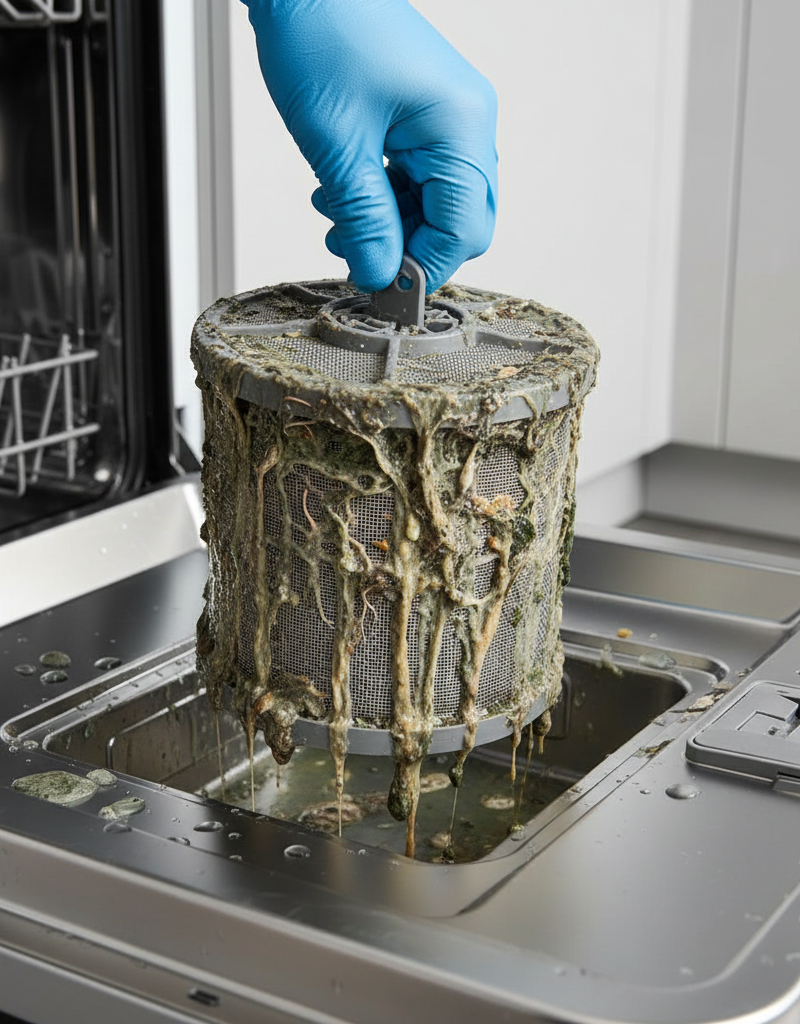
Over time, this fine mesh screen becomes coated in a greasy, sticky film—a combination of melted fats from your food and undissolved detergent. Fine food particles get embedded in this film, where they are protected from the water jets of a normal cycle. Bacteria move in and begin to decompose these trapped particles, creating a thriving ecosystem called a biofilm. As they break down the food waste, these bacteria release volatile sulfur compounds, which are the source of that distinct and terrible rotten-egg smell. Until you physically remove and scrub this film off the mesh, the smell will always return.
Step-by-Step Fix
Follow these steps to deep clean your dishwasher's entire filter assembly and eliminate the odor for good. This process should take about 30 minutes.
SAFETY NOTE: Before beginning any work, disconnect the dishwasher from its power source by turning it off at the circuit breaker. This prevents any possibility of the machine accidentally starting while you work.
-
Empty the Dishwasher: Remove the bottom dish rack completely to give yourself clear access to the floor of the dishwasher tub.
-
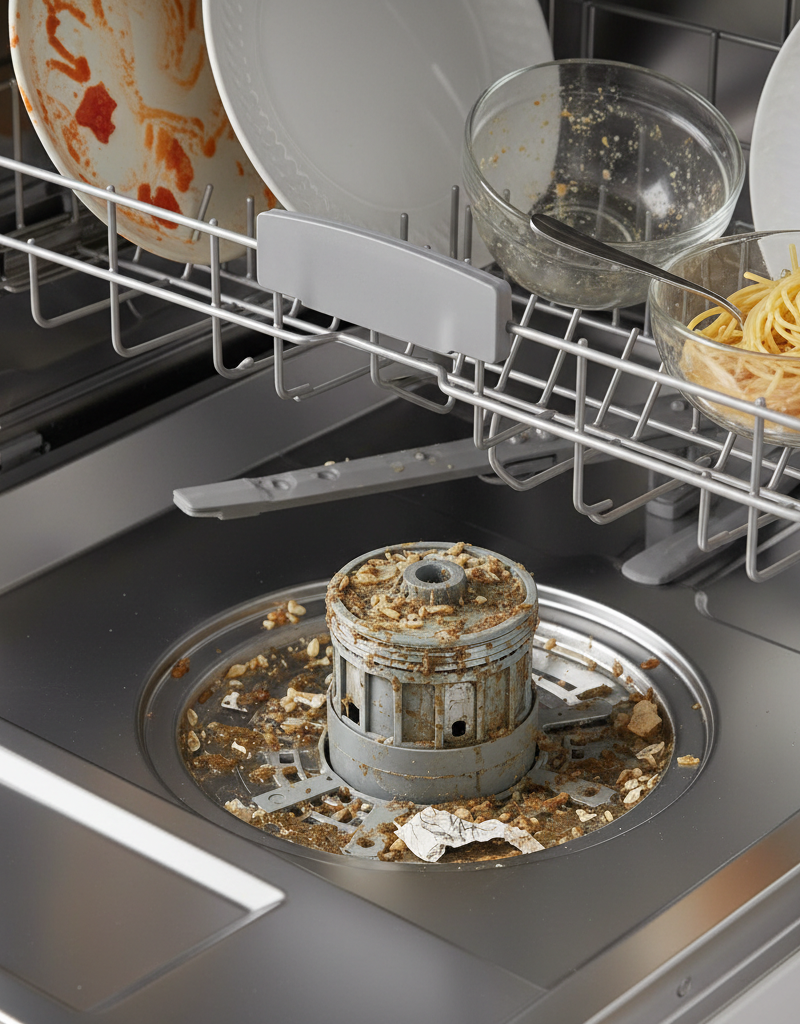
Locate the Filter Assembly: Look at the bottom of the dishwasher tub, directly under the lower spray arm. You will see a circular, raised plastic assembly. This is where the filters are housed.
-
Remove the Lower Spray Arm: The spray arm can obstruct access to the filter. Most lower spray arms can be simply lifted straight up and off their mount. Some older models may have a plastic nut that you need to unscrew counter-clockwise to release the arm.
-
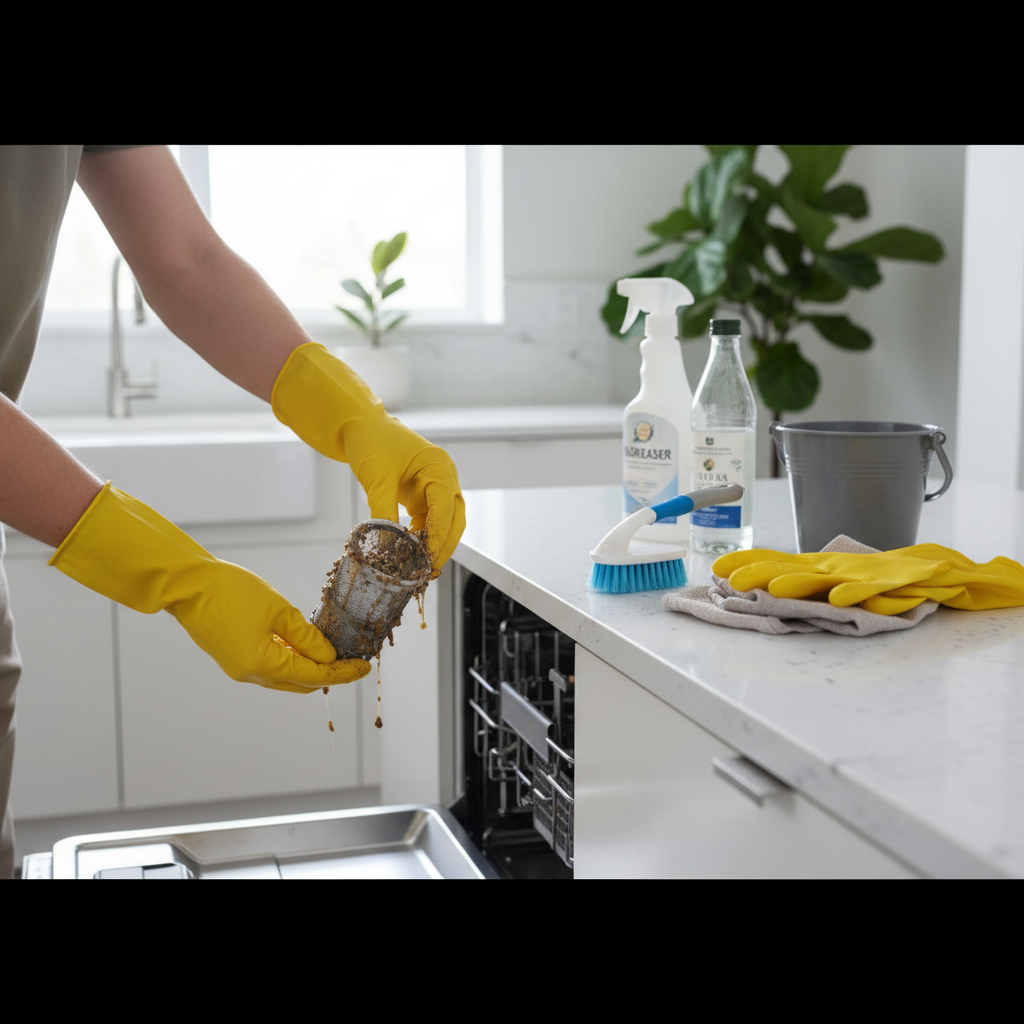
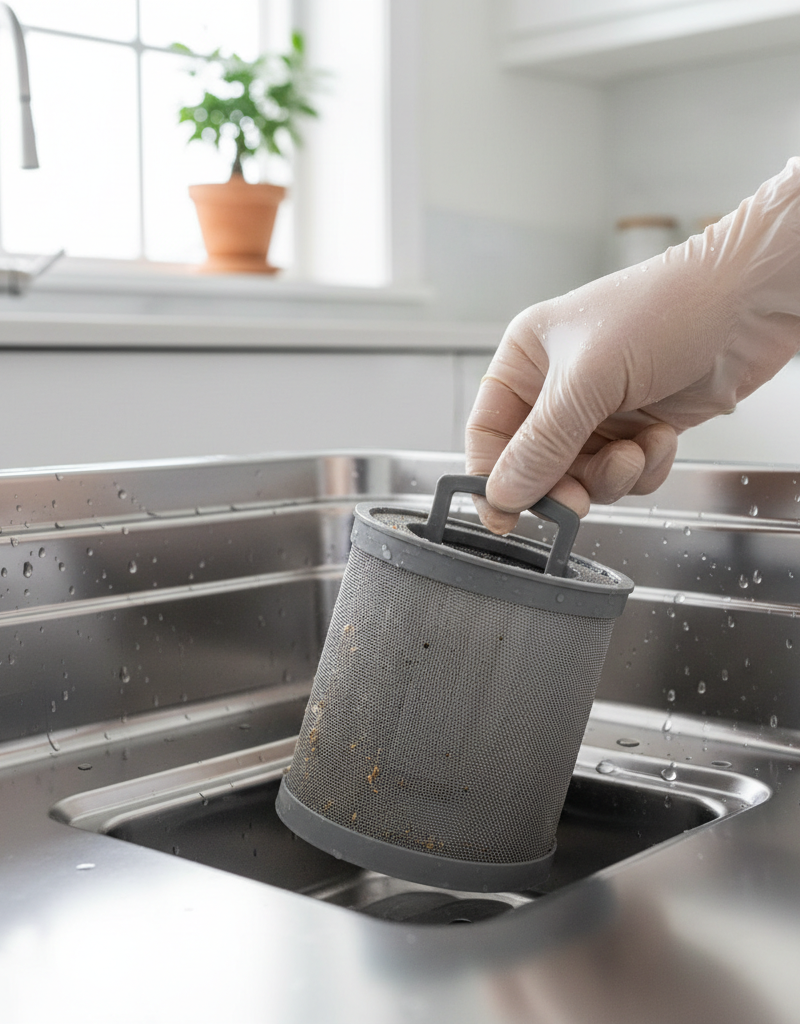
Remove the Main Cylindrical Filter: The main filter, often called the coarse filter, usually has a handle or grips. Turn it counter-clockwise (most models have directional arrows printed on them) about a quarter-turn and lift it straight up. It will likely be filled with unpleasant debris.
-
Expose the Secondary Filter: With the main filter removed, you will now see the flat, stainless steel mesh screen—the secondary or fine filter. This is the primary source of the smell. It covers the sump hole and is what you need to remove next.
-
Remove the Secondary Filter: Pay close attention to how this filter is secured. Most modern designs allow you to simply lift it out. However, some models, particularly brands like Bosch, Maytag, or KitchenAid, may have it secured by one or two Torx screws (often a T-15 or T-20 size). If so, use the appropriate screwdriver to remove them. Do not pry or bend the filter. If it doesn't lift out easily, check for retaining screws or tabs.
-
Clean Both Filters Thoroughly: Take the filter components to your sink. Rinse the heavy debris off under hot running water. Then, using a soft-bristled brush (an old toothbrush is perfect) and some grease-cutting dish soap, scrub both the main cylindrical filter and the fine mesh screen. Be gentle with the fine mesh to avoid tearing it, but be firm enough to remove all the greasy film and tiny embedded food particles. Hold it up to the light to ensure you can see clearly through the mesh.
-
Soak if Necessary: If the grease is particularly stubborn, let the filters soak in a basin of hot water and a cup of white vinegar for 20-30 minutes before scrubbing. This will help break down the biofilm and mineral deposits.
-
Clean the Filter Housing: While the filters are soaking, take a cloth or sponge with hot, soapy water and wipe out the filter housing area (the sump) inside the dishwasher. There's often a ring of sludge left behind here as well.
-
Reassemble in Reverse Order: Once the filters are perfectly clean, re-install them. The flat, fine mesh screen goes in first. If it had screws, secure them snugly. Then, insert the main cylindrical filter and twist it clockwise until it locks firmly into place. You should feel or hear it click. This is a critical step; a loose filter can lead to poor cleaning and potential damage.
-
Re-install the Spray Arm: Place the lower spray arm back onto its mount. Give it a spin with your hand to make sure it rotates freely and doesn't wobble.
-
Run a Two-Part Cleaning Cycle: First, place a dishwasher-safe cup filled with 1-2 cups of white vinegar on the top rack of the empty dishwasher and run a full, hot cycle. The vinegar will help sanitize the interior and break down any remaining grease or mineral deposits in the system. After this cycle finishes, sprinkle a generous cup of baking soda across the bottom of the dishwasher tub and run another short, hot cycle. The baking soda will neutralize any lingering odors, leaving your machine smelling fresh.
Common Causes
Understanding why the filter gets so clogged can help prevent the problem from recurring.
- Not Scraping Plates: While you don't need to pre-rinse, large chunks of food should always be scraped into the trash. These are the biggest culprits for clogging the primary filter and overwhelming the secondary one.
- Greasy and Oily Foods: Large amounts of grease, butter, and cooking oils congeal as they cool in the dishwasher's sump, creating the sticky film that traps other particles.
- Infrequent Use: If you only run your dishwasher once or twice a week, the food soil and moisture sitting in the filter have more time to decompose and breed smelly bacteria.
- Low-Temperature Wash Cycles: Routinely using "eco" or "light" cycles may not use water that's hot enough (140°F or higher) to effectively melt grease and kill bacteria.
- Ignoring the Main Filter: If the main filter is already clogged, more fine particles are forced into the secondary mesh screen, accelerating the buildup of the smelly biofilm.
- Hard Water: Mineral deposits from hard water (calcium and magnesium) can build up on the filter mesh, creating a rough surface that traps food particles and biofilm even more effectively.
Common Mistakes
Avoid these common missteps when trying to cure a smelly dishwasher.
- Only Cleaning the Main Cylindrical Filter: This is the #1 mistake. It helps, but it doesn't solve the core problem, as the worst smells come from the fine mesh screen underneath.
- Using Bleach: Never use chlorine bleach in your dishwasher. It can corrode stainless steel interiors and damage rubber gaskets and seals, leading to leaks.
- Using a Wire Brush or Steel Wool: The fine mesh of the secondary filter is delicate. Abrasive scrubbing tools can easily tear it, rendering the filter ineffective and potentially allowing debris to damage the drain pump.
- Forgetting to Clean the Spray Arm Nozzles: While you have the arm off, inspect the small holes. If they are clogged with hard water deposits or debris, use a toothpick or a small piece of wire to clear them out for better washing performance.
- Incorrect Reassembly: Forgetting to lock the main filter back into place is a frequent error. An unlocked filter can allow food to bypass the system, leading to clogs in your pump or drain line—a much more expensive problem.
Cost & Time Breakdown
Addressing a smelly dishwasher is usually a very cheap DIY fix. Costs only increase if parts are broken or the problem lies deeper in the plumbing.
| Item | Description | Cost (DIY) | Cost (Pro) |
|---|---|---|---|
| Deep Clean | Thoroughly cleaning filters, spray arms, and tub | $0 - $10 (for vinegar/cleaner) | $125 - $250 |
| Filter Replacement | If the fine mesh filter is torn or damaged | $20 - $60 | Included in service call fee + parts |
| Drain Line Cleaning | If the clog is further down the drain line | $5 - $15 (for a drain snake) | $150 - $300 |
| Drain Pump Repair/Replacement | If the pump itself is failing and causing odors | $150 - $350 (part only) | $300 - $600 |
| Total | Typical Scenario (DIY Deep Clean) | $0 - $10 | $125 - $250 |
Tips & Prevention
Keep your dishwasher smelling fresh by incorporating these habits.
- Scrape, Don't Pre-Rinse: Scrape large food solids into the garbage can, but don't pre-rinse your dishes. Modern dishwasher detergents contain enzymes that need some food soil to latch onto in order to work effectively.
- Clean the Main Filter Weekly: Make it a habit. It takes less than a minute to twist out the main filter, rinse it under the tap, and lock it back in place. This dramatically reduces the load on the secondary filter.
- Deep Clean the Secondary Filter Quarterly: Perform the full step-by-step cleaning process described above once every 3-4 months to prevent any significant biofilm buildup.
- Run Hot Water First: Before starting a cycle, run the hot water at your kitchen sink until it gets hot. This ensures the dishwasher fills with hot water from the very start of its cycle, which is more effective at dissolving grease and soap.
- Use a Proper Cleaner Monthly: Once a month, run an empty hot cycle using a dedicated dishwasher cleaner (like Affresh or Finish) or the vinegar/baking soda method described earlier.
- Leave the Door Ajar After Cycles: Once a cycle is complete, prop the door open slightly. This allows the humid interior to air out and dry completely, preventing the growth of musty-smelling mold and mildew.
When to Call a Professional
If you have meticulously cleaned both the primary and secondary filters and the smell persists, the problem may be beyond the dishwasher itself. A persistent foul odor could indicate a blockage or buildup in the dishwasher's drain hose. Bends and loops in the hose are common collection points for sludge. A smell can also indicate a failing drain pump that isn't completely emptying the dirty water from the tub.
Furthermore, the issue might be with your home's plumbing. If the dishwasher drain hose is improperly installed without a "high loop" or an air gap, it can create a siphon effect that allows wastewater from your sink's drain to flow back into the dishwasher tub, bringing awful smells with it. This is a common installation error. If you suspect the issue is with the drain line, the pump, or your home's plumbing connection, it's time to call a professional. Appliance repair technicians and licensed plumbers have the diagnostic tools to identify the true source of the problem and ensure it’s fixed correctly and safely.
PRO CALLOUT: If the smell continues after a deep clean of all filters and the tub, the issue may be in the drain line or the home's plumbing. Call a licensed plumber or appliance repair technician to diagnose and fix the problem safely.
Related Articles
Keep troubleshooting with these hand-picked guides from FixlyGuide:
- Showers Gone Cold? One Hidden Culprit Behind Your Missing Hot Water — Discover the most common, often overlooked reason your shower runs cold and how to fix it with simple steps.
- The #1 Mistake Homeowners Make When Diagnosing Low Water Pressure (It's Not Your Pipes!) — Discover the most overlooked culprit behind low water pressure throughout your entire house and learn how to fix it with simple steps.
- Your shower sucks? 3 hidden culprits explained. — Low water pressure throughout your house often points to a few common culprits, from a partially closed main shut-off valve to issues with…
- Your Windows Are Crying? The Hidden Cause of Condensation — Window condensation isn't just a harmless annoyance; it's a clear signal that your home's indoor humidity is too high, potentially leading…
- The 7 Sneaky Ways Spring Damages Your Home (And How to Stop Them Now) — Uncover the hidden threats spring poses to your home, from subtle water damage to pest invasions, and get actionable steps to protect your…
- Your 'Clean' Dishes Are Still Dirty? The Culprit Is Hiding — Frustrated by gritty, food-flecked dishes after a full wash cycle? The problem isn't your detergent. Your dishwasher is making dishes dirti…
What should this project cost?
Enter your project details for a realistic cost range before you call anyone.
Cost depends heavily on which system turns out to be the source.
- Regional adjustment
- National average
- Labor share (typical)
- ~$1,620
- Quotes to collect
- 3 written estimates
Educational estimate based on national averages — not a binding quote. Always confirm with written local estimates.
Get the print-ready PDF of this guide
A clean, ad-free, printable version you can keep on your phone or pin to the workshop wall. Free with a FixlyGuide account.
- Print-optimized layout
- Tools, materials & every step included
- Saved to your account
Recommended for DIYers & woodworkers
Sponsored
The Top 20 Tools for Workshops of Any Budget
No stationary machines or power tools required — plus 3 fundamental tools that can't be bought at any price.
Get the free guide
Ted's Woodworking — The #1 Woodworking Resource
Detailed instructions, dimensioned drawings, materials & cutting lists, and 3D schematics for every skill level.
See the plansSponsored: links above are affiliate links. FixlyGuide may earn a commission on qualifying purchases — at no extra cost to you.
Frequently asked questions
Can I use bleach to clean my dishwasher?+
It is not recommended. Chlorine bleach can cause corrosion on stainless steel tubs and inner door panels, and it can degrade rubber gaskets and seals, potentially leading to leaks.
How often should I clean my dishwasher filters?+
As a preventative measure, you should rinse the main (coarse) filter weekly or bi-weekly. A full deep cleaning of both the main and secondary (fine mesh) filters should be done quarterly, or any time you notice a persistent odor.
What's that rotten egg smell in my dishwasher?+
That distinct rotten egg smell is typically caused by sulfur compounds. These are released by anaerobic bacteria that are feasting on food particles trapped in your dishwasher's filter system, particularly in the greasy film that builds up on the fine mesh screen.
Is it better to wash dishes by hand or in a dishwasher?+
Modern, Energy Star-rated dishwashers are significantly more efficient than washing by hand, using far less water and energy. A full dishwasher load can use as little as 3-4 gallons of water, while hand washing the same amount of dishes can use up to 27 gallons.
Discussion
Loading comments…