- Turn off the power to the bathroom fan at your home's main electrical panel.
- Use a voltage tester to confirm there is no power at the fan switch and unit before touching any wires.
- Wear safety glasses, a dust mask, and gloves.
- If working in an attic, walk only on joists and wear appropriate protective gear. If using a ladder, ensure it is stable and follow all safety protocols.
General remodeling · Renovation planning
| Project category | General remodeling |
|---|---|
| Problem type | Renovation planning |
| Trade required | General contracting |
| Urgency | Planned project |
| Safety risk | Low safety risk |
| DIY suitability | Pro recommended |
| Cost category | Major investment |
| Typical timeline | Design and permitting often 2–4 months before work starts |
| Contractor type | General contractor |
Repair option
Phase the work and fix the building envelope first.
Replacement option
Full renovation with permits, design, and a general contractor.
Common causes
- Space no longer fits how the household lives
- Resale preparation
- Deferred maintenance stacking up
Relevant tools:project cost estimatorcompare quoteshome improvement material prices
Published May 5, 2026Last updated August 17, 2026
Tools & materials you'll need
Affiliate linksAs an Amazon Associate FixlyGuide earns from qualifying purchases — at no extra cost to you. Prices and availability are accurate as of publication and subject to change.
Quick Answer
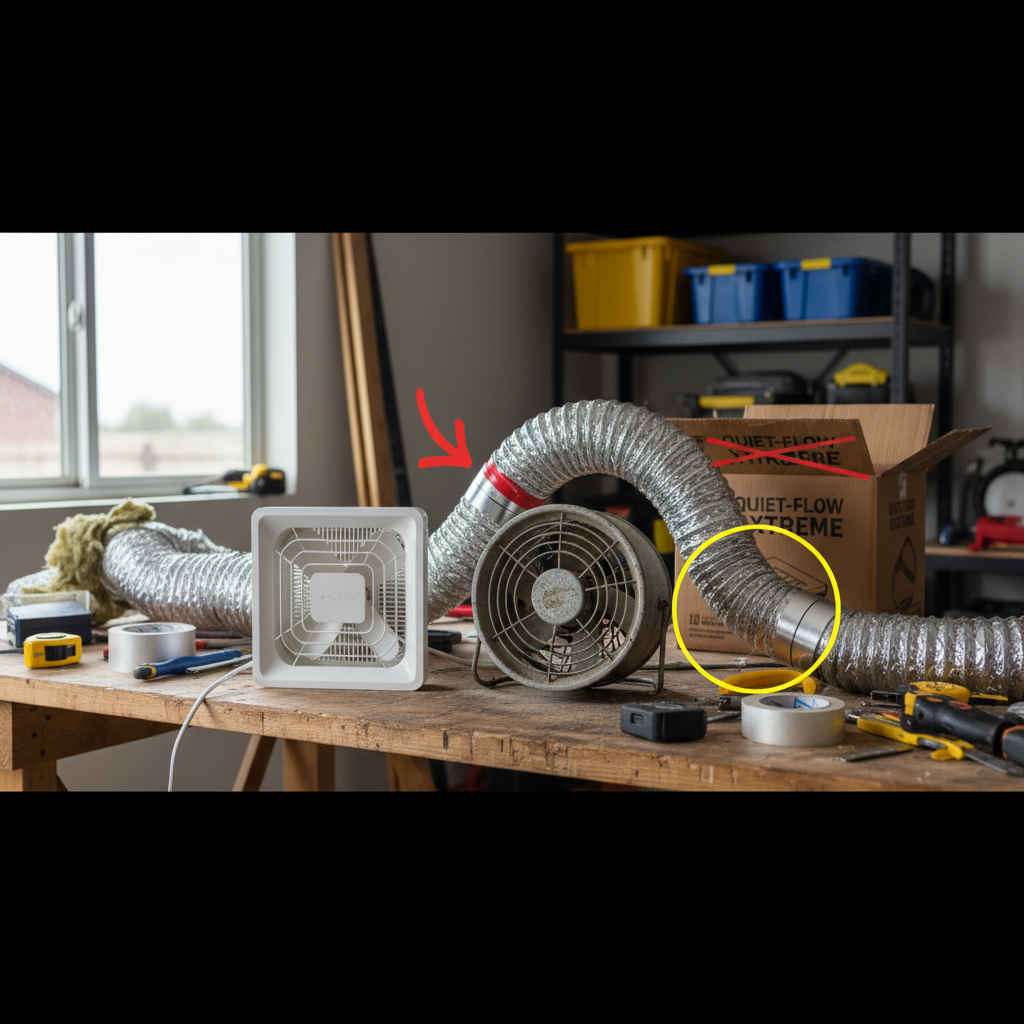
If your new bathroom fan is louder than expected, the primary cause is often high static pressure. This occurs when a new fan, designed for a specific duct size (e.g., 4-inch), is connected to smaller, older, or restrictive ductwork (e.g., 3-inch). This bottleneck forces the motor to work harder, creating significant air turbulence and noise that negates the fan's quiet rating.
The Problem
You did the research. You spent $150, maybe even $250, on a premium bathroom fan with a whisper-quiet rating—something like 0.5 sones. You envisioned a peaceful, spa-like bathroom, free from the roar of the ancient, builder-grade fan you replaced. The installation is complete, you flip the switch, and... disappointment. The new fan is just as loud, if not louder, than the old one. It whines, whistles, or hums with a turbulence that sounds cheap and ineffective.
This is an incredibly common and frustrating scenario for homeowners. The immediate assumption is that the fan itself is defective or that the sone rating was a marketing lie. But the fan is rarely the problem. The true culprit is an invisible force choking its performance: static pressure. Your brand-new, high-performance fan is being suffocated by an old, undersized, or poorly configured duct system it's connected to. That quiet, efficient motor is now screaming for air, and all you hear is the noise of that struggle. The new bathroom fan is louder because it's a high-performance engine being forced to breathe through a coffee stirrer, and until you fix the airway, you'll never get the quiet performance you paid for.
How It Works
To understand why your new bathroom fan is louder, you need to understand the physics of moving air. It boils down to a battle between the fan's power and the ductwork's resistance.
First, let's clarify the ratings. Bathroom fans are measured in two key ways: CFM (Cubic Feet per Minute) and Sones. CFM tells you how much air the fan can move, while Sones measure the perceived loudness. For reference, 1.0 sone is about the sound of a quiet refrigerator humming. A loud, cheap fan can be 4.0 sones or more. Your goal is high CFM (to effectively remove moisture) and low sones (for peace and quiet).
The problem arises with a third, often unmentioned metric: Static Pressure, measured in inches of water column (e.g., 0.1" w.g.). Static pressure is the resistance the fan must overcome to push air through the duct system. Every foot of duct, every bend, and the final exit vent on your roof or wall creates friction and backpressure. Think of it like water pressure in a hose: a short, wide-open hose offers little resistance, while a long, narrow, kinked hose requires much more pressure to move the same amount of water.
Manufacturers like Panasonic, Broan-NuTone, and others test their fans in a laboratory certified by the Home Ventilating Institute (HVI). They get that ultra-low sone rating (e.g., 0.3 sones) and high CFM rating (e.g., 110 CFM) under ideal conditions, essentially with no duct attached (or at a very low default static pressure of 0.1" w.g.). However, the moment you attach that fan to real-world ductwork, the static pressure increases.
A typical, less-than-ideal duct run with a couple of elbows and a standard wall cap might create 0.25" w.g. of static pressure. If you look at the fan's engineering specs, you'll see a "fan curve" chart. This chart shows that as static pressure goes up, both CFM and sone performance get dramatically worse. That 110 CFM fan might only move 75 CFM at 0.25" of pressure. More importantly, the motor has to spin harder and faster to fight that resistance, which generates more noise. The air itself, now being forced through a restrictive path, becomes turbulent and creates a loud "whooshing" sound. The most common cause of high static pressure is a diameter mismatch—connecting a new 4-inch fan to an old 3-inch duct, which nearly quadruples the resistance compared to a 4-inch duct of the same length.
Step-by-Step Fix
This guide will walk you through diagnosing and fixing the ductwork that is making your new fan noisy. The goal is to create a clear, low-resistance path for the air to travel.
SAFETY FIRST: This job involves working with electricity and potentially in an attic or on a ladder.
- Turn off the power to the bathroom fan at your home's main electrical panel.
- Use a voltage tester to confirm there is no power at the fan switch and unit before touching any wires.
- Wear safety glasses, a dust mask, and gloves.
- If working in an attic, walk only on joists and wear appropriate protective gear. If using a ladder, ensure it is stable and follow all safety protocols.
1. Access the Fan and Ductwork
- Action: Pull down the fan's grille. Most are held by spring-loaded metal clips. Squeeze them together to release the grille. Depending on your model, you may need to unplug the fan motor from the housing and remove the blower assembly (usually held by one or two screws) to get a clear view of the duct connection.
2. Identify Your Fan's Duct Requirement
- Action: Look at the fan's metal housing or the plastic duct connector port. You will see it is designed for a specific duct diameter, which is almost always 4-inch or 6-inch on modern "quiet" fans. It will be stamped into the metal or plastic. Confirm this with the fan's installation manual.
3. Inspect the Duct Connection Point
- Action: This is the most critical diagnostic step. Observe how the duct is connected to the fan's exhaust port. Is a 4-inch fan outlet being squeezed into a smaller duct? Is there a "reducer" fitting right at the fan that transitions from 4-inches down to 3-inches? This is the primary mistake that causes noise.
4. Measure and Evaluate the Existing Duct
- Action: Get into your attic or the space above the fan. Use a tape measure to determine the diameter of the duct pipe connected to your fan. Homes built before the 1990s often used 3-inch ductwork, which is completely inadequate for modern fans. Also, note the material: is it a rigid metal pipe or a flexible, foil-style duct?
5. Trace the Full Duct Run
- Action: Follow the duct from the fan housing all the way to where it exits the house (either through a roof vent or a side wall cap). Look for problems along the way: are there excessively sharp 90-degree bends? Are there sections of flexible duct that are crushed, kinked, or have a deep sag? Count the number of elbows. A short, straight run is ideal.
6. The Fix: Replace the Undersized Duct
- Action: If you have a 4-inch fan connected to a 3-inch duct, the only correct solution is to replace the entire duct run with the proper size. Purchase enough 4-inch (or 6-inch, if specified) rigid, smooth-walled metal ducting to make the full run. While flexible duct is easier to install, its ribbed interior creates more resistance. Use it only for the final connection to the fan or for gentle bends where rigid duct is impossible.
7. Ensure Gentle Bends
- Action: When installing the new duct, avoid sharp 90-degree turns. Use sweeping "ells" or 45-degree elbows instead. A sharp 90-degree turn can add the equivalent of 15-20 feet of straight pipe in terms of static pressure. Two smooth 45-degree bends are much better than one sharp 90.
8. Seal All Joints with Mastic Tape
- Action: This is a non-negotiable step for performance. At every point where two sections of duct connect (to each other, to the fan housing, and to the vent cap), use aluminum foil mastic tape to create an airtight seal. Do NOT use standard cloth "duct tape," as it will dry out and fail. Leaky joints reduce suction and can vent moist bathroom air directly into your attic, leading to mold.
9. Upgrade the Exterior Vent Cap
- Action: The small, louvered plastic vent caps are notoriously restrictive. A premium wall or roof cap with a larger opening and a built-in damper will significantly lower static pressure. Look for brands like Lambro or Dundas Jafine that advertise high-flow designs designed for modern fans. Ensure the damper opens and closes freely.
10. Insulate the Ductwork
- Action: If your duct runs through an unconditioned space like an attic, it must be insulated. You can use pre-sleeved insulated flexible duct for this or wrap your rigid metal duct with R-6 or R-8 foil-backed insulation. This prevents warm, moist air from condensing inside the cold duct during winter, which can lead to water dripping back into the fan or causing mold growth within the duct itself.
11. Reassemble and Test
- Action: Securely re-install the fan motor and grille. Turn the power back on at the breaker panel. Now, flip the switch. You should hear a dramatic reduction in noise—mostly the gentle sound of moving air, not a whining motor or turbulent rattling.
Common Causes
- Duct Diameter Mismatch: The #1 cause. Most new quiet fans require 4-inch or 6-inch ducts, while many older homes have 3-inch ducts. Connecting a 4-inch fan to a 3-inch duct creates a massive bottleneck.
- Restrictive Termination Cap: The exterior vent cap is often overlooked. Standard caps with small louvers or poorly designed flappers create significant backpressure.
- Crushed or Kinked Flex Duct: Flexible ducting is easily crushed during attic insulation installs or if stepped on. A single kink can cut airflow by over 50% and dramatically increase noise.
- Too Many Elbows: Every bend in the ductwork adds resistance. More than two or three 90-degree elbows in a single run can build up enough static pressure to compromise fan performance.
- Excessive Duct Length: The manufacturer's performance ratings assume a relatively short duct run. A run over 50 feet, even if perfectly straight and sized correctly, will have lower CFM and higher noise.
- Improper Fan Installation: If the fan's metal housing isn't securely mounted to the ceiling joists, it can vibrate, causing a rattling or humming noise that is mistaken for motor noise.
Common Mistakes
- Using a 4" to 3" Reducer: Homeowners often think a reducer fitting is the solution for a size mismatch. This is the worst possible mistake, as it creates a high-velocity chokepoint right at the fan, maximizing turbulence and noise.
- Using All-Flex Duct: While convenient, using flexible duct for the entire run is a bad practice. Its ribbed interior causes more friction than smooth duct, and it's prone to sagging and kinking, creating blockages.
- Using 90-Degree Bends: Forcing a sharp 90-degree turn with flexible duct or using a hard 90-degree rigid elbow creates significant air turbulence. Sweeping bends are always better.
- Not Sealing Joints: Skipping the foil mastic tape on duct connections allows air to leak into the attic or ceiling cavity. This not only wastes energy but can cause moisture damage.
- Ignoring the Exit Point: Focusing only on the fan and the attic duct run while ignoring a clogged or restrictive exterior vent cap.
- Buying on Sones Alone: Purchasing a fan based on its sone rating without first inspecting the existing ductwork to ensure it can support that fan's performance requirements.
Cost & Time Breakdown
| Task | DIY Cost | Pro Cost | Time |
|---|---|---|---|
| New Quiet Fan Unit (e.g., Panasonic) | $120 - $300 | Same (part cost) | N/A |
| Duct Inspection & Diagnosis | $0 | $100 - $175 | 30-60 minutes |
| Replacing 15ft of Duct (Easy Attic Access) | $50 - $80 | $250 - $450 | 2-4 hours |
| Replacing Duct (Difficult/Cramped Access) | $70 - $120 | $400 - $700+ | 4-8 hours |
| Core Drilling New 4" Wall/Roof Vent | (Tool rental: ~$50) | $150 - $300 (add-on) | 1-2 hours |
| Full Pro Install (Fan + New Duct Run) | N/A | $450 - $900+ | 4-6 hours |
Tips & Prevention
- Plan the Duct Run First: Before you even buy a new fan, go into your attic and check your duct size. If you have 3-inch ducting, you need to factor in the cost and labor of replacing it.
- Prioritize Rigid, Smooth Duct: For the best airflow and lowest noise, use smooth-walled rigid metal ducting for all straight runs. Reserve flexible duct only for short, complex connections where rigid isn
Related Articles
Keep troubleshooting with these hand-picked guides from FixlyGuide:
- That Heavy Mirror? It Needs More Than Just a Nail — Stop guessing with drywall anchors; the physics of shear force and toggle bolt ratings are the secret to keeping your heavy mirror securely…
- That New Grout Is Already Cracking? Here’s the Hidden Cause — Cracked grout weeks after a renovation is often a sign of a deeper issue with your subfloor or tile installation, not just a problem with t…
- The 7 Mistakes That Ruin a Perfect Paint Job (and How to Fix Them) — Painting a room like a pro isn't just about technique—it's about avoiding common pitfalls that lead to streaks, drips, and uneven finishes.…
- Your Floating Shelves Sag? The 3 Drywall Mistakes You're Making — Learn how to install floating shelves into drywall securely and prevent common issues like wobbling or damage with the right tools and tech…
- Your New Faucet Leaks at the Base? The 50-Cent O-Ring Fix — That brand new kitchen faucet shouldn't be dripping at the base; here's the surprisingly common reason why it's happening and the specific…
- That Musty Smell From Your Fan? It's Not Just Dust — A musty smell from your bathroom fan is a major red flag for hidden mold and mildew growth in the fan housing or ductwork, often caused by…
What should this project cost?
Enter your project details for a realistic cost range before you call anyone.
Mid-range remodels commonly $12,000–$22,000; small repairs often under $600.
- Regional adjustment
- National average
- Labor share (typical)
- ~$5,603
- Quotes to collect
- 3 written estimates
Educational estimate based on national averages — not a binding quote. Always confirm with written local estimates.
Recommended for DIYers & woodworkers
Sponsored
The Top 20 Tools for Workshops of Any Budget
No stationary machines or power tools required — plus 3 fundamental tools that can't be bought at any price.
Get the free guide
Ted's Woodworking — The #1 Woodworking Resource
Detailed instructions, dimensioned drawings, materials & cutting lists, and 3D schematics for every skill level.
See the plansSponsored: links above are affiliate links. FixlyGuide may earn a commission on qualifying purchases — at no extra cost to you.
Frequently asked questions
Can I just use a 4-inch to 3-inch reducer right at the fan?+
No, this is the primary cause of noise issues. A reducer fitting installed right at the fan exhaust creates a severe bottleneck, which maximizes air velocity and turbulence right at the source. This is the loudest possible configuration and completely negates the quiet rating of the fan.
What's the difference between sones and decibels?+
Sones are a linear measurement of perceived loudness designed for consumers; 2 sones sound twice as loud to the human ear as 1 sone. Decibels (dB) are a logarithmic scale used more broadly in science. For home ventilation, sones are the industry standard because they provide a more intuitive understanding of noise levels.
Is flexible ductwork always a bad choice?+
Not always, but its use should be limited. Flexible duct is best used for short, final connections between the rigid duct run and the fan housing, as it simplifies alignment. However, it should never be used for an entire long run. Its ribbed interior creates more airflow resistance (static pressure) than smooth rigid duct, and it is easily crushed, kinked, or sagged, which creates blockages.
My fan is making a rattling or vibrating sound. Is that a duct issue?+
It can be. High static pressure from undersized ducts can cause the motor and blower wheel to become unbalanced and vibrate. However, a rattling sound is more often caused by an improper installation. Check to ensure the metal fan housing is screwed securely to the ceiling joists and is not loose. Also, make sure the blower wheel itself is clean and securely attached to the motor shaft.


Discussion
Loading comments…