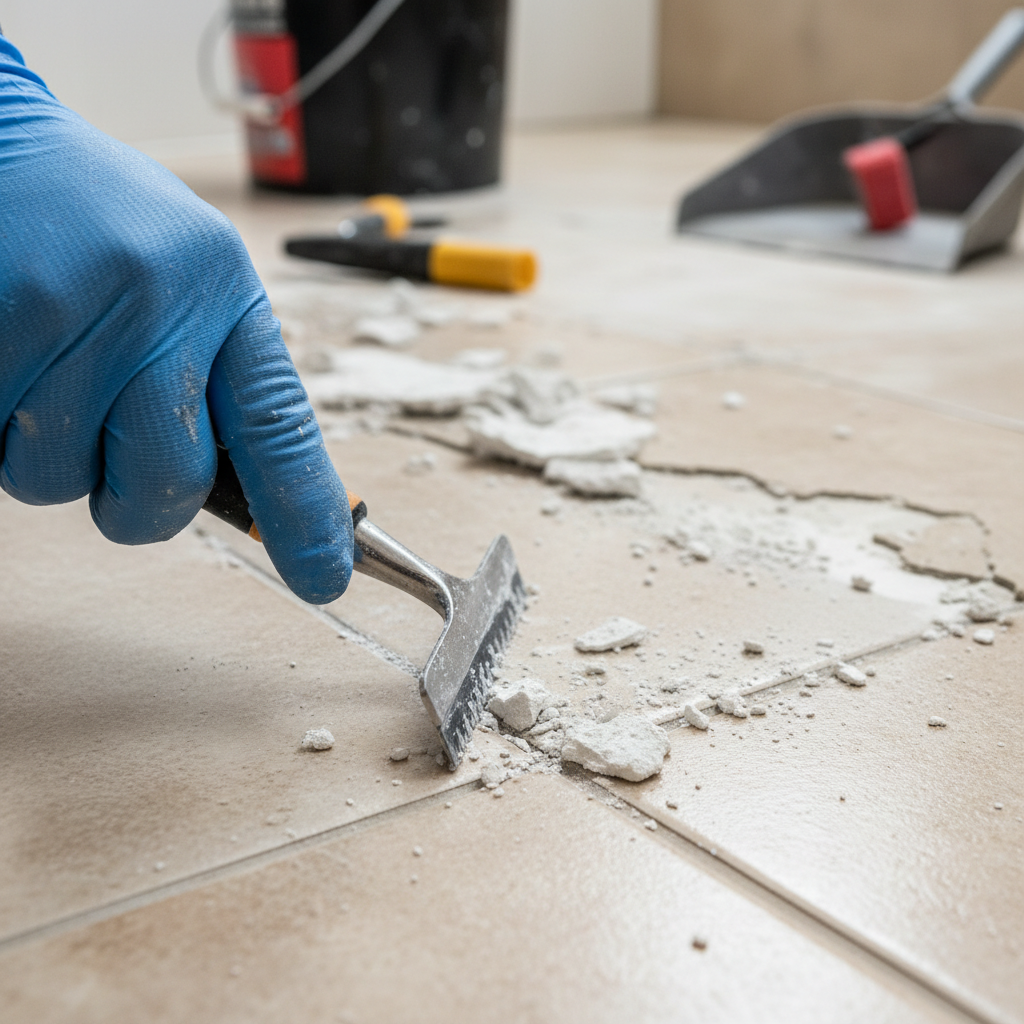
- Tools: Use a grout rake or a multi-tool with a grout removal blade. For fine work, a simple utility knife with a fresh blade works, but is slow.
- Safety: Wear safety glasses (grout shards will fly) and a dust mask.
- Technique: Go slowly and run the tool along the joint. The goal is to remove at least 2/3 of the grout’s depth without chipping the tile edges. Vacuum out all dust and debris from the joints. A clean joint is critical for a good bond.
General remodeling · Renovation planning
| Project category | General remodeling |
|---|---|
| Problem type | Renovation planning |
| Trade required | General contracting |
| Urgency | Planned project |
| Safety risk | Low safety risk |
| DIY suitability | Pro recommended |
| Cost category | Major investment |
| Typical timeline | Design and permitting often 2–4 months before work starts |
| Contractor type | General contractor |
Repair option
Phase the work and fix the building envelope first.
Replacement option
Full renovation with permits, design, and a general contractor.
Common causes
- Space no longer fits how the household lives
- Resale preparation
- Deferred maintenance stacking up
Relevant tools:project cost estimatorcompare quoteshome improvement material prices
Published April 27, 2026Last updated August 17, 2026
Tools & materials you'll need
Affiliate linksAs an Amazon Associate FixlyGuide earns from qualifying purchases — at no extra cost to you. Prices and availability are accurate as of publication and subject to change.
Quick Answer
Freshly cracked grout is rarely a grout problem. It's usually caused by subtle movement in the underlying subfloor or wall structure that transfers stress to the inflexible grout lines. Other causes include using too much water during mixing or cleaning, which weakens the grout, or not allowing it to cure properly before sealing.
The Problem
You’ve just spent a small fortune and countless hours on a beautiful new bathroom tile job. The tile is perfect, the lines are crisp, and for a few glorious weeks, everything looks flawless. Then, you spot it: a hairline crack spidering along a grout line. Soon, another appears. Within a month, your pristine installation looks like it’s been there for years, plagued by unsightly fissures. This isn’t just an aesthetic issue; cracked grout allows water to penetrate the substrate, potentially leading to widespread water damage, rot, and mold growth behind your walls or under your floor. The grout, which is meant to be the final, protective seal of your tile assembly, has failed. The frustrating part is that the grout itself is often blamed, when in reality, it’s usually just the first symptom of a deeper, hidden problem. Homeowners find themselves in a frustrating loop of digging out and reapplying grout, only to see the cracks return, because the root cause hasn’t been addressed. Understanding why it’s cracking is the first step to a permanent fix.
How It Works
To understand why grout cracks, you have to appreciate the chemistry and physics of a tile installation. It’s not just tile and grout; it’s a multi-layer system. For floors, you have the joists, a wood subfloor (like plywood or OSB), an underlayment (often cement board or a decoupling membrane), thin-set mortar, the tile, and finally, the grout. Each layer needs to be solid and stable.
Cementitious grout, the most common type, is essentially a mixture of cement, sand (for sanded grout), and pigments. When mixed with water, a chemical reaction called hydration occurs, causing the cement to cure and harden into a rigid, rock-like material. This rigidity is its weakness. While incredibly strong under compression (pushing forces), grout has very little tensile strength (pulling forces). When the tile assembly moves, bends, or flexes—even fractionally—it pulls the tiles apart, and the inflexible grout in between is forced to stretch. It can’t, so it cracks.
The primary culprit for this movement is subfloor deflection. Building codes allow for a certain amount of bounce or “deflection” in floors. For drywall or carpet, this is unnoticeable. But for a rigid tile assembly, it’s a death sentence. The standard for tile is a floor that deflects no more than L/360, meaning the floor shouldn’t bend more than its span in inches divided by 360. For natural stone, it’s a stricter L/720. If your floor joists are too far apart, too small for the span, or if the subfloor isn’t thick enough, the floor will flex when you walk on it, stressing the grout lines. A decoupling membrane like Schluter-DITRA is designed to prevent this by creating a forgiving layer that isolates the tile from subfloor movement.
Another key factor is the bond provided by the thin-set mortar. If the tile isn’t fully bedded in the mortar (a mistake called “spot-bonding”), there will be voids underneath. Any pressure on an unsupported edge of the tile will cause it to rock or shift, cracking the adjacent grout. Proper troweling technique to achieve 95% mortar coverage is critical. Finally, the grout’s own chemistry can be its downfall. Adding too much water to the mix creates a weaker, more porous final product. As the excess water evaporates, it leaves behind a larger network of microscopic voids, leading to shrinkage and cracking as the grout cures.
Step-by-Step Fix
1. Investigate the Movement — Before you touch the grout, test the substrate. For floors, fill a glass with water to the brim and place it on a tile. Walk around the area, and even jump lightly a few feet away. If water sloshes out, your subfloor has excessive deflection. For walls, press firmly on the tiles on either side of the crack. If you feel any give, flex, or hear a faint crunching sound, the wall substrate or the tile bond has failed.
2. Remove the Old Grout — Carefully remove all the cracked grout. * Tools: Use a grout rake or a multi-tool with a grout removal blade. For fine work, a simple utility knife with a fresh blade works, but is slow. * Safety: Wear safety glasses (grout shards will fly) and a dust mask. * Technique: Go slowly and run the tool along the joint. The goal is to remove at least 2/3 of the grout’s depth without chipping the tile edges. Vacuum out all dust and debris from the joints. A clean joint is critical for a good bond.
3. Clean the Joints — After vacuuming, wipe the joints with a damp, clean sponge to remove any remaining dust. Let them dry completely. This ensures the new grout can form a strong chemical bond with the tile edges and the old grout bed.
4. Address Substrate Flex (If Necessary) — If you identified significant floor deflection, a simple regrout will fail again. The permanent fix involves reinforcing the floor from below by adding blocking between joists, but this is an advanced job. A more accessible, though less ideal, solution is to switch from a cementitious grout to a more flexible one.
5. Choose the Right Grout — Don’t just buy the same grout again. * For minor, non-structural cracks: Use a high-quality, polymer-modified cementitious grout that matches your existing grout color. * For areas with known minor movement: Consider a flexible, high-performance grout like an epoxy grout or a single-component pre-mixed grout. These have better tensile strength and can tolerate slight movement. They are more expensive and can be harder to work with.
6. Mix and Apply the Grout — Follow the manufacturer’s instructions to the letter. * Mixing: Use the exact amount of water specified. Mix until it has a smooth, peanut-butter-like consistency. Let it “slake” (rest) for 5-10 minutes, then remix. This allows the chemicals to fully activate. * Application: Use a grout float to press the grout into the joints, holding the float at a 45-degree angle. Swipe diagonally across the tiles to pack the joints fully. Work in small, manageable sections.
7. Clean Up Meticulously — This is where many DIYers go wrong. After applying the grout, wait about 15-30 minutes for it to set up slightly. Then, use a lightly dampened, clean grout sponge. Make methodical, light passes across the tile surface, rinsing the sponge in a bucket of clean water after each pass. Using too much water will pull pigment and cement out of the grout lines, weakening it. Your goal is to clean the tile, not the grout line.
8. Tool the Joints — After the initial cleaning, you can lightly shape the grout lines with the rounded edge of the sponge or your finger for a smooth, concave profile. This compacts the grout, making it denser and more durable.
9. Allow for Proper Curing — Resist the urge to use the shower or walk on the floor. Most cement grouts require at least 72 hours of uninterrupted curing time. Check the manufacturer’s specifications. During this time, the grout is still hardening and is vulnerable to damage and moisture.
10. Seal the Grout — Once the grout is fully cured (again, check the timeline—it can be up to a week or more), apply a high-quality penetrating grout sealer. This soaks into the grout and helps repel water and stains. Apply it with a small brush or applicator bottle, and wipe any excess off the tile face immediately.
Common Causes
- Subfloor/Wall Deflection: The most common hidden cause. The structure behind the tile is moving, and the rigid grout can't handle the stress.
- Incorrect Mortar Coverage: If tiles aren't fully supported by thin-set mortar, they can rock or shift under pressure, cracking the grout at their edges.
- Too Much Water in Grout Mix: Weakens the chemical structure of the cement, leading to shrinkage and cracks as it cures.
- Excessive Water During Cleanup: Pulls cement particles and pigment out of the fresh grout lines, resulting in a weak, porous, and often splotchy finish.
- Premature Sealing or Use: Sealing grout before it is fully cured can trap moisture, preventing it from reaching its full hardness. Walking on or using a shower too soon disrupts the curing process.
Common Mistakes
- Ignoring the Root Cause: Simply scraping out the crack and filling it with caulk or more grout is a temporary fix that will fail when the underlying movement continues.
- Using the Wrong Removal Tool: Using a screwdriver or a sharp chisel is a recipe for chipped and damaged tiles. Invest in a proper grout rake or blade.
- Mismatched Grout Type: Using an inflexible cement grout in an area that clearly needs some give (like the joint between tub and tile, or a floor with known flex).
- Over-watering the Sponge During Cleaning: This is the #1 mistake. It leads to weak, chalky grout. The sponge should be barely damp, not dripping wet.
- Rushing the Curing Time: Homeowners are often impatient to get their bathroom back, but using a tiled surface before the grout has fully hardened guarantees future problems.
- Spot-Treating Cracks: Only removing the cracked portion of a grout line is a bad idea. To do the repair correctly, you must remove the grout from the entire length of the joint, from corner to corner, to relieve stress along the whole line.
Cost & Time Breakdown
| Task | DIY Cost | Pro Cost | Time |
|---|---|---|---|
| Grout Removal & Regrouting (100 sq. ft. bathroom floor) | $50 - $100 (tools, grout, sealer) | $400 - $800 | 8-12 hours (plus cure time) |
| Switching to Epoxy Grout (100 sq. ft.) | $150 - $250 | $700 - $1,200 | 10-15 hours (plus cure time) |
| Diagnosing Subfloor Deflection | $0 | $150 - $300 (structural engineer consult) | 1-2 hours |
| Reinforcing Floor Joists (from unfinished basement) | $100 - $300 (lumber, fasteners) | $1,000 - $2,500+ | 1-2 weekends |
Tips & Prevention
- Use the Right Underlayment: For new projects, insist on a tile-specific underlayment like cement board or, even better, a decoupling membrane on floors.
- Check Your Joist Span: Before tiling a floor, consult a joist span calculator online to ensure your floor structure is stiff enough. If not, plan to reinforce it.
- Mix Grout in Small Batches: Grout has a limited pot life. Mixing too much at once means the end of the batch will have started to cure before you can apply it properly.
- The "Two-Bucket" Cleaning Method: Use one bucket for the initial dirty rinse of your sponge, and a second bucket of clean water for the final pass. This keeps your sponge and your grout lines much cleaner.
- Caulk All Changes of Plane: Never grout the joint where the floor meets the wall, or where two walls meet in a corner. These areas are designed to move. Always fill them with a flexible, 100% silicone caulk designed for kitchens and baths.
When to Call a Professional
While regrouting a small area is a manageable DIY project, you should call a professional tile setter or a general contractor if you suspect the problem is structural. If you performed the deflection test and the floor is clearly spongy or bouncy, a pro is needed to assess the subfloor and joists and recommend a proper reinforcement strategy. This is not a simple DIY fix and getting it wrong can compromise the structural integrity of your floor. Additionally, if you see cracks that are wider than 1/8 inch, or if the tiles themselves are coming loose, this points to a significant installation failure or water damage issue that requires a professional diagnosis. Finally, if the cracks keep returning after one or two careful repair attempts, it’s time to concede that the underlying issue is beyond the scope of a simple regrout and have an expert open up the floor or wall to find the true cause.
Related Articles
Keep troubleshooting with these hand-picked guides from FixlyGuide:
- The 7 Critical Wall Prep Mistakes That Ruin Your Paint Job (And How to Fix Them) — Discover the crucial wall preparation steps often overlooked by DIYers that lead to peeling, cracking, and uneven paint finishes, and learn…
- Your Floating Shelves Failed? 3 Hidden Drywall Mistakes. — Learn how to safely and securely install floating shelves into drywall using the right anchors and tools, avoiding common mistakes.
- The 3 Tiny Screws That Keep Your Cabinet Doors From Closing — If your cabinet doors are crooked, sagging, or won't close, the problem isn't the wood—it's the three tiny, often-ignored adjustment screws…
- The Chemical Reason Your Peel-and-Stick Tile Is an Epic Fail — Discover the surprising scientific reason—poor surface preparation and adhesive chemistry—why your peel-and-stick backsplash is peeling awa…
- That Heavy Mirror? It Needs More Than Just a Nail — Stop guessing with drywall anchors; the physics of shear force and toggle bolt ratings are the secret to keeping your heavy mirror securely…
- Why Your Dishwasher Leaves Dishes Wet (And How to Fix It) — If your dishwasher leaves dishes wet after a cycle, it's a common and frustrating problem often caused by issues with rinse aid, loading, o…
What should this project cost?
Enter your project details for a realistic cost range before you call anyone.
Mid-range remodels commonly $12,000–$22,000; small repairs often under $600.
- Regional adjustment
- National average
- Labor share (typical)
- ~$5,603
- Quotes to collect
- 3 written estimates
Educational estimate based on national averages — not a binding quote. Always confirm with written local estimates.
Fixly Project Decision Box
- DIY difficulty
- Professional Recommended
- Estimated time
- Monitoring over 60–90 days · engineer visit 1–2 hours
- Cost level
- Major Project
Main tools / materials
- Crack monitor or pencil marks with dates
- Tape measure
- Marble or level for floor slope
When to stop and call a pro
- A crack wider than 1/4 inch or growing month over month
- Doors and windows that suddenly stick or will not latch
- Stair-step cracks in brick or block
- Separation between walls and ceilings or floors
Need professional help?
Get a Foundation EvaluationRecommended for DIYers & woodworkers
Sponsored
The Top 20 Tools for Workshops of Any Budget
No stationary machines or power tools required — plus 3 fundamental tools that can't be bought at any price.
Get the free guide
Ted's Woodworking — The #1 Woodworking Resource
Detailed instructions, dimensioned drawings, materials & cutting lists, and 3D schematics for every skill level.
See the plansSponsored: links above are affiliate links. FixlyGuide may earn a commission on qualifying purchases — at no extra cost to you.
Frequently asked questions
Can I just put new grout over the old cracked grout?+
No. New grout will not bond properly to old, sealed, or dirty grout. This creates a weak, shallow layer that will quickly chip and flake away. You must remove at least two-thirds of the depth of the old grout to provide a clean, stable base for the new grout to adhere to.
What is the difference between sanded and unsanded grout?+
Sanded grout contains fine sand, which adds strength and helps prevent shrinkage in wider grout joints (1/8 inch or larger). Unsanded grout is used for very narrow grout lines (less than 1/8 inch) and for polished or delicate tiles that could be scratched by the sand.
How soon after tiling can I grout?+
You must wait for the thin-set mortar that holds the tiles to fully cure. This typically takes 24 to 48 hours, but you should always follow the specific instructions on the mortar packaging. Grouting too soon can trap moisture and disturb the tiles before they are securely bonded.
Is epoxy grout better than cement grout?+
Epoxy grout is a high-performance alternative that is waterproof, stain-proof, and far more flexible and crack-resistant than cement grout. However, it is more expensive, has a shorter working time, and can be notoriously difficult to apply and clean up, making it a challenging product for beginner DIYers.
Why did my new grout dry to a much lighter color than the sample?+
This is a common issue caused by using too much water, either during mixing or the cleaning process. Excess water can cause "efflorescence" (the formation of white mineral salts on the surface) and can wash out the pigments, leading to a splotchy or faded appearance.
Discussion
Loading comments…