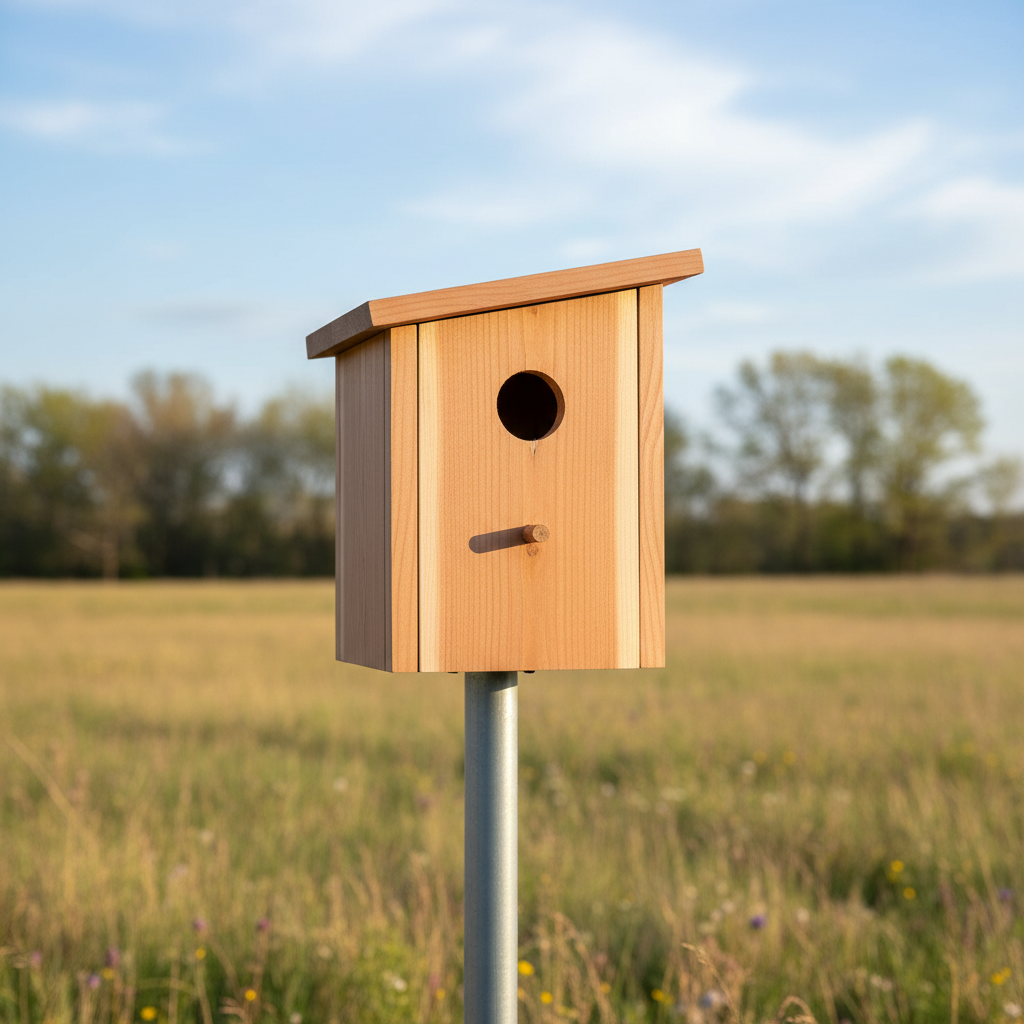
- Gather Your Materials and Cut Your Pieces — Acquire a 1x6 cedar or pine board, ideally 6 feet long. Cedar is naturally rot-resistant, making it ideal for outdoor use. Using a miter saw or handsaw, cut the following pieces precisely:
- Front: 10 inches @ 90 degrees (top edge) and 9 inches @ 15-degree angle (bottom edge)
- Back: 12 ¾ inches @ 90 degrees (top edge) and 11 ¾ inches @ 15-degree angle (bottom edge)
- Sides (x2): 10 ½ inches @ 90 degrees (top edge, longer side) and 9 5/8 inches @ 15-degree angle (bottom edge, shorter side). These should have a slight angle on their top edges to match the roof slope.
- Floor: 4 inches by 4 inches square
Published May 9, 2026Last updated August 17, 2026
Tools & materials you'll need
Affiliate linksAs an Amazon Associate FixlyGuide earns from qualifying purchases — at no extra cost to you. Prices and availability are accurate as of publication and subject to change.
Quick Answer
Building an effective bluebird house requires precise dimensions, including a 1 ½-inch entrance hole, an interior floor of at least 4x4 inches, a depth of 6-7 inches from the hole to the floor, and proper ventilation and drainage. These specific measurements deter predators and competitors while creating an inviting habitat for Eastern, Western, and Mountain Bluebirds. The right design ensures bluebirds feel safe, encouraging them to nest and raise their young in your yard.
The Problem
Many well-intentioned homeowners build or buy birdhouses hoping to attract the vibrant flash of bluebirds to their yards. However, they're often met with disappointment when sparrows, wrens, or even starlings take up residence instead, or worse, the house remains empty. The root cause of this frustration typically isn't a lack of bluebirds in the area, but rather a birdhouse design that fails to meet the specific, precise needs of these particular species. Bluebirds are highly particular about their nesting sites, requiring very specific entrance hole sizes to exclude larger competitors, precise interior dimensions for brood success, and features that ensure safety from predators and proper ventilation. A generic birdhouse simply won't cut it, leaving your efforts unrewarded and your bluebird dreams unfulfilled.
How It Works
To understand why specific dimensions are critical, it helps to think like a bluebird. Bluebirds are cavity nesters, meaning they seek enclosed spaces, typically old woodpecker holes or natural tree hollows. Wild nesting sites provide protection from predators, harsh weather, and competitors. A well-designed bluebird house mimics these natural conditions while improving on them for durability and accessibility.
Entrance Hole: The 1 ½-inch diameter entrance hole is a critical filter. It's just large enough for bluebirds to enter comfortably, but too small for larger, more aggressive cavity nesters like European Starlings. House Sparrows, while smaller, are still deterred by the overall design and depth when the entry hole is correctly sized for bluebirds. The hole should be positioned about 6 inches above the floor, creating a deep cavity that makes it difficult for predators like raccoons or cats to reach the nestlings, while also protecting the nest from wind-driven rain.
Interior Cavity: Bluebirds build cup-shaped nests, and they need enough floor space for the nest itself, plus room for the adults to maneuver and tend to a clutch of 4-6 eggs. An interior floor of at least 4x4 inches provides adequate space. Any smaller, and the nest might be squished, or the fledglings overcrowded. The total depth from the entrance hole to the floor, typically 6-7 inches, is equally important for predator defense. This depth, combined with an interior floor that's not too accessible from the entrance, acts as a natural barrier.
Ventilation and Drainage: While enclosure is key, fresh air and dryness are also vital. Holes drilled near the top of the side walls (under the eaves) allow warm, stale air to escape, preventing overheating in the summer. Similarly, small corner gaps or holes in the floor allow any rainwater that might seep in to drain out quickly. A dry nest prevents mildew and keeps nestlings healthy. Finally, a slightly sloped roof with an overhang protects the entrance and interior from direct rain and sun, enhancing the microclimate within the box.
Step-by-Step Fix
This project focuses on building a simple, effective bluebird house from a single cedar or pine board, incorporating all the critical dimensions for bluebird success.
-
Gather Your Materials and Cut Your Pieces — Acquire a 1x6 cedar or pine board, ideally 6 feet long. Cedar is naturally rot-resistant, making it ideal for outdoor use. Using a miter saw or handsaw, cut the following pieces precisely:
- Front: 10 inches @ 90 degrees (top edge) and 9 inches @ 15-degree angle (bottom edge)
- Back: 12 ¾ inches @ 90 degrees (top edge) and 11 ¾ inches @ 15-degree angle (bottom edge)
- Sides (x2): 10 ½ inches @ 90 degrees (top edge, longer side) and 9 5/8 inches @ 15-degree angle (bottom edge, shorter side). These should have a slight angle on their top edges to match the roof slope.
- Floor: 4 inches by 4 inches square
- Roof: 7 ½ inches by 7 inches
- Safety Note: Always wear safety glasses when operating power tools.
-
Drill the Entrance Hole — On the front piece, measure down 6 inches from the top (the 10-inch edge). Mark the center. Use a 1 ½-inch hole saw to drill the entrance hole. Smooth any rough edges with sandpaper. Ensure the hole is precisely 1 ½ inches for bluebirds and to deter larger birds.
-
Create Ventilation and Drainage — Drill two 1/4-inch ventilation holes near the top corners of each side piece, just under where the roof will sit. For drainage, you have two options: either drill four 1/4-inch holes in the corners of the floor piece, or slightly clip the corners of the floor piece with a saw to create small gaps. Good airflow and drainage are crucial for nestling health.
-
Assemble the Sides and Front — Starting with the front piece and one side piece, align their edges. Use galvanized or stainless steel screws (1 ½-inch) to attach them, pre-drilling pilot holes to prevent splitting the wood. Repeat with the other side piece. Ensure the sloped edges of the sides align to create the correct roof angle. Galvanized or stainless steel screws will resist rust.
-
Attach the Floor — Carefully slide the 4x4-inch floor piece into the assembled front and sides. The floor should sit flush with the bottom edges of the front and sides, about 6 inches below the entrance hole. Secure it with 1 ½-inch screws through the side walls into the edges of the floor. The exact placement ensures the crucial 6-inch depth from the hole to the floor.
-
Install the Back Piece — Align the back piece with the assembled box. The taller side of the back should be at the top. This piece will extend slightly above the side walls to meet the roof. Secure it with 1 ½-inch screws, again pre-drilling. This creates the back support for mounting and helps seal the box.
-
Attach the Roof — Place the 7 ½-inch x 7-inch roof piece so that it overhangs the front and sides slightly, providing protection from rain. Secure it with 1 ½-inch screws. Ensure a slight overhang on all sides, especially the front, to shed water effectively.
-
Create an Easy-Access Front (Optional but Recommended) — For annual cleaning, you'll want access to the interior. Instead of permanently screwing the front piece, consider using a single screw at the bottom as a pivot point and a small latch (like a hook and eye) at the top. This allows the front to swing open easily. Alternatively, some designs hinge the side. Easy access is essential for cleaning out old nests between broods or annually, which is vital for bluebird health.
-
Mounting Considerations — Bluebird houses should be mounted on a pole (not a tree) 4-6 feet high, ideally in an open area with scattered trees or shrubs, facing away from prevailing winds. Use a baffle on the pole to deter predators like raccoons and snakes. Mounting location and predator baffles are as important as the house design itself for bluebird success.
Common Causes
- Incorrect Entrance Hole Size: The single most common reason bluebird houses fail is an entrance hole that is too large, allowing European Starlings and House Sparrows to take over. Even a slightly too-small hole can deter bluebirds.
- Insufficient Cavity Depth: If the depth from the entrance hole to the floor is less than 6 inches, predators can easily reach in and prey on eggs or nestlings.
- Lack of Ventilation or Drainage: Poor airflow leads to overheating in summer and dampness, which can cause diseases and mildew in the nest. Lack of drainage means standing water can accumulate after rain.
- Perches: Bluebirds do not need perches. Perches only serve as convenient spots for predators and competing species to rest and access the entrance hole.
- Thin Walls: Thin walls (less than 3/4-inch thick) offer poor insulation, making the interior too hot in summer and too cold in early spring.
- Lack of Predator Guards/Baffles: Without a baffle on the mounting pole, raccoons and snakes can easily climb up and raid the nest.
Common Mistakes
- Using Pressure-Treated Wood: The chemicals in pressure-treated lumber can be harmful to birds. Always use untreated cedar, pine, or redwood.
- Painting the Interior: Birds generally prefer natural wood. If you must paint or stain the exterior, choose light, natural colors and ensure it's non-toxic. Never paint the interior.
- Installing a Perch: While many birdhouses come with perches, bluebird houses should explicitly not have one. It provides an advantage to predators and competitors without benefiting the bluebirds.
- Placing it in a Shady, Densely Wooded Area: Bluebirds prefer open fields with scattered trees, not dense forests. Place the house facing east or southeast if possible, to catch the morning sun and avoid the harshest afternoon heat.
- Ignoring Annual Cleaning: Old nests can harbor parasites and diseases. Always clean out the house at the end of the nesting season (late fall) or between broods if you have multiple bluebird families during the spring and summer.
- Mounting Directly on a Tree: Trees provide easy access for climbing predators like raccoons and snakes. Always mount on a smooth pole with a predator baffle.
Cost & Time Breakdown
| Task | DIY cost | Pro cost | Time |
|---|---|---|---|
| Acquire Wood & Fasteners | $15–$30 | N/A | 1 hour |
| Cutting & Drilling | $0 (own) | N/A | 1–2 hours |
| Assembly | $0 (own) | N/A | 1 hour |
| Mounting Pole & Baffle (Optional but Recommended) | $20–$50 | N/A | 1–2 hours |
| Total | $35–$80 | N/A | 3–6 hours |
Tips & Prevention
- Annual Cleaning is Key: After each nesting season (typically late fall or wait until late summer after the last brood), open the house and remove the old nest. This prevents parasite buildup and makes the house ready for the next spring. Wear gloves and consider a mask for dust.
- Monitor for Competitors: Regularly check your bluebird houses during nesting season (from early spring through late summer). If you see House Sparrows or Starlings attempting to nest, gently discourage them by removing their nesting materials. Be vigilant.
- Install Predator Baffles: A stovepipe or cone baffle on the pole below the house is essential to deter raccoons, snakes, and even cats. This simple addition drastically increases nesting success.
- Check Ventilation/Drainage Annually: Ensure ventilation holes are clear of debris and drainage holes in the floor are not clogged. Clear any spiderwebs or insect nests quickly.
- Consider Multiple Houses: If you have suitable habitat, placing bluebird houses 100-300 feet apart can sometimes attract multiple nesting pairs, as bluebirds are somewhat territorial during nesting season.
- Provide Water and Natural Food Sources: Supplement your bluebird housing efforts by providing a fresh water source (bird bath) and planting native berry-producing shrubs and trees, which are a valuable food source, especially in colder months.
When to Call a Professional
While building a bluebird house is a rewarding DIY project, you won't typically call a professional for this task. However, if you are struggling with power tools, precise cutting, or safe assembly, consider asking an experienced friend or local woodworking club for assistance. If you have significant issues with persistent predators that bypass your baffles, a wildlife expert or local extension office might offer specialized advice for your specific situation. Never attempt to handle wild animals yourself; always contact local wildlife rehabilitation centers if you find injured or abandoned birds.
Related Articles
Keep troubleshooting with these hand-picked guides from FixlyGuide:
- The Single Cedar Board Secret to Attracting Bluebirds to Your Yard — Discover how to construct an ideal bluebird nesting box using just one cedar board, providing a safe and inviting habitat for these cherish…
- 7 Hidden Equity Drains Costing You Thousands Annually — Your home is an asset, but silent problems like minor leaks, poor insulation, and deferred maintenance can drain its value. Discover the se…
- The Surprising Reason Your House Ticks and Pops At Night (And What It Means) — That unsettling ticking or popping sound in your house at night is usually normal thermal expansion and contraction, but sometimes it signa…
- 7 Inspection Red Flags That Secretly Signal a $20,000 Bill — Don't let your dream home become a money pit. Many buyers and even some inspectors overlook subtle home inspection red flags that lead to f…
- Is a Wall-Mounted Pressure Washer Right for Your Garage? The Unvarnished Truth — Discover if a wall-mounted pressure washer is the right cleaning solution for your home, offering a powerful and space-saving alternative t…
- The 4-Inch Drywall Hole Fix: Why Most DIY Patches Fail (And How to Do It Right) — Don't let a small drywall hole become a recurring nightmare – discover the secret to a seamless, lasting repair that disappears into your w…
Should you do this yourself?
Answer five quick questions before you start. Safety outranks savings every time.
Your experience with work like this
How high do you have to work?
Does the job involve any of these?
Will it need a permit?
Specialty tools
Free and instant. Educational guidance only — not a quote, inspection, or professional diagnosis.
What should this project cost?
Enter your project details for a realistic cost range before you call anyone.
Cost depends heavily on which system turns out to be the source.
- Regional adjustment
- National average
- Labor share (typical)
- ~$1,620
- Quotes to collect
- 3 written estimates
Educational estimate based on national averages — not a binding quote. Always confirm with written local estimates.
Before you start
Check the difficulty, permits, and safety risk — then decide whether to call a pro.
- Estimate this projectGet a cost range for your scope and ZIP before you call anyone.Open
- Get local estimatesSend one request and compare written estimates from vetted pros.Open
Free, no signup required. Estimates are educational guidance, not a quote or an inspection.
Get the print-ready PDF of this guide
A clean, ad-free, printable version you can keep on your phone or pin to the workshop wall. Free with a FixlyGuide account.
- Print-optimized layout
- Tools, materials & every step included
- Saved to your account
This article was independently written by FixlyGuide based on the source topic.
Frequently asked questions
What is the best entrance hole size for a bluebird house?+
The ideal entrance hole size for a bluebird house is 1 ½ inches in diameter. This specific size allows bluebirds to enter comfortably but excludes larger, more aggressive birds like European Starlings, which are common competitors for nesting sites.
How deep should a bluebird house be from the entrance hole to the floor?+
The depth from the bottom of the entrance hole to the floor of a bluebird house should be 6 to 7 inches. This crucial depth helps protect nestlings from predators that might try to reach into the box.
Why shouldn't I put a perch on a bluebird house?+
Bluebirds do not need a perch to enter their nesting box. A perch actually provides an advantage to predators (like raccoons or cats) and competing bird species (like House Sparrows) by giving them a place to rest while attempting to access the entrance hole. Leave the front smooth.
What kind of wood is best for building a bluebird house?+
Untreated cedar, pine, or redwood are excellent choices for building a bluebird house. Cedar is particularly good due to its natural resistance to rot and insects. Avoid pressure-treated lumber, as the chemicals can be harmful to birds.
How often should I clean a bluebird house?+
You should clean your bluebird house at least once a year, typically after the last brood has fledged in late summer or early fall. If bluebirds use it for multiple broods in a season, you can often clean it between broods once the young have left. Regular cleaning prevents parasite buildup and prepares the house for the next nesting season.
Discussion
Loading comments…