- Broken Glass or Ceramic Shards: Accidentally dropped items can shatter, and tiny fragments can be circulated by the wash water, becoming lodged in the spray arm openings.
- Detergent Residue: While less common, some powdered detergents, especially if overused or not fully dissolving, can contribute to buildup within the spray arms.
- Improper Loading: Though not a direct cause of clogged spray arms, overlapping dishes or tall items can block the spray arms' rotation or prevent water from reaching certain areas, mimicking the symptoms of a clogged arm.
Plumbing · Clog
| Project category | Plumbing |
|---|---|
| Problem type | Clog |
| Trade required | Plumbing |
| Urgency | Soon — within weeks |
| Safety risk | Low safety risk |
| DIY suitability | DIY friendly |
| Cost category | Low cost |
| Typical timeline | Same-day DIY attempt; pro visit within a day or two |
| Contractor type | Licensed plumber |
Repair option
Plunger, hand auger, or trap cleanout before chemicals.
Replacement option
Line replacement when clogs return in the same spot repeatedly.
Common causes
- Hair and soap buildup in the trap
- Grease cooling in the branch line
- Flushed wipes or foreign objects
Relevant tools:diy difficultydiy or hire a pro
Published May 31, 2026Last updated August 17, 2026
Tools & materials you'll need
Affiliate linksAs an Amazon Associate FixlyGuide earns from qualifying purchases — at no extra cost to you. Prices and availability are accurate as of publication and subject to change.
Quick Answer
If your dishwasher isn't cleaning dishes properly, the most common and easily rectified issue is a clogged spray arm. Food particles, mineral deposits, and other debris can accumulate in the tiny holes of the spray arms, obstructing the jets of water crucial for washing. A simple 30-minute cleaning of these spray arms can often restore your dishwasher's effectiveness, saving you the expense and hassle of calling a professional.
The Problem
Imagine loading your dishwasher, expecting sparkling results, only to find food residue, cloudy glasses, or grimy spots still clinging to your dishes. This frustrating scenario is a tell-tale sign that your dishwasher isn't performing its primary function. While many factors can contribute to poor cleaning, a leading offender that homeowners often overlook is a constricted water flow from the spray arms. Over time, these critical components become blocked by anything from rice grains and broken glass to hard water scale, preventing the powerful, targeted jets of water from reaching your dirty dishes.
Failing to address a clogged spray arm not only leads to unsanitary dishes but can also impact the dishwasher's efficiency and lifespan. The motor may work harder to try and force water through the blockages, potentially leading to premature wear and tear or higher energy consumption. Before you consider expensive repairs or even replacing your appliance, investigating and resolving issues with your spray arms is a crucial first step that can save significant time and money.
How It Works
Understanding how your dishwasher cleans helps demystify why a clogged spray arm is so detrimental. At its core, a dishwasher operates by spraying hot water mixed with detergent under high pressure onto your dishes. This water is then heated, circulated, and drained multiple times throughout the wash cycle.
The real workhorses of this spraying action are the rotating spray arms, typically one or two, located above and below the dish racks. These arms are hollow tubes with numerous small orifices, or jets, strategically angled to ensure water covers every surface inside the dishwasher. During a wash cycle, a pump forces water from the dishwasher's sump up into these spray arms. The pressure of the water exiting the jets not only cleans the dishes but also causes the spray arms to spin, creating a dynamic, comprehensive washing motion.
Detergent is introduced early in the cycle, mixing with the hot water to break down food particles and grease. High temperatures (often over 140°F or 60°C) are crucial for sanitization and effective cleaning, activated by the heating element at the bottom of the tub. The filtration system, usually a coarse filter and a fine mesh filter, traps larger food debris, preventing it from being recirculated and redeposited onto dishes. After the wash and rinse cycles, a final hot rinse and often a heated drying cycle (or condensation drying) complete the process, leaving dishes clean and ready for storage.
When these tiny spray arm jets become clogged, the pressure and distribution of water are severely compromised. Instead of a strong, even spray reaching all corners, you get weak, erratic streams or no water at all in certain areas. This directly results in uncleaned spots, residual food, and cloudy glassware, precisely the problem you're trying to solve.
Step-by-Step Fix
Safety First: Always unplug your dishwasher from the electrical outlet or shut off power at the circuit breaker before performing any maintenance or repairs. Water and electricity are a dangerous combination.
1. Clear the Dishwasher and Access Spray Arms
— Remove all dishes, racks, and any large food particles from the bottom of the dishwasher. Pull out the lower dish rack completely to gain easy access to the lower spray arm. For the upper spray arm, you may need to lower or remove the upper rack, depending on your dishwasher model. Inspect both spray arms visually for obvious blockages.
2. Remove the Lower Spray Arm
— The lower spray arm usually twists off or simply lifts up from a central post. Most models have a retaining nut or cap that you unscrew (often counter-clockwise) to release the arm. Some newer models might just snap into place. Gently lift the spray arm away from its mount. If it's stiff, don't force it; look for a tab or nut you might have missed. * Tip: Take a photo with your phone before disassembly if you're unsure how it goes back together.
3. Remove the Upper Spray Arm
— The upper spray arm is typically attached to the underside of the upper rack or to a water delivery tube. It might twist off, unclip, or require loosening a lock nut. Some simply pull straight down. Be careful not to bend or break any plastic tabs. If your dishwasher has a third spray arm, usually a small one at the very top, remove it using similar methods.
4. Inspect and Clear Spray Arm Jets
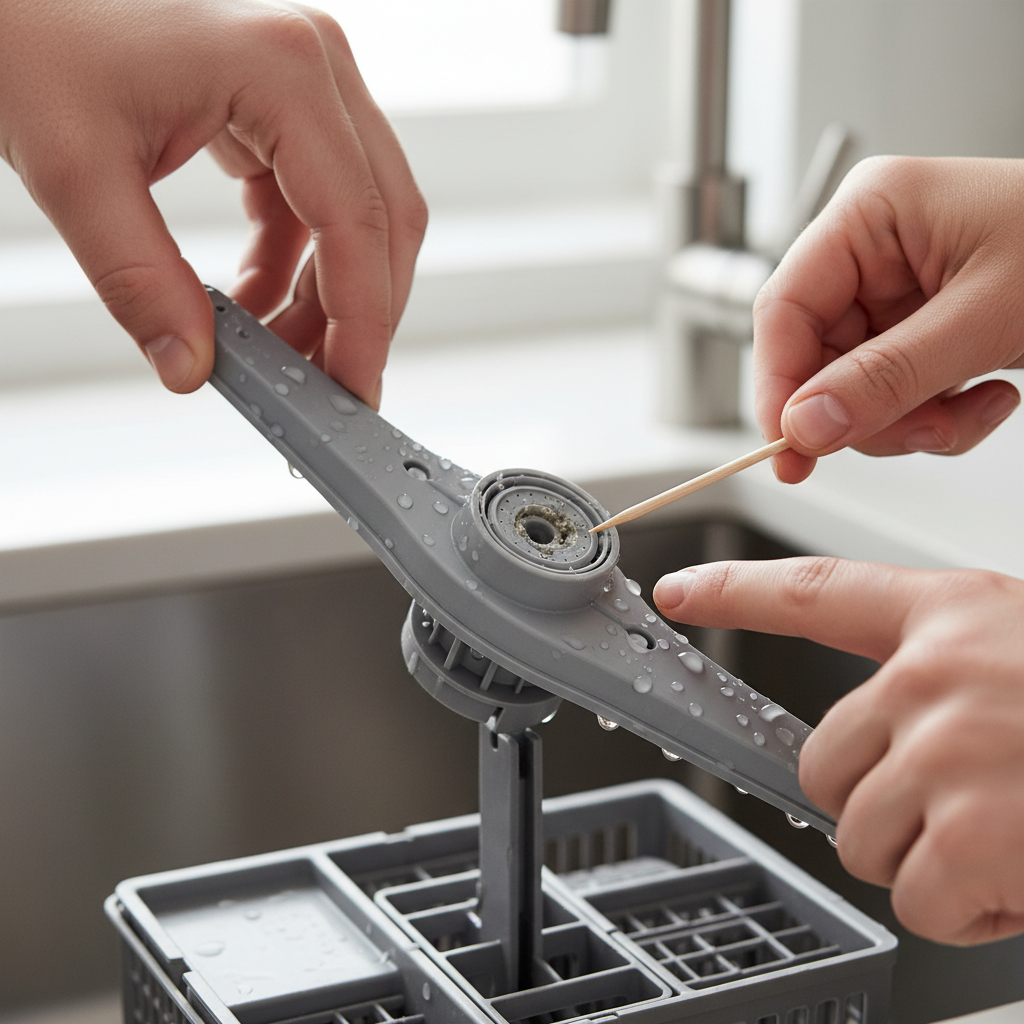
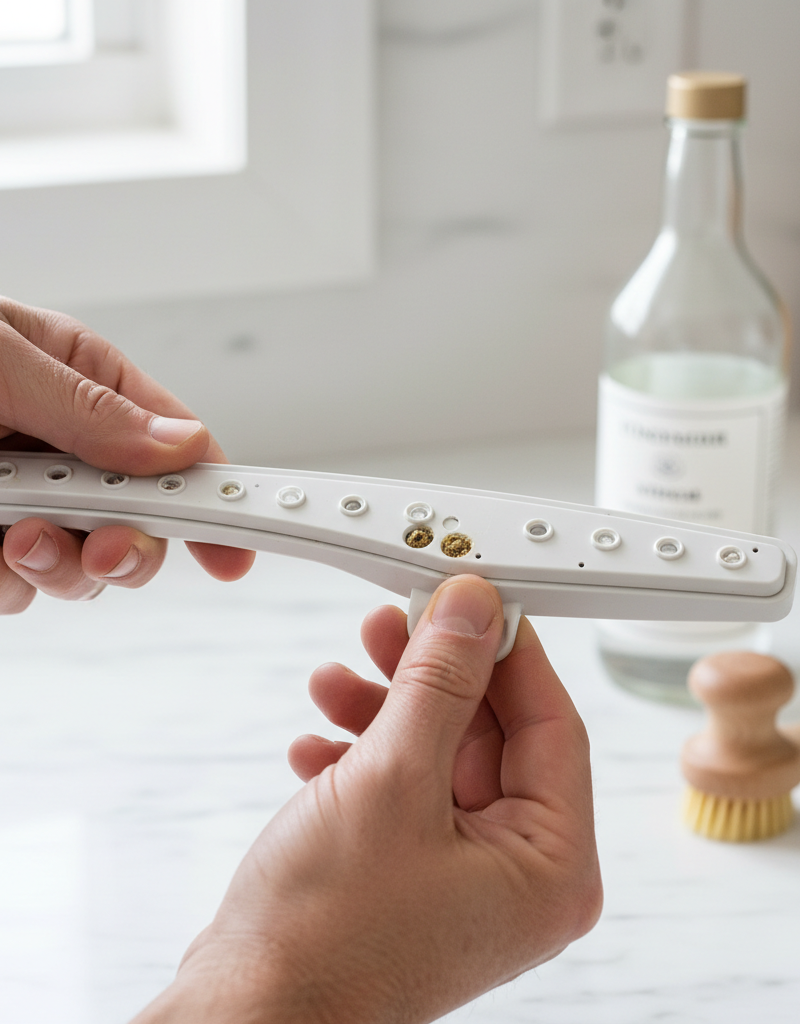
— Hold each spray arm up to a light source and look through every tiny hole. You'll likely see food particles, glass shards, mineral scale, or other debris. Use a toothpick, a small piece of wire (like a straightened paper clip), or a sewing needle to carefully poke through and clear each clogged jet. Be thorough; even one blocked jet can disrupt the water pattern. For stubborn mineral deposits, you might need a small, soft brush. * If this doesn't work: If the blockages are severe or pervasive (e.g., hard water scale), soak the spray arms in a solution of equal parts white vinegar and hot water for 20-30 minutes. This helps dissolve mineral buildup. Then, reattempt clearing the jets.
5. Clean the Spray Arms Thoroughly
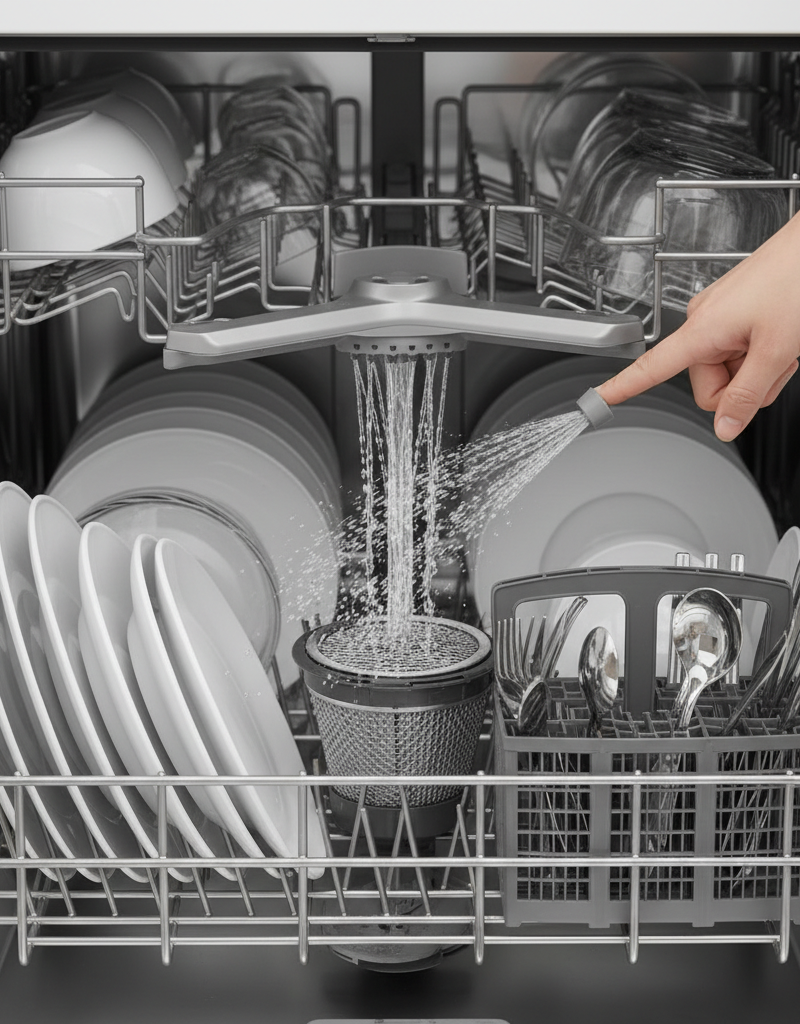
— Once the jets are clear, rinse the spray arms under a strong stream of hot tap water to flush out any loosened debris. You can also use an old toothbrush to scrub the surface of the spray arms, especially if they feel greasy or slimy. Ensure no soap residue or cleaning solution remains.
6. Clean the Filter and Sump Area
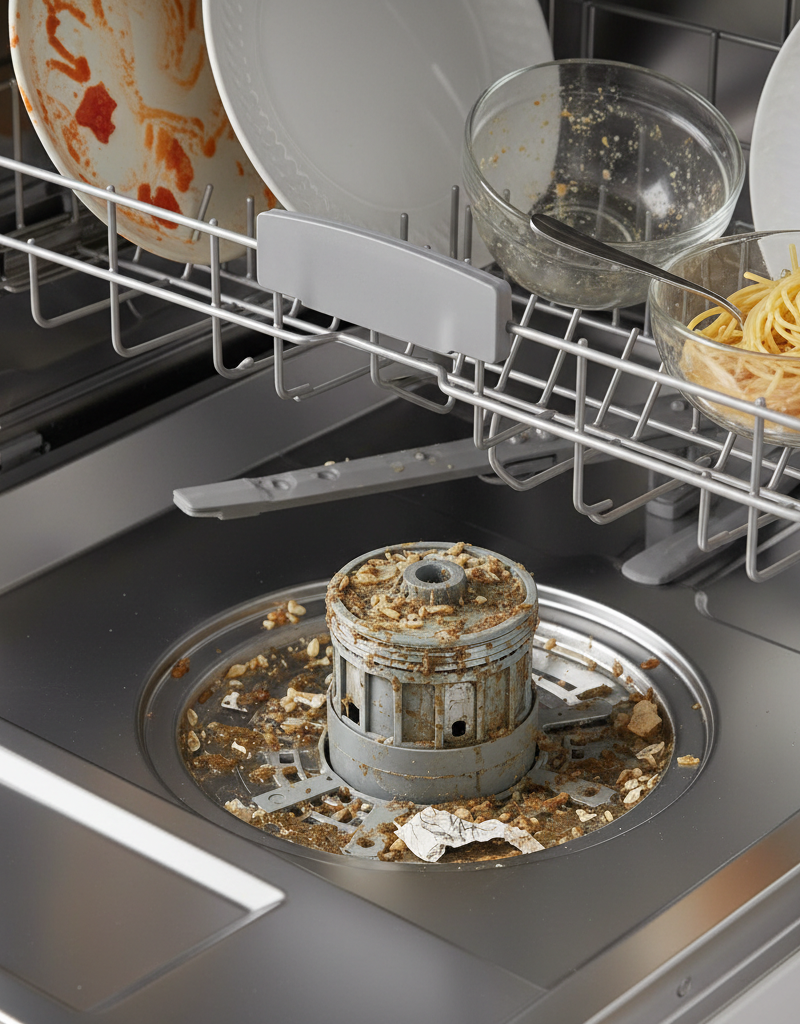
— While the spray arms are out, this is an excellent time to clean your dishwasher's filter and the sump area at the bottom. The filter, usually a cylinder or flat screen, traps larger food particles. It often twists counter-clockwise to remove. Rinse it under running water, scrubbing with a brush if necessary. Clear any debris from the sump area, which is where the main pump draws water from. Dirty filters can contribute to poor cleaning and redeposit food on dishes.
7. Reinstall Components
— Carefully reattach the cleaned spray arms, ensuring they click or screw into place securely. Spin them by hand to confirm they rotate freely and don't wobble excessively. Reinstall the filter and then the dish racks. Double-check that nothing is obstructing the spray arms' rotation, such as tall dishes or cutlery protruding from the basket.
8. Run a Test Cycle with Dishwasher Cleaner
— Close the dishwasher door, plug it back in or restore power. For an ultimate clean, place a dishwasher cleaner (like a descaling tablet or a cup of white vinegar in an open, upright container on the top rack) and run an empty hot water cycle. This will help flush out any remaining debris and descale the interior of the dishwasher and its components, including unseen parts of the water delivery system. * Tip: If you have hard water, consider running a vinegar rinse cycle once a month to prevent future mineral buildup.
9. Check for Proper Drainage
— After the cycle, quickly check that the dishwasher drained properly. Any standing water in the bottom could indicate another issue, though less common with merely clogged spray arms.
Common Causes
- Food Debris: This is the most frequent culprit. Small particles like rice, seeds, broken bits of pasta, labels from jars, or even small bones can easily enter the spray arm jets and block them. Despite pre-rinsing, tiny fragments can still get past the filter.
- Hard Water Mineral Buildup (Limescale): If you live in an area with hard water, mineral deposits (calcium and magnesium) can accumulate inside the spray arm jets over time, narrowing them and restricting water flow. This looks like white, chalky residue.
- Broken Glass or Ceramic Shards: Accidentally dropped items can shatter, and tiny fragments can be circulated by the wash water, becoming lodged in the spray arm openings.
- Detergent Residue: While less common, some powdered detergents, especially if overused or not fully dissolving, can contribute to buildup within the spray arms.
- Improper Loading: Though not a direct cause of clogged spray arms, overlapping dishes or tall items can block the spray arms' rotation or prevent water from reaching certain areas, mimicking the symptoms of a clogged arm.
Common Mistakes
- Ignoring Pre-Rinsing (but don't over-rinse!): Many modern dishwashers are designed to handle some food debris, but large chunks can clog filters and spray arms. Scrape plates into the trash, but don't feel the need to meticulously rinse them clean; enzymes in modern detergents actually work better when they have something to
Related Articles
Keep troubleshooting with these hand-picked guides from FixlyGuide:
- The #1 Mistake Homeowners Make When Their Dishwasher Stops Cleaning (And the Simple Fix) — Discover the most common reason your dishwasher isn't cleaning dishes and learn a simple, effective fix you can do yourself in minutes.
- The #1 Mistake Wrecking Your Dishwasher's Cleaning Power (And the 10-Minute Fix) — Discover the most common, overlooked reason your dishwasher isn't cleaning dishes properly and how a simple 10-minute fix can restore its p…
- The #1 Mistake Homeowners Make When Their Dryer Stops Drying (And How to Fix It Free) — If your dryer is taking too long to dry clothes, the most common culprit is a clogged vent, which can be easily fixed with simple tools.
- The #1 Mistake Homeowners Make When Their Ice Maker Stops (And the Easy Fix) — Is your refrigerator ice maker on strike? Often, a simple oversight or minor clog is the culprit, easily fixable with basic tools.
- The #1 Reason Your Fridge Ice Maker Stops—And the 20-Minute Fix — Uncover the most common culprit behind a non-producing ice maker and learn how to implement a quick, effective fix in about 20 minutes.
- The #1 Mistake Homeowners Make When Their AC Drain Clogs (And The $5 Fix) — Discover the most common error homeowners make when tackling a clogged AC drain line and learn a simple, inexpensive solution to prevent co…
Should you do this yourself?
Answer five quick questions before you start. Safety outranks savings every time.
Your experience with work like this
How high do you have to work?
Does the job involve any of these?
Will it need a permit?
Specialty tools
Free and instant. Educational guidance only — not a quote, inspection, or professional diagnosis.
What should this project cost?
Enter your project details for a realistic cost range before you call anyone.
Cost depends heavily on which system turns out to be the source.
- Regional adjustment
- National average
- Labor share (typical)
- ~$1,620
- Quotes to collect
- 3 written estimates
Educational estimate based on national averages — not a binding quote. Always confirm with written local estimates.
Frequently asked questions
How do I know if my dishwasher spray arm is clogged?+
Common signs include dishes coming out with food residue, particularly in certain areas of the dishwasher, cloudy glasses, or a noticeable lack of strong water jets when you open the door mid-cycle (briefly and cautiously!). You might also see visible debris in the spray arm holes.
Can I run my dishwasher with a clogged spray arm?+
While you can, it's not recommended. A clogged spray arm will result in poorly cleaned dishes and can put extra strain on your dishwasher's pump motor as it tries to force water through obstructions. This can lead to decreased efficiency and potentially shorten the lifespan of your appliance.
How often should I clean my dishwasher spray arms?+
The frequency depends on your usage and water hardness. For average use and moderately hard water, inspecting and cleaning your spray arms every 3-6 months is a good practice. If you have very hard water or notice cleaning issues more frequently, monthly checks might be beneficial. Regular cleaning of the filter is also crucial.
What if cleaning the spray arms doesn't fix the problem?+
If cleaning the spray arms, filter, and running a descaling cycle doesn't resolve the issue, other potential culprits could be a faulty wash pump, a clogged drain line, a malfunctioning water inlet valve, or an issue with the detergent dispenser. At this point, it's wise to consult your appliance manual or call a professional.
Discussion
Loading comments…