- The 1 Mistake Homeowners Make When Their Dishwasher Stops Cleaning (And the Simple Fix) — Discover the most common reason your dishwasher isn't cleaning dishes and learn a simple, effective fix you can do yourself in minutes.
- The 1 Mistake Wrecking Your Dishwasher's Cleaning Power (And the 10-Minute Fix) — Discover the most common, overlooked reason your dishwasher isn't cleaning dishes properly and how a simple 10-minute fix can restore its p…
- The 1 Reason Your Fridge Ice Maker Stops—And the 20-Minute Fix — Uncover the most common culprit behind a non-producing ice maker and learn how to implement a quick, effective fix in about 20 minutes.
- The 1 Mistake Homeowners Make When Their Dryer Stops Drying (And How to Fix It Free) — If your dryer is taking too long to dry clothes, the most common culprit is a clogged vent, which can be easily fixed with simple tools.
- The 3 Hidden Reasons Your Ice Maker Isn't Working (and the $0 Fix) — Troubleshoot common refrigerator ice maker issues with this comprehensive guide, covering everything from simple fixes to when to call a pr…
HVAC · High energy usage
| Project category | HVAC |
|---|---|
| Problem type | High energy usage |
| Trade required | HVAC |
| Urgency | Planned project |
| Safety risk | Low safety risk |
| DIY suitability | DIY for experienced homeowners |
| Cost category | High cost |
| Typical timeline | Assessment within weeks; replacement planned off-season |
| Contractor type | Licensed HVAC technician |
Repair option
Duct sealing, insulation, and a tune-up before touching the equipment.
Replacement option
High-efficiency replacement sized by a load calculation, not a rule of thumb.
Common causes
- Aging, low-efficiency equipment
- Leaking ducts losing conditioned air
- Insufficient attic insulation
- Oversized system short-cycling
Relevant tools:project cost estimatorrepair or replace
Published June 1, 2026Last updated August 17, 2026
Tools & materials you'll need
Affiliate linksAs an Amazon Associate FixlyGuide earns from qualifying purchases — at no extra cost to you. Prices and availability are accurate as of publication and subject to change.
Quick Answer
If your dishwasher isn't cleaning dishes properly, the most common culprit is a clogged spray arm or filter. Food debris, grease, and mineral deposits can accumulate in these components, preventing water from reaching your dishes effectively. A thorough cleaning of the spray arms and filter often resolves the issue and restores your dishwasher's performance.
The Problem
You've loaded your dishwasher, run a cycle, and opened the door only to find dishes still caked with food, cloudy glasses, or a gritty residue. This frustrating experience means your dishwasher isn't performing its primary function, turning a time-saving appliance into a source of aggravation. Before you jump to expensive repairs or replacements, it's crucial to understand why your dishes aren't getting clean. The issue is rarely a complete mechanical failure but often a blockage or a simple operational oversight that can be remedied with a bit of DIY detective work and elbow grease. Ignoring the problem will only lead to more wasted water, detergent, and ultimately, a hand-washing chore you were trying to avoid.
How It Works
To effectively clean dishes, a dishwasher relies on a precise system of water delivery, heating, and drainage. First, hot water (ideally around 120-150°F or 49-65°C) is pumped into the wash tub. Detergent is dispensed, and powerful spray arms, typically located in the middle and bottom of the dishwasher, rotate while jetting streams of hot, soapy water at high pressure. Some models also have a third spray arm at the top. These jets dislodge food particles and grime. The soiled water then drains through a filter system, which prevents larger debris from re-circulating and potentially clogging the pump. The water is often reheated for subsequent rinse cycles, and finally, a drying element or condensation process (depending on the model) helps dry the dishes before the cycle ends. Any interruption in this delicate balance—be it insufficient water pressure, cold water, clogged spray arm nozzles, a blocked filter, or even improper loading—can severely impact cleaning performance. Think of the spray arms as miniature power washers for your dishes, and the filter as the bouncer, ensuring only clean water attempts to re-enter the party. If either is compromised, your dishes will suffer.
Step-by-Step Fix
Safety First — Unplug your dishwasher from the wall outlet or trip its circuit breaker at your main electrical panel. Failure to do so could result in serious electrical shock.
1. Empty the Dishwasher — Remove all dishes, racks, and silverware baskets from the dishwasher. This gives you clear access to the interior components.
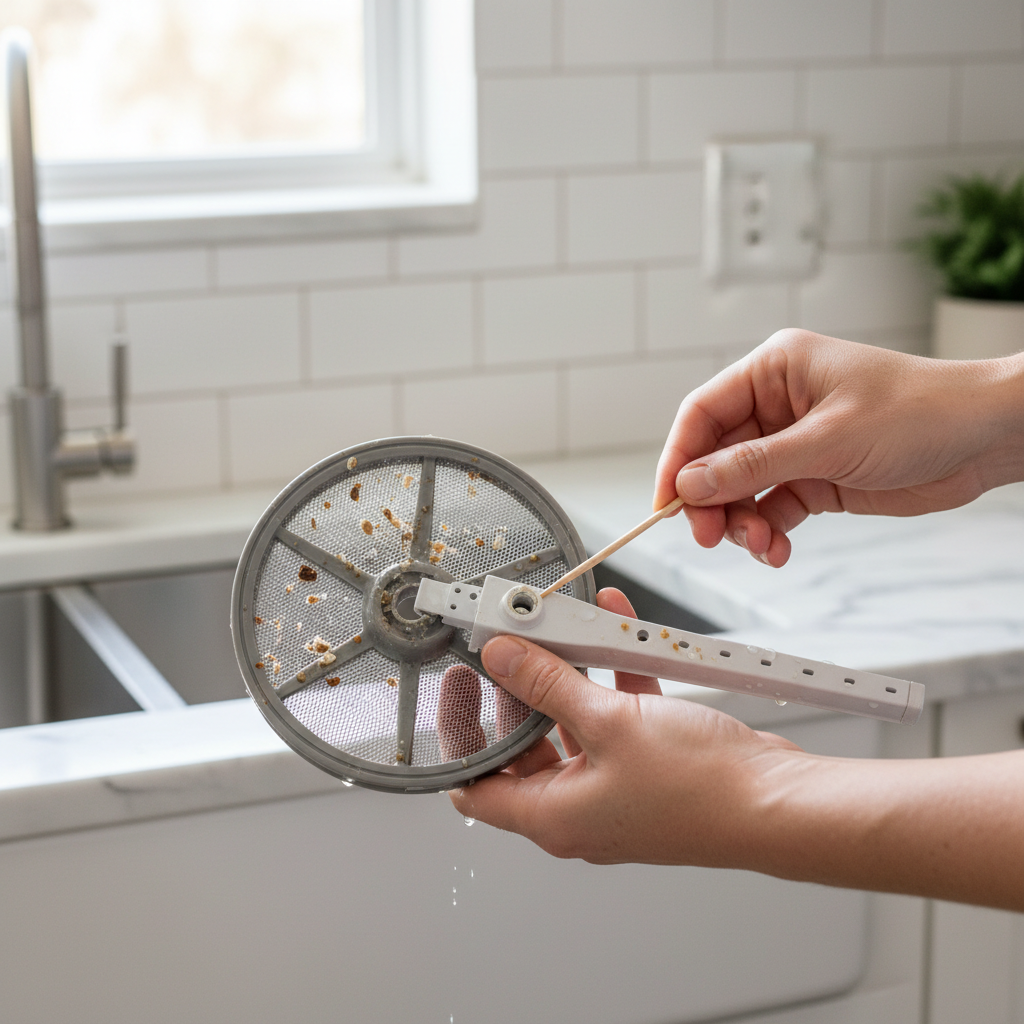
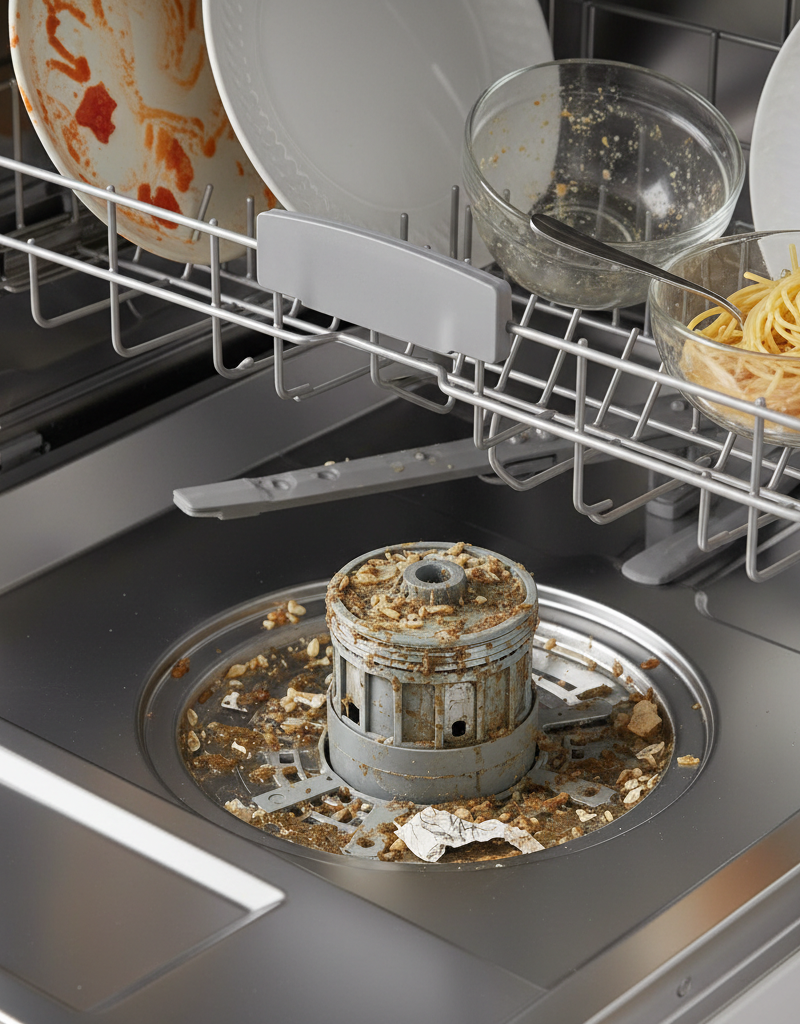
2. Locate and Clean the Filter — Most dishwashers have a removable filter assembly at the bottom of the tub, beneath the lower spray arm.
- How to: Twist, lift, or unclip the filter housing according to your owner's manual. Some filters are two-part cylindrical structures that twist apart.
- Cleaning: Rinse the filter thoroughly under hot running water, scrubbing gently with an old toothbrush or soft brush to remove any trapped food particles, grease, or mineral buildup. For stubborn grime, soak the filter in a solution of warm water and white vinegar (1:1 ratio) for 15-30 minutes.
- If this doesn't work: If the filter appears damaged or excessively worn, consider replacing it. A compromised filter allows particles to recirculate, leading to dirty dishes.
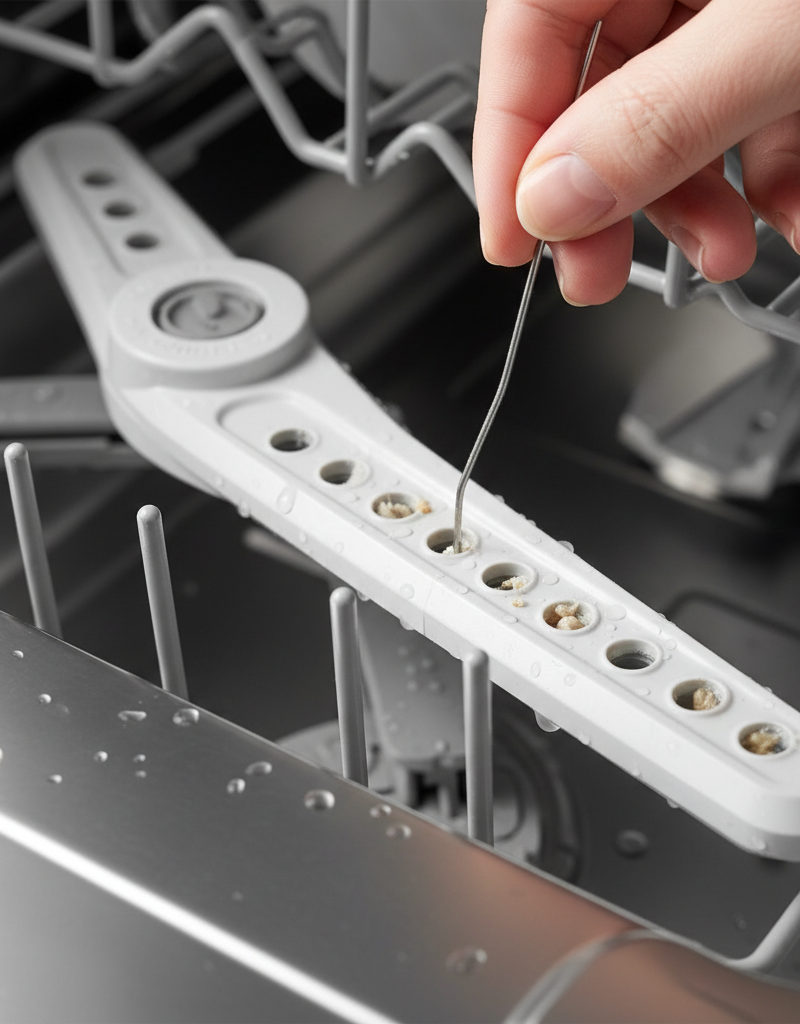
3. Inspect and Clear Spray Arms — There is typically a lower and an upper spray arm (sometimes a third one at the top).
- How to: The lower spray arm usually lifts straight up or unclips with a gentle pull. The upper spray arm may require twisting a retaining nut or unsnapping it from a feed tube. Consult your manual for exact removal instructions.
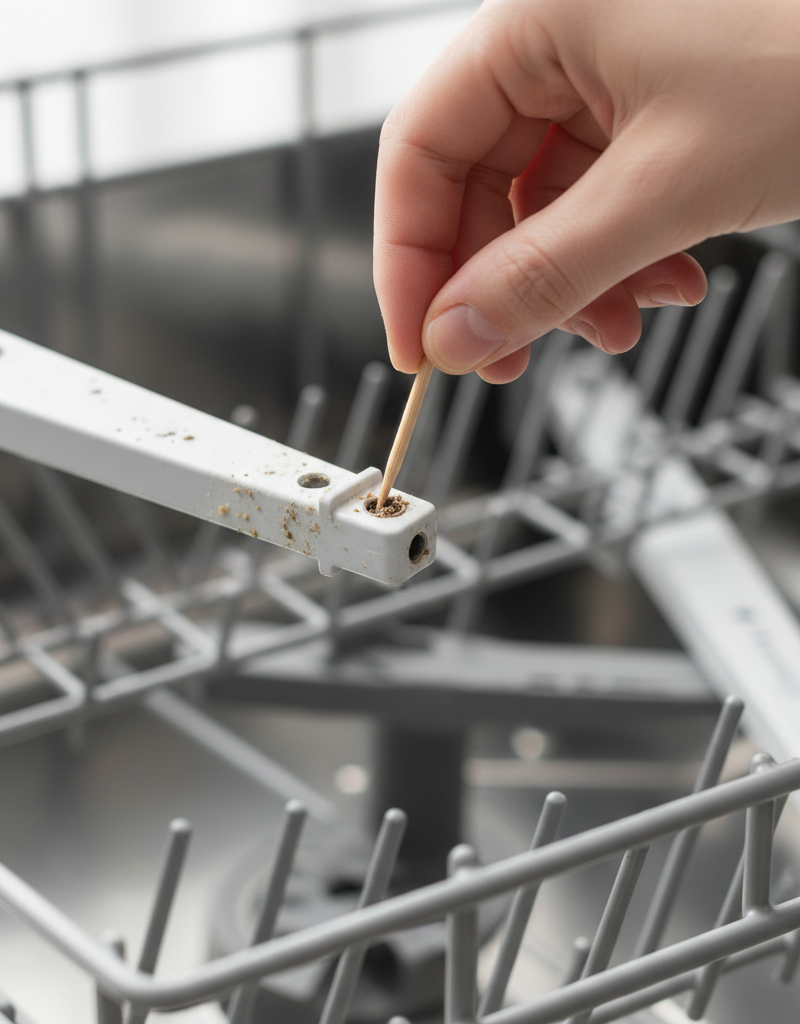
- Cleaning: Hold each spray arm up to a light source. You should be able to see through every tiny hole. Use a toothpick, a small piece of wire, or an unbent paperclip to poke through any clogged nozzles. Food particles, mineral deposits (limescale), and even shards of plastic or glass can block these critical jets.
- Thorough Rinse: Rinse the spray arms thoroughly under warm water to flush out any dislodged debris.
4. Clean the Dishwasher Interior — Even with clean filters and spray arms, the interior can still harbor grime.
- How to: Wipe down the interior walls, door gasket, and detergent dispenser with a cloth dampened with white vinegar or a mild all-purpose cleaner. Pay special attention to the door gasket, where mold and mildew can accumulate.
- Deep Clean: Once the interior is wiped, you can run an empty cycle. Place a bowl containing one cup of white vinegar on the top rack. Run a hot water cycle (without detergent). The vinegar helps remove mineral deposits, neutralize odors, and cut through grease. For even more cleaning power, after the vinegar cycle, sprinkle 1/2 cup of baking soda on the bottom of the tub and run a short, hot cycle.
5. Check Water Temperature & Pressure — Your dishwasher needs hot water to activate detergent and effectively clean.
- How to: Run the hot water at your kitchen sink for a minute before starting the dishwasher. This ensures hot water is readily available. You can also test your hot water temperature directly from the tap; it should ideally be between 120-150°F (49-65°C) to maximize cleaning and sanitizing.
- Pressure: Low water pressure can prevent spray arms from rotating effectively. If you suspect low water pressure, observe the water flow from other faucets in your home. If it's consistently low, you might have a larger plumbing issue.
- If this doesn't work: Insufficiently hot water can also be a sign of a failing water heater or a thermostat issue within the dishwasher itself. Always address water heater issues promptly or consult a professional.
6. Use Proper Detergent & Rinse Aid — The right products make a significant difference.
- Detergent: Use fresh, high-quality dishwasher detergent. Old or improperly stored detergent can lose its efficacy. Store detergent in a cool, dry place. Too much or too little detergent can cause problems – follow the manufacturer's recommendations.
- Rinse Aid: Rinse aid helps water sheet off dishes, preventing spots and improving drying. If you're experiencing spotting, ensure your rinse aid dispenser is full.
7. Load Dishes Correctly — This is a common, yet overlooked, factor.
- How to: Don't overcrowd the dishwasher. Dishes need space for water and detergent to reach all surfaces. Place larger items and items with baked-on food in the lower rack, facing the spray arm. Glasses and bowls go upside down in the upper rack. Avoid blocking the spray arms.
- Scraping, Not Rinsing: Scrape off large food particles, but don't pre-rinse dishes excessively. Dishwasher detergents are designed to latch onto food particles; pre-rinsing can make detergents less effective and lead to etching on glassware.
Common Causes
- Clogged Filter: The most frequent offender. Food debris, grease, and hard water minerals accumulate in the filter, preventing proper drainage and recirculating dirty water. This is especially true for models with self-cleaning filters that are not truly
Related Articles
Keep troubleshooting with these hand-picked guides from FixlyGuide:
- The #1 Mistake Homeowners Make When Their Dishwasher Stops Cleaning (And the Simple Fix) — Discover the most common reason your dishwasher isn't cleaning dishes and learn a simple, effective fix you can do yourself in minutes.
- The #1 Mistake Wrecking Your Dishwasher's Cleaning Power (And the 10-Minute Fix) — Discover the most common, overlooked reason your dishwasher isn't cleaning dishes properly and how a simple 10-minute fix can restore its p…
- The #1 Reason Your Fridge Ice Maker Stops—And the 20-Minute Fix — Uncover the most common culprit behind a non-producing ice maker and learn how to implement a quick, effective fix in about 20 minutes.
- The #1 Mistake Homeowners Make When Their Dryer Stops Drying (And How to Fix It Free) — If your dryer is taking too long to dry clothes, the most common culprit is a clogged vent, which can be easily fixed with simple tools.
- The 3 Hidden Reasons Your Ice Maker Isn't Working (and the $0 Fix) — Troubleshoot common refrigerator ice maker issues with this comprehensive guide, covering everything from simple fixes to when to call a pr…
- The #1 Sprinkler Winterization Mistake That Leads to $1,000s in Damage — Discover the crucial mistake many homeowners make when winterizing sprinklers and how to properly blow out your system to prevent costly fr…
Should you do this yourself?
Answer five quick questions before you start. Safety outranks savings every time.
Your experience with work like this
How high do you have to work?
Does the job involve any of these?
Will it need a permit?
Specialty tools
Free and instant. Educational guidance only — not a quote, inspection, or professional diagnosis.
What should this project cost?
Enter your project details for a realistic cost range before you call anyone.
Cost depends heavily on which system turns out to be the source.
- Regional adjustment
- National average
- Labor share (typical)
- ~$1,620
- Quotes to collect
- 3 written estimates
Educational estimate based on national averages — not a binding quote. Always confirm with written local estimates.
Frequently asked questions
Why are my dishes still dirty after the dishwasher cycle?+
The most common reasons are a clogged filter, blocked spray arm nozzles, incorrect loading, or insufficient water temperature. Start by checking and cleaning the filter and spray arms.
How often should I clean my dishwasher filter?+
It's recommended to clean your dishwasher filter once a month, or more frequently if you wash a lot of dishes with heavy food debris. Some manufacturers suggest checking it every few weeks.
Can I use vinegar to clean my dishwasher?+
Yes, white vinegar is an excellent natural cleaner for dishwashers. Place a cup of white vinegar in a dishwasher-safe bowl on the top rack and run a hot water cycle to help remove mineral deposits and odors.
Why are my glasses cloudy after washing?+
Cloudy glasses are often caused by hard water mineral deposits (limescale) or etching. Using a rinse aid, ensuring proper water temperature, and cleaning your dishwasher regularly can help. If it's etching, it's permanent damage from too much detergent or very soft water.
When should I call a professional for a dishwasher that isn't cleaning?+
Call a professional if, after cleaning the filter and spray arms and checking water temperature, the issue persists. Also, call if you suspect a faulty water inlet valve, drain pump, circulation pump, or heating element, as these often require specialized tools and expertise to diagnose and repair safely.
Can a garbage disposal affect my dishwasher's performance?+
Yes, if your garbage disposal is clogged or backing up, it can affect your dishwasher's drainage, leading to dirty water settling at the bottom of the tub or poor cleaning performance. Ensure your disposal is clear and functioning properly.
Discussion
Loading comments…