- Ignoring the Filter: Many homeowners don't realize their dishwasher has a filter that needs regular cleaning. Neglecting this simple maintenance step is the leading cause of poor cleaning and strange odors.
- Overloading the Dishwasher: Stuffing too many dishes in or arranging them haphazardly blocks water circulation and prevents spray arms from reaching all items, ensuring some dishes come out dirty.
- Using Too Much or Too Little Detergent: While it seems counterintuitive, too much detergent can lead to residue on dishes, while too little won't effectively clean. Follow the manufacturer's recommendations and adjust for water hardness.
- Skipping Rinse Aid with Hard Water: Rinse aid isn't just for shine; it helps water sheet off dishes, preventing spots and streaks, especially crucial in areas with hard water that contributes to mineral buildup.
- Not Checking Water Temperature: Assuming your hot water is hot enough can lead to ineffective cleaning. A quick temperature check at the sink is a crucial diagnostic step many overlook.
HVAC · High energy usage
| Project category | HVAC |
|---|---|
| Problem type | High energy usage |
| Trade required | HVAC |
| Urgency | Planned project |
| Safety risk | Low safety risk |
| DIY suitability | DIY for experienced homeowners |
| Cost category | High cost |
| Typical timeline | Assessment within weeks; replacement planned off-season |
| Contractor type | Licensed HVAC technician |
Repair option
Duct sealing, insulation, and a tune-up before touching the equipment.
Replacement option
High-efficiency replacement sized by a load calculation, not a rule of thumb.
Common causes
- Aging, low-efficiency equipment
- Leaking ducts losing conditioned air
- Insufficient attic insulation
- Oversized system short-cycling
Relevant tools:project cost estimatorrepair or replace
Published May 24, 2026Last updated August 17, 2026
Tools & materials you'll need
Affiliate linksAs an Amazon Associate FixlyGuide earns from qualifying purchases — at no extra cost to you. Prices and availability are accurate as of publication and subject to change.
Quick Answer
The most frequent culprit for a dishwasher failing to clean dishes properly is a clogged spray arm or filter. Mineral deposits, food particles, and debris can obstruct the jets, preventing water from reaching all dish surfaces. A simple cleaning of these components, often using everyday household items, can restore your dishwasher's cleaning power and leave your dishes sparkling.
The Problem
You've loaded your dishwasher, run a cycle, and eagerly opened the door only to find—to your dismay—dishes that are still dirty, spotty, or covered in a film. Plates have baked-on food, glasses are cloudy, and silverware looks like it barely got rinsed. This isn't just an annoyance; it's a waste of water, energy, and your precious time. The problem isn't necessarily that your dishwasher is broken, but more often, that a crucial component is blocked or dirty, preventing it from doing its job effectively. Before you consider replacing the unit or calling a costly professional, understanding how your dishwasher cleans can empower you to fix many common cleaning issues yourself.
How It Works
Your dishwasher doesn't just blast dishes with hot water; it employs a sophisticated system of water circulation, detergent dispersal, and heating to achieve cleanliness. At its core, an electric motor powers a pump that draws water from the bottom of the tub. This pressurized water is then forced through a series of spray arms, typically one at the bottom, one in the middle (under the upper rack), and sometimes a third in the very top of the tub. These spray arms feature strategically angled nozzles that direct powerful jets of water and detergent onto your dishes, scouring away food particles. The water then drains down through a filter system, which catches larger food debris to prevent it from recirculating and potentially clogging the spray arm nozzles or redepositing on dishes. An electric heating element at the bottom of the tub heats the water to optimal temperatures for cleaning and sanitizing, and often assists in drying. Detergent is released at specific points in the cycle—usually during the main wash—to break down grease and food. Over time, hard water mineral deposits, grease, and food fragments can accumulate in the spray arm nozzles or in the filter, diminishing this carefully orchestrated process and leading to poor cleaning performance. Understanding this cycle helps identify where the cleaning process is failing.
Step-by-Step Fix
Safety First: Always unplug your dishwasher from the wall outlet or trip the circuit breaker before performing any maintenance or repairs. Water and electricity are a dangerous combination.
1. Clear the Deck — Remove dishes and inspect the interior.
Before you start, empty the dishwasher completely. Remove all dishes, cutlery, and racks. This gives you clear access to the spray arms and filter. Visually inspect the bottom of the tub for any large food debris or foreign objects that might be obstructing the drain or pump impeller.
2. Locate the Lower Spray Arm — Twist and lift to remove.
The lower spray arm is typically located in the center of the dishwasher's bottom. Many models allow you to simply twist a retaining nut or collar counter-clockwise or just lift the spray arm straight up to remove it. Consult your dishwasher's manual if you're unsure of the exact removal method. Be gentle to avoid breaking any plastic tabs or clips.
3. Examine and Clean the Lower Spray Arm Nozzles — Clear blockages with a thin wire.
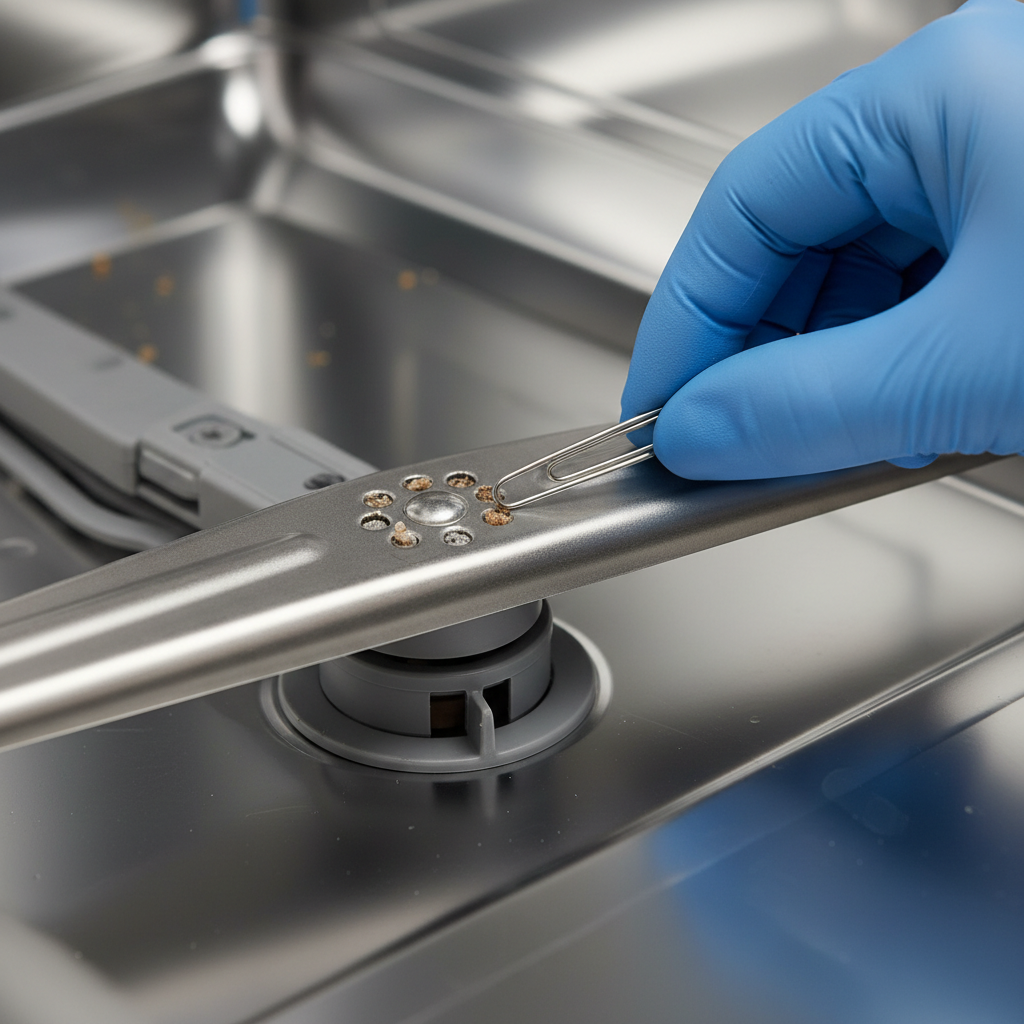
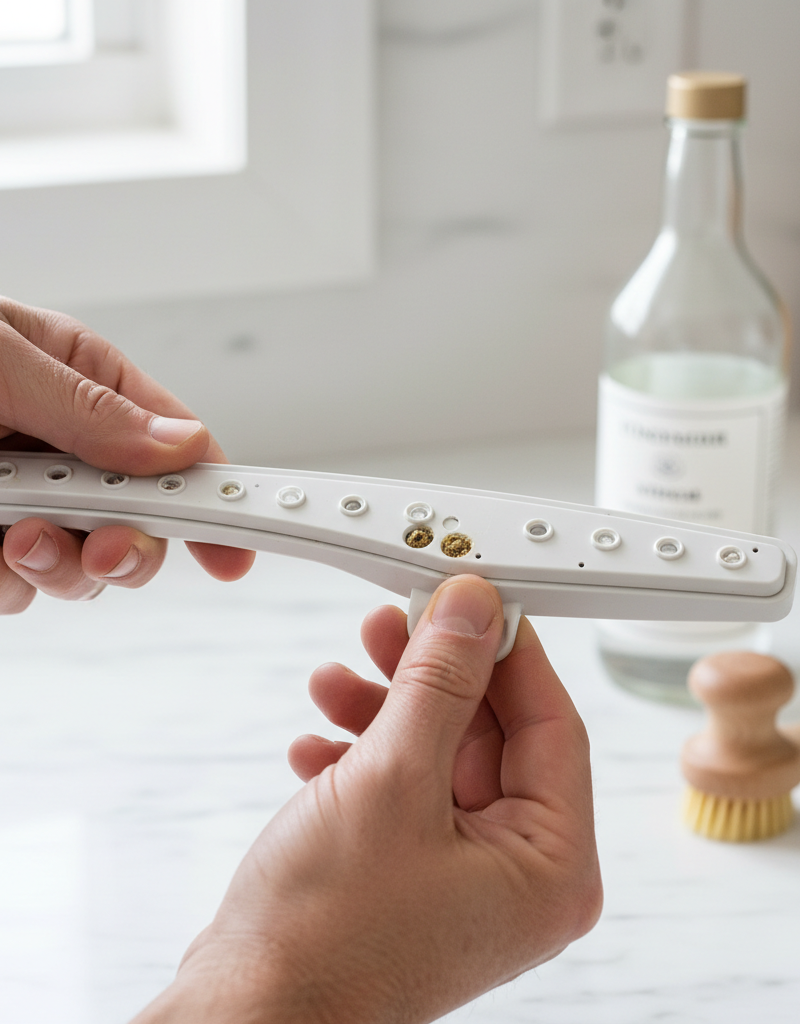
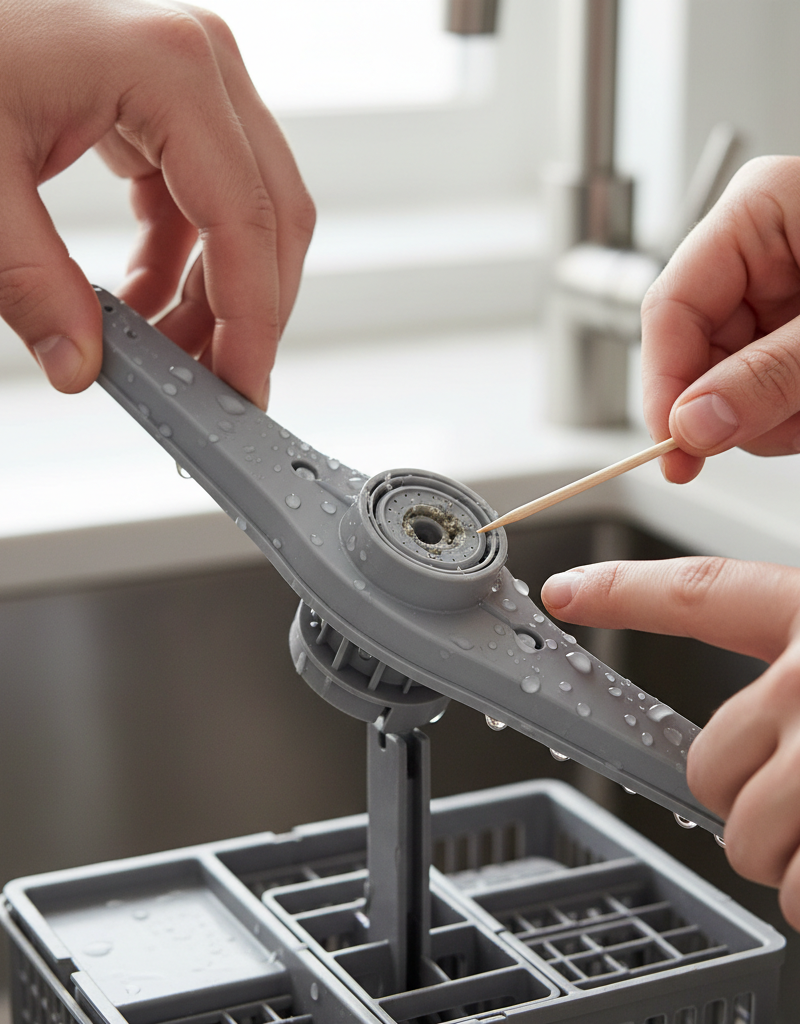
Once the lower spray arm is removed, hold it up to a light source. You should be able to see through all the small spray holes (nozzles). Use a straightened paper clip, a toothpick, or a thin piece of wire to carefully poke out any food particles, mineral deposits, or other debris that might be clogging the nozzles. Run water through the arm to flush out any loosened blockages. Pay close attention to the ends of the spray arm, as these are often the first to clog.
4. Access and Clean the Upper Spray Arm — Remove the upper rack if necessary.
The upper spray arm is usually located beneath the upper dish rack. On some models, it's integrated into the rack; on others, it's a separate component. You might need to remove the entire upper rack to get good access. Similar to the lower arm, check for retaining clips or nuts that allow for removal. Once removed, inspect and clean the nozzles using a paper clip or thin wire, just as you did with the lower spray arm. Flush thoroughly with water.
5. Clean the Dishwasher Filter — Scrub away grime and ensure clear drainage.
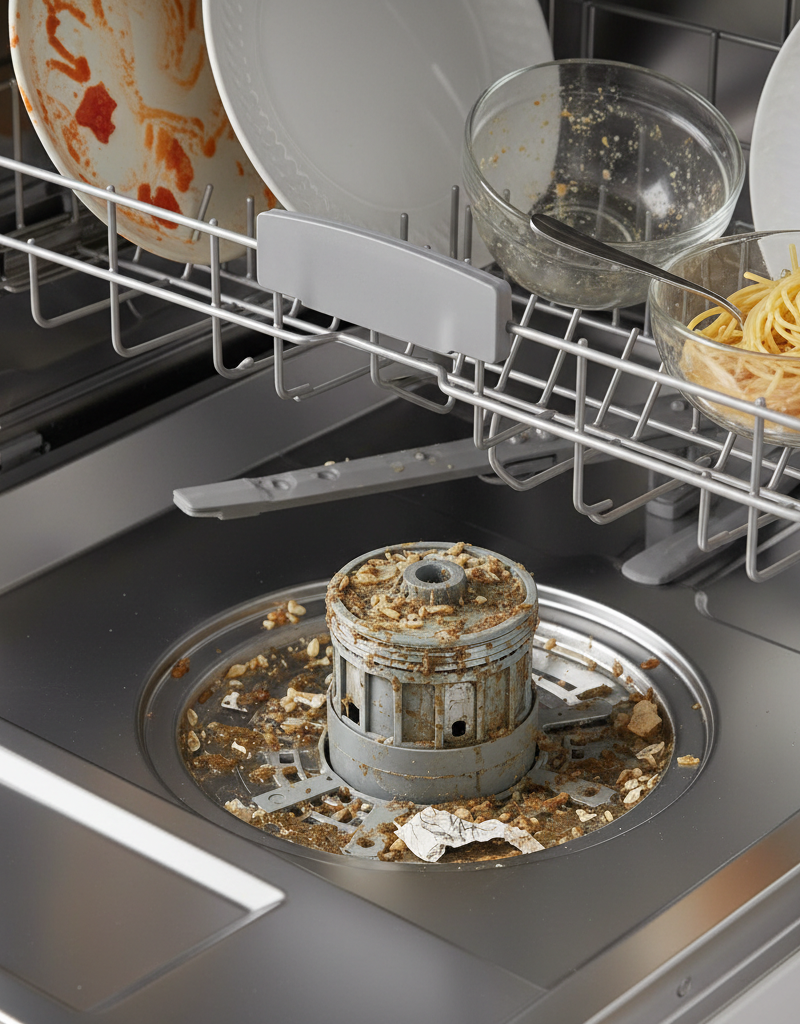
The filter system is usually located at the bottom of the dishwasher tub, often under the lower spray arm. It might be a cylindrical mesh filter or a flat screen. Twist counter-clockwise to unlock and lift it out. Rinse the filter under hot running water, using an old toothbrush or a scrub brush to remove any trapped food particles, grease, or accumulated grime. If there's a fine mesh screen, make sure it's completely clear. For tough mineral deposits, you can soak the filter in a solution of equal parts white vinegar and hot water for 15-30 minutes before scrubbing. Ensure all components are completely free of debris before reinstalling.
6. Inspect and Clean the Detergent Dispenser — Wipe away residue and ensure proper opening.
Check your detergent dispenser. Sometimes, old detergent residue can build up, preventing the dispenser door from opening fully or the detergent from dissolving properly. Wipe down the dispenser compartment with a damp cloth. Make sure the latch mechanism moves freely and isn't sticky. If you use detergent pods, ensure they aren't getting stuck or dissolving prematurely.
7. Reassemble and Run a Test Cycle — Look for improvements.
Carefully reassemble all components, ensuring spray arms click securely into place and the filter is properly seated and locked. Don't force anything. Once everything is back together, plug in the dishwasher or restore power. Run an empty cycle on the hottest setting with a cup of white vinegar placed in the top rack to help descale the interior and flush out any remaining debris. Alternatively, you can run a normal cycle with a specialized dishwasher cleaner. Observe the cleaning performance on your next loaded wash.
8. Check Water Temperature — Confirm adequate hot water supply.
Your dishwasher needs hot water, typically around 120-130°F (49-54°C), to activate detergents and effectively clean/sanitize. Run your kitchen sink's hot water tap until it's as hot as it gets, then measure the temperature with a meat thermometer. If it's too low, adjust your water heater's thermostat. For dishwashers, it's also a good idea to run the hot water at the sink for a minute or two before starting a cycle, ensuring hot water is readily available at the appliance rather than starting with cold water from the pipes.
9. Consider Load Patterns and Detergent — Avoid overcrowding and use quality cleaners.
Are you overloading your dishwasher? Too many dishes, or dishes placed incorrectly, can block spray arms and prevent water from reaching all surfaces. Stack items so water can flow freely. Cups and bowls should face down, and larger items shouldn't obstruct the detergent dispenser. Also, ensure you're using fresh, high-quality dishwasher detergent. Old or clumped detergent can lose its efficacy. If you have hard water, consider using a rinse aid or a dishwasher cleaner designed to combat mineral buildup.
Common Causes
- Clogged Spray Arm Nozzles: The most common culprit. Food particles, mineral deposits (from hard water), or even small broken pieces of dishware can block the tiny holes in the spray arms, reducing water pressure and unevenly distributing water. This prevents proper rinsing and cleaning.
- Dirty or Clogged Filter: The dishwasher's filter prevents larger food debris from recirculating. If this filter becomes caked with grease, food scraps, or mineral buildup, water won't drain properly, and dirty water can be redeposited on your dishes.
- Improper Loading: Overloading the dishwasher or loading dishes incorrectly can block the spray arms' rotation or prevent water jets from reaching all surfaces, leading to spotty or dirty dishes. Tall items can also block the detergent dispenser.
- Low Water Temperature: Dishwashers require hot water (ideally 120-130°F or 49-54°C) to activate detergents and effectively dissolve grease and food. If your water heater setting is too low, or if the dishwasher starts with cold water, cleaning performance will suffer.
- Detergent Issues: Using too little detergent, old/expired detergent, or the wrong type of detergent can impact cleaning. Hard water areas may require more potent detergents or the addition of a rinse aid.
- Blocked Detergent Dispenser: Food or old detergent residue can sometimes prevent the detergent dispenser from opening fully during the cycle, meaning the detergent isn't released at the optimal time or in sufficient quantity.
Common Mistakes
- Pre-rinsing Dishes Excessively: While scraping off large food chunks is good, excessive pre-rinsing actually wastes water. Modern dishwashers and detergents are designed to work best when there's some food residue for the enzymes to latch onto and break down. Too clean, and the detergent may etch glassware.
- Ignoring the Filter: Many homeowners don't realize their dishwasher has a filter that needs regular cleaning. Neglecting this simple maintenance step is the leading cause of poor cleaning and strange odors.
- Overloading the Dishwasher: Stuffing too many dishes in or arranging them haphazardly blocks water circulation and prevents spray arms from reaching all items, ensuring some dishes come out dirty.
- Using Too Much or Too Little Detergent: While it seems counterintuitive, too much detergent can lead to residue on dishes, while too little won't effectively clean. Follow the manufacturer's recommendations and adjust for water hardness.
- Skipping Rinse Aid with Hard Water: Rinse aid isn't just for shine; it helps water sheet off dishes, preventing spots and streaks, especially crucial in areas with hard water that contributes to mineral buildup.
- Not Checking Water Temperature: Assuming your hot water is hot enough can lead to ineffective cleaning. A quick temperature check at the sink is a crucial diagnostic step many overlook.
Cost & Time Breakdown
| Task | DIY Cost | Pro Cost | Time |
|---|---|---|---|
| Spray arm/Filter Cleaning | $0–$5 | N/A | 20–40 minutes |
| Water Heater Temp Adj. | $0 | $100–$250 | 5–10 minutes |
| Detergent/Rinse Aid Purchase | $10–$25 | N/A | 5 minutes |
| Dishwasher Cleaner Cycle | $5–$10 | N/A | 1–2 hours (cycle) |
| Professional Diagnosis | N/A | $150–$300 (trip) | 30–60 minutes |
Tips & Prevention
- Routine Filter Cleaning: Make cleaning your dishwasher's filter a monthly habit. It takes only a few minutes and will dramatically improve cleaning performance and prevent odors.
- Inspect Spray Arms Regularly: Every few months, give your spray arm nozzles a quick visual check. If you see any blockages forming, clear them with a paper clip before they become a major issue.
- Run Hot Water First: Before starting your dishwasher, run the hot water at the kitchen sink for 1-2 minutes until it's hot. This ensures the dishwasher fills with already-hot water, optimizing cleaning from the start.
- Use Rinse Aid: Even if you don't have extremely hard water, rinse aid helps dishes dry better, prevents spots, and can combat film buildup over time.
- Don't Overload: Give your dishes space! Proper loading allows water and detergent to circulate effectively, ensuring everything gets clean. Consult your dishwasher manual for loading tips.
- Descale Periodically: Every 3-6 months, run an empty cycle with a cup of white vinegar in the top rack or use a commercial dishwasher cleaner to descale the interior and flush out mineral buildup.
When to Call a Professional
While many dishwasher cleaning issues can be resolved with DIY maintenance, there are times when professional help is warranted. If you've cleaned the spray arms and filter thoroughly, confirmed adequate water temperature, used proper detergent and loading techniques, but your dishes are still coming out dirty, consult a licensed appliance technician. This could indicate a deeper mechanical problem, such as a faulty wash pump impeller, a failing circulation motor, a malfunctioning water inlet valve, or an issue with the heating element. Furthermore, if you notice error codes on your dishwasher's display, hear unusual grinding or loud noises during operation that weren't present before, or if there's any water leaking from the unit, immediately unplug it and call a professional. Diagnosing and repairing these internal components often requires specialized tools and expertise, and attempting complex repairs without the proper knowledge can lead to further damage or void your warranty.
Related Articles
Keep troubleshooting with these hand-picked guides from FixlyGuide:
- The #1 Mistake Homeowners Make When Their Dishwasher Stops Cleaning (And the Simple Fix) — Discover the most common reason your dishwasher isn't cleaning dishes and learn a simple, effective fix you can do yourself in minutes.
- The #1 Mistake Homeowners Make When Their Ice Maker Stops (And the Easy Fix) — Is your refrigerator ice maker on strike? Often, a simple oversight or minor clog is the culprit, easily fixable with basic tools.
- The #1 Mistake Homeowners Make When Their Dryer Stops Drying (And How to Fix It Free) — If your dryer is taking too long to dry clothes, the most common culprit is a clogged vent, which can be easily fixed with simple tools.
- The #1 Reason Your Fridge Ice Maker Stops—And the 20-Minute Fix — Uncover the most common culprit behind a non-producing ice maker and learn how to implement a quick, effective fix in about 20 minutes.
- The #1 Mistake Wrecking Your Dishwasher's Cleaning Power (And the 10-Minute Fix) — Discover the most common, overlooked reason your dishwasher isn't cleaning dishes properly and how a simple 10-minute fix can restore its p…
- The Nasty Truth: Is Your Bathroom Sink's Stink Coming From a Hidden Biofilm? — A persistent, foul odor from your bathroom sink drain often signals a hidden biofilm buildup, not just a simple clog, demanding specific cl…
Should you do this yourself?
Answer five quick questions before you start. Safety outranks savings every time.
Your experience with work like this
How high do you have to work?
Does the job involve any of these?
Will it need a permit?
Specialty tools
Free and instant. Educational guidance only — not a quote, inspection, or professional diagnosis.
What should this project cost?
Enter your project details for a realistic cost range before you call anyone.
Cost depends heavily on which system turns out to be the source.
- Regional adjustment
- National average
- Labor share (typical)
- ~$1,620
- Quotes to collect
- 3 written estimates
Educational estimate based on national averages — not a binding quote. Always confirm with written local estimates.
Before you start
Check the difficulty, permits, and safety risk — then decide whether to call a pro.
- Estimate this projectGet a cost range for your scope and ZIP before you call anyone.Open
- Get local estimatesSend one request and compare written estimates from vetted pros.Open
Free, no signup required. Estimates are educational guidance, not a quote or an inspection.
Frequently asked questions
Why are my dishes still dirty after a dishwasher cycle?+
The most common reasons are clogged spray arm nozzles, a dirty filter, or improper loading. Food particles and mineral deposits can block water flow, preventing proper cleaning. Start by cleaning these components.
How often should I clean my dishwasher filter?+
You should aim to clean your dishwasher filter monthly, or more frequently if you often wash heavily soiled dishes. Regular cleaning prevents odors and ensures optimal cleaning performance.
Can hard water affect my dishwasher's cleaning?+
Yes, hard water can significantly impact cleaning performance. It leads to mineral buildup in spray arms and on dishes, causing spots and film. Using a rinse aid and periodic descaling with vinegar can help mitigate these effects.
Why are my glasses cloudy after the dishwasher?+
Cloudy glasses can be caused by hard water mineral deposits, etching (where soft water and too much detergent corrode the glass), or insufficient rinsing due to clogged spray arms or filter issues. Try a rinse aid and check your detergent dosage.
What temperature should my dishwasher water be?+
Your dishwasher needs hot water, ideally between 120-130°F (49-54°C). If the water is too cold, detergents won't activate properly, leading to poor cleaning. Run your kitchen faucet's hot water before starting the dishwasher to ensure it fills with hot water.
Discussion
Loading comments…