- Rubbing along the top or bottom: The door edge scrapes against the frame or the floor, creating an irritating sound and potentially damaging finishes.
- Sticking: The door binds in the frame, making it difficult to open or close, often requiring force.
- Failure to latch: The latch bolt doesn't align with the strike plate, preventing the door from closing securely.
- Increased drafts: Gaps around the door allow air to pass through, reducing energy efficiency.
Published May 24, 2026Last updated August 17, 2026
Tools & materials you'll need
Affiliate links- AmazonPhillips head screwdriver
As an Amazon Associate FixlyGuide earns from qualifying purchases — at no extra cost to you. Prices and availability are accurate as of publication and subject to change.
Quick Answer
Most sagging interior doors can be resurrected in under an hour with basic tools and a few simple steps. The primary cause is typically loose hinge screws or stripped screw holes, which allow the door to shift out of alignment. By addressing these hinge issues, you can often restore proper door function, eliminating rubbing, sticking, and latching problems without needing a new door.
The Problem
A sagging door isn't just an aesthetic annoyance; it's a functional and security issue. When a door sags, it pulls away from its original alignment within the door frame. This misalignment can manifest in several frustrating ways:
- Rubbing along the top or bottom: The door edge scrapes against the frame or the floor, creating an irritating sound and potentially damaging finishes.
- Sticking: The door binds in the frame, making it difficult to open or close, often requiring force.
- Failure to latch: The latch bolt doesn't align with the strike plate, preventing the door from closing securely.
- Increased drafts: Gaps around the door allow air to pass through, reducing energy efficiency.
Over time, leaving a sagging door unaddressed can lead to more significant damage to the door, frame, and even the hinges themselves. The repeated stress on misaligned components accelerates wear and tear, turning a minor fix into a potentially larger repair.
How It Works
Understanding how a door is supported helps illuminate why it sags. A typical interior door hangs from a door frame via two or three butt hinges. Each hinge consists of two leaves (plates) joined by a pin. One leaf is attached to the door jamb (the vertical part of the frame), and the other to the door's edge.
The weight of the door, ranging from 40 to 80 pounds for a standard interior slab, is primarily borne by these hinges. Gravity constantly pulls down on the door, exerting shear force on the screws that hold the hinges to the frame and the door. Over time, particularly with frequent use, these forces can cause the screws to loosen, or the wood around the screw holes to wear and strip.
When the top hinge's screws loosen, the top corner of the door on the hinge side drops slightly. Concurrently, the bottom corner of the door on the latch side effectively swings inward and downward, causing it to drag on the floor or rub against the bottom of the jamb. Conversely, if the bottom hinge's screws loosen, the bottom of the door sags, often causing the top latch-side corner to rub against the top of the door frame.
The wood fibers around the screws are under constant compression and tension. As screws loosen, the holes widen, reducing the grip the threads have on the wood. This loss of grip allows the hinge leaf to move minutely, accumulating into a noticeable sag. External factors like humidity changes, which cause wood to expand and contract, can also contribute to this weakening of the screw's hold. The key to fixing a sagging door lies in restoring the firm, immovable connection between the hinges and both the door and the door frame.
Step-by-Step Fix
Here’s how to diagnose and fix a sagging interior door, focusing on hinge-related issues.
-
Safety First — Before starting any repair, ensure the door is stable. If the door feels excessively loose, have someone help you support it. Keep fingers clear of hinge points.
-
Examine the Door’s Movement — Observe exactly where the door rubs or sticks. Open and close the door slowly. Is it dragging on the floor? Rubbing the top corner on the latch side? Sticking along the hinge side or latch side? This will help you pinpoint which hinge, or combination of hinges, is the culprit.
- If the top latch-side corner rubs: The top hinge is likely failing, causing the bottom of the door to swing away from the frame.
- If the bottom latch-side corner rubs: The bottom hinge is likely failing, causing the top of the door to swing away from the frame.
- If the entire latch-side edge rubs: All hinges might be loose, or possibly the door itself has warped.
-
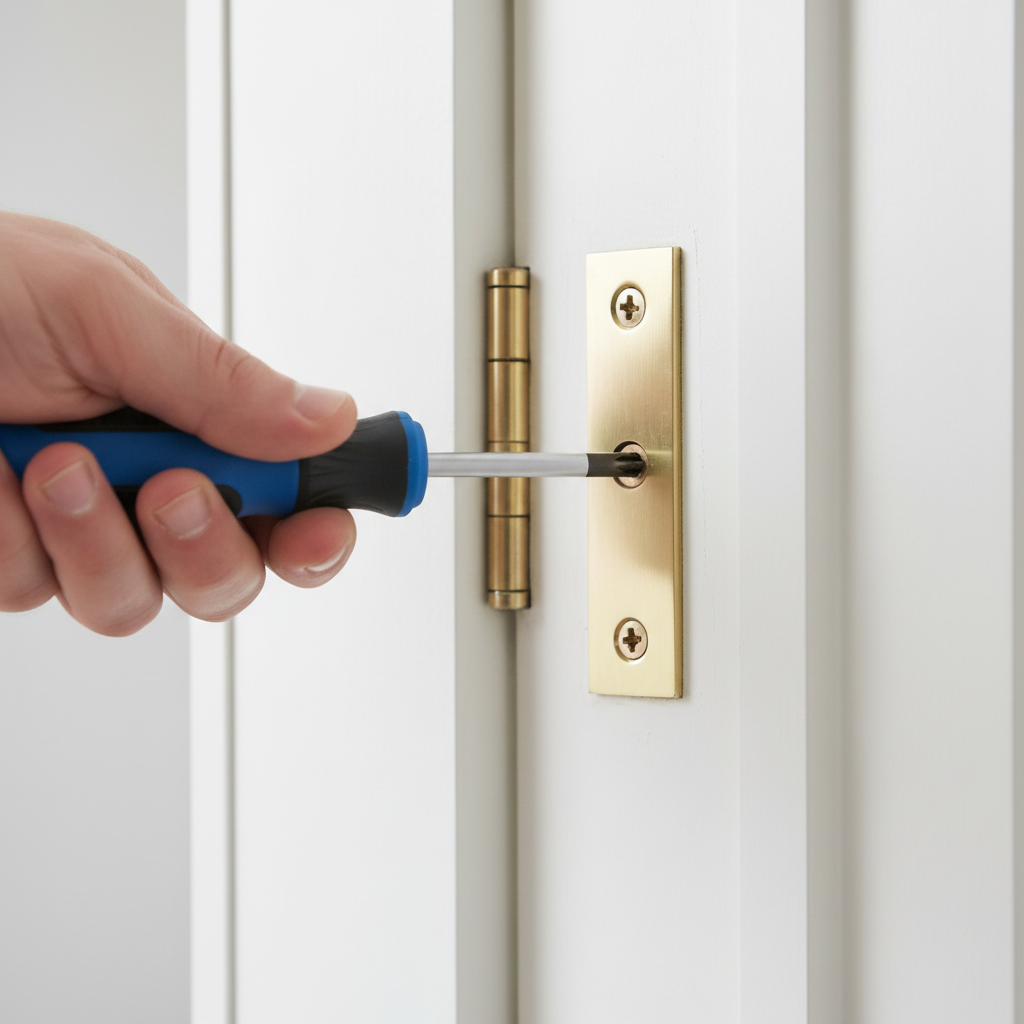
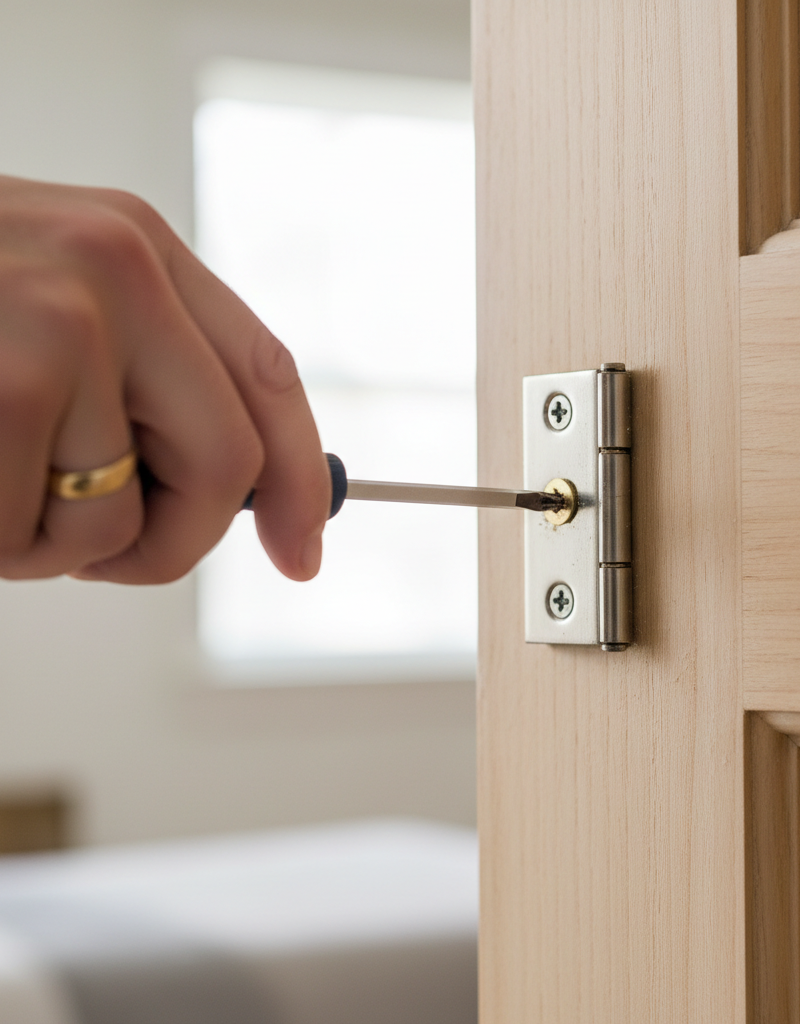
Tighten All Hinge Screws — With a Phillips head screwdriver, thoroughly tighten every screw on all hinges. Start with the top hinge on the jamb side, then the door side, and work your way down. Do not overtighten, as this can strip the screw holes further. Small, manual turns are best.
- If a screw spins freely: This indicates a stripped screw hole. You'll need to reinforce it. Skip to Step 4.
-
Reinforce Stripped Screw Holes — For any screw that spins, remove it and prepare to reinforce the hole. Break off several wooden toothpicks or matchsticks (without heads) and apply a small amount of wood glue to one end. Insert the glued ends into the stripped screw hole until it's packed tightly. Snap off any excess toothpick flush with the wood surface. Let the glue dry for at least 15-20 minutes, or as directed by the glue manufacturer.
- Tip: For larger holes, you can use a wooden dowel (1/4'' or 3/8'') cut to 1-inch lengths, applied with wood glue, then drill a pilot hole for the screw.
-
Reinstall Screws in Reinforced Holes — Once the glue is dry, drive the original screws back into the reinforced holes. The wood and glue mixture should provide a much firmer grip. Again, tighten securely but avoid overtightening. Test the door’s operation.
-
Replace a Short Hinge Screw with a Longer One — If the top hinge on the jamb side is still loose or the door still sags, replace one of the short screws with a 2-1/2 to 3-inch long wood screw. This longer screw should penetrate through the door jamb and into the structural framing behind it, providing substantial anchoring. Use a #9 or #10 wood screw with a similar head type (flat-head Phillips).
- Crucial: Do this for only one screw per hinge, typically the top screw on the jamb side of the top hinge, and possibly the bottom screw on the jamb side of the bottom hinge.
- If this doesn't fix it: The issue might be a warped door or frame, or foundation settling, which requires a professional.
-
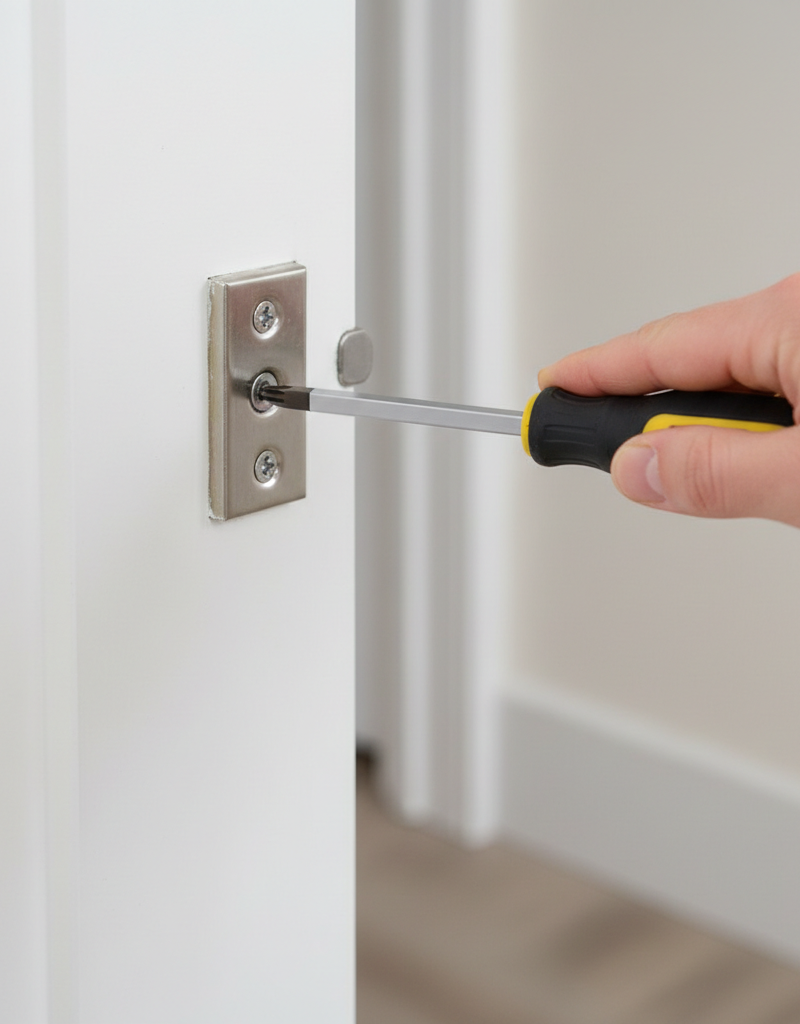
Adjust the Strike Plate (if latching is the only issue) — If the door closes smoothly but won't latch, the strike plate might be misaligned. Loosen the strike plate screws, gently tap the strike plate up or down a hair to align with the latch bolt, then retighten. If this isn't enough, you may need to file the inside edge of the plate a tiny bit or chisel out more wood from the mortise in the jamb. Make very small adjustments and test frequently.
-
Test and Fine-Tune — Open and close the door several times, listening and feeling for any rubbing or sticking. Make small, incremental adjustments to hinge screw tightness if needed. The door should swing freely and latch crisply.
Common Causes
- Loose Hinge Screws: By far the most common culprit. Over time, the constant weight and movement of the door, combined with vibration, causes screws to back out slightly.
- Stripped Screw Holes: When screws loosen, they can strip the wood fibers in the door or frame, preventing them from holding tight.
- Insufficiently Long Hinge Screws: Especially in older homes, the original short screws may not reach the structural studs behind the jamb, leading to inadequate support for the door's weight.
- Warped Door: Extreme humidity changes or poor construction can cause the door slab itself to warp or twist, leading to permanent misalignment.
- Warped or Settling Door Frame: Less common, but structural shifts in the house or prolonged moisture exposure can cause the door frame to move out of square, a more serious issue.
- Heavy Door on Undersized Hinges: A solid core or unusually heavy door puts more stress on hinges, accelerating wear if hinges aren't robust enough.
Common Mistakes
- Ignoring Loose Screws: Many homeowners delay fixing slightly loose screws, allowing the problem to worsen and potentially strip the holes.
- Overtightening Screws: Applying too much force when tightening can strip the screw holes in soft wood, making the problem worse.
- Only Tightening Visible Hinge Screws: Some screws might be hidden by paint or simply overlooked. All screws need to be snug.
- Using Too Short Screws for Reinforcement: When reinforcing stripped holes, using new screws that are the same short length means they still won't reach the solid framing behind the jamb.
- Not Using Wood Glue for Toothpicks: Simply jamming toothpicks in offers temporary relief; glue makes the repair more permanent and solid.
- Assuming a Warped Door Immediately: Many people jump to the conclusion that their door is warped, when in reality, the issue is almost always the hinges. Always rule out hinge issues first.
Cost & Time Breakdown
| Task | DIY cost | Pro cost | Time |
|---|---|---|---|
| Tighten Loose Hinges | $0 | $50–$100 | 10–15 minutes |
| Reinforce Stripped Holes | $2–$5 | $75–$150 | 30–45 minutes |
| Replace Longer Hinge Screws | $3–$10 | $75–$150 | 15–20 minutes |
| Adjust Strike Plate | $0 | $50–$100 | 10–15 minutes |
| Minor Frame Adjustment (pro) | N/A | $150–$300 | 1–2 hours |
Tips & Prevention
- Routine Checks: Every 6-12 months, give your doors a quick inspection. Open and close them fully, and gently jiggle them to check for any play in the hinges. Tighten any screws that feel loose.
- Address Issues Early: Don't wait for your door to be severely dragging. The sooner you address a slight sag, the easier the fix will be.
- Use Proper Screws: If you're replacing hinges or installing a new door, opt for hinges that come with at least one 2-1/2 inch to 3-inch screw for each leaf on the jamb side. This provides critical long-term support.
- Humidity Control: In areas with high humidity, consider using a dehumidifier to minimize wood expansion and contraction, which can stress hinge connections.
- Avoid Hanging Heavy Items: Do not hang heavy coats, bags, or other items from interior doors, as this adds unnecessary stress to the hinges.
- Lubricate Hinges: Occasionally apply a small amount of silicone spray or 3-in-1 oil to hinge pins to ensure smooth operation and reduce wear, which can indirectly contribute to hinge loosening.
When to Call a Professional
While most sagging door issues are hinge-related and DIY-friendly, certain situations warrant professional help. If tightening and reinforcing hinge screws doesn't resolve the sag, or if the door or frame appears significantly warped, twisted, or out of square, it's time to call a licensed carpenter or handyman. Significant frame issues can indicate structural shifting in your home that requires a closer look. Furthermore, if you suspect the problem is related to the house's foundation settling, or if moisture damage is evident around the door frame, contact a structural engineer or a general contractor to assess the underlying cause, as these are beyond a simple DIY door fix and could lead to much larger problems if ignored.
Related Articles
Keep troubleshooting with these hand-picked guides from FixlyGuide:
- The Hidden Culprit Behind Your AC Not Cooling (and How to Find It) — If your central AC isn't cooling your home, the issue often stems from a surprisingly simple problem that's easy to overlook. Learn how to…
- The Hidden Reason Your AC Isn't Cooling (And 7 Fixes Homeowners Miss) — If your central AC isn't cooling your home, the culprit often lies in an overlooked issue that's simple to fix, preventing costly professio…
- The Hidden Reason Your AC Isn't Cooling (And Why Most Homeowners Get It Wrong) — When your central AC unit isn't cooling, the culprit often isn't what you think, leading to frustration and unnecessary repair calls.
- The 12 Checks That Prevent 80% of Costly Home Repairs — Don't wait for a disaster. Our comprehensive monthly home maintenance checklist reveals the surprising, simple tasks that catch small issue…
- 7 Inspection Red Flags That Secretly Signal a $20,000 Bill — Don't let your dream home become a money pit. Many buyers and even some inspectors overlook subtle home inspection red flags that lead to f…
- The 3 Hidden Reasons Your Interior Door Sticks (and The 15-Minute Fix) — Discover the surprisingly common reasons your interior door sticks and learn how to fix it in under 15 minutes with simple tools.
Should you do this yourself?
Answer five quick questions before you start. Safety outranks savings every time.
Your experience with work like this
How high do you have to work?
Does the job involve any of these?
Will it need a permit?
Specialty tools
Free and instant. Educational guidance only — not a quote, inspection, or professional diagnosis.
What should this project cost?
Enter your project details for a realistic cost range before you call anyone.
Cost depends heavily on which system turns out to be the source.
- Regional adjustment
- National average
- Labor share (typical)
- ~$1,620
- Quotes to collect
- 3 written estimates
Educational estimate based on national averages — not a binding quote. Always confirm with written local estimates.
Get the print-ready PDF of this guide
A clean, ad-free, printable version you can keep on your phone or pin to the workshop wall. Free with a FixlyGuide account.
- Print-optimized layout
- Tools, materials & every step included
- Saved to your account
This article was independently written by FixlyGuide based on the source topic.
Frequently asked questions
Why does my door suddenly start sagging?+
Doors typically sag due to gravity and frequent use loosening the screws that hold the hinges to the door frame and the door itself. This cumulative stress can cause the wood around the screw holes to wear or strip, allowing the door to shift out of alignment.
Can I fix a sagging door without taking it off its hinges?+
Yes, in many cases, you can fix a sagging door without removing it. Most repairs involve simply tightening or reinforcing the existing hinge screws while the door remains in place. Only in more severe cases of damage or hinge replacement would removal be necessary.
What if my hinge screws are stripped?+
If your hinge screws are stripped, you can reinforce the holes with wooden toothpicks or matchsticks coated in wood glue. Pack the hole tightly, let the glue dry, then reinsert the screws. For larger holes, a small wooden dowel with a pilot hole can provide a more robust repair.
How do I know if my door is warped instead of just sagging?+
A truly warped door will often show a visible curve or twist in its slab when viewed from the top or side, even when removed from the frame. If the door's edges are consistently out of parallel with the frame after hinge issues are corrected, warping is a possibility. A sagging door, however, typically resumes a straighter appearance once its hinges are properly secured.
When should I call a professional for a sagging door?+
Call a professional if tightening and reinforcing hinges doesn't fix the problem, if the door frame itself appears to be significantly warped or out of square, or if you suspect structural issues with your home like foundation settling or severe moisture damage. These indicate a problem beyond a simple hinge adjustment.
Discussion
Loading comments…