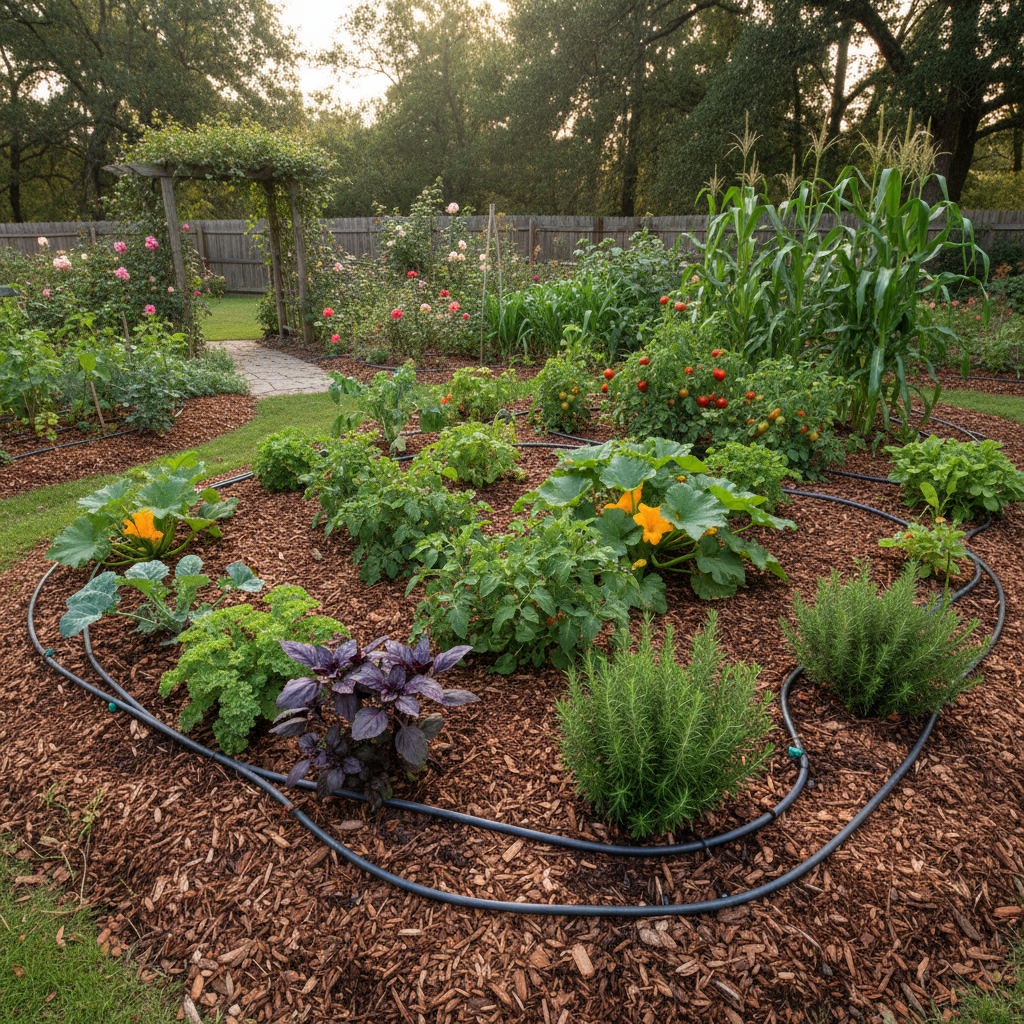
- Materials: Drip irrigation kit, soaker hose, automatic watering timer, pressure regulator.
- Installation Tip: Burying drip lines under mulch makes them less visible and further reduces evaporation.
- If this doesn't work: Check for clogs in the drip emitters or kinks in the hose. Ensure sufficient water pressure to the system.
Published May 15, 2026Last updated August 17, 2026
Tools & materials you'll need
Affiliate linksAs an Amazon Associate FixlyGuide earns from qualifying purchases — at no extra cost to you. Prices and availability are accurate as of publication and subject to change.
Quick Answer
Creating a hands-off garden relies on intelligent design and material choices. Focus on automated watering, natural weed suppression through mulching, choosing the right plants for your climate, and building healthy soil. These strategies work synergistically to reduce daily chores, allowing you to enjoy your garden more with significantly less effort.
The Problem
Many homeowners dream of lush, vibrant gardens but are quickly overwhelmed by the constant demands of watering, weeding, and pest control. Traditional gardening can feel like a part-time job, especially during peak growing seasons or extended absences. This leads to neglected plants, increased water bills, and a general sense of frustration, ultimately making gardening seem more like a chore than a pleasure. The core problem isn't a lack of desire, but a lack of time-saving strategies.
How It Works
Automating your garden isn't about magic; it's about understanding and leveraging natural processes and smart technology. At its heart, it's about creating a balanced ecosystem where plants thrive with minimal human intervention.
Watering Systems: The most significant time-saver is often an automated watering system. Drip irrigation, for instance, delivers water directly to the plant's root zone, minimizing evaporation and runoff. This conserves water and ensures consistent moisture levels. Timers, connected to these systems, can be programmed to water at optimal times, typically early morning, reducing fungal diseases and further evaporation. Some advanced systems even integrate soil moisture sensors, which prevent overwatering by only activating when the soil actually needs it. This precision not only saves water but also promotes deeper root growth as plants seek out the consistent moisture.
Soil Health: Healthy soil is the bedrock of an autonomous garden. Rich, organic soil acts like a sponge, retaining moisture longer and providing a steady supply of nutrients. When soil is balanced, plants are healthier and more resistant to pests and diseases, reducing the need for chemical interventions. Incorporating compost and other organic matter improves soil structure, aeration, and microbial life, all of which contribute to a self-sustaining environment. This also lessens the need for frequent fertilization.
Mulching: A thick layer of organic mulch (like wood chips, straw, or shredded leaves) serves multiple critical functions. Firstly, it acts as a physical barrier, suppressing weed germination and growth. Fewer weeds mean less competition for water and nutrients, and less time spent pulling them. Secondly, mulch significantly reduces water evaporation from the soil surface, keeping the root zone consistently moist and cutting down on watering frequency. Thirdly, as organic mulches decompose, they slowly release nutrients back into the soil, further enhancing soil fertility over time.
Plant Selection: Choosing the right plants for your specific climate zone and microclimate is crucial. Native plants, for example, are naturally adapted to local rainfall patterns, soil types, and temperature extremes, making them inherently more resilient and less demanding. Drought-tolerant or xeriscape plants require minimal supplemental water once established. Understanding a plant's mature size and light requirements also prevents overcrowding and ensures each plant gets adequate resources without constant pruning or relocation. Genetic vigor is a powerful tool in hands-off gardening.
Integrated Pest Management (IPM): Instead of constant vigilance and reactive spraying, an automated garden uses IPM principles. This includes encouraging beneficial insects (through companion planting or insectaries), rotating crops to break pest cycles, and choosing disease-resistant plant varieties. Good air circulation, often achieved by proper plant spacing, also deters fungal issues. These proactive measures create a robust ecosystem that naturally keeps pest populations in check, drastically reducing the need for manual intervention.
By combining these elements, a garden becomes less of a daily chore and more of a self-regulating system, requiring only periodic maintenance to thrive.
Step-by-Step Fix
Step 1: Assess Your Garden's Current State — Before making any changes, understand what you're working with. Evaluate sun exposure throughout the day, identify problem areas (e.g., soggy spots, dry patches, persistent weeds), and test your soil. This initial assessment guides all subsequent decisions.
- Tools: Soil testing kit, compass, notebook and pen, camera.
- Consideration: A basic soil test (available at most garden centers) will reveal pH and nutrient levels, informing your soil amendment strategy.
Step 2: Install an Automated Watering System — Drip irrigation or soaker hoses are far more efficient than overhead sprinklers. They deliver water directly to the root zone, minimizing waste and fungal issues. Connect them to a timer for hands-free operation.
- Materials: Drip irrigation kit, soaker hose, automatic watering timer, pressure regulator.
- Installation Tip: Burying drip lines under mulch makes them less visible and further reduces evaporation.
- If this doesn't work: Check for clogs in the drip emitters or kinks in the hose. Ensure sufficient water pressure to the system.
Step 3: Apply a Thick Layer of Organic Mulch — After weeding, spread 3-4 inches of organic mulch (shredded bark, straw, wood chips, or compost) around plants, keeping it a few inches away from plant stems and tree trunks. This suppresses weeds, retains moisture, and enriches the soil.
- Materials: Shredded bark, straw, wood chips, compost (your choice).
- Safety: Wear gloves to prevent splinters and skin irritation. Lift bags of mulch carefully to avoid back strain.
- Timing: Apply mulch after soil has warmed in spring, but before summer heat sets in.
Step 4: Select Drought-Tolerant, Native Plants — Prioritize plants that are well-suited to your local climate and require minimal supplemental watering once established. Native plants often have natural resistance to local pests and diseases.
- Research: Consult local nurseries, extension offices, or online resources for recommendations specific to your USDA Hardiness Zone.
- Consideration: Group plants with similar water needs together (hydrozoning) to optimize irrigation.
Step 5: Improve Soil Health with Organic Matter — Regularly incorporate compost, well-rotted manure, or other organic matter into your garden beds. This improves soil structure, water retention, and nutrient availability, reducing the need for constant fertilization.
- Materials: Compost, aged manure, worm castings.
- Method: Gently work organic matter into the top 6-12 inches of soil, or apply as a top dressing under mulch.
Step 6: Plan for Companion Planting and Beneficial Insects — Strategically plant certain species together to deter pests and attract predatory insects. For example, marigolds can repel nematodes, while dill and parsley attract beneficial wasps.
- Examples: Plant nasturtiums near squash to trap aphids, or calendula to attract hoverflies.
- Observation: Spend time watching your garden to identify existing pests and beneficial insects.
Step 7: Implement Smart Hardscaping and Walkways — Use permeable materials for paths and patios to allow rainwater to infiltrate the soil rather than run off. Design pathways that minimize foot traffic in planted areas, reducing soil compaction.
- Materials: Gravel, permeable pavers, wood chips (for informal paths).
- Design Tip: Consider swales or rain gardens to direct and retain stormwater on your property.
Step 8: Set Up Rain Barrels or Cisterns — Collect rainwater from your roof to supplement your irrigation. This free, chemical-free water is excellent for plants and reduces your reliance on municipal water sources.
- Materials: Rain barrel kit, downspout diverter.
- Placement: Position rain barrels close to downspouts and on a sturdy, level base.
- Maintenance: Regularly clean gutters and debris screens on rain barrels.
Step 9: Practice Strategic Pruning and Deadheading — While the goal is hands-off, occasional pruning promotes plant health and redirects energy. Deadheading spent flowers prevents plants from going to seed prematurely, encouraging more blooms and reducing unwanted self-seeding.
- Tools: Sharp bypass pruners, gardening gloves.
- Technique: Make clean cuts just above a leaf node or side branch.
Step 10: Utilize Vertical Gardening Where Possible — Maximize space and reduce bending by growing vining plants vertically on trellises, arbors, or walls. This can improve air circulation and make harvesting easier.
- Materials: Trellis, garden stakes, strong twine, vertical planters.
- Plant Choices: Cucumbers, pole beans, indeterminate tomatoes, climbing roses.
Common Causes
- Inefficient Watering: Relying on overhead sprinklers or erratic manual watering leads to water waste and stressed plants.
- Poor Soil Structure: Compacted, nutrient-poor soil requires constant amendments, frequent watering, and makes plants vulnerable.
- Wrong Plant, Wrong Place: Plants that aren't suited to the local climate or microclimate struggle, demanding extra care.
- Lack of Mulch: Bare soil quickly dries out, encourages weeds, and suffers from temperature fluctuations.
- Reactive Pest Control: Waiting for pest outbreaks before acting leads to time-consuming battles with chemicals.
- Overly Complex Design: Intricate garden layouts with many different plant needs and high-maintenance features require constant attention.
Common Mistakes
- Ignoring Soil Health First: Many DIYers focus on plants before preparing the soil, leading to ongoing struggles. Build healthy soil first; it's the foundation of a low-maintenance garden.
- Underestimating Mulch Thickness: A thin layer of mulch won't effectively suppress weeds or retain moisture. Aim for at least 3-4 inches for optimal benefits.
- Over-watering Newly Planted Drought-Tolerant Varieties: While established, these plants need careful watering when young. Don't assume they need no water immediately after planting.
- Planting High-Maintenance Plants in Hard-to-Reach Areas: Placing plants that require frequent deadheading or pruning in the back of a bed means they'll likely be neglected.
- Neglecting to Group Plants by Water Needs: Mixing water-hungry plants with drought-tolerant ones makes efficient irrigation impossible. Zone your plants!
- **Thinking
Related Articles
Keep troubleshooting with these hand-picked guides from FixlyGuide:
- The Secret to Lush Raised Beds? It's Not Just About How You Water — Smart irrigation for raised garden beds isn't just about automation; it's about delivering the right amount of water precisely when your pl…
- The 5 Essential Tools Every New Gardener Needs (And 3 You Can Skip) — Starting a garden doesn't require a huge investment in tools; savvy new gardeners can thrive with just a few key items and save money by kn…
- The 5-Minute Trick to Vacation-Proof Your Garden (Before You Leave Town) — Prevent your garden from wilting while you're away with simple, proactive steps that ensure lush growth and minimal fuss upon your return.
- The Hidden Reason Your GFCI Trips (It's Not Always a Faulty Outlet) — A continuously tripping GFCI outlet is a critical safety warning, often indicating moisture, a faulty appliance, or a wiring problem that r…
- The Sneaky Way a Gas Tax Freeze Could Raise Your Property Bill — A gas tax freeze promises immediate relief at the pump, but for homeowners, it can trigger hidden costs, from deteriorating roads to potent…
- The #1 Mowing Mistake That Leaves Your Lawn Brown and Patchy — Discover the most common mowing mistake homeowners make that leads to unhealthy, patchy grass and how to fix it for a vibrant lawn.
What should this project cost?
Enter your project details for a realistic cost range before you call anyone.
Cost depends heavily on which system turns out to be the source.
- Regional adjustment
- National average
- Labor share (typical)
- ~$1,620
- Quotes to collect
- 3 written estimates
Educational estimate based on national averages — not a binding quote. Always confirm with written local estimates.
This article was independently written by FixlyGuide based on the source topic.
Frequently asked questions
How often should I water an automated garden?+
With an automated drip system and proper mulching, watering frequency can be significantly reduced. For established plants, 2-3 times per week for 30-60 minutes might suffice, depending on your climate and plant types. Soil moisture sensors can further optimize this, ensuring water is only delivered when truly needed.
What's the best type of mulch for weed control?+
Organic mulches like shredded bark, wood chips, or straw are excellent for weed suppression and soil improvement. Aim for a 3-4 inch layer. Black plastic or fabric mulches can also suppress weeds but don't improve soil health and can interfere with water penetration over time.
Can I convert my existing garden to a hands-off system?+
Absolutely! Start with an audit of your current garden, then gradually implement changes like installing drip irrigation, adding mulch, and replacing high-maintenance plants with more suitable varieties over time. It's a process, not an overnight transformation.
How do I deal with pests naturally in a low-maintenance garden?+
Focus on prevention: healthy soil, companion planting to attract beneficial insects, choosing disease-resistant varieties, and proper plant spacing for good air circulation. If pests emerge, try methods like hand-picking or insecticidal soap before resorting to stronger measures.
Is a hands-off garden truly 'no work'?+
A hands-off garden aims for *minimal* work, not no work. You'll still need periodic checks, seasonal clean-up, and monitoring. The goal is to reduce daily or weekly chores to occasional, enjoyable maintenance, allowing the garden to largely manage itself.


Discussion
Loading comments…