- Clogged Air Filter: Restricted airflow due to a dirty filter makes the entire HVAC system work inefficiently, reducing the heat pump's ability to transfer heat and the auxiliary heat's ability to warm and distribute air.
- Incorrect Thermostat Settings: Accidentally setting the thermostat to 'Off', 'Cool', or 'Emergency Heat' when it's not needed, or having programming errors, can prevent the heat pump or auxiliary heat from engaging properly.
- Ice Buildup on Outdoor Unit: Excessive ice on the outdoor coil obstructs airflow and prevents the heat pump from absorbing heat from the outside air. A malfunctioning defrost cycle is often the root cause.
- Refrigerant Issues: Low refrigerant levels (due to a leak) or improper refrigerant charge severely impair the heat pump's ability to transfer heat.
- Faulty Auxiliary Heat Elements: The electric resistance strips themselves can burn out or develop electrical issues, preventing them from generating heat.
HVAC · High energy usage
| Project category | HVAC |
|---|---|
| Problem type | High energy usage |
| Trade required | HVAC |
| Urgency | Planned project |
| Safety risk | Low safety risk |
| DIY suitability | DIY for experienced homeowners |
| Cost category | High cost |
| Typical timeline | Assessment within weeks; replacement planned off-season |
| Contractor type | Licensed HVAC technician |
Repair option
Duct sealing, insulation, and a tune-up before touching the equipment.
Replacement option
High-efficiency replacement sized by a load calculation, not a rule of thumb.
Common causes
- Aging, low-efficiency equipment
- Leaking ducts losing conditioned air
- Insufficient attic insulation
- Oversized system short-cycling
Relevant tools:project cost estimatorrepair or replace
Published May 3, 2026Last updated August 17, 2026
Tools & materials you'll need
Affiliate links- AmazonNew air filter1 · Match your existing filter's size and MERV rating
As an Amazon Associate FixlyGuide earns from qualifying purchases — at no extra cost to you. Prices and availability are accurate as of publication and subject to change.
Quick Answer
When your heat pump isn't heating effectively in cold weather, the most frequent culprit isn't a major breakdown but often an overlooked issue with its auxiliary or emergency heat function. This system, integral to heat pump operation in frigid temperatures, can fail to engage due to a tripped circuit breaker, a severely clogged air filter restricting airflow, or incorrect thermostat settings. Addressing these common problems yourself can often restore your heat pump's heating capabilities without needing a professional service call.
The Problem
Your heat pump is fantastic at efficiently heating your home for most of the year. However, as the mercury drops, typically below 35-40°F (about 2-4°C), you might notice it struggling to keep your home warm, or even blowing cool air. This isn't necessarily a sign of a broken system but rather an indication that it's operating outside its most efficient range. Heat pumps work by extracting heat from the outdoor air and transferring it indoors. The colder it gets outside, the less heat there is to extract, making the heat pump work harder and less efficiently. At a certain point, known as the 'balance point,' the heat pump can no longer meet your home's heating demand on its own. This is where the auxiliary or 'emergency' heat is supposed to kick in. If it doesn't, or if it's not working correctly, your home will feel cold, leading to discomfort and potentially frozen pipes.
Many homeowners, in a panic, will immediately call a technician, often before checking the simplest, most common and often overlooked cause: the auxiliary heat system. Understanding how this critical secondary heating system operates and what prevents it from engaging correctly is key to diagnosing and potentially fixing your 'no heat' situation.
How It Works
A heat pump is essentially an air conditioner that can run in reverse. Inside the outdoor unit, a refrigerant absorbs heat from the surrounding air (even cold air contains some heat energy). This warmed refrigerant then flows through a compressor, which increases its temperature and pressure. It then travels to the indoor unit's coil, where it releases the absorbed heat into your home's ductwork, warming the air. The now-cooled refrigerant returns to the outdoor unit to repeat the cycle.
This process is highly efficient because it moves heat rather than generating it. However, as outdoor temperatures fall, the amount of heat available for extraction decreases. The heat pump's efficiency (measured by its Coefficient of Performance, or COP) drops, and eventually, it can't extract enough heat to comfortably warm your home. This 'balance point' varies by system and climate, but it's typically in the 35-40°F range.
When the outdoor temperature falls below the balance point, or if the thermostat detects a large temperature difference between the setpoint and the actual room temperature, the thermostat signals the auxiliary heat to turn on. Auxiliary heat, also known as 'emergency heat' or 'supplemental heat,' usually consists of electric resistance heating strips located within your indoor air handler. These strips are essentially large coils that generate heat much like a toaster oven. While effective, electric resistance heat is far less efficient and more expensive to operate than the heat pump itself. It's designed for temporary use to bridge the gap during extreme cold or sudden temperature drops.
Modern thermostats are designed to manage the heat pump and auxiliary heat seamlessly. When the system needs more heat than the heat pump alone can provide, it will automatically engage the auxiliary heat. If the thermostat is explicitly set to 'Emergency Heat' mode, it will bypass the heat pump entirely and rely solely on the electric resistance strips.
Step-by-Step Fix
1. Check Your Thermostat Settings – Ensure the system isn't locked out or on the wrong mode.
Make sure your thermostat is set to 'Heat' mode and not 'Cool' or 'Off'. Confirm that the fan is set to 'Auto' and not 'On' (running the fan continuously can make your home feel colder as it circulates air that hasn't been adequately heated). If your thermostat has an 'Emergency Heat' or 'Aux Heat' setting, ensure it's not accidentally enabled unless you specifically mean to use it. Many homeowners mistakenly switch to 'Emergency Heat' assuming it's for cold weather, not realizing it's an inefficient last resort. Try setting the temperature 3-5 degrees higher than your current room temperature to trigger the heating cycle.
- If this doesn't work: Some smart thermostats have lockout features for auxiliary heat based on outdoor temperature sensors. Consult your thermostat's manual to ensure no such setting is preventing auxiliary heat engagement.
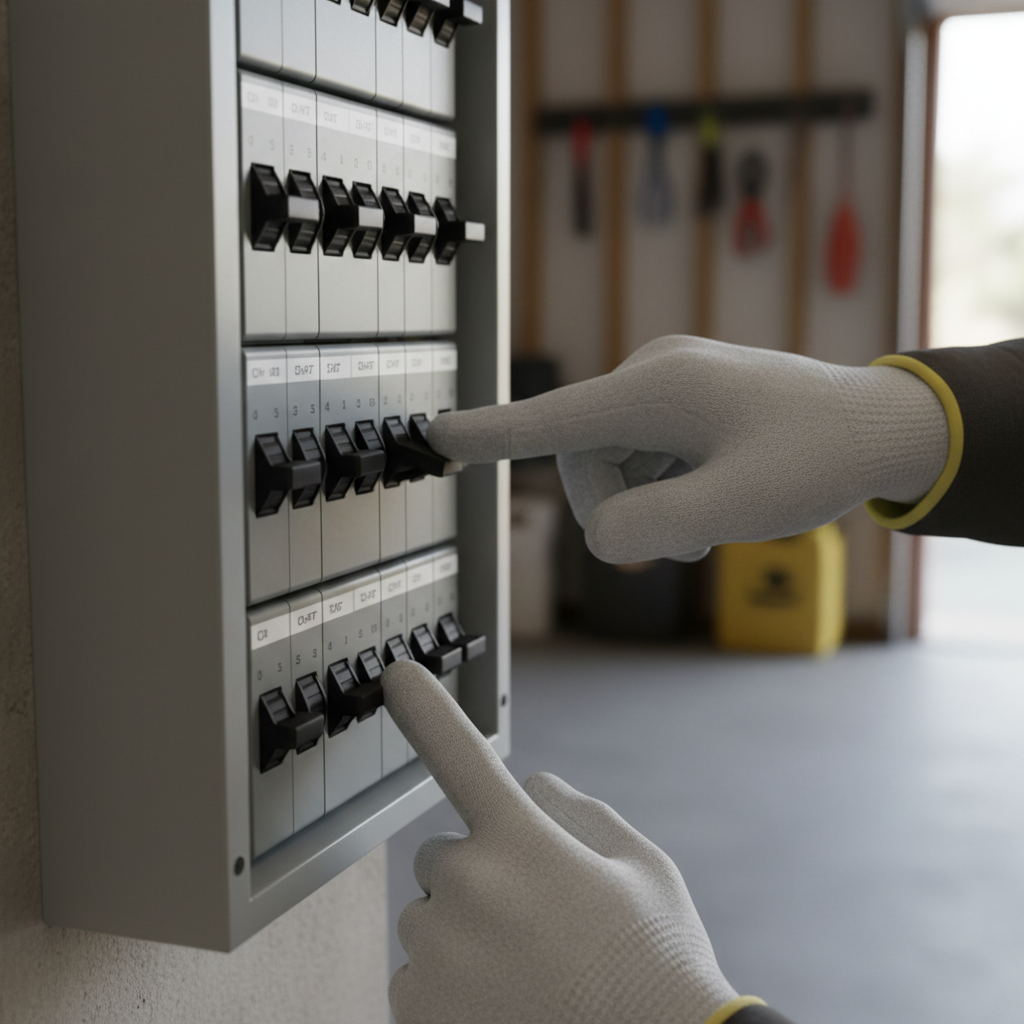
2. Inspect Your Circuit Breakers – A tripped breaker is a common, easy fix.
Locate your electrical panel, usually in a basement, garage, or utility closet. Look for any tripped breakers—these will typically be in an 'off' position or halfway between 'on' and 'off'. Most HVAC systems have dedicated breakers for the outdoor unit, the indoor air handler, and specifically for the auxiliary heat strips. The auxiliary heat breaker is often a larger-amp double-pole breaker. If you find a tripped breaker, firmly switch it completely to the 'Off' position, then back to the 'On' position. Wait a few minutes for the system to attempt to restart.
- Safety Note: Always use caution when working near electrical panels. If a breaker trips repeatedly after resetting, do not continue to reset it. This indicates a potentially serious electrical issue requiring a licensed electrician.
- If this doesn't work: If breakers are fine, the issue isn't a simple overload.
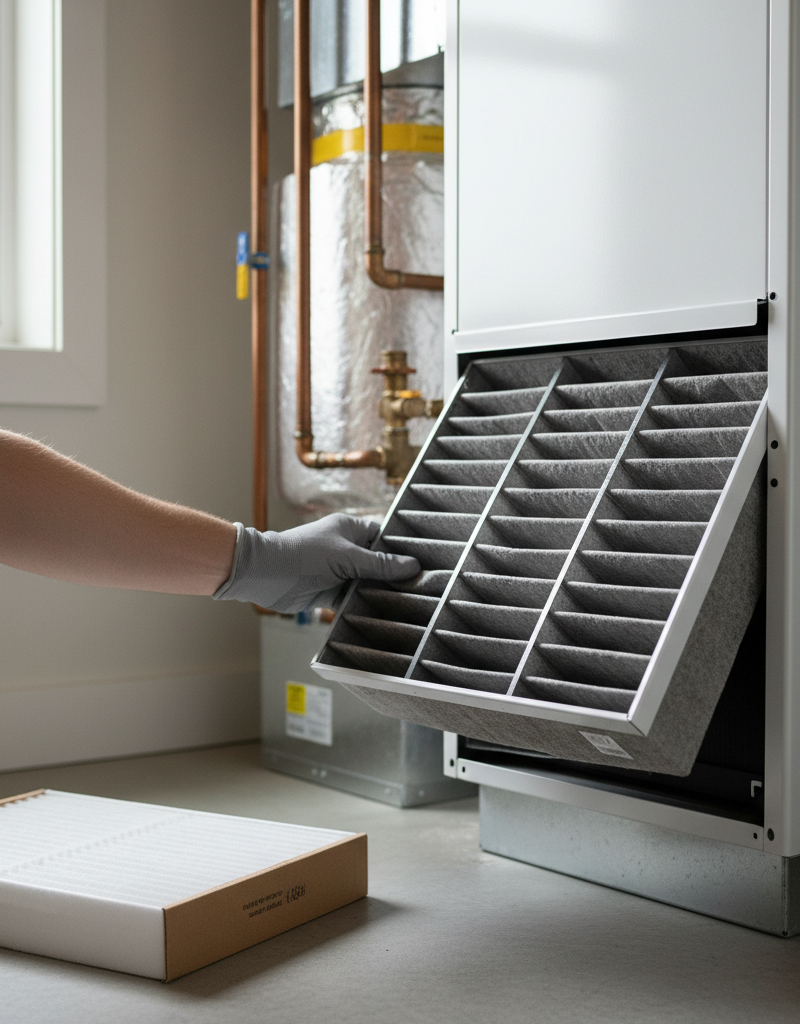
3. Replace a Clogged Air Filter – Restricted airflow severely impacts heating performance.
Find your air filter, which is typically located in the return air duct right before the indoor air handler or sometimes within the air handler unit itself. A dirty, clogged filter severely restricts airflow, forcing your system to work harder and reducing its heating capacity, especially the auxiliary heat strips' ability to distribute warmth efficiently. Replace it with a clean, correct-sized filter. Filters should typically be checked monthly and replaced every 1-3 months, depending on usage and household conditions (pets, allergies).
- Tools: New air filter (check old filter for size). Often, filter sizes are printed on the cardboard frame.
- If this doesn't work: While a clean filter helps, it might not be the sole cause.
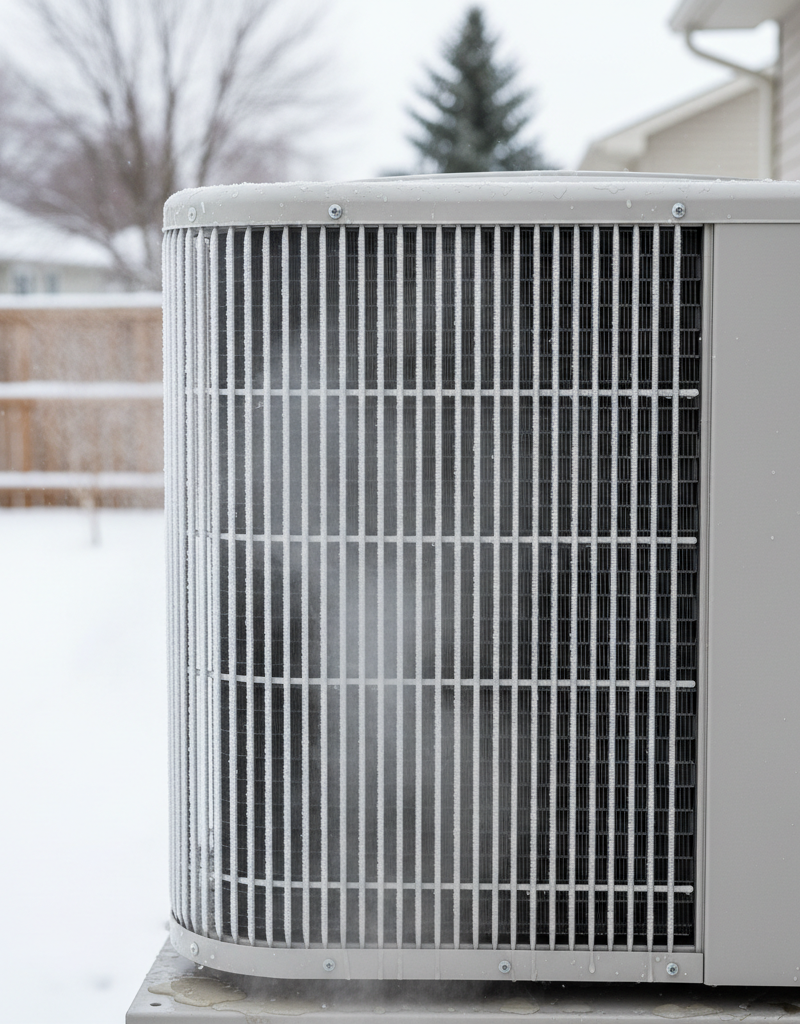
4. Clear Ice and Debris from the Outdoor Unit – Ensure proper airflow for heat extraction.
Go outside and visually inspect your heat pump's outdoor unit. During cold weather, especially with high humidity, frost and ice can accumulate on the coils. Heat pumps have a defrost cycle to manage this, but a heavy buildup can overwhelm it or indicate a problem with the defrost system itself. Gently remove any easily accessible leaves, twigs, or other debris from around the unit. Do not use sharp objects to chip away ice, as you can damage the coils. If there's significant ice buildup, try carefully pouring warm (not hot) water over the coils to help melt it. Ensure the unit has at least 2 feet of clearance on all sides for proper airflow.
- Safety Note: Be careful not to slip on ice or expose electrical components to water.
- If this doesn't work: Persistent icing or a lack of defrost cycle points to a system issue.
5. Check Supply and Return Vents – Unrestricted airflow is crucial for heat distribution.
Walk through your home and ensure all supply registers (where heated air comes out) and return air grilles (where air is drawn back into the system) are open and unobstructed by furniture, rugs, or curtains. Blocked vents significantly impede airflow throughout your home, leading to uneven heating and making your heat pump work much harder, potentially preventing it from reaching the set temperature and engaging auxiliary heat when needed. Also, check that no vents have been fully closed off, as this can create air pressure imbalances in the ductwork.
- If this doesn't work: If airflow seems adequate and vents are open, the issue likely lies within the HVAC components.
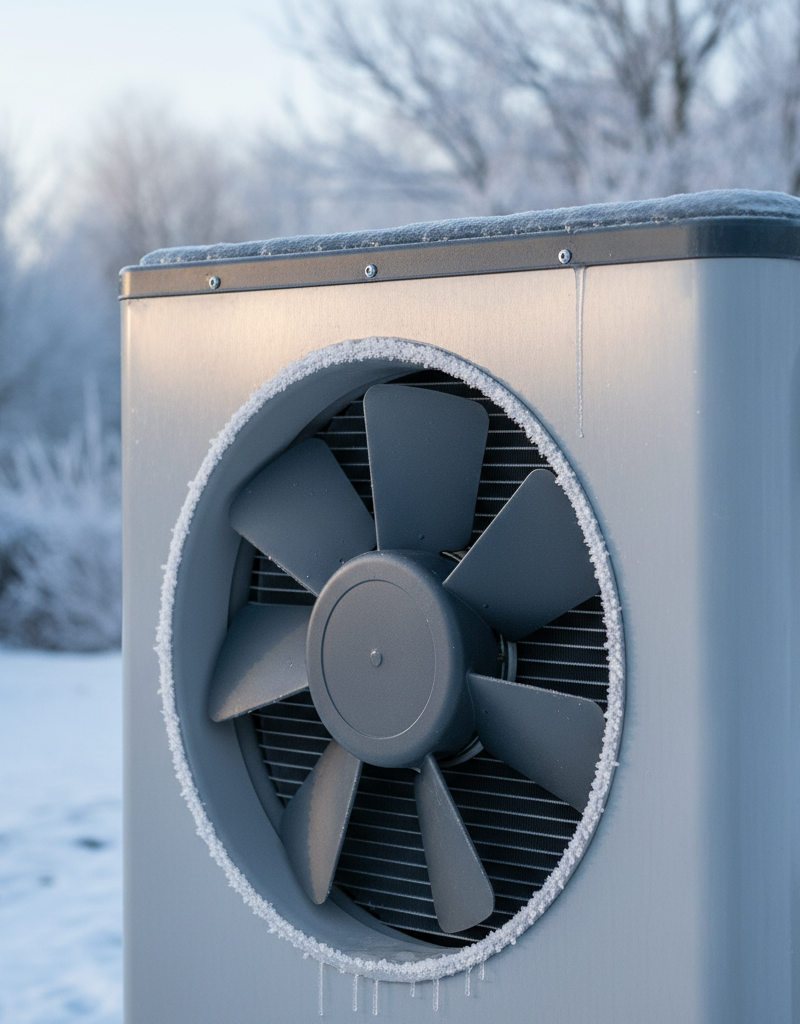
6. Observe Defrost Cycle Operation – A malfunctioning defrost can lead to excessive ice.
Heat pumps initiate a defrost cycle at regular intervals or when sensors detect ice on the outdoor coil. During this cycle, the outdoor fan typically stops, and you might see steam rising from the unit as it temporarily switches to cooling mode (using the auxiliary heat indoors to prevent sending cold air into your home). This cycle usually lasts 5-15 minutes. If your outdoor unit is consistently covered in a thick layer of ice and you never observe it going into a defrost cycle, or if the cycle seems too short or ineffective, there might be a problem with the defrost board, defrost sensor, or reversing valve.
- If this doesn't work: A non-functioning defrost cycle absolutely requires a professional.
7. Consider Outdoor Temperature and Heat Pump Capacity – Know your system's limits.
Remember that heat pumps have limitations. If outdoor temperatures are consistently well below freezing (e.g., single digits or teens Fahrenheit), a standard air-source heat pump may struggle significantly, even with a functioning auxiliary heat system. In such extreme conditions, the auxiliary heat might be running almost continuously, leading to higher energy bills but still potentially feeling less warm than a dedicated furnace. This isn't necessarily a 'fault' but rather the system operating at its performance edge. Ensure your home has adequate insulation and sealed air leaks to maximize the heat pump's effectiveness.
- If this doesn't work: If your system seems undersized for your climate or insulation, consult an HVAC professional for an energy audit or system evaluation.
Common Causes
- Tripped Circuit Breaker for Auxiliary Heat: The electric resistance heating strips draw a lot of power, and a surge or slight overload can trip their dedicated breaker. This is an extremely common issue, especially if the auxiliary heat hasn't been used in a while.
- Clogged Air Filter: Restricted airflow due to a dirty filter makes the entire HVAC system work inefficiently, reducing the heat pump's ability to transfer heat and the auxiliary heat's ability to warm and distribute air.
- Incorrect Thermostat Settings: Accidentally setting the thermostat to 'Off', 'Cool', or 'Emergency Heat' when it's not needed, or having programming errors, can prevent the heat pump or auxiliary heat from engaging properly.
- Ice Buildup on Outdoor Unit: Excessive ice on the outdoor coil obstructs airflow and prevents the heat pump from absorbing heat from the outside air. A malfunctioning defrost cycle is often the root cause.
- Refrigerant Issues: Low refrigerant levels (due to a leak) or improper refrigerant charge severely impair the heat pump's ability to transfer heat.
- Faulty Auxiliary Heat Elements: The electric resistance strips themselves can burn out or develop electrical issues, preventing them from generating heat.
- Malfunctioning Defrost Board or Sensors: These components control the crucial defrost cycle. If they fail, the outdoor unit will accumulate ice, crippling the heat pump's operation.
- Weak Blower Motor: The indoor blower fan distributes the heated air. If it's weak or failing, not enough warm air reaches your living spaces.
Common Mistakes
- Switching Directly to Emergency Heat: Many homeowners, feeling cold, immediately switch their thermostat to 'Emergency Heat'. This bypasses the much more efficient heat pump entirely and relies solely on expensive electric resistance heat, leading to sky-high utility bills. Only use this mode if the heat pump is truly broken and you need heat immediately, or during extreme, prolonged cold snaps where the heat pump cannot keep up even with auxiliary heat.
- Ignoring a Tripped Breaker: Assuming a 'no heat' situation is a major mechanical failure without first checking the electrical panel. A simple reset can save a service call.
- Neglecting Air Filter Replacement: A dirty filter is the enemy of any HVAC system. It reduces efficiency, airflow, and can eventually lead to frozen coils or reduced heating capacity, directly impacting how well both the heat pump and auxiliary heat can warm your home.
- Not Clearing Outdoor Unit Debris: Allowing leaves, snow, or ice to accumulate around the outdoor unit restricts airflow, hindering heat exchange and potentially damaging the fan or coils. It can also impede the defrost cycle.
- Closing Too Many Vents: While tempting to redirect heat, closing too many supply vents can unbalance the ductwork, increase static pressure, and reduce overall system efficiency and airflow, leading to reduced heating in other areas and potential damage to the blower motor.
- Calling a Pro Before Basic Troubleshooting: Jumping to a professional service call before checking the thermostat, breakers, or filter. These simple steps can often resolve the issue at no cost.
Cost & Time Breakdown
| Task | DIY cost | Pro cost | Time |
|---|---|---|---|
| Thermostat Adjustment | $0 | $0–$150 (service call) | 1–2 minutes |
| Breaker Reset | $0 | $0–$150 (service call) | 1–5 minutes |
| Air Filter Replacement | $10–$30 | $10–$30 + service fee | 5 minutes |
| Clear Outdoor Unit Debris | $0 | $0–$150 (service call) | 10–20 minutes |
| Inspect/Clear Vents | $0 | $0–$150 (service call) | 5–10 minutes |
| Professional Diagnostic | N/A | $100–$250 | 1–2 hours |
Tips & Prevention
- Regular Filter Changes: Replace your air filter every 1-3 months, especially during peak heating/cooling seasons. This is the single most important maintenance task a homeowner can do.
- Annual Professional Tune-up: Schedule a professional HVAC inspection and tune-up every fall. A technician will clean coils, check refrigerant levels, test electrical components, and verify the defrost cycle and auxiliary heat operation.
- Keep Outdoor Unit Clear: Ensure the outdoor unit is free from leaves, snow, ice, and other debris year-round. Maintain at least 2 feet of clearance on all sides.
- Monitor Thermostat Settings: Familiarize yourself with your thermostat's programming and ensure it's set correctly for your comfort and energy efficiency. Avoid constant manual switching to 'Emergency Heat'.
- Seal Air Leaks and Insulate: Improve your home's envelope by sealing drafts around windows and doors and ensuring adequate insulation in your attic and walls. This reduces heating demand and makes your heat pump work less strenuously in cold weather.
- Listen for Warning Signs: Pay attention to unusual noises, persistent ice buildup, or a sudden spike in energy bills, as these can indicate a developing problem.
When to Call a Professional
You should call a licensed HVAC professional if, after performing the above troubleshooting steps, your heat pump still fails to provide adequate heat, particularly the auxiliary heat. Specifically, if the outdoor unit is persistently covered in a thick layer of ice and doesn't seem to be defrosting, or if you hear unusual grinding or hissing noises. If a circuit breaker for your auxiliary heat trips repeatedly immediately after resetting, this indicates a serious electrical fault that requires immediate professional attention to avoid fire hazards. Any suspected refrigerant leak, or if the outdoor unit is running but blowing cold air constantly without engaging auxiliary heat, also warrants a call. A professional technician has specialized tools to diagnose complex electrical issues, refrigerant problems, and malfunctioning components like defrost boards and contactors that are beyond the scope of DIY repair. Ignoring these signs can lead to further damage and more costly repairs.
Related Articles
Keep troubleshooting with these hand-picked guides from FixlyGuide:
- Heat Pump Not Heating in Freezing Weather? Here's Why — If your heat pump struggles to heat your home when temperatures drop below freezing, it's likely due to a common issue like a dirty filter,…
- The #1 Mistake Homeowners Make With HVAC Filters (And How Often to Really Change Them) — Discover the crucial mistake most homeowners make with HVAC filters and the specific schedule you should follow to avoid costly HVAC issues…
- AC Blowing Warm Air? Easy Fixes for Common AC Problems — Discover the most common reasons your AC is blowing warm air and learn simple, actionable steps to troubleshoot and fix the issue yourself,…
- The #1 Mistake Homeowners Make When Their AC Won't Turn On (And the Easy Fix) — Learn the most common reason your air conditioner won't turn on and how to diagnose and fix it with simple steps.
- The #1 Mistake Homeowners Make Installing a Smart Thermostat (and How to Fix It) — Avoid the most common pitfall when installing a smart thermostat yourself and ensure a smooth, energy-efficient setup.
- The #1 Mistake Homeowners Make After Finding Missing Shingles (And How to Fix It Right) — Discover the crucial steps to take after a storm rips shingles from your roof, ensuring a proper, lasting repair and preventing costly futu…
What should this project cost?
Enter your project details for a realistic cost range before you call anyone.
Service calls and common repairs run $150–$900; full system replacement typically $6,000–$12,000.
- Regional adjustment
- National average
- Labor share (typical)
- ~$1,935
- Quotes to collect
- 3 written estimates
Educational estimate based on national averages — not a binding quote. Always confirm with written local estimates.
Fixly Project Decision Box
- DIY difficulty
- Advanced
- Estimated time
- Homeowner checks 20–30 minutes
- Cost level
- Moderate
Main tools / materials
- Clean air filter
- Garden hose for condenser coils
- Shop vac for the condensate line
When to stop and call a pro
- Burning smell, smoke, or a tripping breaker
- Refrigerant lines iced over or hissing
- Any work inside the sealed refrigerant circuit (EPA-licensed only)
- Gas smell near a furnace — leave and call the utility
Need professional help?
Find an HVAC Pro Near YouFrequently asked questions
Why does my heat pump blow cold air in winter?+
Your heat pump might blow cold air in winter if it's going through its defrost cycle (this is normal and temporary), if the outdoor temperature is too low for the heat pump to efficiently extract heat, or if the auxiliary heat isn't engaging when it should to supplement the heat pump's efforts.
How cold is too cold for a heat pump?+
Most standard air-source heat pumps become less efficient below 35-40°F (2-4°C). Below these temperatures, their efficiency drops significantly, and they rely more heavily on auxiliary heat to maintain indoor comfort. Modern cold-climate heat pumps can operate effectively at much lower temperatures, sometimes down to -15°F (-26°C) or lower.
Should 'Emergency Heat' be on all the time?+
No, 'Emergency Heat' should generally only be used as a temporary solution if your heat pump is malfunctioning and can't produce heat, or during extreme, prolonged cold snaps where the heat pump simply can't keep up. It uses electric resistance heating, which is much more expensive to operate than your heat pump.
Why would my auxiliary heat not be working?+
Auxiliary heat might not be working due to a tripped circuit breaker, a severely clogged air filter, a faulty thermostat, or burned-out heating elements within the air handler. A professional can diagnose and replace failed components.
Discussion
Loading comments…