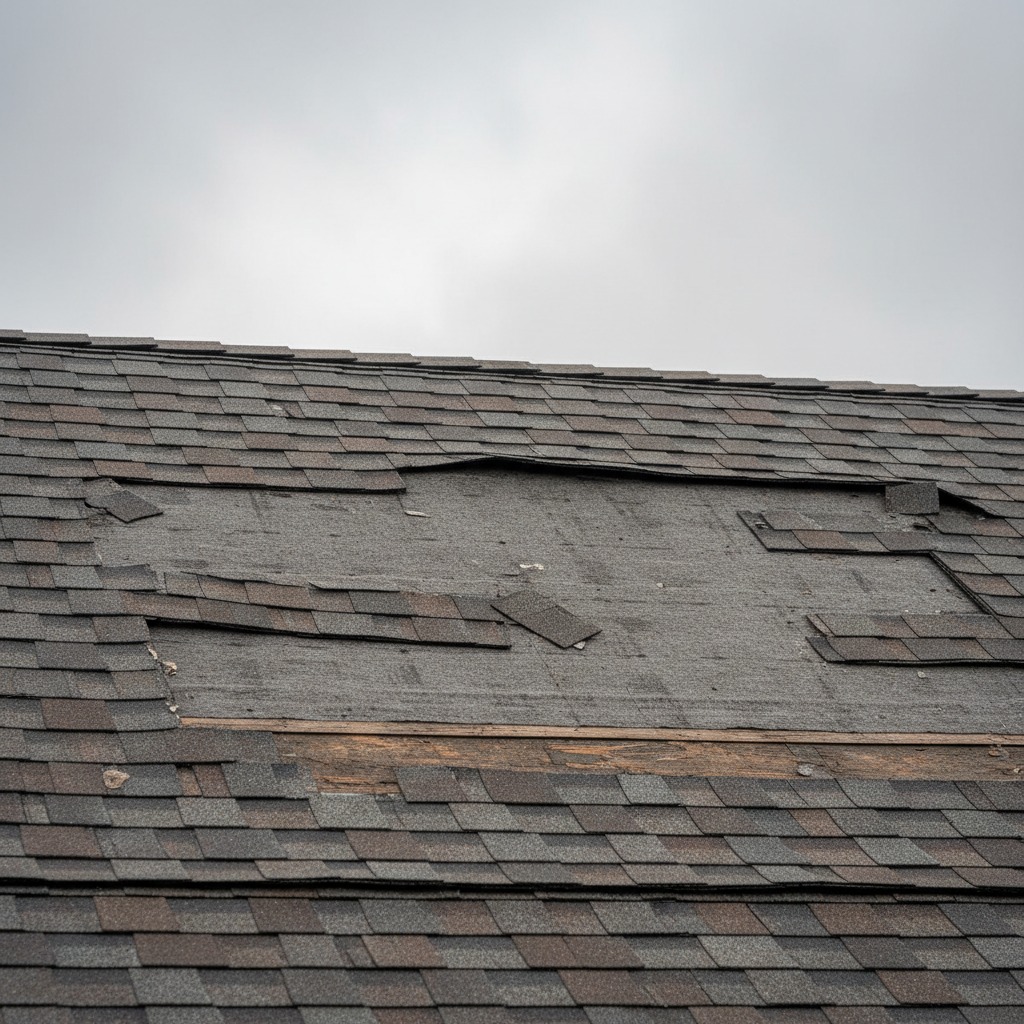
- Improper Installation: Shingles nailed incorrectly (too high, too few nails, or nails not penetrating the decking) are more prone to wind damage. Poor nailing patterns can reduce a shingle's wind resistance significantly.
- Aging Shingles: Over time, the adhesive strip on asphalt shingles can degrade due to UV exposure and temperature fluctuations, making them less resistant to wind uplift.
- Debris Impact: Falling tree branches or other storm-propelled debris can directly dislodge or tear shingles upon impact.
Roofing · Aging roof
| Project category | Roofing |
|---|---|
| Problem type | Aging roof |
| Trade required | Roofing |
| Urgency | Planned project |
| Safety risk | Low safety risk |
| DIY suitability | Pro recommended |
| Cost category | High cost |
| Typical timeline | Plan 4–12 weeks ahead for scheduling and material lead time |
| Contractor type | Licensed roofing contractor |
Repair option
Maintenance repairs to buy a season or two while you budget.
Replacement option
Planned replacement, which is almost always cheaper than a leak-driven emergency.
Common causes
- Normal weathering past the shingle service life
- Poor attic ventilation cooking the shingles from below
- Repeated repairs on the same slopes
Relevant tools:repair or replace roofproject cost estimatorhome improvement material prices
Published May 1, 2026Last updated August 17, 2026
Tools & materials you'll need
Affiliate linksAs an Amazon Associate FixlyGuide earns from qualifying purchases — at no extra cost to you. Prices and availability are accurate as of publication and subject to change.
Quick Answer
When roof shingles are missing after a storm, immediately assess for safety hazards, document the damage thoroughly with photos, and make temporary repairs to prevent further water intrusion. Contact your home insurance provider promptly to start the claim process, and schedule a professional roof inspection to determine the full extent of the damage and necessary permanent repairs.
The Problem
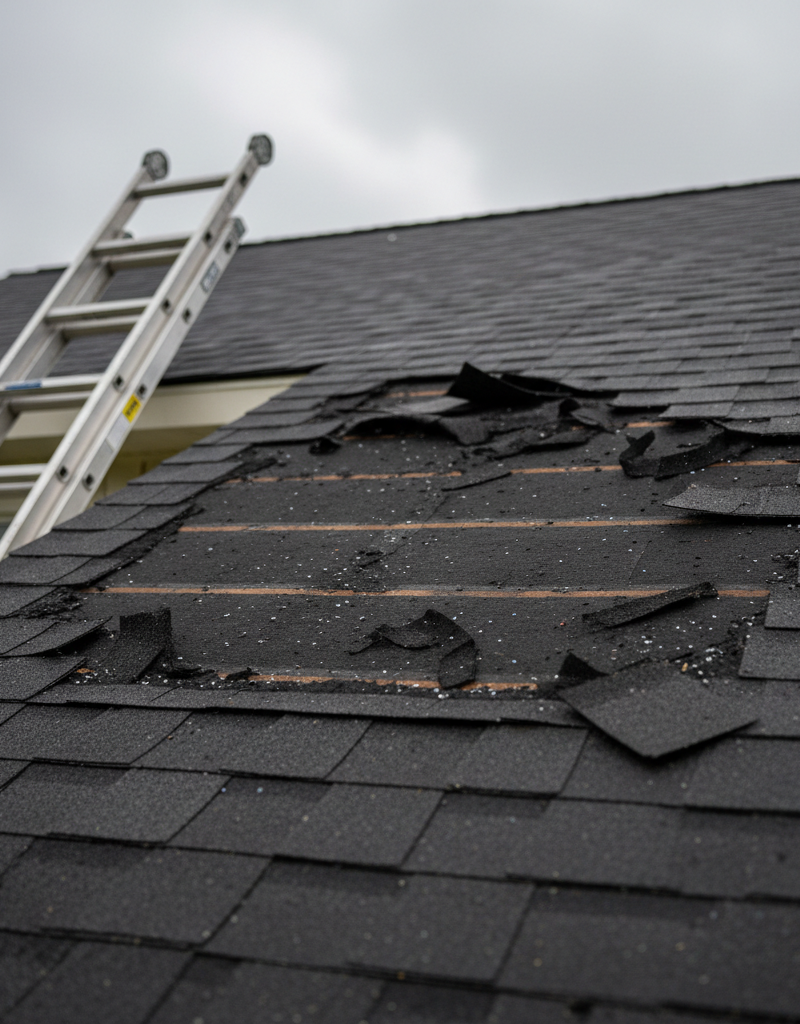
A powerful storm can leave more than just debris in its wake; it can rip shingles right off your roof, leaving your home vulnerable to water damage, leaks, and further structural issues. Missing shingles are not just an aesthetic problem; they expose the underlayment and decking to the elements, accelerating deterioration and potentially leading to costly interior damage like ceiling stains, mold growth, and compromised insulation. The immediate concern is preventing water intrusion, especially with subsequent rainfall, and ensuring the structural integrity of your roof until permanent repairs can be made. This guide will walk you through the essential steps to secure your home, document the damage, and navigate the repair and insurance process effectively.
How It Works
Your roof is a sophisticated system designed to shed water and protect your home. Asphalt shingles, the most common roofing material, are layered over a waterproof underlayment (typically felt paper or synthetic material), which in turn covers the roof decking (usually plywood or OSB). When high winds hit, they create uplift forces that can get underneath the shingle tabs. If the shingle's sealant has deteriorated over time, or if the initial installation wasn't optimal, these forces can break the shingle's seal and rip it from the roof. Once a shingle is dislodged, the exposed underlayment becomes the primary (and often temporary) barrier against water. However, underlayment isn't designed for prolonged direct exposure to UV rays or heavy rainfall, and its effectiveness diminishes quickly. The immediate goal of any temporary repair is to re-establish a watertight seal over the exposed area, protecting the decking and the interior of your home from the elements until a professional can assess and make permanent repairs. This involves understanding the layers of your roof and how each contributes to its overall protective function.
Step-by-Step Fix
1. Prioritize Safety — Before doing anything, ensure the area around your home is safe. Look for downed power lines, sharp debris, and unstable tree limbs. If you see any immediate hazards, particularly electrical, stay clear and call emergency services or your utility company. Do not attempt to climb onto a compromised roof in windy or wet conditions. Your safety is paramount. Only proceed with temporary repairs if it's safe to do so from a ladder or a stable part of the roof.
2. Document Everything — This is crucial for your insurance claim. Take many clear photos and videos from different angles. Capture the missing shingles, any exposed underlayment, water stains on ceilings or walls, and any internal damage. Date and time-stamp your documentation. Walk around your entire property, not just the damaged roof section, as other areas might have sustained damage you haven't noticed yet. If possible and safe, take photos of the entire roof from the ground, then close-ups of the damaged areas.
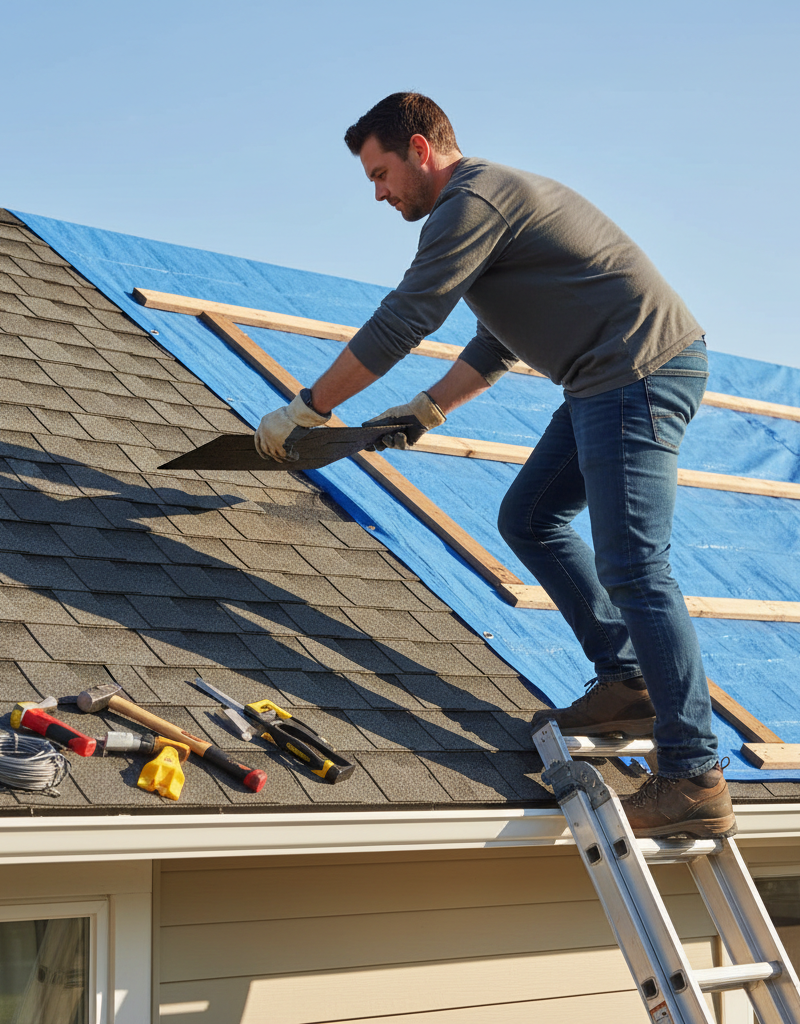
3. Tarp the Exposed Area — Temporarily cover any exposed roof decking or underlayment immediately to prevent further water damage. This is a critical step, even if the rain has stopped, as unsealed areas can let in condensation or unexpected showers.
- Materials: Heavy-duty tarpaulin (large enough to cover the damaged area with overlap), 1x3 wood furring strips, screws or nails, hammer or drill.
- Method: Drape the tarp over the damaged section, extending at least 2–3 feet beyond the perimeter of the exposed area. Roll the edges of the tarp around the furring strips, then secure the strips to the roof using screws or nails, ensuring they penetrate through the furring strip, tarp, and into the roof decking. Avoid nailing directly through the main body of the tarp. Overlap tarps if the damaged area is very large. Do not use adhesives alone; strong winds will rip them off.
- Safety Note: Work slowly and carefully on a ladder. Ensure the ladder is firmly placed on level ground and extends at least three feet above the roofline. Have a spotter if possible. Never overreach from a ladder.
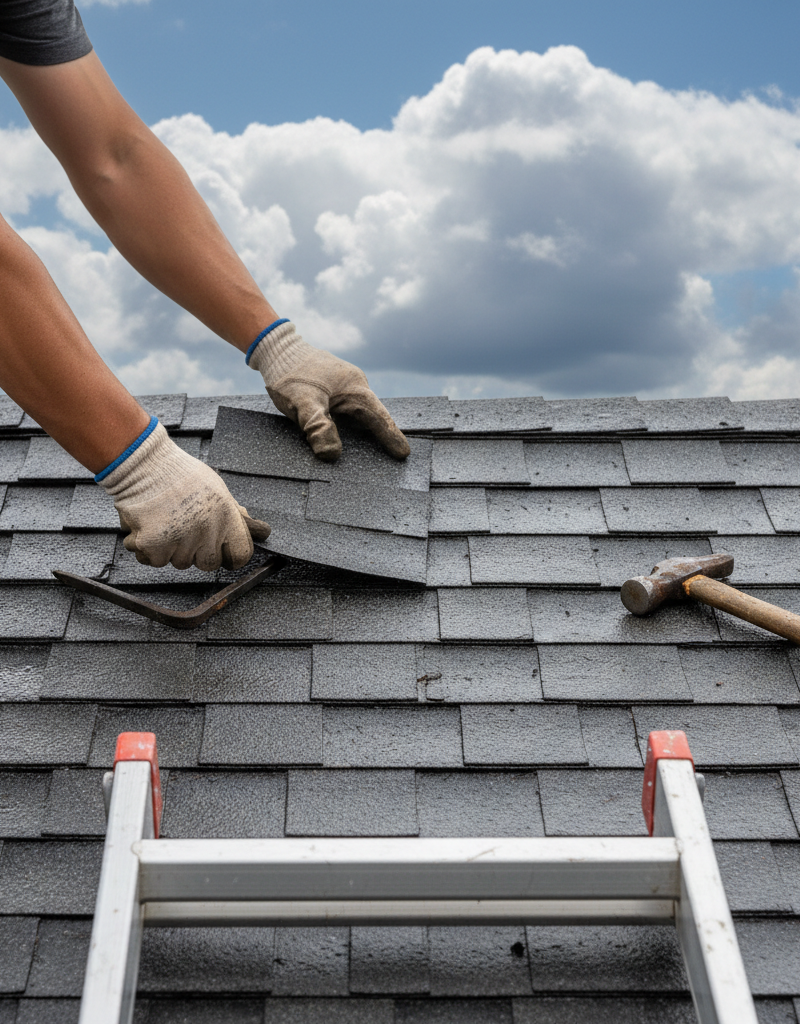
4. Secure Loose Shingles — If you have shingles that are lifted but not completely detached, you can try to re-seal them if the weather permits and it's safe to be on the roof. Gently lift the shingle tab and apply a small bead of roofing cement underneath, then press it firmly into place. If the shingle is torn or creased, it likely needs replacement.
5. Check for Interior Leaks — Even with immediate tarping, water may have already entered your home. Check your attic, ceilings, and walls for any signs of water intrusion or dampness. Place buckets under active leaks. Be especially vigilant in the attic, as water can travel along beams before dripping down.
6. Contact Your Insurance Company — Report the damage as soon as possible. Provide them with your documentation (photos, videos, dates). Your insurer will guide you through their specific claims process and likely send an adjuster to evaluate the damage. Be prepared to discuss the extent of the damage and your temporary measures.
7. Get Professional Estimates — Even for temporary repairs, it's wise to consult with a reputable roofing contractor for a professional assessment. They can safely inspect the entire roof, identify all damaged areas (including those not immediately obvious), and provide accurate estimates for permanent repairs. Obtain at least three written estimates from different licensed and insured contractors. Ensure the estimates clearly detail the scope of work, materials, and warranty information.
Common Causes
- High Winds: This is the most prevalent cause. Strong winds create uplift forces that can peel back shingle tabs, especially on older roofs or those where shingles have lost their adhesive seal. The edge of the roof is particularly susceptible.
- Improper Installation: Shingles nailed incorrectly (too high, too few nails, or nails not penetrating the decking) are more prone to wind damage. Poor nailing patterns can reduce a shingle's wind resistance significantly.
- Aging Shingles: Over time, the adhesive strip on asphalt shingles can degrade due to UV exposure and temperature fluctuations, making them less resistant to wind uplift.
- Hail Damage: While less common for missing shingles, large hail can weaken shingles, making them more vulnerable to subsequent wind events. Hail impact can create spiderweb cracks or bruise the shingle mat, reducing its structural integrity.
- Debris Impact: Falling tree branches or other storm-propelled debris can directly dislodge or tear shingles upon impact.
Common Mistakes
- Delaying Temporary Repairs: Waiting to tarp a damaged area, even for a day, can lead to significant interior water damage that could have been prevented. Act swiftly to cover exposed areas.
- Ignoring Safety: Attempting to climb on a wet or windy roof, or using an unstable ladder, can result in serious injury. If it doesn't feel safe, don't do it. Call a professional for even temporary tarping.
- Insufficient Documentation: Not taking enough detailed photos and videos can hinder your insurance claim. Document every angle and every detail, both inside and out.
- Signing Contracts Before Adjuster Visit: Avoid signing any repair contracts or agreeing to a scope of work before your insurance adjuster or a trusted contractor has thoroughly assessed the damage and you understand your coverage.
- Choosing the Cheapest Bid: While cost is a factor, prioritizing the lowest bid over quality can lead to shoddy repairs, voided warranties, and future problems. Look for licensed, insured contractors with good references.
- Not Checking the Attic: Many homeowners only check inside the living space for leaks. Water often enters the attic first, saturating insulation and wood before it's visible on ceilings. Regular attic checks after a storm are crucial.
Cost & Time Breakdown
| Task | DIY cost | Pro cost | Time |
|---|---|---|---|
| Temporary Tarping | $50–$200 | $300–$800 | 1–3 hours |
| Small Shingle Repair (DIY) | $20–$50 | $200–$400 | 1–2 hours |
| Professional Inspection | $0 | $150–$300 | 1 hour |
| Full Roof Repair (Insurance) | $500–$2,000+ (deductible) | $5,000–$20,000+ | Days to weeks |
Tips & Prevention
- Regular Roof Inspections: Have your roof professionally inspected every 3-5 years, especially after its 10th year and after major storms. Catching minor issues early can prevent major future damage.
- Maintain Gutters: Keep gutters clean and free of debris. Clogged gutters can cause water to back up under shingles, weakening them and potentially leading to leaks.
- Trim Overhanging Branches: Trim tree branches that are close to or overhanging your roof. This reduces the risk of impact damage during high winds or ice storms.
- Check Shingle Adhesion: Periodically, from a safe vantage point, visually check if shingle tabs are lying flat. If you notice lifted edges, a professional roofer can often re-seal them before wind causes significant damage.
- Understand Your Warranty: Know the terms of your shingle and installation warranty. Proper maintenance and timely repairs can help ensure your warranty remains valid.
- Emergency Kit: Keep a small emergency repair kit on hand, including a roll of roofing tarpaulin, a utility knife, duct tape, and a small amount of roofing cement, allowing for quick temporary fixes.
When to Call a Professional
You should always call a licensed professional roofing contractor immediately if you have significant missing shingles after a storm, especially if there's active leaking into your home. If you suspect structural damage to your roof, see sagging areas, or hear unusual noises, a professional assessment is critical. Never attempt to work on a roof if you are uncomfortable with heights, if the roof pitch is steep, or if weather conditions make it unsafe (wind, rain, ice). For multi-story homes, accessing the roof can be extremely hazardous without proper equipment and experience. Furthermore, navigating complex insurance claims and ensuring all repairs meet local building codes are best handled by experienced professionals. They possess the necessary safety equipment, expertise, and proper insurance to perform repairs safely and effectively, and can often help streamline the insurance process.
Related Articles
Keep troubleshooting with these hand-picked guides from FixlyGuide:
- The #1 Mistake Homeowners Make After Finding Missing Shingles (And How to Fix It Right) — Discover the crucial steps to take after a storm rips shingles from your roof, ensuring a proper, lasting repair and preventing costly futu…
- The Urgent Truth About Missing Roof Shingles (And Your 3-Step Fix) — High winds can rip shingles off your roof, exposing your home to immediate water damage – here’s how to assess, temporary patch, and plan p…
- The One Overlooked Mistake After Storm Damage: Finding Missing Roof Shingles Fast — Storms can rip off roof shingles, exposing your home to further damage. Learning how to safely assess and temporarily patch your roof is cr…
- The One Mistake Homeowners Make When Shingles Blow Off (And How to Fix It Fast) — When shingles blow off your roof after a storm, the biggest mistake is waiting; quick, decisive action can prevent far more expensive damag…
- The One Shingle Mistake That Creates Roof Leaks (And How to Fix It Fast) — Missing roof shingles after a storm can quickly lead to extensive water damage if not addressed correctly. Learn how to safely inspect and…
- The 7 Critical Home Inspection Checks Most Homeowners Miss (and How to Do Them Yourself) — Discover the essential annual home inspection checks many homeowners overlook and learn how to perform them yourself to prevent costly repa…
Should you do this yourself?
Answer five quick questions before you start. Safety outranks savings every time.
Your experience with work like this
How high do you have to work?
Does the job involve any of these?
Will it need a permit?
Specialty tools
Free and instant. Educational guidance only — not a quote, inspection, or professional diagnosis.
Questions to ask before you sign
Ask every contractor the same questions and the cheapest bid stops looking cheapest. Check them off as you go — your progress is saved on this device.
Free, no signup. Bring this to every walkthrough so you compare bids on the same terms.
What should this project cost?
Enter your project details for a realistic cost range before you call anyone.
Spot repairs commonly run $400–$1,800; full replacement typically $9,000–$18,000 for an average home.
- Regional adjustment
- National average
- Labor share (typical)
- ~$2,948
- Quotes to collect
- 3 written estimates
Educational estimate based on national averages — not a binding quote. Always confirm with written local estimates.
Fixly Project Decision Box
- DIY difficulty
- Professional Recommended
- Estimated time
- Inspection 1–2 hours · repairs 1–3 days
- Cost level
- High
Main tools / materials
- Binoculars for a ground-level look
- Flashlight for attic checks
- Moisture meter
- Roofing cement (temporary patch only)
When to stop and call a pro
- Active leak near lights, fans, or any wiring
- Sagging, bulging, or water-filled ceiling
- Steep, wet, or two-story roof — do not climb it
- Storm or hail damage you plan to claim on insurance
Need professional help?
Free roof assessment first — no phone calls until you ask for them.
Get Local Roofing HelpGet help with your roof now
Stay off the roof. These free tools help you protect the house and reach the right professional fast.
- Emergency repair checklistThe first steps that limit damage before a pro arrives.Open
- Repair or replace your roof?Answer 10 questions about age, leaks, and damage to get a clear next step.Open
- Get local estimatesSend one request and compare written estimates from vetted pros.Open
Free, no signup required. Estimates are educational guidance, not a quote or an inspection.
Frequently asked questions
How quickly do I need to fix missing shingles?+
Missing shingles should be addressed as quickly as possible, ideally within hours of discovery, to prevent water intrusion into your home. Even a small exposed area can lead to significant interior damage during the next rain event.
Can I replace missing shingles myself?+
You can sometimes replace a few missing shingles yourself if you are comfortable and safe on a ladder, and the roof pitch isn't too steep. However, for extensive damage, multiple missing shingles, or if you're unsure about the underlying damage, it's always best to hire a professional.
Will my homeowner's insurance cover missing shingles from a storm?+
Most homeowner's insurance policies cover roof damage caused by sudden and unexpected events like storms, including wind or hail that results in missing shingles. However, coverage can vary, and deductibles apply. It's crucial to report the damage promptly and review your policy details.
What if I can't find replacement shingles that match?+
For small repairs, sourcing matching shingles can be challenging if your roof is older. Contractors often try to find similar styles or use shingles from less visible areas (like a shed) to patch the main roof. For larger damage, a full roof replacement might be suggested by your insurer or contractor.
How do I know if the underlayment is also damaged?+
A professional roof inspection is the best way to determine if the underlayment is damaged. Signs of underlayment damage can include visible tears, punctures, or widespread water staining on the roof decking from the attic side. If shingles were ripped off with force, the underlayment is likely compromised beneath those areas.
Discussion
Loading comments…