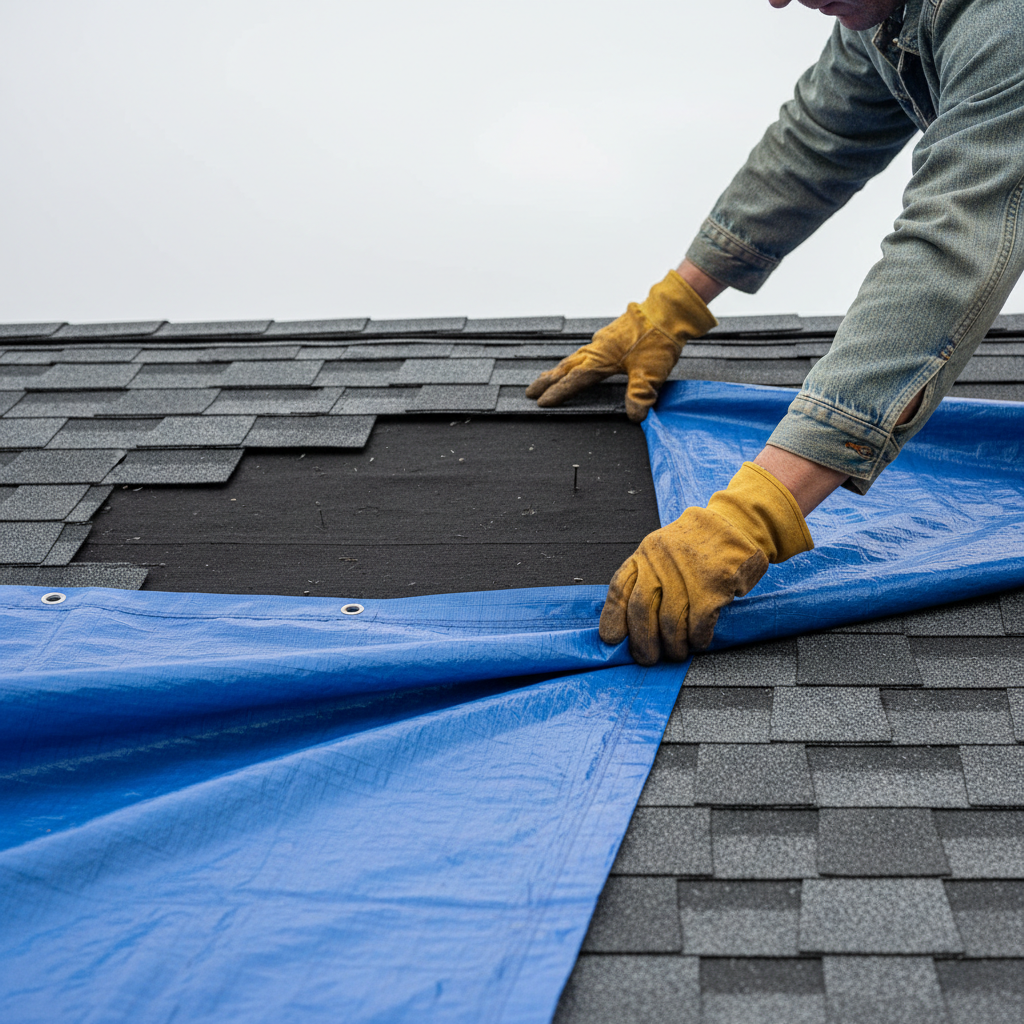
- High Wind Speeds: The most common culprit. Sustained winds or strong gusts can lift and tear off shingles, especially those along edges or areas with less adhesion.
- Aged or Deteriorated Shingles: As asphalt shingles age (typically beyond 15-20 years), the adhesive strips lose their effectiveness, granules wear off, and the shingles become brittle and more susceptible to wind uplift.
- Improper Shingle Installation: Common errors include using too few nails, nailing above the tar line (high nailing), or failing to apply adequate adhesive in cold weather, which prevents the shingles from sealing properly.
- Previous Storm Damage: Hail storms can bruise or crack shingles, weakening them. Even if not immediately apparent, this damage makes them more vulnerable to being blown off in subsequent wind events.
- Poor Ventilation: Inadequate attic ventilation can lead to excessive heat buildup, prematurely aging and curling shingles, making them more prone to wind damage.
Roofing · Aging roof
| Project category | Roofing |
|---|---|
| Problem type | Aging roof |
| Trade required | Roofing |
| Urgency | Planned project |
| Safety risk | Low safety risk |
| DIY suitability | Pro recommended |
| Cost category | High cost |
| Typical timeline | Plan 4–12 weeks ahead for scheduling and material lead time |
| Contractor type | Licensed roofing contractor |
Repair option
Maintenance repairs to buy a season or two while you budget.
Replacement option
Planned replacement, which is almost always cheaper than a leak-driven emergency.
Common causes
- Normal weathering past the shingle service life
- Poor attic ventilation cooking the shingles from below
- Repeated repairs on the same slopes
Relevant tools:repair or replace roofproject cost estimatorhome improvement material prices
Published May 10, 2026Last updated August 17, 2026
Tools & materials you'll need
Affiliate linksAs an Amazon Associate FixlyGuide earns from qualifying purchases — at no extra cost to you. Prices and availability are accurate as of publication and subject to change.
Quick Answer
When roof shingles are missing after a storm, the critical first step is to safely assess the scope of the damage. Many homeowners make the mistake of either ignoring minor damage or attempting permanent repairs without proper safety precautions. A temporary repair with roofing tarps can prevent further water intrusion, allowing time for a professional inspection and more permanent solutions.
The Problem
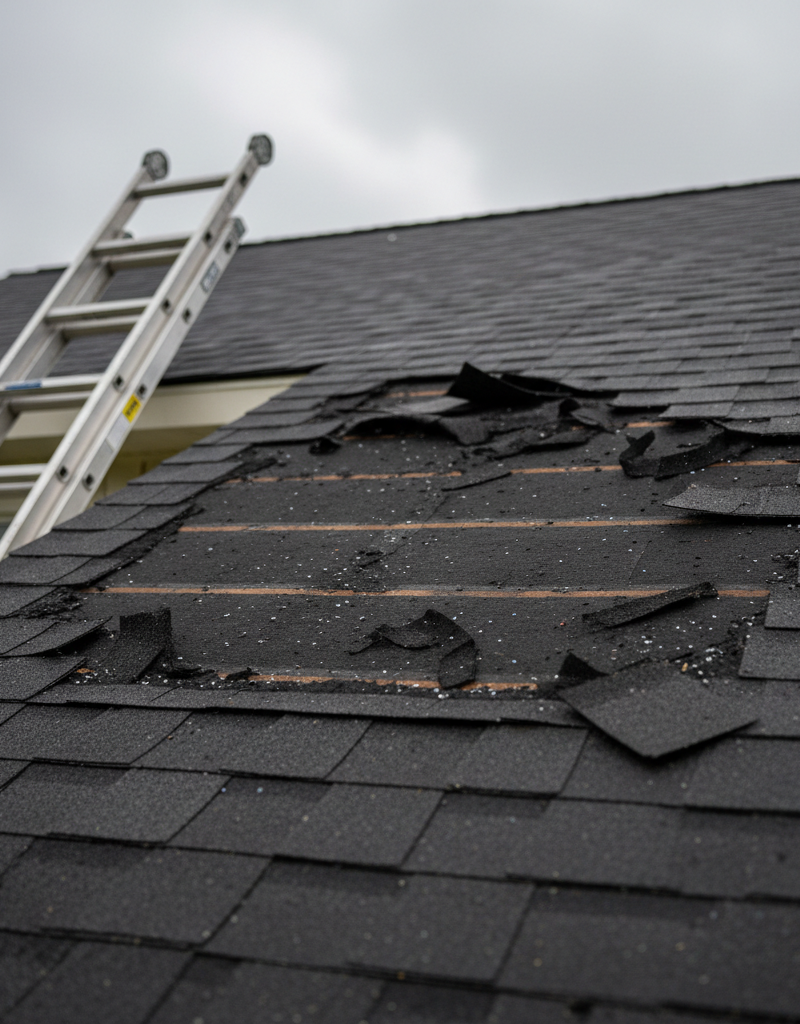
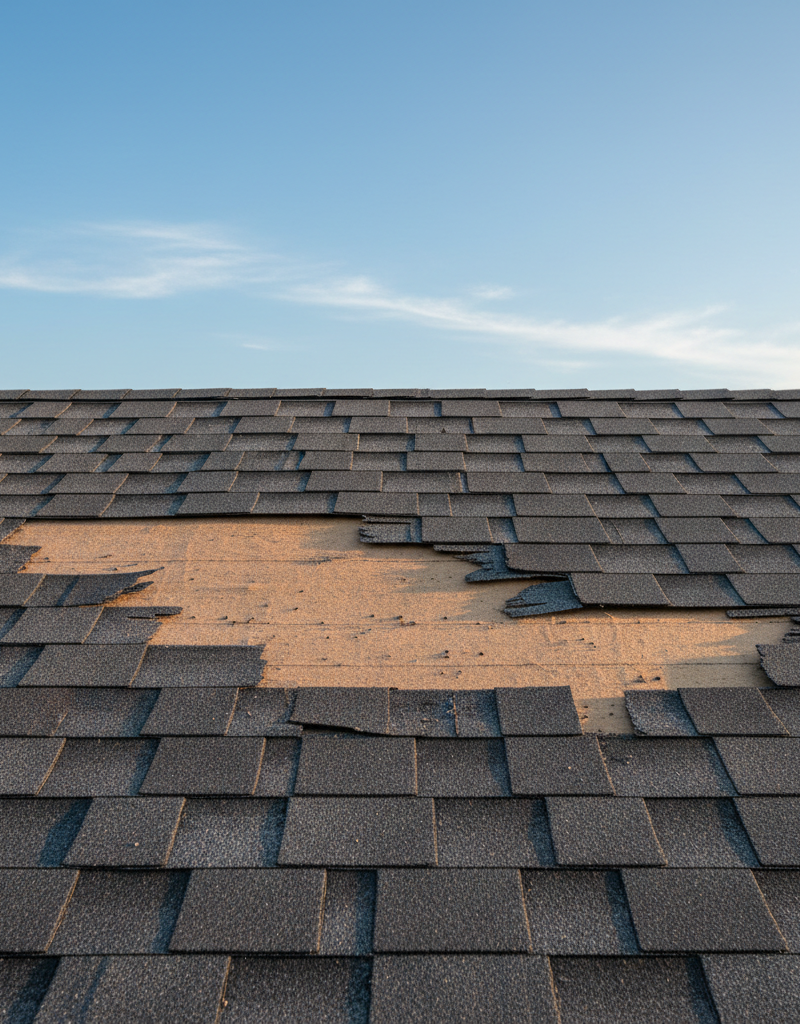
You wake up after a fierce storm—wind howling, rain lashing—and a quick glance at your roof reveals the unsettling truth: missing shingles. Whether it's just a few asphalt rectangles scattered in the yard or a wider swath of exposed underlayment, missing shingles are more than just an aesthetic issue. They are a direct breach in your home's primary defense against water, UV radiation, and severe weather. The immediate concern is water intrusion, which can lead to rotten decking, compromised attic insulation, damaged ceilings, and even mold growth within hours or days if left unaddressed. The problem isn't just the missing shingle itself, but the vulnerability it creates for your entire roofing system and, by extension, your home.
How It Works
Your roof is a complex system designed to shed water and protect your home. Asphalt shingles are the outermost layer, working in tandem with underlayment, flashing, and proper ventilation. Each shingle is designed with an adhesive strip (tar line) that, once heated by the sun, seals to the shingle below it, creating a watertight barrier. During installation, shingles are also nailed to the roof deck, typically with four nails per shingle. The overlap of shingles ensures that water flows down and off the roof, rather than penetrating the structure.
Strong winds, especially those exceeding 50-60 mph, can create uplift pressure under the shingles, particularly along eaves, rakes, and ridges. If the shingle's adhesive seal has degraded over time due to age, UV exposure, or previous hail damage, or if the shingles were improperly installed with too few nails or nails placed too high, the wind can lift and tear them away. Once a shingle is dislodged, the underlying shingle is exposed, and more importantly, the roofing felt or synthetic underlayment can become exposed. This underlayment is not designed for prolonged direct exposure to the elements and can degrade quickly, allowing water to saturate the roof deck and potentially leak into your attic or living space. Understanding this layered defense system highlights why even a few missing shingles are a urgent problem.
Step-by-Step Fix
SAFETY NOTE: Always prioritize your safety. If you are uncomfortable on a ladder or roof, or if the roof pitch is steep, wet, or icy, do not attempt this repair yourself. Call a professional immediately. Wear slip-resistant shoes, use a sturdy ladder, and have someone spot you.
-
Assess the Damage Safely – Begin by evaluating the situation from the ground.
- Walk around your house to identify all areas where shingles are missing or damaged. Use binoculars if necessary to get a closer look at higher sections of the roof. Note the approximate size of the damaged area and the number of shingles missing. Look for not only outright missing shingles, but also bent, creased, or loose shingles that could detach in the next storm.
- If the roof involves a steep pitch (over 6/12), multiple stories, or visible structural damage, skip DIY and call a roofing professional immediately.
-
Gather Your Materials – Collect everything you'll need before climbing.
- This includes a sturdy ladder, heavy-duty tarp (large enough to generously cover the damaged area and extend beyond it), utility knife, hammer, roofing nails (1-inch typically), 2x4 lumber or furring strips, roofing cement or sealant, safety glasses, heavy-duty gloves, and slip-resistant footwear. Have your phone handy for emergencies.
-
Clear Debris and Prep the Area – Ensure a clean surface for the tarp.
- Carefully climb onto the roof if it's safe to do so. Remove any loose debris (branches, leaves, old shingle pieces) from the damaged area. Be gentle to avoid further damage to surrounding shingles. Avoid walking directly on the exposed underlayment or any areas where the roof deck might be softened by water.
-
Position the Tarp Over the Damage – Proper placement is key for water diversion.
- Unfold the tarp and drape it over the damaged section. The goal is to ensure the tarp extends several feet beyond the damaged area in all directions, especially upslope, to prevent water from getting underneath. The top edge of the tarp should ideally be tucked under an existing row of shingles or positioned as high as possible upslope from the damage.
-
Secure the Upslope Edge First – Prevent water from getting under the top edge.
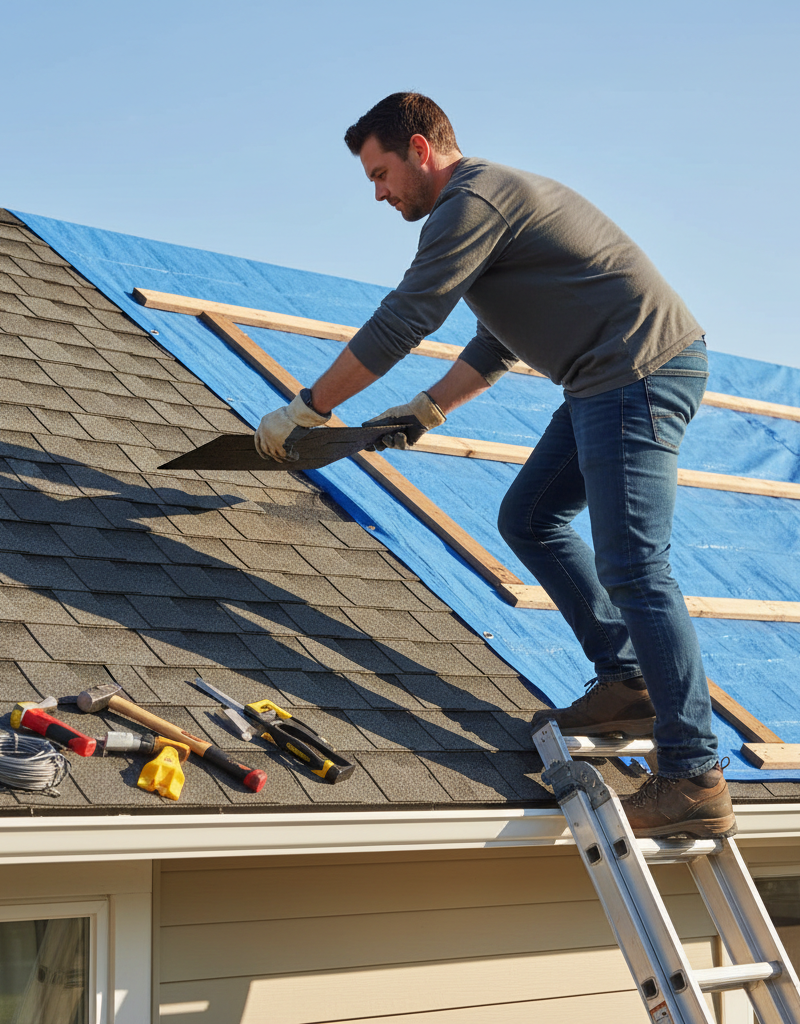
- Roll the top edge of the tarp around a 2x4 piece of lumber or furring strip. This creates a secure, weighted edge. Place this weighted edge over the intact shingles above the damaged area. Nail through the 2x4 and the tarp into the roof deck approximately every 12-18 inches. Use roofing cement under these nails for an extra seal. This creates a watershed that directs water over the tarp.
-
Extend and Secure the Tarp Downslope and Sides – Create a tight, wind-resistant seal.
- Smooth the tarp tightly downslope and over the sides of the damaged area. At the bottom (eaves side) and sides (rake ends), roll the tarp around additional 2x4s or furring strips as you did for the upslope edge. Nail these strips securely into the roof deck, again applying roofing cement underneath the nails for a better seal. The tarp should be taut and wrinkle-free to resist wind. For extra security, you can apply strips of roofing cement along the edges of the tarp that lie directly on existing shingles.
- If high winds are expected, consider adding more furring strips and nails, or even running strapping over the tarp and securing them to fascia boards to prevent it from flapping.
-
Inspect Your Work – Double-check all connections.
- From a safe vantage point, visually inspect the tarp. Are there any loose edges? Is it pulled tight? Is it adequately covering the entire damaged zone? The goal is to create a temporary, water-resistant barrier until professional repairs can be made.
-
Document for Insurance – Take photos for your claim.
- Take clear, well-lit photos of the missing shingles, the damaged area, and your temporary tarp repair. Include wider shots that show the overall roof and home, as well as close-ups of the specific damage. This documentation will be crucial when filing an insurance claim.
Common Causes
- High Wind Speeds: The most common culprit. Sustained winds or strong gusts can lift and tear off shingles, especially those along edges or areas with less adhesion.
- Aged or Deteriorated Shingles: As asphalt shingles age (typically beyond 15-20 years), the adhesive strips lose their effectiveness, granules wear off, and the shingles become brittle and more susceptible to wind uplift.
- Improper Shingle Installation: Common errors include using too few nails, nailing above the tar line (high nailing), or failing to apply adequate adhesive in cold weather, which prevents the shingles from sealing properly.
- Previous Storm Damage: Hail storms can bruise or crack shingles, weakening them. Even if not immediately apparent, this damage makes them more vulnerable to being blown off in subsequent wind events.
- Poor Ventilation: Inadequate attic ventilation can lead to excessive heat buildup, prematurely aging and curling shingles, making them more prone to wind damage.
- Building Code Violations: In some high-wind zones, specific nailing patterns or shingle types are required. If a roof wasn't installed to these standards, it's more susceptible.
Common Mistakes
- Ignoring Minor Damage: Even one or two missing shingles can lead to significant water damage over time. Don't assume a small problem isn't urgent.
- Delaying Temporary Repairs: Water can seep in quickly. The longer you wait to tarp the area, the higher the risk of extensive interior damage and mold growth.
- Walking on Damaged or Wet Roofs: This is extremely dangerous and can cause further damage to the roof, especially if the underlying decking is softened by water.
- Improper Tarp Installation: Simply throwing a tarp over the area without securely fastening it on all sides and rolling the edges around lumber will likely see the tarp blow away in the next gust of wind, providing no protection.
- Using Insufficient Fasteners: Relying on just a few nails or lightweight staples will not hold a tarp in place during strong winds. Heavy-duty roofing nails driven into 2x4s are essential.
- Not Documenting the Damage: Failing to take comprehensive photos and videos before and after your temporary repair can hinder your insurance claim process.
Cost & Time Breakdown
| Task | DIY Cost | Pro Cost | Time |
|---|---|---|---|
| Assess Damage (Ground Level) | $0 | $0–$150 (initial inspection) | 15–30 minutes |
| Purchase Tarp & Materials | $30–$80 | Included | 30–60 minutes |
| Temporary Tarp Installation | $0 (labor) | $200–$500 | 1–2 hours |
| Permanent Shingle Repair | $50–$200 (materials) | $300–$1,000+ | 2–4 hours (DIY), 4-8 hours (pro) |
| Insurance Claim Filing | $0 | N/A | 1–3 hours |
Tips & Prevention
- Regular Roof Inspections: Periodically (at least once a year, and after every major storm) inspect your roof from the ground with binoculars. Look for curling, cracking, missing granules, or loose shingles.
- Keep Gutters Clean: Clogged gutters can cause water to back up under shingles, especially in colder climates where ice dams can form, leading to premature deterioration.
- Trim Overhanging Branches: Trees too close to the roof can cause abrasion, drop heavy debris, and become a direct hazard during storms.
- Ensure Proper Attic Ventilation: Good ventilation extends shingle life by preventing excessive heat buildup in the attic, which can prematurely age the asphalt.
- Understand Shingle Warranty: Know your shingle's wind rating and warranty terms. Some warranties are voided if shingles are not installed to manufacturer specifications.
- Consider Shingle Upgrades: If you live in a high-wind area, consider investing in architectural or designer shingles, which often have higher wind resistance ratings and better adhesive properties than 3-tab shingles.
When to Call a Professional
You should call a licensed roofing professional if you notice extensive damage beyond a few missing shingles, if you see visible damage to the roof deck itself (soft spots, sagging), or if there's any evidence of water actively leaking into your attic or home. Professionals have the necessary safety equipment and expertise to safely assess steep or high roofs. If the storm damage is widespread across your roof, a professional can properly inspect for collateral damage like hairline cracks or impact points that might not be immediately visible to an untrained eye. Furthermore, dealing with insurance claims for significant roof damage often goes smoother with a professional's detailed assessment and documentation. Any uncertainty about the safety or scope of the repair means it's time to call in the experts to prevent further damage or personal injury. Do not attempt to work on main structural components or complex flashing around chimneys or skylights if you are not experienced.
Related Articles
Keep troubleshooting with these hand-picked guides from FixlyGuide:
- The #1 Mistake Homeowners Make After Finding Missing Shingles (And How to Fix It Right) — Discover the crucial steps to take after a storm rips shingles from your roof, ensuring a proper, lasting repair and preventing costly futu…
- The Urgent Truth About Missing Roof Shingles (And Your 3-Step Fix) — High winds can rip shingles off your roof, exposing your home to immediate water damage – here’s how to assess, temporary patch, and plan p…
- Wind Tore Off Your Shingles? The 7 Critical Steps Most Homeowners Miss — Discover the essential steps to take when roof shingles go missing after a storm, from immediate safety checks to temporary repairs and ins…
- Your Roof is Leaking. Now What? — A leaking roof after a storm is a homeowner's nightmare. Learn how to safely install a temporary roof tarp to prevent further water damage…
- Missing Shingles? The Real Trouble Is Under Your Roof — After a storm, missing shingles seem like a simple fix. But the high winds that tore them off likely broke the seals on surrounding shingle…
- The #1 Gutter Mistake That Leads to $10,000 Roof Damage — Learn the most common gutter-cleaning mistake homeowners make and how to properly maintain your gutters to prevent expensive roof damage.
Should you do this yourself?
Answer five quick questions before you start. Safety outranks savings every time.
Your experience with work like this
How high do you have to work?
Does the job involve any of these?
Will it need a permit?
Specialty tools
Free and instant. Educational guidance only — not a quote, inspection, or professional diagnosis.
Questions to ask before you sign
Ask every contractor the same questions and the cheapest bid stops looking cheapest. Check them off as you go — your progress is saved on this device.
Free, no signup. Bring this to every walkthrough so you compare bids on the same terms.
What should this project cost?
Enter your project details for a realistic cost range before you call anyone.
Spot repairs commonly run $400–$1,800; full replacement typically $9,000–$18,000 for an average home.
- Regional adjustment
- National average
- Labor share (typical)
- ~$2,948
- Quotes to collect
- 3 written estimates
Educational estimate based on national averages — not a binding quote. Always confirm with written local estimates.
Fixly Project Decision Box
- DIY difficulty
- Professional Recommended
- Estimated time
- Inspection 1–2 hours · repairs 1–3 days
- Cost level
- High
Main tools / materials
- Binoculars for a ground-level look
- Flashlight for attic checks
- Moisture meter
- Roofing cement (temporary patch only)
When to stop and call a pro
- Active leak near lights, fans, or any wiring
- Sagging, bulging, or water-filled ceiling
- Steep, wet, or two-story roof — do not climb it
- Storm or hail damage you plan to claim on insurance
Need professional help?
Free roof assessment first — no phone calls until you ask for them.
Get Local Roofing HelpGet help with your roof now
Stay off the roof. These free tools help you protect the house and reach the right professional fast.
- Emergency repair checklistThe first steps that limit damage before a pro arrives.Open
- Repair or replace your roof?Answer 10 questions about age, leaks, and damage to get a clear next step.Open
- Get local estimatesSend one request and compare written estimates from vetted pros.Open
Free, no signup required. Estimates are educational guidance, not a quote or an inspection.
Get the print-ready PDF of this guide
A clean, ad-free, printable version you can keep on your phone or pin to the workshop wall. Free with a FixlyGuide account.
- Print-optimized layout
- Tools, materials & every step included
- Saved to your account
Frequently asked questions
How many missing shingles warrant a professional?+
While you might tackle a few missing shingles yourself if you're comfortable on a roof, more than a handful, or any damage that exposes the roof decking, warrants a professional inspection. Extensive or widespread damage often indicates underlying issues or a need for partial re-roofing.
Can I just glue shingles back down?+
No, simply gluing old shingles back down is almost never a permanent or effective fix. The adhesive is often compromised, and the shingle itself may be brittle. New shingles should be properly installed and nailed to ensure a lasting repair.
Will my homeowner's insurance cover missing shingles from a storm?+
Most homeowner's insurance policies cover sudden and accidental damage from perils like wind and hail. Document the damage thoroughly with photos and contact your insurer promptly to start the claim process. Be aware of your deductible.
How long can a tarp stay on my roof?+
A well-installed heavy-duty tarp can offer temporary protection for several weeks to a few months, depending on weather conditions. However, it's not a permanent solution and should be replaced by proper shingle repair as soon as possible to prevent further issues.
What's the difference between missing shingles and damaged shingles?+
Missing shingles are completely detached from the roof. Damaged shingles might be cracked, creased, curled, or have significant granule loss, but are still physically attached. Both can lead to leaks and should be addressed promptly.
Discussion
Loading comments…