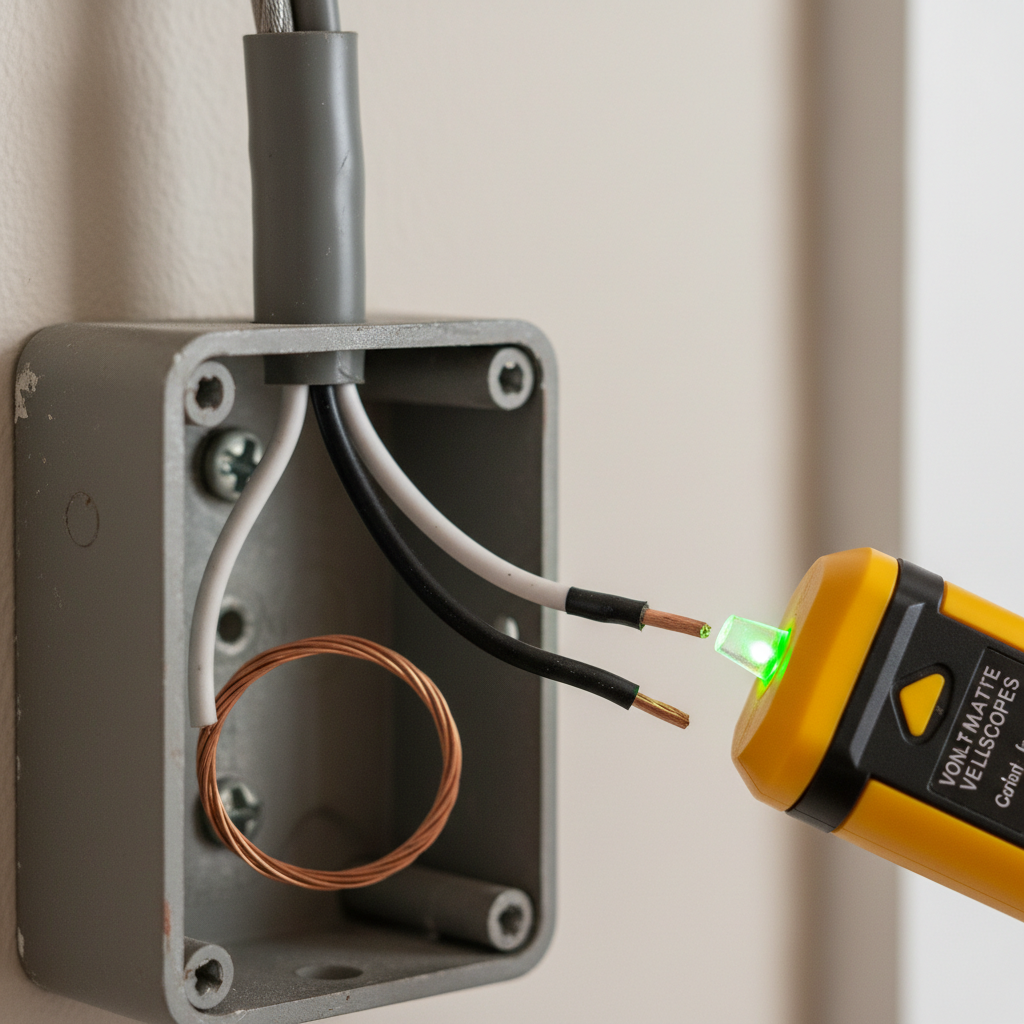
- Safety First – Turn Off the Power – Always begin by cutting power to the circuit at your home's main electrical panel.
- Pro Tip: Don't just flip the breaker; test the switch and fixture several times to confirm the power is off. Use a non-contact voltage tester to verify no current in the switch box.
- Safety Note: Never assume a wire is dead based on its color. Always test.
Published May 21, 2026Last updated August 17, 2026
Tools & materials you'll need
Affiliate linksAs an Amazon Associate FixlyGuide earns from qualifying purchases — at no extra cost to you. Prices and availability are accurate as of publication and subject to change.
Quick Answer
Older homes frequently employ a wiring method known as a 'switch loop,' where a white insulated wire, typically reserved for neutral conductors, is used to carry live (hot) electrical current to a light switch and back to the fixture. This deviation from modern wiring color codes poses a significant safety risk during DIY repairs or upgrades, as homeowners might mistakenly assume a white wire is always neutral and therefore safe to touch, leading to electric shock. Always use a non-contact voltage tester to verify the presence of power on all wires before handling them, regardless of their color, and clearly mark any white wire functioning as a hot conductor.
The Problem
You're upgrading an old light switch, maybe to a dimmer or a smart switch, and you encounter two wires inside the electrical box. One is black, and the other is white. Common sense tells you black is hot, and white is neutral. So you confidently cap off the white wire, assuming it's dead, and start working. This is where the hidden danger lies. In countless homes built before the 2000s, especially those with knob-and-tube or early Romex wiring, electricians commonly used a two-wire cable to loop power down to the switch and back up to the light fixture. To save on material costs and simplify the initial rough-in, the white wire in this two-conductor cable was pressed into service as a continuously hot conductor, bringing power to the switch. The black wire, in turn, became the 'switched leg' carrying power back to the light fixture when the switch was engaged. Without proper identification or understanding, this innocent-looking white wire can be very much alive, carrying 120 volts, ready to deliver a nasty shock to an unsuspecting homeowner. This isn't just a hypothetical scenario; it's a common cause of electrical mishaps for DIYers.
How It Works
To understand the old switch loop, let's contrast it with how modern wiring typically handles a light switch. In a contemporary setup, power (hot, neutral, and ground) often goes directly to the light fixture box first. The switch then receives a hot wire and sends a 'switched hot' wire back to the fixture, along with a neutral and ground connection that usually bypasses the switch itself. This means your switch box will have at least three wires: a hot (black or red), a switched hot (black or red), and a ground (green or bare copper). The neutral (white) typically stays continuous at the fixture. This clear color coding minimizes confusion.
Now, imagine the constraints of older homes. Often, it was simpler to run a single two-conductor cable (black, white, and bare ground) from the light fixture down to the switch box. This single cable has to serve two purposes: bring continuous power to the switch and take switched power back to the light. Here's the trick: The continuously hot wire from the electrical panel goes to the light fixture. From that fixture box, one conductor of the two-wire cable (let's say the white wire) is connected to the continuously hot wire (usually black from the panel). This white wire then carries constant power down to the switch. At the switch, this incoming hot white wire is connected to one terminal of the switch. The other terminal of the switch is connected to the black wire in that same two-conductor cable. This black wire then carries power back up to the light fixture once the switch is turned on. Finally, at the light fixture, this returning black wire is connected to the 'hot' terminal of the light fixture, while the neutral terminal of the light fixture connects back to the neutral wire from the electrical panel. Crucially, the white wire at the switch is carrying unswitched, live current, and the black wire at the switch is carrying switched current. The essential element here is that the white wire in the switch loop is performing the function of a hot conductor, not a neutral. This entire setup can be perfectly safe and code-compliant if the white wire used as a hot conductor is properly marked at both ends with black or red tape. Unfortunately, in many older installations, this marking was either omitted or has deteriorated over time, leaving a deceptive white wire.
Step-by-Step Fix
-
Safety First – Turn Off the Power – Always begin by cutting power to the circuit at your home's main electrical panel.
- Pro Tip: Don't just flip the breaker; test the switch and fixture several times to confirm the power is off. Use a non-contact voltage tester to verify no current in the switch box.
- Safety Note: Never assume a wire is dead based on its color. Always test.
-
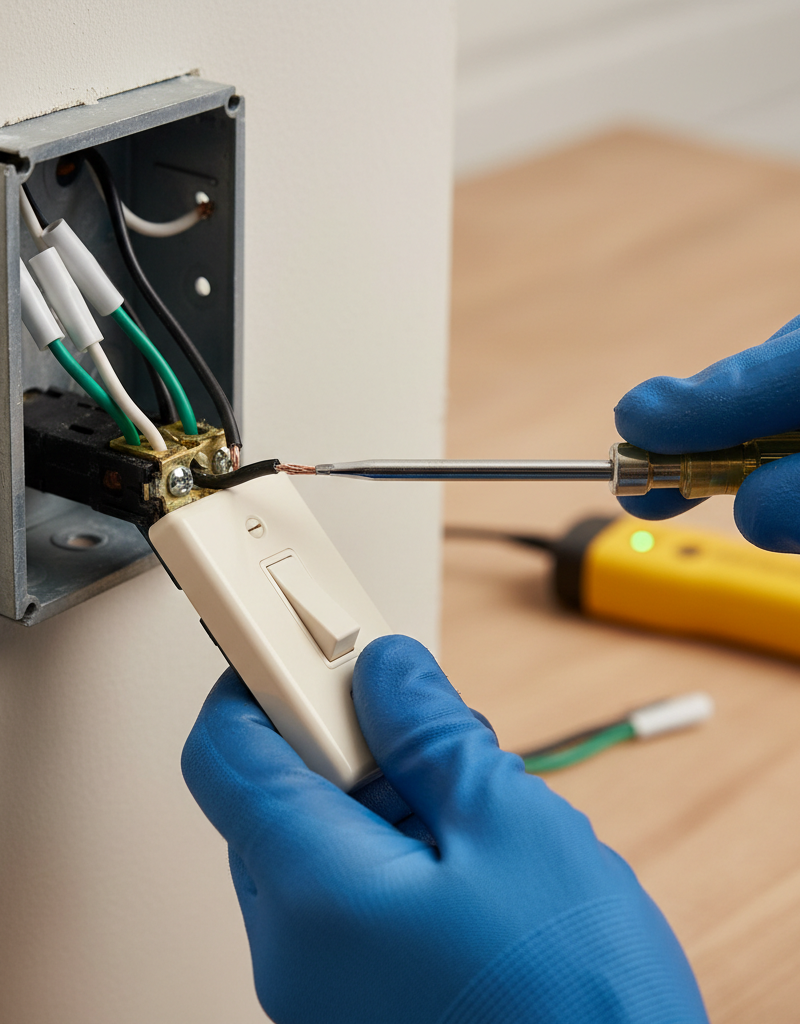
Remove the Old Switch Plate and Switch – Carefully unscrew the cover plate and then the mounting screws holding the switch to the electrical box. Gently pull the switch out, allowing access to the wires.
-
Identify the Wires (The Crucial Step) – This is where you determine if you have a dangerous old-style switch loop.
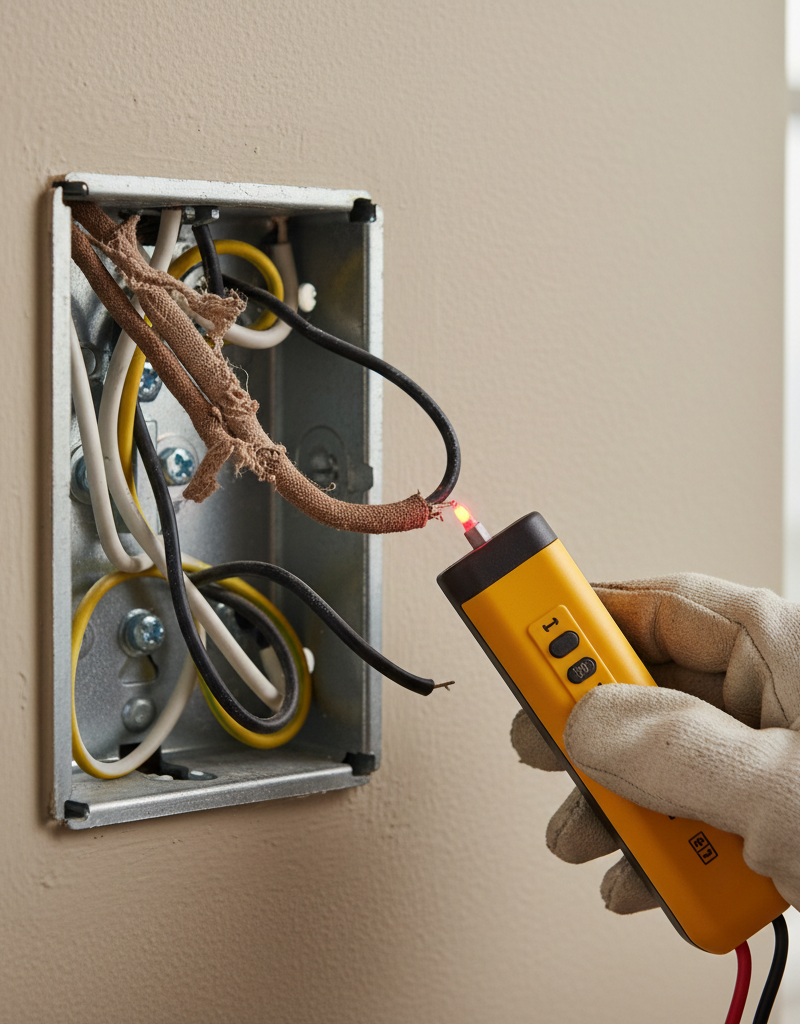
- Look for a two-conductor cable (black, white, and bare copper ground) entering the switch box. Modern installations would usually have more wires or different colored wires (e.g., separate hot and neutral coming in).
- Crucial Test: With the power still off, carefully disconnect the wires from the old switch. Now, temporarily twist the two wires together that were connected to the switch terminals. Go to the light fixture controlled by this switch. If only two wires (black and white) came into the switch box, and connecting them at the switch box makes the light fixture turn on (when power is briefly restored and then turned off again), you almost certainly have a switch loop where the white wire is the
Related Articles
Keep troubleshooting with these hand-picked guides from FixlyGuide:
- The One Pruning Mistake That Could Be Killing Your Shrubs (and How to Fix It) — Discover the crucial pruning mistake many homeowners make that can significantly damage or even kill their shrubs, and learn the simple fix.
- 7 Hidden Equity Drains Costing You Thousands Annually — Your home is an asset, but silent problems like minor leaks, poor insulation, and deferred maintenance can drain its value. Discover the se…
- The Hidden Reason Your GFCI Trips (and 7 Ways to Stop It) — A persistently tripping GFCI outlet is a safety warning, often indicating moisture, a faulty appliance, or a wiring problem that homeowners…
- The Hidden Reason Your GFCI Trips (It’s Not Always a Bad Outlet) — A tripping GFCI outlet is a safety mechanism doing its job, often indicating a problem like moisture, a faulty appliance, or a wiring issue…
- The Hidden Reason Your GFCI Trips (It's Not Always a Faulty Outlet) — A continuously tripping GFCI outlet is a critical safety warning, often indicating moisture, a faulty appliance, or a wiring problem that r…
- The 7 Critical Home Inspection Mistakes Most Homeowners Make (and How to Spot Them) — Discover the crucial home inspection mistakes homeowners commonly overlook and learn how to identify potential problems before they become…
Should you do this yourself?
Answer five quick questions before you start. Safety outranks savings every time.
Your experience with work like this
How high do you have to work?
Does the job involve any of these?
Will it need a permit?
Specialty tools
Free and instant. Educational guidance only — not a quote, inspection, or professional diagnosis.
What should this project cost?
Enter your project details for a realistic cost range before you call anyone.
Outlet and switch work usually $150–$400; panel upgrades commonly $1,800–$4,200.
- Regional adjustment
- National average
- Labor share (typical)
- ~$709
- Quotes to collect
- 3 written estimates
Educational estimate based on national averages — not a binding quote. Always confirm with written local estimates.
Before you start
Check the difficulty, permits, and safety risk — then decide whether to call a pro.
- Estimate this projectGet a cost range for your scope and ZIP before you call anyone.Open
- Get local estimatesSend one request and compare written estimates from vetted pros.Open
Free, no signup required. Estimates are educational guidance, not a quote or an inspection.
Get the print-ready PDF of this guide
A clean, ad-free, printable version you can keep on your phone or pin to the workshop wall. Free with a FixlyGuide account.
- Print-optimized layout
- Tools, materials & every step included
- Saved to your account
This article was independently written by FixlyGuide based on the source topic.
Frequently asked questions
Why would a white wire be hot in older homes?+
In older switch loop wiring from the light fixture, a two-conductor cable (black and white) was often used. The white wire carries continuous, unswitched power down to the switch, making it a 'hot' conductor, while the black wire carries the switched power back to the fixture. This practice helped save on wiring material and simplified installation at the time.
How can I tell if my wiring is an old switch loop?+
The key indicators are a two-conductor cable (black, white, bare ground) entering the switch box with no other wires, especially no additional white (neutral) wire. The most reliable way is to test both wires with a non-contact voltage tester after turning off the breaker and isolating the wires at the switch, then briefly turning power on to see which wire is live.
Is it safe to leave a white wire as hot?+
It can be safe if the white wire is *properly identified* as a hot conductor at both ends using black or red electrical tape or permanent marker. The danger arises when the wire is unmarked, leading to confusion and potential shock for someone working on the electrical system unfamiliar with the old wiring convention. Modern electrical codes require white wires used as hot conductors to be marked.
When should I call an electrician for old switch loop wiring?+
You should call a professional electrician if you are unsure about identifying live wires, uncomfortable working with electricity, or if your old wiring seems brittle, frayed, or shows any signs of damage. Any uncertainty, especially with older, ungrounded systems, warrants professional help to ensure safety and code compliance.

Discussion
Loading comments…