- Tools: Bypass pruners, loppers, pruning saw.
- Pro Tip: To identify dead wood, scratch a small section of bark with your thumbnail. Green underneath indicates live wood; brown and dry means it's dead.
- Caution: Avoid pruning spring-flowering shrubs like Forsythia, Lilac, or Azalea until after they have finished blooming, as doing so now will remove the flower buds.
Landscaping · Deck or fence project
| Project category | Landscaping |
|---|---|
| Problem type | Deck or fence project |
| Trade required | Landscaping |
| Urgency | Planned project |
| Safety risk | Moderate safety risk |
| DIY suitability | DIY for experienced homeowners |
| Cost category | High cost |
| Typical timeline | Most builds 3–10 days depending on size |
| Contractor type | Landscaping contractor |
Repair option
Replace failed boards, posts, and hardware; reseal the surface.
Replacement option
Rebuild when framing or the ledger connection is unsafe.
Common causes
- Rot at posts and ledger
- Storm damage
- Adding outdoor living space
Relevant tools:home improvement material pricesproject cost estimator
Published April 23, 2026Last updated August 17, 2026
Tools & materials you'll need
Affiliate linksAs an Amazon Associate FixlyGuide earns from qualifying purchases — at no extra cost to you. Prices and availability are accurate as of publication and subject to change.
How it works
A yard's transition from winter to spring is a complex biological process centered on soil temperature and plant physiology. During winter, lawns, trees, and perennials enter a state of dormancy to survive cold temperatures and reduced sunlight. Their metabolic activity slows dramatically, and energy is stored in the root systems. As spring approaches, increasing daylight and rising soil temperatures (typically above 55°F for cool-season grasses) signal the plants to break dormancy. Roots begin to actively absorb water and nutrients, and top growth resumes.
Spring yard work is designed to facilitate and support this natural reawakening. Raking and debris removal clear the way for sunlight and air to reach the soil and emerging shoots, preventing fungal diseases like snow mold that thrive in damp, matted debris. Aeration directly combats soil compaction caused by winter snow and rain, creating channels for oxygen, water, and nutrients to penetrate the root zone, which is critical for vigorous growth. Fertilizing replenishes the soil's nutrient reserves, providing the essential nitrogen, phosphorus, and potassium (N-P-K) that fuel leaf development, root expansion, and overall plant resilience. Mulching acts as a protective blanket, insulating the soil from late frosts, conserving moisture as temperatures rise, and suppressing the germination of early-season weeds that compete for resources. Each task addresses a specific environmental stressor, collectively creating optimal conditions for your landscape to emerge from dormancy and thrive.
Step-by-Step Fix
-
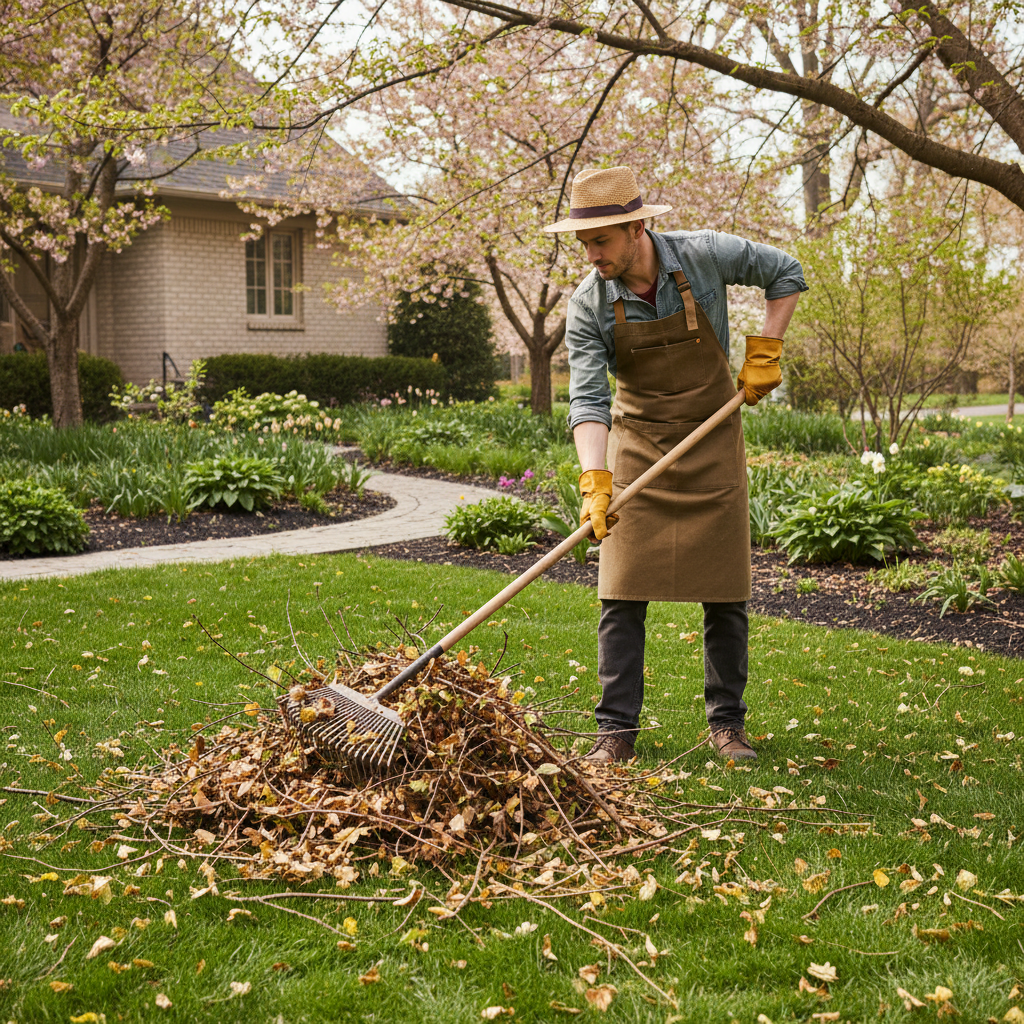
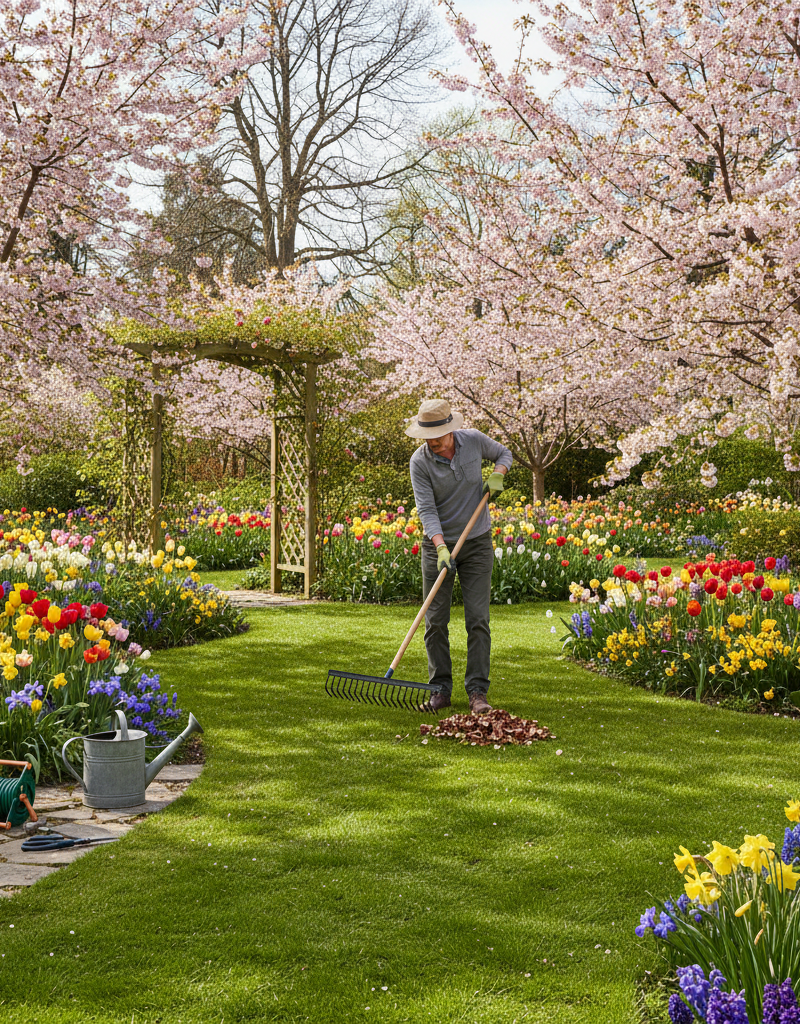
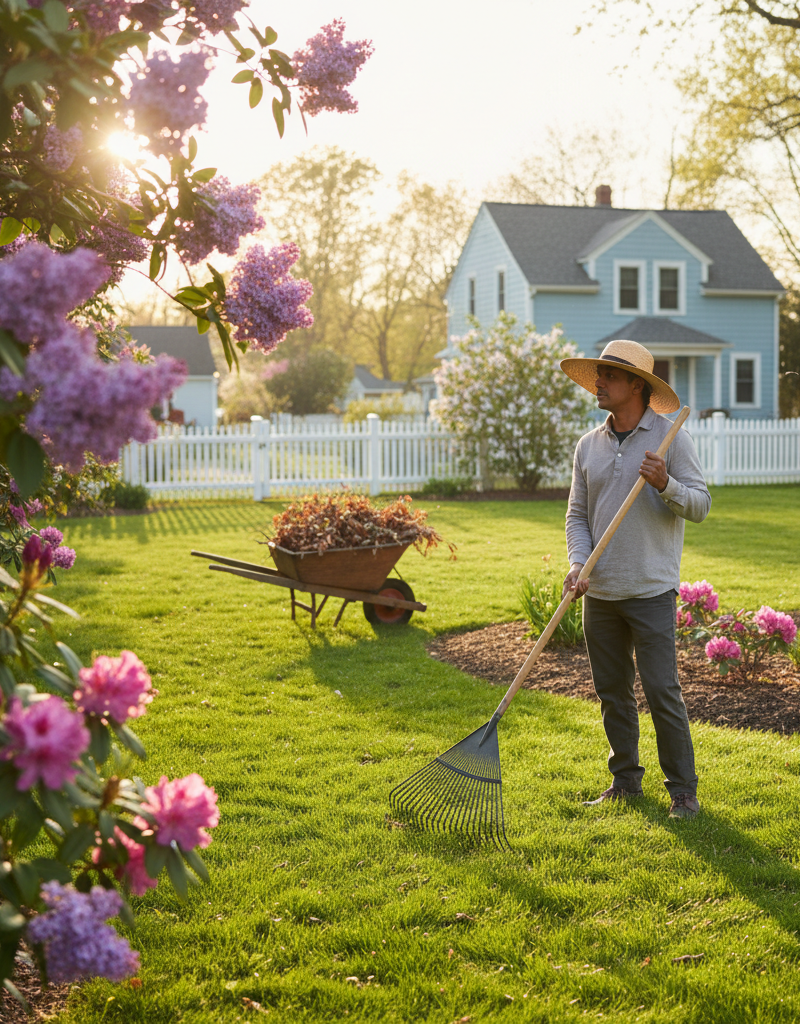
Perform a General Inspection and Debris Cleanup — Walk the entire property to assess winter's impact. Use a sturdy leaf rake to remove fallen leaves, twigs, and accumulated thatch from lawn areas. Clear out garden beds and areas around shrub bases. This initial cleanup removes overwintering pests and disease spores, improves air circulation, and allows warming sunlight to reach the soil.
- Tools: Leaf rake, landscape rake, wheelbarrow or yard waste bags, work gloves.
- Safety: Watch for sharp branches or hidden objects in leaf litter. Wear gloves to protect your hands from blisters and bacteria in decaying material.
-
Prune Damaged, Dead, or Overgrown Wood — Carefully inspect trees and shrubs for branches that are dead, broken from snow load, or rubbing against each other. For most deciduous trees and shrubs, late winter or early spring before bud break is the ideal time for this. Make clean cuts to remove damaged wood, which prevents disease entry points and encourages healthy new growth.
- Tools: Bypass pruners, loppers, pruning saw.
- Pro Tip: To identify dead wood, scratch a small section of bark with your thumbnail. Green underneath indicates live wood; brown and dry means it's dead.
- Caution: Avoid pruning spring-flowering shrubs like Forsythia, Lilac, or Azalea until after they have finished blooming, as doing so now will remove the flower buds.
-
Edge Garden Beds and Walkways — Use a spade or half-moon edger to recut the borders between your lawn and garden beds, sidewalks, and driveway. This creates a sharp, clean line that defines the space and prevents turfgrass from encroaching into mulched areas. A trench about 2-3 inches deep is sufficient to create a root barrier.
- Tools: Half-moon edger or flat-bladed spade, garden hose or rope to mark curves.
- Technique: Facing the bed, insert the spade straight down to your desired depth, then pull the handle back slightly to displace the soil and create a clean V-notch trench.
-
Tackle Weeds in Beds and Bare Spots — Remove any weeds that have already sprouted in garden beds or on the lawn. Young weeds are easier to pull by hand before their root systems become established. For pervasive weeds in beds, a garden hoe or hand-weeding tool can be effective. Addressing weeds now prevents them from competing with your desired plants for water, nutrients, and sunlight.
- Tools: Hand weeder, garden hoe, gardening gloves.
- If this doesn't work: If you have an extensive weed problem established from the previous year, consider applying a targeted post-emergent herbicide on a calm, dry day, following all label instructions precisely.
-
Test and Amend Your Soil — Before adding any fertilizers, understand what your soil actually needs. Purchase a DIY soil test kit or, for more accurate results, send a sample to your local cooperative extension service. The results will provide your soil's pH level and identify any nutrient deficiencies. Based on the report, you can add specific amendments like lime (to raise pH/reduce acidity) or sulfur (to lower pH/increase acidity), and compost to improve structure and fertility.
- Tools: Soil test kit or sample bag, trowel or soil probe, bucket.
- Application: Spread amendments evenly over the soil surface with a broadcast spreader or by hand, then gently work them into the top 2-4 inches with a rake or tiller.
-
Core Aerate Compacted Lawn Areas — If your soil is heavy clay or receives significant foot traffic, it is likely compacted. Core aeration is the most effective solution. Rent a gas-powered core aerator and run it over your lawn. It will pull up small plugs of soil, creating channels that allow air, water, and nutrients to reach the grassroots. The best time for cool-season grasses (like Fescue, Ryegrass, Bluegrass) is fall, but a spring aeration can be beneficial if compaction is severe. For warm-season grasses (Bermuda, Zoysia), wait until late spring or early summer when they are actively growing.
- Tools: Rented core aerator machine.
- Pro Tip: Water the lawn thoroughly a day or two before aerating. Moist soil allows the tines to penetrate more easily and pull cleaner cores. Leave the soil plugs on the lawn; they will break down and return nutrients to the soil.
-
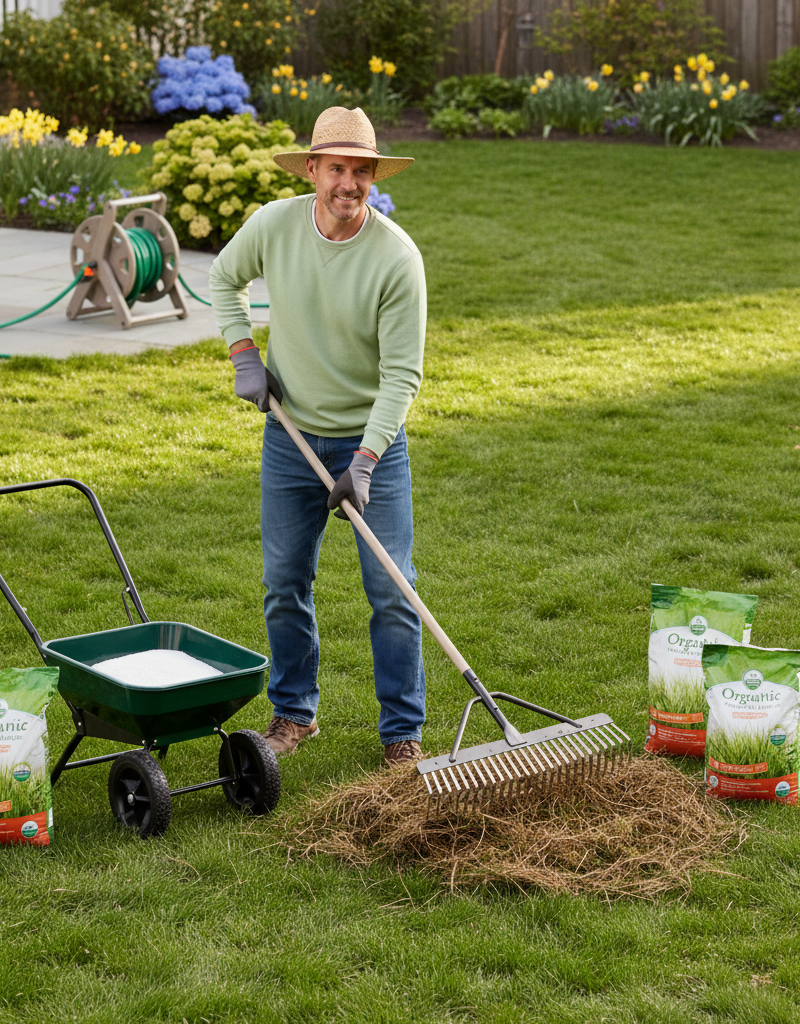
Overseed Bare or Thin Patches — Spring is a suitable time to repair bare spots, though fall is optimal for cool-season grasses. Rake the bare area aggressively to loosen the soil and remove any dead grass. Spread a high-quality grass seed appropriate for your region and light conditions (sun vs. shade). Ensure good seed-to-soil contact by lightly raking the seed into the top 1/4 inch of soil.
- Tools: Hard metal rake, hand spreader, quality grass seed.
- Watering: Keep the newly seeded areas consistently moist—not waterlogged—until the new grass is well-established, which may require light watering once or twice a day for several weeks.
-
Apply Pre-Emergent and Fertilizer — To prevent crabgrass and other annual weeds, apply a pre-emergent herbicide. This product creates a chemical barrier that stops weed seeds from germinating. The timing is critical: apply it when soil temperatures consistently reach 55°F for several days, which is often when forsythia bushes begin to bloom. If you are not overseeding, you can use a combination pre-emergent/fertilizer product. Otherwise, fertilize about 4-6 weeks after seeding.
- Tools: Broadcast or drop spreader.
- Important: Pre-emergents will also prevent grass seed from germinating. If you plan to overseed, you must either skip the pre-emergent, use a specific product safe for seeding (like one containing mesotrione), or wait several weeks after application to seed.
-
Apply a Fresh Layer of Mulch — Spread a 2-3 inch layer of organic mulch, such as shredded hardwood, pine bark, or cedar, in your garden beds and around trees and shrubs. Mulch suppresses weeds, conserves soil moisture, and moderates soil temperature.
- Tools: Wheelbarrow, pitchfork or mulch fork, rake.
- Safety Zone: Crucially, pull the mulch back 2-4 inches from the base of tree trunks and plant stems. Piling mulch directly against them (volcano mulching) traps moisture, promoting rot and creating a habitat for pests and disease.
-
Service Your Mower and Tools — Prepare your equipment for the season ahead. For your lawn mower, change the oil, replace the air filter and spark plug, and most importantly, sharpen the blade. A sharp blade makes a clean cut, which helps the grass heal quickly and resist disease. A dull blade tears the grass, leaving ragged edges that are prone to browning and infection. Clean, oil, and sharpen your shovels, pruners, and other hand tools.
Common mistakes
-
Pruning Spring-Flowering Shrubs Too Early: Many homeowners prune all shrubs in their initial spring cleanup. However, shrubs that bloom in spring (like lilacs, forsythia, azaleas, and rhododendrons) form their flower buds on the previous year's growth. Pruning them in early spring means you are cutting off all the potential flowers for the season. Instead: Wait until these shrubs have finished flowering, then prune them to shape or remove dead wood. General pruning for non-flowering shrubs and summer-blooming shrubs (like hydrangeas and roses) is fine for early spring.
-
"Volcano Mulching" Around Trees: A common but damaging mistake is piling mulch high against the trunk of a tree, forming a volcano shape. This practice traps moisture against the bark, leading to decay, fungal diseases, and insect infestations. It also suffocates the root flare, the critical area where the trunk widens to meet the roots, which needs oxygen. Instead: Apply mulch in a donut shape, creating a 2-3 inch deep layer that starts 3-4 inches away from the trunk and extends out to the tree's drip line.
-
Applying Pre-Emergent Herbicide at the Wrong Time or When Seeding: A pre-emergent herbicide works by preventing seeds from germinating. Its effectiveness is entirely dependent on timing. Applying it too early means it can break down before weed seeds sprout; applying it too late means the weeds have already started growing. Furthermore, it cannot distinguish between weed seeds and grass seeds. Instead: Apply pre-emergents just as soil temperatures consistently hit 55°F. If you plan to overseed your lawn, you must use a specialty herbicide containing mesotrione that is safe for new seedlings, or you must wait until the new grass has been mowed 3-4 times before applying a standard pre-emergent.
-
Working with Soaking Wet Soil: After spring rains or snowmelt, it is tempting to get into the garden immediately. However, walking on, tilling, or digging in saturated soil—especially clay-heavy soil—squeezes out air pockets and severely compacts its structure. This damage can take years to reverse and leads to poor drainage and stunted root growth. Instead: Wait for the soil to dry out. A simple test is to grab a handful of soil and squeeze it. If it forms a dense, wet ball and drips water, it’s too wet. If it's crumbly and falls apart easily, it’s ready to be worked.
-
Setting the Mower Blade Too Low: Eager for a neat-looking lawn, many people perform the first mow of the season on the lowest blade setting. This practice, known as scalping, is extremely stressful for the turf. It removes too much of the grass blade, reducing the plant's ability to photosynthesize and forcing it to tap into limited energy reserves. This weakens the lawn, making it more susceptible to weeds, drought, and disease. Instead: For the first few mows of the season, set your mower blade to one of the highest settings (3-4 inches for most cool-season grasses). Mowing high encourages deeper root growth, helps shade out weed seeds, and promotes a more resilient, healthier lawn.
Cost & time breakdown
| Task | DIY cost | Pro cost | Time |
|---|---|---|---|
| Full Yard Cleanup & Debris Removal | $20 - $50 (yard waste bags, gloves) | $250 - $600+ | 4 - 12 hours |
| Core Aeration | $70 - $100 (machine rental) | $150 - $250 | 2 - 4 hours |
| Lawn Fertilizing & Pre-Emergent | $50 - $100 (product for 5,000 sq ft) | $100 - $200 (per application) | 1 - 2 hours |
| Overseeding Bare Spots | $30 - $80 (seed, starter fertilizer) | $200 - $500 (depending on area) | 1 - 3 hours |
| Mulch Application (5 cubic yards) | $200 - $350 (bulk delivery) | $500 - $900+ (includes labor) | 4 - 8 hours |
| Shrub & Small Tree Pruning | $0 - $100 (if you need new tools) | $300 - $700+ | 2 - 6 hours |
Costs are estimates and vary by region, yard size, and material quality. Pro costs assume a standard suburban lot.
When to call a pro
While most spring yard work is manageable for a dedicated DIYer, certain situations require the equipment and expertise of a professional. Most importantly, any significant tree work involving large branches, trees near structures or power lines, or the use of a chainsaw while on a ladder should be left to a certified arborist. Arborists are trained in safe rigging and cutting techniques to prevent property damage and serious injury.
If a soil test reveals extreme pH imbalances or severe nutrient deficiencies, consulting a landscape professional or agronomist can be beneficial. They can devise a multi-season treatment plan that may involve specialized products unavailable to consumers. For widespread and persistent disease or pest issues, such as fungal blight across the lawn or a serious infestation of bagworms, a professional can accurately diagnose the problem and apply restricted-use pesticides more effectively and safely than a homeowner. Finally, if you are facing major landscape issues like poor drainage causing water to pool near your foundation, or if you need to re-grade a section of your yard, a landscaping contractor with heavy equipment is the only practical solution.
Prevention & maintenance
-
Prioritize Fall Cleanup: The most effective "prevention" for a difficult spring cleanup is a thorough fall cleanup. Raking and mulching all leaves in autumn prevents them from becoming a wet, matted layer that smothers grass and breeds snow mold over the winter.
-
Mow High and Consistently: Throughout the growing season, mow at a height of 3-4 inches. Taller grass develops deeper roots, is more drought-tolerant, and naturally shades out crabgrass and other weed seeds, reducing the need for chemical intervention. Never remove more than one-third of the grass blade at a time.
-
Maintain Sharp Mower Blades: A dull mower blade tears grass, creating jagged wounds that are slow to heal and invite disease. Sharpen your mower blade at least twice per season—once in the spring and again in mid-summer. You can tell a blade is dull if the tips of your grass turn brown and frayed a day or two after mowing.
-
Water Deeply, Not Daily: Encourage deep root growth by watering your lawn infrequently but deeply. Instead of a light 15-minute sprinkle every day, provide about 1 inch of water once or twice a week (depending on rainfall and heat). This trains roots to grow deeper into the soil in search of moisture, making the lawn more resilient.
-
Spot-Treat Weeds: Walk your property weekly during the growing season. Pulling or spot-treating individual weeds as soon as they appear is far easier than battling an established infestation. This vigilance prevents them from going to seed and creating a larger problem for the following year.
-
Clean Tools After Each Use: Prevent the spread of disease from one plant to another by cleaning your pruners, loppers, and shovels after use. A quick wipe-down to remove soil and sap, followed by a spray of disinfectant like isopropyl alcohol or a 10% bleach solution, is an effective preventative measure.
Related Articles
Keep troubleshooting with these hand-picked guides from FixlyGuide:
- The 7 Critical Yard Prep Steps Smart Homeowners Never Skip After Winter — Don't just rake! Learn the essential, often-missed steps to prepare your yard for a lush, healthy spring and summer.
- The 7 Critical Yard Prep Steps Smart Homeowners Never Miss (And Why) — Prepare your yard for a thriving spring with these essential steps, from soil testing to tool maintenance, ensuring a vibrant outdoor space.
- How to Kill Crabgrass Without Killing Your Lawn: A Homeowner's Guide — Crabgrass can quickly take over a lawn, but with the right approach, you can eliminate it effectively without harming your desirable grass.
- The #1 Mistake Homeowners Make When Fighting Lawn Grubs (And How to Fix It) — Discover the crucial mistake homeowners often make when treating lawn grubs and learn the most effective, timing-sensitive strategies to el…
- The #1 Mistake Killing Your Thin Lawn (and How to Fix It in a Weekend) — Overseeding a thin lawn is crucial for a lush yard, but a common mistake can ruin your efforts before they even begin. Learn how to diagnos…
- The 7 Fall Chores Most Homeowners SKIP (And Why They'll Cost You Thousands) — Don't let autumn's beauty distract you from these critical home maintenance tasks that can prevent costly damage and ensure a cozy winter.
Your seasonal maintenance checklist
The small jobs that prevent the expensive repairs. Tick them off — progress saves on this device.
Free, no signup. Skip anything that requires roof access or working near live electrical.
Estimate your own project cost
National averages are a starting point. Enter your details for a range that fits your house.
Mulch & topsoil calculator
- Material cost (delivery extra)$45 – $90
Bulk delivery typically adds $50–$150 per trip but is cheaper than bagged for jobs over ~2 cu yd.
Educational estimate only — always confirm with written local bids.
What should this project cost?
Enter your project details for a realistic cost range before you call anyone.
Cost depends heavily on which system turns out to be the source.
- Regional adjustment
- National average
- Labor share (typical)
- ~$1,620
- Quotes to collect
- 3 written estimates
Educational estimate based on national averages — not a binding quote. Always confirm with written local estimates.
Stay ahead of the next repair
Turn this guide into a schedule you will actually follow.
Free, no signup required. Estimates are educational guidance, not a quote or an inspection.
Get the print-ready PDF of this guide
A clean, ad-free, printable version you can keep on your phone or pin to the workshop wall. Free with a FixlyGuide account.
- Print-optimized layout
- Tools, materials & every step included
- Saved to your account
Frequently asked questions
When is the best time to start spring yard preparation?+
The best time to start spring yard preparation is typically when the last frost has passed, and the soil is workable, often in early to mid-spring, depending on your climate zone. Watch for new growth emerging as a sign.
How important is soil testing for spring yard prep?+
Soil testing is highly recommended every few years as it provides valuable insights into your soil's pH and nutrient levels. This information allows you to apply the correct amendments and fertilizers, preventing waste and ensuring optimal plant health.
Can I use the leaves I raked up as mulch?+
Yes, shredded leaves make excellent free mulch! They break down over time, enriching your soil. Just ensure they are shredded to prevent matting, which can suffocate plants and hold too much moisture.
Discussion
Loading comments…