Quick answer
The clearest signs of roof hail damage are granule piles at downspouts, dents in gutters and soft metal, cracked vents and flashing, damaged siding and window screens on the storm-facing side, and new ceiling stains weeks after the storm. You can document all of it from the ground and the attic. Have a licensed local roofer inspect the surface, and file with your insurer before your policy deadline.
Do not climb onto your roof.
Storm-damaged shingles are slick with loose granules, and homeowner falls are the most common storm-related injury. Everything you need for a claim can be documented from the ground, from an upstairs window, or from the attic hatch. Let an insured roofer walk the slopes.
10 signs your roof was hit by hail
- 1
Damage visible from the ground
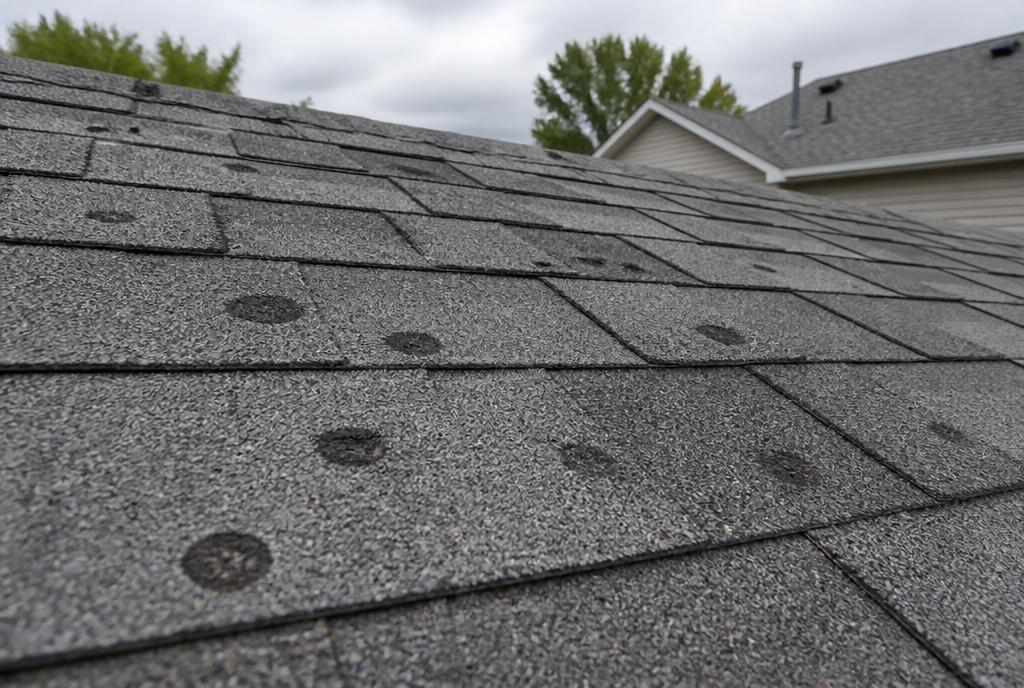
Stand back 40 to 50 feet and use your phone camera at full zoom. Bruised shingles read as dark, irregular circles where the granules were knocked off. Compare the storm-facing slope to a sheltered slope — the difference is the evidence.
Check from: Driveway, yard, sidewalk
- 2
New ceiling stains or drips
A hail bruise fractures the shingle mat. Water enters through the fracture during the next rain, not the hailstorm itself. A fresh, ring-shaped ceiling stain a few weeks after a storm is a hail indicator.
Check from: Upstairs ceilings, closets, garage
- 3
Dents in gutters and downspouts
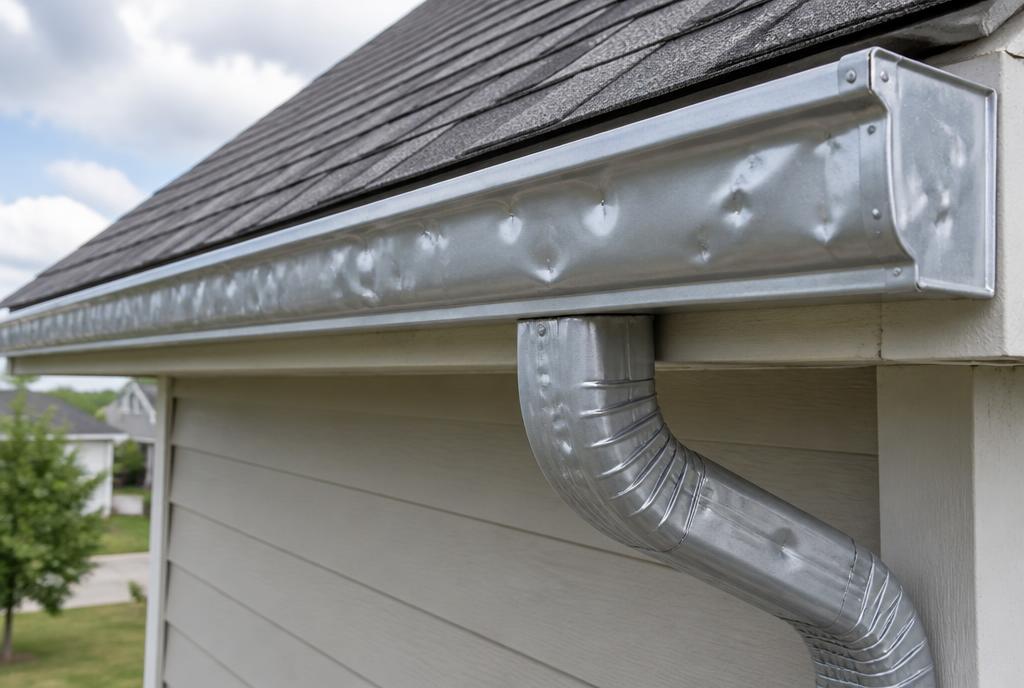
Aluminum gutters and gutter caps dent at a lower impact threshold than shingles. If the gutter face is pocked, the roof above it was hit at the same energy.
Check from: Gutter faces, elbows, downspouts
- 4
Granule loss in gutters and splash blocks
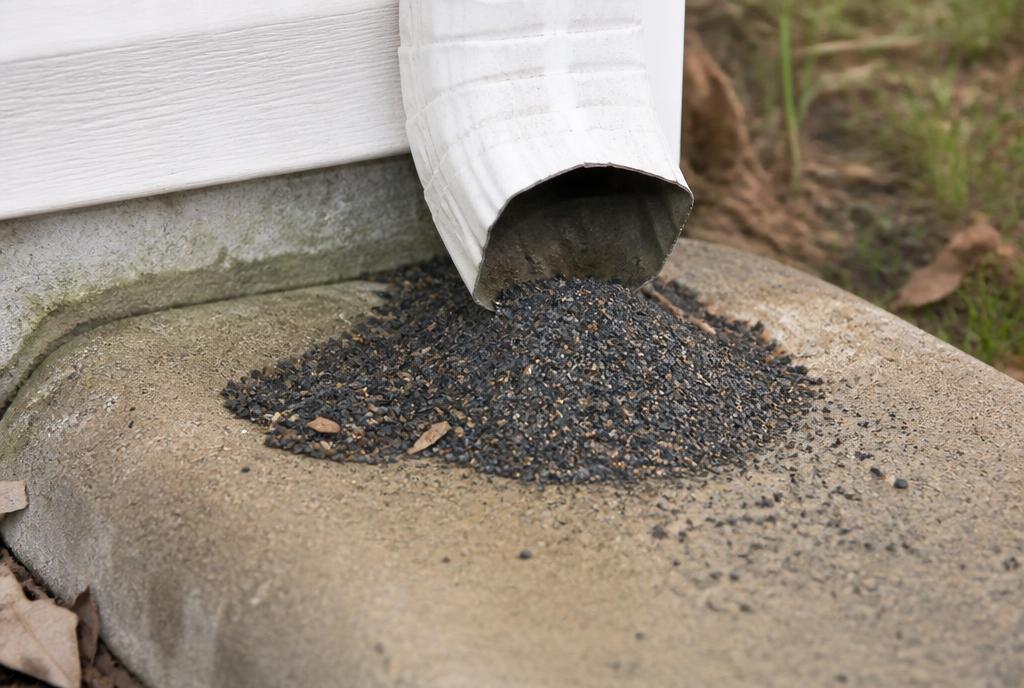
A handful of granules is normal after a new roof. Piles of granules at every downspout after a storm are not — that is the UV-protective layer that keeps the asphalt from drying out.
Check from: Downspout outlets, splash blocks, flower beds
- 5
Dented or cracked roof vents
Turbine vents, box vents, and plastic ridge vents are the softest targets on a roof. Cracked plastic vent housings are direct water entry points and are easy to see from a neighboring vantage point.
Check from: Ridge line, upper slopes
- 6
Dents in soft metal around the property
Check the AC condenser fins, garage door panels, mailbox, grill lid, and any metal patio furniture. Insurers treat this "soft metal" evidence as a strong corroborating indicator of hail size and direction.
Check from: AC unit, garage door, mailbox
- 7
Damaged or displaced flashing
Flashing at chimneys, skylights, and wall junctions is thin metal. Dents, lifted edges, and cracked sealant beads at these transitions are where the majority of post-hail leaks actually start.
Check from: Chimney, skylight, sidewall junctions
- 8
Chipped, cracked, or punctured siding
Vinyl siding cracks in a starburst or vertical split; fiber cement chips at the butt edges. Damage concentrated on one elevation tells you the storm direction, which supports the same direction on the roof.
Check from: Storm-facing elevation, at eye level
- 9
Broken window glass, screens, or wrapping
Look for punched window screens, dents in aluminum window wrap, and cracked glazing beads. Screens tear at a much lower impact than glass, so they often show hail that otherwise left no obvious trace.
Check from: Windows on the storm-facing side
- 10
Attic moisture, staining, or daylight
From inside the attic — with a flashlight and safe footing on joists — look for wet insulation, dark streaks on rafters, rusting nail shanks, or pinpoints of daylight through the decking.
Check from: Attic, from the access hatch
Photo examples
Illustrative examples of what each type of hail evidence looks like. Compare them to what you can see from your own yard.
Insurance documentation checklist
A hail claim is a documentation contest. Work this list before the adjuster arrives.
- Record the exact storm date and save a screenshot of a public weather or hail report for your ZIP code
- Photograph every elevation of the house from the ground, wide and zoomed
- Photograph soft-metal evidence: AC fins, gutters, garage door, mailbox, vents
- Photograph granule accumulation at each downspout with a coin or hand for scale
- Photograph and date any interior stains, and re-photograph as they spread
- Save receipts for tarps, boards, fans, dehumidifiers, and emergency labor
- Write down your claim number, adjuster name, and every call date
- Get an independent, line-item written repair scope before the adjuster meeting
- Keep a copy of your full policy, including the wind/hail deductible page
- Never dispose of damaged materials until the adjuster has documented them
Storm contractor scams: red flags
Storm chasers follow hail maps across state lines. Most are gone long before a workmanship problem shows up. These are the warning signs worth walking away over.
High-pressure door-to-door sales
Legitimate local roofers have a backlog after a storm. A crew that needs your signature today is selling urgency, not roofing.
Large upfront payment demands
Materials are typically ordered on the contractor's account. A demand for half the job in cash before work starts is a common disappearing-act setup.
No verifiable local address
A P.O. box, a hotel, or a truck is not an address. If there is no local office, there is nobody to call when the roof leaks next spring.
Refusal to provide insurance certificates
Without general liability and workers' comp, an injury on your property can become your financial problem. Ask for the certificate directly from their insurer.
Vague or blank contract terms
Missing scope, materials, brand, color, start date, or price means anything can be renegotiated later — always upward.
Promising to "waive" your deductible
In many states, including Texas, absorbing a homeowner's insurance deductible is illegal and can constitute insurance fraud for both parties.
No written workmanship warranty
Manufacturer warranties cover the shingle, not the installation. Most storm-damage leaks come from workmanship.
No local references or recent addresses
A real local contractor can name streets in your area they worked on last month. Drive by one.
Asking you to sign an "inspection authorization"
These forms are often a contingency contract in disguise, locking you into the contractor whatever the insurer decides.
Contractor verification checklist
Ten minutes of verification before you sign. Work down the list in order.
- Confirm the legal business name and match it to the name on the contract
- Verify a physical local address on a map — then confirm it is not a mailbox store
- Request the state license or registration number where your state requires one
- Get certificates of general liability and workers' compensation directly from the insurer or agent
- Confirm they will pull the required permit under their own license
- Ask for three local references from the past 12 months, with addresses
- Read the full contract, including the cancellation window, before signing anything
- Confirm the workmanship warranty length in writing, separate from the material warranty
- Confirm no payment is due until materials are delivered or a documented milestone is met
- Never allow anyone to absorb, discount, or rebate your insurance deductible
Hail damage questions homeowners ask
How long do I have to file a hail damage claim?
It depends on your policy and state, but many policies require notice within one year of the date of loss, and some shorten that further for wind and hail. Check the "duties after loss" section of your policy and file as soon as you suspect damage — waiting is the single most common reason claims are denied.
Can I inspect my roof myself after hail?
Do not climb onto the roof. Hail damage inspection means walking a slope you cannot see clearly, often on wet or granule-covered shingles, and homeowner falls are the most common storm-related injury. Everything you need for a claim can be documented from the ground, from a window, or from the attic — a licensed roofer inspects the surface.
Does hail damage always need a full roof replacement?
No. Insurers typically count impact marks within a 10-by-10-foot test square on each slope. Isolated damage on one slope may be repaired, while widespread bruising across multiple slopes generally supports replacement. That determination should come from an inspection with documented test squares, not a sales pitch.
Will filing a hail claim raise my premium?
Weather claims are generally non-fault and are treated differently from liability claims, but frequency matters and rates in hail-prone regions rise across the whole book of business. If the estimated damage is close to or below your deductible, it is usually not worth filing.
What if my insurer denies the hail claim?
You can request the adjuster's report, ask for a re-inspection with your roofer present, and — depending on your policy — invoke appraisal, which uses independent appraisers and an umpire. A licensed public adjuster is another option, typically for a percentage of the settlement.
Get a hail damage assessment
Answer a few questions about what you found and see whether your roof points to repair, replacement, or an insurance claim.
Back to the Storm Damage Center