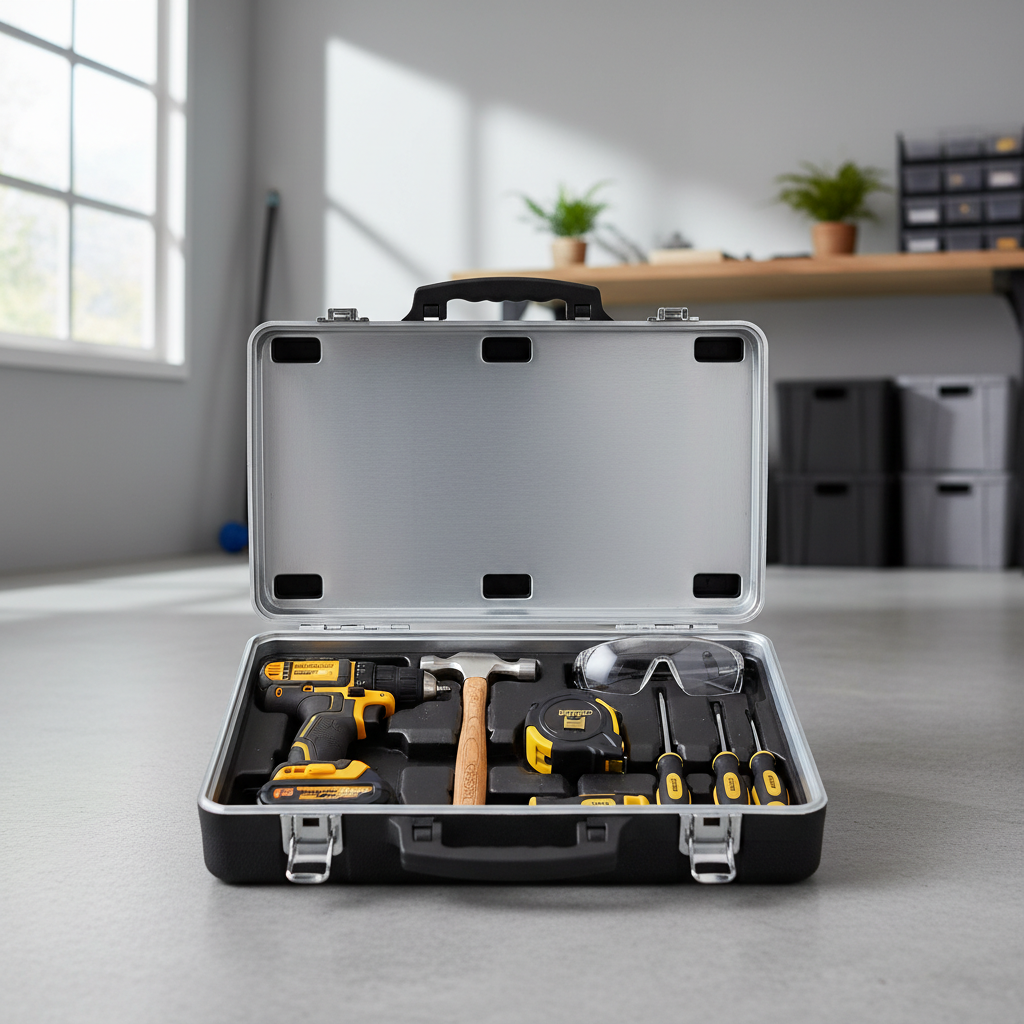
- Assess Your Immediate Needs — Start with what you absolutely need right now.
- Before you buy anything, consider the immediate projects. Are you assembling furniture? Hanging curtain rods? These tasks call for specific tools, like a drill and a tape measure. This helps prevent impulse purchases.
- List out 2-3 essential tasks you know you'll face in the first month.
- If this doesn't work: If you find yourself needing to do something specific without the tool, that's a sign it should be on your "buy" list.
Published June 8, 2026Last updated August 17, 2026
Tools & materials you'll need
Affiliate links- AmazonCordless Drill/Driver Kit1 (18V or 20V with 2 batteries)
- AmazonClaw Hammer1
- AmazonScrewdriver Set
- AmazonAdjustable Wrench1 (10-inch)
- AmazonPliers SetIncludes needle-nose and slip-joint pliers
- AmazonTape Measure1 (25-foot)
- AmazonUtility Knife1 with extra blades
- AmazonWet/Dry Vacuum1 (6-gallon min.)
As an Amazon Associate FixlyGuide earns from qualifying purchases — at no extra cost to you. Prices and availability are accurate as of publication and subject to change.
Quick Answer
New homeowners should prioritize acquiring a core set of multi-purpose tools like a cordless drill, basic hand tools, safety gear, and a wet/dry vac. Specialized or expensive tools, such as a pressure washer or tile saw, are almost always better to borrow or rent for occasional use. This strategic approach saves money and reduces clutter while empowering you to handle most common household tasks.
The Problem
Moving into a new home is exhilarating, but it quickly becomes apparent that a house requires constant attention. From hanging pictures and assembling furniture to minor leaks, clogged drains, and unexpected repairs, a steady stream of tasks awaits. Without the right tools, even simple fixes can become frustrating ordeals, leading to costly professional callouts or prolonged discomfort. Many new homeowners, overwhelmed by the sheer volume of options at the hardware store, either overspend on unnecessary gadgets that gather dust or underspend, leaving themselves unprepared for inevitable household challenges. The core problem is distinguishing between truly essential, frequently used tools and those specialized items that are rarely needed, creating a dilemma of "buy vs. borrow."
How It Works
Think of your homeowner's tool kit as a foundational system, much like your home's plumbing or electrical. Each component serves a purpose, and a well-rounded system allows you to diagnose and address a wide array of common issues. A cordless drill, for instance, isn't just for drilling holes; with the right bit, it can drive screws, mix paint, or even sand small surfaces. A general-purpose wet/dry vacuum is indispensable for cleaning up spills, post-DIY dust, or even unclogging stubborn sinks. Hand tools like screwdrivers, wrenches, and pliers are the direct extension of your problem-solving capabilities, allowing you to tighten loose fixtures, disassemble components, or cut wires.
Tools operate on simple principles: leverage, torque, cutting, and fastening. A hammer uses impact force, screwdrivers apply rotational force (torque), and saws use abrasive cutting actions. Understanding these basic physics helps you select the right tool for the job. For example, trying to drive a nail with the handle of a screwdriver is inefficient and unsafe because it lacks the mass distribution and striking surface of a hammer. Conversely, using a wrench to tighten a Phillips-head screw will strip the head. The "system" works best when you have a varied but not exhaustive collection, allowing you to address the most frequent demands of homeownership without needing a professional workshop. The goal is preparedness and efficiency, not collecting every gadget available. By understanding the core function of each tool, you can make informed decisions about what to buy, what to borrow, and what to confidently say "no thanks" to.
Step-by-Step Fix
While "fixing" isn't the primary goal of buying tools, think of this as a structured approach to building your foundational toolkit.
-
Assess Your Immediate Needs — Start with what you absolutely need right now.
- Before you buy anything, consider the immediate projects. Are you assembling furniture? Hanging curtain rods? These tasks call for specific tools, like a drill and a tape measure. This helps prevent impulse purchases.
- List out 2-3 essential tasks you know you'll face in the first month.
- If this doesn't work: If you find yourself needing to do something specific without the tool, that's a sign it should be on your "buy" list.
-
Invest in a Quality Cordless Drill — The ultimate multi-tasker.
- A 1/2-inch 18V or 20V cordless drill/driver is arguably the most versatile tool you can own. It makes quick work of driving screws, drilling holes, and even mixing small batches of paint or drywall mud.
- Pro Tip: Look for kits that include two batteries and a charger. Brands like DeWalt, Milwaukee, Makita, and Ryobi offer dependable options.
-
Assemble a Basic Hand Tool Kit — The fundamentals for most small jobs.
- This includes a set of screwdrivers (Phillips and flathead in various sizes), a claw hammer, an adjustable wrench, needle-nose pliers, slip-joint pliers, and a tape measure (25-foot is standard).
- Safety Note: Always ensure screwdrivers fit the screw head snugly to prevent cam-out and injury.
-
Don't Forget the Measuring & Marking Essentials — Accuracy is key.
- A good 25-foot tape measure, a utility knife with extra blades, a pencil, and a spirit level (24-inch is versatile) are crucial for precision in everything from hanging art to cutting materials.
-
Prioritize Safety Gear — Protect yourself first.
- Safety glasses are non-negotiable for any task involving power tools, striking, or debris. Work gloves protect your hands. A dust mask is good for sanding or dusty environments. Hearing protection is vital for loud power tools.
-
Consider a Wet/Dry Vacuum — For big messes and DIY cleanup.
- A 6-gallon (or larger) wet/dry vacuum is invaluable for cleaning up sawdust, broken glass, spilled liquids, or even helping clear a clogged drain. It's much more robust than a household vacuum.
-
Identify "Borrow or Rent" Candidates — Save money and space.
- Think about tools you'll use once or twice a year, or for a single large project. Examples include pressure washers, demolition hammers, tile saws, concrete mixers, specialty automotive tools, and heavy-duty ladders. These are prime candidates for renting from a home improvement store or borrowing from a neighbor.
-
Organize Your Tools — Keep them accessible.
- A dedicated toolbox, tool bag, or rolling cabinet keeps your essential tools organized and easy to find, saving you time and frustration during a repair. Labeling drawers can be a huge time-saver.
Common Causes
- Lack of Prior Homeownership Experience: Many first-time homeowners simply don
Related Articles
Keep troubleshooting with these hand-picked guides from FixlyGuide:
- The 4 Critical Power Tools Every New Homeowner FORGETS to Buy (Don't Be One of Them) — New homeowners often overlook essential power tools that make common home repairs and maintenance tasks significantly easier. Learning whic…
- The 5 Essential Tools Every New Gardener Needs (And 3 You Can Skip) — Starting a garden doesn't require a huge investment in tools; savvy new gardeners can thrive with just a few key items and save money by kn…
- The 7 Critical Household Filters You're Forgetting (And What They Cost You) — Neglected household filters are quietly costing you money, diminishing air quality, and paving the way for expensive repairs. Discover the…
- The 4 Critical Dimensions of a Bluebird House (Most DIY Plans Miss One) — Discover the precise measurements and often-overlooked design elements essential for building a bluebird house that truly attracts nesting…
- 7 Hidden Equity Drains Costing You Thousands Annually — Your home is an asset, but silent problems like minor leaks, poor insulation, and deferred maintenance can drain its value. Discover the se…
- Wind Tore Off Your Shingles? The 7 Critical Steps Most Homeowners Miss — Discover the essential steps to take when roof shingles go missing after a storm, from immediate safety checks to temporary repairs and ins…
What should this project cost?
Enter your project details for a realistic cost range before you call anyone.
Cost depends heavily on which system turns out to be the source.
- Regional adjustment
- National average
- Labor share (typical)
- ~$1,620
- Quotes to collect
- 3 written estimates
Educational estimate based on national averages — not a binding quote. Always confirm with written local estimates.
Get the print-ready PDF of this guide
A clean, ad-free, printable version you can keep on your phone or pin to the workshop wall. Free with a FixlyGuide account.
- Print-optimized layout
- Tools, materials & every step included
- Saved to your account
This article was independently written by FixlyGuide based on the source topic.
Frequently asked questions
What's the absolute first tool a new homeowner should buy?+
The single most versatile tool for a new homeowner is a quality cordless drill/driver. It handles a wide range of tasks from assembling furniture and hanging decor to minor repairs, making it an indispensable first purchase.
When should I rent a tool instead of buying it?+
Rent tools for tasks you'll perform infrequently, such as once a year or less, or for single, large projects. Examples include pressure washers, tile saws, concrete mixers, or heavy-duty demolition tools. Rental saves money, storage space, and the hassle of maintenance for specialized equipment.
What kind of basic hand tools do I really need?+
A foundational set of hand tools includes a claw hammer, a set of screwdrivers (Phillips and flathead of various sizes), an adjustable wrench, needle-nose and slip-joint pliers, a 25-foot tape measure, and a utility knife. These cover most small household repairs and assembly tasks.


Discussion
Loading comments…