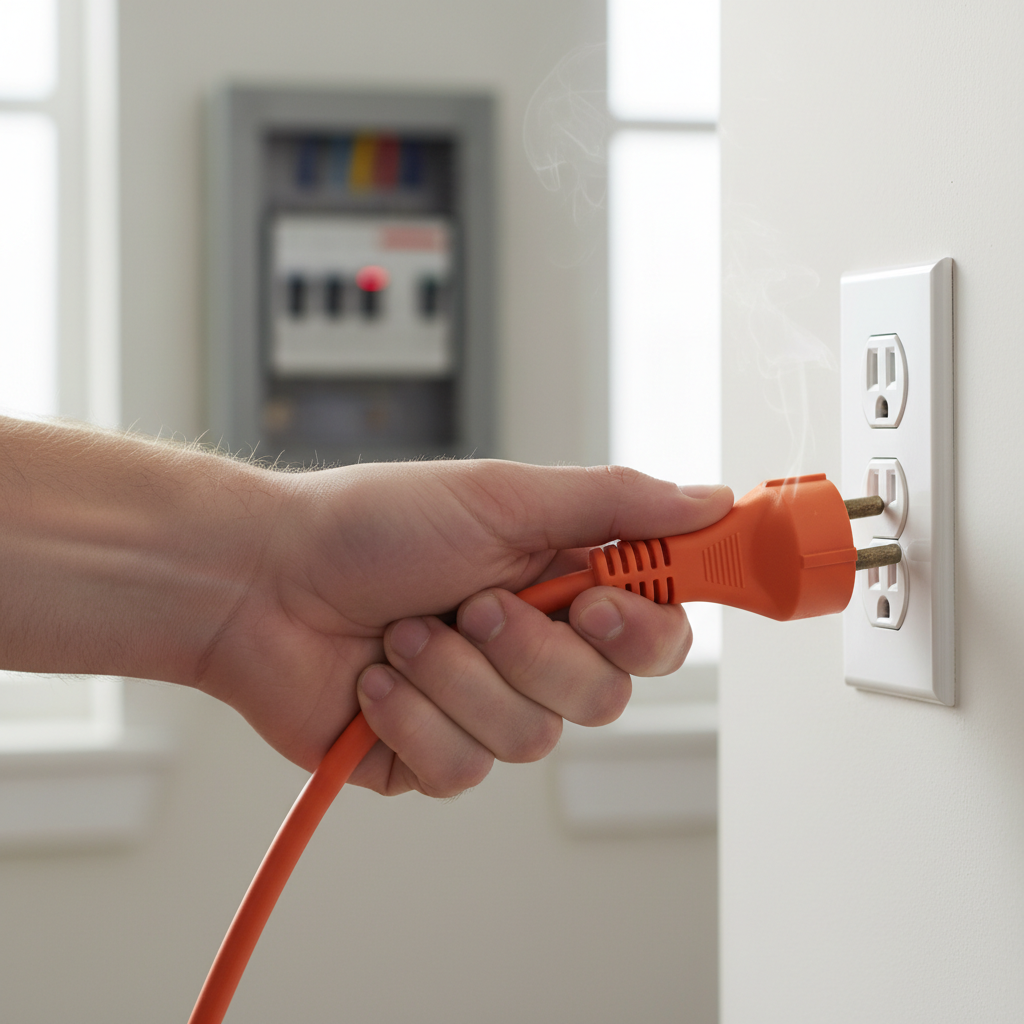
- Damaged Extension Cord: The most frequent culprit. Frayed wires, cuts in insulation, crushed sections, or faulty plugs/receptacles can create a short circuit. Internal wire breaks can also cause intermittent shorts when the cord is flexed.
- Overloaded Circuit: Plugging too many high-wattage appliances into a single circuit, even with a perfectly good extension cord, can exceed the breaker's amperage rating. This is especially common in older homes with fewer circuits.
- Faulty Appliance: The device itself could have an internal short circuit or a ground fault. If the appliance draws excessive current due to a malfunction, it will trip the breaker.
- Water Exposure: Using an indoor extension cord outdoors, or allowing any extension cord to get wet, can create a dangerous short circuit as water is a conductor of electricity.
- Pinched Wires: Running an extension cord under rugs, through doorways, or around furniture where it can be pinched or compressed can damage the insulation and lead to a short.
Electrical · Breaker keeps tripping
| Project category | Electrical |
|---|---|
| Problem type | Breaker keeps tripping |
| Trade required | Electrical |
| Urgency | Urgent — within days |
| Safety risk | High safety risk |
| DIY suitability | Pro recommended |
| Cost category | Low cost |
| Typical timeline | Diagnosis in a single visit |
| Contractor type | Licensed electrician |
Repair option
Isolate the load, then repair the fault or replace the breaker.
Replacement option
New dedicated circuit when the load simply exceeds what the circuit was built for.
Common causes
- Genuine overload on a shared circuit
- Ground fault from moisture in an exterior box
- Failing breaker or a damaged appliance cord
Relevant tools:diy or hire a prodiy difficulty
Published May 4, 2026Last updated August 18, 2026
Tools & materials you'll need
Affiliate links- AmazonNew Extension Cord1 · Match gauge/rating to your needs
As an Amazon Associate FixlyGuide earns from qualifying purchases — at no extra cost to you. Prices and availability are accurate as of publication and subject to change.
Quick Answer
An extension cord that repeatedly trips a circuit breaker is a clear sign of an electrical issue that needs immediate attention. While many assume it's simply an overloaded circuit, the culprit can often be more subtle, such as a damaged extension cord or a faulty appliance. Diagnosing the problem involves systematically checking each component in the electrical chain: the extension cord, the connected appliance, and the circuit itself. Addressing these issues promptly is essential not only for convenience but, more importantly, for preventing potential electrical fires and shocks.
The Problem
You plug in an extension cord, connect an everyday appliance, and zap! The circuit breaker trips, plunging that section of your home into darkness. Frustrating, right? You reset the breaker, try again, and the same thing happens. Or perhaps it works for a while, then suddenly trips after a few minutes of use. This isn't just an inconvenience; it's a warning sign from your home's electrical system. A tripping breaker indicates an electrical fault – either an overcurrent (too much electricity flowing) or a short circuit (unintended path for electricity). When an extension cord is involved, the problem could reside in the cord itself, the device plugged into it, or the circuit it's connected to. Neglecting these warnings can lead to damaged appliances, fire hazards, or even electrical shock, making a systematic diagnosis critical.
How It Works
To understand why your extension cord trips a breaker, it helps to know how electricity flows and how your circuit breakers protect your home. Household electricity flows from the main service panel, through individual circuit breakers, along wires in your walls, to outlets, and then to your appliances. A circuit breaker is essentially an automatic electrical switch designed to protect an electrical circuit from damage caused by an overcurrent or short circuit. When a circuit's current draw exceeds its safe limit (its amperage rating, typically 15 or 20 amps for standard outlets), or when a short circuit occurs, the breaker 'trips' – it automatically opens the circuit, stopping the flow of electricity to prevent overheating of wires, potential fires, and damage to appliances.
An overcurrent happens when too many devices are attempting to draw power from a single circuit simultaneously, exceeding its capacity. Think of it like a highway designed for a certain number of cars; too many cars at once lead to a jam. Each appliance has a wattage rating, and when you plug multiple items into a circuit, their combined wattage (divided by your household voltage, typically 120V) gives you the total amperage. If this total exceeds the breaker's limit, it trips. Extension cords themselves add a small amount of resistance and are rated for a specific current capacity. Using a lightweight, indoor-only extension cord with a high-power outdoor tool, for instance, can quickly lead to an overcurrent situation, causing the cord to heat up, melt, and potentially trip the breaker or even catch fire.
A short circuit, on the other hand, is a much more dangerous and often sudden event. It occurs when electricity finds an unintended, low-resistance path between the hot and neutral wires (or hot and ground wires) within a circuit, bypassing the appliance or load. This creates a surge of extremely high current, far exceeding the circuit's normal operating limits. A short circuit will trip a breaker almost instantaneously. Common causes of short circuits in the context of extension cords include damaged insulation on the cord exposing bare wires, a faulty plug or receptacle on the cord, or an internal fault within the appliance itself that creates a direct path between its internal hot and neutral conductors. Even a loose strand of wire bridging terminals inside an old appliance can create a short. Breakers are designed to react very quickly to a short circuit to minimize damage and prevent fire.
Step-by-Step Fix
1. Safety First – Always prioritize your safety
- Unplug everything: Before troubleshooting, ensure all devices are unplugged from the extension cord and the extension cord itself is unplugged from the wall outlet. This prevents accidental shocks. Never touch a tripped breaker or outlet with wet hands.
- Identify the breaker: Locate your electrical panel. The tripped breaker will typically be in the 'off' position or in a middle, 'tripped' position. Reset it by firmly pushing it to the 'off' position first, then to the 'on' position. If it immediately trips again, do not force it. Call a licensed electrician.
2. Inspect the Extension Cord – Look for visible damage
- Visual check: Carefully examine the entire length of the extension cord. Look for cuts, frayed insulation, exposed wires, melted spots, kinks, or crushing damage. Pay close attention to the plug ends and the receptacles.
- Test with another device (low power): If the cord appears fine, plug it into a different wall outlet on a different circuit (if possible). Then, plug a low-power appliance (like a lamp with an incandescent bulb, not an LED or CFL) into the extension cord. If the breaker trips again, the extension cord itself is likely faulty. Immediately replace it.
3. Troubleshoot the Appliance – Is the device the problem?
- Plug directly into wall: Disconnect the appliance from the extension cord. Plug the appliance directly into the wall outlet that previously tripped with the extension cord (after resetting the breaker). If the breaker trips immediately, the appliance is faulty. Discontinue use and have it repaired by a qualified technician or replace it.
- Check other outlets: If the appliance works when plugged directly into that outlet, try plugging it into a different wall outlet on a different circuit. If it trips a different breaker, the appliance is definitively the problem.
- Consider internal faults: Sometimes, an appliance has an intermittent internal short that only manifests under load. If it sometimes works and sometimes trips, this is a strong indicator.
4. Assess the Circuit Load – Are you drawing too much power?
- Identify circuit components: Unplug everything from the affected circuit. Reset the breaker. Plug in only one high-wattage appliance directly into the wall outlet. If it works, try adding other low-wattage items one by one, avoiding the extension cord for now. If at any point the breaker trips, you've found the combination that overloads the circuit. This implies you need to redistribute appliances to different circuits or use higher-rated dedicated circuits for power-hungry devices.
- Calculate total wattage: Look at the wattage ratings on all appliances connected or planned for that circuit. Remember that resistive heating devices (heaters, toasters, hair dryers, kettles) draw significant power. Sum the total wattage and divide by 120V to get the total amperage. If this exceeds 80% of your breaker's rating (e.g., 12 amps for a 15-amp breaker, 16 amps for a 20-amp breaker), you're likely overloading it. Always use this 80% rule as a safety margin for continuous loads.
5. Replace the Extension Cord (If Faulty) – Use the right cord for the job
- Match UL rating: If your inspection points to a faulty extension cord, replace it with a new, UL-listed cord. Ensure the new cord is rated for the correct amperage and wattage for your application. Never use damaged extension cords.
- Gauge matters: For high-power tools or outdoor use, always opt for heavier gauge (lower AWG number) extension cords. For example, a 12-gauge cord is thicker and can handle more current over longer distances than a 16-gauge cord. Indoor, light-duty cords are typically 16 gauge or higher (thinner wire) and are unsuitable for power tools or appliances like vacuum cleaners.
Common Causes
- Damaged Extension Cord: The most frequent culprit. Frayed wires, cuts in insulation, crushed sections, or faulty plugs/receptacles can create a short circuit. Internal wire breaks can also cause intermittent shorts when the cord is flexed.
- Overloaded Circuit: Plugging too many high-wattage appliances into a single circuit, even with a perfectly good extension cord, can exceed the breaker's amperage rating. This is especially common in older homes with fewer circuits.
- Faulty Appliance: The device itself could have an internal short circuit or a ground fault. If the appliance draws excessive current due to a malfunction, it will trip the breaker.
- Incorrect Cord Gauge: Using a lightweight, thin-gauge extension cord (e.g., 16 or 18 AWG) for a high-power appliance (like a circular saw, space heater, or vacuum cleaner) can cause the cord to overheat and trip the breaker due to excessive resistance or even melt.
- Water Exposure: Using an indoor extension cord outdoors, or allowing any extension cord to get wet, can create a dangerous short circuit as water is a conductor of electricity.
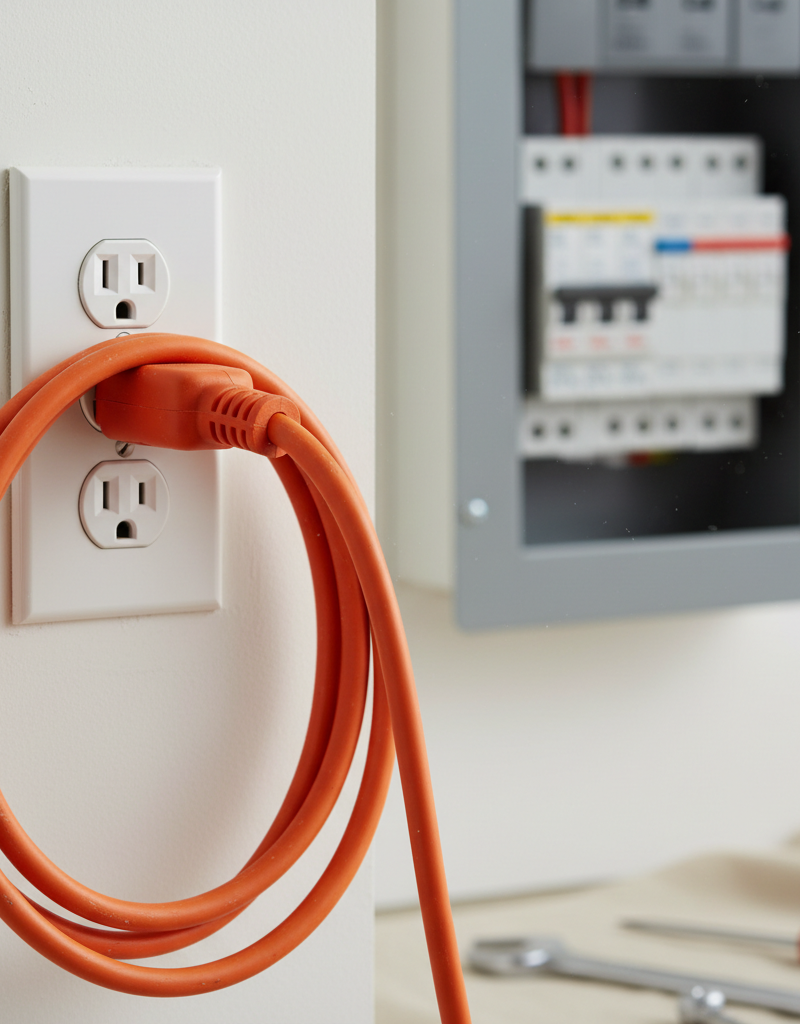
- Pinched Wires: Running an extension cord under rugs, through doorways, or around furniture where it can be pinched or compressed can damage the insulation and lead to a short.
Common Mistakes
- Ignoring Repeated Trips: A breaker tripping is a safety mechanism. Repeatedly resetting it without diagnosing the cause can lead to serious hazards like overheating wires and electrical fires.
- Using Indoor Cords Outdoors: Indoor-rated extension cords are not designed to withstand moisture, temperature extremes, or UV exposure. Using them outdoors can lead to rapid degradation, shorts, and electrocution hazards.
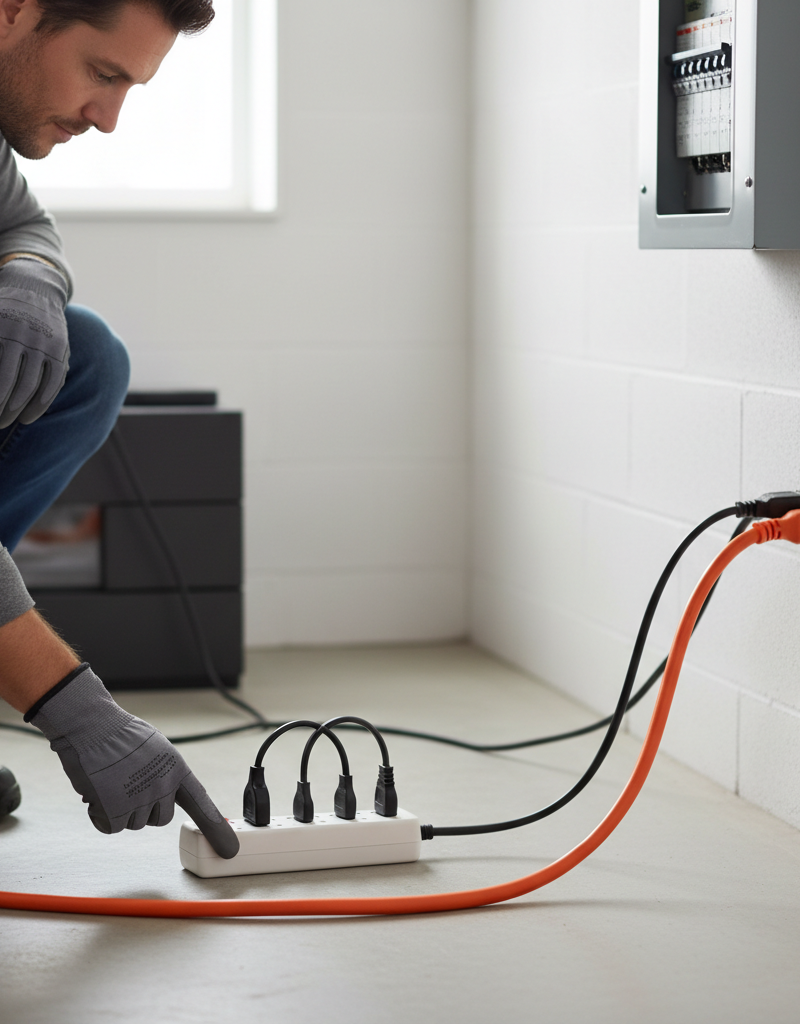
- Daisy-Chaining Cords: Plugging multiple extension cords into each other to extend length or outlets is extremely dangerous. It creates voltage drop, increases resistance, and significantly raises the risk of overloading and fire.
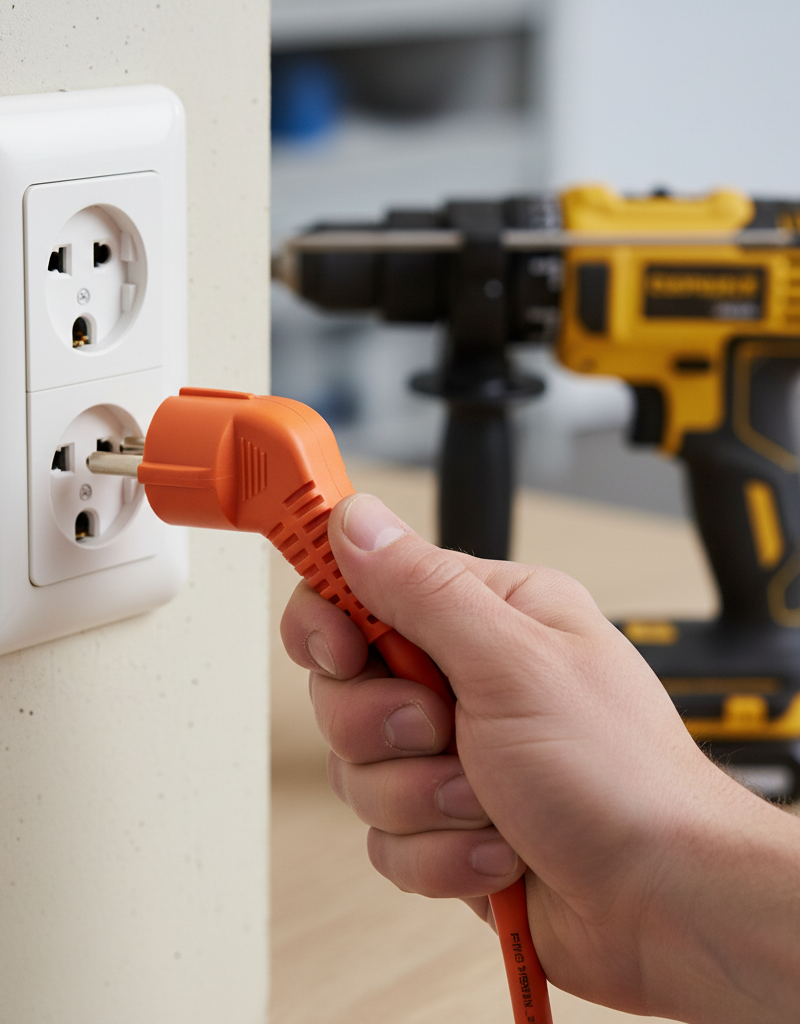
- Overloading the Cord: Just because an extension cord has multiple outlets doesn't mean you can plug in any number of high-power devices. Always consider the cord's wattage/amperage rating and the specific devices you're connecting.
- Running Cords Under Carpets/Rugs: This hides potential damage, prevents heat dissipation, and the cord can be damaged by foot traffic, leading to fire hazards.
- Using Damaged Cords: Even minor nicks or exposed wires on an extension cord make it unsafe. Such cords should be immediately discarded and replaced.
- Assuming All Breakers are Equal: Not all breakers respond to faults the same way. Some are standard thermal-magnetic, while others are GFCI (Ground Fault Circuit Interrupter) or AFCI (Arc Fault Circuit Interrupter). A GFCI trips for ground faults, and an AFCI trips for arc faults, which can be caused by damaged cords or loose connections. Pay attention to the type of breaker.
Cost & Time Breakdown
| Task | DIY Cost | Pro Cost | Time |
|---|---|---|---|
| Diagnose faulty cord/appliance | $0–$100 (for new cord) | $150–$300 (diagnostics) | 15–30 minutes |
| Replace extension cord | $10–$50 | $0 (if included in diagnostics) | 5 minutes |
| Appliance repair/replacement | Varies widely ($50–$500+) | Varies widely | Varies (hours or days) |
| Circuit load reallocation | $0 | $150–$300 (consultation) | 10–20 minutes |
| Electrical panel inspection | — | $200–$500 | 1–2 hours |
Tips & Prevention
- Right Cord for the Job: Always use extension cords rated for the intended use (indoor/outdoor, gauge for wattage). Outdoor cords are typically thicker (lower AWG number) and marked
Related Articles
Keep troubleshooting with these hand-picked guides from FixlyGuide:
- Extension Cord Keeps Tripping Breaker? Easy Fixes for Homeowners — An extension cord tripping a breaker usually indicates an overloaded circuit or a faulty cord/appliance, a problem often solvable with simp…
- Why Your Extension Cord Keeps Tripping the Breaker (And the Simple Test to Find the Hidden Cause) — Discover why your extension cord keeps tripping the circuit breaker and learn how to safely diagnose and fix the real problem with a simple…
- That One Warm Breaker Is Trying to Tell You Something — A single warm circuit breaker is not normal; it's a critical warning sign of an electrical issue, often an overload or a dangerous loose co…
- Why Your Circuit Breaker Keeps Tripping: A DIY Guide — A tripping circuit breaker is a common household problem, often indicating an overloaded circuit or a short circuit. This guide helps you d…
- The 7 Head-Scratching Reasons Your Outlet Died (Even With The Breaker On) — Discover the surprising reasons why an electrical outlet might stop working even when its circuit breaker is fully engaged, and how to safe…
- That ONE Reason Your Closet Door Keeps Derailing — Stop just putting your sliding closet door back on the track. We reveal the hidden—and surprisingly simple—hardware issue that causes 90% o…
Should you do this yourself?
Answer five quick questions before you start. Safety outranks savings every time.
Your experience with work like this
How high do you have to work?
Does the job involve any of these?
Will it need a permit?
Specialty tools
Free and instant. Educational guidance only — not a quote, inspection, or professional diagnosis.
What should this project cost?
Enter your project details for a realistic cost range before you call anyone.
Outlet and switch work usually $150–$400; panel upgrades commonly $1,800–$4,200.
- Regional adjustment
- National average
- Labor share (typical)
- ~$709
- Quotes to collect
- 3 written estimates
Educational estimate based on national averages — not a binding quote. Always confirm with written local estimates.
Fixly Project Decision Box
- DIY difficulty
- Professional Recommended
- Estimated time
- Diagnosis 1–2 hours
- Cost level
- Moderate
Main tools / materials
- Non-contact voltage tester
- Outlet tester
- Flashlight
When to stop and call a pro
- Burning smell, scorch marks, or a warm outlet or switch plate
- A breaker that trips again right after being reset
- Any work inside the service panel
- Aluminum wiring or cloth-insulated wiring
Need professional help?
Talk to a Licensed ElectricianFrequently asked questions
Why does my extension cord trip the breaker even with a low-power device?+
This strongly suggests a short circuit within the extension cord itself. Even a small nick in the insulation or a loose wire inside the plug can cause an instantaneous trip. Inspect the cord carefully for damage or replace it to test if the problem resolves.
Can an old extension cord cause a breaker to trip?+
Yes, absolutely. Over time, extension cords can suffer wear and tear, leading to frayed wires, cracked insulation, or loose connections within the plugs. These conditions can create a short circuit or increase resistance, leading to overheating and tripping the breaker.
What's the difference between an overloaded circuit and a short circuit when using an extension cord?+
An overloaded circuit occurs when too many appliances draw more current than the breaker is rated for, causing it to trip usually after a period of use. A short circuit, often due to damaged wiring or a faulty appliance, creates a direct, low-resistance path for electricity, causing an instantaneous trip with a surge of high current. The latter is typically more dangerous.
Is it safe to reset a tripped breaker repeatedly if an extension cord is connected?+
No, it is not safe. A tripped breaker indicates a fault. Repeatedly resetting it without determining and fixing the underlying cause can lead to overheated wiring, damage to your electrical system, fire hazards, or appliance damage. Always unplug everything and diagnose the issue first.
How do I know if my appliance or the extension cord is causing the trip?+
First, test the extension cord by plugging it into a different outlet with a low-power, known-good device. If it trips, the cord is faulty. Second, plug the original appliance directly into the wall outlet (without the extension cord). If it trips, the appliance is faulty. If neither alone trips the breaker, the issue might be circuit overload or an intermittent fault when they work together.
Discussion
Loading comments…