- Curative (Best for Late Summer/Early Fall): For existing infestations when grubs are already causing damage, use products with trichlorfon or carbaryl. These act quickly to kill actively feeding grubs. Apply in August or early September.
- Organic/Biological Controls:
- Beneficial Nematodes (Heterorhabditis bacteriophora): Apply these microscopic worms in late summer/early fall. They penetrate grubs and release bacteria that kill them. Requires moist soil and careful application per product instructions.
Landscaping · Deck or fence project
| Project category | Landscaping |
|---|---|
| Problem type | Deck or fence project |
| Trade required | Landscaping |
| Urgency | Planned project |
| Safety risk | Moderate safety risk |
| DIY suitability | DIY for experienced homeowners |
| Cost category | High cost |
| Typical timeline | Most builds 3–10 days depending on size |
| Contractor type | Landscaping contractor |
Repair option
Replace failed boards, posts, and hardware; reseal the surface.
Replacement option
Rebuild when framing or the ledger connection is unsafe.
Common causes
- Rot at posts and ledger
- Storm damage
- Adding outdoor living space
Relevant tools:home improvement material pricesproject cost estimator
Published May 5, 2026Last updated August 17, 2026
Tools & materials you'll need
Affiliate linksAs an Amazon Associate FixlyGuide earns from qualifying purchases — at no extra cost to you. Prices and availability are accurate as of publication and subject to change.
Quick Answer
To effectively get rid of grubs in your lawn, the most crucial step is timing your treatment correctly. Grubs are most vulnerable when they are young and actively feeding near the surface, usually in late spring (May-June) for preventing new infestations, or late summer (August-September) for killing existing ones. Apply a granular or liquid grub killer containing active ingredients like chlorantraniliprole (preventative) or trichlorfon/carbaryl (curative) and water it into the soil immediately afterward to ensure it reaches the grubs. For a more organic approach, beneficial nematodes or milky spore can be introduced, targeting the grubs at different life stages.
The Problem
That sinking feeling when you see irregular brown patches expanding across your once-lush green lawn, or worse, finding sections of turf that lift up like a loose carpet. This isn't just dry grass; it's the telltale sign of a grub worm invasion. Grubs, the larvae of various beetles like Japanese beetles, chafers, and June bugs, feed voraciously on the roots of your grass. This root damage deprives the turf of water and nutrients, leading to wilting, yellowing, and eventually, death. A severe grub infestation can quickly decimate an entire lawn, turning it into a spongy, lifeless wasteland that's easily pulled back by hand or ravaged by grub-eating wildlife like raccoons and skunks, creating even more damage.
How It Works
Understanding the grub lifecycle is key to successful treatment. Most common lawn grubs, like those from Japanese beetles, have a one-year lifecycle. Adult beetles emerge from the soil in early to mid-summer (June-July), feed on ornamental plants, then mate and lay eggs in the turf. These eggs hatch into tiny grubs in late summer (July-August). These young grubs are the most destructive, as they feed aggressively on grass roots just below the surface during late summer and early fall, causing the most visible lawn damage.
As temperatures drop in late fall, the grubs burrow deeper into the soil to overwinter. In spring, as soil temperatures rise, they migrate back up to the root zone, continue feeding for a short period, then pupate in late spring/early summer. Finally, they emerge as adult beetles, restarting the cycle. There are exceptions; some grub species, like May/June bugs, have a two or three-year lifecycle, meaning they spend multiple years as grubs in the soil, potentially causing damage for longer periods. The primary damage occurs when grubs are actively feeding, usually when soil temperatures are between 60°F and 75°F (15°C to 24°C), making late summer and early fall critical times for both identification and treatment.
Step-by-Step Fix
1. Confirm the Grub Problem – Don't treat until you're sure.
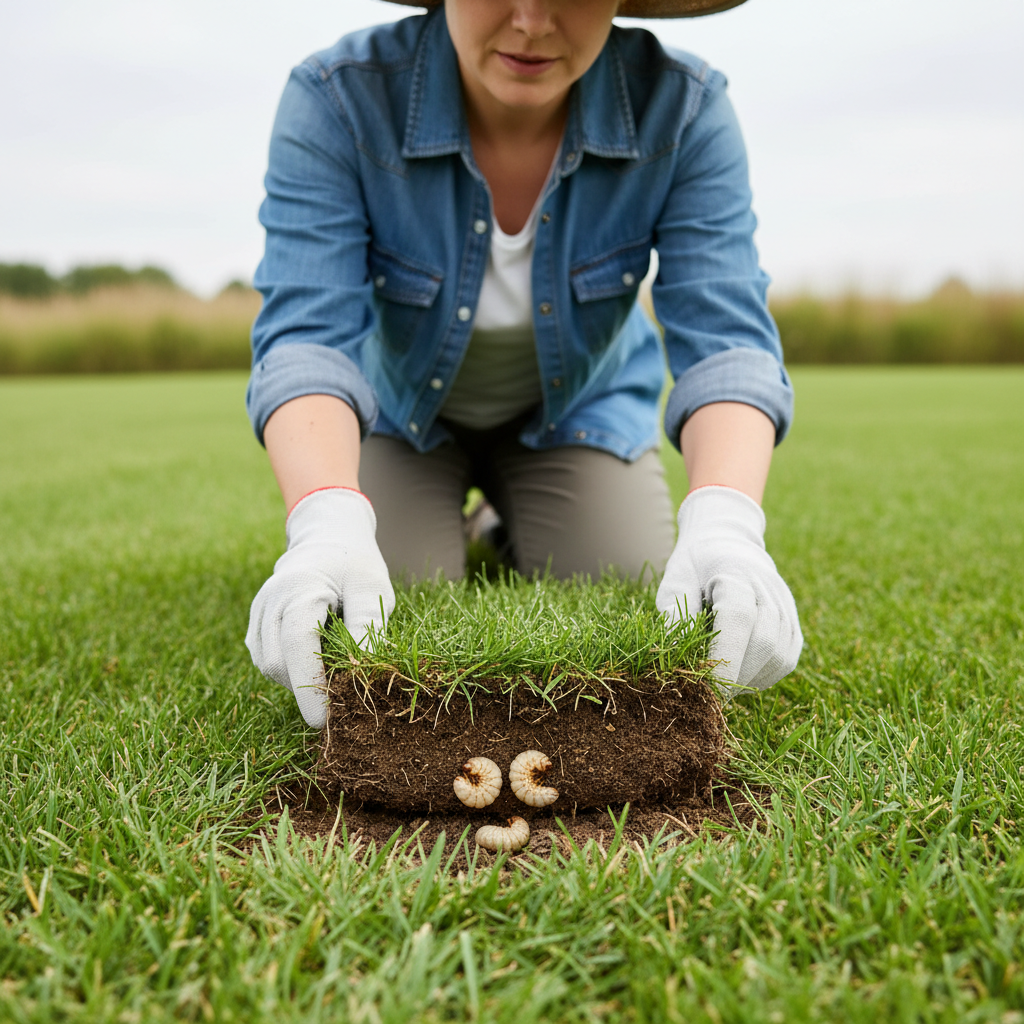
- Perform a "Tug Test": Grab a handful of affected turf and try to pull it up. If it lifts easily, like a piece of sod, revealing chewed-off roots and C-shaped white grubs beneath, you've likely found your culprit.
- Dig a Sample: For a more definitive diagnosis, use a spade to cut a 1-foot square section of turf, about 2-4 inches deep, in a damaged area. Gently peel back the sod and count the grubs. More than 5-10 grubs per square foot indicates a damaging infestation that warrants treatment.
- Assess Damage: Look for irregular brown patches that don't respond to watering. Increased activity from birds, raccoons, or skunks digging in your lawn can also signal a grub presence, as these animals feed on them.
2. Choose Your Treatment Method – Decide between preventative, curative, or organic.
- Preventative (Best for Late Spring/Early Summer): Products with active ingredients like chlorantraniliprole or imidacloprid work by killing grubs as they hatch. Apply these in May or June before eggs are laid or young grubs emerge. This is ideal if you have a history of grub problems.
- Curative (Best for Late Summer/Early Fall): For existing infestations when grubs are already causing damage, use products with trichlorfon or carbaryl. These act quickly to kill actively feeding grubs. Apply in August or early September.
- Organic/Biological Controls:
- Beneficial Nematodes (Heterorhabditis bacteriophora): Apply these microscopic worms in late summer/early fall. They penetrate grubs and release bacteria that kill them. Requires moist soil and careful application per product instructions.
- Milky Spore (Paenibacillus popilliae): Specific for Japanese beetle grubs, milky spore is a long-term solution. It’s a bacterial disease that infects and kills grubs, spreading naturally over time. It can take several years to establish its full effect but offers decades of control. Apply anytime soil isn't frozen, but late summer is optimal for existing grubs.
3. Prepare Your Lawn – Optimize for treatment effectiveness.
- Mow: Cut your grass to its regular height before application. This ensures the treatment reaches the soil more effectively.
- Water (Slightly): If your lawn is very dry, lightly water it a day or two before applying granular treatments. This helps the granules penetrate and dissolve. However, don't drench it, as standing water can dilute some treatments.
- Clear Debris: Remove any thick thatch layer or excessive leaf litter that might hinder the product from reaching the soil surface.
4. Apply the Grub Killer – Follow product instructions precisely.
- Read the Label: This is the most critical step. Dosage rates, application methods, and safety precautions vary significantly between products.
- Safety Note: Always wear gloves, long sleeves, pants, and eye protection when handling and applying chemical pesticides. Keep children and pets off treated areas until the product has dried or been watered in and is safe according to the label instructions.
- Granular Application: Use a broadcast spreader for even distribution. Calibrate your spreader according to the product label for the correct setting. Walk at a consistent pace to avoid over-application in some areas and under-application in others. Spread half the required amount in one direction and the other half perpendicular to the first to ensure full coverage.
- Liquid Application: Attach a hose-end sprayer to the product bottle, or mix concentrates in a pump sprayer per instructions. Apply evenly over the affected area, ensuring complete coverage. Avoid spraying on windy days to prevent drift.
5. Water In Thoroughly – Activate the treatment.
- Immediate Watering: Almost all grub killers, whether chemical or biological, require immediate watering after application. This washes the active ingredients off the grass blades and into the soil, where the grubs are feeding.
- How Much Water?: Aim for about 0.5 to 1 inch of water, either from rainfall or irrigation. This is enough to carry the active ingredients past the thatch layer and down to the root zone without washing them away entirely. Too little water, and the product sits on the surface; too much, and it could be diluted or run off.
6. Monitor and Re-evaluate – Check for results and consider follow-up.
- Observe: It can take several weeks for grub populations to significantly decline, especially with biological controls. Monitor the treated areas for new grass growth and a reduction in grub-eating animal activity.
- Reseed: Once grubs are controlled, reseed any heavily damaged areas to help your lawn recover. Aerate before seeding to improve soil-to-seed contact.
- If it Doesn't Work: If after a few weeks you still see active grubs or new damage, it might indicate improper application, incorrect product choice for the grub species, or a particularly severe infestation. You may need to reapply, try a different active ingredient, or consult with a local lawn care professional.
Common Causes
- High Beetle Populations: The more adult Japanese beetles, chafers, or June bugs in your area, the more eggs they'll lay in your lawn, leading to higher grub counts.
- Ideal Egg-Laying Conditions: Adult beetles prefer to lay eggs in healthy, well-maintained lawns with adequate moisture. Ironically, a beautiful lawn can become a target.
- Lack of Preventative Measures: Skipping preventative treatments, especially if you've had grub issues in previous years, leaves your lawn vulnerable.
- Timing Mistakes: Applying grub killer at the wrong time of year (e.g., trying to kill deeply burrowed, overwintering grubs in winter) will be ineffective.
- Insufficient Watering After Application: Without proper watering, granular products remain on the surface and won't reach the grubs.
- Thick Thatch Layer: A dense layer of thatch (dead grass material) can prevent grub killers from penetrating the soil effectively.
Common Mistakes
- Treating Without Confirming Grubs: Many lawn problems (fungal disease, drought, dog urine) mimic grub damage. Always confirm grubs are present before applying treatment, as unnecessary pesticide use is wasteful and potentially harmful.
- Applying at the Wrong Time: This is the biggest error. Applying a curative product in spring when grubs are pupating, or a preventative in fall when beetles have already laid eggs, yields poor results. Know the grub lifecycle and choose the right product for the right season.
- Not Watering After Application: For granular products, failing to water immediately after application leaves the active ingredients on the surface, where they are inactive or can be degraded by sunlight. The chemicals need to be moved into the root zone.
- Over- or Under-Application: Too much product can harm your lawn or be environmentally irresponsible; too little won't be effective. Always calibrate your spreader and follow label rates precisely.
- Ignoring Thatch: A thick thatch layer (over 1/2 inch) can prevent any treatment, even liquid ones, from reaching the grubs in the soil. Dethatch your lawn if needed before treatment.
- Expecting Instant Results: Biological controls like nematodes and milky spore take time to work, sometimes weeks or even seasons. Even chemical controls require time for grubs to ingest or absorb the active ingredient. Patience is key.
Cost & Time Breakdown
| Task | DIY Cost | Pro Cost | Time |
|---|---|---|---|
| Grub Killer - Preventative | $20–$50 per bag | Included in service | 15–30 min |
| Grub Killer - Curative | $25–$60 per bag | Included in service | 15–30 min |
| Beneficial Nematodes | $20–$40 per pack | Included in service | 20–40 min |
| Milky Spore | $30–$70 per box | Included in service | 20–40 min |
| Spreader (if needed) | $30–$100 | N/A | One-time purchase |
| Full Grub Treatment Service | N/A | $150–$400 per acre | 1–2 hours |
Tips & Prevention
- Mow High: Keep your grass a bit longer (2.5-3 inches). Taller grass helps shade the soil, making it less attractive for adult beetles to lay eggs, and it promotes deeper root growth, making the lawn more resilient to minor grub feeding.
- Proper Watering: Water deeply and infrequently rather than shallowly and often. Healthy, deep roots can better withstand grub damage. In mid-summer, allow your lawn to go slightly dormant. Adult beetles prefer to lay eggs in moist soil, so a slightly drier lawn can deter them.
- Aerate Annually: Core aeration helps reduce thatch buildup and improves water and nutrient penetration, making grub treatments more effective and promoting overall lawn health.
- Overseed Damaged Areas: Regular overseeding, especially with grub-resistant fescue varieties, helps fill in thin spots and maintain a dense turf that is less inviting to grubs and more capable of recovering from damage.
- Monitor Beetle Activity: If you notice a high number of adult beetles (Japanese beetles, June bugs) feeding on your garden plants in late spring/early summer, it's a strong indicator that grub activity in your lawn is likely to follow. This is a good time to consider a preventative treatment for grubs.
- Consider Neem Oil: While not a primary grub killer, neem oil can act as a repellent for adult beetles and, when applied to the soil, can disrupt grub feeding and development. It's a natural option for minor issues or as part of an integrated pest management strategy.
When to Call a Professional
While treating grubs is a manageable DIY task for most homeowners, there are times when calling a professional is the smartest move. If you've tried treating your lawn multiple times without success, or if your infestation is so severe that large sections of your lawn are consistently destroyed year after year, a professional lawn care service can offer more advanced diagnostics and stronger, often restricted, chemical treatments. They can also identify specific grub species, tailor a treatment plan to your region and lawn type, and provide soil amendments or re-sodding services for severely damaged areas. If you live in an area with strict pesticide regulations or prefer not to handle chemicals, a pro can ensure safe and compliant application.
Related Articles
Keep troubleshooting with these hand-picked guides from FixlyGuide:
- The #1 Mistake Killing Your Garden (And 5 Permanent Weed Fixes) — Discover the secret to truly permanent weed removal and stop making the common mistake that allows weeds to relentlessly return, reclaiming…
- The #1 Mistake Killing Your Lawn's Crabgrass Defense (And the Easy Fix) — Discover why common crabgrass removal methods fail and how to naturally eliminate this stubborn weed for a healthier lawn.
- The #1 Lawn Aeration Mistake Most Homeowners Make (And How to Fix It) — Timing is everything when it comes to lawn aeration, and doing it at the wrong time can do more harm than good for your grass.
- The #1 Mistake Killing Your Lawn's Clover—and the Easy fix That Spares Your Grass — Discover the most common mistake homeowners make when trying to eliminate clover, and learn how to remove it effectively without harming yo…
- The #1 Summer Lawn Mistake Turning Your Grass Yellow (and How to Fix It) — Discover the most common summer lawn mistake that causes yellowing grass and learn the simple steps to revive your lawn.
- The Secret Culprit Behind Your Leaky Refrigerator (It’s Not Always the Water Line) — Discover the most common, often overlooked, reasons your refrigerator is leaking water and how to fix them with simple DIY steps.
Should you do this yourself?
Answer five quick questions before you start. Safety outranks savings every time.
Your experience with work like this
How high do you have to work?
Does the job involve any of these?
Will it need a permit?
Specialty tools
Free and instant. Educational guidance only — not a quote, inspection, or professional diagnosis.
What should this project cost?
Enter your project details for a realistic cost range before you call anyone.
Cost depends heavily on which system turns out to be the source.
- Regional adjustment
- National average
- Labor share (typical)
- ~$1,620
- Quotes to collect
- 3 written estimates
Educational estimate based on national averages — not a binding quote. Always confirm with written local estimates.
Before you start
Check the difficulty, permits, and safety risk — then decide whether to call a pro.
- Estimate this projectGet a cost range for your scope and ZIP before you call anyone.Open
- Get local estimatesSend one request and compare written estimates from vetted pros.Open
Free, no signup required. Estimates are educational guidance, not a quote or an inspection.
Frequently asked questions
What are grubs and why are they bad for my lawn?+
Grubs are the larvae of various beetles (like Japanese beetles or June bugs) that live in the soil. They feed on the roots of your grass, starving it of water and nutrients, which causes brown patches, wilting, and ultimately, death of the turf. Large infestations can devastate a lawn quickly.
When is the best time to apply grub killer?+
The best time depends on the type of treatment. For preventative products, apply in late spring to early summer (May-June) before grubs hatch. For curative products, apply in late summer to early fall (August-September) when grubs are actively feeding and most vulnerable.
Can I use organic methods to get rid of grubs?+
Yes, biological controls like beneficial nematodes and milky spore are effective organic options. Nematodes target young grubs and work best when the soil is moist. Milky spore is specific to Japanese beetle grubs and offers long-term control but can take a few seasons to establish fully.
Why didn't my grub killer work?+
Common reasons for ineffective treatment include incorrect timing (treating when grubs are not actively feeding), not watering the product in thoroughly after application, a thick thatch layer preventing absorption, or choosing the wrong type of grub killer for your specific infestation. Always confirm grubs are present before treating.
How do I know if I have grubs?+
Look for irregular brown patches in your lawn that don't improve with water. Try pulling up a section of affected turf – if it lifts easily like a carpet and you see C-shaped white grubs underneath, you have an infestation. Increased activity from animals like raccoons, skunks, and birds digging in your lawn can also signal grubs.

Discussion
Loading comments…